Welcome to In the Deep.
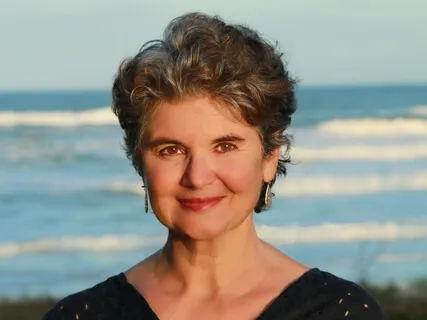
I'm your host,
Katherine Ingram.
The following is excerpted from a session of Dharma Dialogues held in Lennox Head,
Australia in October of 2019.
It's called A Tremor in the World.
My friend Liz in Chicago sent this to me recently.
It's called Small Kindnesses by Danusha Lameris.
I've been thinking about the way when you walk down a crowded aisle,
People pull in their legs to let you by,
Or how strangers still say,
Bless you when someone sneezes,
A leftover from the bubonic plague.
Don't die,
We are saying.
And sometimes when you spill lemons from your grocery bag,
Someone else will help you pick them up.
Mostly we don't want to harm each other.
We want to be handed our cup of coffee hot and to say thank you to the person handing it,
To smile at them and for them to smile back.
For the waitress to call us honey when she sets down the bowl of clam chatter and for the driver in the red pickup truck to let us pass.
We have so little of each other now,
So far from tribe and fire,
Only these brief moments of exchange.
What if they are the true dwelling of the holy,
These fleeting temples we make together when we say,
Here,
Have my seat,
Go ahead,
You first,
I like your hat.
So I often speak about gratitude being one of the open secrets of happiness.
And another open secret of happiness,
Of course,
Are these small kindnesses,
Both in the receiving and in the giving.
Right?
It's amazing how when there is that little moment with someone in a day,
Just out and about,
It's possible that it can make the difference for someone in terms of their perhaps dark mood,
But it's also great for you.
Right?
It's also great for you.
Because in a moment of offering kindness,
It's a kindness to yourself.
So for instance,
As an example,
Well,
I'll back up.
My brother,
I have a brother who died at the age of 38.
He had a hard life.
My brother,
He had a very hard life and he was sort of dysfunctional in the world.
He couldn't quite get it together,
Although he was one of the smartest people I've ever known,
But he just couldn't really function.
And so he was reduced to really hard jobs and he couldn't even hold his difficult job for long.
So a couple of times in his life,
He was a phone solicitor,
Having to just call,
Cold call random people who don't want to be called.
And so he was always struggling with depression in one form or other.
And he would just be beleaguered at the end of a day of having people hang up in him or cuss him out.
And with a very,
Very tiny percentage of anyone ever being kind,
Let alone buying whatever it was he was trying to get them to do,
Change their phone plan or whatever it might've been.
And as I would be very aware of his daily difficulties,
It induced in me a very strong intention to always be really kind to phone solicitors.
They're not in a plum job.
That's not their dream job,
Right?
So I usually,
Whenever somebody's.
.
.
And here,
It doesn't happen as much,
Thankfully.
It doesn't happen that much here.
It happens a lot in America.
But when I was living in America and that was certainly the case,
I would always say,
You know,
I think you're probably going to be better off going to the next person because I'm really happy with my phone plan.
And then they might go on a few more.
They might look at their talking points and try to talk me into it.
And I'd kind of hang in and just say,
No,
Really,
I really hope you're going to do well on the next person.
But like that,
Just take an extra moment to speak to a human being who's maybe having a hard time,
Maybe a rough life,
Possibly.
And that applies out there,
Actually,
In general,
Because frankly,
We're in rough times.
We still live in glorious privilege here,
But we're all feeling it too.
There's a tremor running around the earth,
Around the world,
Right?
We're not oblivious to what's happening.
So even those who are in privilege have.
.
.
Will have the ordinary difficulties of living in a body in a world of uncertainty,
Right?
The ordinary privileges.
One of our friends a week ago was hiking in Yellowstone and fell into one of the boiling hot pools and has now burned over 50% of his body and he's in critical condition.
So even in circumstances where you're theoretically there to have a good time,
Horrible things can happen.
But we all probably are sensing that very,
Very hard things are happening for lots of people in the world now.
And it's that famous line,
Be kind for everyone you meet is carrying a huge burden.
And even if they don't know it at the moment,
Right?
So for everyone out there that you come into contact and who might be lifted even momentarily by contact with you,
Perfect stranger or a friend,
But also because in those moments,
Their own heart is gladdened.
You were saying,
I like your hat.
I just wanted to.
.
.
I'm not sure if it's a question,
But maybe it's an observation,
But this concept of cognitive dissonance.
So this is a perfect example right now.
We're sitting in a really nice space.
It's sunny,
It's reasonably calm and things are quite manageable and quite peaceful even.
And yet at the same time,
What you said earlier about the tremor that's going around the planet at the moment,
There's a sense of that as well.
And navigating what is happening right now with what's maybe to come or with what's other realities that are happening at the same time is creating a dissonance,
Which I think is ramping up more and more.
And navigating that dissonance I think is a really.
.
.
Perhaps that's one of the great challenges that we're facing right now,
Hey?
Yeah,
I totally agree.
Yeah.
And because we're,
To whatever degree we're willing to feel empathy extended,
Right?
We will then be vulnerable and I have no quarrel with that,
To having carrying our own heavier load because we're feeling the sorrow and the tremor,
Even if we're not immediately affected by it by ourselves.
So yes,
If your awareness is inclusive and you care about strangers who are suffering,
Then you have to be prepared to let your heart break a lot.
And I think that's the situation we find ourselves in.
We're going to be.
.
.
We are seeing a lot of heartbreak and feeling a lot of heartbreak and not just the ordinary stuff.
It is ramping up in greater numbers.
And so yes,
It is a kind of dissonance,
I guess is one way to see it.
Another way to see it though is that the spectrum of your own consciousness keeps widening,
Keeps getting wider and including that too and that too and that too.
So it's the joy and the tenderness and all the sweetness and the moments of small kindnesses,
Right?
And I recommend,
Especially in this time,
Gratitude and kindness are easy,
Quick hits of happiness.
And I also recommend that in carrying a heavier load,
You also have to be aware of feeding your own heart and taking care of your own emotional state so that you can handle the heavier load.
Otherwise,
You just stagger under it and fall.
So it's fair enough to make sure that you are using your own attention so that you're kind of keeping yourself buoyant and whatever that takes.
But I have moments,
Definitely moments where I feel just like I can't take on another sorrow in my heart.
I just found out about my friend.
I just found out yesterday,
Although the accident happened a week ago and it's hard thinking about him in the level of pain that he's in an almost,
They've induced an almost coma basically.
But if his awareness,
If his consciousness comes to the fore,
He's going to be dealing with pain,
Extreme pain.
And that,
On top of everything else,
It's like,
It wasn't like I wasn't paying attention to the rest of it.
So there are moments when I feel like I'm going to collapse under this today.
And then I have to just not.
I mean,
I allowed myself some tears,
But then I had to do whatever my own.
.
.
In this case,
What I did was I went to gratitude and I went to kind of the feelings of tenderness that I feel with regard to my friend who I haven't seen in a long time.
He's been living in India.
And he's the brother of another one of my close friends.
And so I was feeling into the whole family dynamic,
The whole system and the little boys that are there.
His nephews are there with him and they're quite young to be experiencing this.
All of it was rolling in my heart.
And I was forcing my attention at some point to present awareness and to gratitude for my own existence,
For the continuation of so much joy in the planet,
To not just look only at the sorrow and not be engulfed by it.
But it is the challenge,
As you say,
Of our time.
It is what we've got now.
It's almost as if that also can force a type of ego death in a way in that the ego structure is what's feeling the weight and the strain and the suffering and a lot of that too,
Isn't it?
And that's kind of at times being forced to relinquish control.
Well,
I'm not sure what you mean by the ego structure,
Feeling the sorrow.
The I that is trying to direct awareness and that sort of thing.
Yeah.
Well,
I think it's possible that there can be more and more a sense of the we,
Right?
So it's not so much a heavy duty me program.
It's more a sense of we.
And in the we,
This particular personality,
This particular mind-body manifestation has the capacity to direct its own attention.
So I always say direct it as needed.
You don't have to constantly going around directing your attention.
But when you find that your own system is starting to collapse a little bit or to become another body on the pile to be taken care of,
Then why not use your own attention?
Not necessarily see it as coming from an ego place,
But to see it as just an intelligent use of your attention when you're in a kind of,
When the mind is going astray,
Which minds tend to do according to conditioning.
And then to just float back to present awareness.
When I hear you loud and clear,
I feel it all the time,
This sense of how much do I bear witness before it starts to get to me.
And I have to manage that.
I have to pull back from it sometimes.
I have to put my attention on something completely different.
And while one can still do that,
I'm happy to do that.
There can come points I suppose when the flood is coming in very rapidly.
And hopefully then one would have the wherewithal to intelligently use the intention and the attention.
It's a paradox,
Isn't it?
Because in the present moment,
Things are just fine,
Aren't they?
Well,
In this present moment,
Yeah.
In this present moment,
But if one was laying in a hospital with one's flesh on fire burning,
It wouldn't be as fine.
Or if you've just found out about someone you love has just died or has just been diagnosed with something or a particular place that you have loved has just been razed to the ground.
We're not one-dimensional creatures.
So yes,
Most of the time in present awareness,
Most of the time for us so far,
It's fine.
It's great.
And yet because we know we're mortal,
We always had that hanging over our heads.
And now we have even more uncertainty hanging over our heads,
More than there was heretofore even in history,
I would say.
So what a time.
What a time to live.
What a time to be paying attention.
What a time to be empathic at the cost of that.
Yeah.
Do you live here in this?
I'm about an hour and a half away down near Yamba.
And in the first week of winter,
Sorry,
The first week out of winter,
Our whole town was nearly wiped out by wildfire.
So when you said before about things can change very quickly,
That's something that is literally in the air from where I've come from.
And we're just starting to kind of come to terms with all of that.
There's a lot of gratitude there as well because no properties or lives were lost.
And yet it was also quite traumatic.
Yes.
Yes,
I'm sure.
I'm sure it's very traumatic.
And that's my point also about we're not one-dimensional creatures even though the threat is temporarily over,
Right?
The trauma,
The post-traumatic response can still be there.
And that's just something we have to understand and work with and not think we have to somehow transcend it some way.
Yeah.
Yeah.
But it's nice.
It sounds like the community came together with each other.
Yeah.
Yeah.
It's like what often happens.
There's that sense of communal bonding in the face of tragedy.
Yes.
A lot of gratitude.
Yes.
But also,
You see that classic grief thing kick in where people will also then feel.
.
.
I wrote after the grief,
Sorry,
After the relief comes grief.
And so then people also.
.
.
There's the anger that can come up and people wanting to blame.
So there's a bit of that going on as well.
Probably justified because the fire was intentionally started.
And at the same time already within the space of three weeks,
The grasses are coming back,
Birds have come in from New Guinea.
It's that paradoxical thing.
Yeah.
Yeah.
Have you had rain?
We've only had a little bit,
Not much.
There's some coming apparently maybe on Thursday,
Friday.
But yeah,
Just a little bit that's come through.
Yeah.
Yeah.
Yeah.
Yeah.
Yeah.
It's interesting also what you said about the anger thing.
Someone told me the other day that she goes to Extinction Rebellion meetings in Tasmania.
And one of the leaders there said the kids are angry and the adults are in grief.
It's an interesting line.
Yeah.
Yeah.
And I guess there's that thing where within grief,
We look at those classic five stages of kubleros.
The first is denial and then the second one is anger.
Is it possible that that's where the zeitgeist is now moving via the kids into anger?
Then we can expect some bargaining to come up.
That's also happening with all the sort of fantasy technologies that people are talking about.
Yeah.
Yeah.
Yeah.
They're all happening actually.
And there are people also I would propose who are in some forms of acceptance,
If not every minute of the day,
But a lot in terms of a general way of feeling into it.
But that's a pretty hard one actually.
It's quite a process.
But there are people worldwide.
I know because they write me letters.
They send me emails.
I've had hundreds of emails from people all over the world because I wrote this huge essay.
And so people have responded who are on that same wavelength and have responded very beautifully.
And with all of the grief that comes with it as well,
Part of the acceptance is accepting the grief.
There's really no way around having that.
And so,
Yeah,
All of those stages are playing out in our time.
I think for me,
I'm kind of toggling between depression and acceptance.
Yeah.
I guess depression is the fourth stage for acceptance.
So there's a sense that maybe that's a tricky one to get.
Maybe a lot of people stop there or there's a part of me that wants to sort of backtrack,
Go back into bargaining or anger or whatever.
But yeah,
I think that the quickest way out is through.
And maybe collectively that's that loss of meaning that a lot of people are experiencing during the depression levels of ramping up.
Absolutely.
I think this is quite an interesting point.
I think possibly the depression and acceptance for this particular thing are going to have to be married to each other.
That Kubler-Ross's five stages have to do with personal death.
Right?
So I can see how you could come to acceptance of personal death.
Right?
And even move out of the depression or the sadness or the despair.
But in this sense,
I think that's going to be harder,
Maybe not even possible.
I think that the despair and the acceptance are going to be living intertwined.
And that's just how it is.
Hard,
But how it is,
At least as far as I can see.
As far as I know thus far.
And also I sense it in all the letters that I get as well.
People who are not fighting anymore about the fact of the matter.
People are not,
They're not angry at anybody.
In fact,
There's no blame in fact.
Many of the people see that,
That this was evolution and here it is.
But what a moment,
You know,
To have to have this one be our fate,
You know,
And the demand of what we're challenged to have to accept,
Including our own despair.
So gratitude,
Kindness,
And understanding.
Yeah,
I have a few questions.
I hope they come out.
And I've just,
As you know,
I've just finished this meditation retreat.
So I have a number of kind of observations and questions around that.
But the main theme is how the kind of,
What I observed in myself and other people in the group observed is the movement from being in the present moment and even getting to the point where you're kind of not so attached to the sense of self.
You know those moments when you're actually just in direct experience.
And that can happen without even being aware of it.
Like in moments of kindness where you're just responsive and things like this.
And how beautiful that is.
And,
You know,
And in that moment I'm sort of laughing at myself.
Like why do I spend so much time analyzing the self that doesn't exist?
You know what I mean?
Like I've just poured so much energy into fixing it.
And then being from in that very open state,
And then it's kind of like ricocheting back into this very strong sense of self.
And the reason I bring this up,
It's the,
For me,
It was around trauma in my body,
Like baked into my system.
And I'm really aware of the trauma in the planet,
You know,
It's like baked into the planet.
And there's research saying that,
You know,
PTSD rates are getting much higher because there's this global PTSD going on,
And I'm aware that in grief stages can bring people closer together and you can have this unity.
But what I experience personally is actually more separation.
So when I contact the trauma feelings,
It's really hard to be in the present.
It's really hard to be open.
So the very thing that you want to be present,
Be here,
Be connected to nature,
To,
You know,
Be in life.
It's kind of like the defense mechanism of the self is like too much to get away,
Shut it down.
So you kind of,
Yeah,
It just feels like I'm not really sure how to be with that,
You know?
So my controlling mind comes in,
The psychologist,
How do I fix this?
Do I do it?
Do I do attention,
Meditation,
Da da da da da da.
But it doesn't really feel like what I'm observing in myself,
I feel is like a natural process.
Like there's a threat.
There is a threat in the environment.
There's threats in my own being,
You know,
Or when they come up and the response to that threat is to kind of contract into this self that feels separate and then can't,
You know?
Yeah.
I mean,
Maybe you're following what I'm saying.
I am,
Yeah.
I'm not sure though that you can,
You contract entirely.
You just contract now and again.
So,
So each of us,
And you've heard me say this probably many times,
Each of us are working with our own capacity,
Our own nervous system,
Our own conditioning,
Right?
And so you're,
In a sense,
There's a sort of organic withdrawal as needed that you're describing as a kind of fully into this sense of self.
It's like a shutdown from connection and not necessarily people,
But just like walking out and seeing this is beautiful,
But not really feeling it.
Yeah.
Like I'm just not really going to feel too much of life right now,
You know?
Okay.
And then it feels very gray and,
You know.
But then it comes back alive again,
Doesn't it?
It comes back into color at some point.
I'm hoping.
No,
But it does,
Doesn't it?
Because you just said you just had this wonderful month of meditation and you've just described that beautiful,
Or that very interesting painting that you just did.
And I know that you're planning to do this whole radio thing addressing all of these kinds of issues.
So you're quite engaged,
Right?
So it's not entirely true that you're just,
You know,
Off in a kind of gray hole of self,
Self,
Self,
Right?
But the quality of my conscious experience is very different internally.
So,
And I'm aware that it's in relation to trauma or threat.
And so I sort of feel like I want to find a new way to,
I don't know if it's possible.
It's kind of like,
You know how,
I think there's like this automatic kind of like thing.
And I think,
Well,
With things in the world,
I guess how can I be with challenge in a way that I don't have to abdicate my own experience?
Do you know what I mean?
I do.
Where I can stay present because there is still beauty and richness and contact even in the midst of great suffering.
But that numb shutting down reflex is so strong.
And it's so sad for me because I want to experience life,
Even if it's shit.
You know what I mean?
I don't want to actually do this numbing separate because that's actually the saddest thing is to feel separate from life.
That's the real suffering.
But if that sort of happens for you as your sort of protective mechanism that just runs on its own,
That you're not deliberately choosing to do that,
But it happens,
It's just your way.
It's your cave that you sometimes go to,
Right?
And okay,
I'd say let it be because I again say to you,
You actually don't stay there.
You do have many breakthroughs into joy.
You sometimes forget them though.
And I think that you also have a natural impulse to be helpful and to be engaged,
Which you continue to do,
Right?
So to just be careful about saying,
I am this way and I'm withdrawn and the world is gray and I don't feel anything and I can't see beauty when I look at it,
All of that.
It's sometimes true.
And it's just some kind of mechanism that is arising.
Perhaps it's protective.
Perhaps it's just- I think as you're saying it,
It seems obvious it's just a protective mechanism I need right now to accept that.
But I think you get into that spiritual thing of,
Oh,
I'm trapped in myself,
Blah,
Blah,
Blah.
Yeah,
No,
Definitely.
As you know,
I will say to really let those go.
When you're not trapped in there,
It feels so good.
I know,
Of course.
It's a real sense of like shit.
It does,
But that's okay because then it haunts you back into wanting to feel it again.
It's sort of like you know that there's another way to be.
But sometimes we all have to go to our caves of various sorts.
I do,
Right?
Sometimes I have moments where I think,
Okay,
I am going to lose it now.
Or I just have to really withdraw.
Really withdraw.
Withdraw from people,
From news,
From any one more task.
Now,
Like I said a while ago,
I don't know how it will be if I get pressed,
If there's a flood of sorrow and of people needing help or if a fire sweeps through.
I don't know.
The other thing I really loved,
That's really helpful,
Thank you.
Just expressing all that because I mean sitting,
Live like an internal struggle with it.
I love how you said about the we,
Not the me.
So the we story,
Not the me story.
Because even in this contraction,
I've gone into a big me story around it.
It's just like,
Oh,
It feels like it fills up the space.
But part of the contraction,
I would say possibly,
Is because you're feeling into the we story that you're feeling so much sorrow and tremor in the world.
You're paying attention to it.
So part of the trauma that you're experiencing is because you have empathy.
So as I'm saying,
I would argue that almost no one can hold the level of the sorrow that is going on.
Some can hope more than others,
But everybody has a limit,
I would say.
How would you define holding the sorrow?
I guess it would be the way that I feel it is that it's very present in my awareness,
Right?
Very present.
So depending on the proximity of the person or the situation to my life,
Then that awareness can be larger,
Right?
If it's my friend who's burned,
That's in my awareness,
Many thoughts,
Many,
Many,
Many,
Many thoughts and feelings in the day.
If it's I hear about some terrible thing that's happened in the Middle East or some country I've never been to and people who I don't know and most likely will never meet,
I can feel sorrow for them,
But not to the same degree as somebody I know and love,
Right?
Nevertheless,
I would propose that some people,
Perhaps many people in the world,
When they hear about bad things happening to strangers on the other side,
It doesn't impact them much,
Right?
So it's all these degrees of how much are you allowing your own feelings of empathy for how far out does it go?
And then also it's possible that you start extending that to the natural world and to the natural creatures,
Right?
The wild creatures who are being decimated,
Right?
So as you start to let those in,
It's very costly to the world with a heart.
It is.
It's very,
You have to have a certain expansion of the heart and be willing to take on a lot of sad feelings.
But at some point you can't just keep doing that or else you'll collapse your own self.
You'll collapse yourself.
I'm saying everybody's going to have a limit to that.
I mean,
I hear about those doctors without borders who go to these war zones and they work 20 hours a day,
Right?
Amazing,
Astonishing,
You know?
And in dangerous circumstances themselves risking their own life.
It's amazing what the human spirit is capable of.
For me,
Just bearing witness is as much as I seem to be able to do at this point.
My experience is that it's my resistance that creates my suffering.
But when I accept the sorrow,
There's a beauty beyond and in that.
That sorrow is how I define it.
And then it's the hiddenness of the sorrow that creates my suffering.
Not when I actually surrender or allow myself to experience it.
But my ego has this movement where it's not actually what I'm hiding.
It tells me what I'm hiding is what's creating my pain.
That's not,
Now my experience is actually not that,
It's actually the hiddenness.
The denial,
Basically.
That's what creates all my suffering,
Creates the oogabook,
The boogie man or whatever like that.
Once I look upon it,
It's different.
So I just want to say it's my resistance to it and how much I resist it creates my suffering.
So when I am with somebody who's in a lot of suffering,
Or I remember having experience where there was a guy in the surf once a couple of years ago and he nearly drowned.
And I was just one of the people that saw him that he got out of the surf.
And after it,
I just happened to bump into him in the car park and went up to him and said,
Hey,
You know,
I was,
That was a bit interesting because you were in the middle of all these people.
I mean,
He was literally this far away from the next person.
And he had to put up his hand because he was,
The rip wasn't there.
The rip was here.
And I've never seen that.
So I've seen it in rivers before,
But I haven't actually seen it in the ocean before.
And he,
Anyway,
I told him about that.
But as I was speaking to him,
I had this beautiful experience of realizing how much I loved hims.
And it was so overwhelming that it,
I,
You know,
My,
My heart went up in my throat.
It was phenomenal experience.
Now,
I reckon if I resisted that,
I would have gone into some sort of,
Maybe,
I don't know,
Whatever my ego trauma or something like that.
But it was beautiful because allowing whatever happened to me,
It was just such a lovely experience to,
To feel how much I loved my fellow man.
And I've never had that experience before.
I think I've resisted it,
Actually.
Yeah,
Interesting.
Yeah.
I've resisted it.
Cheers.
Cheers.
This has been In the Deep.
You can find the entire list of In the Deep podcasts at katherineingram.
Com,
Where you can also book a private session or make either a one time or recurring tax deductible donation to help with the production costs.
Assuming you like these podcasts,
We would also appreciate a review wherever you're getting yours.
Till next time.