Hi,
I'm Curious Cass and this is Curiosity Junkie.
I met today's guest through the Insight Timer app where he's a Buddhist meditation teacher.
He also has a website where he teaches MIDL meditation for anxiety.
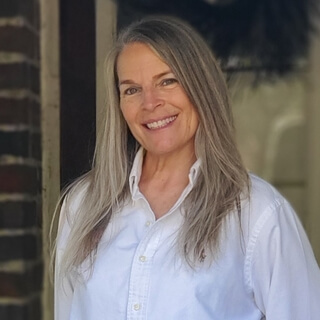
Please welcome Steven Proctor to the podcast.
Hi Steven Proctor,
How are you?
I'm good Cassie,
It's nice to meet you.
Thank you so much for coming on and talking mindful meditation.
It is something that I personally still struggle a bit with,
Kind of that sitting still piece.
So I'm very excited to talk to you and maybe learn a little something for myself today.
Okay,
I'll give you a little tip.
You don't have to sit still.
Oh,
Fantastic,
Thank you.
It's not about fighting against your mind.
It's about developing understanding about it.
So the struggle that you feel isn't stopping you from meditating,
That's actually a teacher.
Just be curious,
Just ask why can't I sit still?
Why is it so difficult?
What's so difficult about doing nothing?
The questions I had to ask myself.
So that brings us to the meditation practice.
So MIDL stands for mindfulness in daily life.
But it's also a play on words.
If you pronounce MIDL,
It sounds like middle.
And it's pointing towards the middle way.
And the middle way or the middle path is what the Buddha described in his first meditation talk that he ever gave.
And so it's pointing towards that with middle.
Most people don't see that play on words.
It's there.
It's meant to be there.
So MIDL seeks to find that middle path,
That middle balance.
The difference between it and a lot of other mindfulness meditation practices is the understanding that seated meditation is just training for daily life.
So what we do is we use seated meditation like a gymnasium,
A place that we sit down and we do different exercises.
So we can learn skills.
Skills like being able to self-observe.
Skills like being able to soften and relax our relationship towards things.
Skills like the ability to sit and still the mind and be comfortable with nothing.
Be comfortable with no stimulation at all.
And so developing these skills when we're in seated meditation,
That means they can be brought into the real meditation.
The real meditation is being with your friends,
With your family.
The real meditation is in the workplace.
The real meditation is in COVID.
The real meditation is when things in life are out of our control.
That's where the real practice is.
So when we train those skills,
The ability to self-observe in our lives,
Developing an understanding of the mind and the heart and how the body responds within that,
We can actually learn how to decondition the mind.
That means decondition all the habitual patterns from your mind that make us feel further away from ourself and further away from others.
And also how to condition qualities of mind and heart that make us feel closer to ourself,
Closer to our family and others.
So bringing together rather than separating.
Because that's,
I think,
Kind of like you were saying earlier,
The piece that has always been more of the struggle.
When I'm alone and when I meditate and I spend time in quiet,
My life is very calm and I feel connected to everything.
But the moment I introduce a new person into my life or go to spend time in family situations,
You lose all of that.
Yeah,
There's a reason too.
You have a way to keep it with you.
The reason is you have to be very clear about why you're meditating.
And this goes to the question that you wrote down about when someone comes to meditation,
What advice is there?
You have to be clear about why you are doing the meditation practice.
Because if you're not clear about that,
Then you'll get different results or you'll get mixed results.
There's different ways of training the mind.
You can train the mind so that you become so concentrated on one thing that everything disappears.
You will get calmness and stillness while you're sitting in meditation,
But you cannot maintain that concentration in daily life.
So it will collapse.
That will go away.
Or you can develop a widening of your awareness.
So you become more aware of your relationship to what you're seeing and hearing and smelling and tasting and feeling,
Sensing in your body,
More aware of your thoughts and thinking,
More aware of your emotions,
More aware of your anxieties and fears.
And by developing that awareness of that,
Then suddenly space appears around everything.
You can actually observe without becoming lost within all of this.
And this then allows you to see the habitual patterns within your mind.
We all have habits we've developed to protect ourselves,
To protect ourselves from discomfort in life.
These develop in what we call our personality.
Our personality is an accumulation of defenses quite often.
And so through opening up to that,
It then allows us to be able to observe our relationship and then soften,
Relax deeply into that mentally,
Physically,
Thus withdrawing,
Mindfully withdrawing our participation from the patterns,
No longer feeding them.
And they gradually weaken,
They gradually fade until they go away completely.
So we can actually decondition our mind just as certainly as we can condition it eventually in daily life.
So the way you practice the meditation is really important.
You can suppress what you're feeling and have temporary peace,
Or you can open up to what you're feeling and take one seat and allow yourself to be with that and find freedom from it all.
That sounds amazing.
I guess.
So let's go in a little bit to,
Because I was looking at your website and the thing that kind of caught my eye was the MIDL for meditation for anxiety.
And I really want to connect my audience with that because I did a poll and asked what,
If I was going to talk to an expert,
What would they want to know the most about?
And anxiety was top of list which was interesting,
But not shocking because of the time we're in in the US where politics are just,
You know,
Wrapping up and we are in COVID lockdown.
And so I think anxiety is top of mind for a lot of people.
And so I want to talk a little bit about your website and what you offer and how we can connect because we're in the US.
So how can we connect and take maybe some of your classes?
I saw that you do also like,
Is it daily or so many every other day meditation,
Like online,
Do you do?
Oh yes,
Yes.
Some of my classes are streamed live every week and people from the US come to the classes for Zoom and there's links on the website to that as well.
So I have a number of websites,
Very busy,
But the website we're talking about here is called MIDLmeditation.
Com.
And on that you'll find 52 meditations,
They're guided meditations,
They're all free.
And there's also detailed instruction with each one.
And this is one year of meditation training in this technique.
So one year of mindfulness training.
Think about it as going to a gymnasium and developing health in your body.
We're going to this gymnasium and we're developing health within the mind,
Health within the heart through doing this.
And following this.
And as well,
I can be contacted through the website anytime.
I love answering questions and talking to people about it.
But also have the live class,
It's where we come and we follow the 52 meditations each week throughout the year.
And I discuss how to do the meditation practice and you can ask questions and everything.
Yeah.
So that's fantastic.
Yeah.
It's a nice thing to do.
Yeah,
So with the question of anxiety,
When meditating for anxiety,
The most common mistake that is made is the development of concentration.
I'm not saying that there's a problem of concentration in meditation,
There's not.
Concentration is a necessary part of meditation.
But using concentration for anxiety doesn't work in the long run because concentrations,
The product of concentration is depression.
And so this is why if you are experiencing high levels of stress or anxiety and you sit down and you try to meditate on one thing,
Your mind will just go everywhere.
And it goes everywhere because if you think about it,
What's happening within the mind when you're experiencing anxiety?
Yeah,
What's going on?
For me,
It's the racing.
It's bouncing.
But why?
It's thinking about things that might happen.
Why?
Because it's scared.
Your mind's scared.
And if we understand the mind,
We can understand that the mind has two parts.
It has that surface level that we are interacting on now.
And then it has the more ancient part,
Which is the survival part of the mind.
And the survival part of the mind's task is to interpret everything that we see and hear and smell and taste and feel in the body and sort it into two things.
Is this safe?
Is this dangerous?
Or do I not care?
Does this have no advantage to me at all?
And it's doing this automatically.
And it's doing this before the thinking part of your mind exists.
It's happening automatically.
And the problem being is it uses past memory to interpret this.
So if you've got any pain,
Particularly just you,
Cassie,
If we have any pain,
We have any trauma in our life,
In our past,
These past memories contain a danger signal,
An unpleasant feeling on that memory.
And so whenever we see something or hear or smell or taste or feel something in our body,
The survival part of the mind dives into the database,
Searches around and goes,
What's this?
And then when it accesses the memory,
It pulls up the memory and it releases the feeling.
So in this case,
Danger means unpleasant feeling.
So it starts judging what's happening in our life now through our past experience.
And of course,
We don't like unpleasant feelings,
So we try to escape from it.
And this is the fight-flight response.
So this is what we're dealing with.
We've got a survival part of the mind.
The problem is with this survival part of your mind is that it doesn't understand language,
Can't negotiate with it.
It understands relationship.
Are you resisting this or are you accepting it?
So our task is to teach it safety.
The task is to teach the survival part of our mind that right now is safe.
And on my website,
Midlmeditation.
Com,
I have a section called MIDL for Anxiety.
And it has the steps to teach the mind safety.
It has the meditation techniques there that bring that experience of anxiety to the end.
There's some very simple steps.
I noticed that it was like three simple steps,
Basically.
Yeah,
It's three steps.
The first one is to understand that your mind and your body are interlinked.
That means your mind conditions your body and your body conditions your mind.
They can't be separated.
So the first one to work with,
Strangely enough,
Is breathing.
And the reason is,
Is when our mind is scared,
What it does is it triggers a stress response.
Yeah,
And that releases adrenaline and cortisol in the body.
I remember years ago,
I got to study that very well.
And we feel very,
Very unpleasant.
Heart rate increases can feel sweaty,
Organs change,
Bowels loosen,
Etc.
But what happens is we have a muscle called the diaphragm.
And this diaphragm muscle is a dome that sits underneath our ribs.
I got to learn about this.
Yeah.
And that muscle is meant to go down to bring the breath in and up for the breath to go out.
You'll see this in a young child,
You'll see their belly going up and down.
Have you noticed that?
Yes.
What about when a young child stressed or unhappy with their breathing?
Yeah.
Yeah.
So when they're unhappy,
When they're sick,
It goes in their chest.
When they're relaxed,
When they're calm,
It's in their belly.
This is normal breathing.
What's called diaphragmatic breathing.
Where did most adults breathe?
In the chest.
I feel like I'm not getting enough air.
Yeah,
Stress.
Stress breathing.
For most adults,
Their diaphragm muscle has disengaged.
It's turned off by the stress response.
That's from the mind.
Vacasically,
We have a problem.
When a muscle isn't used for a long period of time,
What happens to it?
Atrophies and goes away.
Atrophies.
Yeah,
The muscle becomes weak.
So the diaphragm muscle becomes weak,
It becomes tired,
And it becomes weak.
And so it can't re-engage in respiration,
Which means even when things are going well in our life,
We're still stress breathing all the time in the upper chest.
Because the diaphragm,
Like in the young child,
Can't turn back on again.
And so we can work with what's happening psychologically.
But what happens is our mind keeps looking at our body and going,
Oh,
The body's in stress.
Something must be wrong.
Because it's using the body to interpret the world around it.
Do you understand what I mean?
And so this turns the stress response back on,
The adrenaline cortisol,
And back in.
And we have this cycle.
Now this causes hyperventilation,
Hyperventilation causes carbon dioxide to go down,
Brain gets confused,
And it increases our respiration rate.
And that's what leads to panic attack.
So the experience of anxiety is that breathing part of the stress response,
The hyperventilation.
This leads to feeling mentally foggy,
Confused,
Difficulty in concentrating,
Thinking churns,
How can I escape from this,
How can I fix that?
And then defensive emotions,
Irritation,
Anger,
Frustration,
Etc,
Designed to push away.
I know that sounds complex,
But we can just throw that away.
Let's just say that our breathing patterns change and stress breathing becomes normal for us.
And so we have that feeling of dread or that feeling of not quite right sitting in the background all the time.
And so we become hypersensitive and hyper-vigilant.
That sounds familiar.
See,
I'm speaking from personal experience here,
But I put myself in this situation for 13 years to study this.
The first simple thing that we can do is learn how to breathe and learn how to breathe properly.
Not taking a deep breath.
That's the worst thing you can do.
Oh,
Really?
Okay.
Oh,
Yeah.
It's not because when we're experiencing anxiety,
It's not that we're not getting enough breath,
Even though we feel like we're not.
It's that we're over-breathing.
We're breathing too fast.
Our respiration rate is too high.
Our breathing rate needs to actually slow down and it needs to become much deeper.
And deep breathing doesn't mean breathing deeply.
Deep breathing means breathing with the diaphragm.
It means breathing below the belly button.
A little breath below the belly button like that.
Like in a young child.
So through doing these particular exercises,
The first one laying down and daily,
Just learning to breathe in our belly,
Just strengthening that diaphragm and then teach retraining our body how to breathe,
The experience of anxiety goes away.
So are you,
When you're sitting lay down and breathing in the belly,
Below the belly button area?
Below the belly button,
Yes.
And are you talking about taking like a slow breath?
Oh,
Yes.
And in the beginning,
This won't be possible.
In the beginning,
You might find that the movement is only one or two seconds long.
And this is because the muscle is weak.
What we do is at the bottom of the abdominals,
There's a V-shaped muscle down the bottom between the belly button and the top of the pubic bone.
And you can see it in bodybuilders,
Not in me,
In bodybuilders.
And that V-shaped muscle,
When it's pushed away from the body,
Causes the diaphragm muscle to pull downwards.
When it's lowered back,
Causes the diaphragm muscle to go up.
I don't know why,
But it does.
It's like a pump.
So by learning to move that up and down slowly,
The diaphragm gets engaged.
And so when I'm working with people with anxiety and we do this and I have them laying down,
First,
The muscle is weak and it can shake,
But then gradually it gets stronger.
And when it gets stronger,
Then they can gradually slow down the movement.
And as they slow it down,
The diaphragm muscle becomes stronger,
But it also gains the ability to move slowly.
And this causes the diaphragm to re-engage in respiration.
So when I talk to some medical people about this,
We kind of joke that it's like CPR compressions for the breathing,
For the diaphragm.
So it restarts the diaphragm.
And then gradually through doing this meditation,
You'll find that your diaphragm will re-engage in daily life and diaphragmatic breathing will become normal for you.
And this means that your brain can regulate your respiration rather than your stress response.
And so the breathing rate goes down and all those anxiety feelings go away.
All of them,
The mental fogginess,
The thinking settles down,
The defensive emotions,
We just don't get emotionally defensive.
All of that dies down.
Now this doesn't mean that there might still not be something to work with in the mind,
But if we don't work with our body first and the habituated stress breathing,
Then no matter what we do with the mind,
It will keep switching on.
So the first step,
And you can find it on my website on midealmeditation.
Com,
M-I-D-L for anxiety.
The first one is a simple 20 minute exercise of laying down and retraining your breathing.
And generally,
Generally for most people that take its practice daily for three to four weeks to get that significant change.
But if it is past trauma,
Then also needs to be associated with deconditioning or removing the emotional charge with the memory,
From the memory,
Which once we understand how to manipulate the stress response through diaphragmatic breathing,
We can actually remove quite quickly the unpleasantness and emotional charge from the memory.
So I've removed it from my past memories.
So I don't feel like I'm somebody who has a past.
This is what I learned in that Bruce Self study in the meditation.
So M-I-D-L is based on this.
We can use stress and anxiety as our entry point to deeper mindfulness meditation through understanding this.
It's a very gentle process.
It's very organic,
Very natural.
That's fantastic.
And as I was just playing around on that website,
There's so much information that you offer up.
So I just would encourage people to definitely go there and check it out.
I mean,
I was clicking on there and there's just so much educational information that it's amazing that you share all of that.
Thank you for that.
Oh,
You're more than welcome.
What other purpose is there of being alive?
Like nobody owns anything.
Right.
If we all shared everything we knew,
We would all have everything,
Wouldn't we?
Yes,
We would.
Yeah.
Yeah.
I have.
Yeah.
It's about sharing.
It's about kindness.
And it's also about cultivating myself.
And my practice is generosity.
I'm a firm believer in,
You know,
Maybe that some people call it karma,
But just that if you give,
It seems like you almost always get back double or at least what you're giving.
I have always found that when I'm more in that giving place,
If I have something and I share it,
I absolutely am always like taken care of.
I feel like it just cyclically kind of flows back.
Yes.
Yes.
But it's one of the laws of nature.
It's built into the world.
Yeah.
If we're fearful of not having enough,
That's what we'll end up with.
Yeah.
That's the other thing that I kind of love about this practice and maybe an awareness that I've come to is that we do maybe unknowingly so in so many ways until you really become aware of it.
And we manifest so many things into our lives that we really don't even know that we're doing it negative and positive because your mind is constantly.
Well,
It's habitual.
Yes.
The mind is habitual.
And Cassie,
You've done some meditation,
Haven't you?
Yeah.
Have you noticed how often you forget what you're doing?
Oh,
Yes.
This is why you're dealing with in meditation,
In particular mindfulness meditation,
Observing,
Forgetting and remembering.
And when you're with your meditation object and you forget and then suddenly you realize,
Oh,
I've been off,
That's a good thing.
The noticing that you've been off,
That you wandered off thinking is mindfulness.
That's how you develop mindfulness by noticing.
Okay.
But the forgetting is a habitual patterns within your mind.
And this habit is so deeply ingrained that one lapse of mindfulness and your mind will default to habit.
So what you're saying is you're not saying something bad when you wander off in meditation.
You're saying that your mind is conditioned to forget.
Okay.
And so what we're doing is we're teaching it to remember.
Yeah.
Is that forgetting,
Forgetting and remembering.
I like that.
So be very gentle with yourself with that.
Okay.
And that is,
I think,
A wonderful tip for a lot of people beginning to meditate.
And that used to be the hardest part for me.
I still struggle with it.
But the not getting frustrated and being able to just say,
It's okay,
I'm back here now.
Let me just stay here.
Let's just say as a tip for beginner meditators,
If you didn't forget what you were doing in meditation,
You couldn't develop mindfulness.
Oh,
That's fantastic.
Well mindfulness is the very remembering that you've forgotten.
It's important to be gentle with ourselves.
And understand what we're dealing with is out of our control.
What we're dealing with is habit.
Our mind is highly habitual.
Our body is highly habitual.
We've developed lots of habits.
So the first thing you'll see when you sit down to meditate is how habitual your mind is.
And that's okay.
It's perfectly okay.
Your task is to take one seat.
Your task is to notice that.
And if frustration comes up,
If struggle comes up,
Then learn what it means to soften,
Relax that struggle.
Learn what it means to soften,
Relax that resistance.
The wandering off to thinking is not a problem.
The problem is the frustration and the judgment that is not supposed to do that.
The heart beats,
The lungs breathe,
The mind thinks.
The mind is thinking not because it's bad or it's wrong,
Just because it's scared.
So to come back again,
The mind will stop thinking when it finds safety.
And it won't find safety from you trying to tell it to stop thinking.
Right.
The child wakes up in the middle of the night and they've had a nightmare,
A bad dream.
And they're screaming and they're shouting and they're scared.
Do you come into the room and tell the child to be quiet and not to do that?
What do you do?
You take the child,
You hold them very gently and you tell them right now,
You're safe.
It's okay.
You're safe.
And this is how we hold our mind.
This is how we hold our heart.
And as we treat it with this respect,
With the gentleness,
Like you would that child,
The mind will gradually calm down,
Find safe,
Find quiet.
And the thinking itself,
Which comes out of fear also settles down and stops.
Yes.
That's a great visual example.
And I love that because it just kind of reminds you to be kind to your inner child.
Be very kind,
Kind,
Gentle.
It's always the path.
You can't be too kind.
You can't be too gentle.
This is important.
Just understand the struggle,
The frustration,
Other survival part of the mind being scared.
They're not you.
It's just that part of the mind trying to protect you.
So if we understand that's just fear in the mind,
Hold it gently,
Allow it to be there,
Reach it safely and it comes to an end.
And it's beautiful.
And I feel like that's probably a good place to wrap up.
I also feel like I could talk to you for days.
If you knew me,
You would know that you could.
Well,
Let's say farewell for now.
And hopefully I can have you back on and maybe we can talk about something in a different direction.
I love that we got the opportunity to talk about anxiety and the breathing technique that you shared with us.
Super powerful.
I cannot wait to lay down and start that practice.
I'm very excited about it.
So thank you.
And I'm here to offer guidance as well from my own experience.
Okay.
Thank you so much.
Yes,
Thank you.
And thank you to everyone for tuning in,
Listening,
Joining,
Watching.
Stay safe,
Stay curious,
And we'll see you next week.