Hi,
I'm Curious Cass and this is Curiosity Junkie.
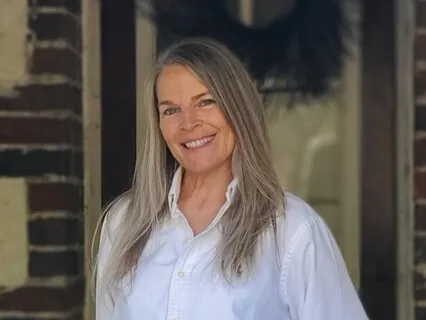
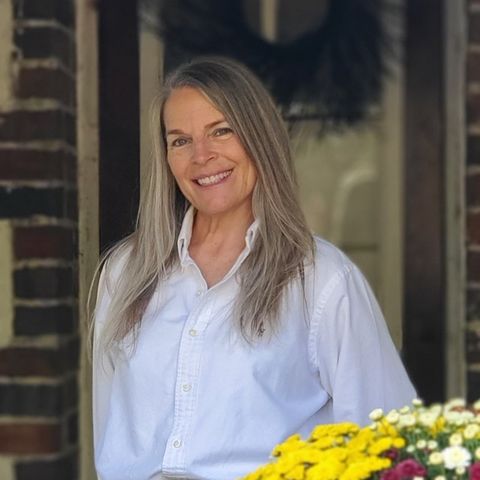
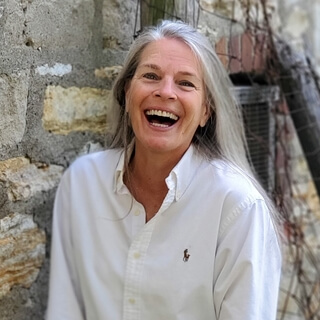
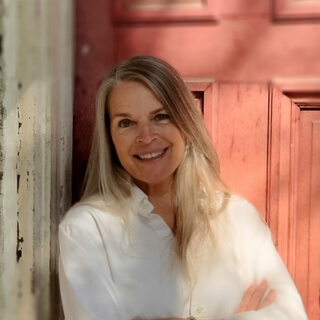
Please welcome Tracy Brady.
Hi Tracy,
Welcome.
We've talked about a lot of subjects and a lot of them lead back to self-love.
I really want to dive into a little bit of forgiveness and how we work on that for ourselves and forgiveness even towards others that maybe we're harboring a little resentment.
Well,
You know,
We have a lot of expectations around people and circumstances and,
You know,
We're completely wired to default to finding things that are wrong and looking for things that look like the past so we can quote protect ourselves from it again.
So unless we do something to change that,
We're going to gather resentments along the way.
But I love the way you tied it in with self-love because forgiveness truly is an act of self-love.
In your experience with resentment or forgiveness,
Has it been easy or difficult and what have you found?
I do think forgiveness is one of the hardest things to do because of maybe some of that stuff that we have from our past that makes us want to hold on to that resentment.
You did this to me.
How dare you?
Yeah,
That's usually,
I mean,
That's usually the first thing that comes up when you talk with someone about why you don't forgive.
They're like,
Well,
Because they did it.
They really did it.
And it worked me in this way,
That way,
And this way,
And that way.
Well,
Who else needs forgiving except the guilty?
Yes,
Right.
If we haven't done something,
We don't really need forgiving,
Do we?
But how does it feel?
I'd ask people to ask themselves,
How does it feel when,
Especially when someone you love has done something to hurt you?
How does that feel when you harbor those feelings of hate and just wanting to get them back?
You know,
That,
Oh,
That,
Oh,
I will never forgive this.
You know,
What does that feel like?
You end up carrying the pain and the anger with you,
And they're just moving on and living life.
They're on to the next thing.
Right.
And it can feel really,
I mean,
If you think about the energy that that creates in your body,
Those thoughts,
I mean,
For me,
It just feels foreign.
It feels like I've swallowed a frog or something.
It just feels like I need to get rid of it.
I mean,
Even talking about it now,
I mean,
I feel it like right here in my solar plexus.
It's almost like a foreign object.
You know,
The tussle comes when,
You know,
You want to feel better,
But your brain and your faking is like,
But you can't,
You can't let that go.
You can't be okay with that.
For me,
It comes at a really high price to hold on to that.
I'm asking someone to get their revenge,
You know,
To get what's coming to them,
Or somehow I'm believing that they're not redeemable or lovable,
Or there's a huge price that I pay for that.
And it's not just a physical discomfort.
It's a recognition that at some level inside of me that if I hold a resentment against you,
For example,
Cassie,
That it comes back on me because whatever I am,
It's a self-fulfilling prophecy because if I believe that you are not redeemable,
That you have done something so awful that when I am at my worst and I do something either intentionally evil or,
You know,
Because my foot was caught in a trap and I reacted or I didn't know any better or whatever,
That if I hold that against you,
Then I am actually holding myself in bondage.
And if I let you,
If I set you free,
If I say,
I forgive you,
You know,
You may do it again,
You may not do it again.
It's my job to protect myself as best I can.
But if I forgive you,
Then at least I have that knowledge internally that maybe someone will set me free from that.
They're not going to maybe hold me to that,
That it can be a mistake.
It can be an error.
It can be part of being human and allowing me to move on.
But if I hold people or things so tightly to an expectation and not release them,
Then that's essentially what I'm doing to myself.
That our most human,
We're all on a path,
We're all trying to get somewhere,
We're all growing in different directions and at different paces and with different histories and motives and challenges.
Am I going to flood up and hurt somebody?
Yeah,
I am.
I know I am.
And as much as it may hurt me to recognize and accept that I was hurt by someone,
You know,
If I,
You know,
Remembering the details of the hurt and how bad it was and all that stuff,
My brain wants to say you cannot forgive because if you do,
They're going to do it again.
Well,
Holding on to it doesn't mean that they're not going to do it again.
That's my responsibility to learn my bad race lessons and that sort of thing with that particular issue or person.
But if I can at least be willing to release them from the hard and fast decision that you are not redeemable,
You are not lovable,
I shall never forgive you for this.
If I can release that,
Then I release myself.
And I'm free to live my life and free to make mistakes.
And it's an act of self-love.
Yes.
Yeah.
And do you think some of the reason we hold on to that resentment and aren't most likely to forgive is that we really haven't forgiven ourselves for stuff?
Or is it that we don't we haven't gotten to that true self-love place where we can be forgiving and we can be of ourselves and of others?
Yeah,
I think you make good points.
It could be any or all of the above.
But asking yourself,
Is it possible that they hadn't awakened to some awareness of how this might hurt me?
I don't know.
I mean,
You know how hard it is to evaluate yourself when you're in a bind,
Especially when you're an emotional bind.
It's hard to have any kind of self-awareness when our amygdala is firing,
Fight,
Flight or flee.
It's very difficult to have our prefrontal cortex engaged.
They fight with each other,
Sympathetic,
Parasympathetic.
So if you can ask yourself,
Is it possible that this person was not in their most created loving self when they did this?
Maybe there's an opening there.
Maybe there's an opening.
And I mean,
I've been in a position where somebody has asked me,
Would you be willing to set them free just for this moment so that you could be free for one moment?
I was willing to do that.
And then when it was time to pick it up again,
I had a little bit of hesitancy because I didn't want to carry that burden again.
That was heavy.
Can I just leave it there?
Most of the time we're trying to forgive someone who has hurt us,
Done something that has caused us pain either in the heart,
Physical pain in the body,
Mind.
How do we begin the process of forgiveness then?
If we've gotten to that point where we're like,
I don't want to carry this anymore.
And I like that.
If you just put that down for a moment,
You just let it go for just a moment.
I really like that.
How do we start the process of forgiving someone who has caused us pain?
We've held on to it for a while.
So it's a comfortable,
We know it,
It's comfortable there.
It's kind of who we are.
How do we start to let that go?
When you start to recognize that it's not serving you,
It's actually maybe you find yourself responding or reacting in ways that affect your important relationships currently.
And you realize that maybe this resentment and non-forgiveness has something to do with that.
It's almost like we don't stop doing or change what we're doing,
I believe,
Until it quits working.
And other people can say it's not working,
But we have to know that it's not working.
We have to be affected.
And so once there's an awareness of that,
Once we kind of say,
Oh man,
Could that really be stopping me from what I want to do now?
Or limiting my abundance or my freedom?
Then maybe there's a chance that you might be willing to do it then.
Some people pray,
Praying for forgiveness.
Some people,
And find success in that.
Some people ask and imagine and envision the other person having all that you want.
And then there's another thing that actually I've used,
But not intentionally.
And that is carrying that resentment all the way out to where you just,
In your mind,
You just want to see them suffer.
What happened for me with that was that I didn't like the way that felt.
That wasn't truly who I am.
When I finally realized that they were hurting in order to do what they did,
It made me feel that I didn't have to continue to see them as such a horrible,
Horrible person.
I could see them as a,
Someone who had lost their way for a moment.
And then I could deal with my part in the whole situation.
And we always have a part.
It doesn't mean that we have an active role.
It may mean,
Because we can be innocent victims,
But it does mean,
Having a part means that there is something there for me to learn about myself,
About life,
About them,
About where I've been headed,
What my values have been.
Do I need to reassess those?
What my purpose is?
How was I trying to get something from someone who couldn't give it to me?
And why did I see that?
Now that kind of thing.
What kind of comes up in my head is,
I think for a lot of people,
We can relate to the parent-child forgiveness piece.
That we didn't get what we felt we needed as we look back,
Maybe in that moment,
We didn't recognize it,
Or it was painful in a moment.
What you're talking about is like,
When we're children,
Even adults,
We can take on more meaning about ourselves based on other people's temporary insanity or problems,
That sort of thing.
Yeah,
Absolutely,
We can do that.
That's one of the things that in therapy,
I do try to help clients look at,
Where did these vows that you made about yourself come from,
And are they true?
Are they true?
It's true that when you're a kid,
Everything that you need is provided by these tall people.
That's a great way to put it.
I like that.
It may be a parent or a grandparent or a foster parent or an older sibling or who knows what,
But an older,
More tall person is responsible for everything about you,
Your food,
Your shelter,
Everything.
So whatever threat we perceive as children,
It threatens us at a very core level because we literally depend on these tall people for our lives,
Our literal lives.
And so anything that comes out can,
I mean,
I don't want to make parents,
You know,
I don't want parents to freak out and say,
You know,
This is,
You know,
I screwed my kid up for life.
Everybody lashes out at their kids.
I mean,
We all have moments.
And that's what I'm trying to get at is,
As now grown adults who as a kid had a moment or maybe several,
Maybe taking a step back as we're working on forgiving the parent or the adult,
The tall person that was responsible for our care that we felt didn't provide it.
Yeah.
I mean,
That's the same principle we talk about with the,
Well,
I assume we were talking about,
You know,
An adult to adult previously.
If you can put yourself in a position as an adult to look back on some of the things that was occurred in your childhood and ask yourself,
Is that something that affects me?
Is it something that I had any control over?
And was it really about me?
Almost nothing people do.
And maybe everything people do is not about us.
Let me repeat.
What I say,
What I do may be influenced by others,
But I still have choices and I,
As much as I can have.
And so when a parent or anyone,
A loved one,
Especially says something or does something that hurts us,
It's really important for us to step back and say,
Even if this pushes a button in me,
You know,
I've got a button about being hyperactive and somebody says,
You know,
You're just all over the place.
You need to settle down because you're driving me crazy and I can't have this or something.
Well,
That's about them.
But because I'm sensitive to that,
I'm going to think that they're saying it about me to me and reinforcing the negative perspective that I have about myself.
Yeah.
So there's a lot that goes into working up to forgiveness and a lot of it is self-reflection and,
But almost,
I always say almost and all,
You know,
Because I don't want to be hard and fast because I don't know,
This is all just my perspective based on my experience and my training and my,
My own real personal experience with clients and myself and friends.
But almost nothing is dependent upon other people's experience.
My experience of what other people do is based on me and my perspective and that can change.
You know,
Going back to the,
I think it's called the serenity prayer,
Grant me the serenity to accept the things I cannot change,
Which is everything that other people have experienced or thinking are doing the courage to change the things I can,
Which is what,
What do I have the power to change within myself,
My ideas,
My beliefs,
The way I was raised,
The vows that I told myself,
The path that I'm on,
Forgiveness of self and others,
You know,
My internal perspectives and the wisdom to know the difference.
That's the last part of that.
Good Lord,
Good Lord,
We want to change other people so we don't have to look inside and deal with our own stuff.
I would love for everybody to do what I think they're supposed to do.
So I don't have to look at myself or grow.
I really don't.
I used to want to want that,
But I really don't want that anymore.
No,
I think that's a great,
A great thing for all of us to hear.
It's not really us and who we are.
It has everything to do with who they are,
How they're showing up in that moment.
And we can push.
I don't mean to be wrong.
I can push somebody or I can be an innocent victim and something can occur to me.
You know,
There are a lot of people that have things occur that they had nothing to do with and they they're very damaged and they're very hurt by it,
But they can release themselves from that and move on and then ask themselves,
What can I learn from this about myself?
What did I learn about myself?
If nothing else,
Forgiveness will teach us that we are truly loving,
Incredibly compassionate beings that have an infinite ability to heal.
And we're so resilient.
You know,
It's so easy to fall into that victim role and say,
You know,
This was done to me.
And that means that I am,
You know,
I better cover up my head and never move again.
And that means that I'm horrible and I deserve it and all that crap.
Yeah.
Well,
It doesn't have to mean that you deserve anything bad.
It can mean that they're an idiot.
Yes.
You know,
And they are in a really crap place.
And maybe,
You know,
This is a time for you to rise up and say,
No,
You know,
That doesn't define me.
No,
I do.
I like that a lot because we do get caught up in the victim piece and forget that we did play.
I like that you said what was what was your part in it and that we have a lesson.
Most likely there's a lesson in it for us as well.
I want to say a lesson doesn't mean like,
You know,
What you think of a lesson can connote like you've done something wrong and you taught a lesson.
Yes.
Not necessarily a lesson I'm talking about.
I'm talking about there may be an empowerment change of thought for you,
A gift in it.
Yes,
I like that.
A gift,
Not a lesson,
But a gift.
Absolutely.
I really like that because that's how that is how we learn and grow.
Maybe you didn't even realize you're triggering this person.
A lot of times we mistake the person or the job or the situation for,
I don't know,
As the reason and the problem.
And so we will change jobs or change relationships or move away from the offending,
Obvious offending source when in fact it may not be that it may be something inside of us that that this situation is trying to highlight for us so that we can grow from and change from and then start attracting something different.
Not necessarily a different person or a different job is attracting something even different in that job or in that person or relationship.
When we know better about ourselves and we do better about ourselves,
We attract different things.
We have different vibrational energy,
We have different chemicals flowing throughout our body.
And so that's going to necessitate a change in the external reality.
Like what's a shortcut for how I'm doing is to pay attention to what's going on because I have at some level invited this situation into my experience for my best purpose and growth.
Forgiveness is such a,
It's another one of those topics that we just don't,
We don't spend a lot of time talking about how to forgive and the benefit of forgiveness.
And I think it,
I think it even has a health benefit,
Honestly.
Holding a resentment is like drinking poison,
Hoping the other person will die.
Yes.
That's why I love having these conversations because I always walk away feeling more empowered and just in a better place.
I'm so glad.
Yeah.
And to all of you,
Thank you for tuning in.
I hope you got some lesson out of our conversation around forgiveness.