Carry was nice enough to let me drag her into a live talk and we've both decided to come up with some questions for each other that I think will lead into conversation.
That will be pretty fun.
Yeah,
Super happy to be here and I've been following you on Insight Timer actually for a little while,
Silas,
And checked out a couple of your courses and I learned so much.
I retain none of it,
But I'm terrible with information,
But it was just so fascinating listening to it and exploring that.
You do a really great job with your courses.
Well,
Thank you so much.
I feel like at times I can come off a tad academic,
But I feel like that's something that is needed in this space too,
Is kind of the nitty gritty,
This is what this is,
This is what that is.
So it can be a lot of fun that way too.
Totally.
Yeah,
I agree.
You're very academic and information forward,
Whereas I tend to be more on the experience side,
Just feeling into what's coming through for us and exploring through that way.
So I love the kind of contrast I'd say of our approach and how we teach and I'm curious if that has anything to do with our practices as well.
It is very important to remember for everyone,
Regardless of where they're at on their path,
Is that you can have the greatest intellectual and philosophical understanding at the end of the day,
But if you don't have that applied in your life,
Your practice,
The way in which you engage and integrate with reality,
Then it's just kind of more words,
It feels like at times.
Yeah,
Absolutely.
Like being really book savvy,
But not necessarily wisdom.
Experience and wisdom.
Yeah,
And I feel like wisdom's more that,
You're right,
Integrating it and being that.
Have you done a few vipassanas in your time?
Yes,
Several.
I've mostly spent time in Zen monasteries,
But I have been kicking around a lot of Theravada monasteries and groups and meditation styles.
And if ever any of these words that I say to you,
You don't know,
Please,
I will explain them because I'm sure there are people in our crowd that don't know what these words are too.
Yeah,
And even me,
I think I have a good idea of Zen Buddhism just from your talks,
But Theravada eludes me.
So give me a little refresher on what that style is.
Cool.
So Theravada Buddhism is the Buddhism that is practiced mostly in Southeast Asia,
Places like Burma,
Laos,
Vietnam,
Cambodia.
And it is the Buddhism that is most closely related or most closely mirrors the practice of Buddhism as the Buddha practiced it.
Rather than Mahayana and Vajrayana Buddhism,
Which is practiced in places like Tibet,
Mongolia,
China,
Japan,
Korea,
Which are a different sect of Buddhism that have different thoughts,
Different works that they focus on rather than the initial words of the Buddha.
I actually have a few questions about enlightenment because it just fascinates me.
So I want to,
Yeah,
Let's jump into one of these questions.
So my personal experience with enlightenment is,
You know,
And this is coming from someone who doesn't really practice Buddhism.
Okay.
No,
Please.
This is an open space.
Yeah.
So my interpretation or like personal interpretation is,
You know,
We can have these direct moments of truth where everything to the cells in our being realize in a moment through being and experiencing as opposed to thinking of what an absolute truth is.
And you know,
Not necessarily like an epiphany or a thought,
Just coming to this realization or self-realization in a moment of reality.
Not something necessarily intuitive,
Like,
You know,
This can happen where intuition personally for me can guide me and show me universal truths,
But it's not a direct,
I want to say experience to the core of my being where every part of me is experiencing it,
Just something that's shown to me.
So I'm curious,
You know,
Your thoughts on enlightenment and I'm going to get more specific in this question,
But,
You know,
To you,
And maybe this is a personal thing,
Maybe it's different in different sects of Buddhism,
But is enlightenment like one whole truth of,
I want to say everything,
You know,
Altogether,
Or can it be individual truths?
For example,
Discovering the truth of who and what you are as an individual on this planet,
Discovering the truth of the universe of creation,
Or is it this encapsulating,
Boom,
Everything at once?
That's my question for you.
Starting off with a big hitter.
So my question,
Just to make sure that I frame this correctly,
How specific would you like me to get?
And how technical?
Let's not get too technical.
I just want to hear the grassroots of this.
Okay.
So,
Enlightenment,
Also called nirvana,
Also called awakening,
In Japanese it's called satori,
Is the deep anchored realization in Buddhism that who you are,
Yourself,
Your identity,
This mask that you wear,
Your ego,
Right,
Is not who you truly are,
Right?
Silas Day is a entity that will pass through this life and have myriad experiences,
But is not who I actually am.
Silas Day is this character that I'm playing,
This fun,
Subjective representation of the objective universe,
Right?
Yeah.
So I get to play and be Silas Day this lifetime around.
And so what awakening,
Or I'll just say enlightenment,
Is,
Is the perfect realization of that fact,
Okay?
So I am not myself,
Myself is not me,
Right?
However,
I get to play the part of whoever I am,
The journey that that self gets to go on,
The journey Silas Day gets to go on,
The experiences,
The joys,
The woes,
The sorrows,
The ups,
The downs,
All of that,
Right?
Okay.
The second thing is the deep realization of impermanence.
All things are constantly passing.
All things are constantly changing.
The Carrie that when we got into this call is not the same Carrie that you are now.
Your cells have changed,
Your thoughts have changed,
Time has passed,
All of these things.
And it is a deep realization that all things are impermanent,
Right?
And through that deep realization of impermanence,
We recognize that the thing which causes us suffering,
I'm sure you've heard many Buddhists talk about suffering,
Is clinging onto those impermanent things.
So clinging onto my glasses,
Let's say my reading glasses.
I like these reading glasses a lot,
But the thing about them is,
Is they're going to break.
I'm going to snap these on accident or the lens is going to snap or break or fall out or whatever it is.
And if I've clung to the idea of these glasses as a permanent fixture,
Then that will cause me some kind of sorrow.
It could be minor,
It could be major.
So awakening is then the realization that the self is not the self.
And that's this fun thing that we get to play and be entirely and completely.
And through that,
Recognizing that all of your emotions and your experiences are experienced by that self.
And you get to be the watcher of that.
And a phrase that always comes to mind is that the mind is a lovely servant,
But a terrible master.
Because it can lead us down all sorts of dreadful roads.
And,
You know,
You lay in bed at night and you think about things that happened 15 years ago and all these things if you let it drive the cart.
So you recognize that.
Secondly,
You recognize impermanence on the deepest of levels possible.
Things are changing constantly.
And in that changing,
You recognize not to cling to them,
Whether it's your glasses or whether it's your loved ones.
And that doesn't mean you can't love your loved ones.
That doesn't mean you can't have the joyous wonder of,
You know,
Having a partner,
Having good food,
All of these things.
But just a deep recognition that all of these things are subject to impermanence,
Just like everything else.
And the third thing is clinging.
Recognizing that you do not have to cling on to every experience that comes your way.
If anger arises within you,
You don't have to grab onto that anger and run with it and be angry.
Now,
Sometimes I'll admit it's fun to be angry.
Sometimes it's just fun to be mad.
As much as we don't recognize it,
Sometimes it is.
However,
It is the training of the mind to be able to recognize when anything whatsoever,
Subtly or very,
Very obviously arises in your sensate experience and you don't have to cling onto it,
But you can simply let it pass by.
And so awakening in the Buddhist sense is the perfection of the wisdom of those things.
And in that,
You're able to live a life free from dukkha,
Which is suffering,
And a life free from clinging.
Be able to be wiser,
More compassionate,
More joyful,
More intellectual,
Whatever you want to call it.
But at the end of the day,
Very grassroots,
As you said,
That's kind of what it is.
Without getting technical at all,
I tried.
I promise I tried.
That was great!
I have like lots of questions coming up from what you just said,
And I'm curious,
You know,
You're talking about it as this perfection of wisdom.
So something that we're learning and we're practicing and we're in a sense becoming.
And you know,
I think myself and maybe some people also have always had this visualization of enlightenment kind of just being this moment,
This bam moment of truth.
And describing it to me is kind of like gradual and slow.
And it's something that we work towards,
Not necessarily something that we receive in a moment.
And so I want to hear your thoughts on that,
Too,
Because I almost see like the Buddha in my mind,
The story of the Buddha is like,
Oh,
He he was working towards it,
But he also had this this moment of truth of like totally receiving that.
So what are your thoughts on on gradual and instant?
So it's really fun because there are moments,
Definitely.
There are big clicks that happen,
Right?
So you can think of it as a journey that you're doing throughout your entire life.
Absolutely.
A gradual process of deepening,
Of cultivating,
Of sowing,
Of learning,
Of growing.
But in that,
Sometimes you get to pick the fruits and you pick the fruits of that and you're like,
Wow,
Man,
This was a great mango or this is a great apple that I cultivated and I worked with and I worked on.
And in that you do have those bang moments to get slightly technical with you for a little bit.
And for those of our listeners who are learned in Buddhism,
In traditional Buddhism,
There are four stages of awakening.
So you have what are called Sotapanna,
Which are stream enterers,
Sakadagamis,
Anagamis and Arhats.
And so those are your bang moments where you're like,
Aha,
And you kind of like you can think of it almost as like leveling up,
Right?
Where it's like,
Oh,
Aha.
And then you have the deeper aha and the deeper aha and the final aha.
With the Buddha,
It is very interesting,
Though,
Because he did progress up until he attained awakening under the Bodhi tree.
And so that was that big boom moment.
But then there was also,
You know,
The training as an ascetic and the training under the other teachers and the wandering and the living in the forest and all that jazz.
Right.
Yeah.
You know,
I love hearing this,
Too.
I'm into like mystical movies or movies with a spiritual meaning.
As you're speaking,
I'm thinking of the Matrix coming up and you're talking about us observing this reality,
Kind of non-reality,
Right?
Like observing the self and the thoughts and feeling like there's this dimension behind it in a way of,
You know,
We perceive this as truth,
But in a sense,
It's not the full picture or it's like this,
I want to say,
Superficial level of the full picture.
And yeah,
I don't know.
What are your thoughts on Matrix versus reality?
Oh,
I mean,
Absolutely.
We can think of it this way.
Our world is based off of the way that we interact with it,
Right?
Like my wooden desk here is hard because I'm soft.
Now is the desk actually hard?
Who am I to say?
Because my perception of it is that it is hard because I am soft.
The actuality of the characteristics of the desk may need to be intuited differently,
Right?
And so the way in which we perceive reality is based off of our senses,
Our mood,
Our mindset,
Our emotions,
All of these things.
You know,
If you wake up and you have a great cup of coffee and you did your eggs just right and the toast was that perfect,
Like nice crispy brown and the butter was perfectly spread and you get in your car and a guy cuts you off on the way to work,
You're probably going to be like,
You know what?
He might be having a bad day.
They might be having a bad day.
You'll let it go.
You're not going to let it faze you.
However,
If you woke up and you didn't get your coffee and you burned your eggs and your toast,
You didn't have your toaster plugged in and you get in your car and someone cuts you off,
You're going to feel a lot differently.
So your perception and interaction with reality and the way in which you cling onto it differs the integration of yourself,
Silas Day or Carrie,
With that reality and the way in which we respond to it.
It's really interesting.
And through that,
Let me lead into a question for you because I'm taking up a lot of our time.
Sure.
So how did you begin?
And for those that are beginning,
What advice would you give on this path of intuition,
On this path of healing,
On this path of kind of integrating yourself with this wacky,
Wild reality that we find ourselves in?
Oh,
I love that question.
One of the first things that comes to mind,
It's not answering your question,
But it's interesting to me is,
You know,
When I went to my first Vipassana,
Which is,
If anyone hasn't done a Vipassana,
More of a traditional Buddhist practice where you're in silence for 10 days and you're learning this very specific approach.
And they said to me,
Because at the time I was a Reiki master and I was teaching Reiki and they said,
You know,
We'll allow you here this time,
But you can't come back because you're digging too many holes to get to the truth.
Right.
You know,
I have my too many things going on in my world.
And essentially they said,
You're not going to get to the truth if you're putting your eggs in multiple baskets,
Put them in one basket.
And that was really tough for me because I'd had such an amazing journey thus far in terms of intuition and energy and just general spirituality.
And I've decided for myself to keep digging multiple holes because it honestly brings me a lot of joy.
So I'm not going to stop that,
But I understood the wisdom from that and the teaching from that.
My journey with intuition started through actually experiences,
Which is amazing because it's not something that the mind can create intuition.
It's something that as opposed to creation is more in receiving mode.
And so I had some really magical things happen to me in my life that just kept me on this path because they were,
I want to see a confirmation of the dimensions.
Well,
You use the word dimensions,
But these extra layers to reality.
And you know,
One of the first things was I,
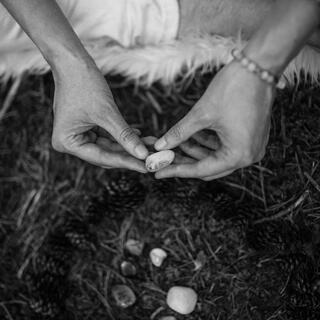
A stone,
Like I picked up the stone and my hand was really hot.
And I was like,
What's going on here?
You know,
This is very strange.
I put the stone down and my hand was still warm and it was literally affecting my energy field.
It's not necessarily intuition,
But in a way it is,
It's an extrasensory perception,
Which is a tool of intuition and understanding the sphere of energy,
Which intuition is really great at using to connect to that sphere.
And then I would say there was a really powerful time for me.
I went to this body spirit soul expo when I was just a newbie,
Just a newbie kind of getting into this.
And a lot of people were doing free readings,
You know,
Maybe some energy healing or a little intuitive reading and nothing major happened,
But I went home that night.
I went to sleep and I actually experienced sleep paralysis where I wasn't asleep.
I was laying there and my body was so heavy,
I could not move.
And I started sweating because I was actually like,
What's going on here?
I'm pretty afraid of this.
And then I started to have these spirits come forward to me,
Like literally,
My eyes are wide open and I'm not asleep because I was so scared.
And I'm seeing these spirits come forward in this kind of silvery light.
They're not even human form,
Which was really interesting.
And they were just showing their faces kind of one after another.
And this went on for over an hour in time where I couldn't move.
And I'm just,
You know,
Watching these beings come forward and make themselves known.
At the same time,
I was hearing energy like waves.
It was so loud.
If there was a train going right by my window,
I wouldn't be able to hear it because this experience was so physical and palpable to me.
There was no denying my,
Not extra sensory perceptions,
But like my physical eyes,
My physical ears.
And to me,
This was this moment of undeniable truth.
It was just an experience that I was having,
But I couldn't deny it.
You know,
I wasn't on any hallucinogens or plant medicine or anything like that,
Just totally conscious and aware.
And after that,
You know,
I had no idea what happened,
But I just always kind of returned to that moment or similar moments where these things have happened to me as this confirmation of,
Okay,
There's these levels in between,
You know,
Our physical reality that we generally see with our physical eyes.
And if I'm ever doubting my intuition or the ability that I have intuition,
I just kind of remind myself of some of these very mystical experiences.
And it brings me so much joy to know the unlimited potential of truths that are out there.
And I think anyone on their journey with intuition will have experiences happen to them where they're spontaneous,
They're unexplainable.
You know,
It's something their mind couldn't necessarily create.
It's something they're just receiving.
And that's this beautiful confirmation of,
All right,
Something's,
Something's going on here.
I don't know exactly what it is,
But I want to explore it.
It's like the call onto the path.
I want to explore this.
I'm so curious.
I just got to know.
And,
You know,
After that moment,
I really began hitting the seat,
We'll call it hitting the meditation seat and not necessarily trying to have the same experience,
But wanting to explore that.
And over the years,
It's just really,
Really supported me with advice,
With guidance.
You know,
One of the most powerful images my intuition ever showed me was I was asking for guidance in life and,
You know,
What do I need to know?
And I'll never forget this.
I'm still learning this,
What my intuition showed me,
But it was like taking me through this bright white room and everything just felt blissful and joyful and at ease.
And then opening another door and journey through,
And it was black and dark and full of scary monsters.
And then eventually,
I don't know if I necessarily went through a door,
But there was this imagery of me,
You know,
At first I was happy and then I was scared.
And then I turned into the color gray and I just felt very,
I feel like this is something that comes through in Buddhism,
But very observant of everything,
Like nothing,
Nothing could face me,
You know,
The highs and lows of life that we go through,
The emotions,
The thoughts,
The traumas,
The illness,
There's something within us that constantly remains stable and at peace.
And for that,
You know,
Intuition let me know that that's something possible.
And I think that's really drawn me on my path to discover that for myself.
Yeah.
So that's been a bit of my journey with intuition.
And I just wanted to share a little example of how it can guide us on our,
On our paths to find a possibly a path of less suffering.
Hopefully,
I feel like that's what our intuition is guiding us towards.
So three things from that.
One,
The state that you're describing in Buddhism,
We would call that equanimity.
Yes.
Equalness,
Levelness,
Totally nothing.
Everything's just bouncing off of me.
No,
No issue.
Secondly,
The sleep paralysis thing.
So ever since I was as for as long as I can remember,
Ever since I was a kid,
I have a thing that's called hypnagogia.
Do you know what hypnagogia is?
No,
I've never heard that term.
Hypnagogia is where your brain wakes up wrong sometimes.
So where sleep paralysis is you wake up,
You're conscious,
But you can't move because your brain hasn't turned on any of the like movie functions yet.
Hypnagogia is your brain turns the dream off last.
So you wake up and you are still dreaming.
Right?
So you're able to move,
You're able to move around.
And it's pretty funny because this has happened to me so much in my life.
The one that I always like to remember and point out,
When I was a kid,
It freaked me out so much because I'd wake up and there'd be like,
You know,
Monsters walking around my room or like the walls would be like turning and all this.
But I woke up once and I opened my eyes and there's a man made or an entity made of green energy shaped like a human being writing something on my closet door.
And I just remember going,
If it's still there in the morning,
I'll figure it out and just rolling back over and going to sleep.
If it's still there in the morning,
I'll figure it out.
And then I had a joke for you.
A joke that you can happily use that I like to tell people when it comes to crystals or stones or anything.
So if anyone ever tells you that rocks don't do anything,
Tell them,
Grab a piece of uranium carried around in your pocket for a little while and see if that affects anything.
I love your kind of analytical approach to this.
You know,
Like the dreams that you had when you're awake,
My mind instantly goes to that green being you saw as being possibly a spirit that you're connecting to or a spirit guide or spirit helper.
But your mind may have just been,
Oh,
It's just a dream,
Right?
I don't think there's any wrong way to interpret it.
I do know we can also have pretty divine experiences in sleep state,
Too.
Oh,
Dreams are the wackiest things in the world.
It's the in-between state.
It's the unconscious playing movies for you about yourself,
About all different archetypes and aspects of your being and your qualities and your journey and your past and your future.
Dreams are wild.
It's so strange.
How does someone who is beginning the kind of self-discovery,
The practice of intuition,
Getting connected with that aspect of themselves deal with imposter syndrome?
Oh,
Yeah,
That's a big one.
You know,
That's one of the biggest questions that comes up,
Especially in all the intuitive courses that I teach on insight is there's this lack of confidence,
First of all,
That's coming up in.
I want to say that's the biggest question.
Is this my mind or is this my intuition?
And to me,
That's imposter syndrome.
That's kind of the I'm not intuitive.
You know,
I can't I can't receive intuitive messages.
I'm not special enough.
And I feel like it would probably be similar to you and how you'd answer that about the path of Buddhism.
It's something where practice really gives you that confidence and that knowing that this is something that you can do,
That you are doing and naturally just doing on your own sometimes like we don't really celebrate our progress,
Our wins or these powerful moments of truth that we do have.
And I still deal with imposter syndrome for sure.
I feel like that's kind of the human nature is always questioning if,
You know,
That question of enoughness.
Am I enough?
Am I intuitive enough?
Am I is this real?
Am I actually,
You know,
Connecting to intuition?
And for that,
I just say,
Just keep keep going with it,
Keep doing it,
Keep practicing it.
And over time,
That confidence really builds because you see,
You know,
Maybe the information or the messages you are given through intuition,
If you start to take that as advice and start to practice whatever is coming through for you,
And then you start realizing all the benefits that are happening in your life.
You're like,
OK,
Yeah,
That was real.
I I took that information that came in.
I did something with it.
And here I am in a better place than I was in before.
But you know,
It takes that step of actually following forward on that intuition of whatever is coming through for you,
Taking the action step,
Because,
You know,
Our intuition can show us everything.
It can it can show us.
The ultimate truths of the universe,
It can show us what we need to do to heal fully.
But there's always this human side to it.
We're not just the spiritual being,
Just this energy body where we're cells,
We're atoms,
We're thoughts,
We're feelings.
And we need to also be 3D at the same time as 5D.
So to me,
That's kind of where the imposter syndrome,
We turn it down a notch is when we start to really bring in the 3D reality into the 5D and integrate those two,
Because there can be that big gap.
And I noticed this for myself with,
You know,
Certain meditation retreats that I've gone on of more of a Buddhist nature.
And I have these beautiful awarenesses come through and I'm still present.
And then I go home,
You know,
Falling into the old habits and questioning,
Was that real?
Did that even happen?
Is this something I can really access,
You know,
That that those doubtful thoughts tend to come in for myself,
For everybody?
I think.
What about you?
What's your take on that imposter syndrome,
Even with your own practice,
Not necessarily intuition,
But with Buddhism?
So in Buddhist practice,
Because I've had the pleasure to interact with thousands of people,
Either in one on one calls or on retreats or in group chats where,
You know,
They field questions or just interacting with people in meditation.
In terms of imposter syndrome,
The biggest thing that I see in Buddhism is a lack of,
I think,
Intellectual knowledge.
That's what you run into a lot,
Because we've got so many different words.
We've got so many different phrases,
All these different names,
All these different lists,
All these different,
I mean,
Buddhists love lists.
You got to give it to us.
We've got more lists.
I mean,
Our list of lists have to be at least 12 lists long,
You know.
And so the imposter syndrome,
I think,
Comes from that more than anything.
I'm sure there are those individuals that in meditation experience imposter syndrome in the practice itself.
But I feel like a lot of Buddhist imposter syndrome comes from the fact of I have to know a thousand different words for a thousand different traditions that are going to use these words differently.
I'll give an example.
Okay,
The word Samadhi in Buddhism.
So if I'm talking to a Vaishnava Hindu,
It's going to be a different definition of the word than if I'm talking to a Mahayana Buddhist,
Than if I'm talking to a Vajrayana Buddhist,
Than if I'm talking to a Zen Buddhist,
Than if I'm talking to a Theravada Buddhist.
It's the same word,
But the specific context of the word is going to be very different.
So I think that's where the imposter syndrome comes from.
However,
In Buddhism,
What you will find is the opposite of imposter syndrome.
The I have attained it all,
Therefore I am the great master,
I am the awakened one syndrome,
Right?
Where they've gone on their first 10 day retreat and had an experience and they think that experience is the be all end all forever and always experience.
And we in Buddhism call that golden chains.
And I was actually going to ask if there's anything like that in intuition where someone has some revelatory thing and they think they've attained the great infinite ultimate all,
But actually it's like,
Oh,
No,
No,
No,
It's just this happens all the time.
Don't worry about it.
Is there anything like that in intuition?
Yeah,
I just call it the spiritual ego.
And there's a few people I know.
And honestly,
I've gone through it a little bit too,
Where you have these big experiences or moments of truth or magical things with energy happening.
And you kind of separate yourself a bit from everyone else thinking,
Oh,
I have these special powers.
I'm seeing things that other people aren't seeing.
And in a way,
It's like putting yourself in a hierarchy of greatness above as opposed to finding that equality.
So absolutely,
Yeah,
That happens in the intuitive field as well.
So if you don't mind,
Carrie,
I just wanted to answer Mandy's question real quick.
So for our listeners who are just listening and not watching or reading,
Mandy asked to Silas topic,
Absolute truth.
How would you think we can find it out?
As a Gnostic,
I'd say we are all on our journey and find our personal truth.
But an absolute truth?
Question mark.
I have a hard time with that one.
How is it in Buddhism?
So I would say that the absolute truth is nirvana,
Which is the perfected wisdom within the very particular tradition and practices of Buddhism.
That can come along with a lot of personal truths on your own personal journey.
But the thing about Buddhism is that we are attempting to use very specific techniques in a very specific way to attain specific changes in our,
You can think of it as neurological framework.
If I wanted to answer this in a very particular way,
You could say that the techniques of meditation that Buddhism are presenting are literally rewiring your neurons to not cling on to events that arise,
Such as anger or hatred or want or craving and all of these,
You know,
Aspects of our reality and being able to understand them on a more fundamental level,
Even if it's adding a microsecond of space in between you choosing to grab onto that and not grabbing onto it.
So in terms of absolute truth,
I'll go very technical and fundamental and call it awakening nirvana,
Whatever you want to call it,
Satori.
But on the very personal level,
I think the Gnostics approach it in a similar way.
It's a personal journey where you're using techniques and attaining personal truths to reach a similar mountain peak.
You know,
My way up the mountain is going to be a little different than your way up the mountain and Carrie's way up the mountain is going to be a little bit different than,
You know,
Someone else's way up the mountain.
I want to throw in a question there to kind of piggybacking on Mandy's question for you.
And it was one of my questions as well.
But,
You know,
I've heard you talk about this,
I think in one of your courses,
And it was just so fascinating to me.
There was like,
This dimension you were talking about kind of in it sounded like a spirit realm,
Like a Buddhist dimension.
And I actually tried to access it using my intuition.
And it was so funny,
I connected to this realm.
And there was what seemed to be some enlightened beings there.
And it's almost like they kicked me out.
They're just like,
No,
No,
No,
You're not,
We're not vibing.
And I totally respect that.
Because it's true,
I was kind of just exploring and almost like taking a trapdoor or something to see something that maybe,
You know,
I wasn't ready for.
I'm curious about this as someone who's more into intuition and dimensions and spirituality.
I call it the fun stuff of intuition and exploring that.
So in terms of,
You know,
Enlightenment,
We're talking a lot of the concepts you're talking about are things we can apply to the 3d world in terms of,
You know,
Suffering and equanimity.
But what about these other realms and understanding these spiritual dimensions and energy?
Is that something you would kind of throw in with enlightenment in terms of absolute truth?
Or is it something that's not necessarily talked about too much?
How weird do you want me to get?
Because you want to go,
Let's go.
Okay,
Well,
Here we go.
We're going into the deep end,
Folks.
I don't normally delve into this end of the pool,
Mind you.
So these Buddhist realms,
And I'm taking a shotgun approach here.
So in Buddhism,
There are things called jhanas.
All right.
A jhana means absorption state,
Quote unquote,
Absorption state.
And the absorption states are states of consciousness that you can enter through shamatha meditation or concentration meditation.
And basically what that is doing is you are concentrating at first so specifically,
And then so widely that your perception of reality shifts and changes.
You are literally breaking down the architectonics of creation before you through focusing so hard.
And through that you can kind of experience different things.
You can experience bliss,
You can experience equanimity,
You can experience infinite,
You can experience infinite consciousness,
Infinite compassion,
Infinite these kind of states that you can enter,
Right?
Now these are very,
Very high level technical things.
And it can get to the point where the it's called the iron wall of concentration in some places.
But it's to the point where you are literally concentrating so deeply and so hard that you are not experiencing anything and also not experiencing not anything.
You're balancing on the knife's edge of neither nothing nor yet non nothing,
Right?
So that's one side of it.
Another way I think though what you were talking about,
Do you have any specifics from these like Buddhist realms,
I guess?
Do you have any words that popped out to you?
Anything like that that I might hone in on?
I don't know why but my mind and I might be making this up because it's a long time ago,
But like 12th dimension or something.
Maybe there was a number to this.
Does that ring a bell for you?
Yeah,
Those would be the Jhanas.
Those are the eight Jhanas,
Right?
Oh,
Okay.
Okay,
And those are in concentration.
And then in Vipassana or insight meditation,
There are various stages and states as well.
You could call it knowledge of mind and body,
Knowledge of cause and effect,
Knowledge of impermanence,
Knowledge of suffering,
All of these things.
And you can experience a variety of things.
In Mahayana Buddhism,
There are also things called pure lands,
Which are pure abodes of particular things that are dwelt in where awakened beings dwell in.
Like the big one is called Sukhavati.
And that's where the Buddha Amitabha lives.
And he's the Buddha of kind of compassionate love and awakening,
Right?
And yeah,
If you probably showed up to Sukhavati,
And he's like,
Wait,
What are you you're not supposed to be here yet.
Go away.
And when I saw you talking about it,
I'm like,
That's it.
That's exactly where it was.
For some reason,
In my mind,
I just see you like accidentally hitting the wrong button on an elevator and the doors open up and you're like,
Oh,
Wait,
Wrong floor.
100% that's exactly what happened.
And I was kind of like,
Oh,
You're not gonna let me in.
But I get it.
I get it.
Let's see here.
What did Ken ask?
I've been interested in Buddhism for the last five years.
But is there an absolute truth in Buddhism and take what he's saying if it works for you?
So what the Buddha said basically is don't trust my words until you try them out yourself.
And that's basically it.
That is the faith,
Quote unquote,
Faith aspect of Buddhism is Buddha said,
I've taught you all these things.
Don't take my word for it.
Go try them yourselves and see that they do work.
And when you recognize that they do work,
You can come back to me and all of the other things you can now trust me that these teachings do actually work.
If that makes any sense,
Ken.
And I wanted to speak to a couple of comments here as well.
Yeah,
Some intuitive experiences.
So Lucy,
You shared that one time you woke up and a white and gold light in the image of a baby was there.
You got real close to it,
You got scared,
The room went dark,
And you fell off the bed.
Okay,
Like to me,
That's one of those big,
Powerful,
Intuitive moments where you weren't seeking,
You know,
You were asleep and then have this quite physical experience for you.
I'm sure it was palpable to not necessarily dream state,
But you could see that light feel that light and it scared you so much you fell off the bed.
And to me,
That's one of those moments of,
All right,
You're something's pulling you onto this path of intuition and,
You know,
Stroking your curiosity.
And you know,
I don't know what it means,
But that's definitely something to explore on your path is asking your intuition.
What does this mean?
What was coming through for me?
What was this image of the baby?
Yeah,
Something to explore.
And then Heidi,
You also shared you've had similar experiences with trees,
Animals and in meditations.
It's sometimes hard to reproduce,
But it's becoming easier through daily practice.
And Heidi,
That's so beautiful.
Like I love to hear these experiences,
Especially connection to nature and animals.
There is a palpable life force there.
And I feel like everybody feels that,
You know,
For some people it's going and standing by a river or waterfall or the ocean,
And you literally feel the cells in your body shifting your mind shifting.
You're walking away from that refresh in a new person.
To me,
My interpretation of that is that life force,
That energy that's moving,
That's so pure and clear.
You're within that field and it's affecting you and your cells.
And so you said it's hard to reproduce some of these experiences.
And absolutely,
There are things I can't reproduce because that's just it.
It's not something we're producing.
It's something that's happening.
And if we're lucky enough,
If our mind is hopefully calm enough,
Which is where I think Buddhism can come in wonderfully as a support tool on if you're choosing just a very focused intuitive path to help you arrive closer to a state of non-thought or clear thought,
Then that really opens you up to your intuitive channel,
To your third eye,
Your intuition,
Your higher self and all of these spiritual realms to just see what's already there and always happening.
And that's why I love that word receive.
No,
We're not producing,
We're receiving or we're witnessing,
We're observing.
But to do that,
We have to turn down the dial on our conscious thoughts because when they're so loud,
How are we going to hear anything else?
Right?
So I have something for you and this is also your homework,
Carrie.
I'm sorry,
You get homework.
Do you know what a koan is?
No.
Okay.
So,
Koans are intuition in Buddhism.
Okay?
Specifically,
Soto Zen and Rinzai Zen Buddhism.
This is very Japanese,
Very Chan,
Northern Chinese Buddhism.
What a koan is,
It is a phrase that if I were your teacher,
I would give you a phrase that does not make any sense whatsoever and you would have to come back to me with an answer.
Okay?
So to give you an example,
I would say,
Does a dog have Buddha nature?
Right?
Right.
It's a strange question to consider.
It's a strange thing to think about.
Another one might be,
What is the sound of no hands clapping?
Right?
Or sometimes there's stories and there'll be,
So a man comes to his teacher and the man goes,
I would like to attain awakening.
And the teacher goes,
Well have you washed your bowl?
And he goes,
Well no I haven't.
And so the man goes and washes his bowl and he attains awakening.
And you think about these questions and you meditate on them and you don't answer logically or else the abbot of the Zen monastery will be like,
Uh-uh,
Go back,
Think about it more.
This needs to be a genuine,
Direct,
Just straight from your intuition answer.
I actually had a teacher once that I was so frustrated with my koan that I got given.
I had been working on it for like three weeks and I walked to the center and I picked up this little statue of a frog and I slipped it in the sleeve.
So I sat down and I pulled it out and I put it on his desk as an answer and he went,
No sorry this reeks of Zen.
This isn't the right answer.
So your intuition Buddhist homework is to go read some koans and kind of consider them.
K-O-A-N.
I feel like you would find them to be very helpful in your practice.
Yeah,
It sounds awesome.
I've heard you speak of them before.
I know that you're talking about them.
To me,
I get like my response is like a feeling,
An intuitive feeling.
You know,
Maybe I can't quite describe an answer in words but there's this sense of inner knowing that comes through.
So I'm excited to explore that.
And I want to give you homework too.
And you know the homework that you're giving me and I'm giving you,
Maybe other people here will want to check them out for themselves depending on where they're at in their journey.
So my homework for you and it's possible you've done it already,
Is to connect to this path,
Actually to connect directly to the Buddha,
You know the most recent Buddha,
Using your intuition and simply by just throwing out an invitation.
I know you'll be really well versed in calming your mind,
Which is wonderful and being present.
So kind of turning the dial down,
Turning it off and just asking and seeing what will come through and you know asking Buddha to come forward,
Make himself known to you and ask if there's anything he wishes to share with you right now that could be helpful for you on your path.
Is this something you've done before?
So that is called guru integration practice.
Of course,
It's already a practice.
We Buddhists have words for everything.
So yeah,
You take a bodhisattva or a Buddha,
Be Avalokiteshvara,
Manjushri,
Amitabha,
Any big figure in Buddhism and you kind of imagine them before you or imagine them above you.
Imagine their spirit,
Their essence,
Their form,
Their figure,
Kind of invoking that right to the best of your ability and mantling.
Do you know what mantling is?
Or so mantling is where the essence or the spirit of something enters you fully,
Right?
So mantling the Buddha kind of thing,
Right?
And you imagine the guru or the Buddha or the bodhisattva or whatever it is kind of sinking down into you while you meditate and taking on the spirit of that and then seeing what comes up,
Seeing what is learned,
Seeing what is different,
Seeing how it feels different and growing and learning from that particular way.
I love that.
You know,
Visualization is something in intuition we definitely use a lot.
And I find it as a good way to like start out in our intuitive practice is through visualization.
But in a way,
It is kind of that producing more so than receiving.
You know,
We're using the faculties of our mind a bit to have an intuitive experience.
So I guess,
Yeah,
A way for you to I'm suggesting for you to try this is instead of the visualization of the mantling to me,
I call that like merging,
But very similar without using visualization and literally just kind of coming to a state of openness or non thing,
No thing,
Whatever you want to call that and asking with that intention and just witnessing like no creation,
No production,
No visualization and seeing if it will come forward of its own accord.
You know,
What's a intuition practice that I like to do?
And it's strange because I kind of came upon it intuitively,
Which is I will sometimes enter a room and I'll go,
What do I need to do?
Or I'll sit down on the edge of my bed and I'll go,
What needs done?
Or like,
What can I do in this space,
In this instance?
And the thing that is astounding to me,
And anyone in our chat can try this,
It's very interesting.
Your spirit,
Your brain,
Your consciousness,
However you want to approach it,
Is readily available to tell you all of the things that you could be doing in that instance.
You know,
Like,
You could,
You know,
Organize the papers over there a little bit better and you could sweep up a little bit.
You could make your bed and just kind of set this space in order for calmness,
For being able to grow more easily and not have all of these tiny things that can nag at us very easily.
Which is a very interesting aspect of intuition to me,
Where it's always readily available and always present in the same way that the present moment is always readily available,
Always present.
Present.
And for me to quote,
His name was Zen Master Dogen,
When asked where you could find awakening or enlightenment,
Dogen said,
Look at your feet.
Right here,
Right now,
That's the only place you're ever going to find it.
Searching anywhere else than directly where you are in this present moment,
And you're going to miss it.
I love that.
Yeah,
I think that's a nice,
I want to say note for us to kind of close on is,
You know,
Enlightenment being here in the present moment,
But also,
You know,
All the answers that we're seeking,
They're right here.
And in fact,
You know,
I work a lot also with like law of attraction,
Attracting what you desire.
But I think the biggest way to move in that realm of law of attraction is the realization that it's already here,
Whatever we're seeking,
Maybe not,
You know,
What the million or billion dollars if it's an abundance thing,
But that feeling that we're seeking from that the thing we really want,
Maybe it's a sense of freedom,
Inner peace,
Whatever it is,
It's only here,
You know,
Looking to that million dollars or that new job.
We're going to get there,
We're going to find that thing,
But it's going to change,
You know,
Then we're going to be seeking something else or not quite fully getting what we truly wanted.
Yeah,
So I love that,
You know,
Looking at your feet,
I feel like that can be answered for so many other problems in life and questions in life.
Thank you for sharing that.
Alrighty,
Well,
Thank you all for coming tonight.
I appreciate it so much,
And we'll see you later.
Create a magical rest of your day and evening.