Hello,
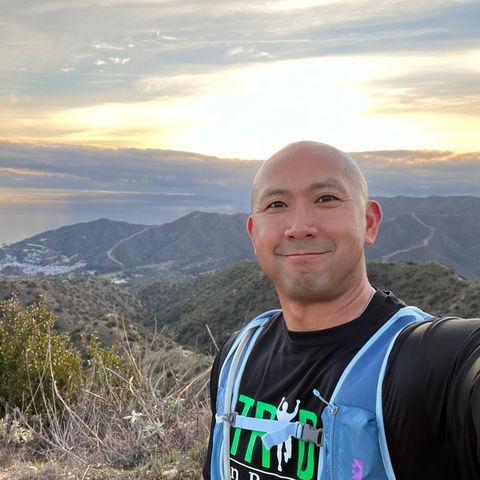
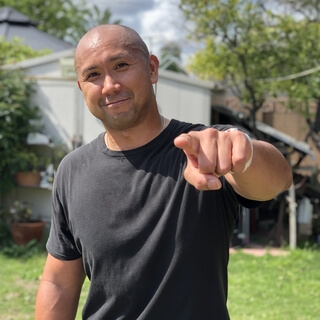
This is Bryant.
Thank you for choosing to listen to my story about the path,
The Buddhist path and my journey in recovery.
As I mentioned in the introduction,
I am not an empowered Buddhist meditation teacher.
I've never been formally trained on the Buddhist path or on mindfulness.
I'm just another human being who has discovered the Buddhist principles and finding what they can do to improve my life and my perspective in the world and also to aid in my recovery.
I smoked meth pretty heavily for three to four years.
It started off recreationally and then became something that I needed when my life was starting to fall apart and it became a daily habit to the point where I would always joke that the pipe was never far from my hand.
It was not a good time for me.
And when I came to recovery,
I was looking for a way to rediscover who it was that I who I feel that I am inside to be that person again.
It was not easy.
So this path,
The Buddhist principles,
The Dharma,
The Buddha and the Sangha,
All of this was very influential and still influential in my life.
So I wanted to share the story of how it came to be and how I interpret the practice.
To me,
It's not a religion and it's meant to be no disrespect to anyone who is a Buddhist.
This is a secular program to me.
It's a way of looking at the world.
So I just wanted to be clear that the topics,
While they do come from Buddhism,
They're looked at from a standpoint of how they apply in my life.
And I'm sharing these experiences with you.
Hopefully you can take them,
Listen to what I have to say,
Think about how they apply in your life and share your perspective.
I'd love to learn more.
And you know,
That's one of the jewels of Sangha that we'll talk about the community of people who are experiencing this program.
And I'd like to also point out that the Buddhist path for me is something to be experienced.
And I think the Buddha,
The Buddha did say,
Don't trust me.
I'm just telling you what I've experienced.
Go see for yourself.
So this is an opportunity for not only for me to share my story,
But to experience the path again.
Let me vocalize it,
See how I understand it and teaching back.
And then you'll teach back to me your experience.
And this is how we'll grow.
So let's start off with I came into recovery,
I believe it was August of 2017.
I had been laid off from my career,
Which I had been at that company for a good 15,
16,
17 years,
16 to 17 years.
And it wasn't I wasn't let go because of I was discovered to be using drugs.
But my use led to the lack of mindfulness in what I was doing.
So in the beginning,
I was able to do both.
And over time,
My attention span slowly drifted and I made a mistake,
Which cost me my job.
So I just lost my job that year.
I was first time ever being unemployed,
Trying to figure out what I was going to do.
But at the same time smoking and it just wasn't a good time.
Just wasn't a good time.
I don't know how else I could say it.
I was lonely.
I was miserable.
That I didn't know how the world was going to work again for me.
So one day,
I just had enough.
I really just couldn't take it anymore.
And I reached out for help.
And that's I think that's one of the crucial things to recognize is there is help if you are willing to ask the question,
Willing to ask for it.
And one day if I ever tell my story on here,
This will make more sense.
But I used to smoke in a room in my bedroom and it was locked by a simple lock.
You turn the lock on the door.
And that's what kept me in my bubble safe quote unquote from the world.
But it also in my mind kept my family,
Parents,
My brother and anyone else who I didn't want hurt safe from me.
It was just a door and a lock.
And all I had to do that whole time if I really wanted to was unlock the door and ask for help.
I was too scared of everything.
So it got to the point where I finally asked for help and I made an appointment and I called and got in to see addiction therapist counselor and enrolled in my first IOP.
And I do remember during the intake,
The one thing that is instrumental,
It's just stuck with me ever since the intake.
And I will think,
Think my therapist at the time for for saying it is after hearing,
Hearing my story and asking me some questions,
She just looked at me and she goes,
You know,
From here on out,
You're going to lead a very emotional life.
And I paused.
I was shocked.
I was shocked because in my mind,
When I hear emotional,
I think hysteria.
I think of the movies.
I think of someone who just can't control their emotions.
You know,
I'm a logical person.
I went to school.
I got,
You know,
I can think of A to Z.
I'm process oriented.
And that scared me a lot.
And I didn't quite understand what she had meant when she said you're going to be emotional.
Thank God she said that.
I mean,
It took a while for me to understand.
But you know,
From that point on,
Everything that I can recall through therapy was tapping into trusting myself to feel emotions again.
In IOP,
In our intensive outpatient program,
Which was 15 days,
It was sharing these moments that were painful and knowing that those memories,
Their memories,
There's something that exists in the past that I was holding onto them so tight,
So using them to be so afraid of the world.
But anyway,
Very grateful for asking for help,
Very grateful for the IOP program.
You know,
I did 12 step.
I did my steps.
I had a sponsor.
I did the program.
And I will be eternally grateful to the 12 steps and to the people in the fellowship for helping me express and tap into the emotions,
Getting out the frustrations,
Learning how to trust again.
There was a lot that's in the 12 steps,
But to me something was missing.
It just wasn't complete.
So one of the things that happened,
I was in group,
And it wasn't my turn to be sharing openly in the group.
But one of the therapists,
The same one who did my intake,
She had seen me and she decided that something on my face registered emotion and I was fair game.
So she turned at me and she just,
She,
She,
Whatever,
You know,
I,
I want to say I remember what it was,
But I think the topic was important.
She was able to drive and ask questions that caused me to break down and cry.
One of the first times I cried ever and letting out this pub,
Very public display of emotion,
Raw emotion about what I was feeling,
Even if I couldn't put it into words.
So by the time that session was done and we were,
The group was moving to the next one,
It was mindfulness.
And before I'd never been able to quite grasp mindfulness,
But bam,
There I was.
I was ready to meditate because I just didn't want to talk anymore.
I didn't want to cry.
I didn't want to,
I just wanted everything to be calm.
I wanted to be able to process and lo and behold,
I finally got it.
I got a taste of what meditation,
Of what bringing my,
My attention to my breath could offer.
So I asked if there were more programs like this and I discovered a program called Refuge Recovery.
Refuge Recovery is a community of people who use Buddhist practices and principles to treat and solve addiction.
It offers a way for us to understand ourselves and understand what's going through our mind,
To take that suffering that we experience,
Those emotions,
Those thoughts and process them.
So I went to my first meeting and ever since then,
It's off to the races.
It was an awakening,
If I can use that word,
I mean,
It really was an awakening for me.
It's even a year,
It's what it's a year and nine months today since my last relapse,
That I felt more at ease with who I am than I have in a long time.
And so kind of to get into the sense of what the practice has done for my recovery,
I'm going to share with you some of the concepts that I learned and we'll put it in the frame of the Three Jewels of Buddhism.
This does come from the Buddhist practice and Buddhist tradition,
The Three Jewels,
The first rule being the Buddha,
The second jewel being the Dharma and the third jewel being the Sangha.
And so I'll go into a little bit of each of them.
But with the Buddha,
When we talk about the first jewel,
Most people think of the Buddha as the man who set the stage 2000 some years ago for this practice,
For this way of life.
And in a lot of ways,
That's how we look at it.
We follow his teachings,
We try to experience what he experienced as form of enlightenment.
But it also meant our own Buddha nature.
It's our own potential to awaken to whatever that means to you.
You can awaken to your potential to awaken for recovery,
The potential to awaken to be that person inside you knew you always could be,
The potential to free yourself from suffering.
It's huge.
For me,
That was really huge.
I just remember one of the things I had learned in previous programs was I was powerless over alcohol and drugs,
Which I didn't quite grasp back then.
I understood it.
But to me,
That was like,
That's it,
I don't have no power.
With Buddhism,
There is potential.
I am powerless over drugs and alcohol.
That doesn't mean I'm powerless in the rest of my life.
I have to learn to trust my potential to trust who I am,
That I can end my suffering through the practice.
You know,
Fucked up things may have happened to me and fucked up things may have happened to all of us.
We may have made fucked up decisions,
But we are not fucked up people.
To me,
That's what the Buddha nature reveals in this first jewel.
I have the potential to free myself from suffering.
Sold.
First thing right there is how do I learn to trust myself again?
Well,
The second jewel,
Dharma,
Which means the truth.
And generally,
We break it down with the Four Noble Truths and the Eightfold Path.
How do we understand the reality?
What's the instructions that we have?
What is it we use to go forward?
So with the Four Noble Truths,
We recognize that one,
There is suffering.
I mean,
A lot of us understand that.
But for me,
Understanding that there is a difference between pain,
Which is a physical response in the body,
And suffering,
Which is emotional or mental pain that we bring upon ourselves because of the pain that we feel in our body or from memories or thoughts that we relive and can't let go.
That we can recognize that there is a difference,
That we can understand what causes suffering through reflection,
Meditation,
Mindfulness,
Inquiry,
Curiosity.
We use logic.
We can end suffering.
It's the third noble truth that there is a way to stop it.
Pain comes with life,
But we don't necessarily always have to suffer to the degree that I put myself through.
And the fourth noble truth is that there is a path to suffering.
There is a way out.
That was laid out in our program called the Eightfold Path.
In the Eightfold Path,
We break down wise understanding,
Wise intention,
Wise speech,
Wise action,
Wise livelihood,
Wise effort,
Wise mindfulness,
And wise concentration.
All eightfolds of the path that can help us understand our reality.
How do we live our life?
There are instructions.
We don't have to focus on each one of them.
As we practice one,
We can concentrate and understand the other path,
Other factors of the path.
And probably in another recording,
We can probably go down all the four noble truths in the Eightfold Path in more detail.
But wow,
That was a lot for me to understand that I can,
You mean that I can bring curiosity,
I can bring inquiry,
I can bring logic to something that I'm feeling.
If I'm able to sit and bring and focus,
I'm able to notice that I'm having an emotion,
I'm noticing that I'm reacting,
I'm noticing that I'm suffering.
Again,
I was always told that thinking my mind was my enemy in other practices.
And in this path,
Our mind isn't our enemy.
It's just another part of us.
Our mind hasn't been trained.
Our mind or let me put it this way,
We have been trained,
We've been conditioned all through our lives to act in certain way and think in certain ways.
It's not our fault that we've come to this point with the behaviors and the thoughts and speech.
Now with the program,
With the truth of our reality,
We are responsible for how we move forward.
When situation A arises,
Do I react the way I've done in the past or can I pause,
Can I reflect,
Can I bring the eightfold path to it,
Can I bring wise understanding,
Wise intention,
Understand what my next moves are and then act?
I have power to change who I am inside and the way I want to be.
And you notice that mindfulness is part of the path.
Concentration is part of the path.
One of the things that I remember understanding or I thought I understood what meditation was in mindfulness,
Right?
We sit and I am searching for the calm,
I'm searching for the peace.
That's what I want during my practice.
And then I struggled because it wasn't calm and peaceful because the thoughts kept coming and I was being interrupted and it was just like,
I can't do this.
No,
You can.
Finally through studying and talking to others,
I can understand that there's so much more than just sitting and wishing,
Waiting for my thoughts to clear.
To me,
Through this path,
Through the Dharma,
It's not waiting for my mind to clear and be silent.
It's being able to,
For me,
Sit,
Focus on my breath,
Focus on an object.
And as my mind goes,
I can be aware that I'm thinking past,
Present,
Future,
I'm feeling an emotion,
Maybe something's distracted me.
I can recognize it's happening in this moment and then choose to let it go.
I don't get caught up or I practice to not get caught up in that path or in that feeling or emotion.
And the better I get at it,
The longer I can sustain focus on what I chose to meditate on,
Whether it be my breath or it could be compassion,
Loving kindness,
One of the heart practices.
The more calm,
More peaceful I felt,
I wasn't off trying to solve problems that weren't occurring in this moment or I wasn't relieving past trauma that was not occurring in the moment.
In this moment,
I am sitting,
I'm breathing.
My thoughts are going,
But I'm able to watch them,
Let them go,
And that was peace.
So when I meditate now,
I have a different understanding of what it means to have a calm mind.
I'm not getting dragged into it as much or as often,
Depending on my day.
I do have my moments,
But I can see,
Wow,
That's just my thought.
That's just the past.
That's just an emotion.
And then I can bring the other factors to the fold.
I can see why that's happening.
Maybe I wasn't using the best speech,
Et cetera,
If I chose to go down that path.
And the last jewel that we have here,
The sangha,
Means community.
In the beginning,
It was the people in my program,
Either in IOP,
The fellowship at 12-Step,
Or in my sangha with Refuge Recovery.
It's crucial that we need people around us.
We exist in a world with so many people.
I'm not recognizing one that I'm not alone in the world was first a huge step.
My problems weren't solely my problems,
And I only had to deal with them.
There were other people who were experiencing similar issues or going through things in life that I could rely on or talk to.
So in the first part of how I understood the sangha was these are like-minded people.
How can I learn to trust them and at the same time trust myself?
When I was smoking meth,
Or even before that,
There's things that we bring into our addiction,
But when I was smoking meth,
I had learned that I couldn't trust people.
They weren't really there for me.
I knew deep down they were,
But the lies that I would tell myself that people were there for me,
Only I could do it.
The world's never going to change,
Or I'm a bad person,
I'm a mess.
All those lies,
I had to learn to trust myself again and trust others.
And so I did that with the community of people around me.
And over time,
As I learned to trust them and myself,
I was finally able to open up to my family and to my friends.
These are people that I've been afraid of for one reason or another.
They were going to hate me,
They were going to leave me,
They didn't understand me.
I was afraid to show them who I was.
Because all this time I had so many different masks on,
So many different things going on.
I can bring them back into my life and trust in them,
Because I started small.
And finally,
Being able to do that,
It opened me up to an even larger perspective,
That I can start trusting people I didn't know.
People I would see in my everyday life.
I remember so many times that I would say I was so lonely,
And yet,
You know,
You go outside,
You go to the gym,
You go to the coffee,
Go to work,
School,
Whatever it is,
You leave your home.
There are so many people around us,
Yet how often do we take the time to notice them?
I had been trained to think that everyone had an agenda.
I had an agenda,
If I was going to talk to you,
It was probably because I needed something,
Or you're cute,
Or you know,
All the different reasons we say we didn't need to.
But then it flips,
Right?
If I'm talking in my mind,
If I say hi to you,
Then all those things I start projecting,
And then I start feeling judged,
I start feeling less than,
And all that stuff that I can't meet priority.
Oh,
Lord have mercy.
But the Sangha is all around us.
I think I like the way the Dalai Lama put it.
I'm reading his book,
The Art of Happiness Again,
And he just put it so distinctly.
I think the writer,
The author of the book,
Who wrote it along with the Dalai Lama,
Asked him if he was ever lonely.
And he said no,
He wasn't.
Because he's a human being,
And he recognizes that other people are human beings,
And we all share the same desire to be happy and free from suffering.
Boom,
Right there,
We already have common ground with other people.
So why do we feel that we have nothing in common?
In this last year and nine months,
At the time of this recording,
And I hope at the time you listen to this if it's longer from then,
I keep that in mind,
And I say hello to people.
If I want to be recognized for a human being as another entity on this planet,
I need to recognize you,
Or this person at the coffee shop.
If I lock eyes with you,
Why not nod or smile or say hello,
And just go about the same day,
No expectations other than to greet you.
And that's changed.
Boom,
That's changed how I feel in the world.
I mean,
Right now,
At the time of this recording,
We're going through COVID,
And it's a little bit a little difficult,
But I still hold to those beliefs.
And I couldn't have done that without the Sangha,
Without the first people in my group,
In my program,
To help me learn how to do that,
Without my family and friends to help me again trust who I am,
Without reaching out to other teachers.
And so all of this,
All from the Buddhist principles,
And we barely scratched the surface.
I used to think that if I was going to be practicing Buddhism,
I'd be learning the precepts,
I'd be learning the four hindrances.
There's so much that go into Buddhism.
It's a beautiful religion.
It's a beautiful path.
But even for people who are looking just to free themselves from suffering,
Free themselves from addiction,
I mean,
Just the basic principles,
The three jewels of Buddhism,
The Four Noble Truths,
The Eightfold Path,
Practicing a meditation,
Understanding that we can be who we want to be.
And a couple of other things that we do in our programs can help immensely with overcoming addiction.
Addiction is just suffering in my mind.
I needed to end the pain,
A mental pain,
Memories,
Trauma,
No self-worth.
You know?
All walks of life,
People can benefit from this.
I'm eternally grateful that I found it.
And so I share that because,
For one,
It helps me get it out,
Helps me refocused,
Making sure that as I grow in the path and I'm understanding the principles and I'm able to explain it.
And I'd love to hear people's experiences too with how the path,
With how meditation or mindfulness,
Whatever you decide to call it,
However you've come to this point in your life,
How it's helping you grow as a person,
How it's helping you be that person you know you are inside.
So again,
I just want to thank you for choosing to listen to this recording.
Again,
I am doing this not only to share my experience with you,
To give back to the recovery community and the song at large,
But it's also one of the things that helps me grow.
I've always wanted to record,
Create,
To do this,
To take meditations that I've loved and try to learn how to guide people in them.
And all these things on Insight Time are the community I'm learning from and I get to participate in.
And yes,
It's scary and yes,
It makes me feel vulnerable.
I'm a perfectionist.
I like to make sure I understand when I'm doing things.
But it's all part of being who I am.
So the last thing I will say on this recording is in the beginning,
I remember being taught that recovery is the most important thing in your life as an addict.
And over time,
I've learned that creating the foundation of your recovery,
Understanding those principles that help set you on the right path is truly important,
But it's not the most important thing in my life.
Living my life is what matters to me.
Being the person I want to be,
Doing the things I want to do,
Helping people.
And there's so much I have left,
So much more I have to discover myself.
But it's not enough just to be in recovery.
I want to live.
I want to share this life with people.
I want to experience this world,
The goodness that's out there,
The good and the bad,
The pleasant,
The neutral and the unpleasant.
That's why I do this.
That's why I'm taking these chances to record,
To share,
To be vulnerable,
To open up.
So I hope that you do too.
I hope you find the meaning for life,
Whether you are in recovery or not.
What does that mean to you?
We'll never really know the answer sometimes.
One of the traits of meditation is you ask the question and the answer may not arise,
But it will come over time if you practice and you sit.
So again,
Thank you.
May you be happy.
May you be at ease.
And may you be free from suffering.