Hi,
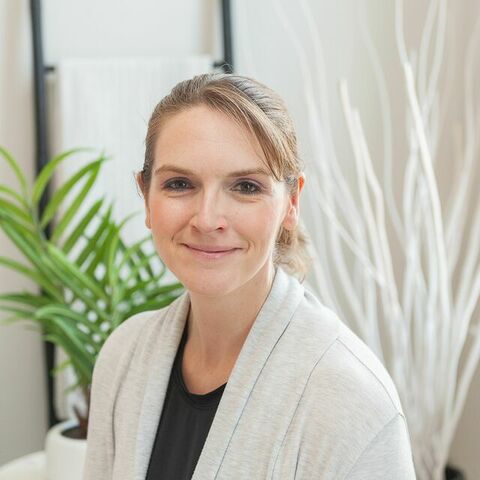
This is Claire E.
Parsons,
Lawyer,
Mindfulness and compassion teacher,
Speaker,
And author.
This is a guided meditation intended to help you avoid getting too serious about your practice.
Discipline is important to meditation practice,
But so is a sense of fun and joy.
With this practice,
You'll check in with what's there in your mind and body,
But I'll cue you to smile and have some fun too,
So that you can relax as you practice.
First,
Find a comfortable seat.
We'll be here for a few minutes,
So you want to find a position in which you feel safe,
Calm,
And supported.
You can be sitting or lying down.
Once you've found your seat,
Bring attention to your breath and start to settle.
Notice the pace of your breath.
Notice how deep or shallow your breath is.
And if you can,
Gradually and slowly begin to lengthen your inhale and lengthen your exhale.
Allow yourself to bring just a bit more breath on this inhale in than you did before,
And then exhale a little bit more deeply and allow the lungs to fully deflate.
Let the breath become smooth and slow and even.
Do this gradually without forcing yourself,
And then start to notice the inhale and the exhale and the pauses in between.
Next,
I invite you to bring attention to your body.
Notice what is there in your five senses.
What do you taste?
What do you smell?
What do you hear?
What do you see?
What do you feel with your sense of touch?
Scan through the body from head to toe to sense what is felt or perceived there.
And as you scan through the body,
Notice any areas of tension and allow your body to relax as much as possible.
Now I invite you to bring attention to your mind.
What's there in your mind now?
Is it calm?
Is it active?
Is it full or is it spacious?
Are you seeing visions or hearing sounds?
Is there any kind of mood or feeling tone or reaction present in your mind?
Sometimes we get uptight about the things that we find in our mind.
So I encourage you now to bring awareness to it and allow a smile to come to your lips.
No matter what you are seeing in your mind or experiencing in your mind,
Just note it and smile at it.
You don't have to push the thought away.
You don't have to have a perfectly clear mind.
Right now,
I just invite you to say hello and smile as you do.
Maybe you are seeing a thought or noticing some sensation in the body.
You don't have to decide the thought or sensation are pleasant to do this practice.
But you can notice whatever is there and allow yourself to smile,
Whether externally or internally.
Then I invite you to take a moment and notice what it feels like to smile.
This can be a small smile.
It doesn't have to be a big grin.
Notice the small curve on your lips.
If you can,
Let the smile spread into your eyes.
If smiling or being directed to smile is hard for you,
You can also try envisioning a loved one smiling or experiencing joy.
Or you can bring attention to the felt sense of smiling or good humor in your body.
Regardless of how you practice this,
Notice how it's almost impossible to furrow your brow at the same time.
Notice whether connecting with a smile makes breathing feel any easier.
Notice whether a smile makes your mood feel any lighter.
Then notice your mind.
Are you still thinking about the same thing you were when I first invited you to smile?
Meditation is a practice of finding focus and clarity,
But this doesn't mean it has to be no fun or that we have to be too serious.
You can practice focus with a sense of play.
With that in mind,
I invite you to bring your attention back to your breath or another focal point of your preference.
Rest your attention on your focal point lightly.
Just watch your attention without clinging too tightly or forcing it.
When your mind wanders,
And it certainly will,
I invite you to smile and bring your attention back to your focal point.
If a physical smile doesn't feel good to you,
An inner smile,
A felt sense of joy or good-spirited humor is fine as well.
I'll leave you here for a moment just to play with focusing your attention and smiling when your mind wanders.
Check in with yourself now.
How are you doing?
Are you having a good time?
Are you getting a little too serious?
Are you a little bit disoriented or confused?
Is this hard for you?
No matter what you are experiencing,
If you are able to watch your focus and return it back to your selected object with a sense of humor or at least a small smile,
You can continue doing that.
If you are having a hard time,
Just notice what the difficulty is for you.
Are you having trouble settling?
Are you having trouble focusing?
Do you feel tired?
Is a thought nagging you in your mind?
There may be good reasons for all of this.
Some days practice is harder than others.
Maybe this is a new practice for you.
Maybe this is something that's not in your habit to do.
Recall that meditation is not an easy practice.
If any of these additional challenges exist for you,
Then the practice may be harder.
Recognize that it takes courage to try something hard and then bring awareness to that challenge and offer yourself either a smile or some kind words.
If coming up with kind words of encouragement is a challenge for you,
Recall how a kind coach,
Teacher,
Or loved one has supported you in the past.
What tone of voice did they use?
What kind of words did they say?
See if you can adopt that same approach for yourself right here.
Then I invite you to try the practice again.
Return your attention gently back to your focal point and observe it.
When your mind wanders to something else,
Whether a thought,
Sensation,
Or emotion,
Just notice it.
Smile or reflect on the situation with some humor or joy and then go back to your focal point.
I'll leave you one more time for a period to practice and play.
Now I invite you to let go of watching the breath or your other focal point.
Bring attention instead to how you feel.
What do you notice in your body?
What do you notice about your mind?
What do you notice about your mood and emotions?
Many of us are accustomed to working really hard to achieve goals.
Studies show us,
Though,
That the optimal challenge for learning is in the mild to moderate range.
Studies also show us that we can and often do learn from play.
Struggle is a part of life.
The practice of meditation can help us cultivate skills that may help us manage struggle better.
It doesn't mean that all of our meditations have to be struggles,
Too.
Considering this,
Notice the effects of the practice on your mind and body.
Ask yourself whether you feel like you could do this again.
If you feel good,
Congratulate yourself for finding a new way to care for yourself.
If you struggled,
Congratulate yourself for showing courage and trying something new.
All we did in this practice was play with our focus for a few minutes,
So you have full permission to forget all about how you did as soon as you open your eyes.
Take a final deep breath in and hold it for a moment to feel the sensation of fullness in your lungs.
Then let it go.
When you are ready,
You can open your eyes.
And I hope you bring your smile with you as you go about your daily activities.