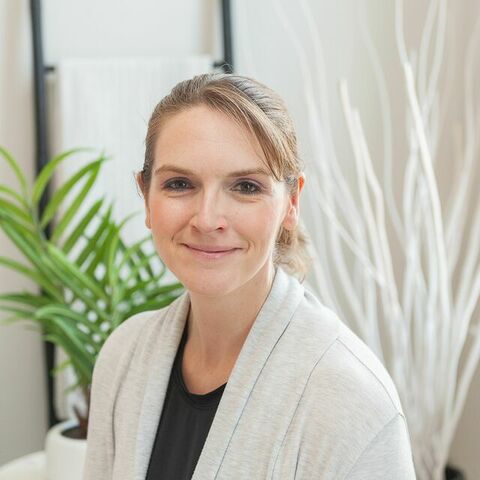
This is Claire Parsons,
Yoga,
Meditation teacher,
Lawyer,
And founder of the Brilliant Legal Mind blog.
One of the things I've been experimenting with lately is using my meditation practice and pairing it with restorative yoga.
Restorative yoga is a practice and style of yoga where yogis hold poses for long periods of time,
At least five minutes,
But they can go up to 15 or even 30 minutes.
With restorative yoga,
You really don't want a lot of sensation.
It's about releasing tension in the fascia within the muscles,
And so it's not so much about stress,
But about rest.
But because you hold the poses for a long period of time and you're relaxing the body,
It's actually a great time to use your meditation skills to sort of help yourself settle and just to be efficient with your self-care practices.
So with this practice today,
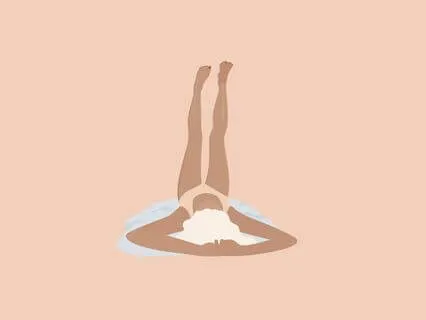
What we're going to do is legs up the wall.
And I selected this pose in particular because it's a pose that you can do even if you have no props available to you,
Such as bolsters or blocks that are commonly used with restorative yoga.
You can do this with your legs positioned up a wall,
Literally,
Where your hips would be close to the wall and your legs would be pointing straight up.
Or you can do this laying down on the floor and having your legs draped over something like a chair or an ottoman or even like a coffee table might work as well.
You just want to have a nice cushiony spot so that your legs don't hurt after a few minutes.
So we'll get started.
So I'm going to give you a few cues to help you get into the pose and then we'll move into some meditation instruction.
And this should be about 10 to 15 minutes total.
So we'll get started by resting our body on the ground and you will need to scooch or inch your hips close to the chair or ottoman or to the wall.
And getting into your legs up the wall posture might be a little bit awkward if you are near a wall.
You may need to sort of inch your hips as close to the possible as the wall as you can.
You can also support under your hips with either a bolster or a blanket or a cushion if that little extra elevation helps you and your legs.
So get into that posture right now and you can use a chair if needed as I've already explained.
And then start to let your body ground into the pose.
Restorative yoga is about settling and so you want to allow the body to just get acclimated to this posture.
You want to feel your head and shoulders,
Back and hips on the floor.
You want to let your arms and hands rest easily,
Effortlessly.
You may notice sensations in your legs and feet almost immediately in legs up the wall.
The blood literally will be draining down into your vital organs and abdomen and hips which is one reason it is a beneficial pose.
But you may notice some tingling.
You may notice some involuntary movements as you sit in the pose as your muscles relax and release.
All of that is normal and everything should return to normal when the pose is done.
As you sit in this pose,
We're going to use the breath to help you settle and you may know that there's a lot of different ways you can focus on the breath.
So that's what we're going to use this pose to do.
In this pose,
Our chest is open,
Our belly is relatively open and we are grounded.
So it's a great time to experiment with different types of breath practice.
So first I want you to try counting the breath in terms of the cycles of the breath.
So to aid in relaxation,
I want you to count the cycles on the exhale.
So take a breath in,
Notice the sensations of the chest rising and the belly filling and on the exhale,
That sensation of release,
Just count one.
Every time you let go,
Count another number and continue counting until you get up to five.
So on each exhale,
You count one and then two and then three and then so on and once you get to five,
Just go back to one.
If you lose your place,
Just go back to one again.
Don't worry about getting to any particular number.
This isn't a goal.
This is a practice to help you relax.
I'll leave you here for a moment to do that just to count.
Now if you get distracted as you sit here breathing and counting,
Remember that that is okay.
Just practice gentleness and kindness with yourself.
Practice perseverance and going back to the breath.
Just find your breath again,
Find that exhale and count one.
If you want to let go of that exhale for now,
Just count two and then three and then four and then five and then six and then seven and eight.
We'll try another style.
Another style of focusing on the breath is to notice the parts of the breath.
So you can notice the inhale as you are breathing in.
That can be at your nostrils or your throat or in your chest or belly.
Then you notice the pause in between the inhale and the exhale and it may be very subtle for you depending on how you're breathing.
Then you notice the exhale as the breath is releasing out and then you notice that pause again and so with each inhale,
Say to yourself,
Inhale.
With each pause in between,
Say pause.
With each exhale,
Say exhale and with each pause before you start the next inhale,
Say pause again and continue staying with each part of the breath,
Naming it in your mind,
Sensing it in your body as you do it.
Like we just did before with counting the breath,
At any time if you get distracted or lost or you forget where you are,
That is normal.
Just go back to the breath wherever you find it.
So now we'll try a third style of focusing on the breath and I invite you here to let go of any evaluation of yourself in terms of your focusing on the breath at this point.
The mind is very difficult and wayward at times.
It does not want to focus on anything for a very long period of time.
So your mind wandering means that you are a perfectly normal human being.
The goal here isn't to be perfect.
The goal here is to learn strategies and ways that help us relax so that we can care for ourselves better.
So a third way of focusing on the breath is to simply notice the sensations of the breath as it comes in and goes out and this is something that we do all day,
But rarely take true note of and so what I'm going to invite you to do here is to notice your breath in terms of how it feels and not what you're thinking about it and where that sensation is strongest for you.
You may notice the breath coming in through your nose in terms of cold air and then warm air on the exhale.
You may notice some sense of a pressure or a spaciousness even in your sinus area and throat as the breath flows in and goes out.
You may notice it in your chest,
Specifically in your lungs,
Filling with air.
You may notice some pressure as they fill and then a release as they deflate and you may notice your belly rising and falling as the diaphragm muscles move your lungs and encourage them to keep breathing.
All of these sensations are wonderful places for you to focus your attention.
All of them are soothing in their own way.
Pick the one that is strongest for you and let your attention settle on that sensation.
Yoga is a practice that invites us over and over again to come back to our bodies.
When we can come back to our breath,
We are talking to our bodies.
It is the connection between our mind and our bodies that allows us to communicate with it.
We notice the feelings of our bodies.
Our minds are listening to our bodies.
So when we have this connection between our mind,
Our body,
And our breath,
We have a communication where we understand an intelligence of the body that we sometimes can forget.
So notice the sensations of the body breathing and just come back to it.
When other other things in the mind want to compete,
Other distractions occur.
Come back to the feeling of the breath and try to distinguish between thinking about the breath.
If you catch yourself thinking about the breath,
Simply see if you can shift your attention gently back to how the breath feels in your nose,
In your throat,
In your chest,
In your belly,
And continue on.
And you've been holding this pose just about 15 minutes at this point.
I want you to bring your attention to the area of your legs and your hips and your knees and send a sense of love and kindness to those areas.
Just carrying attention as you begin to move your body.
Move slowly.
You can slowly begin to turn over onto your side into a fetal position.
Maybe allow your legs to slowly slide down the wall if that is better for you.
But bend them,
Bring some life back into them,
And give them give yourself and your legs some time to recover before you move on to your next activity.
You have done a meditation with this restorative posture where you have learned a little bit about your breath and given your body some time to recover.
Before we close,
Just wish yourself well and congratulate yourself for trying something new.
I hope that you explore meditation further,
And I hope that you make restorative yoga a part of your practice.
It is a wonderful gift to your mind and body.
When you are ready,
Take a very deep breath,
Filling your lungs all the way to the top,
Holding,
And then releasing.
And when you are ready,
You can open your eyes.