Unscripted - Awareness
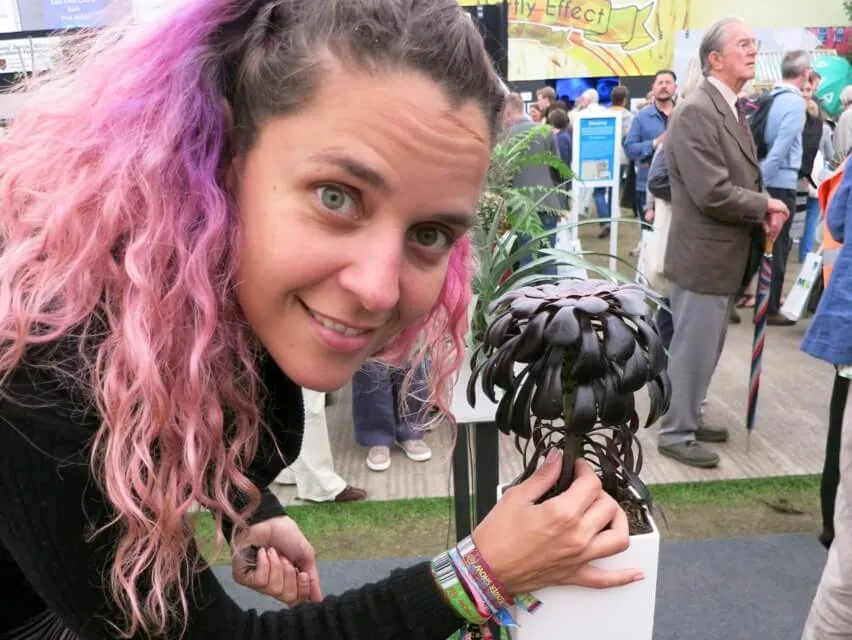
Tigrilla Gardenia takes into the world of “Awareness” in episode 5 of Unscripted. Inspired by nature and plants, we explore the interconnected nature of all life and what this can teach us about a different way of being. This is a conversation that leads us to rediscover our true nature and place in the world. Fascinated by nature since her earliest memories, Tigrilla Gardenia turned that passion into her vocation, leading to a successful nature-inspired business.
Transcript
Welcome to Unscripted,
Conversations exploring where we've come from and where we are going.
We begin with a single word and we go wherever it takes us.
There's no agenda,
There's no script,
Just the passion to share the conversations that matter.
Today I am following the word trail with Tigría Gardenia.
Welcome.
Thank you,
Thank you so much for having me.
Do tell us a little bit about yourself.
Ooh,
Let's see.
So there's a complicated question in a good way.
So I am a nature inspired personal and business mentor.
I work specifically when I say nature inspired,
It's because my specialty is plant intelligence.
I research and study and have a master's degree connected to the intelligence of plants and the plant mind.
And I also teach communication with the plant world.
And I bring all of this into my mentoring because I have a very varied background.
So I'm kind of I'll wrap it up very quickly.
I actually originally studied music engineering and electrical engineering millions of years ago and I spent about 10 years in the corporate world working at big companies like Microsoft,
Really enabling people to connect online through audio video.
That was kind of my specialty.
So my background comes from the world of audio and the creative arts.
And I have produced large events.
I've had my own multiple companies and I have even worked with Cirque du Soleil.
I used to co-own a circus.
So I have a lot of experience.
Really,
My whole experience is how do we bring the more authentic self out into the world?
And when I first arrived in Europe,
I came with a tour of Cirque du Soleil because I'm,
As you can tell from my accent,
I'm not European originally.
I'm Cuban American.
And so I come to Europe.
And when I left tour,
I was teaching Kabbalah and sacred geometry.
So I started to bring in all of my spiritual studies into my work.
And then I moved into Northern Italy.
I live in a place called Domineur.
It's one of the largest spiritual eco communities in the world.
And so at Domineur,
I absolutely fell in love with the plant world.
I fell in love with plants of all sorts,
Specifically the mind of plants.
You know,
It's really funny to me also because when people talk to me about,
You know,
You say,
What's your type?
Like what kind of person do you want to go out with?
To me,
It's always been about the mind,
The brilliant mind.
And I think I fell in love with plants for the same reason.
I fell in love with this brilliant mind that they have,
Their decision making skills,
Their logic and all this aspect.
And so I bring all of that knowledge into my work.
And so when I do,
You know,
Business and personal mentoring,
It's really about how do we bring the true authentic self out?
And in a way that is in harmony with our natural world,
Which is our personal natural world,
But also the natural world physically around us.
How do we really create ecosystems?
How do we create community bonds and mutually beneficial relationships that we can really help each other?
So my work really centers a lot around that.
How do we get to that true authentic self and that connected self?
Wow.
And which brings us to your word,
Which is?
My word is awareness.
So what does awareness mean to you?
So awareness to me is really the core of everything because awareness to me is about really being conscious of not just what I'm doing and where I'm going,
But also the implications and the connections that that touches.
So,
As I said,
I live in Dom and her spiritual eco community and in Dom and her,
We often talk about the we talk about free will.
We talk about the most one of the most powerful things we have as human beings is our free will.
Yet the truth of the matter is that we exercise our free will very little in a lifetime.
We think we're making choices and we think that those choices are free will.
But the truth is that our choices are very conditioned.
They're conditioned on what our parents taught us on what our lineage,
Our culture brought into it.
So everything around family and friends that I was immersed in.
What is the media and the overall world around me teaching me?
And also even our own conditioning from our past lives and our past experiences.
We bring all that into the present.
And so many of the choices that we make are colored by these things.
So this is in some ways why we can make fast decisions as opposed to really exercising a full awareness and free will is about understanding whether or not those choices come from you or whether they come from that conditioning and breaking free from that conditioning.
So you could still make the same choices because you could still choose consciously to be the same.
But when you do it with awareness,
You bring your own power and your own intention into it.
You really do bring a whole new level of meaning because also to be aware means that I take into consideration my needs and the needs of every other being around me.
And also I'm aware of all the ramifications,
But also all the different methods that are around me.
How do other beings do this?
So I take all of this knowledge and all of this power and I put it into my free will choices.
So awareness to me is the ultimate place we want to go.
We don't want to live in the past.
We don't want to live in the future.
We want to live in the present with the knowledge of the past and a direction for the future.
But really the present is the everything and our past and our future is actually all in this one piece of time.
And so when I'm aware of who I am,
Of what I'm doing,
Of why I'm doing it,
Specifically the why,
I can move in this world in a much more connected and aligned way.
I could be much more in the flow and I can also be connected to the other beings.
So I'm getting constant support because I've made my choices and I've taken responsibility for those choices also.
So awareness to me is kind of the cornerstone.
Awareness and trust are the two cornerstones of the work that I do.
Gosh,
There's so many avenues we could take with us.
So how does that,
How did that,
That personal ethos,
That set of values that you've created around that concept of awareness,
How do you then apply that,
You know,
On a very practical level?
I mean,
What's,
What's,
I mean,
Whether that's from your journey or when you're helping other people see that,
What's,
What's the journey from having that value to actually being able to implement it?
Absolutely.
And a big part of getting there is when you have that full awareness,
You know that,
You know,
I was a Kabbalist.
I mean,
I am a Kabbalist.
I used to teach Kabbalah and in Kabbalah you have the whole concept of the balance between what we say is mercy and power or strength,
Right?
So we have a Hesset and Geburah and these two,
You're constantly trying to balance them.
And in one of them you do the right thing because you don't want to get in trouble or you want to do it for somebody else.
So you kind of do the right thing because it's good for the overall society.
Let's say it in that way.
And in the other,
You do the right thing because you're afraid of the consequences.
So those are kind of these two.
But when you balance these two,
You're in the center and you do the right thing because it's the right thing to do.
And when you do the right thing,
When it's the right thing to do,
Everything is beautiful.
All of a sudden we redefine the word beauty.
So getting there to me,
The practical aspect of it is that when I redefine beauty,
I see things that normally I might actually destroy.
Destroy is a bad word to use,
But it's really kind of what we do.
We're self-destructive because I don't recognize its beauty and I don't trust in that.
So very practically,
When I work with people,
I work to help them,
Really,
Which is part of my journey,
Which was really deconstruct to a certain extent a lot of the belief systems that we have as to where did they come from and do you really want those beliefs today?
And you could,
Again,
Like I said before,
You could choose the same thing,
But it's very different to empower it and to be aware that you made that choice.
So and it could be very simple things I think we take for granted,
Which is part of that lack of awareness,
The simple types of things such as your choice in clothing.
I mean,
Does your clothing even really represent who you are today?
Or is it,
Oh,
Because if I'm going to this kind of meeting,
I should dress in this sort of way.
Or my mother taught me I should dress in this way.
And that,
You know,
And so these types of things mean that every morning when I wake up and I put my clothing on,
If I'm doing it from a state of awareness,
If I'm choosing my colors with awareness and I'm choosing the style with awareness,
All of a sudden I'm empowered all day long.
And I'm really feeling that.
And that includes that awareness then extends out to the world around us.
So,
For example,
As I said,
I work with plants.
And so plant blindness is a huge problem in our society today.
The fact that we do not see plants most of the time in our day to day life,
We'll walk outside and we'll happily greet a dog or a cat that we see.
But we don't think about greeting the plant that we probably just walked by.
Even big plants,
Even big trees.
I mean,
But much less grasses or weeds growing through.
So we're not really living in the present.
And so by seeing these other beings,
By seeing plants in particular from my work,
All of a sudden it brings you into the present.
You're not on your cell phone thinking about what you're supposed to do in four steps.
You're not worried about the meaning as to whether or not you're late.
You're not thinking about what happened last night.
You're thinking about the present moment.
It's bringing you into full awareness of the here and now.
So simple exercises that you can do to really bring you into the here and now allow you to make empowered choices,
Especially in your business.
And it's the same thing,
As I was saying with the clothing,
Happens for how people even treat business.
You think about business in a way that you were taught,
That you were conditioned,
That society teaches you how to do.
Measures of success become numbers rather than,
Wait a minute,
Am I getting up?
Do I have all of what I need?
And am I actually have the time to take and do the things that I really want to be doing?
And those are true measures of success.
So I use all of this awareness to help people redefine health,
Happiness and success.
Because abundance is around us,
But we don't see it because we're so conditioned to look at it in a certain way.
I'm doing the right thing for somebody else or I'm doing the right thing because I'm scared.
And neither of those brings us into awareness.
Awareness is I do the right thing because it's the right thing to do,
Which means my definition of success,
My definition of health and happiness,
My definition of service.
And you can only know what is the right thing to do if you are,
As you say,
In that present moment awareness.
Because you have to know who you are in order to be able to make those choices.
Which is,
Do you think,
I mean,
You talked about plant blindness,
But do you think we're actually also blind to ourselves?
Absolutely.
Absolutely.
And if I talk about my own journey,
It was through the plants that I was able to more fully see myself.
Because in their showing their beauty,
When I saw their beauty for what they are,
We tend as human beings,
We tend to value function.
If we don't understand the function of something,
If something is useless,
We don't see it really as pretty.
But in society,
We've sort of idolized functionless beauty and function is kind of considered ugly,
Utilitarian.
So if you think about,
And for me,
Especially as a woman,
Plants have really helped me see how we constrain beauty into certain bottles.
And you think about that with a garden.
If I go to a garden and I see a very controlled garden,
It's like a very controlled woman.
You know,
People have come in,
They've perfectly manicured the hedges,
They've taken out what they consider to be weeds.
But in nature,
That's not how things are.
Things are much more wild,
They're much more expansive.
They each have a function and in a way that is in harmony with another being,
We just have to recognize it.
And so when I started to see how gardens in some ways,
The traditional kind of garden,
Was actually a form of control,
And I started to go look into forests or heads,
You know,
Like little corners that are untamed.
And I started to understand how these really mutually beneficial relationships get created.
I started to understand that my own untamedness is beautiful and is useful and is a complement to something else,
Either within myself or with another person.
And the more I got into understanding that there's really very few plants,
If pretty much only one,
That is just pretty without having any function whatsoever.
But its function is to be pretty,
Which is the tulip.
It's the only one we can't really eat.
It doesn't have a smell.
It doesn't have any other function other than just to be pretty.
And that's okay too.
That has its place,
But it's very limited.
And instead,
All of that wildness and interrelatedness between other kinds of plants and mycelium and animals and everything seems to be chaos,
But in reality,
It's all functional and efficient and resilient.
And that started to help me see all of those parts inside of myself.
Now,
All of a sudden,
All these like wild parts of myself felt useful,
Felt powerful,
Felt like they had their purpose.
And I just needed to then learn how to work with them and use them.
Well,
We've got so conditioned to tame ourselves and to be afraid of our own wildness.
And also,
I think,
I've seen it as I've grown up,
I've seen that to be afraid of the wild as well,
Outside of us,
That we have become so disconnected from that.
That appreciating our wildness,
Our wildness is chaos,
Our wildness is not control.
And then there's that bigger,
There's a bigger thing about,
You know,
That actually our societies don't want us to be wild.
Right.
Because what would happen then?
Right.
And there it goes back to the trust issue,
Which is we tend to be,
When we go wild,
We tend to get out of awareness.
So when we're,
The typical definition for most people of wild is out of control.
And that's not the same thing.
It's out of control means I'm also outside of awareness.
But if instead I'm aware,
But I'm just free to be myself,
And I'm free to let all these parts of myself be the natural thing that they're supposed to be.
Then all of a sudden,
I'm actually wild,
But I'm wild in a state of awareness,
Which allows me to then interrelate with others.
We tend to look at wild as something that you can't relate with because,
You know,
When somebody goes crazy or goes wild,
They tend to be alone.
They tend to be considered messy.
They tend to be considered dangerous or that they hurt themselves.
And so we've given all these connotations to the word wild,
When in reality wild is just like allowing my true nature to come out.
And that can be done in full awareness,
Because my,
My true nature is going to complement somebody else's.
And in places where I need to maybe modify.
I mean,
Plants do too.
I mean,
Plants will over the years they will modify their structure to better work with others,
Even animals do this.
I mean,
If you look at a dog for example,
Dogs have eyebrows,
But they don't use them from a dog,
A dog in the wild does not use their eyebrows really.
But humans use their eyebrows for expression.
And what's happened is there's been a co evolution where dogs have evolved to use their eyebrows,
In order to get reactions and elicit reactions from humans.
They're still wild nature they're using their personal nature their strength their muscles but they've redefined it so that they can enter into a better harmonic relationship and communicate better with the humans in which they share,
So they've colored all.
And that's still wild because it's still their nature.
They're just co evolving with humans.
And that's,
That's the thing that we,
I don't know socially we've become culturally we've become so not not know Westerns culture has become so divorced and disconnected.
So,
So the work that you're doing with plants,
Intelligence plant awareness,
Or is it or self awareness,
Even is actually saying,
If I'm aware of me then I'm aware of how I interact with everything else and therefore I am aware of how I am part of the world not separate from it.
Exactly,
That's exactly it.
That's the heart of the message.
And this especially is true in business business in has been up until very recently thought of as I do my thing,
And I plow forward and I have to like go and forge new territory and I have to kill off the competition,
Because in it and it's been erroneously attributed to the fact that nature is all about competition but the truth is that very little of the of nature is competition because competition usually means that.
So it's better to first try cooperation,
And to create mutually beneficial relationships,
And if there is a moment where that doesn't work,
You can go into competition,
But nature has discovered that gracefully losing is okay too.
And say they've given permission to themselves to gracefully lose,
Even if that means death because they've given new definitions to what does it mean to be quote unquote alive and dead,
Based on the fact that they go to see based on they've evolved themselves in a way where life and death is just an evolutionary cycle.
And so therefore,
They're able to really look for the way that they could be cooperative and only use competition for very specific moments because they're very intensive and very energetically taxing,
And then go back into partnerships.
And that business has been taught as being a very linear process of linear growth and that's one of the things that is certainly very topical at the moment with discussions about GDP being the measure of success for a country.
And the same is true with business,
It's like the bottom line is the measure of success,
But,
And so that's linear and it's always got to be growing and yet that's not how life works.
It's not how nature works.
So we can learn a huge amount about rediscovering some of those natural rhythms and as you said that natural intelligence about how to respond.
Right.
And to give new like you said perfectly well new definitions of what is success.
If I have a company that is doing well,
Where my employees are happy where they have adequate amount of time off where they have adequate benefits where they have everything that they need,
And are creating a workplace environment that is connected both connected with each person connected with themselves,
Each person connected with others,
And each person connected to the greater landscape in which they're immersed in.
That's a measure of success we should marry.
And this is why there's comfort like there's countries that are looking instead of GDP happiness indexes and other types of things,
Because what's really important for us to get down to is the core of.
Do I have what I need in order to feel fulfilled and happy.
And,
But before you can even get there,
You need to work through your own fears and limiting beliefs.
In order to be consciously aware of what happiness really even needs to you,
Because if I'm coming from a place of scarcity,
Then it's understandable that to me,
Looking at my bank account has had a certain number in it,
And even to be honest,
It will never have the right number,
Because I'm coming from scarcity so I'm always looking at that bank account as an it's scarcity.
And so that's never going,
I'm always going to be in this race of trying to get more.
But if instead,
We come into like conscious awareness,
If we come into the understanding of wait a minute.
When are those moments that I was really happy.
What were the elements that I needed.
Okay,
So I know for me,
And being okay with it also like I used to many many years ago I was teaching a class on abundant.
And I had one of the women in my class to me,
Me me laugh because she was saying how she had her eye on a very specifically the tongue purse.
She had been looking at this person for the long time and this was her right now measure success was buying that person I'm like okay well what's holding you back from buying the purse.
And of course you know the person was expensive everything I'm like okay well,
Are you going to have 15 of these purses.
And she's like no I only want one,
And I'm like,
Then buy it because that one purse.
First of all,
You're buying at the time,
A very good brand that's going to last you 20 or 30 years.
So yeah,
You're spending a price tag on it.
But let's admit the fact that this could be a purse for your life.
And also,
It helps you,
You know,
Really feel your empowerment of what it is that you've earned and what you've accomplished,
And it's not a bragging symbol,
It's a personal symbol and it helps fuel your happiness in your work.
So there's no reason for us to even look at objects that we want to buy as something negative,
The negative comes in when we put the connotation around it of like,
I constantly need it for again that do the right thing because it's part of my environment.
If you've done the work to understand that that one purse,
One makes you feel good.
And it encourages you,
And you're giving to something that has high quality,
And you're making sure that how it's affecting environment and you're connecting to all these pieces you're aware when you make that purchase,
It's going to have a whole different value to you.
And it's going to nourish you rather than be something that just like,
It's like empty fuel that you just like use and then all of a sudden you're bored by it,
You're going to make that item is going to become a personal success story for you.
Hmm,
Yeah,
So it's a good way of looking at it because normally I can't,
It's too expensive or I really shouldn't or all of the other,
You know,
All of the things that might come up for that.
Yeah,
But then you'll buy 20 cheap purses and in the end you're going to spend the same amount of money,
And you're not going to feel satisfied by it.
So that's the other piece of awareness is what really satisfied me,
Do I buy one really positive thing with its quality with it,
You know connections,
Or do I fuel my fear and my emptiness and when I buy cheap stuff.
Besides the fact that it's terrible for the environment,
Most of the time,
Which which means you're not an awareness,
To begin with because you're not realizing the damage that you're doing by buying all those cheap things,
But more than anything,
It doesn't feel anything for you,
Doesn't feel a personal satisfaction.
And so therefore it doesn't even nourish your personal awareness.
That's an interesting phrase isn't it,
Nourish your personal awareness.
That's something that we've,
We're not good at socially because we're asked to put ourselves to one side and to meet everybody else's needs,
Whether that's in the workplace you know as an employee or in family or as you know as a mother or as a sister or,
I mean,
In all sorts of situations we're asked to put everybody else first and nourishing our personal awareness is actually the first obstacle isn't it.
Exactly.
Exactly.
And that's the most important piece because without that,
None of the rest has a value and so therefore you're taking taking taking taking,
Or even giving giving giving giving which both of them are don't work in the long term.
But it's always a hull of victory.
And so what we're trying to get to is that what I've learned is that to consume less to do everything that we're talking about environmentally and all these things starts with my own personal awareness,
Because when I'm aware of who I am,
Of what I really need,
Of what I want to accomplish and more importantly what my why is,
I naturally consume less because I don't need as much.
I don't need what's going to make me happy.
I don't need those 17 cars,
Unless I'm a really big enthusiast,
But then I have 17 cars for a small house.
Not because I feel guilty about it,
But because really I'm never in the house.
I'm with my 17 cars.
Absolutely.
It's about it's about having it's about knowing what makes you happy,
Knowing yourself well enough to know what makes you happy,
And giving yourself permission to have that and not all the other extra bits and pieces that because that never happens in when we discover our true,
True nature that never happens in the wild.
Well,
I'll tell you what,
I'll just throw out an extra three dozen blooms this year because that's what everybody thinks I should be doing.
It's about what are the conditions around me?
What are the other plants doing around me?
How much light am I getting?
How much water am I getting?
All of those things are playing into those decisions about what it's going to be like this year.
Exactly.
And again,
It's that awareness that also from a plant perspective allows them to create in a way that creates an overall harmony.
So take the example of oak trees.
Oak trees do not give the same amount of acorns,
Don't create the same amount of acorns every year.
Now people try to think that what's causing it is environmental conditions.
And yeah,
That plays a part into it,
Right?
That's whether it's a mass year,
So you have tons of acorns or small amount of acorns.
Really,
One part of it is definitely what's happening around the environment,
But not just the weather environment.
Also what's happening with the squirrels.
So plants need to reproduce,
Right?
So they have to take care of their own interests.
It's super important.
But they also know that their acorns are food for squirrels,
Right?
And other small animals.
So what have oak trees done?
They don't give the same amount of acorns every year because they know that if they give a lot of acorns one year,
But then a small amount of acorns for two or three years after that,
Then the squirrels,
Every time there's a large amount,
The squirrels kind of say,
Oh my God,
This is a master.
We have to like take all these and hide them all over the place because we never know when this another one of these is going to come.
So they go off and they hide all of these,
Which means they take the acorns and they push them as far away as possible from the oak in order to make sure other predators don't get them.
And that's how the oak tree sends all of its children out into the world farther than what they could do on their own.
So there's a collaboration where the oak tree says,
I know my acorns are going to be eaten.
And that's OK because I want the squirrels to exist.
I want them to be nourished.
I need that relationship with the squirrels.
So every few years I'm going to give the squirrels an overabundance.
They're going to fill their belly.
In the other years,
I'm going to get just enough for them to survive and for us to survive.
But mostly for them,
Because in those other years,
The squirrels take them and they hide them every single year because now they don't know when they're going to get a lot of when they're going to get a little.
The acorn for themselves,
I mean,
The oak tree for themselves only need a few acorns to be out into the world every few years because,
Of course,
They grow slow and all that type of stuff.
But for the squirrel,
They produce acorns every single year,
But they produce them in different quantities to keep this relationship flexible.
So we can do these same types of things where we can look at what is it that I need for my growth?
Because I always need to take care of myself because if I don't take care of myself,
Then I'm not going to be able to take care of anybody else.
So I always have to look at myself first,
Which is what the oak tree is doing.
I'm going to produce acorns because I need my children to go out into the world.
But the quantity of the acorns I produce every year is in relationship to the environmental conditions,
To the animals around,
To whether there's pests,
To all kinds of things,
In order to make sure that not only does my ecosystem thrive,
I mean,
My own personal life thrives,
But my overall ecosystem thrives.
And so my relationship with all these,
But the only way I can do that is to be aware of the needs of the squirrel.
I can't just think of myself and do it.
I need to think also about the needs of the squirrel.
So I can still take care of me first while taking care of the squirrel.
And that's an amazing analogy for business,
Isn't it?
Because business has been taught to be,
It's like,
I'm taking care of my own needs and that's it.
And if you're not paying any attention to that,
Or you're threatened by what is going on around you,
Then you're zoning in and not understanding your place within the big scheme of things.
You're not understanding how you're contributing to an overall field of activity.
You're not understanding how that field of activity is preparing the ground for your own business.
Because it is all about collaboration.
It isn't about competition at all.
Competition is a complete illusion.
Exactly.
That's exactly it.
Exactly.
And not only that,
It's detrimental.
The more we think of it as a competitive landscape,
The more it's because we think of scarcity.
When the truth is that each one of us offers a unique perspective.
And therefore,
If I trust in what I'm producing,
Then I don't have to ever think about it as competition.
I could think of it as competition from the perspective of helping me improve what I'm doing.
So learning from that kind of healthy competitive spirit.
But if I don't look at it as competition,
If I think of it as more of,
Okay,
So I might do a product that's very similar,
But there's something I'm putting into it that's different.
Whether that's because I give it my own unique twist,
Whether that be from an energetic perspective of what I give,
But I trust that I trust that what I'm creating is so good,
It's so important,
It's so nourishing,
It's so whatever words describe your product,
That people are going to purchase it.
And then I'm not going to worry about whether or not there's others out there that do something similar.
Because I am my own unique thing.
And I think that this is what I love about working with entrepreneurs.
Especially one of my kind of talents is the fact of taking people,
I often get people,
I work with a lot of multi-potentialites.
People who have lots of what they feel like are disparate interests.
So they've maybe felt like they've jumped from one thing to another by their family members and by their friends.
They're often considered to be the one that doesn't accomplish things or finish things because they tend to get bored easily.
Or they finish them but then move on to something else rather than continuing on in the same thing.
And a multi-potentialite is usually a real no to multi-potential,
It's not really jumping.
They have a deep pattern that they're trying to fill.
And that when you find that deep pattern,
When you're aware of that deep pattern,
All of a sudden it's almost as if I have a continuous root system and I'm having all these different trunks,
Like tree trunks or different plants that are coming up from it.
But the root system is the same.
So if I look at,
For example,
There's a system of colonial trees in Utah of the United States.
It's called Pando and they're Quaken Aspen.
And so here you have all it looks like a forest of individual trees,
But the truth is it's one giant root system.
And it's,
You know,
Tons of football fields big.
When you have all these different thousands of trees,
But they're all one deep pattern.
And so if we look at ourselves as a deep pattern,
Especially from multi-potentialites,
We find,
We're aware of that pattern.
Then all of a sudden I empower every single thing that I do and I'm able to combine my talents in new things.
So what I love about working with entrepreneurs is that every offer you have,
Every product,
Every service is a unique combination of your talent and you get to bring it in and give it that signature.
But you have to be aware and trusting of your talents to be able to mix and match them in new and unique ways.
That allows me to give something to somebody that is personalized with not just my signature,
But what I can do for you.
I absolutely love that because that's exactly that's exactly the approach I take as well as what I found is that people just,
As you said,
That awareness,
Coming back to it,
Is that people aren't aware of what it is that they have as a resource to do that.
That focus is so not on,
You know,
You can look at your every experience that you've had has in some way or other shaped you to give you the perspective,
A unique perspective.
Everything that you've learned is combining to give you a unique perspective and skill set.
And as you said,
That that awareness,
That ability to turn that awareness onto yourself and say,
This is what I have.
And yeah,
I can use this in different ways.
Then,
Yeah,
That comes back to that point that you have to come back to yourself and be that self-aware,
Which brings you back to your first point,
Which is that you need to be in the present moment to be able to appreciate it.
Exactly.
So how do you how do you work with people with plants then?
What is it that you how do you bring that into your mentoring?
I mean,
A lot of it is kind of like I've done now,
You know,
Where I use I help people see the functions that plants usually work with.
And then I help take those patterns,
Those patterns and extrapolate them out to their own work so they understand.
That's one part of it.
And the other part of it is I help people really just get back in touch with plants,
Get back in touch with nature.
I teach a course called Reconnect with the Plant Kingdom.
It's an online course,
A seven week online course.
And in that course,
We go through a series of really kind of life changing topics because we talk about,
You know,
Life and death cycles,
Which really are very different when you look at it from the natural world to what we have separated ourselves out from.
But in reality,
We're still a part of that same natural world.
We look at the ecosystem and the community and what it takes to really build that community.
We look at things like what does it mean to be an individual in an ecosystem?
And then I in that course,
I help people really walk into a greater direct connection because the more connected you are,
The more these answers are going to come to you directly from the plant world,
Directly from nature itself.
I mean,
The plants are here and they want to connect with us.
They want to communicate with us.
And there's much there's lots of evidence from the scientific world as to why that's happening and what they really want to accomplish.
So in my work,
Whether it be in that class,
I very much focus on that.
But even in my one on one or in my mastermind,
I oftentimes bring ritual and spirituality,
As well as deep connection with nature into the work,
Because I find that you receive much more answers.
I mean,
If you look from a from a scientific perspective,
When I just 20 minutes in nature will lower my cortisol levels,
Will lower my stress and will bring more clarity.
And for people who live near areas where they actually see nature.
And when I say live near areas of nature,
I don't mean you live in the middle of nowhere in the woods.
It could just be a park or a tree right outside.
It proposes that already encourages my body to heal.
It encourages my body to stay healthy and it encourages my mind to expand and to allow my creativity.
So I coupled that together with my work and my spiritual training to give people the ability to connect to themselves,
To nature and the physical environment around us and then beyond to the subtle world that also surrounds us so that you can then tap into your own guidance.
So I use kind of this mix of science as well as spirituality,
Because that's who I am.
I mean,
I come from an engineering background.
I have a master's in plants,
Social innovation design.
And so I've studied the science.
I do research into the effects of plant music on human health.
So I have a scientific or a STEM sort of approach,
You know,
Science,
Technology,
Engineering and mathematics.
But I also have been living in a spiritual eco community for,
You know,
Years.
And I also have been teaching Kabbalah for more than 10 years.
So therefore,
I have this whole connection also to the subtle world.
And I find that that is the complete self,
Which because that's who we are and,
You know,
And bringing that through especially creativity,
Because I find that the arts is really our ticket out of it,
Because the arts gives us unconditional permission to just explore.
Similar as dreams do and other aspects.
But I find that creativity in general doesn't have any bounds.
And so for encouraging people to use creativity to express that spirituality and that connection to nature.
So finding that balance between when should I be structured and follow something the way it's written and when should I just let go and do it.
And so I bring all of this into the work that I do to really guide people to look at entrepreneurship,
To look at business with new eyes and more importantly,
New aware definitions of what you want to accomplish.
I don't really subscribe to the whole make six figures,
Not because I don't think it's a good thing.
I think it's fine.
And you're absolutely if what you need is six figures.
But I also find that that abundance comes in so many different ways.
Like if I need to go somewhere and I need to fly somewhere,
I could say I need 500 euros in order to get a plane ticket.
Or I could say I really just need to get this place.
And who knows,
Somebody might give me a plane ticket,
Somebody might give me a train ticket,
Somebody might carry me in their car and take me there.
You never know what's going to happen in order for you to get there.
So I'm all about how do I really expand my definitions of success?
How do I definitions of what I want to accomplish?
Looking at the true why.
How is that?
How do I get there in harmony with the same patterns and the patterns of myself and the patterns of me?
Which I think is the best explanation of why I'm bringing all of those parts of you together,
That you are able to do that in that way.
It's about finding that state of balance between all of that root system that you have,
Bringing all the pieces of your background and your experience into a completely unique way of being able to bring that information forward,
Because somebody else would bring it forward in a completely different way.
Right,
Exactly.
So that's been absolutely fascinating talking to you,
And I could continue for a very long time.
And I mean,
Thank you for just that exploration of our own wildness is like it's so much food for thought.
And I would encourage you,
If you'd like to connect with Chigurh,
Contact details will be beneath the in the show notes.
So I would encourage you to go and do that.
Thank you so much.
Oh,
My pleasure.
Absolute pleasure.
Thank you so much for listening and following the word trails with us.
I hope you found it inspiring and intriguing.
The details for all of my guests are in the show notes beneath to help you continue to follow the trail.