Hi,
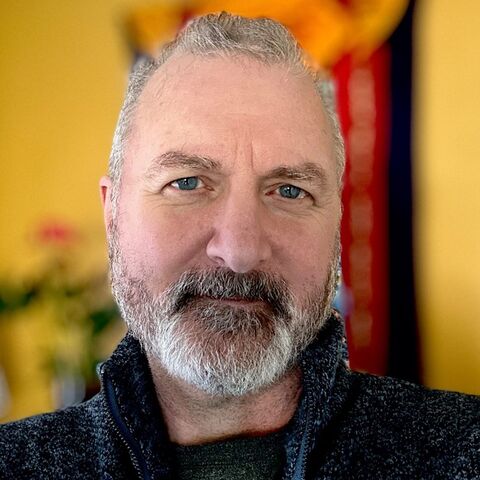
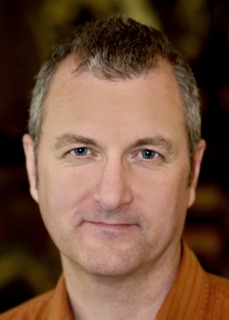
I'm Bodhi Pakcha,
And I'm going to guide you through a meditation practice,
Which is a supplement to the book,
This Difficult Thing of Being Human,
Published by Parallax Books.
And This Difficult Thing of Being Human is a book about self-compassion.
So it's best to find a way of sitting upright,
That allows you to have the spine effortlessly upright.
So you don't want to be holding yourself rigid,
You want to be comfortable,
But at the same time you don't want to be slumping.
And as you feel your way into your posture,
Just see if you can relax the muscles in the back of the neck a little.
We often hold tension here.
And when we soften the muscles in the back of the neck,
The chin comes down,
Slightly tucked in toward the chest.
And you can let your eyes close.
And take two or three deep breaths.
Really letting go on the out-breath.
Just arriving by noticing whatever is arising in the senses.
So even with your eyes closed,
You can be aware of light and space around you.
And you can be aware of what you're hearing.
Just allowing the muscles around the eyes to be soft.
Letting them relax.
And letting your eyes be slightly unfocused.
Just as they would be if you were staring into space.
And as you allow the eyes to soften in this way,
You may find that you spontaneously start to be more aware of the body,
And particularly of the sensations of the breathing.
So what are the sensations that constitute this experience of breathing?
In what parts of the body can you experience the breathing?
And often,
When people hear the word breathing,
They think breath.
They think of the sensations of the air flowing through the passageways of the body.
The breathing is much more than just the breath.
It includes any and all sensation connected with the movements of the body as air flows in and out.
So the movements of the rib cage are one of the most prominent sensations connected with the breathing.
And with the eyes soft,
Just seeing if you can notice that the rib cage is not just on the front of the body,
But it's moving on the sides of the body and on the back,
All the way around to the spine.
And it's not just the ribs that are moving,
There are muscles and skin covering the rib cage.
And the skin is in contact with your clothing and moving against your clothing as you breathe in and out.
Again not just on the front of the body,
But on the sides and the back.
And with the eyes soft,
It might be possible for you to experience all of that at the same time.
So you don't need to go looking for these sensations.
Just let them come to you.
And another prominent part of the breathing is the movements done in the abdomen.
And here again we may have a tendency to focus on the front of the body,
But the muscles of the abdomen wrap all the way around the sides and again around to the spine.
And the abdomen,
Just like the chest,
Is covered with skin.
The skin that brushes against your clothing as you breathe in and out,
Perhaps pushes up against your waistband.
So maybe you can be aware of the abdomen and the chest at the same time.
All of these different sensations connected with the breathing.
And there are of course sensations deeper in the abdomen.
The build and release of pressure as the diaphragm pushes down on the in-breath and relaxes on the out-breath.
So you can be aware of this wave of pressure building and releasing,
And of the diaphragm tensing and relaxing.
So,
Just keep on doing these movements.
The breathing takes place also in the spine just notice how the shape and length of the spine change as you breathe in and out the spine lengthening on the in-breath settling on the out-breath the shoulders are rising every time you breathe in and they settle back down again every time you breathe out so this too is part of the breathing perhaps you can notice sensations inside the shoulder trunks as the shoulders pull up and away from the weight of the arms and perhaps you can feel some of those movements in the arms themselves,
In the upper arms and perhaps if the arms are in contact with the chest,
The arms are moving as the chest expands and relaxes you might notice sensations also in the lower arms and even the hands and that build and release of pressure that I mentioned then in the abdomen doesn't just stay in the abdomen,
It pushes down into the pelvic cavity down into the hips into your buttocks and if you're very attentive you may notice sensations in the legs all the way down into the feet and of course there are the sensations of the breath air flowing in through the nostrils,
Through the passageways in the head,
Down the throat,
Into the chest and then all the way back again so there's a huge amount you could be aware of and with the eyes soft and slightly unfocused you might find it's possible to be aware of all of this at the same time not of course observing every sensation in great detail but having a general but very definite sense of the breathing taking place in the whole body so as you continue to sit observing the breathing in this way,
Breathing in the whole body it's possible that the mind has quieted a little,
But it's also possible that thoughts are still arising and if that's the case,
That's fine you're not trying to stop thought altogether it's enough just to allow thoughts to come and go if you get caught up in thinking,
Then just letting go,
Softening the eyes and coming back to an awareness of the breathing in the whole body so in a minute I'm going to ring a bell and I invite you just to sit on for a little longer,
Just absorbing the effects of this practice just taking your time to notice what's arising before you move on to your next activity thank you Thank you.
Thank you.