Hello Radiant Souls,
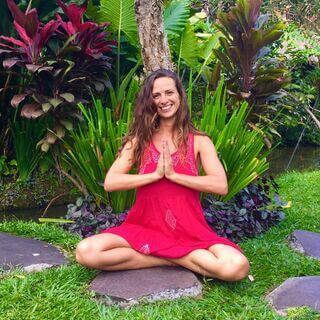
It's Nola Bloom here,
And today's meditation is called Yoga Wisdom in Stillness,
And this is a meditative journey through the eight limbs of yoga.
These ancient teachings,
As outlined by the sage Patanjali in the Yoga Sutras written over 5,
000 years ago,
Offer us a pathway to a balanced lifestyle,
Clarity of mind,
And inner peace.
The eight limbs guides us through ethical living,
Personal discipline,
Physical postures,
Breath control,
And deep meditation,
Leading us towards unity with our true selves and the universe.
In today's meditation,
We will softly explore each of the eight limbs,
Touching on their essence while creating space for reflection.
This practice offers both deep relaxation and the opportunity to uncover the core wisdom of yoga,
Allowing these sacred principles to settle deep within you.
Now let's get started and find yourself a comfortable seated or lying down position.
Allow your body to fully relax.
Take a deep breath in,
Filling your lungs completely,
And as you exhale,
Feel your body softening and releasing any tension.
Allow your mind to settle into stillness.
Feel yourself becoming more present,
Open,
And ready to receive the ancient wisdom of the eight limbs of yoga.
We begin with the first limb,
Yama,
Or moral restraints.
The yamas are a guideline of how we interact with the world around us,
Encouraging us to live with compassion,
Truth,
And non-attachment.
These principles help us align our actions with integrity and kindness,
Creating harmony within ourselves and in our relationships with others.
Now take a big breath in,
And as you exhale,
Let's journey through the five yamas together,
Reflecting on how these moral restraints guide us towards peaceful living.
The first of the yamas is called ahimsa,
Or non-violence.
Now visualize yourself moving through your day with ahimsa.
See yourself approaching every interaction with kindness,
Whether it's with loved ones or strangers,
Or even in the way you speak to yourself.
Feel the softness in your heart as you release any harshness or judgment.
Inhale deeply,
Filling your heart with compassion.
And as you exhale,
Letting go of any tension or negative thoughts.
Next,
We move to satya,
Or truthfulness.
Imagine yourself living in complete honesty,
Where your words,
Actions,
And thoughts align.
Picture a moment in your life where speaking your truth brings clarity and lightness.
As you breathe in,
Feel the strength of being authentic.
As you exhale,
Release any fear of judgment or misunderstanding.
Allow yourself to be fully transparent in your communications.
Now shift your awareness to asteya,
Or non-stealing.
Picture yourself in a situation where you fully honor what is yours,
Without seeking to take what isn't freely given.
Whether it's someone's time,
Energy,
Or possessions.
As you inhale,
Invite gratitude for everything you have.
As you exhale,
Release any desire for what you don't need.
Feel how this sense of non-stealing allows you to cultivate generosity and appreciation for the abundance in your life.
Next is brahmacharya,
Or moderation.
Realize yourself finding balance in every aspect of life.
Whether it's in your habits,
Relationships,
Or energy.
Imagine how practicing moderation can help you conserve your energy.
Allowing you to stay focused on what truly matters.
Inhale,
Inviting balance,
And as you exhale,
Release any excessive desires or impulses.
Feeling a sense of calm and control.
Finally,
Let's explore aparigraha,
Or non-attachment.
Picture yourself letting go of material possessions,
Old ideas,
Or expectations that you've been holding onto far too tight.
Inhale,
Create spaciousness in your heart.
As you exhale,
Feel yourself releasing attachment.
Trusting that everything you need is already within you.
Notice how non-attachment brings freedom and peace into your life.
Allow these yamas to settle into your consciousness.
Guiding you towards living in harmony with yourself and the world.
Allow your breath to flow naturally as we move to the second limb of yoga.
Niyama,
Or personal observances.
The niyamas are personal practices that guide our relationship with ourselves,
Fostering inner discipline and spiritual growth.
They help us cultivate purity,
Contentment,
And dedication on our journey.
Take a big breath in,
And as you exhale,
Visualize how these personal observances can support your growth.
The first of the five niyamas is saucha,
Or purity.
Imagine a sense of clarity and cleanliness washing over you,
And purifying your thoughts,
Your body,
And your surroundings.
Visualize your mind as a clear blue sky,
Free from distractions and clutter.
As you inhale,
Feel this purity expanding throughout your entire being.
As you exhale,
Release any impurities or heaviness.
Next is santosha,
Or contentment.
Picture yourself fully embracing the present moment,
Without longing for more.
Imagine sitting in a peaceful place,
Fully content with everything,
Just as it is.
As you breathe in,
Feel a deep sense of gratitude for what you already have.
As you exhale,
Release any dissatisfaction or desire.
Feel how contentment brings peace and fulfillment into your heart.
Next is tapas,
Or discipline.
Imagine the fire of discipline burning within you,
Strengthening your resolve to commit to your personal practices,
Even when they feel challenging.
As you inhale,
Feel your inner fire growing stronger,
Fueling your dedication.
As you exhale,
Let go of resistance,
Embracing the growth that comes from consistency and effort.
Next we come to svadhyaya,
Or self-study,
And the study of sacred scriptures.
Svadhyaya invites us to turn inward,
Reflecting on our thoughts,
Emotions,
And behaviors,
While also exploring sacred texts and teachings to gain deeper insight.
It is through this dual practice of the study of wisdom traditions alongside inner reflection that we come to understand ourselves and our place in the world more clearly.
In today's meditation,
We are practicing svadhyaya together.
And as we explore the eight limbs of yoga,
We reflect on these teachings and how they apply to our own lives.
Big breath in,
And bring awareness to your breath.
Big breath in,
And bring awareness to your inner landscape.
And fully exhale,
Release any judgments or criticisms.
How can the wisdom of these sacred teachings guide your personal growth?
How can the wisdom of these sacred teachings guide your personal growth?
Let this practice of svadhyaya deepen your connection to yourself and to the ancient wisdom of yoga.
Finally,
We explore ishvara pranidhana,
Or surrender to a higher power.
Imagine yourself fully trusting in the flow of life,
Letting go of control,
And allowing the universe to guide you.
Inhale deeply,
And feel the support of a higher power surrounding you.
As you exhale,
Surrender your worries and concerns,
Knowing that you are held and supported by something greater.
Now allow the niyamas to settle within you.
Now allow the niyamas to settle within you.
Nurturing your inner world and guiding your personal growth.
Now we move to the third limb of yoga,
Asana,
Or postures.
Asana is the physical practice of yoga postures.
But its purpose goes beyond just stretching and strengthening the body.
The practice of asana helps to prepare the body and mind for deeper meditation by cultivating balance,
Stability,
And ease.
The word asana means seat,
Symbolizing the ability to sit comfortably and steadily for extended periods,
An essential quality for meditation.
In asana,
We focus on two key principles.
Sthira,
Which means steadiness,
And sukha,
Which means ease.
These two qualities must be balanced in every pose.
Sthira gives us the strength and stability to hold the balance.
Sukha invites us to relax and find comfort within the pose.
Let's practice this now.
Visualize yourself sitting in a comfortable position.
As you inhale,
Feel sthira,
The steadiness of your spine,
The grounding of your sit bones into the earth,
And the strength and focus of your body.
Your posture is strong,
Stable,
And centered.
Now,
As you exhale,
Invite sukha into the pose.
Allow your shoulders to fully relax.
Soften your jaw,
And notice your breath flowing smoothly.
Feel the sense of ease,
Comfort,
And openness within the stability.
You are both strong,
Yet relaxed.
Embrace your body,
Your mind,
And your body.
Balance within the posture.
As you breathe,
Notice how this balance of effort feels within your body.
This same balance applies to how we move through life.
Where can you bring more steadiness and strength?
And where can you invite more ease and relaxation?
Allow the balance of sthira and sukha to remain within you as we move to the fourth limb of yoga.
Pranayama,
Or breath control.
Pranayama is the regulation of breath,
The life force that sustains us.
By controlling the breath,
We can calm the mind,
Purify the body,
And connect more deeply with our inner selves.
Let's begin by practicing ujjayi breath,
Also known as ocean breathing.
A calming and balancing breath technique.
Gently constrict the back of your throat,
Creating a soft,
Ocean-like sound as you inhale and as you exhale.
Feel the breath move through your body,
Bringing both energy and calmness.
Inhale deeply,
And exhale completely,
Allowing the breath to ground you into this moment.
With each inhale,
Imagine drawing in peace and vitality.
With every exhale,
Release tension and distractions.
Feel how controlling your breath helps quiet the mind and center your energy.
As you breathe,
Reflect on how the breath supports you in every moment.
Notice how breath control can help you manage stress and bring clarity to your mind.
We then move to the fifth limb of yoga,
Pratyahara,
Or withdrawal of the senses.
Pratyahara is the withdrawal of the senses,
Allowing us to turn our attention inward and detach from external distractions.
Pratyahara helps us cultivate a deep inner focus,
Creating space for introspection and stillness.
Let's begin by withdrawing our attention from the external world.
Imagine yourself gently withdrawing from each of your five senses one by one.
Starting with sight.
Anytime we close our eyes,
It helps us to remove the sense of sight.
It helps us to remove the sense of sight.
Now visualize the images around you fading away as your attention shifts inwards.
Big breath in and big breath out.
And let the sense of sight become quiet.
Next,
Move to sound.
Notice the sounds around you.
Perhaps the rustling of leaves,
Distant voices,
Or the hum of your environment.
As you breathe in,
Acknowledge these sounds and as you exhale,
Allow them to fade into the background.
And as you exhale,
Allow them to fade into the background,
Turning your focus inward.
Next,
We move to smell and taste.
Next,
As you inhale,
Become aware of any scents or tastes lingering within your senses.
With your next exhale,
Allow them to just drift away,
Bringing your awareness further inward.
Finally,
Focus on touch.
Feel the sensation of your body against the surface beneath you.
Notice the sensations of your skin as any gentle breeze passes by.
As you exhale,
Release the awareness of external touch.
Turning completely inward,
You are now fully immersed in your inner world.
Detached from external distractions.
Notice how withdrawing from the senses creates a peaceful,
Quiet space within.
Next,
We move to the sixth limb of yoga,
Dharana,
Or concentration.
Dharana is the practice of the mind.
Dharana is the practice of the mind.
Dharana is the practice of the mind.
Or concentration.
Dharana is the practice of focused concentration.
It involves training the mind to focus on one point,
Bringing clarity and stillness to our mental state.
In our yoga practice,
We also refer to this as a drishti,
Focal point.
Now let's practice dharana by choosing a single point of focus.
It could be your breath,
A sound,
Or a point in your body.
As you breathe in,
Draw all of your awareness to this single point of focus.
As you exhale,
Maintain the awareness of your breath.
As you exhale,
Maintain the awareness of your breath.
Maintain your focus.
Inhale,
Concentrating fully.
Exhale,
Maintaining your focus.
And again,
Inhale,
Concentrating fully.
And exhale,
Maintaining your focus.
Now continue for a few more breaths.
Feel how this one-pointed focus begins to quiet the mind.
With practice,
Dharana helps us to build the mental strength to focus on tasks,
Conversations,
Or challenges with greater clarity and awareness.
In your life,
Where might you need more focus or presence?
We then move to the seventh limb of yoga.
Dhyana,
Or meditation.
Dhyana is meditation.
A state of uninterrupted focus and deep awareness.
In this state,
The mind becomes still,
Allowing us to be fully immersed in the present moment.
Unlike dharana,
Which requires effort and concentration,
Dhyana,
Or meditation,
Is the effortless flow of awareness.
As you remain still,
Continue to focus on your breath.
Allow your mind to settle into stillness without forcing it.
Simply observe the breath as it moves in and out of your body,
Allowing thoughts to pass without attachment.
With each inhale,
Feel yourself becoming more present.
With every exhale,
Let go of any distractions.
Notice how this state of meditation brings a sense of calm and clarity.
It's not about stopping the mind,
But allowing thoughts to pass without judgment or reaction.
And finally,
We come to the eighth limb of yoga,
Samadhi,
Or enlightenment.
Samadhi is the ultimate state of yoga,
A state of unity and bliss,
Where the ego dissolves and where we experience oneness with the universe.
It is the culmination of all the previous limbs,
Where we find peace beyond the mind and body.
Take a big breath in,
And imagine yourself merging with the energy around you.
As you exhale,
Feel yourself letting go of the boundaries that separate you from the world.
In this moment,
You are connected to everything.
There is no separation,
No division,
Only unity.
Experience this feeling of oneness and bliss,
Even if it's just for a moment.
Samadhi may seem distant or far off,
But it can be glimpsed in moments of deep connection,
Whether in nature,
With loved ones,
Or in meditation.
Now as you rest deeply in this quiet space,
Let us gently revisit the sacred path of the 8 limbs of yoga.
Feel them like a soft breeze,
Brushing through your awareness,
Each one a thread in the fabric of your being.
Starting with Yama,
The moral compass that guides our interactions with the world.
Ahimsa.
Feel the gentleness of nonviolence,
A warm embrace of kindness in every thought,
Word,
And action.
Satya.
Sense the clarity of truth like the morning sun shining on all that is real and authentic.
Asteya.
Feel the abundance of not needing to take,
Honoring what is already yours and trusting in enoughness.
Brahmacharya.
Imagine the graceful flow of moderation,
Moving with mindful energy,
Not too fast and not too slow.
Aparigraha.
Let go,
Releasing attachment like leaves falling from a tree,
Surrendering with ease to the winds of change.
Niyamas.
The inner practices that nourish the soul.
Saucha.
Visualize the purity of a clear stream,
Cleansing the body,
Mind,
And spirit.
Santosha.
Rest in the sweetness of contentment,
Finding peace in this very moment,
Just as it is.
Tapas.
Feel the inner fire of discipline,
A gentle flame that fuels transformation and growth.
Svadhaya.
Reflect on the sacred mirror of self-study and the wisdom found in sacred texts.
This meditation itself is Svadhaya,
An unfolding of your true self.
Ishvara Pranidhana.
Sense the peace of surrender,
Trusting the universe to hold you as you release the need to control.
Asana.
The body as a sacred vessel,
Balanced between sthira and sukha.
Finding both strength and softness in every moment.
Pranayama.
The breath of life,
Gently flowing in and out,
Calming the mind and awakening the body's energy.
Pratyahara.
The peaceful withdrawal from the outer world,
Allowing you to slip inward where stillness resides.
Dharana.
The single-pointed focus like a steady flame guiding your awareness to one point of attention.
Dhyana.
The quiet river of meditation where you are no longer separate but simply present,
Flowing effortlessly with life.
Samadhi.
The soft,
Radiant light of unity where you dissolve into oneness connected to all that is.
Timeless and boundless.
Now let all this wisdom wash over you like a gentle rain.
There is nothing to think,
Nothing to analyze.
Feel the subtle merging of each limb like streams flowing into the same vast ocean of your awareness.
With each breath,
Allow the teachings to settle into the heart of your being.
Inhale softly,
Receiving the grace of the eight limbs and exhale,
Letting the grace fill you,
Anchoring deep within.
Just rest here Take a few more deep breaths allowing everything to gently integrate like a soft,
Glowing light within you.
Every breath deepens your connection to the wisdom of the eight limbs.
You feel peaceful,
Calm,
And whole.
When you're ready,
Gently bring awareness back into your body,
Wiggling the fingers and toes perhaps moving the head from side to side.
Feel the support of the earth beneath you and the peace and serenity in your heart and slowly open your eyes carrying the sense of balance and insight into the rest of your day.
Thank you so much for sharing this time with me.
Namaste