Welcome to the I Can't Sleep podcast,
Where I read random articles from across the web to bore you to sleep with my soothing voice.
I'm your host,
Benjamin Boster.
Today's episode is from a Wikipedia article titled,
Interstellar Medium.
The interstellar medium,
ISM,
Is the matter and radiation that exists in the space between the star systems in a galaxy.
This matter includes gas in ionic,
Atomic,
And molecular form,
As well as dust and cosmic rays.
It fills interstellar space and blends smoothly into the surrounding intergalactic space.
The energy that occupies the same volume,
In the form of electromagnetic radiation,
Is the interstellar radiation field.
Although the density of atoms in the ISM is usually far below that in the best laboratory vacuums,
The mean free path between collisions is short compared to typical interstellar lengths.
So,
On these scales,
The ISM behaves as a gas,
More precisely a plasma.
It is everywhere,
At least slightly ionized,
Responding to pressure forces and not as a collection of non-interacting particles.
The interstellar medium is composed of multiple phases distinguished by whether matter is ionic,
Atomic,
Or molecular,
And the temperature and density of the matter.
The interstellar medium is composed primarily of hydrogen,
Followed by helium,
With trace amounts of carbon,
Oxygen,
And nitrogen.
The thermal pressures of these phases are in rough equilibrium with one another.
Magnetic fields and turbulent motions also provide pressure in the ISM and are typically more important dynamically than the thermal pressure.
In the interstellar medium,
Matter is primarily in molecular form and reaches number densities of 10 to the 12th molecules per cubed meter.
In hot diffuse regions,
Gas is highly ionized and the density may be as low as 100 ions per cubed meter.
Compare this with a number density of roughly 10 to the 25th molecules per cubed meter for air at sea level and 10 to the 16th molecules per cubed meter for a laboratory high vacuum chamber.
Within our galaxy,
By mass,
99% of the ISM is gas in any form and 1% is dust.
Of the gas in the ISM,
By number,
91% of atoms are hydrogen and 8.
9% are helium,
With 0.
1% being atoms of elements heavier than hydrogen or helium,
Known as metals,
In astronomical parlance.
By mass,
This amounts to 70% hydrogen,
28% helium,
And 1.
5% heavier elements.
The hydrogen and helium are primarily a result of primordial nucleosynthesis,
While the heavier elements in the ISM are mostly a result of enrichment,
Due to stellar nucleosynthesis,
In the process of stellar evolution.
The ISM plays a crucial role in astrophysics precisely because of its intermediate role between stellar and galactic scales.
Stars form within the densest regions of the ISM,
Which ultimately contributes to molecular clouds and replenishes the ISM with matter and energy through planetary nebulae,
Stellar winds,
And supernovae.
This interplay between stars and the ISM helps determine the rate at which a galaxy depletes its gaseous content,
And therefore,
Its lifespan of active star formation.
Voyager 1 reached the ISM on August 25,
2012,
Making it the first artificial object from Earth to do so.
Interstellar plasma and dust will be studied until the estimated mission end date of 2025.
Its twin,
Voyager 2,
Entered the ISM on November 5,
2018.
Field,
Goldsmith,
And Habing,
1969,
Put forward the static two-phase equilibrium model to explain the observed properties of the ISM.
Their modeled ISM included a cold dense phase consisting of clouds of neutral and molecular hydrogen,
And a warm intercloud phase consisting of rarefied neutral and ionized gas.
McKee and Oestreicher,
1977,
Added a dynamic third phase that represented the very hot gas that had been shock heated by supernovae and constituted most of the volume of the ISM.
These phases are the temperatures where heating and cooling can reach a stable equilibrium.
Their paper formed the basis for further study over the subsequent three decades.
However,
The relative proportions of the phases and their subdivisions are still not well understood.
The basic physics behind these phases can be understood through the behavior of hydrogen,
Since this is by far the largest constituent of the ISM.
The different phases are roughly in pressure balance over most of the galactic disk,
Since regions of excess pressure will expand and cool,
And likewise under-pressure regions will be compressed and heated.
Therefore,
Since p equals nkT,
Hot regions generally have low particle number density,
N.
Coronal gas has low enough density that collisions between particles are rare,
And so little radiation is produced.
Hence,
There is a little loss of energy,
And the temperature can stay high for periods of hundreds of millions of years.
In contrast,
Once the temperature falls to 10 to the 5th kelvin,
With correspondingly higher density,
Protons and electrons can recombine to form hydrogen atoms,
Emitting photons which take energy out of the gas,
Leading to runaway cooling.
Left to itself,
This would produce the warm neutral medium.
However,
OB stars are so hot that some of their photons have energy greater than the Lyman limit.
Enough to ionize hydrogen.
Such photons will be absorbed by and ionize any neutral hydrogen atom they encounter,
Setting up a dynamic equilibrium between ionization and recombination,
Such that gas close enough to OB stars is almost entirely ionized,
With temperature around 8,
000 kelvin,
Until the distance where all the ionizing photons are used up.
This ionization front marks the boundary between the warm ionized and warm neutral medium.
OB stars,
And also cooler ones,
Produce many more photons with energy below the Lyman limit,
Which pass through the ionized region almost unabsorbed.
Some of these have high enough energy to ionize carbon atoms,
Creating an ionized carbon region outside the hydrogen ionization front.
In dense regions,
This may also be limited in size by the availability of photons,
But often such photons can penetrate throughout the neutral phase and only get absorbed in the outer layers of molecular clouds.
The densest molecular clouds have significantly higher pressures than the interstellar average,
Since they are bound together by their own gravity.
When stars form in such clouds,
Especially OB stars,
They convert the surrounding gas into the warm ionized phase,
A temperature increase of several hundred.
Initially,
The gas is still at molecular cloud densities,
And so at vastly higher pressure than the ISM average.
This is the classical H2 region.
The large overpressure causes the ionized gas to expand away from the remaining molecular gas,
And the flow will continue until either the molecular cloud is fully evaporated,
Or the OB stars reach the end of their lives after a few million years.
At this point,
The OB stars explode as supernovas,
Creating blast waves in the warm gas that increase temperatures to the coronal phase.
These too expand and cool over several million years,
Until they return to average ISM pressure.
The ISM is confined to a relatively thin disk,
Typically with scale height about 100 parsecs,
Which can be compared to a typical disk diameter of 30,
000 parsecs.
The vertical scale height of the ISM is set in roughly the same way as the Earth's atmosphere,
As a balance between the local gravitation field and the pressure.
Further from the disk plane,
The ISM is mainly in the low-density warm and coronal phases,
Which extend at least several thousand parsecs away from the disk plane.
This galactic halo or corona also contains significant magnetic field and cosmic ray energy density.
The rotation of galaxy disks influences ISM structures in several ways.
Since the angular velocity declines with increasing distance from the center,
Any ISM feature,
Such as giant molecular clouds or magnetic field lines that extend across a range of radius,
Are sheared by differential rotation,
And so tend to become stretched out in the tangential direction.
This tendency is opposed by interstellar turbulence,
Which tends to randomize the structures.
Spiral arms are due to perturbations in the disk orbits,
Essentially ripples in the disk,
That cause orbits to alternately converge and diverge,
Compressing and then expanding the local ISM.
The visible spiral arms are the regions of maximum density,
And the compression often triggers star formation and molecular clouds,
Leading to an abundance of H2 regions along the arms.
Coriolis force also influences large ISM features.
Irregular galaxies such as the Magellanic clouds have similar interstellar mediums to spirals,
But less organized.
In elliptical galaxies,
The ISM is almost entirely in the coronal phase,
Since there is no coherent disk motion to support cold gas far from the center.
Instead,
The scale height of the ISM must be comparable to the radius of a galaxy.
This is consistent with the observation that there is little sign of current star formation in ellipticals.
Some elliptical galaxies do show evidence for a small disk component,
With ISMs similar to spirals,
Buried close to their centers.
The ISM of lenticular galaxies,
As with their own properties,
Appear intermediate between spirals and ellipticals.
Very close to the center of most galaxies,
Within a few hundred light-years at most,
The ISM is profoundly modified by the central supermassive black hole.
Astronomers describe the ISM as turbulent,
Meaning that the gas has quasi-random motions coherent over a large range of spatial scales.
Unlike normal turbulence,
In which the fluid motions are highly subsonic,
The bulk motions of the ISM are usually larger than the sound speed.
Supersonic collisions between gas clouds cause shock waves,
Which compress and heat the gas,
Increasing the sound speed so that the flow is locally subsonic.
In the ISM,
This is further complicated by the magnetic field,
Which provides wave modes,
Such as Alfvén waves,
Which are often faster as impeded by the magnetic field,
And which are often slower as impeded by the shock wave.
In the ISM,
This is further complicated by the magnetic field,
Which provides wave modes,
Such as Alfvén waves,
Which are often faster as impeded by the magnetic field.
In the ISM,
This is further complicated by the magnetic field,
Which provides wave modes,
Such as Alfvén waves,
Which are often faster as impure sound waves.
If turbulent speeds are supersonic,
But below the Alfvén wave speed,
The behavior is more like subsonic turbulence.
Stars are born deep inside large complexes of molecular clouds,
Typically a few parsecs in size.
During their lives and deaths,
Stars interact physically with the ISM.
Stellar winds from young clusters of stars and shock waves,
Created by supernovae,
Inject enormous amounts of energy into their surroundings,
Which leads to hypersonic turbulence.
The resultant structures of varying sizes can be observed,
Such as stellar wind bubbles and superbubbles of hot gas,
Seen by X-ray satellite telescopes or turbulent flows observed in radio telescope maps.
Stars and planets,
Once formed,
Are unaffected by pressure forces in the ISM,
And so do not take part in the turbulent motions,
Although stars formed in molecular clouds in a galactic disk share their general orbital motion around the galaxy center.
Thus,
Stars are usually in motion relative to their surrounding ISM.
The Sun is currently traveling through the local interstellar cloud,
An irregular clump of the warm neutral medium a few parsecs across,
With the low-density local bubble a 100 parsec radius region of coronal gas.
In October 2020,
Astronomers reported a significant unexpected increase in density in the space beyond the solar system,
As detected by the Voyager 1 and Voyager 2 space probes.
According to the researchers,
This implies that the density gradient is a large-scale feature of the VLISM,
Very local interstellar medium,
And the general direction of the heliocentric and the general direction of the heliospheric nose.
The interstellar medium begins where the interplanetary medium of the solar system ends.
The solar wind slows to subsonic velocities at the termination shock,
90 to 100 astronomical units from the Sun.
In the region beyond the termination shock,
Called the heliosheath,
Interstellar matter interacts with the solar wind.
Voyager 1,
The farthest human-made object from the Earth after 1998,
Crossed the termination shock December 16,
2004,
And later entered interstellar space when it crossed the heliopause on August 25,
2012,
Providing the first direct probe of conditions in the ISM.
Dust grains in the ISM are responsible for extinction and reddening,
The decreasing light intensity and shift in the dominant observable wavelengths of light from a star.
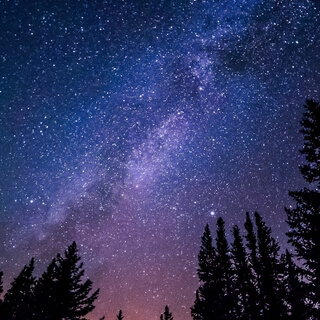
These effects are caused by scattering and absorption of photons and allow the ISM to be observed with the naked eye in a dark sky.
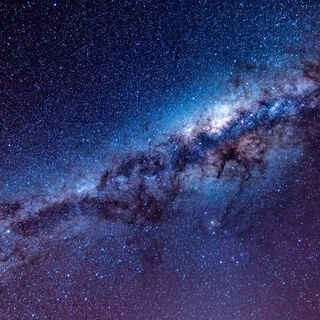
The apparent rifts that can be seen in the band of the Milky Way,
A uniform disk of stars,
Are caused by absorption of background starlight by dust and molecular clouds within a few thousand light-years from Earth.
This effect decreases rapidly with increasing wavelengths.
Reddening is caused by a greater absorption of blues and red light and becomes almost negligible at mid-infrared wavelengths.
Extinction provides one of the best ways of mapping the three-dimensional structure of the ISM,
Especially since the advent of accurate distances to millions of stars from the Gaia mission.
The total amount of dust in front of each star is determined from its reddening and the dust is then located along the line of sight by comparing the dust column density in front of stars,
Projected close together on the sky,
But at different distances.
By 2022,
It was possible to generate a map of ISM structures within 3 kiloparsecs of the Sun.
Far ultraviolet light is absorbed effectively by the ISM,
Specifically,
Atomic hydrogen absorbs very strongly at about 121.
5 nanometers,
The Lyman-alpha transition,
And also at the other Lyman series lines.
Therefore,
It is nearly impossible to see light emitted at those wavelengths from a star farther than a few hundred light-years from Earth,
Because most of it is absorbed during the transition from one star to the other.
All photons with wavelengths less than 91.
6 nanometers,
The Lyman limit,
Can ionize hydrogen and are also very strongly absorbed.
The absorption gradually decreases the increasing photon energy,
And the ISM begins to become transparent again in soft X-rays.
The ISM is usually far from thermodynamic equilibrium.
Collisions establish a Maxwell-Boltzmann distribution of velocities,
And the temperature,
Normally used to describe interstellar gas,
Is the Kilo-Hertz value.
The ISM is usually far from thermodynamic equilibrium.
Collisions establish a Maxwell-Boltzmann distribution of velocities,
Normally used to describe interstellar gas,
Is the kinetic temperature,
Which describes the temperature at which the particles would have the observed Maxwell-Boltzmann velocity distribution in thermodynamic equilibrium.
However,
The interstellar radiation field is typically much weaker than a medium in the thermodynamic equilibrium.
It is most often roughly that of an A-star,
Surface temperature of roughly 10,
000 Kelvin,
Highly diluted.
Therefore,
Bound levels within an atom or molecule in the ISM are rarely populated according to the Boltzmann formula.
Depending on the temperature,
Density,
And ionization state of a portion of the ISM,
Different heating and cooling mechanisms determine the temperature of the gas.
The first mechanism proposed for heating the ISM was heating by low-energy cosmic rays.
Cosmic rays are an efficient heating source able to penetrate in the depths of molecular clouds.
Cosmic rays transfer energy to gas through both ionization and excitation,
And to free electrons through Coulomb interactions.
Low-energy cosmic rays are more important because they are far more numerous than high-energy cosmic rays.
The ultraviolet radiation emitted by hot stars can remove electrons from dust grains.
The photon is absorbed by the dust grain,
And some of its energy is used to overcome the potential energy barrier and remove the electron from the grain.
This potential barrier is due to the binding energy of the electron,
The work function,
And the charge of the grain.
The remainder of the photon's energy gives the ejected electron kinetic energy,
Which heats the gas through collisions with other particles.
X-rays remove electrons from atoms and ions,
And those photoelectrons can provoke secondary ionization.
As the intensity is often low,
This heating is only efficient in warm,
Less dense atomic medium.
For example,
In molecular clouds,
Only hard X-rays can penetrate,
And X-ray heating can be ignored.
This is assuming the region is not near an X-ray source,
Such as a supernova remnant.
Molecular hydrogen can be formed on the surface of dust grains when two H atoms,
Which can travel over the grain,
Meet.
This process yields 4.
48 electron volts of energy distributed over the rotational and vibrational modes,
Kinetic energy of the H2 molecule,
As well as heating the dust grain.
This kinetic energy,
As well as the energy transferred from de-exitation of the hydrogen molecule through collisions,
Heats the gas.
Collisions at high densities between gas atoms and molecules with dust grains can transfer thermal energy.
This is not important in hill regions because UV radiation is more important.
This is not important in hill regions because UV radiation is more important.
It is also less important in diffuse ionized medium due to the low density.
In the neutral,
Diffuse medium grains are always colder,
But do not effectively cool the gas due to the low densities.
Grain heating by thermal exchange is very important in supernova remnants,
Where densities and temperature are very high.
Grass heating via grain-gas collisions is dominant deep in giant molecular clouds.
Far infrared radiation penetrates deeply due to the low optical depth.
Dust grains are heated via this radiation and can transfer thermal energy during collisions with the gas.
The process of fine-structure cooling is dominant in most regions of the interstellar medium,
Except regions of hot gas and regions deep in molecular clouds.
It occurs most efficiently with abundant atoms having fine-structure levels close to the fundamental level.
Collisions will excite these atoms to higher levels,
And they will eventually de-excite through photon emission,
Which will carry the energy out of the region.
At lower temperatures,
More levels than fine-structure levels can be populated via collisions.
For example,
Collisional excitation of the n equals 2 level of hydrogen will release a ly-a photon upon de-excitation.
In molecular clouds,
Excitation of rotational lines of CO is important.
Once a molecule is excited,
It eventually returns to a lower energy state,
Emitting a photon which can leave the region,
Cooling the cloud.