Welcome back,
Or welcome to the I Can't Sleep Podcast,
Where I read random articles from across the web to bore you to sleep with my soothing voice.
I'm your host,
Benjamin Boster.
Today's episode is from a Wikipedia article titled,
Rainbow.
A rainbow is an optical phenomenon caused by refraction,
Internal reflection,
And dispersion of light in water droplets,
Resulting in a continuous spectrum of light appearing in the sky.
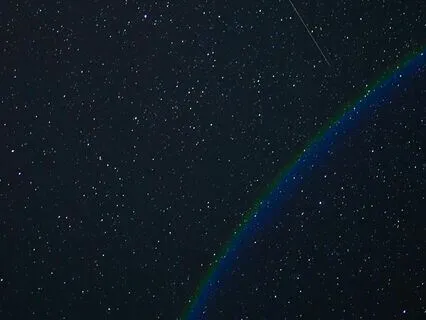
The rainbow takes the form of a multicolored circular arc.
Rainbows caused by sunlight always appear in the section of sky directly opposite the sun.
Rainbows can be caused by many forms of airborne water.
These include not only rain,
But also mist,
Spray,
And airborne dew.
Rainbows can be full circles.
However,
The observer normally sees only an arc formed by illuminated droplets above the ground,
And centered on a line from the sun to the observer's eye.
In a primary rainbow,
The arc shows red on the outer part and violet on the inner side.
This rainbow is caused by light being refracted when entering a droplet of water,
Then reflected inside on the back of the droplet,
And refracted again when leaving it.
In a double rainbow,
A second arc is seen outside the primary arc,
And has the order of its colors reversed with red on the inner side of the arc.
This is caused by the light being reflected twice on the inside of the droplet before leaving it.
Rainbows can be observed whenever there are water droplets in the air and sunlight shining from behind the observer at a low-altitude angle.
Because of this,
Rainbows are usually seen in the western sky during the morning,
And in the eastern sky during the early evening.
The most spectacular rainbow displays happen when half the sky is still dark with raining clouds,
And the observer is in the middle of the sky.
The result is a luminous rainbow that contrasts with the darkened background.
During such good visibility conditions,
The larger but fainter secondary rainbow is often visible.
It appears about 10 degrees outside of the primary rainbow with inverse order of colors.
The rainbow effect is also commonly seen near waterfalls or fountains.
In addition,
The effect can be artificially created by dispersing water droplets into the air during a sunny day.
Rarely,
A moonbow,
Lunar rainbow,
Or nighttime rainbow can be seen on strongly moonlit nights.
As human visual perception for color is poor in low light,
Moonbows are often perceived to be white.
It is difficult to photograph a complete semicircle of a rainbow in one frame,
As this would require an angle of view of 84 degrees.
For a 35mm camera,
A wide-angle lens with a focal length of 19mm or less would be required.
Now that software for stitching several images into a panorama is available,
Images of the entire arc,
And even secondary arcs,
Can be created fairly easily from a series of overlapping frames.
From above the earth,
Such as in an airplane,
It is sometimes possible to see a rainbow as a full circle.
This phenomenon can be confused with the glory phenomenon,
But a glory is usually much smaller,
Covering only 5 to 20 degrees.
The sky inside a primary rainbow is brighter than the sky outside of the bow.
This is because each droplet is a sphere and it scatters light over an entire circular disk in the sky.
The radius of the disk depends on the wavelength of light,
With red light being scattered over a larger angle than blue light.
Over most of the disk,
Scattered light at all wavelengths overlaps,
Resulting in white light which brightens the sky.
At the edge,
The wavelength dependence of the scattering gives rise to the rainbow.
The light of a primary rainbow arc is 96% polarized,
Tangential to the arc.
The light of the second arc is 90% polarized.
For colors seen by the human eye,
The most commonly cited and remembered sequence is Isaac Newton's sevenfold red,
Orange,
Yellow,
Green,
Blue,
Indigo,
And violet,
Remembered by the mnemonic,
Richard of York gave battle in vain,
Or as the name of a fictional person,
Roy G.
Biv.
The initialism is sometimes referred to in reverse order as V-I-B-G-Y-O-R.
More modernly,
The rainbow is often divided into red,
Orange,
Yellow,
Green,
Cyan,
Blue,
And violet.
The apparent discreteness of main colors is an artifact of human perception,
And the exact number of main colors is a somewhat arbitrary choice.
Newton,
Who admitted his eyes were not very critical in distinguishing colors,
Originally divided the spectrum into five main colors,
Red,
Yellow,
Green,
Blue,
And violet.
Later,
He included orange and indigo,
Giving seven main colors by analogy to the number of notes in a musical scale.
Newton chose to divide the visible spectrum into seven colors out of a belief derived from the beliefs of the ancient Greek sophists,
Who thought there was a connection between the colors,
The musical notes,
The known objects in the solar system,
And the days of the week.
Scholars have noted that what Newton regarded at the time as blue would today be regarded as cyan,
And what would today be regarded as cyan,
And what Newton called indigo would today be considered blue.
The color pattern of a rainbow is different from a spectrum,
And the colors are less saturated.
There is spectral smearing in a rainbow owing to the fact that,
For any particular wavelength,
There is a distribution of exit angles rather than a single unvarying angle.
In addition,
A rainbow is a blurred version of the bow obtained from a point source,
Because the disk diameter of the sun,
0.
5 degrees,
Cannot be neglected compared to the width of a rainbow,
2 degrees.
Further,
Red of the first supplementary rainbow overlaps the violet of the primary rainbow,
So other than the final color being a variant of spectral violet,
It is actually a purple.
The number of color bands of a rainbow may therefore be different from the number of bands in a spectrum,
Especially if the droplets are particularly large or small.
Therefore,
The number of colors of a rainbow is variable.
If,
However,
The word rainbow is used inaccurately to mean spectrum,
It is the number of main colors in the spectrum.
Moreover,
Rainbows have bands beyond red and violet in their respective near-infrared and ultraviolet regions.
However,
These bands are not visible to humans.
Only near frequencies of these regions to the visible spectrum are included in rainbows,
Since water and air become increasingly opaque to these frequencies,
Scattering the light.
The question of whether everyone sees seven colors in a rainbow is related to the idea of linguistic relativity.
Suggestions have been made that there is universality in the way that a rainbow is perceived.
However,
More recent research suggests that the number of distinct colors observed in a rainbow is not always equal to the number of distinct colors observed in a rainbow.
However,
More recent research suggests that the number of distinct colors observed and what these are called depend on the language that one uses,
With people whose language has fewer color words seeing fewer discrete color bands.
Light rays enter a raindrop from one direction,
Typically a straight line from the sun,
Reflect off the back of the raindrop,
And fan out as they leave the raindrop.
The light leaving the rainbow is spread over a wide angle,
With a maximum intensity at the angles 40.
89 to 42 degrees.
Note,
Between 2 and 100% of the light is reflected at each of the three surfaces encountered,
Depending on the angle of the incidence.
White light separates into different colors on entering the raindrop due to dispersion,
Causing red light to be refracted less than blue light.
When sunlight encounters a raindrop,
Part of the light is reflected,
And the rest enters the raindrop.
The light is refracted at the surface of the raindrop.
When this light hits the back of the raindrop,
Some of it is reflected off the back.
When the internally reflected light reaches the surface again,
Once more,
Some is internally reflected,
And some is refracted as it exits the drop.
The light that reflects off the drop exits from the back,
Or continues to bounce around inside the drop after the second encounter with the surface,
And is not relevant to the information of the primary rainbow.
The overall effect is that part of the incoming light is reflected back over the range of 0 degrees to 42 degrees,
The most intense light at 42 degrees.
This angle is independent of the size of the drop,
But does depend on its refractive index.
Seawater has a higher refractive index than rainwater,
So the radius of a rainbow in sea spray is smaller than that of a true rainbow.
This is visible to the naked eye by a misalignment of these bows.
The reason the returning light is most intense at about 42 degrees is that this is a turning point.
Light hitting the outermost ring of the drop gets returned at less than 42 degrees,
As does the light hitting the drop nearer to its center.
There is a circular band of light that all gets returned right around 42 degrees.
If the sun were a laser emitting parallel monochromatic rays,
Then the luminance brightness of the bow would tend toward infinity at this angle if interference effects are ignored.
But since the sun's luminance is finite and its rays are not all parallel,
It covers about half of a degree of the sky,
The luminance does not go to infinity.
Furthermore,
The amount by which light is refracted depends upon its wavelength,
And hence its color.
This effect is called dispersion.
Blue light,
Shorter wavelength,
Is refracted at a greater angle than red light,
But due to the reflection of light rays from the back of the droplet,
The blue light emerges from the droplet at a smaller angle to the original incident white incident white light ray than the red light.
Due to this angle,
Blue is seen on the inside of the arc of the primary rainbow,
And red on the outside.
The result of this is not only to give different colors to different parts of the rainbow,
But also to diminish the brightness.
A rainbow formed by droplets of a liquid with no dispersion would be white,
But brighter than a normal rainbow.
The light at the back of the raindrop does not undergo total internal reflection,
And most of the light emerges from the back.
However,
Light coming out of the back of the raindrop does not create a rainbow between the observer and the sun,
Because spectra emitted from the back of the raindrop do not have a maximum of intensity,
As the other visible rainbows do,
And thus the colors blend together rather than forming a rainbow.
A rainbow does not exist at one particular location.
Many rainbows exist,
However only one can be seen depending on the particular observer's viewpoints as droplets of light illuminated by the sun.
All raindrops refract and reflect the sunlight in the same way,
But only the light from some raindrops reaches the observer's eye.
This light is what constitutes the rainbow for that observer.
The whole system composed by the sun's rays,
The observer's head,
And the spherical water drops has an axial symmetry around the axis through the observer's head in parallel to the sun's rays.
The rainbow is curved because the set of all the raindrops that have the right angle between the observer,
The drop,
And the sun,
Lie on a cone pointing at the sun with the observer at the tip.
The base of the cone forms a circle at an angle of 40 to 42 degrees to the line between the observer's head and their shadow,
But 50% or more of the circle is below the horizon.
50% or more of the circle is below the horizon unless the observer is sufficiently far above the earth's surface to see it all,
For example an airplane.
Alternatively,
An observer with the right vantage point may see the full circle in a fountain or waterfall spray.
A secondary rainbow at a greater angle than the primary rainbow is often visible.
The term double rainbow is used when both the primary and secondary rainbows are visible.
In theory,
All rainbows are double rainbows,
But since the secondary bow is always fainter than the primary,
It may be too weak to spot and practice.
Secondary rainbows are caused by a double reflection of sunlight inside the water droplets.
Technically,
The secondary bow is centered on the sun itself,
But since its angular size is more than 90 degrees,
About 127 degrees for violet to 130 degrees for red,
It is seen on the same side of the sky as the primary rainbow,
About 10 degrees outside it and an apparent angle of 50 to 53 degrees.
As a result of the inside of the secondary bow being up to the observer,
The colors appear reversed compared to those of the primary bow.
The secondary rainbow is fainter than the primary because more light escapes from two reflections compared to one,
And because the rainbow itself is spread over a greater area of the sky.
Each rainbow reflects white light inside its colored bands,
But that is down to the primary and up for the secondary.
The dark area of unlit sky lying between the primary and secondary bows is called Alexander's band,
After Alexander of Aphrodisias who first described it.
Unlike a double rainbow that consists of two separate and concentric rainbow arcs,
The very rare twinned rainbow appears as two rainbow arcs that split from a single base.
The colors in the second bow,
Rather than reversing as in a secondary rainbow,
Appear in the same order as the primary rainbow.
A normal secondary rainbow,
A normal secondary rainbow,
May be present as well.
Twinned rainbows can look similar too,
But should not be confused with supernumerary bands.
The two phenomena may be told apart by their difference in color profile.
Supernumerary bands consist of subdued pastel hues,
Mainly pink,
Purple,
And green,
While the twinned rainbow shows the same spectrum as a regular rainbow.
The cause of a twin rainbow is believed to be the combination of different sizes of water drops falling from the sky.
Due to air resistance,
Raindrops flatten as they fall,
And flattening is more prominent in larger water drops.
When two rain showers with different sized raindrops combine,
They each produce slightly different rainbows,
Which may combine and form a twinned rainbow.
A numerical ray tracing study showed that a twinned rainbow on a photo could be explained by a mixture of 0.
4 and 0.
5 millimeter droplets.
That small difference in droplet size resulted in a small difference in flattening of the droplet shape,
And a large difference in flattening of the rainbow top.
Meanwhile,
The even rarer case of a rainbow split into three branches was observed and photographed in nature.
In theory,
Every rainbow is a circle,
But from the ground,
Usually only its upper half can be seen.
Since the rainbow's center is diametrically opposed to the sun's position in the sky,
More of the circle comes into view as the sun approaches the horizon,
Meaning that the largest section of the circle normally seen is about 50% during sunset or sunrise.
Viewing the rainbow's lower half requires the presence of water droplets below the observer's horizon,
As well as sunlight that is able to reach them.
These requirements are not usually met when the viewer is at ground level,
Either because droplets are absent in their required position,
Or because the sunlight is obstructed by the landscape behind the observer.
From a high viewpoint,
Such as a high building or an aircraft,
However,
The requirements can be met and the full circle rainbow can be seen.
Like a partial rainbow,
A circular rainbow can have a secondary bow or supernumerary bows as well.
It is possible to produce the full circle when standing on a circle,
For example,
By spraying a water mist from a garden hose while facing away from the sun.
A circular rainbow should not be confused with the glory,
Which is much smaller in diameter and is created by different optical processes.
In the right circumstances,
A glory and a circular rainbow or fog bow can occur together.
Another atmospheric phenomenon that may be mistaken for a circular rainbow is the 22-degree halo,
Which is caused by ice crystals rather than liquid water droplets and is located around the sun or moon,
Not opposite it.
In certain circumstances,
One or several narrow faintly colored bands can be seen bordering the violet edge of a rainbow,
I.
E.
Inside the primary bow or,
Much more rarely,
Outside the secondary.
These extra bands are called supernumerary rainbows or supernumerary bands.
Together with the rainbow itself,
The phenomenon is also known as a stacker rainbow.
The supernumerary bows are slightly detached from the main bow,
Becoming successively fainter along with their distance from it,
And have pastel colors consisting mainly of pink,
Purple,
And green hues rather than the usual spectrum pattern.
The effect becomes apparent when water droplets are involved that have a diameter of about one millimeter or less.
The smaller the droplets are,
The broader the supernumerary bands become and the less saturated their colors.
Due to their origin in small droplets,
Supernumerary bands tend to be particularly prominent in fog bows.
Supernumerary rainbows cannot be explained using classical geometric optics.
The alternating faint bands are caused by interference between rays of light following slightly different paths with slightly varying lengths within the raindrops.
Some rays are in phase,
Reinforcing each other through constructive interference,
Creating a bright band.
Others are out of phase by up to half a wavelength,
Canceling each other out through destructive interference and creating a gap.
Given the different angles of refraction for rays of different colors,
The patterns of interference are slightly different for rays of different colors,
So each bright band is differentiated in color,
Creating a miniature rainbow.
Supernumerary rainbows are clearest when raindrops are small and of uniform size.
The very existence of supernumerary rainbows was historically a first indication of the wave nature of light and the first explanation was provided by Thomas Young in 1804.
When a rainbow appears above a body of water,
Two complementary mirror bows may be seen below and above the horizon,
Originating from different light paths.
Their names are slightly different.
A reflected rainbow may appear in the water surface below the horizon.
The sunlight is first deflected by the raindrops and then reflected off the body of water before reaching the observer.
The reflected rainbow is frequently visible,
At least partially,
Even in small puddles.
A reflection rainbow may be produced where sunlight reflects off a body of water before reaching the raindrops,
If the water body is large,
Quiet over its entire surface,
And close to the rain curtain.
The reflection rainbow appears above the horizon.
It intersects the normal rainbow at the horizon and its arc reaches higher in the sky,
With its center as high above the horizon as the normal rainbow's center is below it.
Reflection bows are usually brightest when the sun is low,
Because at that time its light is most strongly reflected from water surfaces.
As the sun gets lower,
The normal and reflection bows are drawn closer together.
Due to the combination of requirements,
A reflection rainbow is rarely visible.
Up to eight separate bows may be distinguished if the reflected and reflection rainbows happen to occur simultaneously.
The normal,
Non-reflection primary and secondary bows above the horizon,
With their reflected counterparts below it,
And the reflection primary and secondary bows above the horizon,
With their reflected counterparts below it.
Occasionally a shower may happen at sunrise or sunset,
Where the shorter wavelengths,
Like blue and green,
Have been scattered and essentially removed from the spectrum.
Further scattering may occur due to the rain,
And the result can be the rare and dramatic monochrome or red rainbow.
In addition to the common primary and secondary rainbows,
It is also possible for rainbows of higher orders to form.
The order of a rainbow is determined by the number of light reflections inside the water droplets that create it.
One reflection results in the first order or primary rainbow.
Two reflections create the second order or secondary rainbow.
More internal reflections cause bows of higher orders,
Theoretically unto infinity.
As more and more light is lost with each internal reflection,
However,
Each subsequent bow becomes progressively dimmer,
And therefore increasingly difficult to spot.
An additional challenge in observing the third order or tertiary and fourth order or quaternary rainbows is their location in the direction of the sun,
About 40 degrees and 45 degrees from the sun respectively,
Causing them to become drowned in its glare.
For these reasons,
Naturally occurring rainbows of an order higher than two are rarely visible to the naked eye.
Nevertheless,
Sightings of the third order bow in nature have been reported,
And in 2011 it was photographed definitively for the first time.
Shortly after,
The fourth order rainbow was photographed as well,
And in 2014 the first ever pictures of the fifth order or quaternary rainbow were published.
The quaternary rainbow lies partially in the gap between the primary and secondary rainbows,
And is far fainter than even the secondary.
In a laboratory setting,
It is possible to create bows of much higher orders.
Felix Belay,
1808-1882,
Depicted angular positions up to the 19th order rainbow,
A pattern he called a rose of rainbows.
In the laboratory,
It is possible to observe higher order rainbows by using extremely bright and well-collimated light produced by lasers.
Up to the 200th order rainbow was reported by N.
G.
Et al.
In 1998,
Using a similar method but an argon ion laser beam.
Tertiary and quaternary rainbows should not be confused with triple or quadruple rainbows,
Terms sometimes erroneously used to refer to the much more common supernumerary bows and reflection rainbows.
Like most atmospheric optical phenomena,
Rainbows can be caused by light from the sun,
But also from the moon.
In case of the latter,
The rainbow is referred to as a lunar rainbow or moon bow.
They are much dimmer and rarer than solar rainbows,
Requiring the moon to be near full in order for them to be seen.
For the same reason,
Moon bows are often perceived as white and may be thought of as monochrome.
The full spectrum is present,
However,
But the human eye is not normally sensitive enough to see the colors.
Long exposure photographs will sometimes show the color in this type of rainbow.
Fog bows form in the same way as rainbows.
They are formed by much smaller cloud and fog droplets that diffract light extensively.
They are almost white with faint reds on the outside and blues inside.
Often one or more broad supernumerary bands can be discerned inside the inner edge.
The colors are dim because the bow in each color is very broad and the colors overlap.
Fog bows are commonly seen over water when air in contact with the cooler water is chilled,
But they can be found anywhere if the fog is thin enough for the sun to shine through and the sun is fairly bright.
They are very large,
Almost as big as a rainbow,
And much broader.
They sometimes appear with a glory at the bow's center.
Fog bows should not be confused with ice halos,
Which are very common around the world and visible much more often than rainbows of any order,
Yet are unrelated to rainbows.
A sleet bow forms in the same way as a typical rainbow with the exception that it occurs when light passes through falling sleet ice pellets instead of liquid water.
As light passes through the sleet,
The light is refracted causing the rare phenomena.
These have been documented across the United States with the earliest publicly documented and photographed sleet bow being seen in Richmond,
Virginia on the 21st of December 2012.
Just like regular rainbows,
These can also come in various forms,
With a monochrome sleet bow being documented on the 7th of January 2016 in Valparaiso,
Indiana.
The circumzenithal and circumhorizontal arcs are two related optical phenomena similar in appearance to a rainbow,
But unlike the latter,
Their origin lies in light refraction through hexagonal ice crystals rather than liquid water droplets.
This means that they are not rainbows,
But members of the large family of halos.
Both arcs are brightly colored ring segments centered on the zenith,
But in different positions in the sky.
The circumzenithal arc is notably curved and located high above the sun or moon,
With its convex side pointing downwards,
Creating the impression of an upside-down rainbow.
The circumhorizontal arc runs much closer to the horizon,
Is more straight and located at a significant distance below the sun or moon.
Both arcs have their red side pointing towards the sun and their violet part away from it,
Meaning the circumzenithal arc is red on the bottom while the circumhorizontal arc is red on top.
The circumhorizontal arc is sometimes referred to by the misnomer fire rainbow.
In order to view it,
The sun or moon must be at least 58 degrees above the horizon,
Making it a rare occurrence at higher latitudes.
The circumzenithal arc visibly only at a solar or lunar elevation of less than 32 degrees is much more common,
But often missed since it occurs almost directly overhead.
It has been suggested that rainbows might exist on Saturn's moon Titan,
As it has a wet surface and humid clouds.
The radius of a Titan rainbow would be about 49 degrees instead of 42 degrees,
Because the fluid in that cold environment is methane instead of water.
Although visible rainbows may be rare due to Titan's hazy skies,
Infrared rainbows may be more common,
But an observer would need infrared night vision goggles to see them.
Droplets or spheres composed of materials with different refractive indices than plain water produce rainbows with different radius angles.
Since saltwater has a higher refractive index,
A sea spray bow does not perfectly align with the ordinary rainbow,
If seen at the same spot.
Tiny plastic or glass marbles may be used in road marking as reflectors to enhance its visibility by drivers at night.
Due to a much higher refractive index,
Rainbows observed on such marbles have a noticeably smaller radius.
One can easily reproduce such phenomena by sprinkling liquids of different refractive indices in the air.