Welcome to the I Can't Sleep Podcast,
Where I help you drift off one fact at a time.
I'm your host,
Benjamin Boster,
And today's episode is about Dinosaur National Monument.
This sponsored episode is a birthday gift to Ashley from Mike.
Happy birthday,
Ashley!
Dinosaur National Monument is an American national monument located in the southeast flank of the Uinta Mountains,
On the border between Colorado and Utah,
At the confluence of the Green and Yampa Rivers.
Although most of the monument area is in Moffett County,
Colorado,
The Dinosaur Quarry is located in Utah,
North of the town of Jensen,
Utah.
The nearest Colorado town is Dinosaur,
While the nearest city is Vernal,
Utah.
Originally preserved in 1915 to protect its famous Dinosaur Quarry,
The monument was greatly expanded in 1938 to include its wealth of natural history.
The park contains over 800 paleontological sites,
And has fossils of dinosaurs including Allosaurus,
Deinonychus,
Abydosaurus,
And various sauropods.
The Abydosaurus consists of a nearly complete skull,
The lower jaw,
And the first four neck vertebrae.
The specimen was found at the base of the Massenticate member of the Cedar Mountain Formation,
And is the holotype for the species.
Paleontologist Earl Douglas of the Carnegie Museum discovered eight vertebrae of an Apatosaurus on August 17,
1909.
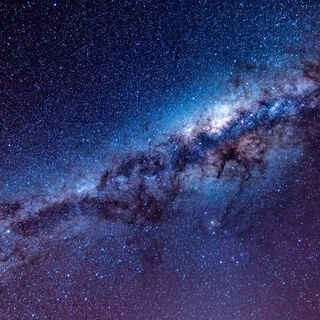
The International Dark Sky Association designated Dinosaur National Monument and International Dark Sky Park in April 2019.
The Fremont people lived in the area of what is now Dinosaur National Monument before the 14th century,
With archaeological evidence dating from circa 200 to circa 1300.
Archaeologists first studied and named the Fremont culture along the Fremont River in south-central Utah,
And have since traced it through much of the Green and Colorado River drainages.
The Fremont did not build large permanent dwellings.
Instead,
They lived in small bands within natural shelters,
Such as rock overhangs or shallow caves,
Or small villages.
They consumed plant foods,
Such as pine nuts,
Berries,
And cactus fruits,
As well as wild game,
Including mule deer,
Bighorn sheep,
Smaller mammals,
And birds.
They also grew corn,
Beans,
And squash,
Sometimes using irrigation techniques.
The fate of the Fremont culture is unclear.
Many designs in the monument are accessible for close viewing along four trails in Utah,
One of which is near the visitor center,
And a fifth trail in Colorado.
The dinosaur fossil beds,
Bone beds,
Were discovered in 1909 by Earl Douglas,
A paleontologist working and collecting for the Carnegie Museum of Natural History.
He and his crews excavated thousands of fossils and shipped them back to the museum in Pittsburgh,
Pennsylvania for study and display.
President Woodrow Wilson proclaimed the dinosaur beds as Dinosaur National Monument in 1915.
The monument boundaries were expanded in 1938 from the original 80 acres surrounding the dinosaur quarry in Utah to 210,
844 acres in Utah and Colorado,
Encompassing the river canyons of the Green and Yampa.
The plans made by the U.
S.
Bureau of Reclamation on a $10 billion Colorado River Storage Project began to arouse opposition in the early 1950s when it was announced that one of the proposed dams would be at Echo Park,
In the middle of Dinosaur National Monument.
The controversy assumed major proportions,
Dominating conservation politics for years.
David Brower,
Executive director of the Sierra Club,
And Howard Sonizer of the Wilderness Society,
Led an unprecedented nationwide campaign to preserve the free-flowing rivers and scenic canyons of the Green and Yampa rivers.
They argued that if a national monument was not safe from development,
How could any wildland be kept intact?
On the other side of the argument were powerful members of Congress from western states who were committed to the project in order to secure water rights,
Obtain cheap hydroelectric power,
And develop reservoirs as tourist destinations.
After much debate,
Congress settled on a compromise that eliminated Echo Park Dam and authorized the rest of the project.
The Colorado River Storage Project Act became law on April 11,
1956.
It stated that no dam or reservoir constructed under the authorization of the Act shall be within any national park or monument.
Places on the list of National Register of Historic Places include prehistoric sites,
Castle Park Archaeological District,
A prehistoric residential site with inhabitation during 1500 to 1000 BC,
And again from AD 1000 to 1899 by the prehistoric Fremont culture,
Ute and Shoshone people.
Mantles Cave is a prehistoric Fremont culture residential site from 499 BC to AD 1749.
Other sites,
Josie Bassett Morris Ranch Complex,
Dennis Julian Inscription,
Ryle Chew Ranch Complex,
Upper Wade and Curtis Cabin.
The Dinosaur National Monument sits on a vast area of desert land in northwestern Colorado and northeastern Utah.
Typical of high deserts,
Summer temperatures can be exceedingly hot,
While winter temperatures can be very cold.
Snowfall is common,
But the snow melts rapidly in the arid and sunny climates of these states.
Rainfall is very low,
And the evaporation rate classifies the area as desert,
Even though the rainfall exceeds 10 inches.
The Wall of Bones located within the Dinosaur Quarry building in the park consists of a steeply tilted 67 degree from horizontal rock layer,
Which contains thousands of dinosaur fossils.
The preserved section is only a portion of what was originally present when Douglas made his discovery.
When work ceased in 1922,
A portion of the quarry was left for future development.
The work began as part of President Franklin Roosevelt's Civil Works Administration,
Which provided employment during the Depression under the Transient Relief Service and later under the Works Progress Administration.
This work included constructing a road to the quarry,
Removal of overburden covering the bone-bearing strata,
And building of a small temporary museum.
World War II interrupted work,
But this was resumed in 1951 with the building of a small metal building over the east portion of the quarry to test whether bone was abundant enough to warrant a larger,
More permanent building.
This more permanent building was erected in the mid-1950s as part of the National Park Service Mission 66 plan.
The architectural design was highly controversial for its ultra-modern use of glass,
Steel,
And concrete ramp that spiraled around a cylindrical office tower.
The building opened at the dedication ceremony on June 1,
1958.
The design had two levels and abundant natural light so that visitors could watch technicians remove the hard rock to reveal the excavated fossil bones in situ.
In July 2006,
The quarry visitor's center was closed due to structural problems that,
Since 1958,
Had plagued the building because it was built on unstable clay.
The decision was made to build a new facility elsewhere in the monument to house the visitor's center and administrative functions.
Making it easier to resolve the structural problems of the quarry building while still retaining a portion of the historic Mission 66-era exhibit hall.
It was announced in April 2009 that Dinosaur National Monument would receive $13.
1 million to refurbish and reopen the gallery as part of the Obama administration's $750 billion stimulus plan.
The Park Service successfully rebuilt the quarry exhibit hall,
Supporting its weight on 70-foot steel micropile columns that extend to the bedrock below the unstable clay.
The Dinosaur Quarry was reopened in fall 2011.
Vernal is the county seat of and the largest city in Uinta County,
Utah,
Approximately 170 miles east of Salt Lake City and 20 miles west of the Colorado border.
As of the 2020 census,
The city population was 10,
079.
The population has since grown to 10,
432 as of the 2022 population estimate.
Vernal is home to the Vernal Temple of The Church of Jesus Christ of Latter-day Saints and one of the nine statewide regional campuses of Utah State University.
The city serves as a gateway to the nearby Dinosaur National Monument,
Flaming Gorge,
And the Uinta Mountain Range.
Vernal,
Unlike most Utah towns,
Was not settled by Mormons moving west or across the state.
Brigham Young sent a scouting party to the area Uinta Basin in 1861 and received word back that the area was good for nothing but nomad purposes,
Hunting grounds for Indians,
And to hold the world together.
That same year,
President Abraham Lincoln set the area aside as the Uinta Indian Reservation with Captain Pardon Dodds appointed as Indian agent.
Dodds later built the first cabin erected by a white man in the Uinta Basin around 1868.
Settlers began to filter in after that and built cabins in various spots on or near Ashley Creek.
In 1879,
Many came close to perishing during the infamous hard winter of that same year.
Vernal is in the Uinta Basin,
Bordered on the north by the Uinta Mountains,
One of the relatively few mountain ranges which lie in an east-west rather than the usual north-to-south direction.
The Tavaputs Plateau lies to the south and Blue Mountain to the east,
While Vernal itself lies in Ashley Valley.
The valley is named in honor of William H.
Ashley,
An early fur trader who entered the area in 1825 by floating down the Green River in a bull boat made of animal hides.
Vernal is located on the northern edge of the Colorado Plateau and south of Flaming Gorge National Recreation Area on the Utah-Wyoming state line.
The city is in a high desert area of the Colorado Plateau.
According to the United States Census Bureau,
The city has a total area of 4.
6 square miles,
All land.
Vernal has a cold desert climate with low humidity.
The average annual temperature is 46.
9 degrees Fahrenheit with a mean high of 59.
8 degrees Fahrenheit and a mean low of 34.
0 degrees Fahrenheit.
As of the Census of 2020,
There were 10,
076 people,
3,
217 households,
And 2,
095 families residing in the city.
The population density was 2,
180.
7 people per square mile.
There were 3,
217 housing units at an average density of 696.
3 per square mile.
The racial makeup of the city was 83.
17% white,
0.
46% African American,
3.
68% Native American,
0.
79% Asian,
0.
48% Pacific Islander,
3.
91% from other races,
And 7.
48% from two or more races.
Hispanic or Latino of any race were 8.
62% of the population.
There were 3,
217 households,
Out of which 37.
79% had children under the age of 18 living with them.
57.
8% were married couples living together,
12.
1% had a female householder with no husband present,
And 27% were non-families.
22.
9% of all households were made up of individuals,
And 9.
9% had someone living alone who was 65 years of age or older.
The average household size was 3.
01,
And the average family size was 3.
86.
In the city,
The population was spread out,
With 30.
7% under the age of 18,
11.
06% from 18 to 24,
28.
3% from 25 to 44,
21.
2% from 45 to 64,
And 8.
54% who were 65 years of age or older.
The median age was 30.
5 years.
For every 100 females age 18 and over,
There were 122.
9 males.
The median income for a household in the city was $50,
692,
And the median income for a family was $34,
453.
About 14.
7% of families and 19% of the population were below the poverty line.
Vernal's economy is based on extracting natural resources,
Including petroleum,
Natural gas,
Phosphate,
And uintate,
More commonly known as Gilsonite.
This has led to the establishment of branch offices of companies such as Halliburton and Schlumberger.
Tourism also plays a role in Vernal's economy due to the town's roots in the Old West and being a large site of ancient dinosaur fossils.
Vernal and the surrounding area are popular among outdoor enthusiasts as they are situated near plentiful spots for fishing,
Fly fishing,
Hunting,
And other outdoor activities.
Vernal's public schools include Ashley Valley Education Center,
Uinta High,
Uinta Middle School,
Vernal Middle,
Ashley Elementary,
Discovery Elementary,
And branches of Utah State University and Uinta Basin Technical College.
In 2015,
The Terra Academy opened as a K-12 charter school.
Private schools include White House Academy and Uinta Basin Christian Academy.
In 2007,
Uinta School District built new buildings for two elementary schools,
Mazer and Naples Elementary,
And the nearby communities to accommodate increased enrollment and eliminate unsafe older buildings.
Other area schools include Davis Elementary,
LaPointe Elementary,
And Eagle View Elementary,
Pre-K-8.
The National Outdoor Leadership School NOLS Rocky Mountain Riverbase.
Vernal is along an east-west Federal Highway,
U.
S.
Route 40,
And a north-south Federal Highway,
U.
S.
Route 191.
The two highways overlay each other,
Heading west from the city.
The city's Vernal Regional Airport has scheduled nonstop air service to Phoenix,
Operated by Contour Airlines with Embraer ERJ jet aircraft.
Passenger service is subsidized by the Essential Air Service,
EAS program.
Twice weekly,
Service is also offered to Salt Lake City via Red Tail Air.
Vernal is served by two out of the three Basin Transit Association Routes,
The Vernal-Roosevelt Route,
Connection available to the Deschenes Route in Roosevelt,
And the Vernal Circulator,
As well as the Salt Lake Express Route to Salt Lake City.
The Dinosaur Roundup Rodeo is an annual PRCA rodeo,
Held in Vernal during the second weekend of July.
It has been running since the 1930s.
This event has been nominated as one of the top five large outdoor rodeos of the year multiple times,
And attracts over 500 contestants each year.
Dinosaur Days and Hot Air Balloon Festival features a growing multi-day hot air balloon festival,
Along with numerous other community events,
Many of which have a hot air balloon theme.
The John Wesley Powell River Festival celebrates the exploration and history of the region with live music,
Food trucks,
And activities that focus on local history.
Games,
Anime and More,
GAM,
Is a biannual fan convention.
It is a multi-genre convention having video games,
Card games,
Cartoons,
Costumes,
Tournaments,
Tabletop gaming,
And similar activities.
The GAM convention is held during March and August in Uinta County,
Utah.
In 2015,
It was the first anime convention held in Vernal,
As well as the first gaming convention held there,
Making it the first convention of its type in Vernal.
In 2016,
It was held in Naples,
Utah for the first time,
Making GAM the first convention of its type in the city of Naples.
The Uinta County Fair occurs Thursday through Saturday each year in the second week of June.
Lookout Point rests on the western edge overlooking Ashley Valley.
The valley in which Vernal is situated.
The Bank of Vernal,
A.
K.
A.
The Parcel Post Bank Building,
3rd West Main Street,
Is a registered historical building in the Uinta County Landmark Register.
Also known as the bank that was sent by mail,
The Bank of Vernal was constructed in 1916-1917 by William H.
Coultharp,
A Vernal businessman and entrepreneur.
Coultharp took advantage of inexpensive parcel post rates to ship some 80,
000 masonry bricks in 50-pound packages via the U.
S.
Post Office,
The 180 miles from Salt Lake City to Vernal.
After completing delivery of the bricks,
The U.
S.
Post Office hastily changed its regulations.
The United States Postmaster General Albert Sidney Burleson explicitly stated in a letter that it is not the intent of the United States Postal Service that buildings be shipped through the mail.
Today the building is used as a branch office of Zions Bank.
Notable People Ron Abaglin,
Former Weber State men's basketball coach,
Born and raised in Vernal.
Earl W.
Bascom,
Inventor,
Rodeo cowboy,
Artist,
And sculptor.
Texas Rose Bascom,
1922-1993.
Rodeo performer,
Hollywood actor,
National Cowgirl Hall of Fame inductee.
Claire Bergener,
U.
S.
Representative from California,
1973-1983.
Lane Frost,
Rodeo star,
PRCA bull riding champion of the world,
Attended junior high school in Vernal.
E.
Gordon Gee,
Academic who held more university presidencies than any other American.
Douglas Kent Hall,
Writer and photographer,
Academy Award winner.
Dallin H.
Oaks,
President of Brigham Young University,
Utah Supreme Court Justice.
Dennis Preece,
Hall of Fame wrestling coach,
Had local high school in Vernal.
James Woods,
Film and television actor,
Was born in Vernal.
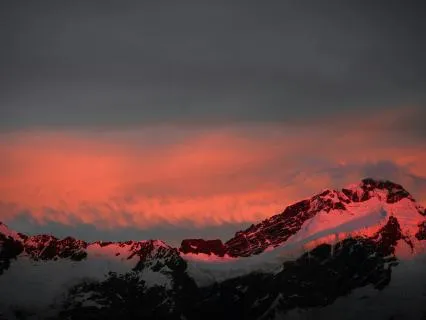
The Uinta Mountains are an east-west trending mountain range in northeastern Utah,
Extending a short distance into northwest Colorado and slightly into southwestern Wyoming in the United States.
As a sub-range of the Rocky Mountains,
They are unusual for being the highest range in the contiguous United States running east to west,
And lie approximately 100 miles east of Salt Lake City.
The range has peaks ranging from 11,
000 to 13,
528 feet.
With the highest point being Kings Peak,
Also the highest point in Utah.
The Mirror Lake Highway crosses the western half of the Uintas on its way to Wyoming.
Utah State Route 44 crosses the east end of the Uintas between Vernal and Manila.
The name Uinta derives from the Ute word,
Uvweteu,
Meaning pine forest or pine tree.
The Uinta Mountains are part of the Wasatch and Uinta-Montane Forests ecoregion.
Nearly the entire range lies within Uinta-Wasatch-Cache National Forest on the north and west,
And Ashley National Forest on the south and east.
The range's highest peaks are protected as part of the High Uintas Wilderness.
The forests contain many species of trees,
Including lodgepole pine,
Subalpine fir,
Engelmann's spruce,
Douglas fir,
And quaking aspen.
There are also many species of grasses,
Shrubs,
And forbs growing in the Uinta Mountains.
Fauna is typical of the central Rocky Mountains.
Large grazing and browsing animals,
Including the Rocky Mountain elk,
Mule deer,
Moose,
Pronghorn antelope,
Mountain goats,
And Rocky Mountain bighorn sheep.
Mammalian predators include the American black bear,
Mountain lion,
Coyotes,
Red fox,
Badger,
Wolverine,
Martin,
And the long-tailed weasel.
A gray wolfpack has been observed at the eastern end of the range in Moffett County,
Colorado.
Raptors include bald and golden eagles,
Turkey vultures,
Various hawks and harriers,
And owls,
Including the great horned owl,
Great gray owl,
And barn owls.
Other notable large birds include the sage grouse and white-tailed ptarmigan.