Hi there,
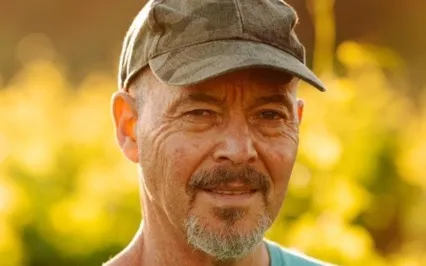
My name is Barry Zwaristine and you are listening to the Post-Military Transitioning Challenges talks.
I am a combat veteran,
Psychologist and author with over 20 years of sitting with veterans and current serving.
The PMTC talks can support you to achieve a successful navigation into civilian territory.
The core mission of my talks is that no veteran should ever have to come home to die.
Hi and thanks for taking time to connect with me.
Wherever you currently are,
I hope that life is treating you well and that these talks are in some way contributing positively to how you are managing your transition process.
If you feel these talks are benefiting you,
Please follow my profile.
You'll then also be notified as I complete ongoing talks and meditations.
At the end of the talk,
Please take some time to rate and comment as this supports me to move forward with my vision and service to veterans.
In my last talk on navigating through relationship territory,
I talked about the importance of keeping your safety on.
And keeping your safety on really took me back to being on operations in the Rhodesian Bush War where when we were on patrol,
Your safety was always off.
Whereas when we were back in our bush camps or in base camp,
Your safety was always on.
And if you think about it,
Being back in your bush camp or in your main base camp,
That's really about safe territory.
You have to think about other people around you.
It's not about reactivity and immediate response.
Being in the bush and on patrol is about being able to react suddenly and aggressively without having to flick the lever up or down.
And so too with the brain.
If we think about keeping your safety on,
We need to look at what is happening in the brain where keeping the safety on becomes a problem.
Now as I've said before in previous talks,
The back of the brain is where all the emotion is.
So really navigating your way through the back of the brain or your ambush territory,
That's like being on operations and your safety is off.
It's not about regulation.
It's about reactivity in appropriate ways.
When you are in the front of your brain,
That is the OP,
Your observation post,
Where you are able to think,
Plan,
Organize and assess.
So it's really the calm,
Organized state of your brain.
Now in life,
It's impossible to always stay in the front of our brain because of the impacts of whatever we're coming,
Impacts of whatever we have experienced in our lives or the intensity with regard to whatever is happening in the present.
Now anyone listening to the talk,
Think about whether you've always been able to navigate effectively when you were in the front of the brain.
Did you always remain calm and focused?
Did you communicate effectively?
And the answer to that is certainly no.
I think there's,
I've not yet met anybody who can claim to have a mastery over self-regulation all the time.
And so what we would have experienced is that in situations where it wasn't required,
We would afflict the safety often.
We would have gone in feet first and reacted.
So in other words,
We would have rapidly moved from a situation where we were initially dialoguing from the front of our brain and we would have gone back to the back of our brain and ambush the ambush territory and we would have behaved accordingly.
Now if we do not know how to downregulate,
If we do not know how to calm ourselves,
As I pointed out,
You're really at risk of three things.
You're at risk of having a runaway gun where you are literally out of control.
You're at risk of having an accidental discharge,
Which is a sudden outburst of anger,
Or a stoppage where you just stop working.
It's like that almost,
How would I put it,
That incapacitating anxiety or depression.
So none of those ways of working actually work when we have to be present and communicate effectively with people around us and especially in relationships.
So the challenge is,
What do we do between the situation which we're facing and the reaction?
You know,
Often when we haven't learned the core tools,
There's no gap,
There's no space between the situation and the reaction.
There's a situation,
We immediately go into the back of our brains and we react.
We have to somehow find a way of creaking open that space to give us a stop gap,
To calm ourselves down,
To bring the blood flow from the back of our brain into the front of our brains,
And then to be able to proceed forward in a calm,
Focused and respectful way.
So this leads me to this talk,
Which is really,
I believe,
A very important protocol that when your safety is on,
Now you can begin to learn how to communicate with respect with the people that you love.
I'm not saying it's always easy and I'm not saying we're always going to get it.
And sometimes we lose it,
But at the end of the day we need to learn,
Then we can get up dust off and take that learning forward.
Okay,
So let's look at relationship lesson two,
Which is,
As I said,
About respect.
A partner of Efton once said to me,
There are times when I look into his eyes when we're having a tricky discussion and all I see is hate or coldness.
It's like if I would just disappear,
He'd be happy.
I see no care for how I feel.
It's exhausting.
Everything is about his needs and his difficulties from the war.
But what about me?
And I think that was a very powerful bit of feedback for me,
Because that question,
What about me,
Is absolutely spot on.
There needs to be room for our partners and our families in our struggles when we return from operations or from the military and while we are transitioning from the military into civilian life.
When we bring the war back home,
There is no room for anyone around us.
Every little bit of space is consumed by everything we're struggling with and the challenges that we face when we are stuck in the back of our brains or in our ambush zones.
And so keeping the safety on and learning how to do that is a critical part of learning to then take the next step,
Which is learning to listen and behave with respect.
So if your anger and anxiety and reactivity are not within your control,
And I say this with respect and compassion,
Then please ask for help to get you to the point of becoming more on top of your feelings.
If you cannot do it for yourself,
And that is understandable,
Remember enough time in operations combined with whatever you brought prior to the military is going to rewire your brain.
And when your brain is rewired,
You can't just think it into change.
It's very difficult.
It runs you.
I also want to add that your partner is no different from the soldiers you operated with or those who outranked you.
Unless your partner is abusive towards you,
They have earned the right to be respected.
And that's critical.
They have earned the right to be respected.
As I said,
Veterans often bring the war home.
And what this does is it results in the family walking on axials around them.
If your partner has demonstrated care and a willingness to love and support you,
You also need to understand how challenging it can be to care for a veteran.
As much as you struggle,
So do the others in your life.
They too have also earned the right to respect.
Your responsibility is to use the tools that professionals or whoever is supporting you have given you.
So to get from point A to point B in a different way,
You need to find a way to change how you process situations,
Which is,
You know,
A very basic operational protocol.
If you need to change direction,
You need to know your map,
You need to plot and you need to plan it,
And you need to come in with a very different skill set that fits the situation you're currently facing.
One of the things that I do is that every day I wake up and I look at my wife lying next to me and I find gratitude for the person that I see.
And that gratitude is something that really helps me shift into the present moment.
I'd say give this a go.
Do the same when you head to sleep at night.
Think about that person lying next to you.
Think about what this person has brought into your life and the qualities you value in them.
Think about the good times you've had and while you're holding and feeling the memories and emotions,
Just try gently breathing in and out.
Remember that breathing is a really good way of down-regulating your brain.
If you like writing,
Then at the end of the day identify and write three positive things you notice during the day in connection with your relationship.
Do this every day.
You could also do this together with your partner.
The one way to change behaviors that feel stuck is to identify what you are grateful for.
The more you do this,
The more you will create brain and neural change.
It will become real if you fake it long enough.
Just remember that it can initially feel very artificial doing this.
You may have to fake it till you make it.
The brain does not change overnight.
So what we know about the brain is that if you're caught in a loop of thinking over extended period of time,
So you might be caught in anger,
Resentment,
You might be caught in traumatic situations you were exposed to,
But the longer those things exist within your brain,
The more the brain wires into that situation.
And eventually you get to the point where instead of you being able to change it,
It's locked you in and it drives you forward.
It runs the show.
And you know,
I remember in the seventies people used to talk about the old seventies things of about thinking about positive,
Loving things and just do it every day.
And a level of gratitude.
And I remember thinking a long time ago,
This is,
You know,
Really the Kumbaya banging drum type stuff.
But neuroscience has shown that when we start to say to ourselves or observe and write or repeat three grateful things every day,
Both regards to our life,
Our partners and our families,
Over time neurons in the brain are naturally attracted to positive statements.
And eventually they are going to migrate across into a change of pattern,
Rewire and you wake up one day and you go,
Wow,
I'm really starting to feel lighter,
More present at this point in time.
So we know that there is a gap between creating change or beginning change and actually achieving and meeting change.
And that gap is,
As I said,
That's the fake it till you make it stuff.
So here's maybe a little trick you may want to try out or a tool or a strategy is for all you veterans listening to this talk at the moment,
Before you step through the front door,
You know,
I don't know what your day might have been like.
It might've been really tricky.
It might be hard.
It might be challenging.
You may be feeling tense,
Stressed,
Angry and irritable.
Or you may be feeling really good,
But sit in your car for 10 minutes or five minutes.
Do a scan through your body and identify any areas of tension where they exist.
You might experience tension in your hands,
Your chest,
Your heart,
Your head.
Just be aware of that tension.
And what you can also do is put your hands over that place and then gently breathe in and breathe out.
The other breathing technique I talked about in prior talks was what you can also do then is while you're breathing in and out,
Imagine that tension in your body and the breath moving through it.
Think about something you have gratitude for.
It could be any situation towards yourself,
From others,
Folk around you,
But something where even in your worst moments,
It brings a sense of peace,
Joy,
Relief,
Compassion or gratitude into your heart.
Breathe that in,
Breathe that out.
Another thing you can do is you're sitting in the car,
You're aware of where you are,
You're aware of the tension.
You know that at the moment you're more in your ambush zone than you're OP.
And as you know,
Walking into the front door of a house while you're in your ambush zone is not a very good idea.
And then what I want you to do is also do some box breathing.
So you breathe in for five minutes,
Hold for five minutes,
Breathe out for five minutes.
Sorry,
Breathe in for five seconds,
Hold for five seconds,
Breathe out,
Hold for five seconds,
Breathe in again,
Hold,
Out,
Hold.
So do a couple of rounds of box breathing,
Then take a deep breath in and release.
What you do before you start this is that you assess how upregulated you are from one being really calm to 10 being really upregulated.
So if you know in the car you're probably about a seven or eight,
Do all of this and then do a check in on your body,
Feel where you're at.
And if you've gone from an eight to a five or a four or even an eight to a seven,
That's still improvement.
So at least when you walk into the front door,
You're more in your OP,
In your calm focus state and you're more able to step into your home with gratitude,
Respect and ability to listen and communicate effectively.
In other words,
You've created a stop gap between the stimulus or the situation and your response.
So I hope this helps.
Work on the respect.
Remember if you lose respect,
If your safety gets off,
If you react,
Then own it.
All you have to do is apologize.
But then the important thing is when you step back and dust off and you come back in a different way,
You need to show the ability to create change.
You know,
I often say you've only got so many brownie points before you lose credibility with your partners and your family.
So repeating the same safety off pattern day after week after month is only going to just burn down everything else around you.
So repair,
Work on yourselves,
Get help,
Use those pull through strategies,
Do something every day to care for who you are.
Remember the pull through strategies are two components.
The one is keeping the working parts of your weapon clean,
Which is make sure you're eating,
Make sure you're sleeping,
Make sure you're exercising.
And then you've got the internal pull through tools,
Which are the breathing techniques,
Mindful meditation techniques,
Yoga,
Self-compassion.
There's a whole lot of techniques and we can explore some of those in later talks.
Okay.
So thank you for listening yet again.
I hope that these talks help you to keep your safety on.
And I hope that you practice respect and the tools we've mentioned today.
You're welcome to leave a comment after the talk and let me know how this impacted on you.
You can let me know if you felt that something else needed to happen.
If you've got some ideas,
I'm happy to explore that in the next talk.
So just a quick summary.
Point one,
If your anger and anxiety and reactivity are not within your control,
Then ask for help to get you to the point of becoming more on top of your feelings.
Two,
The one way to change behaviors that feel stuck is to identify what you are grateful for.
The more you do this,
The more you will create brain and neural change.
If you fake it long enough,
Then it will eventually become a real feeling.
And point three,
And most important of all,
Your partner and your family are not the enemy.
And I'll repeat that one because it's critical.
Your partner and your family are not the enemy.
So I hope this helps you just to wish you a good week ahead of you all.
Thank you as always for joining me and showing the support.
It's really great to see and it's lovely to actually see a community starting to form and share the things that I have held so important for so many years.
And the wisdom that the people I have sat with have brought to me and changed my life.
And I'm hoping in how I've been changed by the people I've sat with,
How I've impacted them,
That these will in turn impact on you,
Create change for you,
And that you in turn will play that change forward.
Have a good week again and thank you and see you soon.
Bye.