Hi there.
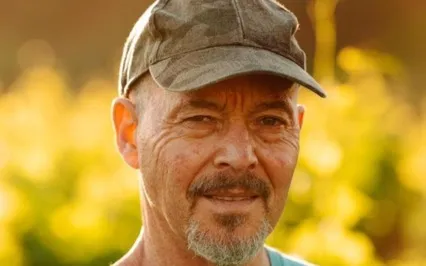
My name is Barry Zwaristine and you are listening to the Post-Military Transitioning Challenges podcast.
I am a combat veteran,
Psychologist,
And author with over 20 years of sitting with veterans in current serving.
The PMTC podcast can support you to achieve a successful navigation into civilian territory.
The core mission of my book and podcast is that no veteran should have to come home to die.
Hi.
Thanks for joining me on talk two of the PMTC series.
In the first talk I looked at the mission and vision behind my talks and my book,
As well as gave a bit of a brief background on my life.
Today I want to step away from looking at mapping out the transitioning territory.
I want to look at what I call two key concepts to support you to move forward with something very practical and that can begin to help you to create achievable change and progress from today.
The two concepts I am going to look at are operational neuroscience,
Which is the first one,
And the second one is what I call pull-throughs.
Now for those of you that are not familiar with the term pull-throughs,
Pull-through is the action of keeping your weapon barrel clean.
And I will go into that in further detail about what happens when your weapon has a dirty barrel.
But both these concepts will support you in meeting the transitioning demands that you may be experiencing.
There's nothing scientific about it.
It's very practical and it can begin to give you some goals to begin to create change and put yourself back in charge.
Now transitioning by its nature,
I really call transitioning that place between where you were and where you need to arrive.
And it demands a number of following attributes and skill sets from you.
The first is the ability to sustain and work with the challenges of change.
The second one is learning to become comfortable with discomfort.
The third is defining operational protocols,
Your arcs of fire,
Weapon maintenance,
Emergency protocols and learning to move between your OP and ambush zone to name a few.
And again I'll go into the whole concept of the OP and ambush zone further into this talk.
I want you first of all just to take a second to think about where you currently are as you navigate forward into change at this point in time as you are listening to the talk.
Really pause it,
Take a couple of minutes and think about what are you facing.
What is working for you,
What's not working for you,
What's impacting and how do you feel inside.
Get a tune in to your own internal territory as well as the territory outside of you.
Now I want to use the metaphor of being in a vehicle.
The territory you are currently driving through as I said may be challenging but this is the nature of your situation.
It is as it is.
Your choice is whether you can adjust and adapt to the terrain.
As you self-reflect and think about whether you are in the driver's seat or the passenger seat which means you are alone,
The vehicles progressing forwards and nobody's in the driver's seat.
In the driver's seat you may be in the middle of a dust storm or a contact but you certainly can draw on your navigation tools,
Your communication network and weaponry.
In the passenger seat however you are helpless.
You are unable to impact on managing the terrain in any way at all.
In the driver's seat you have choices at a number of levels.
You have the possibility to plan,
Think,
Organise as well as observe.
This is what the front of the brain can do.
Let's call the front of the brain your OP which is your observation post.
For those of you that are not familiar with an OP it's that point where you are watching the territory or the terrain below you,
You are observing,
Thinking,
Planning,
Making notes.
There is a distance between where you are and where the action is happening on the ground.
In the passenger seat however everything can feel completely out of control and this is obviously going to kick up your stress and anxiety.
This is what I call the position at the back of the brain.
It's all emotion.
It's about survival and this part of the brain I tend to call the ambush zone where your claymores,
Your trip flares,
Immediate action drills are happening.
It's high states of arousal.
Life certainly will at times alternate between putting you in the driver's seat at one point and at another time it's going to stick you in the passenger seat.
That is life and I think the key point that I want to stress here is that no matter where you are currently situated there is room to move no matter how small it may be and I want to repeat that,
That no matter where you are at the moment if you start to work carefully with what you can do,
Small incremental points of change,
You can put yourself in the driver's seat and retain a resemblance,
A beginning of control.
You can move no matter how small it may be.
I just want to extend the metaphor of operational neuroscience a bit.
Under normal conditions there is a flow of blood between your ambush zone,
The back of your brain,
To your OP,
The front of your brain.
In other words if you want to get technical,
From the back of your brain,
The limbic system,
To the front of the brain which is your frontal cortex but let's keep it to OP and ambush zone.
So,
To give you an example,
You may be driving and see a box on the side of the road.
Your ambush zone immediately kicks up and moves into flight,
Fight or freeze as it plans to deal with what could be an IED.
However your OP is still operational so what it does is it kicks in,
It assesses the situation and redefines a threat as only a box.
Another one could be you walking along a trail in a game reserve or in a national park.
You see a stick,
The first part of you reacts to that stick as if it were a snake.
The back of your brain kicks in,
Calms your body down,
Calms your brain down.
Now you can think and plan and move forward.
And of course how we react to situations in front of us is determined by past experience which is always stored in memory.
So if you've had an encounter with a snake,
If you've had challenges with IEDs,
If you've been bitten by a dog,
Those things stay in memory and there's a filing cabinet which says every time you see this image,
This object,
This creature,
It's a fear response in order to protect you.
And the front of the brain helps us regulate that fear response.
Now when your ambush zone predominates as you struggle to just survive,
It tends to and will constrict blood to the front of your brain.
So now your OP is effectively shut down.
You are driven by raw emotion and you know a classic example of this is road rage.
You know when somebody gets out of a car with a cricket bat or whatever they're carrying and starts beating on a car,
Breaking windows,
Kicking and screaming,
There's a part of them in the back of the brain which is uncontrollable.
They are unable to be in a point of gaining insight to control,
To assess,
To understand that what they are about to do is not going to work.
So hence the core necessity of learning how to move from your ambush zone to your OP.
So the core challenge is therefore to learn to identify and use strategies and tools that quickly kick down your ambush zone and rapidly shift you into the driver's seat or your OP.
At that point you can think and plan.
I want to now look at one of my core tools in working with veterans.
This is what I call your pull-throughs.
And as I said,
A pull-through is really the action of cleaning your weapon.
You know I'm an old timer but I presume they still do it by dropping a lead weight down the barrel.
It's attached to a string and a piece of whaley rag which you then pull through to clean any accumulated residue out of the barrel.
Now a failure to keep the barrel of your weapon clean will result in three actions.
The first one is you're going to experience a stoppage.
This is where your weapon fails to fire and I equate this to things like depression,
The inability to act on your world and these are the human equivalent of a stoppage in engaging with our world.
The second action is you may experience an AD which is an accidental discharge or you may know it as an ND which is a negligent discharge where your weapon discharges without you intending it to fire.
Of course risky to others around you.
Now I equate that to anger,
Aggression and reactivity are all examples of this and in these situations our families and friends can become the casualties.
Finally you may experience a runaway gun and this is where the weapon starts firing uncontrollably.
I remember in my time in the Rhodesian bush war when we were training with MAGs machine guns I remember looking to my right and seeing an individual have a runaway gun on his MAG and the front of his brain completely shut down.
He was working on pure fear on the back of his brain and at that point he stood up and with the gun firing he started to turn around and the weapon would have been directed in people around him.
He was knocked to the ground and it was quickly managed but that's a classic example of when the back of our brains are completely out of control.
You know at an emotional level this is where you are so out of control in every area of your life that you leave a trail of devastation that can and does destroy everything around you and within you.
Now to step back into the transitioning journey life and change can be stressful.
If we don't self care and if we do not identify tools and strategies to clean out the residue that all this leaves within us we really do place ourselves at risk for anxiety,
Depression,
Stress and illness and everything else.
Alcohol as we know is a common strategy used by veterans to clean their barrel,
To down regulate their stress,
To have a moment of peace and respite.
However as we know there certainly are significant impacts and risks with this.
Now let's go back to the weapon.
You may not want to jump into or approach your ambush zone of traumatic memories which is fair deal but what I want to say is you can begin to learn how to keep your personal barrel clean.
As with a weapon there are three components to weapon maintenance.
The first one is oiling and cleaning the moving parts.
The second one is zeroing in your weapons so that whatever you aim at you're going to hit and thirdly it's cleaning the barrel.
So how does this equate to life and transitioning tools?
Well cleaning the working parts would be to identify achievable ways of moving your body,
Exercise,
Watching your nutrition,
Sleep and well-being.
If those are out of balance irrespective of what residue is accumulating in your body,
Your foundation on which you're trying to transition forward is going to be impaired and shaky.
Furthermore if your well-being is not working then there's additional residue inside your body because not only are your life challenges impacting on it but your well-being is adding to the residue internally.
Defining your weapon,
That could be things like practicing mindfulness,
Learning how to plan and organize.
It's really all about defining focused intent.
You know to progress forward you can't be fuzzy.
To progress forward effectively everything about focused intent is defining your territory,
Defining the goals,
The demands,
Directions and navigating through effectively.
And finally pull-throughs.
Now you know there are many possibilities.
Breathing techniques,
Yoga,
Cold water showers,
Meditation,
Really any body-based modality.
This is the process of ensuring and strengthening internal operational capability.
This is probably more than enough for one talk without leaving you in overload.
But I do want to stress that probably the first thing I do work with with veterans is before we even approach ambush zones we're looking at how they can stabilize internally and externally.
Because if your foundation is based on starting to create change with your pull-throughs,
Starting to create change with well-being,
Physical well-being,
Nutritional well-being and sleep,
Your ability to meet the more complex demands of trauma or complex transitional challenges you may be facing becomes more effective.
I think to sum it all up is that transitioning is extremely complex.
But if you can move from the passenger seat into the driver's seat you may be driving through what feels like a contact or as I said a dust storm.
But at least you're navigating forward.
At least every action,
Whether using your navigation system,
Using your phone to call for help,
Controlling the wheel,
Controlling your direction,
At least you have some level of control in starting through the beginning of the challenges you are facing and reaching the end of it.
So when you're in the driver's seat think about transitioning as having a beginning and an end.
It's that place between.
But if you just keep moving you're going to get to the end.
Now,
In the next few talks I'm going to look at a number of pull-throughs that I personally use every single day and pull-throughs that I have suggested to the veterans that I do sit with and ones in fact that they've suggested to me that I've taken on board.
You know,
It's a kind of we keep each other informed.
We can all learn from each other.
I'd just like to ask that when you have finished listening to this session could you please consider rating it and maybe writing a review when the pop-up appears.
You can also edit this at any time and this will support me to effectively share my thoughts and understandings.
You can also contact me through my website at Barry Zworstein.
And just to conclude I look forward to seeing you and hearing from you at the next talk.
Thank you and really appreciate you being here with me through this one.
Take care.
Have a good day.
Cheers.
Bye.