Welcome to the Post-Military Transitioning Challenges talks.
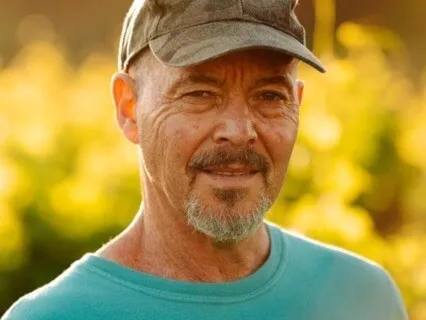
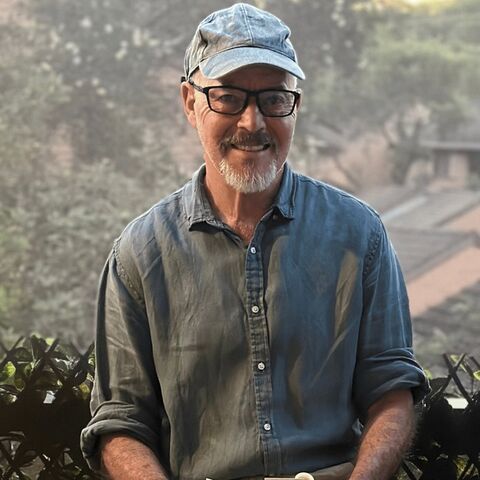
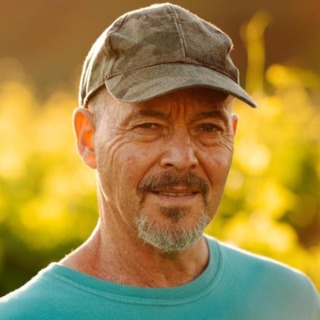
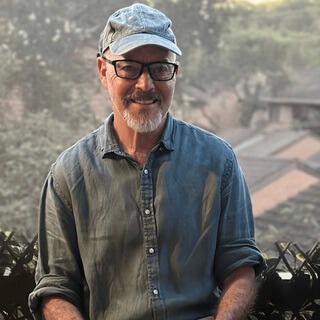
I am a psychologist,
Combat veteran and author with over 20 years of supporting veterans to achieve successful transitions into civilian territory.
These talks are an additional resource to my book,
Which Way Is Your Warrior Facing?
An Operational Manual for Current Serving and Veterans Transitioning into Civilian Life.
My core vision and mission is that no veteran should ever have to return home to die.
Hi,
It's great to have you join me on the first talk in the Post-Military Transitional Challenge series or to keep it nice,
Tight and sharp,
The PMTC series.
I'd like to begin this first podcast by sharing stories about my origin and then talk through my vision for both my book and the PMTC talks.
Why did I choose the name PMTC?
Well in exploring acronyms such as PTSD,
PTS and combat stress,
I began to over time identify symptoms that appear to be related not to impacts from time in the military,
But more driven by the challenging demands of the transitioning process.
I observed that individuals were struggling with loss of tribe,
Loss of purpose,
Meaning and identity.
The challenges they were experiencing were impacting on stress,
Anxiety and of course ultimately mood.
This then impacted on their sleep.
There was also a tendency to use alcohol and an overall decline in wellbeing.
Now when seeing a professional,
They would note that they had left the military,
Were feeling stressed,
Depressed and anxious,
As well as irritable and angry and were excessively using alcohol.
The question is,
Could and would this be labelled as PTS or post-traumatic stress?
My concern was that being diagnosed as having a disorder when it may possibly be a cluster of symptoms typical to challenging transitions would leave little room to adjust and adapt.
For me the term post-military transitioning challenges left room to embrace the journey.
So for example,
The fact that it's seen as transitioning means that it's got a beginning and an end.
Post-military identifies that this is not connected to your time in the military,
But it is connected to a transitional period,
Which again,
As I said,
Has a beginning and end.
And of course we know veterans love a challenge.
So by using the term PMTC,
It left room for people to identify that,
Yep,
What I'm going through at the moment is certainly a struggle.
It's got a beginning and an end and it's exciting to manage the discomfort and gain the wisdom to actually create positive change as I or you transition into civilian territory.
A little bit about my history.
I was born in 1953 in Southern Rhodesia,
Which became Rhodesia,
Then Zimbabwe Rhodesia,
And finally Zimbabwe.
Schooling was not my greatest part of my life and I focused more on sports and academics.
I then went to university in South Africa where I spent several years training and education and in 1976,
I returned to Rhodesia to comply with national service requirements and was involved in the Rhodesian Bush War where I operated as a fighting medic in four man sticks.
On leaving the war in 1977,
I spent several years living and working in South Africa before immigrating to Australia,
Where I lived for several years before settling in England for a brief period.
After unsuccessfully attempting to mountain bike from Great Britain to Israel in 1984,
This is probably a story for another time,
I flew there instead and spent four years developing the British Council English Language Centre and while I was in Israel,
I developed a passion for marathon running,
Which extended to ultra marathon running after returning to South Africa to qualify as a clinical psychologist.
I returned to Australia in 2000 where I have remained ever since.
My book and these talks are the culmination of 20 years of service and experience as a psychologist to the veteran and current serving community.
It was formed through the conversations with these extraordinary men and women and it was grounded in my experience of my war and grew from my experiences as an ultra marathon runner,
As well as the victories,
The struggles and the losses in my life.
It is my gift to this tribe and one that is already positively impacting on those transitioning into civilian life.
It's acknowledged by key figures from the SAS,
SEALs,
Delta Force,
Air Force and Counter Intelligence as being a valuable and life saving response.
The core thing for me is that too many veterans are being lost as they lose their way through the bewildering transitioning challenges that face them as they attempt to navigate into civilian life with a map and a compass that I believe is far from attuned to the demands of the journey.
Everything and I want to repeat everything I do is driven by a mission to support veterans to form their map and orientate their compass.
I use the language,
The tools and the skill sets grounded in military language and training.
So it's accessible,
It's understandable and it also draws on who the veteran was and still is.
My other wish is that these talks will also add to the growing voices of those professionals who have realized the importance of taking time to enter the world,
The language and the lived experience of the veteran and allow this to form their communication,
Support modalities and care of this tribe.
My book and these talks rests on four core protocols.
The core vision is to ensure that no veteran ever has to come home to die.
My approach acknowledges that civilian territory can and does feel like the next operational arena for many.
It understands how many men and women struggle to navigate effectively as they face and battle against complex issues both around and within themselves.
Protocol number two is that my approach speaks from the language of the veteran's territory.
It enters the veteran's territory and journeys with them.
It guides the veteran forwards by drawing on already existing skill sets and operational protocols.
It also maps out the key points to be aware of such as loss of tribe,
Belonging,
Moral injuries,
Grief,
Not feeling good enough,
Redefinition of self,
Adjustment challenges and purpose and meaning and that's just to note a few.
The PMTC talks will support you the veteran or if it's at the moment the partner is listening or whoever else,
It will support you with tools and understandings to be able to persevere when the journey becomes overwhelming.
It will guide you forwards to be able to begin to make small changes and find ways,
Even if they're small ways,
To embrace the uncertainty of life outside of the military.
These talks strongly hold the belief that just as much as no veteran should ever be left behind,
So too should every veteran acknowledge his duty and obligation to not leave himself behind.
And that's critical.
I want to really state that part of my core vision in working with veterans is that your initial vision,
Your initial mission is to go back and rescue yourself.
And by rescuing yourself,
I mean rescuing the positive qualities,
Skill sets,
Values and attributes of who you were,
Who you still are and integrate these with a civilian as you navigate effectively into civilian life.
You should never leave yourself behind.
You have learned so much as a veteran.
To leave it behind is a waste.
In these talks,
You will be guided to return and rescue the positive qualities that you use to embody.
I will give you tools to care for and understand the wounds that you carry.
You're also going to learn the skill sets to adjust,
Adapt and form a new identity based on not just who you are now,
But as I said,
Also who you were then.
So in conclusion,
There will always be moments when the challenges facing you are not just about achieving your personal best,
But also about your capacity to endure.
You know,
Endurance demands the ability to maintain focus and ongoing movement in the face of dwindling resources and exhaustion.
In these moments,
It's not necessarily about excellence,
But about achieving personal victories in the face of insurmountable demands,
As well as emotional,
Physical and psychological depletion.
By so doing,
You will stretch into a stronger and more confident sense of who you are in these moments.
You know,
It's the nature of some transitions that they will challenge your capacity to endure,
And what I always say is no matter what you face now,
Just keep moving.
If you can't run,
Walk.
If you can't walk,
Crawl.
And if you're really struggling to crawl,
Crawl.
Sit down,
Take a break,
Have a breather,
Make yourself a cup of tea or coffee,
Then get up,
Dust off and just keep moving.
Remember that success is achieved by the refusal to be defined by the odds stacked up against you in these moments,
And I'll repeat that because I think it's important.
Success is achieved by the refusal to be defined by the odds stacked up against you in these moments.
These talks will help you to re-find who you were,
Re-gather it and bring it into your present challenges as you are moving into change and embracing how you transition into new territory in your life.
So thank you for joining me on the PMTC journey.
It's great to have you with me.
I really appreciate your presence.
And remember,
Whether you are a veteran,
A partner of a veteran,
Whatever you may be,
There is a place for you here.
Thank you.
And take care.