Hi,
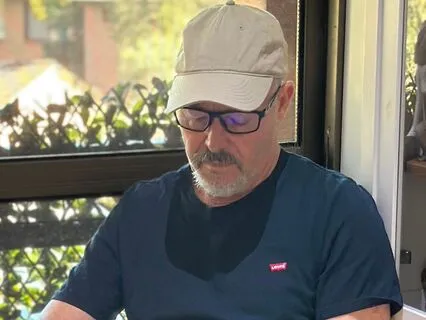
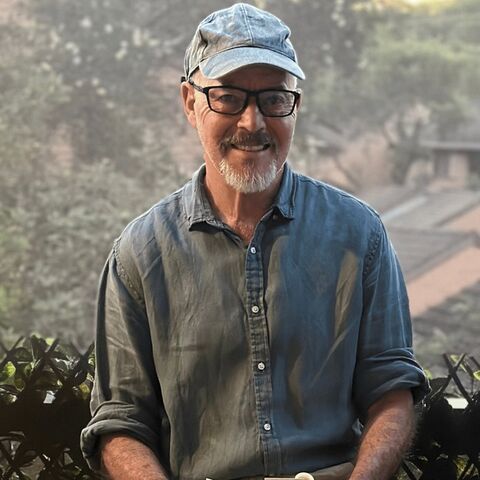
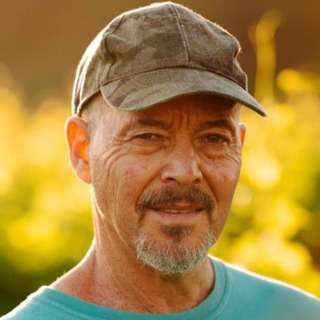
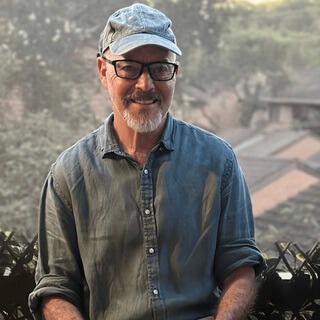
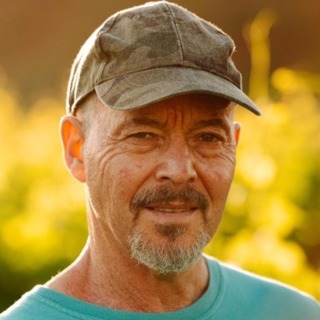
I'm Barry Sworistein and welcome to part two of the audio Which Way Is Your Warrior Facing?
An Operational Manual for Current Serving and Veterans Transitioning into Civilian Life.
Today I thought I would begin by looking at the history behind this book.
Around 2012 I began to contact several Rhodesian military groups on Facebook since I am a veteran of the Rhodesian military.
It soon became apparent that these veterans and their families had a real need for support.
Through Skype,
Email and contributing articles and checklists to the various groups,
I supported several soldiers and their partners worldwide.
However,
Time restrictions soon made it clear that it was impossible to support more than a minimal number of people.
From this was born the vision of writing this book so that as wide a range of veterans and their families,
Not just from the Rhodesian Bush War,
Could benefit from the insights,
Understandings and strategies that I have used over the years.
For those of you who are unfamiliar with the Rhodesian Bush War,
The war began around 1964.
It ended in 1979 after which the country transitioned to a new black majority government under Zimbabwe Rhodesia.
In 1980 the country was renamed Zimbabwe under Prime Minister Robert Mugabe.
So why the title?
What came to me was that so often in times of transition,
From military to civilian life,
Or with the impacts of trauma,
Much of our behaviour tends to become self-destructive,
Either inwardly towards ourselves,
Examples like alcohol lifestyle,
Stress or depression,
Or outwardly towards others and the territory we occupy.
The goal would be a constructive and positive movement towards relating to ourselves,
Others and our world in a way that respects and cares for who they and we are.
So often veterans are advised to move on.
It's all in the past.
Just let go.
The quality of service and self-sacrifice has defined every individual I have sat with.
You should not be letting go of whom you were,
But instead reclaiming those extraordinary parts and values of your warrior.
The question is at this moment,
Which way is your warrior facing?
I believe that the initial strategy is to go back on a rescue mission and reclaim the positive attributes that define you.
You are then in a stronger position to navigate forward,
Drawing on your insights,
Values and tools.
From this point,
You will be better equipped with an appropriate map and compass to integrate into your new life as a civilian.
This book is not an academic or research text,
Nor is it a replacement for appropriate diagnosis and management.
It's a book based on endless hours of sitting with men from the Australian military and the Rhodesian Bush War,
From World War II through Vietnam to Iraq and Afghanistan.
It's a book based on my insights from being a combat veteran and a fighting medic of the Rhodesian Bush War to the many messes and losses I faced during my post-war journey.
It's based on my experiences witnessing the veterans' deep pain,
Loss and grief,
And their depression,
Stress,
Anxiety,
Anger and everyday struggles to adjust to the unpredictable complexities of civilian life.
It is based on the universal and timeless experience and shared comradeship of veterans gathering with veterans,
No matter whether they come from special force units or regular units.
It's based on the stories of veterans' partners and children as they have desperately tried to find ways to understand and bridge the traumatic silence so typical of many veterans,
As well as to deal with the war that returned home,
The rage and reactivity,
The alcohol and flashbacks.
It's based on the deep feelings of loss,
Grief,
Disconnection and despair that veterans have felt as they've tried to reconnect with those they love.
It's also based on supporting veterans and their families to create a map and find a compass that will help them operate in the bewildering and unpredictable confusion of civilian life.
Finally,
This book is based not just on the trust and insights that have emerged between myself and these remarkable people,
Not just on the deepening of my skills in treating trauma,
But also on my healing journey.
As much as I have had an impact on those I have been privileged to sit with,
They in turn have enriched,
Affected and left me a wiser and better man,
Veteran,
Father,
Friend,
Husband and psychologist.
I have drawn on operational lessons,
Principles and military training.
I have linked these factors to create a map and resource that veterans can draw on when transitioning to civilian life.
I have translated the brain and neuroscience into operational terms.
Through this book,
I hope you will become clearer about moving from an ambush mode to what I call an OP,
Where you observe,
Plan,
Think and organize mode.
An OP,
By the way,
Is also an observation post where the terrain and those moving across it can be monitored without being visible.
You will learn tools and insights to choose which way your worrier faces.
You will find language to support you to communicate with your partner,
Friends,
Children and family.
You will find help in identifying tools to learn to do your pull-throughs,
Keep your personal barrel clean and avoid stoppages.
My wish is that this book will equip you with tools and understandings to initiate an immediate cock-hook and look when you find yourself in a tight situation.
This is an immediate action drill to assess and then clear a cartridge stuck in the breach of a weapon.
There is no rocket science in anything I have written.
I leave the academics for others.
This is an on-the-ground,
In-territory,
Dusty,
Sweaty practical book.
I do not suggest anything that I have not personally used and continue to use to this day.
I wish you well on this journey and hope that along the way you find the peace you deserve and the connection with others that are important to you in whatever territory you currently find yourself.
I want to stress that you may be recently out of operations or 40 years may have passed since you were on active duty,
But it is never too late to get help to change and heal.
A question I'd like you to reflect on,
And maybe write some notes if this helps,
Is what do you wish to get out of listening to this book?
Document what comes to you.
If nothing,
You can always return to this at a later stage.
Remember that the challenge of change is to create your opportunities.
I'd now like to move on to some thoughts as you begin the journey.
To heal and adjust from military to civilian life is about embracing the soldier,
Refinding the worry in the present and drawing on the positive aspects of the past.
Healing and adjusting to civilian life is about acknowledging grief,
Guilt,
Loss and shame and respecting who you are.
Transitioning out of the military need not be just the end of a good life,
But the beginning of an even better life firmly grounded in the wisdom,
Learning and experience of who you were and still are.
I wish you well in your road ahead and that this book will be a positive part of your journey.
Although most veterans I have sat with in my practice have been men,
I have tried to adopt a gender neutral perspective as this book applies to both female and male veterans.
To create change,
Consider whether you would be willing to move from the space where you currently are standing.
No matter how stuck you may feel,
It is essential to believe and understand that you can do a few small things.
As veterans,
You were trained to remain focused no matter how challenging,
Complex or seemingly hopeless and at times life threatening the situation appeared.
You never lost sight of the need to take care of your weapons.
Like weapons,
You also need a regular pull through which I will get into later.
To clarify for those unfamiliar with the term pull through,
This defines the action of pulling an oily rag through the barrel of a rifle to clean it.
This pull through may be a focus on your well-being,
Both internally and externally or physically.
Do you exercise?
Is your weight a problem?
What is your eating like?
What is your sleep like?
Do you smoke or use alcohol?
Too many veterans I have seen have tended to neglect their well-being as they dive into unhealthy eating patterns and tobacco and alcohol use to numb the pain and the grief.
This is a recipe for a stoppage which is when a weapon fails to fire often because it is not cleaned.
It is initially far easier to set healthier life balance goals than to begin with the more complex trauma issues.
Another factor is your attitude that you will bring to change.
Are you willing to do what it takes to recover?
Are you ready to learn strategies to enjoy a more balanced relationship with your partner and children?
If you are reading or listening to this book,
I would ask that part of your agreement now with yourself will be that you are worth investing in.
No matter how out of control you have experienced your behavior towards yourself and others,
No matter how deep your depression may have been at times and may still be,
No matter how exhausting you experience surviving each day to be,
I'd like you to remember that you are still and always will be a worrier.
Without exception,
Every worrier I have sat with has embodied trust,
Loyalty,
Dependability and reliability.
Very few have traveled your road.
Your present circumstances do not define who you are.
This book results from the collaboration between veterans and me as we shared conversations over the years.
It encapsulates the core insights,
Lessons and tools that have emerged between us during that time.
This book is the result of many years of finding the adequate balance between the two parts of myself,
Psychologist and veteran,
And discovering that both working together benefited those I sat with.
I'd like to invite you to walk with me as you move through the book.
Be discriminating and see what resonates and works for you.
Try stuff out and give things a go.
In 1990,
I decided to run the 84km Uphill Comrades Ultramarathon.
Although my intent was clear,
I had not expected the demands of training to be as rigorous and time-consuming as I had imagined.
At times I was looking for any excuse to opt out.
I began to resent the demands of the person who was training me.
I lost faith in myself,
But the combination of a determined mentor and my willingness to do whatever it took,
No matter how challenging both the training and the race itself would be,
Eventually got me over the finishing line.
I hope that,
In whatever small way,
This book supports you in crossing your finishing line.
Just a few short,
Sharp and easy-to-remember points as we wind up today.
Integrate and recognize the strengths of who you were.
Acknowledge and respect whatever emotions you feel.
Remember,
Transitioning out the military can be an opportunity for new beginnings,
And you are only as stuck as you feel.
So,
Something to think about.
Where are you in your transitioning journey at this very point in time?
Take your time.
Document when ready.
Remember,
Never lose your fire.
Hold your discipline in whatever way you can.
Your wars and struggles need not define or diminish you.
Reach out.
Lend a hand and take a hand.
In tribe we are strong.
In tribe we belong.