Hi,
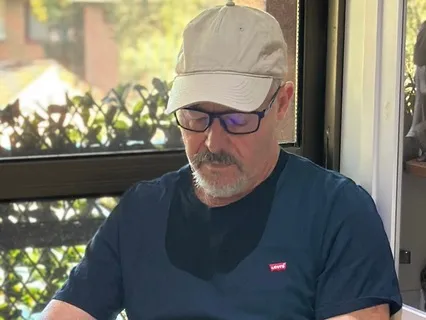
I'm Barry Zworesteen and this is part 5 of the audio version of my book Which Way Is Your Warrior Facing?
An Operational Manual for Current Serving and Veterans Transitioning into Civilian Life.
Today I'd like to really talk about the importance of mapping out your civilian territory.
Understanding the complex aspects of learning to operate in civilian territory effectively supports transitioning the best of who you are and allows effective adaptation and adjustment.
I want to encourage you all to take time to explore all aspects of your potential transitional territory.
These may include reintegrating back into your family,
Professional and personal goals,
Job hunting,
Retraining etc.
Understand that the more you map out your territory including your strengths and areas of deficit,
The more successful you will be.
I'd like to leave you with this thought that no goal can be achieved without prior preparation and rehearsal.
Think about,
Take time and maybe after this question stop and make a note in a journal,
Think about how would you currently assess your ability to map out your transitioning territory.
Think about documenting your strengths and challenges on a page or two and you can always refer back to these and adjust and adapt them as needed.
Remember that you will need to find your resources for those times when your journey can be long and exhausting.
In the transitioning journey the one thing I often look at quite a lot in detail is the space between leaving the military and arriving in civilian life.
You learn to operate in the military.
Remember that you were initially challenged to adjust to a more regimented life.
You had to take on and learn new skills and you also had to reform a new identity.
All these skills apply to transitioning to civilian life.
However,
This time around you have the core attributes and values of the warrior to drive you forward.
There will be challenges as you adjust,
Adapt and form your new identity.
So take your time,
Maintain communications with those that can support you and build a map to help you navigate.
Maintain situational awareness and go OP to observe your new territory when in doubt,
Stress or overwhelm.
Remember the concept of the OP is to go to the thinking part of your brain so you get more distance from the situation you are facing and allow yourself an opportunity to gain distance,
Think,
Plan and observe what is actually happening to you from a non-emotional point of view.
Everything you need to have to adjust is already within you.
You would place your life on the line for another,
Yet many veterans tend to leave themselves behind when transitioning into civilian territory.
You are under the same obligation to bring yourself back.
Your trauma and struggles are no different from or lesser than those carried by others.
They do deserve attention,
Support and care.
The attributes that form who you are and willingly give to others also apply to yourself.
So do whatever it takes,
Go back,
Give yourself a hand and allow others to walk with you.
How you transition into civilian life will be determined by your ability to track your progress,
Which involves your well-being,
Mental state,
Impact on others and use of pull-through tools.
If you ignore the tracks you make,
You could certainly be heading into your own ambush,
So at regular intervals stop and think about how you are doing.
This is no different to your operational skill set.
Remember that the territory between leaving and arriving can take time.
The civilian world is not necessarily waiting to welcome you with open arms.
Your rank and experience may have little currency value in your new life.
Reforming yourself may well be out of your circle of understanding,
So be willing to ask for help,
Whether it be a coach,
A mentor,
Counselor etc.
Be ready to learn new skills and adjust and adapt as required.
So just to summarize a couple of these points is point one,
Everything you need to have to adjust is already within you.
Point two is the attributes that form who you are and that you are willing to give to others also apply to yourself,
So do whatever it takes.
Really don't leave yourself behind,
So go back,
Give yourself a hand,
Allow others to walk with you.
Three,
Use the core attributes and values of the warrior to drive yourself forward and we have looked at these and be ready to learn new skills and adapt and adjust to those you already have.
So again take a moment and think about who you are willing to ask for support.
Are you part of the problem or the solution to ensuring effective transitioning?
Can you identify what you are contributing to the problem and the solution and see what comes to mind and document.
Remember by journaling you give yourself an opportunity to think about your situation and also go back tomorrow,
The next day,
The next week and reflect on what you've written.
This is your active participation engagement in ensuring that you bring the best of yourself forward.
At the moment your challenges may feel massive,
With support this can change,
So never give up.
It's not necessarily the terrain that's the problem but your attitude to what lies in front of you and I really want to repeat that because I think it's important.
It's not necessarily the terrain that's the problem but your attitude to what lies in front of you.
I'd like to now cover the idea in the whole situation of moral injuries and here I want to focus on moral injuries associated with traumatic experiences from within one's organization.
I will also note aspects from within the civilian territory and the impacts that this can have.
Increasingly number of veterans I have seen have shared the traumatic impacts of being removed from their unit or tribe and rapidly transitioned out of the military because of injuries or bullying and discrimination.
Now what I have learnt over the last 22 years is that these can have a very very traumatic impact and do need to be dealt with.
They can erode your sense of self profoundly as well as feeling competent as a member of the military.
The core values of mateship,
Reliability and dependability on the ground within your tribe may not always be the same that drives your organization forward.
Politics,
Personal ambition and power can replace these core values.
The expectation of fairness,
Trust and care can therefore become compromised.
This can potentially traumatize the individual.
At this point one's organization can really begin to feel like the enemy.
The felt betrayal of family and tribe can wound deeply as they compromise and contradict your core values.
The experience of this can impact your warrior profoundly.
It is possible that these experiences can result in the loss of lives not driven by operational impacts.
The warrior journey is thousands of years old.
Inherent in it and critical to it at the core is the hunting of and killing others and the willingness to do this.
What is the meaning of violence in this territory?
It is the skill and capacity to focus and direct lethal aggression.
In the context of this territory this is neither distorted nor abnormal and I want to repeat that again.
In the context of this territory this is neither distorted nor abnormal.
Warriors have an intimate relationship with death and as a result an appreciation of life.
However values and judgments can be placed and are placed on these skills,
Mindsets and individuals in civilian territory.
Ignorance based on a vision that fails to see the importance of creating rituals to welcome you back results in a culture that judges,
Labels and distorts.
Homelessness,
Disconnection and despair are to an extent a reflection of the battleground within the home territory that they return to.
What currently exists to bridge the return is far from satisfactory.
I believe that there is a dire need to step back and out of our management models and genuinely see and welcome these individuals and value them for their strength and wisdom.
All territories have a shared responsibility to look critically at this progress and this process.
My core vision and my core mission is that no warrior should ever have to return home to die.
So thank you for being with me today.
My next talk will begin to focus on operating in relationship territory or connection with others and we'll look at a number of lessons that I felt can impact positively on your ability to navigate through relationship territory.
But until then I wish you well.
Have a good week ahead of yourself and I look forward to catching up with you soon.
Take care and goodbye.