Hi there,
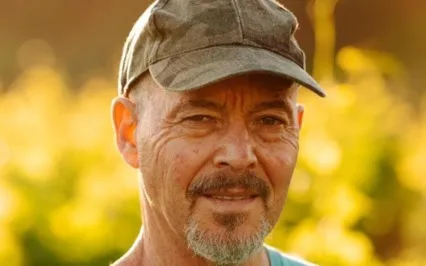
My name is Barry Zwaristine and you are listening to the Post-Military Transitioning Challenges talks.
I am a combat veteran,
Psychologist and author with over 20 years of sitting with veterans and current serving.
The PMTC talks can support you to achieve a successful navigation into civilian territory.
The core mission of my talks is that no veteran should ever have to come home to die.
Hi and thanks for taking time to connect with me.
Wherever you currently are,
I hope that life is treating you well and that these talks are in some way contributing positively to how you are managing your transition process.
If you feel these talks are benefiting you,
Please follow my profile.
You'll then also be notified as I complete ongoing talks and meditations.
At the end of the talk,
Please take some time to rate and comment as this supports me to move forward with my vision and service to veterans.
In my last talk,
I covered a couple of things.
The first I looked at was grief and we explored the experience of grief for a veteran and how difficult it is for veterans,
One,
To experience their grief and two,
To communicate their grief to those around them.
I used the letter that a veteran can write to their partners,
Friends,
Families,
Etc.
And I also used a poem to create a lived experience and an understanding for others about the reality and the worlds that veterans carry.
And finally,
I also talked about the whole concept of change and discomfort and that to really create change,
We have to be able to step into our zones of discomfort and find ways of becoming comfortable.
I pointed out that the transitioning process is really that place between where you were and where you wish to be.
And in that place,
It's often about letting go,
Reforming parts of who you are and facing parts of who you are that may feel a little bit uncomfortable.
I also talked about the need for there to be more written or spoken about with regard to the partners of veterans.
And I noted that veterans will often bring home the war into their family environments and in that process,
They can become the enemy to the people that love them.
Today I want to follow up on the whole concept or idea of relationships and I want to look at some tools and strategies that veterans can use to adjust,
Adapt and to enjoy successful relationships.
And I call these ones seven lessons for operating in relationship territories.
You know,
If you think about it,
How many partners of veterans note that their husbands or wives seem to have a far more intimate connection with their military tribe than within their family?
For veterans and current serving,
Tribe is based very much on unconditional support through adversity and suffering.
It's a very,
Very strong and deep bond that is forged through the military ritual of being broken down and being reformed.
It's about the shared memories of operations,
Often unspoken,
But deeply etched into,
Again,
As I use that expression,
The marrow of the bones.
This bond is not something that can easily be grasped or understood by others.
And when it's not understood by the partners of veterans,
It can certainly erode the foundation of connection with partners if not spoken about.
Now,
Over the years,
Partners I have spoken with have continually noted how the veterans they love bring the war back home.
They describe their reactivity,
Their moodiness,
Their need for control,
Hyper vigilance,
Isolation,
Ease of being triggered,
Difficulties navigating through intimacy and challenges in communication.
They note that the veterans seem to be wired for the flight or fight instinct.
They struggle with the deep bonds that they have with their fellow veterans,
Which often feel more intimate than those between themselves and their partners.
You know,
They've been partners that have said to me,
He's so withdrawn or she's so withdrawn and really doesn't communicate much.
But whenever I see my partner with their friends,
I can see that he just comes alive.
And they long for that part of the person they love that they see happening between themselves and within their tribe.
Now,
I'm not a relationship expert,
And it's not something I really touch on.
However,
I want to say that there are many lessons from operational territory that can be used to operate effectively in relationship territory.
My goal often in working with veterans is to draw on the knowledge they have,
The skills they have,
The strategies they have,
And show them how they can apply them across different territories.
I once worked with a veteran who was aware of his reactivity to his wife.
In situations of disagreement or whenever he felt he was being criticized,
He could become very dismissive,
Aggressive,
Or he'd just walk away,
Time out.
It was difficult to get into shift that,
And I asked him one day,
I said to him,
When you were patrolling through a village in Afghanistan,
And where the woman at that village,
As you described it,
Had been very verbally and physically aggressive towards you,
Did you react aggressively to them?
His response was that he paid no attention to them,
And he had maintained a controlled and neutral position.
So at that point,
I asked him how,
When his wife wanted to communicate her frustrations and feelings towards him,
He reacted as if she were the enemy and were armed.
I reminded him that if he could demonstrate self-control in these situations,
He could again learn to achieve more constructive ways of communicating with appropriate support.
So the thing I try to bridge always is veterans come with incredibly complex and skilled learning tools and strategies,
And when they see that they can already apply these across territories,
It's not about teaching them new tricks or tools or insights,
It's about teaching them to use what's already a part of them.
I would like to stress,
However,
That the brain at war does not differentiate territories,
So it will behave in civilian life the same way as it does in military life.
I explained to veterans that they have all learned the discipline of self-control,
And that if the challenges of what they've been through at war have impacted the positive qualities of being a warrior,
And if they find that this is really impacting significantly,
Then part of the courage of creating change and even walking into discomfort would be seeing somebody to get help.
So what I then formulated was seven protocols,
And I'm going to work through these protocols one at a time.
So these will be a series of short talks you can listen to.
It won't take too much concentration,
Because it shouldn't take too long,
Each talk.
The first one I call keep your safety on.
Now for those of you that are not too familiar with a weapon,
When you put your safety on,
It means if you pull the trigger,
It's not going to fire,
It's locked.
And the concept of putting your safety on is that when you're walking into arguments of territories or challenging territories or potentially territories or relationships or communication of conflict,
You need to think about what you do to keep your safety on.
What a veteran said to me one day,
He said,
I don't know what happens every time my partner brings an issue or a concern to me about the relationship.
He said,
I immediately feel like no matter what I do,
I'm going to get judged or blamed and that it's always going to be my fault.
I get irritated and frustrated and worked up.
I can see that I'm becoming abrupt and argumentative.
As things escalate,
I start to feel out of control to the point where I either get out of the room or I start becoming aggressive.
He said that he felt like the enemy at that point.
And you know,
His wife said,
At that point,
He feels like the enemy at home.
We're walking on eggshells around him.
And the wife said that we often just end up screaming at each other till one of us bursts into tears or somebody storms out of the house.
Now,
This is not an uncommon experience.
Remembering I want to stress again that the brain at war,
When it transitions into civilian territory,
It doesn't change.
It stays the same and it reacts to what it perceives as situations of conflict or aggression.
It will react in exactly the same way.
It just will.
So there are a couple of things that you as veterans can do to avoid getting to this point.
The first thing is as you enter any potentially tricky communication,
First,
Breathe.
You know,
Breathing is critical.
There's a very simple breathing technique called box breathing for those of you that haven't heard about it.
Imagine a box and each side of the box is five seconds.
You breathe in as you're going up for five seconds.
As you're going across the box,
You hold your breath for five seconds,
Breathe out for five seconds,
Hold your breath for five seconds.
And you can do that several times.
You can also use something called heart focused breathing.
So when you're feeling you're starting to upregulate,
Imagine your heart is being in the center of your chest and practice this before you actually get into a situation.
Then what you do is gently breathe in and out of that center of your chest.
And then what you have to do is also think about something positive,
Something that gives you a feeling of appreciation or care,
A good memory,
Which is essentially a positive experience and breathe that in.
Now you shouldn't be waiting for a conflict to come up to work this one out.
What you should be doing is practicing this regularly till it becomes instinctual.
So as things become heated,
Just keep breathing.
Breathing brings down the back of your brain.
Now the other thing which is very useful is it's quite useful to have a bottle of really cold water.
So you fill it with ice and cold water and you sip on this when you find you're starting to kick up a little bit.
We know that cold water kicks down the back of the brain.
Now I'm going to go into the whole neuroscience of the brain.
But just to say that when we start getting emotional,
When things start kicking up in our ambush zones,
It stops blood flow to the front of the brain.
The minute this reduced blood flow to the front of the brain,
You can't think,
You can't plan,
You can't communicate effectively,
Then everything hits the dust.
So the goal here is to kick down the back of the brain so the front of the brain can work more effectively.
Breathing cold water.
The other thing is to try and reframe this as you're breathing.
So the one thing is don't see this as an attack.
First try and get into your OP and adopt the position of first wanting to listen so that you can understand.
Ask your partner to tell you more about why they feel this way.
What you need to do is remember that the other person's story is real.
But it may not be your experience,
But it's real for them.
And that your partner has the right to be listened to.
As I said,
Go into OP mode.
OP,
If some of you have not gone to my previous talks,
OP is an observation post.
It's the point at which you observing,
Assessing,
Judging territory.
So that's the rational part of our brains.
Use your breathing,
Use your cold water,
Go into that OP.
And then if there's a part of you that's tending to take everything personally,
Then just step away from it as you're in your OP and invite your adults to come in.
Listen and breathe.
In the end,
It's not often so much about the scoreboard of who is right or wrong,
But just the experience of somebody respectfully listening to you.
Remember that listening is all about keeping your safety on and ensuring that you're not locked and loaded.
So the mindset,
The breathing,
The cold water,
The capacity to reframe and draw on your experiences is certainly going to help you.
Finally,
Before getting into any tricky territory,
If you become quickly overwhelmed or you know you've started the day off and you're not in a good place,
Find a quiet time with your partner and negotiate that you will take a brief time out to focus and center and then return to the conversation.
You know,
This is a good protocol,
A good operating protocol to work with in relationships.
It's a simple statement that you agree when one of us is kicking up and we know the outcome is not going to be a good one.
Somebody whoever it is is going to say,
Look,
I'm going to take 15 minutes.
I'm just going to practice my protocols,
My strategies,
My tools,
My breathing.
When I'm calm,
I'm going to come back out and we'll finish the conversation.
There is no point remaining in any form of communication when all of you,
Both of you or one of you is in your ambush zone.
As one partner of a veteran once said to me,
It doesn't matter what I do.
If I try and communicate how I'm feeling without blame,
He immediately takes it personally and gets uptight,
Defensive and aggressive.
She said,
I feel like I'm always walking on eggshells and having to be hyper vigilant around him.
I love him,
But I end up feeling so alone.
I just wish he would learn to listen.
He doesn't need to fix things and I'm not trying to attack him.
So just to summarize point one,
Manage your safety through communicated timeout,
Breathing,
Having a glass of cold water or as an emergency protocol,
Climb into a cold shower.
You know,
A cold shower is a pretty radical thing to do,
But it's incredibly effective when you are feeling out of control or you have lost control.
Climb into a cold shower for 30 seconds.
It literally kicks down the back of the brain.
Two,
Adopt the position of first wanting to listen so that you can understand.
Three,
Remember that listening is all about keeping your safety on and ensuring that you are not locked and loaded.
Remember,
As I said,
Draw on who you were,
Draw on those skill sets that are still there within you.
And finally,
If you become quickly overwhelmed,
Find a quiet place with your partner,
Negotiate that you will take a brief timeout to focus and center and then return to the conversation.
So I hope this helps.
We get to go into the lessons in the next talk one lesson at a time.
I look forward to seeing you then.
Take care.
And I hope this hope you found this useful.
Look after yourselves and see you soon.