I'm Greg Powell,
And for today's practice,
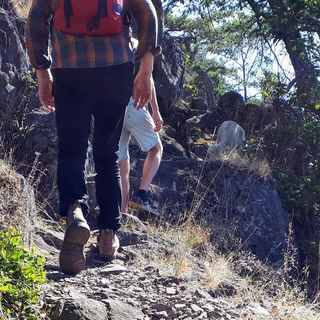
I invite you to come for a walk with me.
Maybe this means actually coming outside and walking while you're listening.
Or maybe it means just staying right where you are and imagine that you're walking.
The practice does work best when you're outside and moving.
But today I will invite us to practice shifting our gaze,
Changing the way we perceive the world and our surroundings.
Maybe changing the way we interface with the world.
So why don't you get whatever you need,
And I'll meet you outside.
I invite you to do this little experiment.
I wonder if you would,
When you're walking,
Try to see how far ahead of you your gaze is.
In other words,
How far in front of your body are you normally looking?
Now I ask this because I've recently noticed that I look generally about two steps in front of where I am now.
So basically two meters ahead of me is where my gaze lands on the ground.
Which means that everything else that I'm taking in,
I take in only through my peripheral vision.
I mean,
I glance up,
But sometimes I'll glance around.
If I'm sufficiently mindful,
I'll actually take some time to fix my gaze upward for an extended period of time.
But generally when I'm walking,
I'm only about two steps ahead of me.
And there's probably some good reason for this.
I'm sure that I grew up to learn that I need to watch where I'm walking.
I probably tripped enough times as a toddler or child to know that I need to watch for objects in front of me.
I wonder if some of this is commissioned though too.
Have I learned to keep my gaze low?
Have I learned to watch the ground instead of for other people?
Now I do know that I'm someone who,
When I'm walking down the sidewalk,
I do look at people in the eye.
I make a point of looking up and making eye contact and smiling or saying hi.
But generally I'm looking down at the ground.
So for today's practice,
We're going to challenge ourselves to look up as much as possible.
To allow our peripheral vision to detect when there is an object in our way.
Now if you have some visual impairment and this doesn't quite work the way I'm describing,
Then I invite you to think of some adaptations so that it can work for you.
I'm not sure exactly what this would be like.
If you use a cane to sense what objects are in your way,
Is there a different way of using your cane that allows you to sense something different than you normally do?
But for me,
I'm going to practice keeping my gaze at my eye level and glancing down periodically.
So inverting my normal habits.
So as we're walking or wheeling,
However you're getting around,
I invite you to look up.
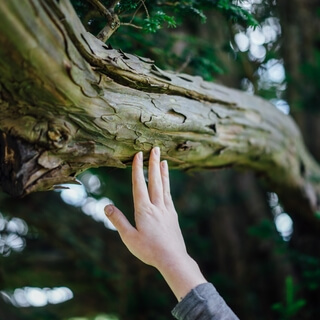
This might mean looking up to the treetops as if you're looking for nests or koala bears.
It might mean looking at eye levels so as to make eye contact with others you're encountering.
Or maybe it's looking to the sides and up.
In other words,
The challenge today is to fix your gaze anywhere except where you normally fix it.
Assuming that you normally fix it,
Like I do,
A few steps in front of me.
What's it like to look up?
What's something new you're sensing,
Seeing?
Is there indeed a nest where you hadn't noticed one?
Is there a tree around you that is actually sick and dying that you hadn't noticed?
Or inversely,
Is there a tree that looks unwell down low,
But when you look up you notice that there is indeed lots of vitality in that tree?
Or if you're in a city,
What do you notice about the buildings as you look up?
Maybe street lights or street signs.
Maybe you're in a city with a streetcar network with tons of overhead cables and wires.
What's it like to pay attention to what's above ground instead of what's on the ground?
What do you notice happening in yourself as you do this?
If you're not looking two or three steps ahead of you,
And you normally do,
Do you feel more anxious?
Are you worried that you're going to trip over something?
Do you feel more relaxed,
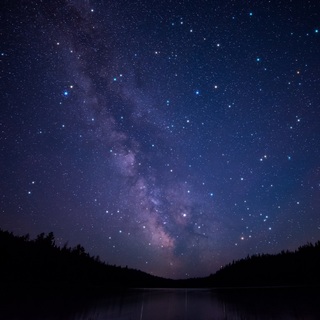
Taking in the grandiosity of the sky and the universe beyond the earth?
Are you overwhelmed by new things?
Or are you awed by something you hadn't noticed before?
I pay attention to the Christian calendar,
The church calendar,
And we've entered the season of Epiphany.
The word Epiphany comes from new appearance.
And it's when the Magi,
The Zoroastrian priests,
Arrived to find the newborn Jesus.
And he was probably a couple of years old actually by the time they actually got to him.
But Epiphany remembers the new appearance,
Maybe the new appearance of God made flesh.
But I wonder if this season issues an invitation to all of us to find that new appearance.
What is looking different these days?
What are we to change our minds about these days?
What are we to notice that we hadn't noticed before?
What are we to see that we hadn't seen before?
Or what are we to sense that we hadn't sensed before?
Or what are we to sense differently than we had before?
Is there life growing where there previously wasn't life?
Is there death where there previously was life?
How are you invited to look different to those around you?
I don't just mean a new hairstyle or new clothing or new makeup.
But how are you being invited in this moment to put forward a new appearance?
Maybe characterized by deeper love and connection.
Maybe putting forward an appearance of greater authenticity.
Maybe putting forward an appearance of confident vulnerability.
Maybe you're being called to look like someone offering support.
Maybe you're being called to look like someone receiving support.
As you practice looking around in a different way,
Notice what invitations there are for you to be a different way.
Is there a new way for you to interface with the world?
I'll leave you with that question.
I'm going to continue walking for a little while.
Maybe you will too.
And until next time,
I'm Greg Powell.
Peace.