Hi,
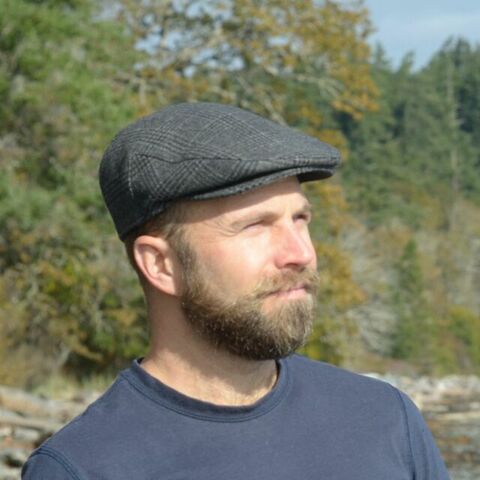
I'm Greg and thanks for joining in this way.
One of my favourite ways to feel connected to the sacred is to go for a run.
Although mountain biking and skiing are up there for me too,
Running is just a little bit more accessible.
And once I hit the 40 minute mark roughly,
I experience the runner's high,
Where the endorphins are pumping through and everything seems just incredible.
And I've trained enough such that this can last for several hours actually.
If I'm running a marathon 42km or 26 miles,
I can go for about three quarters of it until things start to be a bit too much.
And at that point,
When things feel a bit too much and the natural high is waning maybe,
I have certain practices that I use to stay connected as best I can.
So I invite you to come with me on a run.
Truth be told,
I'm actually going to stay right where I am sitting,
But I invite you to take me for a run.
I'm going to put some music on.
Nope,
Not that music.
How about this?
Yeah,
We'll go for 180 beats per minute,
Which is a good cadence to run at.
And let's go for a run.
I consider there to be three main paces.
There's the all day pace,
Where it seems like we could run like this all day.
And depending on your fitness level,
Maybe you can.
Most people can't actually run at that pace all day,
But it seems like it when they first start out.
The all day pace or the slow and steady or slow and easy maybe.
So we could speak in full paragraphs,
Or you might be able to breathe through your nose with your mouth closed.
That's one pace.
Another pace is when you could speak in say sentences,
But not full paragraphs.
This might be getting close to a lactate threshold,
Which is an important pace for training if you want to get faster or improve your endurance.
And the third pace is above the lactate threshold,
Which is when you could run maybe in bursts of a few words at a time.
In an all out effort,
You could barely speak a full word.
We seldom train at those speeds,
Especially if you're listening to this.
So consider those three speeds.
There's the all day pace,
Speaking in full paragraphs or breathing through the nose.
That's pace one.
Zone one.
Zone two is below the lactate threshold,
But where we could only speak in full sentences.
Probably can't do it through the nose only.
Zone three is above the lactate threshold where we could only speak in short bursts of speech,
Say single words or short phrases.
Take a moment now to notice what pace you are running at now.
Could you speak in full paragraphs?
Could you speak in full sentences?
Or could you get just a few words or short phrase?
It's an important practice of recognizing the pace at which we are running.
How much we are asking of our bodies.
When we're fully tuned into the run itself,
We know the pace.
But if our minds have wandered or if we're running with somebody else,
It's easy to lose track of that.
And it only really matters if we're trying to pace ourselves for something.
But it's an important practice to be able to tune into the body,
To recognize the pace at which we are going.
Then we can evaluate if that's the pace we want or if we want to change the pace.
Some people swear by training with a heart rate monitor.
That can be a very helpful tool.
The zones that I described earlier can correspond to heart rate zones.
And those again can be very helpful training methods.
But better yet,
Maybe to be able to perceive the heart rate without an external monitor.
This is actually a fairly advanced skill.
Took me years of running with a heart rate monitor before I could perceive my heart rate without one.
And I don't mean precisely knowing the number of beats per minute.
But rather attuning to how fast the heart is beating,
How hard the heart is beating,
Noticing the heart rate and the strength of the pulse.
This is important also.
Especially if we're running in heat.
Might not be able to notice those things.
So take a few moments to see if you can perceive without touching anything.
Of your pulse,
Your heart rate and the strength of your pulse.
Sometimes it can help to actually stop running to notice the heart rate.
Now of course it's going to drop fairly quickly once you stop.
But that could be a helpful way to do this.
You could do this of course just by feeling for your pulse.
But the practice itself is a practice of perception without touch.
So we've considered our breathing.
We've considered our heart rate.
Let's consider our gait,
Specifically at this point,
The cadence.
The music is at 180 beats per minute which correlates to a safe running cadence.
Meaning the likelihood of injury is lowest at around 180 beats per minute.
Sprinters might be going faster than that.
But most people actually keep the cadence constant regardless of their speed and just change the stride length.
So to go faster their stride gets longer.
But they keep the cadence about the same.
You might well have adapted your cadence even subconsciously to match that of the music.
But it could be that you've been running a bit faster or a bit slower.
What do you notice now as you hear the music at 180 beats per minute?
Is your cadence faster than that or slower than that?
I'm not convinced there is a correct cadence.
But I am convinced that noticing your own cadence is an important skill.
With our attention on our cadence let's consider another practice.
There is very little about our bodies that is actually symmetric.
Our bodies seem symmetric because most of us have two legs and two arms and two eyes.
A nose somewhat in the centre,
A mouth somewhat in the centre.
But consider a photograph of yourself compared to your reflection.
Intuitively you know that it's not quite the same image.
Because we're not actually symmetric.
The heart is on one side,
The left side,
Not the other.
We have only one spleen,
One appendix for example.
There's not much about our bodies that actually is symmetric and so our running gait is not symmetric either.
We tend to come down harder on one side than the other.
So with this practice consider coming down slightly harder on one.
You're going to count 1,
2,
3,
1,
2,
3,
1,
2,
3,
And you're emphasizing coming down a bit harder on one.
And by using an odd number,
3 or it could be 5,
You end up switching the foot on which we're coming down hard.
So it might be left,
Right,
Left,
Right,
Left,
Right,
Left,
Right,
Left,
Right,
Left,
Right,
Left,
Right,
Left,
Right.
Changing the emphasis in our minds can change the emphasis in our feet.
Which is helpful because it helps us to be aware of the asymmetries in our gait.
It's not that we're trying to change anything or correct anything,
We're just noticing.
And it might be that when you are tired,
Say in the long run,
Changing your gait could open up new possibilities for energy or mobility.
It might be that you want to change your gait,
But that's not necessarily the point here.
The point is to notice.
1,
2,
3,
1,
2,
3,
1,
2,
3.
Coming down hard on one side is going to seem more awkward than coming down hard on the other side.
Pay attention to which side is naturally your coming down hard side,
And which side is not.
Since we're considering our gait and considering asymmetries in the body,
See if you can perceive which hip protrudes further ahead than the other.
It might seem like your pelvis is rotated slightly,
Actually.
Your right hip might be further ahead slightly than your left,
Or your left could be further ahead slightly than your right.
See if you can notice which one it is that is furthest ahead.
Of course the pelvis will rotate naturally through the gait.
So when you're striding with your left foot forward,
Your left hip is going to come forward,
Or you're striding with your right foot forward,
Your right hip is going to come forward.
But which one comes further forward?
We're not trying to change anything,
Just noticing.
Developing our proprioception here.
Awareness of where our body is in space.
Now let's move that practice from the hips up to the shoulders.
Which shoulder is rotated further in front of the other?
Again,
They're going to be moving back and forth,
Opposite the leg.
Does one shoulder,
The right shoulder,
Or the left shoulder,
Come further in front of the other?
While you're noticing which shoulder comes further ahead of the other one,
What about rotation in the spine?
Can you tell where in the spine your rotation is happening?
Maybe down in the lumbar spine,
Maybe up in the thoracic,
Maybe there's some in your cervical.
Can you pinpoint the joint between the vertebra that is carrying a disproportionate amount of the twisting?
It's unlikely that the twist will be distributed evenly throughout the vertebra,
Although that correlates to healthy running movement also,
When that rotational load,
Let's call it,
Can be distributed throughout the spine.
It's unlikely that you want your head rotating much.
Your chin shouldn't really be going side to side.
You kind of want your nose leading the way straight ahead.
You might see when people get really tired,
Their head starts to bob.
If we're strong,
The head leads the way.
We've taken note of our pelvis.
We've taken note of our shoulders.
Let's bring our awareness down to our feet.
Consider which part of the foot makes contact first.
If you're in bare feet,
This is likely easy to perceive.
Shoes might dampen the perceptibility a little bit.
But take note,
Is it a heel that comes down first?
Is it the toe,
The forefoot?
Is it the midfoot?
And how much ahead of the rest of the foot?
Is there a long delay or is it a short delay?
Pay attention to how that is happening and pick one foot first to do this.
Notice which part of the foot comes down first and what then follows,
What happens after that initial strike.
Now shift your awareness to the other foot.
Which part of that foot comes down first?
Is it the same as the first foot?
Noticing which part comes down first,
Notice what happens after that.
Notice the immediate response after the initial contact.
We're not trying to change anything necessarily,
Just becoming aware of what is happening in these moments.
Now let's take a few moments simply to dwell in gratitude.
If you're running,
You're doing something that not everyone can do.
So you might give thanks for that ability.
You might give thanks for what seems like miracles going on in the body,
Each cell getting what it needs to perform to fulfill its purpose,
Each muscle getting what it needs to keep you balanced,
Keep propelling you,
Your bones getting what they need so those levers can act and you can move.
It might well be that your body isn't performing the way you want it to.
See if you can find equanimity with that.
See if you can recognize changes you want to make and yet still be okay with the way things are.
You might want to keep running or maybe this is it for you and that's okay.
Either way I offer you gratitude for coming on this journey.
May you know peace and may you know equanimity and may you know gratitude.