Hi,
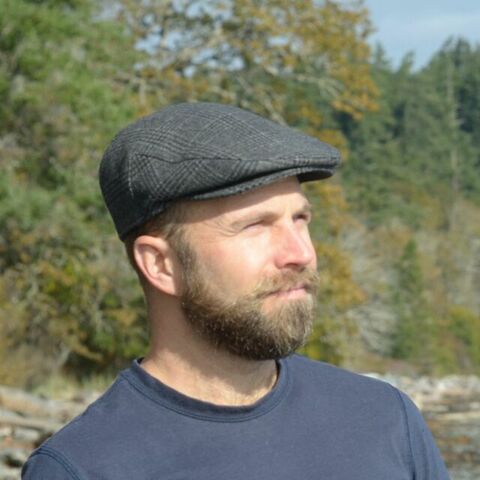
I'm Greg,
And thanks for joining in this way.
Several years ago,
I participated in a workshop.
And the workshop was based on one of the habits from Stephen Covey's Seven Habits of Highly Effective People.
And I found the activity quite moving then,
And I've returned to it several times since then.
The habit is called,
Begin with the End in Mind.
And the exercise is simply to imagine yourself present at your own funeral.
And specifically to imagine what people are saying about you.
Now I believe that our lives are more significant than simply what we do or what we accomplish.
It's more complicated than what others know about us or would say about us.
But it can be helpful in the sense that it helps to provide some direction.
And perhaps even more helpful to record it somehow and to come back to that.
Maybe the vision stays the same.
Maybe it changes from time to time throughout life.
But it might be helpful to know what the end might look like,
Such that the chapters between birth and death might be filled with meaning.
Might be filled with flourishing.
So I'm going to go for a walk and lead us through this exercise.
You might do it seated or lying down,
Or you might join me for a walk.
Either way,
Let's get to it.
Let's begin by noticing what's going on.
How are you feeling emotionally?
How are you feeling physically?
Sometimes our emotions manifest in physical sensations.
What's happening in your body?
Is there tension somewhere or pain?
I'm not trying to change anything.
Just notice what is.
Notice what we're bringing into the practice.
Take a few breaths or a few steps just to release that which has already happened today.
Find yourself present in this moment,
In this practice,
In this experience.
So we're imagining that you are present at your own funeral.
We imagine the circumstances of your death are not fraught,
But rather peaceful.
We imagine you've lived a long and full life,
Died of natural causes,
And whatever you believe happens after death is now underway.
What your survivors have gathered to grieve,
To express their sadness,
But also to celebrate your life,
To celebrate the ways in which you have influenced them.
And at this celebration of life or funeral,
Several people speak.
They reflect upon the impact of your life on them.
The first person to speak is a long time friend.
As you're imagining this scenario and you're idealizing it a little bit,
In other words,
You're imagining what you would like for people to say.
What is it you imagine your long time friend saying about you?
What are some of the stories they tell?
What are the lingering memories?
What are they saying that makes people laugh?
What are they saying that makes people cry?
What are they saying that gives the others insight into who you are?
Your long time friend takes their seat again.
And the next person to speak is a coworker.
We're presuming that you've lived a long life,
And so your coworker might have been a coworker for many years before.
But what are they saying about you?
Are there projects about which they are reminiscing?
Are there achievements they raise in their speech?
How is this coworker reflecting upon your life?
Your coworker takes their seat.
And the next person to speak is your child.
They've grown up,
Of course,
Because this is at your funeral after a long life.
Maybe this is a child that you've raised,
Your own child.
Maybe this is a member of the next generation that you have influenced.
Maybe you don't have children of your own.
But what does a member of the next generation,
What does your child,
Say about you?
In this idealized version,
The mistakes are not there,
The regrets are not there.
It's all good,
And it's all flowing.
What are the stories this grown-up child is telling about you?
What is the cause for laughter?
And what is the cause for tears?
How are your children or the next generation remembering you?
And the last person to speak is you.
Remember,
This is a fully imagined scenario,
But one in which you get to say a few words.
What are you saying about your life in this idealized funeral setting?
What do you imagine to be your proudest moments?
What do you imagine to be the stories that have had the most meaning?
Some of these stories are things that might have already taken place in your life,
In reality now.
Some of them might take place in the future.
So you've imagined a funeral at the end of your long life.
Now imagine those same people gathered today.
It's not a funeral,
But it is a reflection upon your life,
Maybe it's a significant birthday or some other reason to get together and celebrate your life.
What are these people saying about you now?
What are the stories they're telling?
What are the memories they're sharing?
And when you compare these imagined present-day reflections to the imagined future reflections,
What are the differences?
How is what you imagine people saying about you in the future different from what you imagine people saying about you now?
How is the ideal future scenario different from the present?
What are the ways the idealized reflections of the future are the same as the reflections of today?
There are things that you are doing now that you might wish to continue doing.
There are ways of being that you might continue.
And there are things that you are doing now that you might wish to change.
There are ways of being that you might wish to change.
The intention in this practice is not to make a list of things to change and things to keep,
But rather be present to the feelings that arise when you consider those.
You might feel terrific satisfaction,
For example.
You might feel lament.
Either way,
I hope you find encouragement.
I hope you feel the strength to attune to the feelings that have arisen.
I hope you find the wisdom that no doubt will be helpful.
And I offer you gratitude for coming along this journey.
The journey of our lives continues.
And if we can hold on to a vision of the end,
Then those chapters between birth and death will be full of flourishing.
May you know flourishing.
And may you know peace.