Hello and welcome to the Back to Being podcast,
Where I speak with experts,
Practitioners and everyday people about living a more healthy,
Active and mindful life.
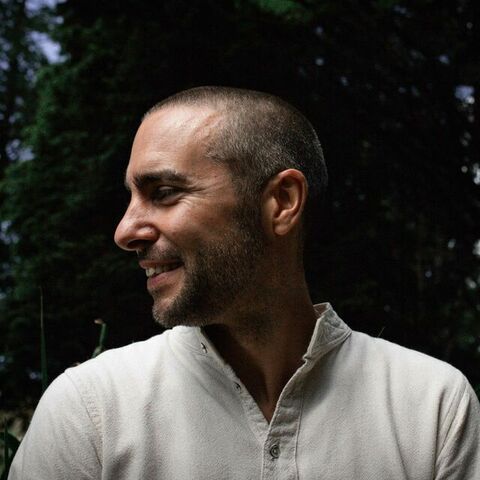
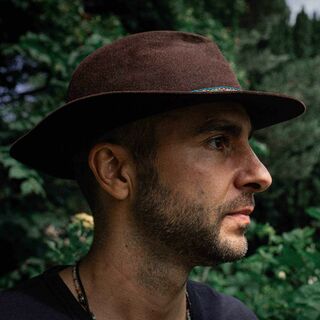
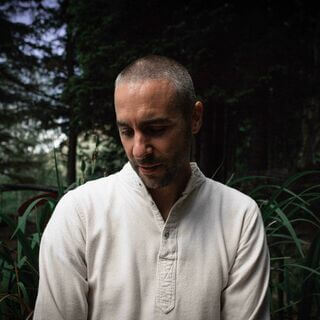
My name is Karim Rushdie and I've spent over a decade learning to transform my own chronic pain and stress so I can lead a life worth living.
Now I'm using what I've learned along the way,
As well as the knowledge and experience of my guests,
To share unique perspectives that can help you do the same.
Thank you for tuning in today.
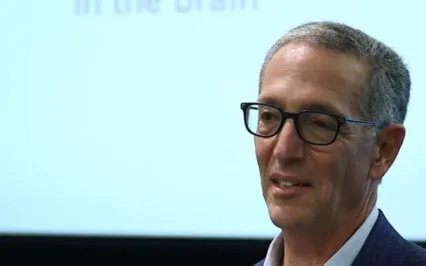
Today I speak with one of the world's foremost experts on pain management,
Dr.
Howard Schubner.
Dr.
Schubner is the director of the MindBody Medicine Center at Ascension Providence Hospital in Southfield,
Michigan,
And a clinical professor at the Michigan State University College of Human Medicine.
He has authored three books,
Unlearn Your Pain,
Unlearn Your Anxiety and Depression,
And Hidden From View.
Dr.
Schubner is also the co-creator of Emotion,
Awareness and Expression Therapy,
EAET,
An evidence-based,
Highly effective psychological treatment for chronic pain.
He was part of the team that conducted the Boulder Back Pain Study,
Which demonstrated that 75% of the people with chronic back pain treated with pain reprocessing therapy recovered fully and documented the changes in the brain that occurred with this treatment using function MRI scans.
This is a fascinating and really informative conversation on the nature of pain and how we can overcome the suffering it causes.
I hope you enjoy listening.
So I am here with Dr.
Howard Schubner.
I'm really excited to have this conversation.
He's one of the global experts in pain management,
Unlearning Pain,
Which we're going to talk a bit more about during this conversation.
So Howard,
Thank you so much for being here with me today.
Oh,
It's a pleasure.
Thanks for having me.
So before we jumped on,
We were talking about Howard's 2.
5 day work week,
Which I mistook to think that the other four and a half days were spent,
You know,
Kicking back and relaxing,
But that's two and a half days seeing patients.
Howard,
Tell us how you spend the other four and a half days.
You know,
I grew up in my first job as an academic doctor at a university medical school at Wayne State University.
And you know,
We were trained that you have to do clinical practice,
You have to teach,
You have to do research,
You have to do administrative work,
And you have to do community service.
So that's what I do.
You've carried that forward with you.
Teaching is really important to me.
And I don't think you can be an effective teacher unless you're actually practicing as well.
Research is critical.
If we don't have research to show that what we're doing is valid,
Then why would anyone believe us?
So we're working actively on a bunch of research projects.
And then,
You know,
You just have to give back,
You just have to do something that in your little way can help the world.
Yeah,
That's fantastic.
And I appreciate you giving back today by spending an hour with me really,
Really grateful for it.
Perhaps we can start with the basics.
And,
You know,
I've experienced a lot of pain in my life,
Chronic pain for the last 10,
11 years in particular,
The course I've designed to help people with low back pain is based on some of the things I've learned.
But maybe if we just go right back to the start,
And love to hear your explanation.
What is this thing that we call pain?
And why does it exist to begin with?
Yeah,
It's a really fascinating topic.
And it's been,
I think,
Diverted to the understanding that if you have pain,
There must be something wrong with your body.
Which all makes sense to most people.
And all of a sudden,
I think I can hear people click,
Drop this video.
It gets better,
Guys,
There's gonna be stuff that you haven't thought about,
I haven't heard before.
But it turns out pain is a function of the brain.
We know this because you can get an injury and not have pain.
And there's thousands of examples of that and research showing that.
So even though an injury will send signals via the nerves to the brain,
The brain has to decide whether to actually turn on pain or not.
So this is a revolutionary idea.
And it's true.
I mean,
It's just straight neuroscience.
But most people and doctors,
Most doctors wouldn't really think of it that way.
Why would you get pain?
Well,
We need pain.
Pain is a warning signal.
It's a protection.
If you break an ankle,
If you don't get pain,
You're gonna walk on a broken ankle and be very seriously injured and hurt.
Children who were born without the ability to experience pain often die at a young age because pain is a protector.
It's very important.
So how can you have pain in the absence of an injury?
We know you can have pain in the presence of an injury as a warning signal to tell you stop walking on that broken ankle.
But how can and why would you have pain if you're not injured?
And it turns out,
I think,
I mean,
This is a little bit of speculation,
Of course.
A hundred thousand or so years ago,
Homo sapiens were on the earth and so were Neanderthals.
Neanderthals were bigger,
Stronger,
They had bigger brains.
They were better than humans,
But humans survived and Neanderthals died out.
And the reason appears to be that humans worked in clans.
They got together and they learned to communicate and they learned to hunt together and cook together,
Eventually farm together.
And so if you got bit by a tiger,
You could die because of the injury.
So your brain would turn on pain to alarm you to rest and recover.
If you got kicked out of your clan,
You could also die because you wouldn't be protected by the clan.
And why would you get kicked out of the clan?
For emotional reasons.
You beat up somebody,
You kill somebody,
You sleep with someone's wife,
You know,
All these things that are transgressions,
Sins that you could get kicked out of the clan for.
So if you get kicked out of the clan,
You could die.
And how would you get kicked out of the clan?
By being shamed.
And so I think what happened is our brains learned to turn on pain,
Physical pain,
When there was an emotional stress going on that was life threatening.
And what we see in the research,
The neuroscience research shows us that when you give someone a physical injury and you do fMRI of their brain,
Certain patterns light up.
When you give someone an emotional injury and you scan their brain,
The exact same patterns light up.
Incredible.
Right?
So emotional pain can cause real physical pain and it does it all the time.
Yeah.
Well,
We're going to get into a little bit about brain generated versus structural pain in a bit,
But first you run the MindBody Medicine Center in Providence Hospital.
Yeah.
Providence Hospital.
Right.
And I think for a lot of people,
When they hear the term MindBody Medicine,
But particularly the skeptics,
You know,
The warning lights go off,
They're like,
What is this?
Some kind of,
You know,
Through through topic here.
What is MindBody Medicine?
Why is it so important?
Well,
It's just understanding the truth,
The facts that the brain and the body are together,
Work together.
They're inseparable.
Everyone really knows it.
And it turns out that our brains actually create what we experience.
So this is called predictive processing.
And this is again,
Not brand new,
The last 20 some years,
Neuroscience understanding that our brains create what we see,
What we hear,
What we feel.
And so it's really understanding the power of the brain.
When you see something,
It's not your eyes that cause what you see,
Because light comes in your eyes.
It's actually your brain that creates those images.
And our brains have control over what we see.
And sometimes they miss see things like police officers can in a stressful situation,
See a gun that's not there.
This happens all the time.
And it's just how our brains processing.
We can hear things that we don't,
That aren't there.
And we can feel things.
You know,
The story I always tell is my wife has the same breakfast every morning,
Sliced apple yogurt,
Granola.
And one morning she had an extra slice and she fed it to me.
I didn't see it or touch it because it was dark and I'd been on it.
And I got a rotten taste in my mouth,
Even though it was a rot.
But it turned out it wasn't an apple,
It was a peach.
But my brain was expecting the crunch of an apple.
And to protect me,
My brain was just doing its job.
And it gave me a rotten taste that this is too soft.
It's not right.
I mean,
That is amazing.
That's simple,
Simple thing that shows the power the brain has over what we experience.
And so,
You know,
When I started my internship and I was a young doctor with a huge imposter syndrome and a huge fear of hurting someone and making mistakes as a doctor,
I would go to the hospital and I had diarrhea every morning.
That was my brain.
Right.
You know,
You're afraid.
This is scary stuff going on here.
Yeah.
And that's just how our brains work.
Absolutely.
And whenever people question that mind-body connection,
You know,
I always bring up the,
You know,
Ask them to close their eyes,
Tune into your little finger or your left big toe.
The fact that you can feel what's there is because the nervous system,
Which is an extension of the brain,
Extends throughout our body.
I mean,
Our brain is in our body.
Our mind is in our body.
Why do you think mind-body medicine is not studied more?
Why doesn't every hospital in the world have a center for mind-body medicine?
I think number one,
There's a tremendous over-reliance on biotechnological medicine,
Drug surgery,
Which has been good.
It's gotten us to amazing research and help for cancer and diabetes and heart disease.
Tremendous work in biotechnological medicine.
So I don't want to diminish those achievements,
But a lot of illnesses,
The major causes of disability in the world right now are back pain,
Neck pain,
Anxiety,
Depression,
Other musculoskeletal pain,
Headache.
Those are the major causes of disability now in the world.
And those,
When you take all those,
As I can describe,
We can talk about the majority of those are actually mind-body disorders.
The problem is that in addition to the over-reliance on biotechnological medicine,
There is a tremendous stigma about psychology,
About the idea that stress or emotions matter or that they could cause something and that people hear it's all in your head and they feel they're being blamed,
They're being told their symptoms aren't real,
They're not being validated.
And that's the last thing you want to do to people.
And so we have this conundrum of trying to explain to people that their pain or other symptoms,
Anxiety,
Depression,
Fatigue,
Insomnia is real,
Not imaginary,
But also not caused by a physical disease that they need to fix and that it's reversible.
And explaining that sometimes is just hard,
People don't get it or really don't want to hear it because they're stuck in the stigma of psychology and the over-reliance on biotechnological medicine.
Yeah,
I guess especially that we're so used to instant gratification,
To quick fixes and most mind-body medicine,
I mean,
It takes time,
It takes effort,
It takes practice for these treatments to work.
And a lot of people just want to pop that pill or take that injection or have that surgery.
And unfortunately,
A large proportion of the people that work in the medical sector are all too happy to offer that as a first option.
When it works,
It's fine.
You know,
It's funny,
But a lot of times the treatments that we do in biotechnological medicine can work well quickly because of the placebo effect.
But no one knows that's what's going on.
But nevertheless,
If it works,
Great,
I don't care.
I remember reading somewhere someone had said that,
You know,
The most effective drug of all time is the placebo.
Oh,
Yeah,
By far.
You know,
Slightly stigmatized and a little bit the unwanted child in the medical profession.
What is it that's led you to devote your career to it?
How did you first get interested in pain and then in mind-body medicine in order to address pain?
Well,
I think I was actually interested in mind-body medicine when I was younger in my college years.
And so I had read a lot about it back then.
And then I went off into my career and did,
You know,
Whatever I did,
My clinical practice,
My teaching,
My research,
Etc.
But then around 2002,
A friend of mine suggested I read a book by Dr.
Sarno,
John Sarno,
Who is writing about this in the 70s,
80s and 90s.
He's written some amazing books.
He's helped the thousands and thousands of people,
Maybe millions of people.
His books are still best selling.
It's amazing because he had this simple idea through his practice of seeing that a lot of people he saw had back pain or neck pain or other musculoskeletal pains because he was a physiatrist.
He noted that they actually didn't have physical damage to explain the pain.
And when he helped them see that they weren't actually damaged and he helped them free their mind and become less fearful of the pain and realize that stress and emotions are at the bottom of it,
They got better.
And the fixes were often really fast.
And I was like,
Wow,
That's amazing.
Because when we see people with chronic pain in the biotechnological medicine world,
We kind of go,
Oh,
Geez,
Whatever we can do,
We'll try,
But it's probably not going to work.
Yep.
Yep.
They're going to be a chronic patient for you as well.
And that's the message that the vast majority of chronic pain patients get.
I'm talking about across the board through all of medicine,
From the practitioner on the corner to the highest level academic medical center,
They're getting that same viewpoint that you have chronic pain,
It's incurable,
We'll help you cope with it better.
That's the best we can do.
We've got a lot of things to try to help you cope.
And,
You know,
Frankly,
That's not what people want to hear.
They're desperate.
And it certainly may be true in some cases if someone has metastatic cancer pain that we can't cure.
Yeah,
A coping model makes sense.
You will help you cope with it better.
But if you have back pain,
Neck pain,
Fibromyalgia pain,
Headache pain,
Migraine pain,
Irritable bowel pain,
If you have chronic pelvic pain,
Chronic fatigue,
Anxiety,
Depression,
Insomnia,
The vast majority of these people,
Everyone needs an individual evaluation to be sure.
Okay.
Everyone does.
You don't want to miss something that's major and structural.
But most of the time with these chronic pain situations and the other disorders I mentioned,
Most of the time it is a mind body disorder and it is potentially reversible.
And to take away that hope is devastating.
Yeah,
I think you touched on a good point there,
Which is you're not advocating for people to not seek any treatment.
And one of the great things about,
You know,
Western medicine is the diagnostic capability.
So go and get those scans,
Get those tests,
Find out what is going on in there.
But then when you're told there's nothing we can do for you apart from the drugs or the surgery or the injections,
That's when it might be time to look at potential alternative paths,
Right?
Exactly.
It really boils down to listening and looking very carefully.
If you have a lens,
If you have a telescope,
You can see stars that,
You know,
Other people can't see.
If you have a microscope,
You can see bacteria that you can't see with the naked eye.
And what we've developed is a lens.
It's the mind body lens.
And when you have that lens,
You can see things that other doctors can't see because they don't have that lens.
It's not a hard lens.
It's not expensive.
It doesn't cost a million dollars to make a super I forget what the new telescope is used to be the Hubble telescope,
But there's a new telescope.
I know they have it doesn't cost that much money.
It's just a viewpoint of understanding that when someone's pain turns off,
When they go on vacation,
That's a sign that it's not structured.
When their pain hurts,
When they sit in a certain chair,
But not another chair,
When their pain is triggered by sound or light,
Wind,
You know,
There's there's clues.
There's a lens that you can use if you take the time to listen and look.
That is the power of this work,
Because when you recategorize the problem from being incurable,
To being reversible.
Game changer.
It's huge.
I get emails every day from people who are going through this process.
Just today,
This morning,
I was reading an email from somebody,
Oh my God,
It just makes so much sense.
I looked at it from a different point of view.
When you talk about that process or that lens,
I mean,
Are there protocols that you and your team at the clinic have developed?
What happens if a patient,
Let's say I walk into the clinic,
You know,
Chronic back pain for a period of several years,
Debilitating,
You know,
I've been told by others that there's nothing that can be done about it.
You're going to have to learn to live with it.
How does the interface go between myself and your team?
Yeah,
That's a great question.
The first step is love.
It's compassion.
The first step is compassion.
Seeing you as a person and being compassionate for you and helping you to be compassionate for yourself,
Understanding that your pain is valid,
It's real,
It is not all in your head,
It's not imaginary,
It's not fake,
It's not because you're crazy,
It's not because you want the pain,
It's not your fault.
It's starting from that point of view.
So people can understand that they're being heard and listened to and taken seriously.
And then it's explaining this whole neuroscience of pain and predictive processing and how the brain works.
So people can begin to open their mind to understanding that it may be the pain is because your brain is turning on pain through neural circuits.
That's a fact.
The question is,
Is it being triggered by a structural problem in the body or is it being triggered by neural circuits in the absence of a structural problem in the body or some combination of the two?
But with chronic pain,
Most of the time it's triggered by neural circuits in the brain in the absence of structural damage.
And how we determine that is like what I was saying before,
Is a protocol of listening and using these criteria that we've put forth and these little tests that we've put forth to help people see it and show them,
You know,
Like I say,
When your pain is triggered by the wind sometimes and not other times,
Is it really the wind?
It's so important,
I mean,
To acknowledge and appreciate that people's pain is real.
Even if it's,
As you say,
All pain is brain generated,
Some due to just what's going on in the brain and others due to what's going on in the body.
But you know,
You do come to a point,
I know I was there,
Where you start to question whether or not this is real.
Am I making all of this up?
Now I had some structural damage,
But I think it was less than the level of pain justified.
And it was very heartening for me to realize that it's real.
Even if it is brain generated,
It's very real for you.
You're not making it up.
And there are things you can do,
Steps you can take to work on it.
That awareness is so important.
Just to know that this is how the brain operates,
That level of awareness can alleviate suffering almost immediately because it's that relief,
You know.
The physical sensations are very real,
But the thoughts and the emotions around the pain are really what create more suffering than the sensations themselves.
Right.
What happens is that physicians are trained to assume that all pain is caused by something in the body.
And when they find an abnormality in the body,
Such as a little bit of arthritis on an x-ray or a degenerative disc on an MRI or a bulging disc,
They will immediately jump to the conclusion that that is the cause.
That is what's triggering the pain.
But yet the vast majority of people have those findings on imaging tests in the absence of pain.
So to make that conclusion is often faulty reason.
But that reasoning,
When it's applied,
When that conclusion is jumped to,
People become more and more fearful.
Doctors use words like,
You'll never get better,
You have the back of an 80 year old or things like that.
And then that makes them more and more fearful.
And it turns out that that fearfulness actually is what's driving neural circuits in the brain to continue to create pain.
Yeah.
The number of times that I heard from doctors,
You know,
Someone your age should not have a back like this.
I see this in much older patients.
This looks like you were skydiving and the parachute didn't open properly,
Or you look like you've been thrown from a horse and then that all gets into your head and you're thinking,
Well,
None of those things happen to me.
You know,
What is going on?
To understand is that doctors have not carefully looked at that literature and seen that 50% of 30 year olds have degenerative disc disease with no pain.
Yeah.
40% of 30 year olds have bulging discs and the numbers go up to 80% and 60% of 50 year olds,
So most people are going to have these abnormalities,
But doctors aren't doing the testing on people who have no pain.
They are only doing the testing on people who have pain.
So they're seeing that and they're making that correlation.
But the research that's been done on people who have no pain shows the exact same thing.
Yeah.
Amazing.
I mean,
It's a very convenient truth.
It kind of ties a pin in it if you can attribute the pain to something you find on an MRI.
So what is the difference between the structural pain we feel and the brain generated pain?
Does it manifest in a different way?
Are the sensations going to be different or can it be exactly the same?
No,
They're exactly the same.
All pain is real.
All pain is created by the brain.
So the pain that occurs due to a physical injury to stress or neural circuits in the brain can be every bit as severe as pain caused by a structural injury.
Every bit is severe.
The pain is the same.
It can have all variations of quality and intensity.
But the way we diagnose it is by these criteria of where it is,
What triggers it,
And is it consistent or inconsistent?
And I call those the FIT criteria.
Is it functional,
Inconsistent or triggered?
And we've written those up.
These are in our books.
And we made some videos describing them.
So there's a lot of ways for people to access.
You don't have to be a physician to investigate your symptoms by looking at them carefully.
Right.
We'll share some of those resources for sure with the listeners.
We'll put them in the show notes.
We'll come back to where people can learn more.
Those books you mentioned,
You've written books about unlearning pain,
Unlearning anxiety,
Unlearning depression.
It sounds difficult to unlearn those things.
What does it actually entail?
How do you unlearn your pain or your anxiety or depression?
Yeah.
The first step is,
As I said,
It's understanding it's not your fault.
It's gaining hope and optimism that this might be reversible.
And it's understanding what's actually going on.
When you can tell somebody,
Of course,
Your brain turned on neck pain when you were in that difficult situation at work.
Right.
All of a sudden it makes sense.
Yeah.
Right.
Yeah.
So the first step is understanding and diagnosing.
The second step then is to start changing the neural circuits.
Well,
How do we change the neural circuits of pain,
Anxiety,
Depression,
Insomnia,
Fatigue?
It has to do with a vicious cycle because the pain or the other symptom generates a reaction.
And you were talking about this earlier,
All the thoughts,
All the fears,
All the worries.
So we tend to fear it.
We focus on it.
We're fighting it.
We're frustrated by it.
We're trying to figure it out endlessly and we're trying to fix it.
So these are the six apps.
You have to stop doing that.
It's hard because those are the natural reactions.
That's what everybody does and everybody wants to do.
Of course you would.
But when you stop doing that and when the symptom comes,
You react to it as if it were a child lying in bed,
Fearful of a monster in the closet.
You open the closet door and say,
Look,
There's no monster.
So you're telling yourself,
I'm not really doing it.
I'm okay.
And then you're giving love and compassion and soothing and reassuring.
It's going to be all right.
You're going to be hung.
This is okay.
You're soothing the brain.
You're calming the brain.
You're giving feedback to the brain that it's okay.
And when you do that,
The brain,
This dangerous signal in the brain starts to ramp down,
Starts to turn off instead of ramping up by more fear and more worry and all that other stuff that I mentioned.
And so we call this pain reprocessing therapy and there's a variety of things involved in it.
And then you're gradually doing more rather than doing less without fear and with more confidence.
So if it hurts to walk,
What you want to do is imagine walking with no fear and with joy,
Calm.
Imagine doing that and then start walking with the same attitude of calm and peace and reassurance and soothing and joy and walk five steps that way.
And then walk five more steps.
Keep doing it until your brain starts realizing,
Oh,
It's okay to walk five steps.
And then you walk 10 steps and 20 and pretty soon your brain is learning to turn off these signals,
These neural circuits.
And it's an amazing process to see.
So that's the next major component of it.
And the component after that is not necessary for everybody.
The other component we call emotional awareness and expression therapy,
Which deals with the underlying emotions and the stressful situations from people's lives,
Because that underlying has been,
You know,
It's what started this,
The symptoms in the first place.
We've got a variety of techniques that are simple and safe to help people express their feelings that have been held in,
Express their feelings of resentment or anger toward their boss or their child or their parent,
Because they can't express those in real life,
But they can express them in writing or they can express them out loud when they're alone.
They can let them up,
They can let them out and they can let them go.
And they can deal with their sadness and grief again in a healthy and safe way by allowing themselves to feel it and turning that sadness and grief into compassion for themselves and to realigning or repairing relationships that have been damaged.
Sometimes realigning a relationship has to do with quitting a job,
Or it has to do with speaking up for yourself.
I was talking to a woman the other day and I said to her,
If you look inside,
If you just look inside of yourself or your spirit guide or your deeper loving self or whoever it is inside of you that you relate to that cares about you,
When you say,
Is there a message,
This pain that you've been having for nine months,
It all started at a certain time in your life.
And is there a message that this pain is trying to give you?
Because your brain doesn't speak English.
It doesn't tap you on the shoulder and say,
My dear,
There's something really stressing going on in your life.
It's just giving you the pain and you have to figure it out.
So I'm asking her to look inside and she says,
I know exactly what I need to do.
I know exactly what I need to do in this situation.
And I said,
Do you think you can do it?
And she said,
Oh yeah,
I think I can.
And it was a beautiful,
Beautiful moment because now she's not looking at this pain as something incurable and not fixable and something that is totally out of her control.
She's seeing the pain as something she can make go away.
And in fact,
Just talking to her,
Her pain went away on the spot.
Yeah,
It can be instantaneous for sure.
It went away.
She's going,
Okay,
Now I'm not afraid of it anymore.
So that was step one.
And then step two is what do you have to do in your life?
And she said,
You know,
I think I'm going to be able to speak up for myself.
Amazing.
Yeah.
Yeah.
It was definitely better than 20 years of opioid pills or something.
Isn't it?
So,
I mean,
You know,
You must be one of the very few doctors,
Researchers,
Academics with your credentials,
Who is prescribing people,
You know,
A healthy dose of love,
Compassion,
Joy,
Et cetera.
How does the mainstream receive the work that you do?
Of course,
If you Google Howard,
You will see tons of talks and references and all the great work he's doing,
But I'm wondering how other doctors,
Particularly people in pain management,
Because in most hospitals and most clinics,
Pain management means we're going to give you some drugs.
I mean,
I have a friend who's working in that area and I was really surprised to find that out because I thought it would be more on the psychological side of things.
So yeah.
How is the work received?
Well,
I got an email this morning from a woman who's an amputee for 47 years.
And she said,
Pain in the stump for 47 years.
And she's just recently found this work and she's getting better now.
In the last six weeks,
She said,
I've made more progress in the last six weeks than I've made in 47 years.
I'm walking,
I'm walking on the prosthesis.
I'm able to put pressure on it.
Something I couldn't do.
And I'm so grateful and I'm so happy.
Thank you for your work.
And it wasn't just me.
I'm not the only one doing this.
I'm sure.
And then she said,
Okay,
I am an advocate.
So she went to her primary care doctor and she told her primary care doctor about this work and she got a tepid response.
And then she told her physical therapist about this work.
And she got a lukewarm response.
And then she told her pain management doctor about this work and she got another somewhat dismissive response.
And I could just hear the deflation,
Her tone,
Because she's saying this is amazing.
And my doctors don't really seem to want to listen.
And then I had a conversation with a physician who got pain himself and now he's better.
And he said to me,
I would never have believed this could be possible if it didn't happen to me.
And so there's something apparently very important about seeing this for yourself with your own eyes,
But just hearing about it somehow it's hard for people to change.
Yeah,
Especially if you've been trained,
If you've gone to school for five years and then,
You know,
Residency and worked your way up into a certain status in the medical profession.
This really flies in the face of a lot of what's taught,
Doesn't it?
And practiced.
It does.
It does.
And it's just hard to change for lots and lots of reasons,
You know,
Having to do with your practice,
What you're trained,
The way you think,
You know,
There's a really great pain physician who I've been in discussion with now and he runs a major medical center pain program and he's saying,
But Dr.
Schubiner,
What about all the science we know about the nerves and the spinal cord and all that?
I'm going,
Yeah,
That's real.
That's important.
He said,
How can I throw all that out?
And I go,
Well,
It's a question of perspective.
Is that the most important thing that we need to emphasize with our patients showing that your nerves are sensitized or should we look at the fact that the brain can actually control pain turning it on or off?
What do we want to tell people?
How do we want to practice?
And this whole program is set up.
So the mainstream medical community is conditioned to treat pain through biotechnological approaches of drugs,
Injections,
Surgery,
And,
You know,
Taking a mind-body approach really flies in the face of that.
It's at odds with what people have been taught throughout their college,
Their early years of practice,
And then through their careers.
So how do you introduce mind-body medicine to them?
How do you bring the mainstream over to this side?
Well,
You can't force somebody to change their views,
Whether it's political,
Religious,
You know,
I think the world has discovered that in the recent last couple of years.
So you know,
It just has to happen by seeing things,
You know,
The people who are most concerned about this are the people who are suffering,
The patients,
They are the most concerned because they're the ones suffering and they're the ones who are desperate and they're the ones who look and keep looking for something.
And oftentimes they fall upon this work eventually after when the other methods haven't worked.
But increasingly we have a growing number,
I don't know if it's a large number,
But a growing number of physical therapists and physicians and nurses and psychologists and social workers who are frustrated that their methods,
What they've been taught,
Are not as effective as they would hope.
And they have patients who are frustrated and then they get an experience where they see somebody who had had this and they taught them about it.
That's the same thing that happened to me.
Someone told me,
Hey,
Check this out.
And I read about it and it made sense to me.
So it's a tipping point process.
You know,
It's little by little,
You know,
Clearly we're doing research and our research is showing amazing results.
We just published a study in back pain where 75 percent of the people that we treated in the study had resolution of their back pain after average of 10 years of back pain.
Back pain gone or virtually gone in 75 percent of the people we treated.
That's an amazing.
That's incredible.
But that doesn't happen in,
You know,
The kind of usual coping with your pain model.
So,
You know,
We just keep chipping away at it.
We just keep speaking and talking and teaching and researching and treating people.
And the word gets out.
You're part of it.
I don't know when it's going to change,
But it will.
You can't keep a good idea down forever.
Yeah,
That's true.
And there's a real growing body of research and acceptance.
And if not in the medical community,
People outside are starting to demand this approach to treatments for conditions they have.
I mean,
People are just much better informed these days.
But coming back to lower back pain,
Which is,
You know,
My experience and many,
Many,
Many others,
As you said,
It's one of the most common forms of disability and suffering in the world.
I remember in a talk.
I mean,
You've given so many.
I can't remember which one it was.
I was watching maybe one of the Google talks.
You were sharing the data that showed comparing surgical versus non-surgical interventions for lower back pain.
Could you share a little bit about that?
Because I was blown away by that.
Well,
When a new medication is being researched,
You know,
You have to test that medication against the placebo treatment to see if it's actually better than placebo.
We don't approve for use medications that are no better than placebo.
That makes sense,
Right?
Let's take surgery for back pain.
Now,
There are some indications for back surgery.
If you have a tumor of the back,
You have an infection in the back.
If you have a disc that's very large and is pressing on the nerve and is causing nerve pain,
That's unremitting and it's causing neurologic symptoms,
Surgery can be excellent and is necessary for certain conditions.
And for your average daily run of the mill neck pain or back pain,
Where there's no evidence of anything that is neurological going on,
No actual neurological involvement,
In other words,
The reflex are normal,
Strength is normal,
Sensation is normal,
You just have back pain that's unremitting.
Research when you compare surgery versus non-surgical treatments,
There's no difference.
Exercise or physical therapy or even doing nothing is just as effective as back surgery in those conditions.
How long are these studies?
Well,
They follow people for one or two years.
And so we're offering a treatment which is very invasive,
Sometimes risky,
Very expensive,
Long rehabilitation for a treatment that's not actually shown research-wise to be better than even just the simple treatments.
But if you compare it to an actual mind-body approach,
It would be no contest.
The same is true of injections for back pain.
Injections for back pain when you compare effective,
But no more effective than placebo injections for back pain.
So it's mind boggling that some of the standard treatments that we use have not been shown to be effective in randomized controlled trials,
But yet that's the standard approach.
Yeah,
It's amazing.
And it goes back to what you were saying earlier.
I mean,
The reason for that invasive procedure is,
You know,
Scan is done,
Tests are done,
Everything shows up as it would on anyone,
As you point out earlier,
And the doctor decides that that must be the cause.
Cause and effect,
This person's got a bulging disc,
I'm going to go in there and fix it.
Whereas that bulging disc is likely not causing the pain that they're feeling.
Exactly I saw a patient the other day who had pain from the lower spine to the mid spine to the upper spine,
Both sides of the back.
This person has been suffering for 10 years with pain all up and down the back.
And the MRI shows one area of a bulging disc in the lower back that if it was causing a problem,
It would cause pain down his leg.
He didn't have any pain down his leg.
He had pain all up and down his back.
So he sees a surgeon,
The surgeon says,
Yeah,
We can fix that.
Yep.
That's what we do.
That's what we do.
But how is that going to help this guy's pain all up and down his back by fixing one area of the lower back?
Yeah.
And he doesn't actually have leg pain that that would be causing.
I mean,
It's mind boggling that that would be a potential.
And you know what the patient said when he was offered surgery,
He said,
Great,
Sign me up.
Of course.
Of course.
I mean,
That's what we do.
I was right on the verge and I'd resisted for a while,
But I was right on,
Thankfully I had a very forward thinking and open-minded surgeon,
One of the top spinal surgeons in Hong Kong where I was living at the time,
But even he was advising against it.
You know,
He just said,
You're young,
You're otherwise healthy.
I don't think surgery is the right option for you.
He said,
If you were 70,
I'd put an artificial disc in you tomorrow,
But you know,
You're in your late twenties.
So as long as you can work through this,
Let's try and work through this.
I'm very grateful for him saying that,
But flash forward 18 months when the pain hadn't abated.
I mean,
I was ready to go in and demand that he cut me open and you know,
I know now that it would have been no more effective than doing nothing.
As you said,
Let alone doing some cognitive behavioral therapies,
Some physios,
You know,
Some other work.
So really amazing.
Uh,
Howard,
You've been so generous with your time.
I've got a couple more questions for you.
I wanted to talk about meditation for a moment.
Do you think,
Do you see a role for meditation in working with pain and unlearning pain?
Is there any research you've come across in this area?
Do you meditate?
So let's talk about meditation for the last few minutes.
Yeah,
Absolutely.
Yes.
I've,
I've been studying and practicing and teaching mindfulness meditation for over 20 years.
I think everyone should do some form of meditation.
Mindfulness is the brand that I tend to use and teach and advocate.
I think everyone should learn that.
But then we have to ask the question,
If we're honest,
Why are the research studies on mindfulness meditation not showing them to be very effective for pain?
Why are the research studies on mindfulness meditation not showing them to be any more effective than cognitive behavioral therapy,
Which has a very small impact on pain?
And I believe the answer lies in the question of categorization.
When you categorize your pain as being due to structural damage that's incurable and you do mindfulness for it,
You may have some effect on it,
But the category is,
You know,
You're damaged.
You can pay attention to it and you can try to separate from it in the Buddhist sense,
But that's not going to be easy.
However,
When you're able to recategorize this pain as being due to your brain,
Now the pain becomes basically,
And this may offend some of your listeners,
This pain basically becomes a thought.
Mindfulness is incredibly useful for dealing with thoughts because people know that their thoughts are generated by their brain,
By their mind,
And they're just thoughts.
And that's one of the most liberating things about mindfulness meditation is to be able to watch thoughts,
Not get wound up in them,
Not get unraveled by them and allow them to come and to go and to decide whether to do anything about those thoughts or not.
Well,
It turns out when you recategorize pain as a thought,
When you categorize pain as a neural circuit in the brain,
In the absence of physical damage,
Now mindfulness can be incredibly effective and that's how we use it.
So helping people to relate,
You talk about categorization,
I always use the term unpacking,
It's kind of unpacking pain into its constituent elements,
Right?
Yes,
There might be the sensations,
Then there's the thoughts and there's the emotions,
But that recategorization of it,
And then change the way you relate to those thoughts or relate to that,
You know,
This thing we call pain air quotes.
Exactly then,
Then pain will vanish.
Literally it will vanish when you look at it from that point of view.
And when that happens,
If it only happens for a minute or five minutes and vanishes and all of a sudden people now know,
Now they don't have to worry when it comes back the next time,
They can go,
Oh yeah,
Just a sensation.
Yeah.
And the way we talk about it is so important.
The language we use,
I remember when I first started learning mindfulness meditation for pain relief and I was using one of Jon Kabat-Zinn's old audio guides.
One of the things that really stuck out and still sticks out with me to this day is try not using the word pain.
Call them what they are,
Uncomfortable sensations,
Intense physical sensations,
Because then you start to realize pain is only when you bundle on those thoughts and those emotions around it,
Then it becomes pain,
This thing that causes all this suffering.
So yeah,
Very,
Very powerful.
When you view the sensation as neural circuit,
As not damaged,
Then you can lean into it.
You can allow yourself to feel it without fear.
You're changing,
As you said,
You're changing your relationship to it.
And when you can lean into it and observe it and feel it and be with it and allow yourself to investigate it and watch it as if your brain is putting on a show for you.
All of a sudden there's a relaxation in the danger signal in the brain.
And then the pain often will shift or move to a different spot.
And then you go,
Oh,
This neural circuit's turning on,
This neural circuit's turning off.
And you have a whole different relationship and,
And now you're on the process of freeing yourself from something that you previously viewed as being incurable.
And what an amazing process that is.
Yeah.
Thank you.
Thanks for sharing that.
Okay.
Before we go,
What projects are you working on at the moment that you are really excited about?
Well,
We're doing a lot of teaching.
We're doing courses all over.
Are you teaching medical professionals or are you teaching,
You know,
General public or is it a bit of both?
Medical professionals.
Okay.
But we include physicians,
Nurses,
Social workers,
Psychologists,
Acupuncturists,
Massage therapists,
Physical therapists,
Or physiotherapists,
Chiropractors,
Body workers.
Anyone that's working with pain in some shape way or.
Absolutely.
Because these skills are usable,
They're transferable.
They're not that hard.
They're understandable and you know,
People are coming in contact with a whole variety of practitioners and we know that,
You know,
If you're open to it and you have a good heart and you care about people,
You can learn how to do this work.
So we're doing a lot of teaching.
We're doing research.
We just finished a study where we're looking at the causes of back pain.
We're looking at this categorization issue and we've evaluated over 220 people with chronic neck and back pain to determine how many of them actually have a structural problem versus not.
And the hint is most don't.
Right.
It turns out most don't have a structural problem,
Which is shocking,
But.
Most do have a bulging disc or two,
But it's not the cause of their pain.
Correct.
And we've shown that and we've proved that.
We think we've proved it.
We'll see how the medical profession reacts when we publish that data.
We just got funded through some excellent colleagues of mine for a new study where we're comparing our version of an emotional awareness and expression therapy for back pain compared to standard cognitive behavioral therapy and acceptance in therapy.
So we're going to be head to head comparison of these different models.
We've already done a trial like this for fibromyalgia,
Where we compare emotional awareness and expression therapy to standard cognitive behavioral therapy for pain in fibromyalgia.
And we showed that the emotional awareness and expression therapy was superior to the cognitive behavioral therapy for pain relief.
This was the first study to show in a large sample that one psychological intervention for pain was actually superior to another.
Remember I said before that the CBT and the ACT and the mindfulness all have equal results and they're not very strong results.
So we're excited about that new study.
There's a colleague of ours doing a study in long COVID,
Long haul COVID using these techniques at Harvard.
So we're very excited about that study ongoing.
I'm not personally involved in that.
And we're beginning to branch out.
We just helped write a paper with some scholars on the effects of racism on pain.
Wow.
That's a whole nother podcast.
How discrimination causes hurts and how hurts can cause physical pain.
Yeah.
Well,
As you started the conversation today by saying that evolution in homosapiens to register emotional and psychological distress as physical pain was a part of our evolution.
So that's fascinating.
Exactly.
So there's a bunch of stuff.
There's just a few things happening in your life right now.
Where do people go to find out more?
I mean,
If there are medical professionals,
Are there courses,
Workshops that you and your team teach,
Are they available online so people outside of the US can join or is it just within the US at the moment?
Yeah.
Most of our teaching is virtual nowadays,
Which has been amazing.
We're just rolling out a mobile training app that can be done at any time by anyone on their phone.
Oh,
Amazing.
Self paced.
Self paced learning.
Yeah.
You don't even have to join a course.
It's relatively inexpensive.
It's called Ovid DX.
So that's going to be rolled out in the next month or so.
We're excited about that.
All the information is available on my website,
Unlearnyourpain.
Com.
We have a nonprofit professional organization called PPD Association.
So PPDassociation.
Org,
Which is psychophysiologic disorders,
PPDassociation.
Org.
There's the peer run group of people who have recovered from pain or working with that called TMSWiki.
Org.
In Britain,
There's SERPA.
Org,
S-I-R-P-A,
Which is an amazing,
Great organization run by Georgie Oldfield.
So those are a few resources that people can use.
Dr.
David Hanscom has an online program,
The Curable app.
There's Curable Health app is really a great program.
I run a program with Hal Greenum in Australia called freedomfromchronicpain.
Com.
And there's an online program with that.
There's one called lin.
Health,
Another online program for patients.
And then all the trainings,
If you go to my website,
All the trainings are available.
There's also the Pain Reprocessing Therapy Institute in Los Angeles that offers trainings in pain reprocessing therapy.
So there's a lot of resources out there for people who want to learn.
There is,
There's a real wealth of resources.
Well,
As I said,
We'll drop some of those into the show notes so people can go and check them out.
I also encourage listeners to go and watch a couple of your talks.
There's some really good ones online there and you've appeared on many other podcasts too.
There's six animated videos.
They're short,
They're animated,
And they,
I think,
Have a high level of explaining pain and explaining this mind-body connection in brief videos.
And that's the first thing that I suggest people watch to get a sense of it.
Fantastic.
I'll do that.
Howard,
Thank you so much once again for sharing.
I mean,
As we just heard,
You're an incredibly busy guy and really appreciate you sharing your time with me today and just the service that you're doing,
The fight that you're fighting.
Please continue to share this gospel widely.
People need to hear it,
Both the professionals,
But also the patients,
People who are suffering from pain that they think is caused by something that actually it's not.
So I hope we can invite you back sometime and talk about some of the other work that you're doing.
Thanks so much.
I try not to be too evangelical in my tongue.
You mentioned spreading the gospel.
No,
I mean,
You've got to be.
I mean,
This is real suffering.
People's lives are devastated by this issue of pain and not understanding it properly and not realizing that they can unlearn it and that there are ways to make it go away,
If not overnight,
In some cases overnight,
But you know,
With some diligent kind of practice and applying themselves.
So okay,
Don't be too evangelical,
But do keep spreading the word.
It is a passion.
It's a passion to have and to do,
And it's a mission and it gives a lot of meaning and purpose to me.
And people who've been discovering this work are finding a lot of that passion as well and a lot of that mission and purpose.
So it's inspiring.
It's inspiring to see people recover and have agency in their own life and realize that they have the clue.
They have the answers inside of themselves if they know how to look and they know what lens to put on this viewpoint of looking at pain from this lens as opposed to another lens.
Yeah.
So just tuning into themselves and listening,
As you said earlier.
Fantastic.
Okay,
Howard,
Take care and hope we get to speak again soon.
Thanks so much.
You take care.
Thank you.
Thanks again for listening to the Back to Being podcast.
If you enjoyed this episode,
You can subscribe to receive news about future shows.
If you're struggling with lower back pain and the distress it can cause,
Then check out the Back to Being method,
A 10-week program based on my own lived experience designed to help you transform your relationship with lower back pain so you can live a healthier,
More active and mindful life.
Until next time,
Be kind to yourself and others.
I wish you well.