Hello and welcome to the Back to Being podcast,
Where I speak with experts,
Practitioners and everyday people about living a more healthy,
Active and mindful life.
My name is Kareem Rushdie,
And I've spent over a decade learning to transform my own chronic pain and stress so I can lead a life worth living.
Now I'm using what I've learned along the way,
As well as the knowledge and experience of my guests to share unique perspectives that can help you do the same.
Thank you for tuning in today.
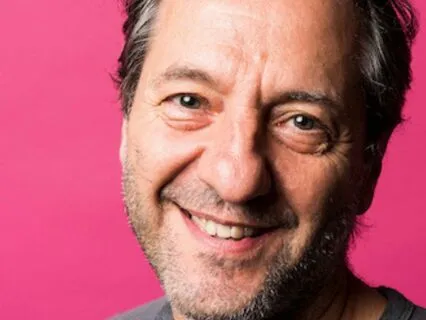
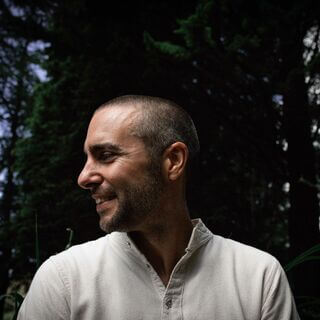
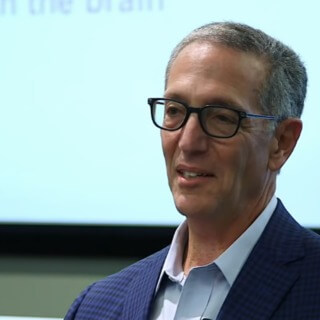
Today I'm speaking with leadership coach,
Facilitator,
Journalist,
Sustainability expert and Zen mindfulness practitioner Joe Confino.
Joe works at the intersection of personal transformation and systems change.
His coaching practice focuses on supporting leaders within the climate movement.
Joe has worked closely for the past 16 years with the late great Zen master Thich Nhat Hanh and his Buddhist monastic community in Plum Village.
He is co-founder and co-presenter of the acclaimed podcast series,
The Way Out is In,
And is chair of the board of Parallax Press,
Which publishes books on mindfulness in daily life.
Joe's career as a journalist spanned almost three decades,
During which he served as executive editor and member of the senior leadership teams at the HuffPost and Guardian.
In this episode,
Joe and I discuss the link between inner work and outer change.
He shares his personal journey of discovery and healing,
His relationship with Zen,
And how mindfulness can help facilitate transformations in ourselves and the wider world.
I got so much out of having this conversation with Joe,
And I hope you do too.
So Joe,
Welcome and thank you so much for being with me today.
Yay,
This is going to be fun.
I'm already excited actually,
Because I like nothing more than chatting.
Yeah,
And surprises,
As you just said before we hit record.
I mean,
You've got no idea who I am,
And you thought they sounded like a fun conversation,
So you just thought,
Let's do it.
Yeah,
I'll never have an idea of who you are,
Because I don't even know who I am,
And I'm 61 years old.
So hopefully during this conversation,
We'll get to know each other a bit better.
And after the recording,
We can fill in some of the gaps.
But I tell you,
One thing I am is I'm a great fan of the work that you do,
And in particular,
The podcast that you and brother Fab who have been putting out for,
Has it been a year and a half now or so since you started that?
Yeah,
About a year and a half.
So I was working in New York,
And then left New York after five years,
And my wife and I decided to come to Plum Village,
And we arrived during COVID.
And we were the only outsiders allowed in,
Because I'm the sort of chair of the board of Tic No Tan's publishing house,
Parallax Press.
So I was one of the only outsiders allowed in.
And the first time I arrived,
Bapu greeted me,
And he's the abbot of Plum Village and was Tic No Tan's personal attendant for 17 years.
And he's still only 35 years old.
It sounds like he'd be about 70.
Yeah,
Right.
After all that,
He's still only 35.
And we went for a walk,
And he mentioned about,
Oh,
It'd be nice to,
I'm thinking of doing a podcast just for the other monastics.
And I wondered if you,
You know,
You're a journalist,
If you have any thoughts about it.
I said,
Bapu,
I've wanted to do a podcast for ages.
So scrap the other monastics,
Let's do something much bigger,
Much broader,
And just do something together.
And on that first walk,
We just said,
Yeah,
Let's do it.
So it was a very,
It came out of sort of seemingly nowhere.
And it still feels like that,
To be honest.
I mean,
You know,
The conversations you have are so natural,
So organic.
Sometimes it just feels like you're sitting in that little hut with you two,
Just shooting the breeze about topics,
Which are,
And that's the other thing,
I mean,
It's making topics of great import really accessible to people and so needed over the last 18 months and before and going forward.
So really,
Really grateful to you and Fabio for putting that out there.
Yeah,
No,
It's fun.
And,
You know,
People imagine that we must prepare them in advance or have scripts or have written down questions or anything.
And actually,
You know,
The whole purpose of mindfulness is to be present in the present moment.
And that's how we do the podcast that sometimes it's only when we sit down at the table around.
So we recorded in the sitting still hut,
Which was Thich Nhat Hanh's hut,
Where he lived in Upper Hamlet.
So we sit around his little kitchen table,
And we'll sit there and sometimes we'll know the day before,
But sometimes we'll be texting each other on the morning,
Oh my God,
What are we going to talk about?
And I'll say,
Oh,
I don't know what to do.
And we might even get to the table and say,
What should we do?
And then we'll just start because I think the most important thing I've learned from Thich Nhat Hanh is what it is to embody and the words.
So anyone can say words,
But actually,
Who do we trust?
We trust people that we feel embody what they're saying.
And everything I learned about Thich is whenever he said something,
It's who he was and who he was is what he said and vice versa.
So I think we try to do what we can in that direction,
Which is just to show up and actually be open to what emerges in that moment and trust that that will make sense to people.
And I think the response we get from people is that they really feel that they're sitting next to us.
They feel they're part of a conversation.
They don't feel they're being told and taught anything.
I see it as a real opportunity to learn at the feet of this wonderful young man who's deep in the Dharma,
And I can ask him anything and we can share.
And so I see it as my sort of weekly teaching.
And for Phap Phu,
He loves it because the traditional way of imparting information from religion is through Dharma talks,
But you're given a sort of an hour and a half talk.
But actually,
He's a young man and he's full of fizzing energy and he's fun.
And this gives him also another way to express the Dharma in a way,
As you say,
That's light,
That's humorous,
That's vulnerable.
And that allows people to connect to it because actually we're trying to be as real as we can without giving our darkest secrets away.
So mindfully walking the talk.
Yeah.
And there must be some great energy in that hut,
You know,
And I'm sure that provides a little bit of inspiration to just the knowledge that Thich Nhat Hanh sat there and walked there and taught there.
It's really,
Really special.
I'm trying now not to look at my notes for today's conversation because we're talking about how we want it to emerge at the moment.
It's funny you mentioned this because one of the challenges I've been having recently with regard to that is,
I'm learning to,
I'm doing a master's in mindfulness,
I'm learning to teach mindfulness,
Hopefully teach it well.
But I just completed teaching my first eight week course,
Which is a mindfulness based stress reduction course,
Something that Jon Kabat-Zinn created about 40 years ago.
And it's been really effective in helping people manage stress,
Low mood,
Anxiety,
Pain,
Very scientific approach.
It's evidence-based,
But at the same time,
It's light.
It's about emergent learning rather than sitting there and telling the participants the way the world works,
Which for the last 12 years is what I've been doing in my role as a facilitator of leadership programs.
So I'm used to standing at the front of the room and kind of managing the crowd and giving them all the insights as the so-called expert.
And then to be in this other mindfulness-based teaching context environment,
Where your role as a teacher,
As a facilitator is to just create conditions where that learning can emerge.
And it's so bloody hard to do that.
It's so hard to hold back from that didactic kind of teaching that you want to do and to just be on your soapbox and tell people.
So I can imagine in the podcast conversation,
Just allowing,
Creating conditions,
Which you've done partly by the physical setting,
Where those insights and learnings can emerge.
It's really wonderful.
Yeah.
And in fact,
Our next episode is going to be,
Which is recording in a few days,
Is around humility.
Because what I remember,
What you said has just triggered something in me,
Which is that,
I mean,
Nothing bad.
Trigger is a dangerous word.
What has reminded me of maybe is a softer way of saying it.
Yeah.
When I was trained as a facilitator,
The person training us said,
You know,
The best facilitation is,
To give you an example,
He said is that you're asked to facilitate a three-hour meeting of a complex subject with a group.
And halfway through the conversation,
You say one thing,
Which is like dropping a little pebble in the water.
But it fundamentally shifts the conversation because it's like a almost a needle in an acupuncture point,
You know,
It just opens everything up.
And then the whole meeting goes brilliantly after that.
And at the end,
They sort of walk out and say,
God,
That was such a good meeting,
But why did we do Joe here?
And I remember screaming,
I was like,
No!
I'm thinking,
Joe,
You were so,
How could we,
Couldn't have done this without Joe.
Joe is so wonderful.
Joe is so insightful.
Joe,
Without Joe,
We'd be stuck and lost.
And it was such a learning about what my need was around being recognized,
What my need was to be seen,
What my need was that I'm necessary,
You know,
Without me,
You can't do this.
Whereas actually,
You know,
The more honest and open answer is to say,
I was just present.
And by my presence and by listening quietly and intently,
And by watching the dynamics,
I was able to say one thing,
Like the one needle,
Not the 50 needles,
The one needle that opened up the system.
And that's enough.
Yeah.
Yeah,
I completely relate to that.
I mean,
It's been a very humbling experience,
I think,
Because as you say,
Mindful facilitation flies in the face of what we are kind of conditioned and taught to believe a teacher or an expert should be.
And to kind of sit there and to create those conditions that I mentioned earlier,
And then to sit and to listen to participants,
Dialogue amongst themselves and those learning goals and outcomes just emerging without you having done,
You know,
As much as you think you should,
Is really,
Yeah,
It's really humbling,
Because it actually reminds you that you're not as needed,
Or you're not as needed in the way you thought you were,
You know,
Maybe beyond that,
That you don't need to be recognized for being needed,
Because the fact is,
We are all needed.
But often,
There's a hook attached to it,
Which we want,
We want something from being clever at that moment,
Or being insightful or being mindful,
Or being mindful,
You know,
That there's always a hook and a trap in there.
That if I by showing how mindful I am that people will love me.
Yeah,
No,
That's a really good,
That's a really good point.
All that's needed is,
As you said,
Presence,
Real,
Real presence.
I want to backtrack a bit because I want to,
You've already kind of dived into some of the work that you're currently doing to that relationship you have with with Plum Village,
Which of course is taking our hands,
Monastic community,
And to Thich Nhat Hanh,
You know,
Himself,
But I'd love to backtrack a bit and find out what brought you to even the door of Zen and mindfulness and the work of Thich Nhat Hanh and the community.
So maybe you can give a broad brushstroke of the,
You know,
The what,
40 years,
I guess,
That led to that point before Zen came into your life.
Is that correct in saying it's been 20 years or so,
This Zen journey that you've been on?
Yeah,
Yes,
It has.
And like anything in my life,
It's always about a good woman.
If I'd been on my own,
I'd be sitting a bed set,
Sort of with a kitchen stacked up with cartons of old Chinese takeaways,
Delivery takeout,
And sort of sitting like a couch potato thinking,
What is the point of this life?
So luckily,
Women have played a very strong role in showing me how strewed up I am and how I can resolve that.
So,
I mean,
Just briefly,
You know,
I've,
So just in terms of my professional career,
I've been a journalist for more than 40 years.
So I started off as a financial journalist on the Daily Telegraph and then was Wall Street correspondent,
Which I still find it quite difficult to connect myself to that time.
And then I was 23 years at the Guardian,
Starting off sort of helping on the business and finance team.
And then I had a sort of epiphany.
And in that epiphany,
For a long time,
I'd been,
So I started with the professional and then go to the personal,
But I'd been sort of in all the 11 years I was a business and finance journalist.
I never really understood it.
I was running,
I was news editor of the Daily Telegraph,
Sort of business and finance desk.
And I didn't understand a thing that was going on.
And I wonder sometimes,
I wonder sometimes if those working in the industry understand what's going on.
Exactly.
And the reason I didn't understand it was because it wasn't connected to real life.
It was all about mergers and acquisitions and share prices and bonuses and currency movements.
But in none of the journalism was I seeing that connected to real people in the real world and the impact.
It was like this sort of vacuum that things were going on inside.
And in fact,
I just was in the city of London for the first time in many years the other day,
And just recognizing that again,
Just sitting and watching people during the day and saying,
All these people are making decisions about that it will affect millions or billions of people around the world,
But have no connection to the impacts of what they'll be doing and are just looking at each other and competing with each other and how it's possible to destroy a world or a civilization through that disconnection.
And so the epiphany was when I was at the Guardian that I had this experience and out of that experience,
I realized that actually I was much more interested in values and in how we connect things to real life and to do the important things.
So for me,
It was helping set up the environment site at the Guardian,
Then the global development website.
And then I set up something called Guardian Sustainable Business,
Which was about integrating sustainability into the world of business.
And then I ran a project,
It sounded like a project,
But I had this sense of as the Guardian was growing,
There was always a risk that it would lose its core sensitivities to its values.
And so I set up this project called Living Our Values,
Which was just making us accountable for everything we did.
And so that if we were telling other people to do something,
That question,
Were we doing that ourselves?
So if we were doing something about the terrible pay for cleaners,
What were we paying our own cleaners?
If we were talking about destruction of forests,
Where were we buying our newsprint from?
It's that embodiment you mentioned earlier,
Isn't it?
Yes.
And I always remember this,
I wrote this report called Living Our Values,
And I remember taking the first one home to my then wife.
So darling,
Look,
Look,
This lovely sort of glossy document showing about Living Our Values.
And she looked at the time and said,
When are you going to start living yours?
Straight to the heart.
No defenses would have protected me from that.
But in a sense,
What she said was so important about all of our lives,
Which is that what we do in the outside world,
Are we doing it inside?
And in a sense,
The work of the Guardian was an externalization,
A projection of my own wish onto the outside world.
But was I actually doing it myself?
And the answer,
Unfortunately,
Was at that time,
No,
Not really.
And in my experience,
When I coach people or see people,
I think we're all doing that,
That we're trying,
That we are going through a healing journey in life.
But we make the mistake that because through our ears and our eyes,
That we see the world outside of ourselves,
That we then try and heal ourselves in the work we do,
Which makes absolute sense,
Because what we do is a reflection of who we are.
And that often we don't then bring it back home to ourselves.
And so,
You know,
In terms of my personal journey,
So that's sort of my professional journey,
But it relates to this inner outer work.
Yeah,
Absolutely.
You want to talk about,
I mean,
In terms of the inner work,
I mean,
As a young boy,
You know,
I was completely lost.
And even as a teenager,
I was completely lost.
I felt like I was walking in a desert with no sense of a direction to go in,
No landmarks to follow,
No map to look at.
I couldn't,
I mean,
And it's hard to even describe it accurately,
But I felt a bit worthless.
I felt like a nobody and a nothing.
And I couldn't make sense of myself in the world in a way that was very sad and lonely.
I remember,
You know,
And it's a bit of post-rationalization,
But I think I spent my early years sitting at what felt like the edge of a sea of sadness,
An ocean of sadness.
And at that time,
I felt that was my ocean of sadness.
I had no sense that I was maybe sensitive to the ocean of sadness in the world.
And it was only in my first journey to New York as Wall Street correspondent for the Daily Telegraph,
Which I think I was 27 or 28.
And my then wife said,
Look,
You know,
You are really screwed up and it would be really helpful for you to go and get some help.
And I thought I was perfect,
Of course.
But what was lucky for me is in New York,
If you didn't have a therapist,
There was something wrong with you.
And,
You know,
Dinner parties,
All you discussed was what your first therapist thought about your other therapist,
You know.
And so I actually went to see a Jungian analyst.
And I remember my first time I went into his office,
He asked me the most simple questions.
He said,
You know,
What do you hope to achieve by being with me?
And what came out of my mouth completely shocked me because I said,
I just want to be at peace with myself because I feel I've been at war with myself my whole life.
And it was such a revelation that actually not only was I lost,
But I was at war with myself for feeling lost because I thought I was constantly failing.
And so there was this voice inside me that whatever I did wasn't good enough or that I would fail,
Full of fears and stresses.
And I did some work in for about a year and a half.
And it really helped me.
It sort of gave me reference points.
It allowed me to be more open about the issues that I was facing that I hadn't been able to share with anyone else.
And then when I came back to the UK,
I did some development with a group called Psychology of Vision,
Which was very experiential,
Very physical.
And it was a sort of integration of spirituality and Western psychology.
And it was a bit of a mishmash of taking bits from different traditions.
But actually,
It was deeply important in my life because it allowed me to really have a deep dive into finding where my sort of demons were.
And it wasn't just my experience,
Because I think often with therapy,
It's one to one.
And so all you talk about is yourself.
But actually,
I watched hundreds,
If not thousands of people over a few years,
Going through that process and sharing their processes and seeing what was where their hurts and pains were and realizing,
Actually,
We all create these stories around our lives and then pattern our behavior around our stories and our beliefs.
And I remember once going on a 10-day workshop with this group,
And it was a really powerful process.
And on day seven,
It was about the terror of nothingness.
And people were chosen to represent that particular aspect.
And on that day,
I was chosen to represent the terror of nothingness because probably I looked absolutely terrified.
And it was about stripping away our judgment,
Stripping away our beliefs,
Stripping away this entire superstructure of our lives that we create and that we then support and build on.
And we have this extraordinary skyscraper of things,
Stories and beliefs and judgments.
And if you just wipe that all away,
Then actually,
What's left?
And then you see that,
Well,
It's nothingness.
And that seems terrifying,
But actually,
It's like the abyss.
It's only when you dive into the abyss that you realize it's full of infinite possibilities.
It's not the place where we die.
It's the place where we truly find ourselves.
But we have to go through that.
We have to jump off the cliff into the abyss.
We can't argue with it.
We can't sort of intellectually understand.
And then I separated and remarried and my current wife,
Paz,
Introduced me to Thich Nhat Hanh.
And I remember we went.
.
.
Luke- Physically introduced you to the person of Thich Nhat Hanh?
Luke- No,
No,
No.
Thich Nhat Hanh and his teachings.
Paz- Unfortunately,
It's not that easy to get over there.
Luke- Come on,
Come down to pub and meet my mate Thich.
But meet him before nine o'clock,
Because otherwise,
Well,
After five pints,
He doesn't make any sense.
So,
It's just the teaching,
But the first time,
And we went to a retreat of his at Nottingham University.
And I think someone noticed on my form,
You know,
You had to fill in a form and saw that I was a journalist at the Guardian and said,
Would I like to come and interview him?
Paz- Wow.
It is that easy.
You just have to have the press card.
Luke- And just really connected because I was in a place in my life where actually I'd done some deep diving into my psychological wounds.
And Thich's teachings were sort of a real balm and a real way,
A gentler way of approaching life.
And I think what was most important is just so practical.
You know,
As Thich says,
You don't have to study,
Do a master's in mindfulness.
Paz- Thanks,
Thanks.
Luke- Just thought I'd pick you up there to practice mindfulness.
You can start right now.
Paz- And there's some really easy techniques.
They're easy techniques,
But they're not easy to practice because,
And we can get into the difficulties of practicing,
It's hard.
It's not instant noodles,
But it is,
If you read the packet,
You just put it into boiling water and something will happen,
You know,
So the instructions are simple.
The instructions are simple.
Yeah.
But actually we're not very good at following them.
You know,
Instant noodles,
Put in the hot water for one minute,
It boils in three hours and they say,
Noodles are very good,
Are they?
Something's wrong with them.
Luke- Leave them sitting in a bowl of cold water for 20 minutes and then wonder why they're so crunchy.
And so that's a sort of,
Sorry,
A straight long monologue about how I came to the Thich's.
I could have answered that at once and then we wouldn't have a podcast day.
So what you're talking about stories really,
You know,
Resonated this narrative that we construct.
And I was listening to a talk by a very wonderful teacher,
British teacher called Rob Burbeer,
Who was a resident teacher at Gaia House,
One of the retreat centers in the UK,
Sadly passed away a few years ago.
And he was talking about this story and it was really interesting because he was using the Buddha as an example.
And the premise was how we frame the story is everything.
I mean,
Of course,
In an ideal world,
We can just let go of it all and the superstructure falls away,
The scaffolding is gone and we're left only with who we really are.
But the reality is we all move through life with these stories,
With these narratives and strong connection between that narrative and how we show up in the outer world.
So again,
In a game and out again.
But he was saying,
You know,
How we frame the story and checking in with how we're framing the story every now and then is so supportive.
Are we framing our story as a noble quest through life,
As a journey of growth and challenge and crisis and victory and all of those things that shape us?
Or are we framing our life in terms of victimhood,
In terms of dissatisfaction,
In terms of all the things that happened to us?
And asking that question,
Why is this happening to me rather than the simple reframing of,
Well,
Why wouldn't this happen to me?
I'm a human being after all.
And he was saying,
You know,
The Buddha could have very easily said,
Well,
You know,
My life,
My mom died in childbirth and I had a super controlling dad who wouldn't let me do anything,
You know,
Wouldn't let me leave the palace.
And then I had to leave my entire family.
And then I went out and was hanging out with these ascetics and even they didn't get me.
So I had to move,
But no,
He framed it very differently.
He framed it,
Post enlightenment,
As a path,
A quest,
A journey,
A journey to recognize,
To embrace,
To transform.
And I thought it was really powerful because I started checking in with how I frame my story and it changes throughout the day.
And I mean,
In the morning,
You might go on a noble quest,
Then something happens,
A conversation happens mid morning,
By lunchtime,
You know,
The world is against you and you're the victim of life,
Really resonate with that.
But I want to know when that story kind of fell away,
Surely a new story,
A new narrative emerged out of that.
I mean,
That's what I'm assuming.
Is that the case for you?
Yeah,
I'm probably going to say something that is antithetical to Buddhism in a sense,
But I think I went from feeling I was nobody to feeling I was somebody.
And what I mean by that,
I think is that rather than thinking I had nothing to offer,
I realized I have something to offer.
And then I think,
Well,
What have I to offer?
And it's nothing about intellect.
It's nothing about a new perspective that I think what I have to offer is to show up as fully as I can.
And I always remember,
You know,
When I was at the Guardian running sort of this sustainable business platform,
You know,
I was constantly invited to come and talk at major conferences.
Well,
Why are they inviting me?
Because I'm not an expert and I don't really know that.
I don't know,
You know,
I don't know that much.
And I'm not really someone who likes to accumulate knowledge or things.
And I realized they just,
They invite me because I show up and I show up with my vulnerabilities and my complexities and my deep desire to transform.
And that is an energy rather than something physical.
And I think people resonate to energies.
And one of the things,
Again,
In my coaching practice,
What I see so much is people mistake,
People think they can solve problems in the physicality of life.
So,
For example,
You know,
There's that phrase being caught on the horns of a dilemma and people are trying to solve a problem.
Should I take this job or should I take that job?
Should I live in this city or should I live in that city?
And then we'll write all these things about,
Well,
London has this and this,
Edinburgh has that,
That,
That.
But I've never felt the answer is in the physicality.
Is it London or is it Edinburgh?
It's about who am I and how do I want to show up in the world?
I'm being clear on sort of,
You know,
Take my past tradition to about aspiration.
What's my aspiration life?
What's my dream?
What is my volition?
What is I really want?
And once you're clear about that,
Then normally one of those cities will show up and one of those will fall away because the answer is not the city.
The answer is who am I in the world?
And it may end up as a third city or there's no city.
And so,
For me,
So much in life is about saying what is the energy that I'm resonating to?
Who are the people I feel an affinity to?
And the people I feel an affinity to are people who are warm and open and vulnerable and curious and willing to be open to change and to re-evaluating who they are and what they do.
And that's because that's what I find most valuable.
And then if I'm with people who have a very fixed story,
I refer to it as a sort of a horse with blinkers on that's racing around the track.
And the reason the blinks are on is so it doesn't look at anything else.
Is to be with those people in a way that recognizes what it's like to be a horse with blinks on because I've been that and how to come alongside that and whisper something in the ear that might slow them down a bit.
It's not about judging people,
But it's saying actually in this world of busyness and overwhelm and burnout and guilt,
Toxic guilt around we're not doing enough.
What is it like to just show up being more of who I am and that's enough.
And just showcasing sort of what it is to live a more spacious life.
And within that,
Knowing I'm very fortunate.
I'm not retired.
I've got a house.
I've got a financial base.
My kids have grown up and flown the nest.
I recognize the privilege,
But actually I wish I'd spent time or known someone or be supported by someone who was able to show me that.
So that I was able just to see there's another way and just to say maybe I change my direction five degrees because I know this.
And I was always told by someone,
If you have a ship and you change direction by five degrees,
You end up in a different part of the world.
It's not like you end up in the same place,
But just 20 miles down the shore.
Yeah.
And depending on how long the journey is,
The further away from where you are.
They're really interesting.
I love what you said there about,
Well,
First of all,
You said you kind of had this shift from feeling like you're nobody to feeling like you're somebody.
And that was maybe antithetical to some of the Buddhist teachings,
But I don't think so.
I mean,
It's like that idea of who we are is so much smaller right than who we really are.
And it's as if that nobody that you thought you were melted away.
And actually you saw that from a different perspective and you saw how big you actually were and the role you could play in the world.
And then also,
I love what you said about showing up whenever you're asked to contribute,
Showing up with energy rather than,
You said physicality in my head,
I was going to say agenda.
It's like,
Come with your energy,
Not with your agenda.
Come with energy and presence,
Not agenda and plans.
That's something I'm personally trying to work on too.
I'm a bit of a control freak.
So I always want to have an agenda.
I sent you the five bullets of things that we want to talk about today and I'm trying not to keep going back to them.
But yeah.
Can I give you an example of that?
Yes.
Which is that I've been supporting Plum Village in terms of how they can make an impact around climate issues.
Tick that time was a climate activist for 50,
60 years.
He was very engaged in this.
Didn't he hold just as an aside,
He held an international climate conference,
Thousands of people,
Like 20 years before the Kyoto.
Yeah.
It was the first UN conference on the environment.
He recognized the risks well before most people.
And so one of the things that Plum Village is now doing is offering retreats for climate leaders and activists.
And so we held a retreat last summer for 30 climate leaders,
And it was about having a difficult conversation.
And we chose an issue of net zero.
We had people from oil companies and from people who wanted to close down the oil and gas companies and youth activists and people who had created carbon credit schemes to people who felt that they were a complete disaster.
So you had this rich sort of diversity of views.
And Christiana Figueres,
Who is a student of Tick that time as well,
And is supporting Plum Religion in the same field,
Sent out the invitations.
And so because Christiana sent them out,
People generally said yes.
But in so many conferences I've been to,
Before you go to the conference,
You have the app,
You are able to pre-book your dates.
You know exactly what's on the schedule and down to the minute.
And you get a full list of the participants that you can choose who it is that's important you want to speak to.
And we sent out something with no itinerary,
No list of who was going to come.
We just said,
Show up,
Just come.
And they didn't know anything.
They literally weren't told anything.
And so they all came and the first day was silent.
The first afternoon and morning was silent.
So some of them will have recognized each other,
But couldn't say anything.
And some of them didn't know each other.
And it was a five-day retreat.
And the first three and a half days were just practice.
Just early morning sitting meditation,
Walking meditation,
Mid-morning,
Eating in silence together,
Sort of sharing groups and evening sittings.
And there was only the last day and a half where we actually spoke about the topic and it transformed.
It transformed and people went through not only individual transformations,
Which they did,
But the way they relate to each other.
Moving beyond the form,
Which is your oil and gas company executive.
And I'm trying to close you down to,
We're two human beings,
You know,
Struggling to make sense of the world and our place in it.
And then you can have the conversation about,
I want to close you down or no,
We need oil because actually without it,
The economy would collapse.
But you can have that conversation with understanding.
And so that,
Again,
Was quite long-winded response to what you were saying about the importance of letting things emerge,
But also having a clear framework because it sounds like you created the conditions there in those first three days or three and a half days.
You created conditions,
The energy shifts as those conditions are created,
The energy is cultivated.
And then,
As you say,
That last day and a half becomes probably infinitely more productive than a full five days of just trying to talk about it would have been.
So it's wonderful.
And that,
I think,
Is the power of mindfulness in any teaching or learning context is that it just makes the soil so much more fertile for that learning to take place.
It's because it touches something deep in all our humanity,
Which is actually underneath all that stress and competition and striving and fears is a tender heart.
And when we're able to open up to our tender heart,
Then we're able to let go of all the stuff that's causing us difficulties in our life.
It's not that they go away,
But for that moment,
We're able to touch another aspect of ourselves that is often hidden or pushed away or unacknowledged.
And yet it's the thing everyone wants to acknowledge.
Everyone wants to feel that connection,
That sense of safety,
Sense of I don't have to defend myself.
And when I was being trained up as a coach,
The person who trained me up,
We had to do a session with one of the other participants to test our skills,
I suppose.
And I worked with him.
And I always remember that we came to this moment where I just realized that what would help him would be just to let go of the armor.
We all have this thick armor plating around us to protect ourselves for all good reasons,
But it's hugely exaggerated.
And I had this image because I work a lot in images.
I just see images.
And the image was of someone coming back from battle,
Exhausted,
And coming home to his beloved and putting down his sword and taking off all his armor and stepping into her bedchamber,
Sort of vulnerable and open and with tenderness and love and to receive that tenderness.
And obviously,
I'm a man and maybe that's a very sort of genderized view of it in one sense,
But actually underneath the gender was this sense.
.
.
Well,
You didn't say what gender his beloved was.
Thank you.
I'm safe.
And the energy of it was actually we're all weary of battle and we're battling ourselves mostly.
And then as a result of that,
We're battling the world and we're battling nature.
We're at war,
You know,
We're at war with ourselves.
And so,
Wow,
What a surprise.
We see war in the world and we're at war with nature.
Because we're not at peace with ourselves.
I mentioned to you just before we started the recording that last night I happened to.
.
.
I found recently an interview I did with Thich Nhat Hanh 10 years ago and the recording was really bad quality.
And I sent it to someone and got it cleaned up.
And in it,
I asked Jaime,
Why is no one acting?
And he had a bit of a chuckle and he said,
Well,
People aren't dealing with their own suffering.
You know,
How can you expect them to care about the suffering of the world?
They're overwhelmed by their fears about themselves.
So why would they.
.
.
You ask them to overcome their fear of the world.
You can have as many.
.
.
They said you can have as many policies but actually it's too late.
And I said,
Well,
What's the solution?
He said,
Well,
Maybe just show people someone who's really happy.
Thich Nhat Hanh said it in a profound way.
Show them someone who's happy.
Show them that it's possible.
I think that's,
You know,
And I speak for myself too.
And again,
At different times of the day,
It's very easy,
I think,
For people to misconceive that people who have been practicing mindfulness for however long or on this path or on this journey,
That it's a linear one,
But it's not,
Right?
As we were saying as well before the recording.
Yeah,
I think we think at times that freedom isn't possible,
Right?
This kind of lasting happiness is some idealistic notion that really can't be attained.
So I think there's some deep wisdom in there.
Just show them that it is possible.
And of course,
We have children in our lives who can show us this.
And I think that's one of the beauties of children and then the work,
Which is a big part,
I know,
Actually,
Of the Plum Village tradition as well,
Working with your inner child and healing yourself through working with the inner child.
But children show us that it is possible,
That actually,
That we were happy.
We were present.
We were so much more mindful at one stage or another in our lives.
I want to go down this rabbit hole,
I really do.
But I also want to pull it back out,
Because there's a nice segue here to one of the things I want to talk to you about,
Which is that inner and outer game,
To make it sound a bit crass,
Or the inner work and the outer change.
And it's interesting,
Because I noticed that early in the podcast,
You would introduce yourself as somebody working at the intersection of personal transformation and systems change.
Recently,
You tweaked that a little bit.
And I don't know if it's a conscious tweak,
Or you're saying systems evolution instead of systems change.
So first question is,
Why the little tweak there?
Was it even conscious?
And second one is,
What do you mean by that?
You know,
What is the intersection of personal transformation?
So to tell you the truth about this,
I have not a clue what it means.
It sounded great.
So smart.
Because I said it,
And I without thinking about it.
And so I've now been having to work hard at trying to think,
What was that about?
You know,
What does that mean?
And I sort of made a bit of sense on it,
I think,
Which,
And as I said,
I don't know whether I'm just trying to save my sorry ass by coming up with a good answer to that question.
Because I prefer the answer that I don't know.
But then people think I'm just joking that I must know.
You know,
I always have that thing when I say I don't know,
And people say,
You know,
Say,
Yeah,
Yeah,
Of course you don't know.
Of course you don't know.
And I was like,
No,
No,
I don't know.
They said,
Yeah,
Yeah,
Yeah,
We recognize that.
Yeah,
Sure,
I'm sure you're right.
He's so humble.
So how do you come to someone you don't know something?
But I think what it means is that,
You know,
Chai's teachings at the core are about interbeing,
And that you cannot separate self.
There's no such thing as self.
In Buddhism,
They talk about the historical and the ultimate dimension.
So in the historical dimension,
I'm Joe Confrino,
I've got a passport that proves I was born in the UK.
And on the ultimate dimension,
I'm part of everything.
And so how do we live those two realities?
So on the historical dimension,
You know,
I'm looking to change myself,
Because I believe that when I change myself,
I can change the world.
Because we're all trying,
As I said,
You know,
95% of people try to change the world,
Only 5% of people change themselves.
So people separate out themselves from the world and see themselves still,
You know,
Part of that is the belief in individuation that I am me,
And I'm trying to change the world.
And they think by changing the world,
Ultimately,
As I said,
You know,
There's a hidden game going on,
Which is that people are trying to heal themselves outside of themselves.
And so what I believe about,
You know,
Personal transformation systems evolution is saying,
Actually,
If I change,
If I truly change,
Or work on myself,
And have a different perspective,
Different way of seeing the world,
Then the world starts to change.
Because,
You know,
The Buddha said,
With my thoughts,
I create the world.
So if I change my thoughts,
I mean,
You know,
In sustainability,
They talk about mindset change.
But it's just saying,
Actually,
If I change the way I see the world,
Then the world changes.
If the world changes,
Then I change the way I see myself.
And so,
In a sense,
It's not a linear,
It's a circular flow of reflection,
Action,
Reflection,
Action,
Learning,
Action,
Reflection,
You know,
Which is,
There's a whole body of academic knowledge,
That sort of learning,
Which makes sense to me,
Because if I change,
And I see the world change,
Then it allows me to understand that I'm changing.
But I can't understand I'm changing,
If nothing changes,
Because then how do I know I'm changing?
So,
In a sense,
It makes absolute sense to me that if we're working at scale without working at intimacy,
Then we're not changing anything,
We just look as though we're changing something on the surface,
But are we really changing something?
And in fact,
My commitment when I left the Huff Post in New York,
Was I realized I'd been working at scale for a very long time,
The scale being journalism and helping to inform and educate people about the issues of climate change,
Sustainability,
Biodiversity collapse,
Etc,
Social injustice,
All those issues.
And I've been working at scale,
And wanting to help people to say,
Wake them up.
But in my last few years,
I had lost the connection to doing that.
I was working at scale,
But I wasn't feeling it.
I was running around trying to raise money to set up a section on systems transformation,
But I wasn't changing.
And so,
I made a commitment when I left the Huff Post and came to the Village,
That I wanted to go from scale to intimacy,
Which is that,
If I believe that showing up is most important,
How we show up,
Rather than what we do,
Then I wanted to know what it is to more fully show up,
And then how that changes the world.
And my inspiration for that,
As I'm thinking of it,
Was Thich Nhat Hanh.
When I interviewed him once,
I said,
Hi,
You know,
There's so many things going on in the world,
You know,
How do you know what to focus on?
And he said,
Well,
Learn to do one thing well.
And what I've learned to do is,
I've learned to sit and to walk.
And I was thinking,
And you know,
It's part of me that,
Yeah,
Right,
Right.
Sure thing.
You've written 100 books.
You sort of nominated for the Nobel Prize.
And what you're saying,
You've just learned to sit and walk.
You don't know,
Hello.
And then I reflect on it,
Of course,
It's true.
That's the quality of his sitting,
And the quality of his walking.
That is the foundation of the changes created,
Because he was a really poor practitioner,
And didn't actually just spoke well about it,
But actually,
You know,
Went down the pub,
Had his five pints once a week,
You know,
And mixed with the glitterati,
And had this sort of fame banner around him.
Then he wouldn't be,
He wouldn't create the changes created.
And I refer to him as the most famous person no one's ever heard of.
Because it is a bit of an enigma that so many people know of his work,
But no one really knows who he is,
Or what his name is.
You know,
They say his name,
But they don't know how to spell it.
You know,
It's like no one knows.
And so,
That sense of personal transformation changes the system.
And then as he's created community,
And as he's seen the work develop and blossom in the world,
That's changed him.
Because he's seen what works and what doesn't work,
And how can he reach a Western audience?
Well,
What are the words that help,
What are the words that don't help?
And then that goes into the world and you see is what people resonate to the inner child work you're talking about.
Because it aligns with Western psychology in the inner child.
It doesn't come from Vietnam,
It comes from an ancient tantric text.
And so,
And the reason I moved it from systems change,
Systems evolution,
Was just because my big brother said,
Well,
It's all just about systems change.
Actually,
You know,
Think that changes about evolving.
You know,
I think of it because of my big brother,
I sort of,
You know,
Have to delve my cap into him.
So,
That's a big shout out for him now.
He's got that at the top of every podcast.
One of my brothers will say,
Which brother are you talking about?
It's Danny,
That's my brother,
Danny.
It's not you,
Danny.
It's not you,
Simon.
You've given me lots of other things,
But this particular thing was you,
Danny.
So,
There's a feedback loop.
I mean,
You're talking about this feedback loop between that personal transformation and the systems change or evolution.
I mean,
One of the reasons I hold Ting Nan Han so dear,
And you know,
He's been such an influence in my life over the last decade,
Is because he's constantly bringing it back to,
I mean,
His engaged Buddhism in the first place,
Right?
It's about not being a hermit in the enclave or in the monastery and shutting oneself off from the world,
But being out there and applying the teachings,
Bringing the practice to life,
Which I love.
But how do you,
You know,
Playing devil's advocate here,
There's a huge self-help industry and growing exponentially,
It seems,
As our mental health challenges grow,
Right?
And as we become more isolated and cut off,
And I don't mean from other individuals,
I mean from ourselves and the world.
But there's a very fine line between that personal transformation tipping over into kind of self-indulgence or a self-centered endeavor.
And I feel like having the systems evolution or having some kind of tether to the outer world is crucial,
So it doesn't go that way.
I mean,
I wonder if there's something you could speak to in your own kind of journey.
I mean,
When you started therapy,
When you started to try and unpack all of your issues and your baggage,
How did you stop yourself from becoming so self-absorbed in that endeavor that you lost sight of why you were doing it in the first place and how you actually show up in the world?
Who said I lost my self-indulgence?
It's all about me.
It's great.
It's all about me.
Well,
A few things.
I think the reason I became a journalist was because I was curious about the world.
And as I developed my journalism,
It was with a wish to help people to see what was going on in the world in order to change it for the better.
Again,
I mentioned about this idea of having an aspiration,
Having a dream,
Having a clear sense of purpose or meaning,
You know,
However that is.
I think that immediately tethers us to a cause and tethers us to the world around us in a positive way.
I don't mean tethers us in a sort of,
It holds us tight to that.
But it aligns us with something beyond ourselves.
And I think if we're clear on our aspiration,
Then we will not,
Or it's more difficult to be trapped by this sort of,
This idea that I do it for myself.
And because of course,
If we don't have the in and out and just have the inner to inner,
Then we're constantly,
We're still going around a circle,
But not going very far.
And I think there's a real,
You know,
There's a sensitivity in how we see this because what my experience is,
And it's from the climate retreats at Plum Village,
But also from individual people I coach,
Is that there's such a feeling that anything anyone does for themselves is self indulgent.
And it's such a big mistake.
That is the burden.
That is the overwhelm.
Is this belief that we need to keep giving out because there's something to save and taking ourselves out of the equation and working really,
Really hard and not giving ourselves back.
It's like emptying the well without seeing the well needs to be replenished because if the well's not being replenished,
That will run out of water.
Yeah.
Now generosity really starts with oneself,
Doesn't it?
I mean,
If you don't,
You're not generous to yourself.
You cannot go out there and give.
Yes.
And Thai's teachings,
And you know,
Not just Thai,
But she is so clear about,
So if our bowl is empty,
We've got nothing to give.
If our bowl is overflowing,
We'll just give naturally.
It will just flow.
It's like a car.
You know,
If a car isn't able to sustain its own energy,
You know,
Its own electricity to make the lights work,
You know,
Nothing will happen.
It will run out of juice.
We are all running out of juice.
And especially if you're working in the field of climate,
Biodiversity,
Social injustice,
Because there's so many problems in the world.
They're so acute and they're getting worse.
Pretty much every indicator is going into danger territory.
And so,
You know,
This idea that the more we give,
The problem races away from us.
If we don't have a practice or a way of coming home to ourselves,
Then of course,
We're going to burn out.
Of course,
We're going to reach a point of despair.
Of course,
We're going to feel what's the point and either become nihilistic or going to collapse because actually it's too much.
You know,
Unless we're refreshing ourselves in a way that makes sense,
Not in a way that's on the surface,
Like,
Well,
I'm going to take time and go to the cinema once a week,
Which is lovely.
Of course,
We need to take a break.
What does it mean to really replenish ourselves?
What is it that replenishes ourselves?
What is it that allows our bowl to run us over?
I think,
You know,
Everyone needs to work that out for themselves.
But for me,
You know,
Ty talks about slow down,
Rest and heal.
This idea that we're running out of time,
That it's too late.
It's all from one way of seeing the world,
Which is the historical dimension.
And if you're only able to see the historical dimension,
Then it's quite fair and accurate and honest to say it's too late.
It's all going to end up in a shit show.
We're all going to die.
And I can't bear this extraordinary pain of watching so much suffering,
Seeing so many species detomated,
Seeing so many people suffer.
And it's not just,
You know,
Animals,
But the plants,
The trees suffer and see the rivers polluted.
If we are only in that zone,
Then it is pretty damn likely we're going to despair and burn out.
Because why wouldn't we?
If we're truly able to touch that grief,
And I don't think any of us,
Or very few of us are truly able to touch that.
We're still in our mind most of the time around it.
But when we're truly able to touch that without a spiritual practice,
Then that is likely to lead to collapse,
Internal collapse,
Never mind external collapse.
And so what is it that sustains us?
And what is it that sustains us?
There's something,
There's another dimension.
And in the ultimate dimension,
You know,
Time tooks back,
You know,
Everything's as it should be.
We have a total different understanding of time.
That the reason we're panicking is because we're alive right this minute.
And there's something to save now.
And it's our responsibility to save it now.
And when we sort of zoom out,
And we see the sort of four and a half billion years life of this planet,
We see that as you constant collapse and re-heal.
And at the time,
It would look pretty awful.
If you were living,
You know,
If you're a dinosaur,
You're going to say,
Bloody hell,
We've got to do something about this volcano,
Because how are we going to survive?
And it's a bit of a disaster.
I'm seeing all my other dinosaur friends die,
And my family,
You know,
Etc,
Etc.
At that moment,
Of course,
It is devastating.
It is painful.
It is full of fear.
But in the great half of history,
The dinosaurs is just a layer of rock.
And one day will be a layer of rock.
And concrete will be a layer of concrete.
And we have no idea what happens.
And,
You know,
Tye talks about the Earth can spend 100 million years recovering,
Because it's not on a time clock.
It's not in a rush.
But we're in a rush.
And the important thing is not to use that as a spiritual bypass to say,
Well,
Actually,
It really doesn't matter if we all die,
And if all species die,
Because actually,
That's life.
And that's the history of the universe.
We're all okay,
Chaps.
We'll do our best,
But actually,
It doesn't really matter.
It's essentially those are interplaying with each other.
The historical dimension is real,
Because we're living this life.
It is important that we do our best to preserve as much of this world and life as possible.
It is devastating to see what we're doing and to feel powerless to change it.
And the most important thing is in this is what is our response.
Our response is not to also collapse,
But to touch our joy,
To wake up in the morning and say,
Actually,
There's still so much beauty around us.
We're losing so much,
But there's still so much.
To actually see a tree and see it blossom and to deeply appreciate that,
To feel what it is to be at peace,
To feel what it is to be joyful,
To be able to be joyful and find deep meaning in the midst of chaos.
And we have so many examples of that.
One that obviously comes to mind is Viktor Frankl,
Who was in the concentration camps and said some things.
In fact,
I think I'm accurate,
But I haven't read it in many years.
But even at the point where someone was being led into a gas chamber,
There was still a choice.
It's do I laugh or do I hate?
In everything we're doing,
We have a choice.
Am I going to hate the world?
Am I going to hate other people?
Am I going to hate myself?
Or do I choose love?
And love will make the difference.
And not love in a mental thought of love,
But in an action.
The energy of love.
It's hate for the world and for our situation.
I think it comes from almost being trapped,
Tethered in the wrong way to the historical dimension.
And in all of those things,
Whether it's feeling and expressing love and translating that into action,
Or touching the beauty of the natural world of our relationships with others.
In all those ways,
Because you said earlier that the world is outwardly seemingly falling apart.
The ultimate dimension,
Everything's as it should be.
So not to worry,
But we don't want a spiritual bypass and end up in that place of apathy.
I see practice as this.
I see formal practice as this.
But I also see doing anything mindfully as doing this,
As touching the ultimate.
So the more we can touch the ultimate dimension,
It's almost as if the more portals to that ultimate dimension we can open.
And the more we open,
The more it starts to seep and creep into the historical dimension.
And that's maybe the systems change,
The systems evolution that you're talking about there.
Because I've worked with so many high potential executives and civil servants and wonderful people in wonderful roles with so much responsibility and influence,
But very much operating in the historical dimension alone.
And real change can't come from that.
We need to bring back some of the lessons from the ultimate,
Don't we,
Into this plane in order for real change to take place.
And that was just what came to mind when you were talking about that.
And of course,
This is not limited to Buddhism.
I mean,
As I'm talking,
There's a painting that I had created from one of the Guardian illustrators,
And it's on my wall here.
It's of Jewish mysticism,
And it's called The Kabbalist.
And it shows the Kabbalist as I'm looking at it.
He's standing in between the world of men and the world of nature.
So he's in the center of balancing world and nature.
And he's standing there,
And he's reaching his arms up.
And his arms reach up to the sun and then beyond the sun into the heavens and connects to the angels and then the archangels and then to God.
And the Kabbalist's role is to hold the forces,
To bring heaven down to earth.
It's not to go from earth to heaven.
It's to say,
Actually,
We bring heaven to earth,
Or as Thay would say,
You know,
Heaven is already on earth.
Yeah,
The kingdom of God is here.
So,
You know,
And that picture is very meaningful to me because it says,
How do we hold things in balance?
How do we hold this world of humans,
Men and women,
Men and women to the world of nature?
And how do we bring,
You know,
The divine in whatever form it is onto the earth so that it infuses?
And I think what's amazing,
And again,
When I coach people,
I don't think I've told anyone something that they didn't already know.
I don't think I've shown them anything that actually they weren't aware of,
But it was covered over.
It's like when you go metal hunting and you dig up the earth and you come across this,
You know,
Like there was news the other day of this beautiful Saxon or whatever,
This sort of treasures.
And the treasures were all there,
But we needed a metal detector to find it.
And in that sense,
You know,
As a metaphor,
It's quite apt for who we are,
You know,
The treasures are all there,
But they've been covered over and lost.
And so,
You know,
As a coach or therapist,
It's just like,
Beep,
Beep,
Beep.
Okay,
I think,
As in the way you're talking,
I think there's something there.
Let's dig there.
Iman Weiss Yeah.
Just thinking,
You know,
We talked earlier that for many people,
They think,
You know,
Real lasting happiness,
Joy,
Contentment is impossible.
It's out of reach,
It's idealistic.
And I think many people,
When they hear the word mindfulness,
They think of it as some skill that needs to be acquired.
And you talked about the tender heart earlier,
And,
You know,
Always reminding friends when I taught them that mind and heart are the same word in many of these ancient languages.
So you can,
You know,
Heartfulness is a synonym for mindfulness.
But that tender heart,
That capacity to be mindful is innate.
And it's not about acquiring it,
Finding it outside.
Some teacher's got it,
And she or he can teach it to me,
And then I'll have it too.
It's as you say,
It's uncovering,
Discovering.
I think you said earlier,
Opening to that tender heart,
Just opening up to it.
It's already there.
And the ultimate is already there too,
Isn't it?
But it's just the surface.
And it's an accumulation.
And,
You know,
Again,
As you're speaking,
The image that comes up is the book by Paul Kahalo,
The alchemist,
Or I'm not sure if I'm pronouncing his right.
You have to go on a long journey to come back to the place you started and to find the treasure.
But you don't know the treasure's there when you're starting.
And the journey is an accumulation of the journey,
Of the places where we feel worthless,
You know,
The places I've,
In my own life,
Felt worthless,
The places where I feel that I've got nothing to offer,
The places where I feel scared,
The place where I feel needy,
The place where I want,
I just want someone to hold me,
And the places where I feel that I've been pushed away or sidelined,
The place where I haven't been recognized for the things I'm doing,
All those painful moments that come flooding into my mind.
And to appreciate them now,
Of course,
You know,
It's ridiculous to say,
Oh,
Well,
Appreciate it at the time,
Because you say,
Don't be so bloody stupid.
I don't want to go through,
I don't want anyone to go through that,
What I've gone through.
And then we recognize that actually,
Because I've found a way through it,
Through it is the accumulation of wisdom that I can then share.
And it's not sharing to stop someone going through it,
It's by sharing to show that there's another path.
And,
You know,
I was told,
I remember speaking to the most senior nun in the Plum Village community one day,
And I said,
God,
Don't you get bored with hearing the same thing every day from Thich Nhat Hanh?
Doesn't Thich Nhat Hanh get so bored from repeating the same thing?
Oh,
My God,
You know,
Year after year,
You repeat the same stuff.
And she looked me steely and lovingly in the eye and said,
But do you practice?
Do they practice?
And the fact we constantly need to be reminded of this path,
Because the spiritual voice is a quiet voice,
And the world is a very loud voice,
And that it's so easy to forget and so easy to look at the bright golden baubles shining there rather than the sort of compost.
Yeah.
And that's what mindfulness is,
Isn't it?
I mean,
The root of the word that Sati and Smriti and Sanskrit is memory.
It's to remember.
And it's that reminder to see and be with things as they are,
That reminder that we are much bigger than we think.
We can hold so much more in our awareness than we think is possible.
Joe,
I want to start to wrap up.
You've been really kind with your time,
But this could also be a three hour podcast is what I'm thinking.
So that's probably not,
But we have to do a part two.
But I want to make it just very practical.
So for anyone who's been listening to this and who your journey and path resonates and they can relate to,
And they want to start that process of consciously accumulating,
Right?
We're accumulating all the time,
But it's very often unconscious,
But be more conscious of that accumulation and maybe shifting the narrative and the story a little bit.
Where do they start?
Yes,
Personal transformation,
Inner work sounds great to me.
Systems,
Evolution,
Changing the world.
Wonderful.
Now,
How do I align the two?
What's a practical step I can take to start on that new path?
Just to clear my throat,
To be honest.
Just be honest.
I can't say the words.
Stop it.
Stop being honest.
Get the agenda out.
Yeah,
Get the agenda out of here.
Say what you're about to say.
I'm not a meditator.
My wife gets up every morning and sits and I don't.
And there's part of me thinks,
Well,
There's something fundamentally wrong with me because the core practice in Puvvilege is to sit.
And so I'm a complete fraud,
Which may well be true.
And what I do is I observe the world and myself,
Which I believe is mindfulness,
Is to pay attention to what is going on.
And so everything can be a trap.
So sitting for 15 minutes in the morning can be wonderful and it can be a trap because I've done my meditation,
I'm off to work and then I'm off to work in my mining company and I feel far more relaxed and concentrated so I can make some better decisions about mindful mining,
Which,
You know,
That's a new one.
I can make more profit,
You know,
Or whatever,
Because I'm more concentrated.
And I once asked Ty,
You know,
What's the difference between,
And,
You know,
I was interviewing him about business and business and mindfulness and,
You know,
Businesses take your mindfulness,
But actually,
Is it mindfulness?
And he said,
Well,
He asked a rhetorical question.
He said,
Is a thief picking a lock being mindful?
And he said,
No,
He's being concentrating because mindfulness always leads to greater love and compassion.
But to be mindful for me is to be aware in the present moment.
And I've learned this in other ways as well through my coaching training,
Through psychology is to be an observer of oneself,
To recognize there's a wise part of us that can watch us that is not part of the stories we've created.
There's a wise aspect of ourselves that's beyond our stories,
That's beyond our psychological fault lines,
That is able actually to observe all that with equanimity and love.
So very practically,
For me,
Mindfulness is just going from thinking,
All I am is what I'm playing out.
I'm angry,
You know,
Is to say,
There is anger in me.
And also,
There's a wise part of me that's able to watch that anger and to relate to it and to soothe it.
And so for me,
I think it's just become an observer.
Don't necessarily try to change anything,
Because the striving to change often leads to self-attack,
Which is,
Well,
I'm trying to change,
But I can't,
Which just shows I'm useless or I'm worthless,
Or I don't have the strength.
So we often use a spiritual practice to criticize ourselves,
To self-attack ourselves,
To diminish ourselves even more,
And to allow our ego to deny that there's a root true.
I tried this,
It didn't work.
So that means it's all a load of bullshit.
And therefore,
Actually,
I'm just stuck with who I am,
And I just have to cope.
And if I'm angry,
I'm angry,
And that's the way it is.
And just to say,
Actually,
I am observing my anger.
I'm observing my joy.
I'm observing my neediness.
I'm observing the fact that I'm doing this podcast for many reasons.
So,
You know,
Why did I say yes to this podcast?
Because I just said yes.
But if I were to say,
Why did I say yes?
Well,
It's partly because actually,
I love these sort of conversations.
I find them inspiring.
I love it because I like to share what's helped me in my life.
And I think Tai's teachings at this point are really,
Really important.
I think what he's able to offer is supremely important and needed in this moment.
And also,
I want people to love me.
I want people to listen to this.
You know,
What I started off with,
With this sort of,
You know,
There is,
I am a bag of needs as well.
I'd love someone listening to say,
Wow,
That really inspired me.
And it's made me want to change.
Or I've really listened,
And I believe that,
And I want to do this as a result of that.
And so,
If someone were to,
If one person had that feeling,
I would be joyous because actually,
That's my deepest wishes to help people come home to themselves and to life.
And also,
I want them to think I'm,
You know,
Become a wise old bird in my old age and that I'm not useless,
And I'm not worthless.
I'm not all the things I used to believe because they're still in me.
And they're still crying out to be loved and appreciated.
And to allow that,
To allow myself,
My needs still to be there,
But to set them in the direction of a clear-eyed loving purpose,
But not to deny them because they're with me,
They're part of me.
I can still very easily get knocked off center by an unkind word or an unkind action.
And I know how to more quickly come back to my sense and to be able to see that in context.
And just lastly on that,
Okay,
I mentioned this to you just before.
We didn't have a long time.
We had five minutes.
We said a lot in five minutes before we started this conversation.
But one of the things I mentioned was this recording of Tic-Tac-Toen that I've just uncovered and listened to.
And he was 86 years old.
So,
It was 10 years ago.
And I said,
So,
Tai,
You know,
Everyone thinks you're perfect,
But actually how's your practice?
What are you up to?
And he said,
There's no such thing as perfection.
The Buddha wasn't perfect.
But people like to love him in a way by saying he was perfect,
But he wasn't perfect at all.
And DFI.
Yeah,
I'm not perfect.
And the best I can ask for myself is,
You know,
Every day I learn something a little bit new,
That I'm moving in the right direction,
But that there's no,
He said,
There's no frontier.
There's no frontier to love.
It's endless.
And if I were to live,
He said,
If I lived another hundred years,
I would deepen what I know,
Deepen my understanding,
But it'd still be,
And it'd still be endless.
And so,
You know,
Not to believe there's a result that,
You know,
I've been doing this for a year and nothing's changed,
But to have faith in that whatever I'm doing will at some point express itself.
And if it's not expressing itself now,
It's not because it's not important or worthless,
Or it's not working.
It's because I have faith in myself and my capacity that change is possible and that it may accumulate very,
Very slowly.
And that one day we'll show it,
The sun will come up and I'll say,
Wow,
But if I hadn't done all that effort,
If I hadn't made a commitment,
Then the sun couldn't come out because I haven't done the work.
So it's always a balance between commitment and education and letting go of the attachment to results,
But having a faith in one's deepest,
Deepest knowing and desire and trusting enough that it will show up.
Yeah.
I'm going to add to that and answer my own question a bit and say one thing I think people can do is tune into the podcast,
Check out Joe and Brother Fapu's podcast,
The Way Out Is In.
Not only,
I think,
Does it present an opportunity to touch some of Thich Nhat Hanh's teachings for those that aren't familiar and to learn a bit more about him and his life.
But there's a lot in there that I've found in listening to it over the last several months.
As soon as the podcast is over,
It even sometimes while it's on,
You can apply some of what's being talked about.
And that's,
I think,
Where the rubber hits the road.
And of course,
It's going to make you love and need Joe in your life because he needs that as well.
OK,
Last question before we end the recording.
What are you working on at the moment that's kind of exciting you?
You've got a lot of stuff going on,
But I wonder if you could just share maybe one or two projects that are exciting you at the moment that maybe you're going public,
We can look out for,
But even things that are just,
You know,
Personal projects.
So one of them is supporting Plum Village in its climate strategy.
And so this retreat for climate leaders and activists last summer was an experiment which was wonderfully received.
And it's about creating a community of practitioners within the climate movement who work together,
Know each other,
Fight each other,
Who have the Plum Village practices as a foundational understanding in which to have those conversations.
And that is now expanding out largely thanks to the support of Christiana Figueres,
Who,
As many listeners will know,
Was the sort of main architect of Paris Climate Agreement and one of the wise elders in this movement.
So in May,
We're holding a retreat or Plum Village or the holding retreat,
Which Christiana and I will support in Holyhock in near Vancouver for North American leaders and activists.
And then the plan is to have one this October,
Hopefully in Plum Village and then one in Africa,
One in Asia,
One in Latin America.
So it's basically taking this work out to leaders around the world to support this systems evolution and personal transformation.
So that's great.
So that's one thing.
Another thing,
You know,
TED has this big program called Countdown,
Which is around rather than just sharing ideas,
How to act on ideas or ideas that we can act on.
And it's holding a big convening in Detroit.
And I've been asked to sort of help develop the inner consciousness sort of projects,
Well,
Sort of sessions there.
So I'm working with various people,
How we creatively work with people through art and experiential experiences to get in touch with their inner humanity.
So I'm doing that.
And I think the thing I probably love most apart from the podcast is coaching,
Because as I said,
I went from sort of the sense of creating scale to creating intimacy.
And as I came more in touch with myself again,
I realized,
Actually,
I still want to,
Of course,
I do want to have an effect and scale if I'm able to.
And then to start working,
Coaching sort of climate leaders who are working at scale,
But supporting them in coming home to themselves and being more to deepen their own understanding of themselves and in relationship to the world so that the work they do and the actions they take are more embodied and therefore have more impact,
Both in terms of their lives and also the work they do.
And because that work is so intimate and I think of it as,
You know,
There's something so beautiful about watching a flower go from a bud into a blossom.
And we have this visceral appreciation of a flower blooming.
And I have a sort of visceral appreciation of a human being blooming and escaping this tight bud of protection and being able to show up more fully,
More brightly,
With more vibrancy.
And who doesn't respond to that?
MARK Fantastic.
Never a dull moment at the ranch confina.
Yeah.
Well,
Joe,
I said at the start,
And I'm even more grateful now for you spending this time with me and having this conversation.
Thank you.
Thank you so much.
JOE Oh,
So you do love me.
MARK I love you too.
I love you too.
You got another one.
Yeah,
Before we started,
I was really a fat brother fat who fan,
But I think you've converted me now.
JOE Yeah,
Hooray.
Send me a signed document.
MARK I'll put it on the toilet wall.
So now starts the challenge of editing this.
Yeah,
I think I'm gonna make it a two-part.
We'll see how it turns out.
If you're listening to this and it's part two of the conversation,
Then you know that we split it into two parts.
But yeah,
Thank you,
Joe,
So much.
And I hope it's not the last time that we do this.
JOE A real pleasure.
And I still don't know who you are.
I'm not someone.
MARK I'm somebody.