Hello and welcome to the Back to Being podcast,
Where I speak with experts,
Practitioners and everyday people about living a more healthy,
Active and mindful life.
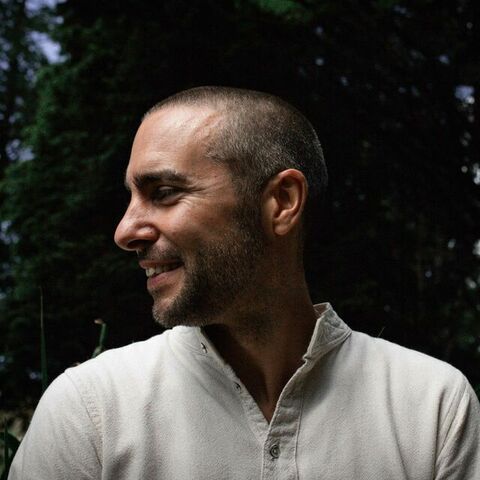
My name is Karim Rushdie and I've spent over a decade learning to transform my own chronic pain and stress so I can lead a life worth living.
Now I'm using what I've learned along the way,
As well as the knowledge and experience of my guests,
To share unique perspectives that can help you do the same.
Thank you for tuning in today.
In this episode,
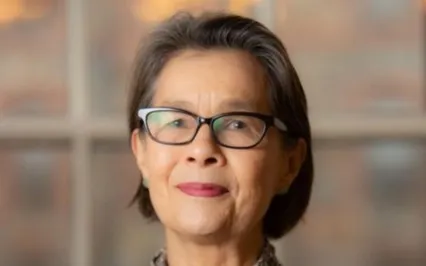
I sit down with Meg Chang to talk about Mindfulness-Based Stress Reduction,
MBSR,
An eight-week evidence-based program that offers secular,
Intensive mindfulness training to assist people with stress,
Anxiety,
Depression and pain.
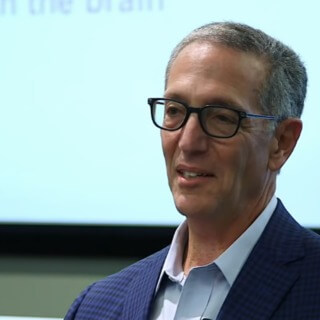
Meg is an instructor of dance movement therapy at Lesley University in Cambridge,
Massachusetts.
She's worked as a dance movement therapist in psychiatric facilities,
Medical settings and in private practice.
Meg is also a long-time MBSR instructor who studied and began teaching at the original stress reduction clinic at the University of Massachusetts Medical Center,
Under the supervision of the creator MBSR,
Jon Kabat-Zinn.
Meg holds a special place in my heart as she was my instructor when I took the MBSR program and she did an incredible job of guiding me and my fellow participants on our shared learning journey.
In this episode,
We talk about what MBSR is,
The journey that participants go on during the program and the foundational attitudes that help them cultivate mindfulness and apply it in everyday life.
I hope you enjoy the conversation as much as I did.
So thank you Meg for being with me today.
Really excited to be speaking with you and it's just a great honor.
You know,
After you instructed my MBSR course last year,
I was very deeply impacted by it and I'm just really happy that you're part of this podcast.
So I'm going to dive in with the first question that I have for you,
Which is a simple one,
Although pretty deep.
There's many definitions of mindfulness and I'd like to know which one you believe captures it best.
How do you define mindfulness?
Well,
First of all,
Karima,
When I got your email,
I was totally happy to do it because it's like,
Oh,
One of my favorite students.
It was great.
You know,
So I'm very happy.
It was nice to hear from you.
And actually I have to say,
I feel like that first question is the hardest question really because there are now so many definitions of mindfulness and I it's almost like we might want to circle back and revisit that,
But I think in some ways it depends on how it's being used.
In other words,
The definition that I learned first from Jon Kabat's in with mindfulness based stress reduction is paying attention in a particular way in the present moment.
And I think that weaves in really nicely to the mindful space stress reduction teaching.
But I think there are definitions of mindfulness that artists use and musicians use and dancers use and sports people use.
And you know,
What's really remarkable about this word now is that it has become so commonplace that I could go out on the street and ask somebody,
What do you know about mindfulness?
You know,
What do you think mindfulness is?
And they would give me an answer.
Right,
Right.
Yeah.
They would have read it somewhere,
Seen it in the news,
Seen it on TV.
They would have heard it and said,
Oh,
Just be in the moment.
So I think they're really two pieces.
One is however somebody can most use,
Use this concept of mindfulness,
Whatever that means to them.
And then I think the other one is about just really having everything focused into one moment of being fully with whatever's going on.
Whether it's what's going on inside,
What's going on outside.
So it is really paying attention as opposed to having the mind in one place while the mouth is talking.
So that kind of thing.
The mind can be in many places.
So paying attention in the present moment.
So just paying attention to feelings,
Sensations,
Thoughts,
And in a particular way,
Because we can pay attention of course,
In an anxious way,
We can pay attention in an angry way.
Attention can get very focused at heightened moments,
But I think this is like really choosing to pay attention.
That's great.
It kind of reminds me of,
I don't know if you're familiar with Amicia.
She's a neuroscientist and she does a lot of work around attention and mindfulness.
She uses the analogy of the MP3 player.
Our mind is often skipping forward.
It's fast forward,
It's skipping to the tracks ahead,
Or it's going backwards,
Rewinding.
And mindfulness is basically just staying on play and listening,
Being fully in that present moment.
You know,
You say paying attention in a particular way,
And then you said,
You know,
There's some ways which are maybe not very mindful ways to pay attention in anxious ways or others.
So what does that mean in a particular way?
What is the way to pay attention?
Well,
I think in a way that has to do with,
This is going to sound paradoxical,
So holding it loosely.
So you're paying attention.
It's opening up all the senses.
So paying attention to the sensorium.
So what we're literally taking in,
In whatever way is that we think of in hearing or seeing or feeling,
Tasting,
Smelling.
So there's that particular way.
And then I think it is this piece about being there for each moment that's unfolding.
Without kind of judging it,
That non-judgmental is also a phrase that comes up so often,
Isn't it?
Absolutely.
So if you're paying attention anxiously,
You're,
By definition,
It means you're worrying about something that hasn't happened yet.
You're a little bit in the puke,
Aren't you?
But if you're in the present and you're doing it non-judgmentally,
Then you're not layering that present moment experience with any labels or with any worry.
Sometimes people talk about plants are growing and you're pulling them up by the roots to see is it growing?
Are the roots growing?
So like that sense as we're paying attention,
We're just right there.
Yeah.
And bringing as much,
It's hard to put some of this stuff into words because it's gotten so it's so much in ordinary language now.
Right.
Right.
And in a way it has to be experienced,
Doesn't it?
More than anything.
Absolutely.
Absolutely.
I agree with you.
I think that that's probably what makes it elusive as we're trying to talk about it.
Yeah.
So mainly the second question I had maybe will help us then,
Which was how does it show up in your life?
So in your day to day experience,
How does mindfulness show up and can you imagine life without it?
What would your life be like had you not walked this path?
Right.
Right.
Well,
Part of the problem is that at my age by now,
I've been doing this for such a long time that I'm not sure if I can really remember when I didn't practice in some way meditation or mindfulness.
But I suppose probably the place where I find it most useful is just really paying attention to what's actually happening,
Really using mindfulness of the body to just come back from wherever I started wandering away as I'm talking to somebody or as I'm working on something.
So I think it's that piece about having more resources,
Particularly physical resources,
To really center attention on like right now I'm feeling one foot is under me and one foot's on the floor.
So just really being able to feel that sense of what's actually happening right now in mindfulness.
Right.
So mindfulness is that doorway.
And I think you're right.
It is mostly a practice.
Words are helpful.
It's that old finger pointing at the moon thing.
I mean,
We're pointing at this experience,
But actually the actual present moment of being mindful is very different than any of the words that we might be using to talk about it.
Yeah.
Yeah.
That saying comes up a lot in mindfulness teaching and learning that don't confuse the finger pointing at the moon for the moon itself.
And I've been experiencing that firsthand in the master's program that I'm doing because we're being asked to do some very intensive training and using guidance,
Which I'm not used to using.
And you start to confuse the guidance for mindfulness itself and that can cause a lot of tension.
You start to judge the guidance.
This isn't the guidance I want to listen to.
Why does he or she say it that way?
And you have to keep reminding yourself that the guidance is not why you're doing this.
You talked about being embodied.
Do you think your backgrounds and kind of dance and movement meant that you were,
It came a bit more naturally to you?
I mean,
I suppose being embodied as a key part of your profession.
Well I think it is now,
But I do,
You know,
To go back to what we were talking about,
About mindfulness and in a way my first experiences with mindfulness were unbeknownst to me,
Were when a very dear teacher of mine brought a very,
Very detailed attention to breath and we spent probably 30 minutes breathing in many,
Many different physical positions.
And so I think that that really helped it.
It shifted again.
We've been talking so much about how mindfulness is experiential and I think what that did is it really did shift what was happening in my body and in what we know about the parasympathetic nervous system and the whole,
The vagus nerve,
It really shifted me into literally a different state of mind.
And then I really think that was my first experience of mindfulness was really through the body and through dance and movement.
And then when I later learned about this,
You know,
Sometimes I call it patient education approach of mindfulness,
Mindfulness-based stress reduction,
I had an experience to lay some of the words on top of the concepts of mindfulness that we're now more familiar with.
Yeah.
Yeah.
So when you first were experiencing it,
You didn't know it was called mindfulness at that point?
Oh,
Absolutely not.
Yeah.
Yeah.
And I worked with her name was Elaine Summers and she had developed a whole technique called kinetic awareness.
It was really to help rehabilitate people,
Dancers who'd had very severe injuries and she absolutely forbade anybody to do anything relating to meditation.
She would say,
No,
This is not meditation.
Meditation is something else.
You know,
This is really just paying very,
Very close attention to your body.
Yeah.
I talk about that a little bit in the course,
That distinction between mindfulness and meditation,
Because the two are conflated so often.
Yes.
You know,
Meditation can help you cultivate mindfulness and there are mindfulness meditations,
But you know,
Meditation is not necessarily mindfulness because meditation is somewhat confined to that formal practice.
Whereas mindfulness is a quality of being,
It's something that carries over into our everyday life.
Absolutely.
Absolutely.
So how did you get from say that first experience of mindfulness before you knew it was mindfulness to becoming a mindfulness teacher?
I think what happened was I was teaching dance movement therapy to psychiatric patients and somebody told me that there was a need for a teacher to teach relaxation techniques in a medical setting,
In an outpatient hospital program.
And so taking my experience with breathing and dance movement therapy and then going to this hospital setting and working with patients who had different kinds of physical problems and then doing what I now know as the body scan,
But then I thought of it as step-by-step muscular relaxation,
Starting with the feet and moving up to the head.
What little did I know was actually the body scan,
Which is what we do now.
But so I think that that was really when I started applying it using some synonyms,
Like very full of care for my body,
For the body.
We would have patients come into these classes and so I would teach them relaxation techniques and we would go through the body very carefully.
And because they were in this hospital program,
You know,
They were already fairly sick and so they were aware of their body in a very negative way,
Right?
Because when you're sick,
You're aware of it.
And this gave them another way to have an objective perspective on the body rather than being so anxious.
And so when you're in pain or when you're ill,
It's very hard to just have a neutral experience with the body.
Sure,
Sure.
We kind of coat the physical sensations with all of those emotions and thoughts around it and that causes so much more suffering than the physical sensations themselves.
Absolutely.
So how did you get introduced to MBSR and what is MBSR?
How does it work?
Who's it for?
And what was your entry point into MBSR?
Okay.
MBSR is mindfulness based stress reduction.
And it is a particular curriculum that was developed by Jon Kabat-Zinn at the University of Massachusetts in 1977,
I think,
Or 77.
And it wasn't called MBSR then,
Was it?
It was just called like a stress and relaxation program or something,
Was it?
That's why he used mindfulness based stress reduction.
So that's why he emphasized the stress reduction part.
Herbert Benson in Boston,
Who also used meditation,
Completely left it out and basically taught progressive muscle relaxation.
So that was Herbert Benson in Boston,
But Jon Kabat-Zinn was like an hour away in Worcester,
Massachusetts.
And he developed mindfulness based stress reduction,
Which is this eight week program that is the set curriculum and people work their way through it sequentially.
So how I first was introduced to this particular program was actually through the New York Times and the psychology writer,
Daniel Goldman.
I don't know if you're familiar with him.
Yeah,
I'm actually missed.
Okay.
So Daniel Goldman and Jon Kabat-Zinn were friends and they were friends from meditation basically.
And so Goldman wrote an article for the New York Times science section on mindfulness based stress reduction because then they were using it with chronic pain.
And that was a study that put mindfulness based stress reduction,
MBSR for short,
Put it on the map.
I was teaching in the hospital to patients,
Big hospital in New York,
And they wanted to do a 24 hour closed circuit TV option for patients in their room.
And so they had sports programs,
Programs about patient education,
Diabetes,
Things like that.
And the person who was making the video himself was a meditation practitioner and he said,
Oh,
We have to have a relaxation channel.
And so I recorded a relaxation body scan.
I did a sitting meditation,
Awareness of breath meditation,
But there were literally at that time there was nothing that you could put on about relaxation.
There was nothing recorded.
So this was closed circuit TV,
Except Jon Kabat-Zinn.
He was the only person who had a video of anything related to relaxation or mindfulness.
That was exactly what the hospital contracted for.
And so I just took the New York Times article and I wrote to Jon and I said,
We need this.
And then he was so excited because nobody was paying attention to his work then.
And he had classes.
He was so excited that we got the videotape.
We broadcast it through the whole hospital.
And actually one of the really sweet stories that I heard later,
And it's in one of his books.
Yeah,
Full Catastrophe Living.
He mentions this TV channel in his book,
Full Catastrophe Living,
I remember now.
Apparently one of his relatives was watching at 3 a.
M.
In the hospital.
He's lying there in bed,
You know,
Being miserable.
And he's watching this video and all of a sudden he goes,
Oh,
There's Jonny.
And it's like his,
You know,
His nephew or something.
So he got in touch with Jon and said,
Oh,
I just saw you on TV.
I like that story.
It's a very personal connection to it.
That's nice.
So this eight week program,
Maybe you can get into a little bit more detail in terms of the journey participants go on and what the ultimate.
This is a sticky one because one of the key attitudes of cultivating mindfulness is not to strive or be too goal oriented,
But what are some of the goals or objectives of the program and what journey do participants go on to try and reach those goals?
Right.
Right.
Well,
Whenever people ask me what I do and I tell them I teach mindfulness based stress reduction,
Everyone says,
Oh,
I need that.
So I mean,
There isn't anybody you can talk to who doesn't say they need stress reduction.
So to some extent,
The goals depend on what the person comes in with.
At the time when I started teaching it in the hospital and when Jon was working in his initial work,
It was people who were quite ill.
Yeah.
So,
You know,
People who had unremitting pain,
People who were in later stages of cancer,
People who were out of control,
Diabetics,
Because Jon started teaching it in a medical school and hospital,
He got referrals from doctors who didn't know what else to do.
And so these people came into the class just,
You know,
Help me.
My life is a mess.
Help me.
So to some extent,
I feel like because it's an elective program,
It's not covered by insurance in the United States because it's elective.
People come to the program having heard that this will help them feel better physically,
Have less anxiety and stress.
I don't think people come necessarily wanting to be happier,
But I think they come because they feel that they are at the end of their rope and they've heard about the program by now.
And so I think that's really why people come.
And then as they're going through the eight week program,
They change.
They begin to get more mindful.
They're able to have a little bit of distance from their stressors.
They're able to see their stressors in a different way.
Some people even develop a different relationship to their stressors,
Whether they're physical or psychological.
Yeah,
I can certainly testify to that.
I think it's that,
You know,
It's a shift in perspective that occurs.
And I think that that shift in perspective means that you do relate and not just to your stressors,
Not just to the whatever condition you might be living with.
And now of course,
It's been somewhat democratized.
It's no longer limited to,
You know,
Patients with very serious illness.
It's for anyone who's feeling any kind of stress,
But that shift in perspective.
And then,
Yeah,
You relate differently to everything,
Including yourself.
You relate differently to your internal terrain,
To the external environment,
To it all.
And that does,
I mean,
Happiness is never guaranteed,
But I think it certainly sets you off on a strong footing.
I agree.
I agree with that.
Yeah.
Yeah.
I think one of the things that people come to trust themselves in a different way.
They come to trust their body in a different way.
They even come to trust some of their thoughts and feelings because they don't get so wrapped up in them.
So they're,
You know,
One of the things we talk a lot about in the class is that thoughts are just thoughts,
You know,
And you are not your thoughts.
Sometimes we believe that we are,
Whatever we're thinking is completely real,
But as we know,
The mind can play a lot of tricks on us and convince us of things that are not that like,
You know,
Like somebody can have a perfectly full meal and then see something they really like to eat and think,
Oh,
I'm just going to go and eat that because that's the way the mind sees something it wants and just goes right after it.
And so that's the mind.
That's not actually something the body is saying.
Yeah,
We are not our minds.
No,
We're not our thoughts.
We're not our minds.
That's a really good segue into the next question,
Which is about these,
What are called the attitudinal foundations,
Right?
You're talking about trust,
People kind of learn to trust their bodies,
Trust themselves to a greater degree.
And trust is one of these core,
I think there were seven core attitudes initially that Jon Kabat-Zinn talked about in his book,
Full Catastrophe Living,
And are implicit within the program.
If I recall,
I never really remember you at any point saying,
Here are the seven attitudes or here are the nine attitudes,
But they're just woven into the entire curriculum.
But maybe just for people who are listening.
So it's maybe you can,
You can reel them off.
Pop quiz,
What are those seven and then added two later.
So maybe we can talk about the nine attitudes and then I've got a follow up question for you.
So what are those foundational attitudes?
So this is from the eight week mindful space stress reduction program,
And it was written in,
As you said,
Full Catastrophe Living,
Which is the book that was written about the mindful space stress reduction program.
So the first one is beginner's mind,
Which now I think is very relevant because as we were talking about earlier,
Everybody knows,
Everybody quote unquote knows what mindfulness is.
So beginner's mind means that it means approaching any of the teaching,
Any of the practices as a beginner or any of the homework,
Which is also a big part of the eight week MBSR program.
So looking at just really starting out from the beginning and not having a lot of opinions about what this should be or shouldn't be.
And then non judging,
Which I think we talked about earlier,
Non judging ourselves,
Non judging or being aware of judging other people.
Sometimes so often the mind is so busy saying,
I like this,
I don't like this,
Or it's kind of neutral.
Just being aware of that tendency to always evaluate and judge is really big shift towards being more conscious of what's going on.
Yeah,
There's that fog of judgment.
When you become aware of it,
I think the fog slightly clears and you can see things with greater clarity as they are.
Absolutely.
Yeah,
Absolutely.
Then we start to know when I started to notice how much I had an opinion about every single moment of my life,
It was really surprising.
And so just even being able to say,
Oh,
There I go again,
I'm deciding that I like,
You know,
I like this particular thing I'm doing now more or I don't like something is just,
It's a pretty much of a surprise.
So then acceptance,
Which I think acceptance,
It's a hard word.
I think acceptance is a really tough one.
Especially if you're in pain or you're,
You know,
Chronic stress,
State of stress can be very difficult.
I think sometimes acknowledgement might be another way of saying it or just recognition like,
Oh,
I recognize this is happening and,
Or even just allowing oneself to receive what's going on without again,
Without judging.
The attribute right after acceptance or attitude is letting go.
And that's a really important one that goes along with acceptance because letting go means like literally letting go.
So one of the,
One of the metaphors we use a lot is if you're,
If you make a really tight fist and we could do that right now,
Even as I'm talking,
You make a really,
Really,
Really tight fist.
If you just keep tightening your fist,
Tightening your fist,
Tightening your fist,
Tightening your fist,
And then you just like,
Let it go.
And you know,
You can feel how different your hands feel just when you let go.
So,
You know,
Again,
That goes along with acknowledging that there are difficulties and then letting them go because perhaps there's nothing you can do about it right then and there.
And then we talked about trust and I think there is some trust that if we let this go,
It'll be okay.
You know,
Sometimes I think with worry,
Like I know for myself,
Sometimes I can worry.
Worry and worry,
Worry.
And I'm not sure really that if I stopped thinking about whether or not my train's going to be late,
If I'm afraid,
If I let that go,
That,
You know,
I'll miss the train,
But actually we just have to trust that we'll get where we need to go when we need to be there.
And then of course that the other attitude is patience.
So being able to be patient with the world as it's unfolding in its own way.
So these attitudes get more and more,
What's the word,
Existential or esoteric.
And I think one of the things that's hard sometimes for people that come into this eight-week program is that people say,
I want something right now.
And so we talk about patience and it's like,
How can I be patient?
But that in itself is something that gets developed through the practice,
Doing the whole practice,
Which is to,
You know,
Meditate or do a body scan for 45 minutes.
You learn a lot of patience doing that and then non-striving or non-doing,
Which is just about incomprehensible to most people in the Western hemisphere.
Most people are the part of civilization that,
You know,
Where,
Where work is really central.
It's very hard to be non-doing,
But when we're practicing mindfulness,
We're actually not doing anything.
And so that of course is the paradox.
But gratitude,
Gratitude,
Gratitude,
Gratitude and generosity came later.
And I,
I personally think that that had to do with,
I've known John since over 20 years now.
And I think as he matured and as he began to recognize and be recognized and recognize how important this work was,
I think he developed gratitude and he actually was always a generous person.
But I think really seeing how generosity is a kindness really,
And it does speak to so many of the other attitudes such as letting go,
Such as trust and patience.
So I think generosity is a really important one that can really shift.
You know,
That's where I think some of these very day to day things that you read about,
You know,
Like think of three positive things that happened today.
I think that's a kind of act of generosity to oneself.
So kindness is implicit in there,
Kindness to yourself,
Kindness to others,
And I guess a key part of compassion too,
Isn't it,
From a stance of generosity.
Yes.
Wonderful.
So if the follow up question to that is of those nine,
Which one do you find that's the most challenging?
I know which one it is for me.
It's patience.
I'm not really,
Really impatient by nature,
But which one do you find?
Because one of the things that's central to the MBSR program as I experienced it with you and as I now I'm starting to understand from learning to become a teacher is the importance of the instructor embodying those attitudes during the program.
And then in itself is a,
It's kind of a teaching.
So I'm interested to know which one,
If any,
Or anything more than one that you kind of have to work that you're conscious of as being more challenging and that you have to work on a little bit more.
Well that's a great question because when you were asking that,
My first thought was non judging because you know,
I'm actually a pretty critical person in terms of having a lot of opinions about things.
And so recognizing that mechanism is at work,
Liking,
Disliking part of my mind is at work is I think that's the biggest challenge.
Really.
Okay.
And in the eight week program,
I mean,
It'd be interesting to hear cause I know there's a few core themes within the program and it does progress sequentially,
Right?
In the first couple of weeks there's a focus on X and then next couple of weeks focus on Y.
What are those core themes?
How would you describe the focus that you bring to participants learning journey over the eight weeks?
Hmm,
Well I think it's interesting you were saying earlier that we,
The teachers now don't talk about the,
The attributes of mindfulness,
But I do think those are the ones that end up getting folded in in one way or another through the eight week practices.
So I think the piece that I left out earlier when I was describing that there's a set curriculum with each of the classes is that there's also an expectation that people will practice every day for 45 minutes and that in itself usually,
First of all,
It gets people's attention and then it,
It often really puts people pretty quickly directly in,
Comes face to face with whatever the stressor is.
And so then I think all of these things we have to start weaving them,
You know,
We have to meet our life with a certain amount of patients.
We have to start recognizing when we're striving,
Wanting things to be different than how they are.
Often teachers say,
And I think this is true,
That just wanting things to be different than how they actually are is the biggest source of stress.
Yeah.
Yeah.
And that's the,
That's the kind of sign,
Even though the scientific definition isn't,
It is the stresses,
The body trying to adapt to changes in the environment and it could be internal or external environment.
And if you can't adapt,
Or if you're resisting that environment,
That change in the environment,
Because you're not acknowledging or accepting it.
Yeah.
That's a huge,
Huge stressor.
I'm just thinking about it in my own life.
Adaptability is so important.
I mean,
That's a key part of reducing the stress.
So what do you say to somebody?
If I said to you,
You know,
If I was considering MBSR and,
And then you drop this bond that there's a expectation of 45 minutes of practice a day for eight weeks,
I think it was six days a week,
Actually.
It can be very daunting to just think about that.
I came in with a practice already of about probably 20 to 30 minutes a day.
I was doing before and then the program really helped me to level it up to 45 minutes.
So thank you for that because that's been really helpful now when I'm on my masters and having to do 45 minutes a day for probably the next four years.
But that's a big barrier for a lot of people.
What would you say to somebody who said,
Oh,
You know,
I'd really like to do the program.
I'd like to,
You know,
Have my stress reduced and I've got perhaps this illness or issue that I'm dealing with,
But 45 minutes a day,
I don't know if I can handle that.
What would you,
How would you field a comment like that or a concern like that?
Well,
There are two parts to this.
One is that it takes a lot of time for the body to make the changes it needs to make.
And so that amount of time helps the body to slow down and helps the mind to slow down.
However,
As a teacher,
What I discovered was that people would say,
Oh,
It'll be hard to find 45 minutes,
But I'm sure I can do it.
And they would very happily blithely come into class.
And then by the second class,
People were coming back and saying,
I can't do 45 minutes.
It's impossible.
Why did you ask us to do 45 minutes?
So that to me was like the most interesting part that people would say,
Oh,
Well,
It'll be hard,
But I'll figure it out.
And then when they were actually trying to do that 45 minutes,
That's when it really highlighted for them what was going on in their life,
The kind of pressures they were up against,
The self-imposed stressors that they were,
Or their perception that they were external.
So what do I say to people?
I say to people that basically it's a bit of a physical training that you're actually training your body,
Your muscles,
You're training your muscles,
Your breath,
Your parasympathetic nervous system,
You're training it to be,
To respond,
React in a different way.
And so it actually takes that much time.
The 45 minutes gives you time to settle,
Time to begin to process,
To come back to wherever your mind or your life has taken you and to come into just accepting to use one of those attitudes,
Accepting that you're going to be practicing.
So the other thing that I say to people is that 45 minutes has become the standard in terms of research.
And so research is all based on the model of a 45 minute day practice.
Yeah.
And that's,
That's really interesting point and somewhat provocative because nowadays mindfulness has gone into the mainstream.
You've got all of these apps.
More practice mindfulness,
You know,
Today and you know,
Don't get me wrong.
There's a huge benefit.
Five minutes is better than no minutes for sure.
And I think I don't want to sound too kind of preachy here,
But a lot of people are missing out because they're doing the five or 10 minutes a day using their app and it's helping them,
But it's really the tip of the iceberg.
And if they were to extend that out to,
I mean,
I remember the difference.
I was doing 20,
30 minutes a day for about,
You know,
Seven,
Eight years before joining the program.
But the difference between 20 to 30 and then 45 a day,
It's a quantum leap in terms of how it then started to show up in my life outside of those 45 minutes.
Exactly.
And yeah,
That's a tough conversation to have with friends or,
You know,
People you meet who say,
Yeah,
I use Headspace.
I do my 10 minutes a day.
And you want to say,
Well,
That's wonderful you're doing 10 minutes a day.
It's so much better than doing nothing,
But you know,
There's a whole nother world out there if you were to,
You know,
And the science and the research tells us that now,
Which is really interesting.
Right.
Well,
I will tell you a funny little sort of story about that,
Which is that my son began taking the eight week class and then he took it online and the recorded version and it was just for various reasons.
He never really completed it.
But he did start meditating for 45 minutes a day and he did it for quite a long time.
And then he stopped taking the course and eventually that sort of the meditation practice fell away too.
And then more recently he's done abs,
But the other day I was talking to him about his practice or something,
Just what he was up to.
And for his work,
He has to fly a lot and he doesn't like flying at all.
So he said,
Actually I do most of my practicing on an airplane,
So there's 45 minutes.
Now you're sitting there heart racing and working with that.
So I thought that was pretty funny.
So that's when he gets a long meditation.
Yeah,
Right.
That's a good time to do it.
Very helpful.
And apart from the time commitment and the sitting or the lying down or just allocating 45 minutes,
What are some of the other common challenges that you see participants facing as they progress through the program?
Well a lot of times people come in and they're convinced that there's a right way to do it.
Right in quotes.
And that if they just do it,
The meditation or the mindfulness,
The right way,
The correct way,
Then you know,
Everything will be better.
Their lives will immediately change and there will never be any more worries and everything will get better if they can just do it right.
So I think the biggest challenge really is to bring people back to the fact that whatever they're doing,
That's where the mindfulness of the present moment comes in.
Whatever they're doing is the meditation.
So even if they're arguing with the teacher or even if they're frustrated with their meditation or even if they're happy with their body scan,
That's where the being present in the moment really comes into play.
Because it's saying that's what's happening right now.
That's what's really happening at this moment.
And it is the right way for you.
It is right.
And that there is not this hypothetical standard that if I could just do it right,
You know,
At a high grade,
Then that'll fix everything.
Yeah.
It speaks to that,
That striving that's kind of inbuilt into our cultures,
Particularly in the West.
We were so achievement based and it's all about what you accomplish on a day to day,
On a week to week,
A month to month,
How productive you are,
Right?
While you were saying that,
I was recalling my experience and I remember I took issue with some of the recordings that we were using.
By the way,
Weren't your lovely voice,
Which I think was one of my expectation that it was going to be your voice.
And that became a key part of the frustrations I had with the reactions I had to some of the recordings actually became a part of a key part of the practice itself.
So I think that really resonates.
The practice is not just the formal practice.
It's the entire experience,
Right?
End to end experience.
To your earlier question,
The 45 minutes is what allows more of that awareness to come for you to confront that because doing something for five or 10 minutes a day,
While it's better than nothing,
That's not enough time to have some of the ways that we live our life,
Our habits to really become aware of those habits,
You know,
And begin to change and begin to take any action to change them.
Right.
Right.
Yep.
You can really invest that time.
What about from an instructor's perspective?
What are some of the challenges you face when teaching the program that kind of crop up again and again?
Well,
I find that it's hard for me as an instructor to not want to give the right answer myself,
Because I want to make people happy.
I want people to feel good.
So if a person asks me a question,
I want to give them an answer.
But a lot of times participants have to discover the answer for themselves.
You know,
Their particular way of solving a problem or whatever their answer might be.
So I think that's one of the really hard things as a teacher is to allow participants to find their own way through the practice.
And so to have some confidence that if people do continue to come to class and do the practice,
That whatever it is that they're asking me as a teacher,
They're going to discover themselves.
And then once they discover it themselves,
It's going to be so much more grounded and so much more useful and even more profound.
That's how trust is going to be built,
Because we abdicate a lot of responsibility for taking decisions or for inquiry,
Because we turn to experts.
And these days we turn to the internet.
I mean,
That's the thing that one of the pipskate downsides the internet is that we don't believe we have the answers inside us.
And I remember that in the program,
Your guidance and facilitation rather than teaching is even maybe not the right word for it.
I use in the program I'm doing for the low back pain,
I talk about it's a process of guided discovery and that really is MBSR too,
Is guided discovery.
It's not like aging minds.
And it's a good segue actually into this concept of inquiry,
Because I know that's a really key part of the program is that dialogue that we had with you,
With each other,
With ourselves,
And then coming to our own conclusions.
Exactly.
About things.
Yeah.
And then you start to,
You restore us trust in yourself and your intuition and your ability to face whatever's in front of you rather than that feeling of helplessness,
Which comes with pain and illness especially.
You really feel like I can't do this on my own.
You get medicalized is the word or institutional,
But you think only the doctors can help me.
And then when they can't help you,
You lose all hope.
And that can be very challenging.
Okay.
Just I got a couple more questions for you and then we can bring it to a close.
I wanted to touch on when we're talking about the attitudes just now.
And the first one you talked about was beginner's mind,
Which is a concept from Zen Buddhism actually,
Right?
And I love that concept.
And some of those attitudes,
As you said,
Start to verge on getting a bit esoteric or either spiritual,
Whatever you want to say.
Mindfulness,
The roots and the origins of mindfulness,
Despite it not coming out in the program are in Buddhism.
I mean,
Every faith tradition has an element of it,
But it's best articulated,
Let's say,
Or brought out within Buddhism.
But the MBSR program and mindfulness in its modern manifestation is almost entirely secularized.
And I wonder what your views on why that is the case.
I mean,
You know,
John and the decisions he took around that,
But I'd like to know,
Yeah,
Why that is.
And then how do you feel about that?
Hmm.
Hmm.
Oh,
So that's a good question.
Well,
Why it is,
I think actually has everything to do with the time and place that mindful space stress reduction was introduced in the United States,
Because it was introduced in the late 1970s.
And it was introduced in Worcester,
Massachusetts.
It's a somewhat conservative.
I hope I won't offend anybody from Worcester too much by saying that somewhat conservative.
Sorry to hear any listeners from Worcester.
Yes,
Or maybe,
Well,
Anyway.
And also John really felt that if he used Buddhism,
That it would completely alienate anybody from trying the program,
That they rejected immediately.
He also,
And I think this speaks a little bit to the United States,
He didn't want to have the trappings of anything religious.
And I know that there are churches who won't allow us to teach or won't allow people to talk about mindfulness because they really see it as Buddhism as a religion,
Which it is not.
It's a philosophy.
Well,
That's a whole other podcast there we could do.
We could donate that.
Yeah,
But Westerners and Easterners perceive meditation and mindfulness.
So I think that that's really the biggest reason is it really had to do with the time and the place.
Now,
Here's what I think is really interesting.
Is it in the 20 some years that have,
Or 40 years that have ensued since the program was developed?
And because I think of the program,
People are aware of the Buddhist roots.
And so now I think what's been very difficult and one of the big conversations is why are we not recognizing the Buddhist roots?
Why are we not recognizing the contributions of all these people,
Millions of people around in East Asia,
In countries where this was developed,
Who have been practicing for centuries and are practicing for centuries.
And why are we not acknowledging that more?
So I feel like that's a really big shift that's come in and something that is very much the subject of in the United States of academic discussion is how to acknowledge more of the original teachers who were from China,
Japan,
Vietnam,
Specifically and directly now.
Yeah.
I do remember on our program even,
It came up a couple of times and it was,
You know,
I think participant led just questions about it because as you say,
Most people know about it there.
Yeah.
It's really interesting.
I want to go back to just so people listening are very clear because we've been talking about the origins of the program and how it started was designed for people with chronic illness,
Very serious illness who were,
As you said,
Had unremitting pain and had exhausted all other avenues.
And that's when they came to me.
But these days,
Just so people are aware,
You may have no illness at all.
You may have no injury or illness.
You may not be in pain.
That doesn't mean you can't take the program.
In fact,
I think of the 30,
35 odd people that were on our program,
I'm not exactly sure when my read was probably half or less had actually physical conditions.
The others,
It was more just about the stress,
You know,
The stresses of life that they were dealing with that we all deal with.
So I just wanted to kind of make that clear and then maybe just hear from you a little bit about how it has been opened up to a much wider,
Broader audience these days.
Yeah.
Yeah.
No,
I think that's really been one of the really big shifts is that as it's become more mainstream,
People hear about it and believe that it's going to be a panacea,
That it will fix everything.
I would say there's also a very large,
Very large component of people who come for very specific psychological reasons,
Which is justifiable because I think that that it is also really helpful for anxiety.
And then we know that mindfulness based cognitive therapy has been developed for depression and people with actual clinical depression.
And so there is a way that all of these approaches can be very useful in terms of addressing the mind directly,
Really,
Or emotions directly.
And so I think since since mindfulness and mindful space,
Stress reduction and the practices of meditation are actually unitary,
There's not a separation between the mind and body,
Even though we make it all the time.
So I feel like we get so far away sometimes from what it is that's really happening in the moment.
And so that all of these practices are a way to come back to that.
And I know I didn't answer your question.
No,
It wasn't really a question.
It was just more the accessibility of the program,
Just in case there are people who are thinking,
I feel stressed for whatever reasons,
Life,
Work,
Relationships,
Family.
This is a program for people that are sick.
This is a program that are in pain,
So I can't take it.
And I kind of wanted to make it clear that,
You know,
You can take it.
It is for anyone.
There are benefits for anyone,
And it's not like you have to show a certificate saying that you suffer from whether it be a mental or physical ailment in order to be allowed onto the program.
Yeah.
Well,
The people that I was seeing in Massachusetts or that I see now come to mindful space stress reduction because they've heard of it.
They've heard of mindfulness and they've read about it in a magazine and they think it is the magic solution and they want some of it.
They want to get some of it.
And that's why they come to mindfulness now.
I tell them I'm a mindfulness teacher and people get all excited because they think that it's the answer.
It is the answer.
And they don't really realize that thing that we were talking about,
That it's inside of them.
Yeah.
And really all we're doing is kind of setting up the conditions,
If people go through with it,
To have to find what it is that's causing their stress and to even themselves come up with ways to relieve it.
Yeah,
That is a really good point.
This is not like taking an accounting course where you,
You know,
Or ballet program,
A tennis program,
Where you didn't have that skill before and then you're learning that completely new skill.
No,
This isn't innate.
This is actually our true nature is awareness and consciousness.
And all you're doing is,
You know,
Lifting the veil in a way,
Like what you said,
Creating the conditions so that that innate ability that we have to be in the present moment can flourish and can come out.
So yeah,
It's not a magic bullet,
But it certainly goes a long way towards removing a lot of those barriers to feeling less stressed.
Okay,
Last question for you,
And then we'll wrap up.
So there might be someone who's listening to this,
Or there might be somebody who's been familiar with MBSR for a while,
Has been toying with the idea of taking the course that hasn't yet taken the plunge.
I believe everyone can benefit from it,
No matter who you are,
You know,
You don't have to have a kind of particular condition.
So what would you say to someone,
Meet someone on a plane and they say,
Oh,
You're an MBSR teacher,
I've been thinking for years about doing the course,
But I just haven't taken the plunge.
What would you say to them to give them that little nudge they maybe need?
Well,
You know,
This is where I would try and find out more.
I would engage them in the inquiry that we were talking about earlier.
What is it that is standing between their interest and their taking the program?
I do think it becomes very personal and individual.
You know,
What gets in the way?
What's stopping them?
Even what are they afraid of?
What are they afraid of discovering?
So you'd make that actually a practice in and of itself.
You'd ask them to look a bit deeper into the reasons why practice mindfulness in coming to the decision.
That exactly.
Or is that the way you usually relate to yourself when it comes to something you think you want to do that would be good for you?
Once you put it off,
Most of the people that we know and are talking to,
I mean,
It's not like they can't afford it or,
You know,
That anything stands in their way.
So that's really the question.
What is the reason that people are interested,
But not doing it?
I love it.
That's your instructor coming out of you there.
I really,
I really like that.
Don't give them the answer.
Let them seek a little deeper and come to the answer themselves.
Yes,
Because you can read about this everywhere.
And so if it's intrigued you,
I mean,
Maybe it just hasn't been accessible,
But if it's intrigued you and you're not doing it,
Why is that?
Well Meg,
Thank you so,
So much.
It was such a,
Well,
First it was just a great trip down memory lane to be talking to you for the past hour,
Because it's brought me back to the program,
But also it was really enriching and as someone that's on this journey myself now,
It's been really useful and I think would be really,
Really enriching for people that are listening and didn't know about MBSR or,
Or had just a little understanding of it and get a bit of a more holistic picture.
Well thank you.
I'm happy to talk about it and I'm not really sure that it's going to be that useful,
But if you find it useful and helpful,
I'm absolutely thrilled.
It was really,
Really great.
Thanks again for listening to the Back to Being podcast.
If you enjoyed this episode,
You can subscribe to receive news about future shows.
If you're struggling with lower back pain and the distress it can cause,
Then check out the Back to Being method,
A 10 week program based on my own lived experience designed to help you transform your relationship with lower back pain so you can live a healthier,
More active and mindful life.
Until next time,
Be kind to yourself and others.
I wish you well.