On the Lions Roar podcast,
We're always looking forward to our next great discussion.
That's something we share with the students and faculty at St.
John's College,
The sponsor of this week's episode.
The Graduate Institute at St.
John's College in Santa Fe,
New Mexico is for students seeking a lifelong commitment to thoughtful,
Collaborative inquiry into fundamental human questions.
The Master of Arts in Eastern Classics examines the core literary,
Philosophical,
And theological works of India,
China,
And Japan.
In small discussion-based classes,
Students delve into the richness of Asian traditions and study classical Chinese or Sanskrit.
This three-semester program offers both online and on-campus options.
So join the vibrant community of learners from all walks of life and learn more about St.
John's Master of Arts in Eastern Classics at sjc.
Edu slash lion.
That will take you directly to the program page.
Welcome to the Lions Roar podcast.
From the publishers of Lions Roar magazine and Buddha Dharma,
The Practitioner's Guide.
I'm Sandra Hannibal.
The episode is also sponsored by Naropa University,
Where experiential learning meets academic rigor.
If you want to live a purpose-driven and bodied life in order to change the world,
Go to naropa.
Edu.
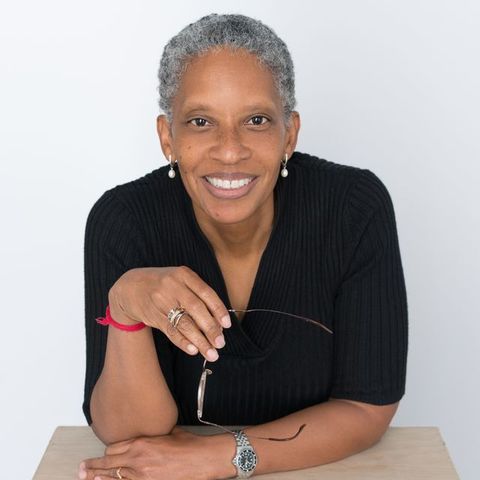
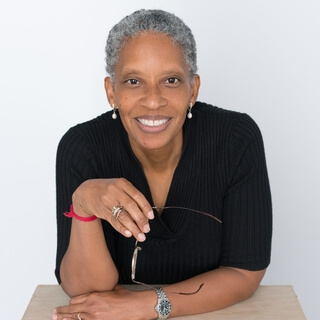
Sister True Moon of Clear Grace is a black non-binary nook,
A combination of the words nun and monk,
Ordained in the Plum Village tradition,
Headed by the venerable Thich Nhat Hanh,
Traveling across the United States to lean into the American experience at this moment in history and share the medicine of Dharma.
They speak with Lions Roar's associate editor Pamela Ayo-Yotunde about what brought Sister Clear Grace from the Christian faith to a Buddhist monastery,
How they found their calling in New Orleans after Hurricane Katrina,
Letting go of privilege and laying down the ego to make genuine connections with other human beings.
So,
Sister Clear Grace,
It is a real honor,
A real honor to receive you and receive your time and experience and wisdom.
And thank you so much for participating in this conversation for Lions Roar.
Thank you for having me.
Thank you for the invitation.
I'm so grateful to share.
Thank you.
I thought that we could begin with,
With just knowing a little more about how you came to be who you are or represent at this moment.
I'm thinking that,
You know,
Having grown up as a black girl in the United States,
I never knew Buddhists,
Didn't know anything about Buddhist monastics,
And therefore had no vision of what it could mean for me to be a black woman practicing Buddhism.
Can you say a little bit about your beginnings like where you were born,
Where you grew up,
And how you discovered the Dharma.
Absolutely.
So I was born in Monterey Bay,
California,
To a single mother of 17 year.
And it was actually seaside California which is very near Monterey.
Growing up as a multiracial mixed person,
Often not being black enough and not being able to speak the language of some of my ancestors either speaking Spanish.
There was always this chasing and this looking after looking for a place to fit in.
And I actually had become very good at that at an early age,
And it just seemed like something that was never ending.
And quickly,
We moved from place to place,
A three to four times a year,
Mostly running from domestic violence my mother was.
She's of Irish and Mexican descent and my father is African American,
And he was really quite not in the picture from the beginning.
And we had a lot of freedom of our society and violence as well.
So ending up in the prison system,
Never had an opportunity to spend time or,
Except for the family I was raised in an African American family from quite young,
From quite a young age with a lot of friends and aunties and uncles and grandparents that I also cherish dearly.
So,
We moved quite often maybe three or four times a year,
Running from one situation one relationship to the next so it always felt like there was this constant feeling,
And I really appreciate you at the beginning sharing about the person that I am at this moment,
Not so much who I've come to be because we're always coming to be this individual or this person right,
And it just,
It never it never stops I mean,
Especially with the eye of the Dharma.
There's not a wanting to have a hold on that so there's no longer and I think this is part of the biggest liberation and I've been able to find,
Because there are no longer is needing to find a place to land or to rest or to fill at home,
Or to feel like I'm fitting in.
And that has been the hugest liberation and gift of the Dharma.
Wow,
Letting go of fitting in.
In my later years in Southern California.
Up until the age of 35,
And which I moved to the south,
Louisiana,
After Katrina.
And that was,
I think that was when things started unfolding for me honestly,
Or started really making that greater turn from Christianity to Buddhism.
So what's the connection there.
Well,
First of all,
Let me back up and ask you.
I don't know if there are a lot of people who move to Louisiana,
After a disaster.
Yeah,
But you chose to do that.
I was called to do that.
So,
In that,
That world of some Sarah chasing and relationships I was married.
And that turned to a divorce I lost my very best friend I lost my young sister at the age of 14.
So all of these things were for me,
Turning in direction of the liberation right into the Dharma.
So these great sufferings were actually points in my life that I see now as turning points into the Dharma.
I traveled all over the world with Tina Marie who was a great R&B musician.
I worked with her for many many years and we traveled often to Louisiana for the essence festival and there was something about landing my foot on the tarmac of that great town coming in to Louis Armstrong Airport,
That I was home and that my ancestors were there and there's so much history in the south.
And in the churches and in music so landing there felt full it felt like I was returning home,
Just as when I landed also in India,
The land of the Buddha.
So,
So this.
I was at that time working in corporate.
I was very successful in running many restaurants within the greater New Orleans area and the Ninth Ward,
And I just saw the people of the community and the joy that was in their eyes.
In the music and in the festivals right so there was much poverty and much suffering and great violence and great harm that they had had been victims of many years over and over again but the joy and the light and the life and the love that was present was something that was so beautiful just as as the folks that I had met when I arrived in India for someone to have so little yet looking into their eyes seeing that they had so much.
And I found that living in California,
You know,
I had it all I had the cars and the house and the success and the careers and the,
The certificates and all of those things to go along with the life of living in California,
But it felt that every time for me it had become to felt come to feel a superficial way of living so I was always trying to keep up with the Joneses are moving on up right so it always felt like something that I had to do,
Or something had to be done,
And I was at a point where I wanted to really enjoy people and enjoy coming to be a self that wasn't reliant on external conditions.
Wow,
Because you had had all the,
All the trappings had all the things you arrived.
You had it enough.
Yeah,
But they were enough.
Right.
That's right.
What's next,
Right,
I think,
Especially as as an African American woman.
At that time,
A queer African American woman growing up in corporate America.
And amongst many,
You know,
Mostly middle aged white men.
It just felt like this climbing of the ladder never was going to stop,
Even though I got really good at it.
And it was very successful at it and knew how to do it and sit right at those tables at the CEO offices and drink coffee right along with them.
It no longer became true,
And it plays an integrity.
So on one side you have the experience of growing up in beautiful Monterey,
California,
I mean it is absolutely gorgeous.
Growing up there,
But also while growing up in all that beauty,
Moving from place to place,
Multiple times during the year fleeing domestic violence.
Learning somehow that oh the road to success means you know,
Being able to engage in business climbing up the corporate ladder being around the board,
The table.
And then you had some kind of,
You said calling to go to Louisiana,
After Katrina,
The president at the time didn't even want to land in Katrina,
Right because of the devastation,
Right,
But you were called there.
And while there,
You see that people of modest means to humble means,
Humble to modest means,
In the midst of sorrow,
Had all of this joy.
And that was the real abundance,
It wasn't the certificates and the car and the marriage and all that.
Were you practicing Buddhist when you went to Louisiana.
I was not,
You know,
I had at that time,
Thought that I wanted a healthier living style so had embraced in meditation on my own,
Healthier living healthier eating choices I started running my own parathons and ran my first marathon upon entering into Louisiana,
And I founded the greater mindfulness community of New Orleans,
Which was in the ticket Han tradition and quickly fled to the monastery in Mississippi,
Where I knew then that I had been a nun,
And at that time,
I had again as a young black woman I didn't know what a Buddha was,
I had never other than my good dear friend Tina Marie had been introduced to the Buddha,
And she practiced many things.
I didn't know what a Buddha was so when I heard the calling that I had attempted to have children,
Me and my partner had attempted several times to have children,
And I had dropped to my knees where we do this,
This asking of God why you know where we drop to our knees and why isn't this how I hasn't this happened why hasn't this come to fruition.
And it was the call was because your path is to become a nun,
To be a mother to many.
And I was like,
Do you know who I am and where I am in the life that I lived in the things that I do and how could I be a nun so this was the question.
Why it was unfathom fathomable right how could I be a nun,
And and the only picture in my mind was that of a Catholic none.
So I quickly run to the internet and saw some of the things that were necessary that you had to take up this path that you have had to live to be a nun and this path didn't match my life right so I didn't see myself being that,
And I quickly set that down and set that aside you know knowing that that was a call.
That I answered to it's not one that I generally shake off or,
You know,
Just push away,
And it had gotten louder and the third time it was the three,
It was,
It came in three repetitive norms,
Because your path is to be a nun because your path is to be a nun,
Because your path is to be a nun,
And at that particular moment I renounced everything.
And I quickly aspired to become an aspirin at the monastery,
And I vowed to never go back to California because it was how I left all of those things in those ways of being.
And I didn't see it possible,
Living in that lifestyle the life that I had created for myself there.
So,
The monastery sent me right back to Deer Park monastery in California,
So it was kind of Is it because I knew you didn't want to go back.
Yeah,
Well no they didn't know that I didn't want to go back that was my personal you know wish to not go back,
It was to create this,
This new lifestyle that wasn't one of chasing or having things right.
And I didn't find that possible with family and friends and the means that it,
It requires to live in such a state so I entered into the monastery at Deer Park monastery as an aspirant and was ordained as the very first novice at that community with much request to go to France and to go to other monasteries,
But I felt that it had to be that the only reason I was sent back to California was because there needed to be representation of a black queer monastic.
And why would I go to France to do that when the healing needed to happen here you know and there was just as there is now there was great violence in the state and in the country against black bodies against queer bodies and in California,
Our most diverse state I just didn't understand why we didn't have monastics that looked like me,
Or that I could relate to.
And I just didn't understand why I was important.
And there was nobody that could tell me know at that time it wasn't receiving ordination wasn't something that could be given because I had given my whole heart and my whole purpose to the way of the Buddha.
And I knew that that was the direction in which I was moving and that's still so is today.
It is indeed and we're going to get to that.
I want to go back I keep wanting to go back I hope you don't mind.
I'm running back or running forward.
Okay,
Right,
Running in circles.
So I've been to Deer Park in Escondido,
California,
And I attended a retreat there.
And so when you talk about having the life of what I call material excess.
And you go off all of that,
And you strip down.
And then you are living at Deer Park.
I want people to get an a picture of what that means.
That is not the place of comfort if you,
If you,
You know what I'm talking about.
What did it,
What did it mean for you to strip down to that bare essence and find joy in that place.
And it felt like I had received the treasures of silver and gold beyond measure,
Living in Louisiana I had come to have a corporate car corporate credit card so I traveled the world as I pleased I did my own schedule and work from home.
I had a class mileage,
I mean flight everything was paid for.
So I did I had the luxuries I had a beautiful shotgun and metering suburb suburbs of metering Louisiana.
And at that particular time,
I got home for people to check at home yeah that's straight back you can.
Yeah,
Well you know,
You have to Google that.
And for those things I quickly lay down,
I mean I laid down it was like an overnight thing I went into the cabinets clear things out,
Put everything on Craigslist and said,
You know,
I am.
And I hadn't at that time been accepted anywhere.
So,
So my goal at that time was to live the life of a Buddhist disciple as a lay person.
And I was waiting from that point,
Again,
It wasn't something that I needed to wait for that could be given to me.
Once I was accepted to go to Deer Park.
I took nothing with me I mean I even had a calligraphy of taking that hand that said breathe my dear and it was an original and I left that with my song a community in New Orleans because I thought that I couldn't bring anything to the monastery.
And once I got there I saw that my older brothers and sisters had years of books and things that I was like what I didn't have to get rid of my Louis Vuitton wallet,
Or my I don't know what these things are worth right the material things of the world.
But you know I quickly moved to living on a bed box,
A wooden box that we live on in the monastery to having maybe a three by eight foot space,
Where we kept our layering bathroom with elder sisters.
So there's really no privacy I mean you have to do what you do amongst your sisters and I slept in the room with maybe five or six elder siblings,
And just the training I think the training that was there,
Being able to lay down the ego lay down the ways in which I came to see myself which is all part of the foundation and all the part of the training.
And,
You know,
Hopefully in this practice there's a point where we can transcend that.
But in order to do that the training is necessary of the foundation and I'm super grateful for the Plum Village community and tie to have provided me with that.
You know,
I don't know if you know since a Alex Kukui Oh,
Do you know him.
I do.
Yeah.
Okay,
So I interviewed him,
And he said something very similar about having gone the path of attaining things in the profession,
Getting the promotions,
Having the,
The bonuses.
And he had the golden handcuffs.
And when he had achieved all of these things,
Just like what you're talking about having achieved those things.
And then it's like,
Okay,
Where's the happiness.
And so the point I'm trying to make this x I'm trying to underscore the point that you made,
Which is in a certain way.
We in America are sold the story about happiness being found in material possessions and incorporate advancements,
And so many of us have done it now,
And are finding that it may provide a certain lifestyle,
But it doesn't really open the heart.
In fact,
I think we come from a history where we were told that that wasn't the place for us or that we couldn't attain that so often it became something that we had to do or that in order or we were the one who was able to do that for our ancestors or for those behind us or for those with us right.
So it became a part of what we had to do.
And then we got really good at it,
But then it left us often I think,
Leaving like that feeling like there was still so much more to fulfill.
There's so much there's so much.
Okay,
Now,
I was going forward and I went backward now I'm going to go sideways.
Bear with me,
I'm gonna go sideways.
You were not practicing,
You're not practicing the Dharma when you went to New Orleans.
I was not.
But while there.
I would argue you had a spiritual experience that is consistent congruent with how people come to understand Buddhism,
Would you say that's true.
Absolutely.
Yeah,
I had to slow down.
I wasn't able to do that in my hometown in my home state.
I was,
I had to go to somewhere else to experience the Dharma and able to hear the Dharma and able to see the Dharma.
The phenomena and the beauty that was present showed me that.
May New Orleans,
From this point forward,
It wasn't known already as this may have been known as a pilgrimage destination.
Absolutely right for understanding joy and sorrow as one.
Yes.
I hope to revisit this place very soon especially after the recent storm,
Friends and family are still recovering so I do hope that all of the south,
All of our,
All of our states and in our country can be revisited during this pilgrimage.
Maybe so.
Shall it be so shall we be the ones to make it so.
This allows intellectual knowledge and intuitive wisdom to work together,
Resulting in a sense of purpose and moral clarity that drive professional success and a life of service Naropa offers bachelor and master degrees in psychology,
Creative writing divinity yoga,
And more.
Learn more at Naropa.
Edu.
So you're traveling.
Yeah.
Why.
So there's this aspiration of diving deep into the fullness of the measure,
And to sharing the Dharma in a way that comes to an embodiment that I come to understand and to see.
I'll say that when I was sitting up on the mountain,
The hidden mountain for many years,
Where insights,
Start to rise,
I would hear the cries of the people being in California on the Kumeyaay Nation land,
And also within an hour of the Tijuana border.
Lots was happening.
Also at that time we had the shooting in Orlando at the nightclub.
And as is now black and brown bodies were being gunned down often at the hands of law enforcement.
And those cries as the peace and the joy was arising often would meet the suffering and the ability to hold that and to walk through that became so powerful.
And so often I would find myself walking amongst the cries and the sorrows of the people.
And I could embrace that and understand that in a way that it became became my own direct experience,
Without it,
Shaking me or wavering me in any direction.
And just these experiences kept coming and I felt that this is something powerful that I'm able to experience,
And this gift,
How do I.
.
.
And it wasn't even looking into it was just this gift cannot not be shared.
It was just this nature.
And as these things would happen I would look to our Buddhist,
Buddhist communities to embrace this type of transformation,
Especially for those of those lay friends that live in the world so they're walking in the world or they're of the world with these daily challenges,
But it would take a big tragic moment,
Such as some of these things that I am sharing for us to look deeper.
And I felt that there's a version within our communities and I just really couldn't understand how we were not able to transcend that now.
You know,
It's always work we had to do or grouping that we had to do.
And I felt that the Buddhist teachings give us enough to transcend that and to just come forth and love and compassion.
And what does that action look like right especially as Buddhist communities.
And again,
On retreat or people folks that would come up the mountain or on retreat,
And often I'd look amongst the people and there wouldn't be anybody that looked like me or that could understand a lot of those sorrows and sufferings and I would go to teachers and ask them,
You know,
Where are the Buddhist teachings that speak to this because I know they're there where's the liberation and transformation in this.
And very respectfully one of my older sisters said you know because I'm not of the United States of America and I don't have that experience,
I really don't know.
And it was at that moment that I knew I had to seek that out on my own I had to be a refuge to myself.
And when I think of the tradition of the of the Buddha and the monastics going out to the forest if we,
We look at suit to number four fear and dread,
Where we would go out and we would be challenged against our practice right so our ability to be aware in body speech and mind so that when we enter into the dwellings of the forest,
Where there are lions tigers bears snakes and poisonous venomous spiders,
And just our mind our mind could be the most fearful thing if we hear a rustling in the leaves.
And I don't see hunger elements of the nature and these things are also in the world I don't see being in the city any different than being in the forest,
You know,
There are suitors where the Buddha says you know if a monk gets too close to the village because of the challenges of those defilement those underlying defilements can be,
They can come up and they can rise up and you can you can be basically like tempted to walk back into that.
But I feel that that's what we practice for so when I'm sitting there and I know that we're practicing we're doing this great work of meditation.
We're doing this type of mindful awareness where we come to see all things and have this type of clarity and this insight that that's what we should be prepared for.
So in the pandemic and in the wake of George Floyd,
And there was a call to action and many of our communities and I think as Buddhist you know I sat on the cushion and we came out for a little while.
And it was like we went back to the cushion.
And I was like,
I'm not sure what I'm going to do.
I'm going to do something about it.
I'm going to do something about it.
I'm going to do something about it.
And I was like,
I'm not sure what I'm going to do.
I'm going to do something about it.
I'm going to do something about it.
I'm going to do something about it.
It's just an opportunity to share that there's this freedom and there's this liberation that I have been able to overcome many injustices in the world in the way that I walk in the world and I thought this should be shared amongst all the people.
We often say the Dharma is free and accessible to all.
And I'm going to say,
Sister Cleargrace how moved I am by your,
Not just your desire,
Not just your commitment,
But also your action to move out from places of comfort,
Right,
Into the places where our breathing is constricted,
So to speak.
So that you can continue living out this call and show people,
Or at least be available to people,
In a way that they see Buddhism not just as the happy Buddha statue that you throw coins into for good luck and good fortune,
But a real live person of color in robes living the life of liberation and freedom from the suffering that they don't know how to do yet or don't know that they have the capacity to cultivate yet.
So to be that living example.
And so I celebrate you for that and I honor you and I hope that on your travels as many people can meet you as possible.
Now,
Upon meeting you,
Given,
Just like you said,
You didn't know folks like yourself.
And it's very likely they don't know people like you.
Right.
And so sometimes human beings when we meet people who we don't automatically deem as having anything in common with,
We have an aversion towards them,
Right,
Aversion,
We become defensive.
We treat them as the alien the other start making generalizations and the list goes on,
All the ways that we dehumanize people in our minds on your travels up to this point,
How have you dealt with any kind of discrimination that you may have experienced,
If you've experienced it.
Yeah,
Subtle forms.
I want to share.
More importantly,
That the gift has of receiving along this journey has like you you meant you touched on our discriminating minds are judgmental minds is laying that down in every interaction,
Especially amongst those folks that I that I'm meeting,
And the things that I am learning from them and they,
The offerings that they're offering up are so huge and they're so vast in order for me to truly receive them on behalf of the whole Sangha.
I have to be pure in mind and pure in heart.
So,
It's easy.
I'll share an example I was with a wise mother Miss Stephanie last week,
And she had asked for some change and we didn't have any changed.
And she was like,
But for 60 cents I can get a can of Vienna sausages.
And I said,
Oh,
Well,
I have a few dollars on a card a gift card that I'd be happy for us to go in so we go into the family dollar now in my growing up I'm aware of food oppression.
I'm aware that family dollars are only in certain communities.
I'm aware of the risk and health factors on black and brown bodies and all bodies right that diabetes high blood pressure the list goes on.
But in her joy of having this meal of a cold can of Chef Boyardee and eating it out of a can and inviting me to her space,
And we get in the back of the monastery,
And we're eating on the bumper of the van and we shared a meal together.
So I have to lay these things down,
And I have to be present in her fullness and without my judgment or the ways that I see society and all of the roots of greed and hatred and delusion at the root of that.
I have to lay that down I can't pick up one side of the stick,
Because when I pick up one side,
The other side is already there.
So in order for me to enter into these interactions with folks,
I'm doing my work and I'm watching my mind,
And I'm watching the habit energy and the nature of the mind to want to go there.
And the other night I parked in a in a Walmart parking lot because to find somewhere to sleep with the van is often a struggle and I can hear noise outside of the van and I hear the police and then I open up the window and I'm looking out and there's like a lot of noise,
You know,
So I get in the van and I moved to another side of Charlotte.
The other side of Charlotte to flee for safer sleeping.
And I realized at that moment,
My,
My googling safe neighborhoods in Charlotte,
And then and then me fleeing that safety is a privilege.
You know,
Often folks don't have a way to get up and move their van to the other side of town to sleep well without having to worry about the police outside their door.
And when I enter into these communities I usually start in downtown.
And I'm really just imbuing the gratitude and the light and every sentient being that I come across so for me it's about,
How are you doing.
Nice to meet you.
Good to see you today.
Amongst seeing people for the first time,
And I often get that right back.
And it's amazing it's amazing that all of those things can fall down and they can drop away.
And of course we enter into often what is your get up and,
You know,
God bless you and in a way that might not be offerings full of blessing,
But maybe your heart.
Yeah,
These types of things.
You know,
But I don't have to pick them up like the Buddha says this is not a gift I don't have to receive.
And for that moment.
I'm there,
I'm there and I hope to have been seen,
And maybe I haven't,
But I see them and I think that's what's important.
Because I'm not going to pick that up.
Yeah,
Not,
Not every day is every day is work,
I am working and working with the mind and there's so much money in the world so much money.
And at the same time there's so much poverty and there's so much hunger.
And as I visit camps in the morning homeless camps.
Last week.
I,
It was really cold in the van,
And so that then I embrace the elements and being cold.
And the first thing I like to do in the morning is wake up and enjoy a cup of coffee.
And I thought for my friends who sleep outside on the streets as we're turning into the fall and the winter months are approaching us.
How nice would it be for them to come out of their tents in the morning and have a warm cup of coffee too so I went down to the circle K and I bought a sleeve of those styrofoam cups and I have a little four cup press in the van and I just made like five cups of coffee and served it up.
So now I have this aspiration to maybe get a school bus and turn it into a food truck and a dwelling and serve to the communities of hunger warm grits in the morning warm oats.
Just the basic simple things that are needed just just out of love,
Just as an offering alms for the people.
That's it,
You know,
And for that.
So,
We get back to the van and I do have my little soda cups full of change and,
You know,
She's collecting change off the ground and she's in a wheelchair she's facing eviction.
65 year old,
Year old woman.
And I give her all of the coin from the thing and she goes well I'm going to go buy a juice.
Do you want to juice what flavor would you like you want a watermelon you want a fruit punch and I said why don't you surprise me.
So I'm giving what she's asking for,
But she wants to make sure we have a juice so we go behind the family,
The store into the back of the alley where they throw out the cardboard box and she goes I have a little nature spot in the back that's really really quiet.
And that's where I go and enjoy my lunch.
I sit on my chair and I'll put the little ravioli out,
And I said I would be happy to come and join you.
And I drive the van around there and we start breaking a meal together and we say our blessings and she's like,
You do missionary work on I said something like that I said it right now I'm just enjoying lunch with you.
And we sit down and she's like can I get a picture with you and we take a picture and she just shared wisdom stories from way back and very joyful super grateful for this meal.
That's where we connected in sharing together and the only way that I was able to do that was to lay down all of those things and all the thinking of the world and the things that I want to attach on to that I want to call the cell for me or I or mine,
Because I'm very familiar with that I'm very familiar with going shopping at the dollar store.
Right.
And,
Yeah,
But that's not here.
That's not here.
And she still calls me Are you still in.
Are you still in Charlotte,
Are you still in Charlotte I said yes I'm still here Miss Stephanie will be safe now and just know these types of the connections these types and this was a day that I wasn't.
I do about three or four days on pilgrimage like I go into certain areas and I walk every day.
And I don't really have a particular plan whatever comes in front of me is what I address,
But this was a laundry day.
So this was a day of me just doing laundry and it you know I'd love to have the laundry episodes because a lot of times I'm doing Dharma in the laundry mat.
And if I wasn't in the laundry mat,
You know,
I don't I don't know that those conversations would be happening.
So,
One of the things that I've understood about Buddhism,
Is that from the from the stories of the Buddha is.
He was open privilege,
And he left privilege.
But I don't know if modern day Buddhism is understood that way.
Can you help us understand what it means to recognize our privileges.
And then to move away from those privileges.
Why should we do something like that.
Well,
Well I think that's kind of especially in American Buddhism it's it's the doing that we need to stop.
It's not that the,
The core teaching and foundations of the Buddha are the five precepts so the morality and the sealer are the foundation to practice restraint.
So the gift of generosity is actually for us to not do those things that we want to do and the precepts help us to walk that path.
So giving up the things that we desire giving up something that means a lot to us is the true gift of generosity.
So when we create this foundation of morality of sealer,
It gives rise to compassion because we will have more insight so the mind will have more time to settle with mindful awareness,
And then we can see we start to see that I want what others want others want what I want we all want the same thing.
Thank you.
Now,
In,
In honor of our fullness.
I'm not going to call you by the many names that you were known by,
I'm just going to say how much I appreciate the love of you.
Thank you.
Applications,
Website,
Video,
Social media,
Online courses,
Practice retreats,
And more.
We tried to bring Dharma to people right where they are,
Knowing the difference it can make in their lives.
You can help us spread the Dharma by leaving ratings and reviews or go to lionsroar.
Com to subscribe and get unlimited access to online articles,
New magazine issues,
And several collections,
Plus perks and exclusives from Lion's Roar magazine and from Buddha Dharma,
The practitioners guide.