Hi,
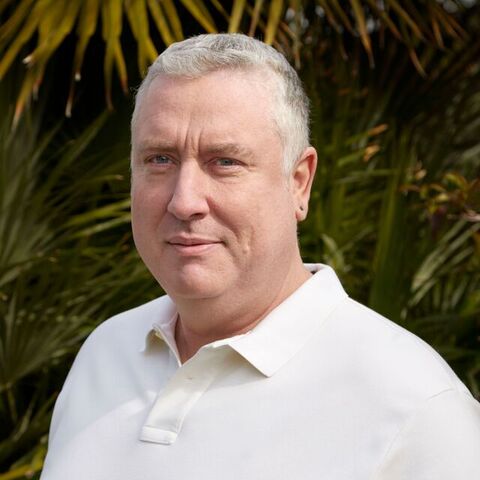
I'm Brett Michael Phillips.
My goal here is to help you understand how truth works and to find the limiting factors in our brains,
In our belief systems,
In our biology that distort the truth so we can compensate for them and experience a higher level of understanding of the truth,
The higher dimensions,
Life,
The universe,
God,
Everything.
So,
What I want to focus on today is probably the number one biggest obstacle to higher truth,
And that is the nature of the mind and how it wants to over-linearize everything.
In other words,
Our minds like to take everything we see around us and put them into a simple box of cause and effect,
Things we can touch and explain and understand within our four-dimensional biology.
One example of this would be the way that when we're children,
A lot of us are told,
If you want to have a good life and be happy and make money and do all these great things,
It's easy,
Or at least simple.
You be good,
You study,
You do well in school,
You listen to your parents,
You follow the rules,
And you'll be rewarded with a good life.
That's a load of crap,
Right?
Every adult knows that.
It's not that simple,
Is it?
There's a million factors that determine how your life turns out,
Much of it beyond your control.
Genetics,
Your parents,
Your friends,
Your teachers,
What's happening in the world,
Mass consciousness,
Astrology,
A million things,
Right?
Blind luck,
Which I would explain as connection to the quantum field.
There's all these things that influence it.
But we don't want to think that life is so complicated and so scary and so random,
Especially when we're children.
So we're told these lies that give us purpose,
That give us a context to understand our lives and give us this illusion of control.
So we think we understand what we have to do to have a good life.
Now,
Of course,
That's not true,
But that's an example of how we take a very complex nonlinear phenomena and oversimplify it with a linear model.
It doesn't work,
But it is a very attractive lie.
In order to really break through to higher truth,
One of the things we need to understand is something that was taught to us by Albert Einstein.
Albert Einstein told us that there is no preferred frame of reference in the universe.
What does that mean?
It means that no matter where you go in the universe,
There is no center.
There is no place that is more central,
More proper,
More true,
More absolute than another.
A lot of people have a simple idea of how the universe expands.
We think there must be some center to the universe,
And the universe expands like a liquid,
And there's an edge.
It doesn't work that way.
The way it works is the space itself is expanding.
There is no edge to the universe.
There is no border you can cross over.
There's also no center.
There's no middle.
That's an example of how we over-linearize everything.
And when we over-linearize everything,
It traps us.
It prevents us from finding the truth.
So I want to help you break free right here,
Right now.
I want to give you an example of something that we all think is so simple and so easy,
But is actually an example of how we over-linearize and lead ourselves into delusion and falsehood.
Let's talk about the ordering of events in time.
That seems pretty simple,
Right?
It would seem that we can all agree the order in which things happen in time.
That happened at one o'clock,
That happened at two o'clock,
That happened at four.
And no matter where you are or how you measure it,
You're going to get the same order.
That's not true.
This is another example of the over-linearization,
The over-simplification of the mind.
Let me give you an example from cosmology.
Let's say we have a galaxy.
We'll just call it random galaxy,
Right?
Let's say that the galaxy is 100,
000 light years across.
And on one side,
You have star A,
And 100,
000 light years on the other side,
You have star B.
We'll throw up a graphic here so you can see this.
Here's what happens.
Star A and star B both explode as supernovas.
Kaboom!
Which one blew up first?
The answer is it depends on where you're at.
If you live near star A,
You're going to see star A explode.
And then 100,
000 years later,
You're going to see star B explode.
Why is that?
Well,
It takes the light 100,
000 years to go across the galaxy.
That's what 100,
000 light years means.
But if you live near star B,
You're going to say,
No,
No,
No,
You're wrong.
It's just the opposite.
First star B exploded,
And then star A exploded 100,
000 years later.
But wait,
A third person comes in and says,
I live near the center of the galaxy.
What I saw is they both exploded at exactly the same time.
Why is that?
Well,
The light on either end of the galaxy took 50,
000 years to get to the center.
So the truth,
Even in something as simple and fundamental as the ordering of events in time,
Is relative to a context.
But our minds oversimplify it.
Just in case you're wondering,
The reason we fall into this trap is as humans on earth,
We're all within a very similar relative context.
That relative to the speed of light,
The earth is very small.
So if you ask humans on different parts of the planet,
What order did events occur in,
They're going to give the same answer.
Why?
We're not far apart enough for the speed of light to come in.
But the point that I want you to see is,
Even something so fundamental,
So obvious as what happened first,
There is no simple answer.
It all depends on your frame of reference.
We want to be really careful oversimplifying that.
Otherwise,
It can lead us to a bad place.
Otherwise,
It's very easy for us to fall victim to this over-linearization,
To thinking that things are simpler than they actually are.
And this is true with spiritual teachings too.
This is the whole point of this,
Right?
If you want to learn cosmology,
Plenty of good videos on that.
I'm here to teach you about spiritual truth.
This is meta-truth.
This is the truth about truth.
So whenever you have a truth,
You always have to ask yourself,
What is the context in which this exists?
If you don't,
You haven't actually discovered truth.
You've discovered a data point,
A point of reference that is within a larger context.
So I hope this makes you a little confused.
I hope this opens your mind a little bit,
That even something so fundamental as what happened first,
There is no simple answer.
It all depends on your frame of reference.
Another example of this idea of linearization is that the truth you want to use is not always the most precise,
The most powerful.
That seems kind of crazy,
Right?
Well,
Here's an example.
Let's say you're going to build a doghouse in your backyard.
Are you going to go out and try to correct for the curvature of the earth?
Are you going to go down to Home Depot and tell the guy,
Well,
You know,
I want four boards,
But I want them to be one picometer shorter on the left side than the right side?
Of course not.
They're going to think you're crazy,
Right?
They're probably going to call security.
Why?
If you're building a doghouse in your backyard,
Within that context,
The curvature of the earth does not matter,
Does it?
No.
So we use a simpler model.
We can simply treat the earth as flat when we are building a doghouse in our backyard.
Applying the higher truth,
The more powerful,
More precise truth,
Buys us nothing.
In fact,
It actually drives us backwards.
Because again,
You go to Home Depot,
You say,
Well,
I want six boards that are three by four,
They'll give that to you.
But if you say,
Well,
I need to correct for this curvature of the earth,
And I want these on one side to be slightly less than the other,
They can't do that.
We don't have the tools for that or the measurement,
At least not at Home Depot,
Right?
So this is why I want you to hear that truth is not as simple as give me the highest,
Biggest,
Most profound truth.
It is about what is the truth that fits the context,
That fits the application.
This is where we get the idea of what's called an engineer's approximation.
That if you're going to build that doghouse in your backyard,
Don't worry about the curvature of the earth,
It doesn't matter.
We can approximate the truth,
Treating that backyard as flat,
And that will actually work better.
It's close enough for the job.
So kind of crazy,
Right?
Even more important to me is for you to see that there are multiple different contradictory truths that can exist at the same time at different levels.
And that the highest truth is not always the one you want.
And so we talked earlier about star A and star B exploding.
Who's right?
Well,
It depends on where you live,
Right?
That's what I mean by multiple contradictory truths can exist at the same time.
And we look at the idea of the earth being flat to build a doghouse.
We know that's not true,
But that's the model,
The approximation that works best when you're building a doghouse.
And so it's kind of,
Not only are there different multiple contradictory truths,
But the one you want is not always the one that is the most powerful,
The most accurate,
The most precise.
Sometimes that will cause more problems for you than it's worth.
And this is so important because if we can't see the limitations of our brains and our minds,
We can't find the truth.
And so one of the reasons that the highest truth is not always useful is that the highest truth is sometimes not accessible to us.
It's too complicated.
It literally does not fit inside the human brain.
And so this is why I'll say you may have a great garage,
But you cannot fit a monster truck inside of it.
There's nothing wrong with the truck or the garage.
It just doesn't fit.
So sometimes the highest truth just doesn't fit in your brain.
So we have to have an approximation,
A model that's close enough.
And that's actually much more useful.
When we live our human lives,
What we're really doing,
When we have all these models and ideas,
Even the laws of the universe,
Even relativity and Newton's three laws,
What we're doing is we're taking this fundamentally higher dimensional universe,
Which has who knows how many dimensions,
At least 12,
Might be 24,
53,
72,
Lots of good theories about that.
And we're projecting it down into a four-dimensional model that fits in the brain.
There's always going to be problems and errors that occur,
Distortions.
Now that's okay.
As long as we're aware of the distortions,
We can correct for them.
But if we're unaware of the distortions,
It's going to cause enormous problems.
Here's a simple example.
If you go look at a typical map,
What's called a Mercator projection,
Right?
The flat rectangular map that we all saw on the classroom wall when we were in grade school.
If you look at that typical map and you look at Greenland and you look at Mexico,
You're going to see something kind of crazy.
You're going to see that on that map,
Greenland looks like it's four times bigger than Mexico.
Okay.
But if you get a globe and you look at it,
You're going to see that Mexico is actually four times bigger than Greenland.
Kind of crazy,
Right?
Why is that?
Well,
The earth is a fundamentally three-dimensional thing,
Right?
Roughly spherical.
When we flatten it and put it on a map,
It distorts it.
It makes things closer to the poles look bigger and things closer to the equator look smaller.
It's not actually true,
But it distorts it.
However,
I mentioned earlier that sometimes the highest truth is not the one you want.
That applies here as well.
As an example,
I cannot take a globe and fold it up and put it in my pocket or throw it in the glove compartment of my car.
That's impossible.
But I can do that with a map.
So a map has a lot of advantages and utility over a globe.
Why?
It's two-dimensional.
You can fold it up.
You can put it in your pocket.
You can throw it in your glove compartment.
You can display it on your computer screen.
You can't do that with a globe.
But the map is dangerous if you don't realize the distortions.
Because if you're going to be flying across these areas,
You may not put enough gas in your plane to get across Mexico because you think it's smaller than it is.
Or you may overload your plane trying to go across Greenland.
The point is that there's distortions with all lower dimensional projections,
Approximations,
And models.
That's okay.
As long as we're aware of those distortions,
We can correct for them.
And then we get the best of both worlds.
If you know how to correct for the distortions on the map based on how far north or south something is,
That map becomes incredibly useful.
Probably even more useful than the globe.
Why?
You can fold it up,
Put it in your pocket,
Throw it in your glove compartment.
So I know this is a little crazy,
But I really want to emphasize these points because this is how we discover higher truth.
We need to see the limitations that our brain,
Our mind,
Our belief systems,
Our consciousness imposes on us.
Then we can work with them,
Work with approximations and models that fit in our brains,
That fit in our mind.
And then correct for some of those distortions and end up with something,
A truth that's really powerful that can really affect your life and really work for you.
Would love to help you discover your spiritual power.
And also one of my online events where we're going to do some live interactive quantum field work to catapult you into a level of higher consciousness that you may have never experienced before.
So I hope you enjoyed this.
I hope this breaks you out of the limitations of linear thinking so you can experience higher truth in your life.
I'm Brett Michael Phillips,
And I hope to see you again very soon.
Until then,
Take care and namaste.