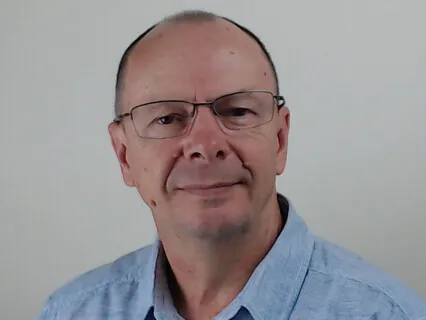
This was my career trajectory,
Looking to what is a human being?
What can we be?
Not necessarily what kind of are we,
But what can we be?
What sort of faculties do we have that perhaps that we've been not noticing or not exploring or not developing?
And what sort of experiences,
What sort of environments,
What sort of interactions might be really supportive of that more full blossoming of a human being?
And along that whole path of several decades in my personal life,
I had all my ups and downs,
Relationship challenges,
Financial challenges,
My own emotional challenges,
Some related to the work and various frustrations in there and all that sort of stuff.
Lots of highs,
Lots of lows,
Some great successes,
Some horrible failures that really challenged my ability to feel good within myself.
And in exploring lots of ideas and spiritual practices and natural healing modalities and philosophies and trying to suss out,
Come on,
There's something going on here,
What is it?
And this long path that I've had,
I've finally been able to see,
Here's what makes sense,
Here's how it works,
Here's how it comes together.
And that's why I've written this book,
Spiritual Awakening,
Made simple.
That's why I had to get that in the title somehow,
Made simple,
Because it seems so infinitely complex.
Life in general seems infinitely complex.
When you start thinking about,
Well,
What is a human being?
Well,
There are a million opinions expressed about that.
And so it seems immensely complex.
You go to a library,
Especially a college library or a university library,
And they're massive.
And they're filled with these books that people have written about how to make sense of life and have a successful,
Satisfying life.
You think,
Wow,
It must be that damn complex,
Gee,
You know?
And it's not.
This is why I wanted to write the book,
Because I've been able to cut through so many assumptions and distorted perceptions.
Because a lot of my investigations looked into the very thing about what's the nature of human perception and what is the nature of human learning and what's the nature of what we call the knowledge that results from this.
And what I discovered was that the mind is not the reliable faculty we've been taught since babyhood to think that it is.
It's a great tool.
Yes,
It is.
But right now,
For the mass of humanity,
The mind runs the person in the way like the tail is wagging the dog.
The mind is something,
A tool we've got to use.
It's like our tail.
We can wag it.
We can use it in ways that are helpful to us and to others.
But we make the mistake,
Our culture raises us in the home,
In the school,
In the media,
In ever-present advertising,
To think that we are our thoughts.
That what we see and hear and read is kind of the truth and what we've learned in school and in college and university is truth.
It's not truth.
It's an abstract construction of reality that we've built in our minds,
Connected with,
Yes,
Our emotions and our senses and our experience and our memories and our hopes and our dreams and our fears,
All these things come together to influence the mental construction that we build around any idea,
Concept or person or thing.
So that we've got to a point where what we experience in our life each day is not reality or truth.
It's a construction of reality.
It's a pattern of conditioned interpretation that we've built from our childhood.
And each of us has a unique kind of set of conditioning.
There's a lot of overlap,
Of course,
And that's why we talk about this culture.
People tend to sort of be like this in that culture.
In that culture,
They do these kinds of things.
So there are a lot of overlaps,
Yes,
But ultimately each individual through our experience from childhood,
We build up this set of conditioned ways of interpreting who we are and what the world is that are just conditioned interpretations.
And what causes a lot of our suffering of one kind,
Whether it's just general dissatisfaction or the occasional emotional discomfort of,
You know,
Disappointments or conflicts or whatever.
Or often even more intense kinds of things that many people,
Increasing numbers of people are experiencing like loneliness or anxiety or fearfulness of the future or depression.
And all of these things that we think are who we are are not at all who we are.
And I just want to invite your listeners,
Elizabeth,
To ask themselves this very simple little question,
Which helps to kind of illustrate and to help them discover what I'm talking about.
If they think back to when they were 10 years old,
Approximately,
Did they feel like they were them at that age?
And that's going back into the second person.
Did you feel like you were you when you were 15 or so?
And when you were 20,
Did you feel like you were you having that experience?
You were different at that time?
Probably you're out of school.
You're in a job your first job or your college or something like that.
But did you feel like you were?
Yeah,
I was me when you were 30.
Did you feel like you were you?
Yeah,
Did when you were 40 do so you've always felt like you were you that's a constant.
But have your thoughts changed your some of your beliefs change your ideas about you and the world have any of those changed?
Well,
Yeah.
Yeah,
Lots of them have have had different emotions at different times.
Yes,
I have.
Have you been in different situations once you called yourself a student then you called yourself maybe a graduate student where you called yourself a carpenter or a nurse or an accountant or whatever.
But you were you before you were an accountant.
So accountant isn't who you are nurses not who you are if you're in jail criminal is not who you are because you were who you were before you went to prison.
So the self-image that we develop from our earliest infancy and even prenatally we begin to get impressions.
It's a mental construction mental emotional all these things tied in together bottle body is also tied in with this because with each thought and interpretation of a perception each emotion that we have each memory each desire each goal or aspiration that we have also tied up in that is chemical processes in the body that correspond with all those aspects in a not just in the brain either throughout every cell of the body.
So there are energy flows happening in the body that correspond and that's why we can have a particular experience or see a particular person or even see a particular kind of person or a particular kind of animal and it can create quite a there's a word.
I can't quite reach but intense emotional or even physical response to that a palpable kind of a response and that's because all these things are tied up together our emotions and our feelings and our perceptions and our bodies functioning.
That's how health and illness and so forth tie in with our perceptions and our emotions and so forth because they're all part of a kind of a network or a Matrix of patterns of functioning.
So the mistake we make with kind of raised into it in our family life in our schooling in our culture in general is to think that we are our thoughts.
We are our concepts we are and the world is what I'm perceiving what I'm interpreting out of what I'm reading or what I'm seeing or what I'm hearing but all of those things are interpretations.
Go back to what I was just asking you listeners to do think back to when you attend 20 30 40 you felt like you were you right and you were that was the you you were the you.
You are the formless awareness.
That has been mostly in the background all of your life and it's been mostly in the background because you've been making the mistake like like everybody like every human being learns to do until I unlearn it.
Of identifying yourself with your body with your thoughts with your emotions identifying with things in the environment things that you perceive things people objects situations occupations.
We begin to see these things as being a part of who we are or I'm less of what I want to be because I'm not that yet or I haven't got that person in my life or I haven't yet achieved that goal of being a doctor or whatever it might be but all these things are nothing to do with who we are.
And this is what my book is about spiritual awakening made simple.
It's about helping people in a very straightforward way a very methodical way to see how they've come to see themselves in the world the way that they see themselves in the world and then how to in a very simple way notice that those things are not true.
They're just interpretations or mental Constructions.
So when we experience something that we get upset about we have a interaction with a person or we have a particular experience.
What troubles us emotionally is not what we've experienced.
It's that we have a thought that says what I've just experienced or what that person said or what I've just seen happen there is bad.
Wrong it shouldn't be that way and then we get the emotional response even into our body.
I mentioned in the book Candace Pertz research about how something happens in every cell of the body when we have a particular perception or a particular experience or a particular interaction with a person.
So we think that I'm feeling this way because of what happened because of what was said because of what I saw because of what I experienced or because of what I am know you're having a particular emotional experience because of a thought that you're having and believing about what you just observed or you just saw or experienced.
So the answer to the things that cause us so much trouble and frustration and emotional turmoil in our life is to notice that it's a reaction that's triggered by believing a thought that something is bad.
So two things are most helpful and actually quite simple when you're shown how to discover one is that the thoughts that we believe are actually the thoughts that we have.
So two things are most helpful and actually quite simple when you're shown how to discover one is that the thoughts that we believe can never be shown to be true.
And when you see that you can never show that any thought is true for certain you get released from it and then the emotion that was triggered by it dissolves.
So one thing is noticing that our thoughts can never be shown to be true.
And the other thing is noticing that I am not my thoughts and as we get used to noticing our thoughts and questioning them we increasingly disidentify no longer see the thought as being who I am.
Then what's left first of all the emotion that's been triggered by a thought that things are wrong or bad or not good enough or my life is insufficient in this way.
What do we notice that there's no way we can know that those thoughts are true the troubling emotion dissolves and we notice that I'm the awareness that's noticing the thought then we cease to be identified with our thoughts and our emotions and what's left.
The real you peace filled observing awareness that was behind the scenes but no longer is now behind the scenes where it's woken up because we've ceased to make the mistake of identifying with a thought thinking that thought is a true and be it's me.
When we see that I can't know for certain that it's true sometimes I can know pretty sure that it's false because if I can see one example that contradicts the thought I can see that there's no way I can know that is true.
Well suddenly then such relief feeling of relief comes in the emotion that's been troubling me maybe for an hour maybe for 40 years.
It dissolves into nothingness now because our emotional patterns our thought patterns our behavioral patterns are patterns.
They're kind of habitual ways of functioning that we've learned from really really early on when we question something that's been triggering a negative emotion and we realize that we can't know that it's true and we see that it's just a thought.
It's not actually me on the one noticing the thought on the awareness noticing the thought that's come up.
So then the emotion dissolves and we feel at peace.
That's not the end of the story because it's a habit pattern.
So a week later.
Maybe a day later maybe a month later sometime that pattern is going to get triggered again for a couple of reasons I because it's a habit and another very curious reason what might seem to some of your listeners Elizabeth as a quite curious reason why this might come up is because we tend to have this idea of who we are.
It often operates generally operates mostly unnoticed and that's why we use this term.
It's sort of subconscious pattern,
But whether it's conscious or it's unconscious say I have a troubling thought.
Oh,
I've done another big mistake.
God,
I'm so stupid.
And you know,
I get down on myself I get depressed.
I feel you know,
Unworthy this and that the other and then I from reading this book.
I've been led through this simple process to see actually there's no way that I can know that that thought that I'm stupid is true.
For example,
Have I ever had an experience where I that led me to think I was quite clever in doing that.
Well,
Yes,
I have had that.
Well,
Then the thought that I'm stupid copy true because you've also had the thought that I'm clever as anyone else ever said you're not stupid that was clever.
It was I admire how you were able to do such and such most people would say yes several people maybe lots of people have said at different times.
Yeah,
You were quite clever to be able to do that.
So I'm stupid copy a true thought because other people have said I'm clever.
So these kinds of simple questions Elizabeth are in the book leading people through different troubling thoughts that are quite common.
Yeah half a dozen or so till they get the idea and then they can apply them to any kind of emotional reaction that they might have to their experience or to their thoughts or whatever and once they are able to see through the pattern.
They question it peace comes.
It's like aware presence comes into the conscious.
And this you know,
It's hard to use words here because this is you and so to say that you experience peace or you experience a more stillness of awareness is kind of words get in the way now because we're talking about something which is beyond words.
It's beyond the conceptual.
Mind so we're not really experiencing it because that would mean there's me and this here what I'm experiencing but there's this beingness that I am is becomes more palpable.
It becomes now what I'm experiencing aware presence and it's kind of it's kind of it's a very simple way of experiencing it.
So the feelingness that I am is becomes more palpable it becomes now what I'm experiencing aware presence and it's kind of it's got characteristics you got to be careful about naming the characteristics because then the mind comes and grabs hold of one and then it debates them in it says no.
Yeah,
And if there's that characteristic there's also the opposite one and blah blah blah then you put the mind aside again in the ways that I show in the book and you see that actually one of these beautiful qualities of this aware presence.
Put the mind aside again in the ways that I show in the book and you see that actually one of these beautiful qualities of this aware presence that is who we are is Peacefulness and this is what we discover when we question a thought that's been troubling us What we feel is peace and it's not just that we feel something that's peace.
Isn't that nice?
The peace is us and These sort of qualities are part of what is the essence of life the essence of a human being peace love joy Playfulness,
They just come bubbling up into the beingness of who we are So you have an experience that triggers a thought that triggers a troubling emotion you question it and then you feel at peace again And it's that's beautiful but because it's been a habit pattern and Because it's been perhaps part of my self-image or my self-concept That I'm a stupid person.
I'm also Creating my habit patterns are kind of creating the situations that will arise again Or I'm selectively looking at things and somehow drawing to me or I'm drawing myself to situations where I'm gonna have that kind of It's gonna trigger that kind of thought that kind of reaction again.
It's partly because We got this it seems strange to say this is what I'm coming back to what I said five minutes ago you listeners I find it strange to say We actually want to feel bad Really we want to feel bad Partly kind of yes because it's part of who you think you are if stupid person has been intermittently part of my self-concept And then I take it away and I see that actually that's not so that's not true I can't see at all that that thought is true It's not the end of it because it's been a habit There's been this part of our conceptual identity part of my conceptual identity to give this illustration of thinking of myself Intermittently perhaps but nevertheless thinking of myself as stupid so it comes up again because it's part of who I think I am And even if it's been unpleasant if it's part of who I think I am I'm a bit reluctant to let it go And that's why it requires Being ready again not being surprised and not being discouraged when that pattern maybe gets triggered again And then again you just use those same simple processes that I ascribe in spiritual awakening made simple To question your thought and then it dissolves the emotion and then you come back to who you really are which is Peacefulness There's so much to say about this When you come back to who you are this peaceful wakeful presence It's not actually who you are as the individual person because the essence of who each of us is is We could say connected we could say it's one with We could say it's one with the essence of life.
It's one with the consciousness which is what underlies and orchestrates all of life And so when we come back to this stillness and peace What we come back to is a connection with life that's flowing through us as us We come back to this oneness with the universality of life that is the essence of who we are And what flows then what it can flow then because we've questioned the Impediments that our mind has been placing in the way These habitual thoughts and concepts and emotional patterns That have been dominating our consciousness when we dissolve those what can flow is the universality of Consciousness intelligence life that we are in our essence it can flow through us then comes Intuition creativity A sense of how it would be satisfying to proceed with your life That doesn't come from your conceptual mind doesn't come from your conditioned thinking It comes from the essence of life and you in that way then you become more and more an awake expression Of the intelligence that's underlying all of life