Welcome back.
This is the second episode of the Art of Meditation podcast.
My name is Andy.
I'm part of the Art of Meditation gang and I'm joined today by two special guests.
I've got James who's a 25 year old from Stroud in Gloucestershire and we have Penny who's a young mum from the south of France.
Hi Penny.
Hi,
Hello.
And I'm also joined by Hugo and Bergs who were here last week.
Hello.
Hi Andy.
How are you doing?
Great.
So there's a few of us and the reason there's a bigger group today is we're talking about the give back generation.
So this is a term that Bergs coined and it follows on very neatly from last week when we were talking about the long out breath.
So we have a tendency to breathe in and breathe in and breathe in and always want more and last week we heard why it was important particularly now to really breathe out,
To give back and today we're going to talk about what that really means practically.
How can we be the generation that gives back?
So Bergs,
What do you mean by the give back generation?
Well as we're about to hear in the talk it was only back in 1970 when as a species humanity got to the point where we were taking out more than the planet could regenerate.
You know that means that the planet's got an awful lot to give.
It managed to sustain everything we were doing up to that point but beyond that we've reached a tipping point and since then we've been taking out more than the planet could possibly cope with us taking out and in that short brief period of time which is just a generation we've seen an unprecedented number of tipping points reached in the natural order and the ecosystems are breaking down but not just ecosystems we as humanity are breaking down we're not functioning properly because we're not living appropriately.
Now if it took a generation to create so much damage at a really difficult to repair level then in one generation I'm positing the notion we could turn it around.
It's going to be a big ask we're gonna have to dig deep but it's in us if we make the decision en masse to be the give back generation we might find a way out of the predicaments that we're facing.
And that's an inspiring message isn't it?
It's kind of a call to arms can we be the generation to give back?
So maybe now let's hear more about what Bergs means by give back generation.
We have a 10-minute discourse that was recorded live at the most incredible retreat center in the Pyrenees and even better than the audio you can see the visual as well with these incredible mountains in the background so that's on Bergs' YouTube channel.
The sound is good enough?
Yeah the sounds good enough but yeah if you want to find it on the YouTube channel search give back generation and it will come up.
There's a bit of hiss but it's recording outside.
It's live at the moment.
In the most pristine environment so just picture the mountains as you listen to Bergs' words.
Have you ever stopped to ask yourself why you may be here upon this earth at this time?
Did anyone explain to you how you arrived here at this extraordinary time in history and not at another time?
You could in a different time and under different conditions have lived in the village and chopped wood and carried water but no you didn't you came here now to this world at this time at the end of the age of intoxication and the pursuit of pleasure.
Look at it like this way.
You don't get human beings more fortunate than the human beings that are alive at this time in the shall we say the well-provided parts of humanity.
Not in history do you and not on the planet right now do you and yet there's no indication that there is any more sense of peace or happiness or fulfillment or personal meaning amongst those who have plenty than there is amongst those who don't have very much at all.
There's a very poor correlation between how much you have and how happy you are.
Now just imagine if you were to say okay let's look at what I really need and let's look at what I don't and if I don't need it I'm going to give it in some way energetically I'm going to think really intelligently about what I could give.
You know I bet that in one generation imagine imagine if how many people are there in our group maybe a thousand people maybe 1,
500 people imagine if every single one that's just 1,
500 people said okay what I don't need what I really don't need I'm going to make my life simple and I'm going to give what I don't need I wonder what the net contribution would be if we all brought our consumption levels down to the sort of level that they are here and said how can I really imaginatively creatively joyfully give all of that extra stuff that I've got.
Imagine what you could do now this is one small group of people I bet if everybody started thinking like that in a single generation we could probably solve the problems of this planet.
If you think how much surplus there is sitting around and not only that you think how much consumption there is that is bringing absolutely no joy.
Imagine if that was all turned towards the replenishing and the regeneration and the renourishing of this tired planet that's carrying a burden of all of us.
I reckon in one generation we could probably get this show back on the road.
In 1970 the World Wildlife Fund they created this notion of what's it called the over yeah the World Wildlife Fund introduced this idea of overshoot day.
An overshoot day is the day of the year upon which on that year humanity's used all of the replenishable resources that the planet is going to produce in the whole of that year yeah and in 1970 overshoot day came towards the very end of December.
So effectively in 1970 as a group we used up everything that this extraordinary planet had to offer us for that year and then the next year we started again.
This year five days ago we reached overshoot day.
What that means is that humanity as a whole for the rest of this year is an overdraft.
It's writing checks we're writing checks that the planet can't catch.
So between now and the 31st of December this year we're using resources the planet can't replace.
Now we've seen that we've seen that and that's been the case now for a generation,
A little more than a generation.
So on that principle we could do some simple sums and say if we were to stop using what we didn't need let's say we chose to be the generation that said we're going to give it back.
Us.
We're going to be that generation that give it back and we said everything I don't need I'm not going to use and everything I've got that I don't need well that can't possibly be adding to my own happiness.
Sitting around not being used enjoyed appreciated or delighted in in any way everything I don't need I'm going to put back into some effort to replenish to renew regenerate or to share with those who do need.
In a single generation we could turn that whole situation around.
Why is it not so obvious?
Why not so obvious?
Why was it not so obvious what we should do in 1970 when the World Wildlife Fund said hold on guys we're about to start taking out more than there is.
How come we didn't at that moment sit down and go right folks this has got to stop this has to stop.
Right what are we going to do?
I know what we're going to do we're going to stop using what we don't need and we're going to give it back.
Well you know we are extraordinarily intelligent human beings so I can't begin to fathom why that didn't happen then.
Perhaps it was because there was little sign when you looked around you it still looked like an inordinately abundant planet but it's not the case that there's no sign now.
There are no ends of sign that it is creaking.
We are creaking individually,
Group levels,
At social levels,
Economic levels,
Political levels,
Global levels.
Humanity is creaking to find meaning,
To find happiness and to find peace and our planet is creaking almost every direction we look.
Why is it not obvious that the only thing left to do as human beings alive on this planet is to recognize that as the most intelligent creatures on this planet we have to learn to behave in the most intelligent way we possibly can to exercise that intelligence.
If we had the capacity through not realizing what we were doing to get to a place that in 1970 we were at the point of taking out more than we could possibly afford to take out then we've got the capacity in one generation to give it all back.
So imagine if you got a little letter came through your door in a week's time and it said right folks this is the story this is where it's at we're gonna overdrawn and it's time to start settling the books.
I'd like you to tick a box that says you're in or you're not and if you're in come and see us and let's see what we've got to give back.
Think how much time you'd have when all you really needed was food shelter and good companionship and the opportunity to look out there and go wow think how much time you'd have to intelligently creatively and lovingly give back to make this an even more beautiful place than it is because I'm sure we've got it within us to do that if we wanted.
That would be an act of bravery and courage and that would probably be the making of us wouldn't it right at the time where we really need something to become the making of us because there's a little part in your heart that is dying to know what you've got what you're made of what you've got to give.
So when we stop asking ourselves what's in it for me we create a little space to start asking what have I got to give what have I got to give.
You've got so much to give.
This life won't come around like this again.
In this life that you have that you're a part of wherever you are in it this is your opportunity to find out what you've got to give so that at the end of it you can really recognize really see for yourself what you've been a part of while you've been here.
Don't miss your chance to be a part of that.
Think about it for a moment.
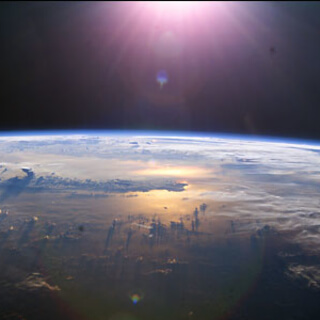
Here we are somewhere down the line upon this fortunate human life of ours upon this miraculous planet that supports such a life just a dot in the vastness of space.
How many eons does it take for such conditions as this to appear?
How long did we wait for the chance to appear here at this time?
How great once was our longing to behold the extraordinary display of beauty that creation unfolds for us everywhere that we cast our eyes.
How quickly did we forget the miracle of creation as we instead became intoxicated with our own creations.
Let us all take responsibility for our presence here and learn to live in a way that we may bequeath this blessed planet in all its miraculous beauty to those who are still to come who like us have waited for so long for their chance to behold it.
Wow so that's a strong message can we really give back more than we take out what do you people reckon?
I'm trying to understand when you say giving back.
What is giving back?
Different computers now.
What we're talking about is the idea that actually I'm going to put something back somehow in some way that wasn't here when I got here.
Like gardening and things like that.
Working with the land,
Rejuvenating the land,
Not taking out so much,
Building things in ways which aren't depleting,
That aren't going to degrade in a way that leaves a trace,
It's going to take thousands of years to break down,
Thinking intelligently about what we use to support our lives with.
But that's the notion of getting to the point where my footprint is small.
What I'm saying is we don't stop at the idea that my footprint is small,
We make our footprint small so I free up all the time and energy and resources that I'm using living a complicated,
Ocular or indulgent life and put that back into the pot so that other people might get something from me so they're not necessarily having to work just to put food on their table so they've got time so we've got time to go out there and grow forests,
Grow stuff in the ground,
Grow stuff the old way,
Cut it by hand,
Use your hands and your time instead of technology and chemicals and disposable consumables that leave so much behind in a detrimental way,
Just in the process of living our daily life.
It is so expensive for human beings being here.
So is that something I can do on my own without no one around?
Small ways you can do it on your own and with other groups of people going together with your friends,
Starting to share your resources?
What you still can do on your own is possible.
Let's take for example what we're doing here.
Before we came here all of us were probably living in a household where there was one or two people which meant the heating bill was all entirely for me,
The water was entirely for me,
That whole house was all to myself or just me with a couple of people,
Just me and my family.
Now there's eight,
Nine,
Ten of us living here on this farm,
The same amount of resource as when there were two apart from the three.
My mum had cancer a few years ago and during her rehabilitation from her chemo she went to live in some friends houses and her house was empty and while she was there she had such a great time because it was nice and social and friends were around and I said to her,
I said,
Mum,
Why don't you move in and then rent your house to five people so you're not living there alone and all that resource that you use yourself can be shared amongst five people or six people.
I did an inventory in my mother's consumption.
She doesn't have a particularly off-print life but she's an elderly lady living in the family house on her own.
When I totted up her consumption it was seven times the World Wildlife Fund's sustainable level of consumption.
Seven times!
It's extraordinary,
She had no idea living what she thought was a relatively simple life.
The moment she moved into that house with two other friends suddenly all of that resource being used in the house stopped and she started sharing resources that was already being used by her friends.
This kind of thinking,
Getting together and sharing resources,
Delighting in the fact you've got a good company and the fact that it's simple,
Straightforward,
Not costly so that you're not wondering if you're gonna have enough in your pocket at the end of the month to pay all the expensive bills but asking yourself,
Oh I've got more than I need.
Where can I give that?
I just want to put some context on that both because where we are now,
We're in a farm and as you said there's about ten of us at the moment living here over the summer so there's some people living in vans,
Some people living in tents,
We have one kind of quite small communal kitchen,
We have a lot of outdoor structures and tarps up and it's been part of a process for the Art of Meditation to over the summer for two months to live outdoors in nature.
And if we look at what we've consumed,
I was talking to you the other day,
Since I parked my van up here I put one light on at night for about ten minutes and the rest of the time I'm running off a candle.
If it's cold in the morning I might have my heater on for five minutes or five minutes in the evening and that's it.
I didn't start the engine.
I'm looking at what my footprint is compared to when I was living in a house in a town,
Just two people,
You know,
A hot water boiler,
Heating on when it doesn't need to be on.
It's just,
There's no comparison,
The amount of stuff.
And we're all delighting in being here,
Not having to worry about where it's all coming from,
Finding how much we can do with our day.
I mean look what we do on the average day.
Look how much as a group we're able to do,
Working towards finding ways of contributing and giving back,
Whether it's in the garden,
Whether it's out in the forest or whether it's here learning how to share this information with people.
We've got time because we're sharing our resources.
Do you think it's a missed trick because when people think of sustainability they normally think of lowering their footprint through,
In a very individual way,
So maybe kind of investing in solar panels or like,
You know,
Reducing or stop using plastic or going vegan.
It feels like what people don't talk about much is what you're talking about,
Which is,
Okay that's all really important,
But on top of that we need to start sharing resources in a better way as a group.
Exactly.
Well,
Take young Jimmy over here.
You know,
He's been up with us for a couple of months.
You know,
He came from a house where he was living on his own in Stroud,
Yeah,
And he's going back there.
Now the difference by just being here amongst people,
Sharing the food,
Eating,
Cooking and eating together and going back he's got to think about how do I keep this house going for myself?
How do I go out and feed myself?
How much am I going to have to spend on shopping?
How often am I going to have to be shopping?
How much fuel am I going to use to go backwards and forwards to the shop individually when we're going once every few days with ten people?
That's the way we can think.
Now,
I dare say young Jimmy's been happier here with lots of friends around than he was on his own living down in Stroud.
What do you think Jimmy?
Much,
Much so.
It's been amazing to be around people,
You know,
And it feels like a home.
Yeah,
It's just wonderful and I suppose also like another thing that it just occurred to me as you were talking was the amount I read a stat about how many young people are going to have to be or even now are living at home just with their parents because buying a place or renting a place is just so untenable for them I just thought you know it seems to be a good follow and to start bunking together and you know coming together like that.
Sharing.
But at the end of the day even if you are having to live at home with your parents,
They spend a lot of time taking care of you,
Take care of them,
Share resources.
If that's what you've got to do,
For goodness sake don't go into debt.
Borrow money to go and rent a house that you can't really afford so you can live all on your own,
Get lonely and spend your day struggling and worrying about how you're going to pay your way.
You know it is a paradigm shift because we're all you know we're all brought up thinking about independence,
Carving out our independence,
Our personal freedom.
There's no lack of personal freedom being here by sharing resources.
We've actually got the freedom to act,
To do things,
To do things we want to do.
We've got time,
We've got energy to spare.
There's no personal freedom in living a life where all of your energy is going towards just sustaining your complicated and expensive life.
No personal freedom.
There are other ways as well,
Because I'm thinking of a lot of people who do live in flats or houses in the city who maybe aren't at the stage at the moment in their lives to live in a more communal way but how about there are things people can do in their streets and their community to kind of basically less individuals and more part of a group and is that really a central message of this Give Back Generation?
Well,
I mean there's another aspect to this.
How many people now live in a city where they don't know their neighbours and there's no sense of community?
You know my father grew up in South London and everybody knew everybody on the street and they were hanging out together and they were all good friends and when something went wrong they looked after each other.
You know how lonely people are or how many lonely people there are living in the middle of a city surrounded by thousands of people?
It's crazy.
We're isolated and in our isolation we're consuming far more than we would if we were sharing and living together.
I used to live in the countryside and then I'm,
I don't know,
I guess I was a bit greedy and I want to move to a big city like Paris,
London,
All this big city and then that's when I actually like I wasn't talking to anyone.
I became lonely like in the big house for no reason that's why I was just thinking like what you're saying and it happened to me.
And not only are you lonely but you're struggling to support that life because it's so expensive.
It's really expensive this big city,
This house,
They're not even massive.
They're not even big.
Yeah,
Exactly.
And that's happening all the time isn't it?
It's happened,
I'm not that lonely.
In Wilmington city,
They rented out a sky high.
I don't know why.
I don't know what I was wishing.
Because I think,
I think developing this is quite interesting because there was something you said in that discourse,
This consumption that's bringing us no joy and I think that's really important because even if we are out there consuming loads of stuff we're not actually even enjoying it anymore.
I remember this time I was sitting on the tube years ago and I was thinking is this really it?
Is this my life?
What am I contributing?
Nothing.
I'm going into an office to do a job that isn't really positive.
Where does this go?
And that was part of the beginning of the journey to eventually end up going on retreat and hearing these teachings but when I heard it was like of course you've got to give something back.
It's like that's what makes the life meaningful.
Without giving anything back why on earth did I think it was ever going to be meaningful?
You know there's a big difference between being of service,
Being subservient and we've got this dysfunctional idea of giving.
If I'm one who's in service I'm of some kind of lower status than one who's the receiving of those services.
I mean that is a profoundly dysfunctional attitude.
The one who is giving of themselves is the one whose life is meaningful and when we start to think like that everything starts to change.
Even our idea of class structure starts to break apart and then we start to see it in terms of there aren't limits on what I can give in terms of what kind of money I've got that's left over.
The limit on what I've got to give is how inundated I am just holding my life together and you find that often those people who've got a little and a simple life spend so much less energy holding their life together.
They're first off the blocks when it comes to giving because they can.
So untangling ourselves from this tangled knot of intoxication,
Consumerism and this constant quest for more,
You know everyone's sick to the back teeth of it.
The only way is to turn it on its head not just reorganize it so we can find better ways of burning fuel,
More efficient cars so we can drive further,
To stop going so far,
To stop using so much stuff and then offering it back.
Like I said,
Everything sitting around doing nothing,
Giving you no joy,
What on earth is the point in it?
Give it away.
You're not taking it with you.
Reminds me,
I saw this first hand when I was volunteering at a refugee camp in Samos in Greece and it was about 2,
000 people squeezed into this tiny camp but the conditions were awful and you saw a lot of people falling apart so falling into drugs,
Alcohol,
To crime but the really inspiring thing was the people who just without anything living in a tent just put all their energy into service.
They were just giving and giving and giving.
They were teaching the children,
They were doing whatever they could to make other people happy and those are the people that were so bright and so alive in their adversity.
That's the point your challenge can be the making of you or your undoing.
You had people in that camp,
Their challenge was their undoing.
You had people in that camp,
Their challenge was the making of them and it's always the case no matter how challenged you are,
No matter how easy or difficult your life is you can make it your making or your undoing.
And how did they make it their making?
By not focusing on their adversity but focusing on what they can give within that adversity.
Amazing story,
Amazing people.
I believe a lot of people here,
They're not really sure what the purpose.
They don't know what,
They think they have to get out of the money,
Go walk,
Come back home,
Maybe have a little argument with the wife,
Go to sleep and same story and it would keep going week and week and week and week.
I mean if you ask for some people what you did,
What you did this month,
What was amazing.
I don't know,
I'm really shocked.
That's amazing?
People have no clue anymore.
I'm serious,
Like when you look around people don't do anything anymore.
I think they know that.
The point is,
The Buddha calls it this numbness,
It's ignorance.
We don't know what we do,
We don't spot it.
You can't blame people,
There's no one's fault,
We just don't spot it.
We don't stop and have a proper look.
As soon as you stop and have a look like you're doing now,
You're going,
That's lunacy.
And yet it's so easy to just find yourself rolling and rolling in this cycle where you're just taking out and giving out.
Because they don't know.
This is a really interesting point that you mentioned actually in the long out breath and you said look,
Look at your life,
It shows you,
It shows you what you need to do and I think that's a really,
That's so obvious but we don't look and it's like life is showing us that we seriously need to change and yet we don't.
It's relatively obvious.
It is true isn't it?
You know,
In the 70s it was clear that there was maybe another 100 years were under the water.
Let's build our society around burning it.
Do you know what I mean?
It's just not intelligent.
So you know,
We don't act intelligent.
It's just about being intelligent,
Compassionate,
Caring human beings.
Because if you care about this planet,
This isn't a violation of your personal rights,
Being asked to give away the things you don't need.
It's an invitation to be what you're capable of being.
So it might sound a little bit radical but it's not.
If you actually look at it as bare,
Light of day,
As naked truth,
It's the only thing that's going to give us a sense of meaning.
How do you think anyone's going to feel continuing to live their life,
Self-indulgently,
Continuing to take out,
When it's clear the planet isn't going to last,
When it's clear the next generation isn't going to have the opportunities we have,
Do you honestly think that person can go to bed at night feeling good about themselves unless they're completely numb?
It doesn't take much consciousness about being honest with ourselves.
That's all,
Really.
It just starts with that.
If we were honest,
We know what we've got to do.
I'm not really sure if you're always supposed to explain to a kid when I barely know myself what to do.
I don't think it's necessary to load young children yet with that.
What I think is important is to start to instil in them the idea that their life could be an act of contribution,
Rather than the idea that my life is a question about what am I going to get.
Very,
Very early on when we're young,
We think in terms of what am I going to get,
Can I have more,
I want more,
Have I got enough.
If we can start to instil in young children the idea that what it's about being alive is about giving,
Right at that early stage we might start to initiate change.
I don't think it's necessary to overwhelm him with the challenges that we face,
But if we can instil those values of giving in them,
Then that's the beginning of a give-back generation.
Well,
When you live in London,
It's pretty challenging.
I'm sorry.
It's challenging,
Isn't it?
It's like electronic everywhere.
Whenever you go to school,
You need a laptop.
I mean,
How long am I supposed to come with telling,
Oh,
We need to plan a trip this weekend?
Well,
We've got to.
.
.
Do you understand?
Yes,
It's going to be.
.
.
It's boring for them.
They don't get it.
Well,
We didn't used to have all that stuff.
We used to grow up,
Our parents grew up without any of those things.
Yeah,
But it was okay.
We used to run outside all day,
And now we used to do stuff without destroying anything as a kid,
Just as a kid.
We've got to work our way back to those ways that we were in the past when we lived connected to nature,
When we didn't need so much distraction,
When we didn't need so much stimulation and so much gratification.
It's a gradual process of reversing the tendency.
It's not something that's going to happen overnight.
But in a generation.
.
.
Look,
It took one generation for kids to go from being able to sit,
Quietly play outside,
Entertain themselves,
To need constant stimulation.
One generation.
Why can't that be reversed in a generation?
No,
But Jimmy,
Look,
You're 25 years old.
You come here to hang out with us over the summer because you've asked this question.
You know that you are the front line of the Give Back generation.
I'm almost an elder now.
So it's in your hands.
So what do you think about all this?
Well,
I suppose what I found most challenging is when I hear this stuff,
And it really resonates,
And I want to,
As many others my age,
They want to do something.
But it's not quite clear how to start engaging in doing that.
And a lot of my friends are like,
Well,
How does that relate day to day?
Livelihoods and what do we do?
And it feels really hard to break out of the current that we're in.
You know,
There's expectations of society,
Parents,
Whatever.
And it's hard to,
Like,
You know,
You hear it and you go,
I've got to do something.
What do I do?
And then meanwhile,
You know,
It's easy for that to get washed over.
And I think making that jump to a different sort of way of being or doing things,
You know,
It's like,
Where do I go?
It's a bit bewildering.
I can understand that.
But that's where we've got to see it in terms of a generation.
We're the generation and the generation before who took it all out.
My generation,
Your generation,
You guys are late 30s,
I'm 50,
You're 24.
You know,
I'm over halfway through my life.
I've definitely already consumed everything that was coming my way,
Or I hope it was reasonable to expect.
So we,
I'm the generation that has to find a way of making it possible for your generation to give back.
So we need to support you so you can go out and give.
Because if you get trapped in the same cycle that we were in,
Which we've got to go out to work to start this ever more,
To uphold this ever more complicated life,
You're going to be stuck.
But if you start to see the work,
The time and energy you put in with your hands as a way of contribution,
And if we can find ways to support you so that you're provided for,
Your basic needs aren't many,
It hasn't cost a lot to have you here.
You've helped build a barn,
You've helped regenerate the walled garden,
You're planting trees,
You're getting food,
You're getting fed,
You're sheltered,
You're enjoying yourself,
We would provide you the impetus.
One of the things that parents have been in such a rush to do is to keep their kids out of home and say go out and make a way for yourself.
I'm the generation of parents,
I haven't got kids,
But people my age,
Their kids are coming your age now.
And when I was growing up,
It's like you're 18 years old,
Go out and make a name for yourself,
Earn yourself some coin,
Support your own life.
Well how about if those parents took the pressure off their kids and said hold on,
I'm going to hold this space with you,
This excess that I've got,
So you can go and find a way of giving it for yourself,
Boy.
This change has got to happen right away.
The older generation,
The people who've used it,
We're the people who've used it,
You're the people you're going to have to live with the way that we've lived.
So we've got to hold the space for you so you can go and find these ways of making it actually happen.
This has got to be cooperation.
It's not going to happen suddenly.
First thing you've got to do is to get to the place where you delight in that simple life.
So that it's not an act of attrition,
It's not some kind of sacrifice,
You have to go out and taste it for yourself and say there is a simple joy in living this way that I didn't experience when I was struggling to uphold my life.
And then you'll find your motivation,
And then you'll find the courage because it won't be frightening anymore,
Because you've learned that your life is much easier to support than you grew up thinking it was going to be.
I've still got another generation,
25 years as a generation.
I'm only going to be 75.
This is all over in the next 25 years.
Next generation is going one way or another.
So we've all got to support each other.
I need him to be a good guy so my seven years little boy can see it with his own eyes and then he will be the next good guy.
There you go.
It's a chain reaction.
It is.
So,
James,
You're getting from an elder and from a seven year old boy saying you are the Give Back generation.
Are you inspired or are you daunted or both?
Both,
I'd say.
Very inspired.
But I guess you just got to get out there and get stuck in.
That's the way.
I think what's interesting here is there's been this theme implicit in the background,
Which we haven't really looked at now yet,
Which is what actually makes that possible within ourselves.
You've talked about a simple life but we haven't really looked at the fact that that actually makes you happy.
You often talk about the person that's of few needs and easy to serve is happy.
That's right.
That's what the Buddha said.
He who has a few needs and easy to serve is close to being happy.
He who is of many needs and hard to serve is far from being happy.
And this is our point.
We've made ourselves of so many needs.
We're so hard to please and serve our expectations and sense of entitlement.
So huge that we find it so difficult to be happy.
So we do need to do this work on ourselves so that we actually can recognize,
I don't need what I thought I did.
Because,
Look,
If you're asked to give something up that you think you need,
It's considered a sacrifice.
But if you're asked to give something up that is actually a burden to you,
That you're done with,
It's a relief.
Now that's where what Hugo is pointing out,
That's where the difference is made.
If you can actually go through this process for yourself and really see this as a truth,
You'll choose to give those things up.
If you don't come to those conclusions because you don't go out and have the experience of freeing yourself up and the burden of all this complicated life,
You're going to see that you're being asked to give something up.
Well,
Why shouldn't I?
My parents didn't.
But your parents struggled their whole life to uphold that.
You don't want to be in that position.
You want to be in a position where you've got more to give than you need to take out.
So,
You know,
We've got to inform ourselves by walking this talk.
That's why I said to everybody,
Right guys,
We're outside this summer.
We're outside for the summer.
We're going to share our resources.
We're going to get used to being walking the earth,
Sleeping under the stars,
Work out what it is to not be surrounded by all this stuff that we depend upon.
You know,
Look at how everyone's come alive this summer.
Changes.
Everyone's been so happy.
Everyone gets on.
There's no arguments,
No fights.
Not much.
You've got to walk,
Live and breathe it and see for yourself,
Not just the truth in it,
But the magic in it.
You know,
It's like,
You know,
The Buddha talks about a wish-fulfilling jewel.
You know,
The Dharma is a wish-fulfilling jewel.
When you see what it's pointing at,
Which is this simple way of life,
Which is making the changes within yourself,
When you realise that your needs are few,
It's the wish-fulfilling jewel.
Very quickly you get to the place where you've got everything you need.
Very quickly you get to the place where you can delight simply in being alive.
Do you know how many people out there will never get to the point of delighting in the simple act of being alive?
Because their life is just a struggle to uphold.
And I'm not talking about the people having to work every day just to get clean water and food.
I'm talking about the people who are working every day to keep this mass of material stuff around them to support their life.
You know,
They're just as miserable.
So,
Give it back,
Create the space inside you,
Open up,
Recognise that actually it's a relief to be asked to give.
It's not like somebody putting this upon you.
It's like you're going to be the generation that are going to flourish in consciousness,
In the way that we didn't,
Because we were so intoxicated with this life we were trying to fulfill.
And to make these big changes,
It seems to me that a change in attitude is a huge problem.
It's a paradigm shift in attitude.
Like the long out breath is a paradigm shift in attitude,
The give back generation,
It's a paradigm shift in attitude.
It's not a let's readjust the way we're living in light of the challenges we're facing.
It's about stop and start again with a completely different perspective.
And that's what I think is probably the single most important message to take out of this.
We aren't going to look into the current way of things looking for a way to fix it.
It's not the point.
That is in a state of crisis,
Because it's meant to be in a state of crisis.
The natural order cannot uphold things that are complex and overloaded like that.
So we don't need to fix it.
It will just do its thing,
Reorganise itself in its own way.
Meanwhile,
Somewhere quietly,
We've got to set in motion this new way of being that doesn't stand on the ground that is crumbling.
I say the ground,
I'm talking about the belief system that is crumbling.
Times are changing.
How does someone practically take that forward?
So they're listening to this,
Something clicks,
Like people can imagine,
Understand that message and say,
Yeah,
That totally makes sense.
But then that feels like the start of a very long journey.
What are the first few steps you can make to become part of this Give Back generation?
Well,
I like to explain it like this.
Think about the energy of carrying and being carried.
Look at your life in terms of how much carrying you do.
Are you carrying,
Supporting others,
Giving,
Taking responsibility in a conscious way for your presence here.
Carrying your responsibilities intelligently.
Being carried means I've got a sense of entitlement,
I'm owed this.
I mean,
That basic idea that this planet is here for us to take out whatever we want.
It's not.
It's a blessing and profound gift to be here.
So it's recognising that and going,
OK,
How can I possibly repay the debt of gratitude that I have for this extraordinary life,
Not this extraordinary,
Complex,
Amazing,
Modern,
Technologically driven life,
But the fact I wake up in the morning and I breathe in,
I breathe out and I'm at success at life every day I wake up.
How can I say thank you?
And you start to think like that,
Where every day should be an expression of gratitude.
Then you're going to start to think differently,
Behave differently,
Be a different person.
Now,
It's not easy.
A lot of people genuinely are struggling.
You've given an example of people,
Like an abject strife,
Where they found ways to give.
It doesn't matter where you are.
You know,
We've already talked about these four types of beings.
There are beings born in the darkness,
Who are walking into darkness,
Born in the darkness,
Walking into light.
Born in the light,
Walking into darkness,
And born in the light,
Walking into the light.
It doesn't matter whether you are struggling endlessly right now,
Or whether you're the most fortunate person on the planet.
Whether you're walking in the right direction is a question of whether you are making the world a better place by being here.
That's the only measure there is.
Just to make this shift,
How does this relate to a meditation practice?
Well,
Look,
If you look at something like,
If you look at meditation,
What are we actually asked to do?
Sit on our backsides,
Possibly watch our breath for half an hour.
I mean,
Mind numbingly boring.
It couldn't be more boring than that.
Now,
The point is,
Not that you've got to learn to sit and watch your breath,
But the fact that you can be there,
Present with yourself,
Undistractedly for half an hour,
And not just get to the point of not going mad,
But recognizing that in that moment when you are 100% present,
A certain joy opens up in you.
A certain sense of ease comes upon you.
A sense of happiness comes,
And you aren't doing anything extraordinary.
That's where meditation informs you in a way that you weren't expecting.
Because we think our happiness is going to come when I get the thing I want most.
But it doesn't.
Happiness arises in your heart when your heart is unvexed by the experience you're having in the moment.
So learning to sit quietly and be with yourself is the starting point.
Because most of the madness going on around us,
Most of this running around like headless chickens trying to pursue things we haven't got,
Is only the result of the fact we can't be with ourselves.
The moment you get to the place of being able to be with yourselves,
You realize that your needs are so few.
Just the opportunity to be here and delight in this is enough to make coming here worthwhile.
And then everything else is a gift instead of something you feel entitled to.
So meditation is very important because it opens that door that allows us to start to be with ourselves in ways we couldn't previously.
Maybe I'll bring in Hugo to this point,
Because Hugo you've been practicing for over 10 years.
Have you found in your journey a shift through your practice,
Your meditation practice,
Where you've realized your needs are fewer than you thought before and you've given back?
Yeah,
I mean I think from whatever I might have thought meditation was about when I first came to sit,
It became apparent quite quickly that the by-product of it was that I was able to suddenly just be very content doing very few things,
Having never been able to be with myself and always sought peak experience after peak experience after peak experience.
And it was actually quite quick,
A few retreats and suddenly I found that I was doing what I never thought I'd be able to do,
Which was to sit down and really enjoy just a simple cup of coffee in the morning and enjoy the mood of the day.
So yeah,
Absolutely.
Didn't you learn to garden?
I did learn to garden.
Grow vegetables?
Yeah,
Yeah.
And find the real peace within that,
Which I never thought would be possible.
So you say you're happier now than you were before you started meditating?
Infinitely,
Without a doubt.
In fact I wasn't ever happy until I started meditating.
And then very quickly I found that I was happy.
But the point I'd like to make is it's not the meditation that made him happy,
It's the space that allowed him to claim in his life and the life that he was able to have that wasn't fraught the way that his previous life was.
So it's not the meditation itself,
It's the opportunity that opens up to us,
Not just to find a simple peace within ourselves but to start giving back.
So you have to step back,
Literally stop and just start again.
That's what you're telling me.
Because I mean I wasn't happy myself,
You were unhappy.
So I mean what's happened literally is that I find myself,
You find yourself,
Well I'm in protest.
The person you're trying to find is the one who puts his head on the pillow at the end of the day and who wakes up with himself in the morning.
That's the person you've got to make friends with.
I can feel the difference already.
I mean I can sleep.
I mean it isn't easy for people to appreciate what actually meditation is doing to us.
When you look at it from the outside it looks like a rather pointless exercise instead of cross-legged on the floor doing nothing.
But the fact that we just aren't,
We're so restless,
We're so agitated inside ourselves that we can't actually be with ourselves,
That's the square root of our problem.
It's scary.
That's why it's because it's scary to be with yourself.
So you know people like James,
He's talking to his friends.
You know you can't go out and rant and rave at everybody and say hey you've got to give everything away.
You know I'm sure altruism is going to play a big part in rectifying some of our problems.
But you've actually got to go through that process internally where you realise actually I really can.
I really don't need this stuff.
Not I'm a little bit sort of begrudging of the fact that I'm going to have to give this away but I suppose I must.
But actually yeah absolutely have it.
Have it please.
Have it.
I don't need it anymore.
And I think that's where meditation plays a pivotal role in that sort of rite of passage out of this place where we are so focused on ourselves and what we're going to get.
To this place where we can just start to function as a human being and see our life in terms of our contribution.
So James is there anything you want to add?
You're the give back generation.
Well I guess the thing that came to me as I was listening to what you were saying there was that there is actually an opportunity for my generation to really do something great.
And that felt really good.
You know that made me feel optimistic and hopeful rather than daunted by the challenges.
That's what I felt so I thought I'd add that.
Do you feel that's refreshing because there's so much news at the moment that's really depressing and particularly people around your age they don't see where their future's coming from.
And this as you said is a more optimistic message.
Absolutely.
I think yeah it's really you know really important as well to hear you know to have some messages of hope.
And you know something that feels really clear you know it's like that makes a lot of sense.
And I think that's really useful in times when there's lots of confusing stuff about you know to have a really clear message.
And you know the practicalities I suppose we'll have to figure that out for ourselves but the message is quite clear.
That practicality thing the one thing I'll say about that it's inertia.
It's difficult to get going on this idea that it is OK to give.
It's difficult to get our heads around.
But you just got to jump in.
The joy that comes from giving something that you had previously never thought you would give.
Of actually saying why shouldn't I spend my day doing something entirely for somebody else's benefit.
You just got to get on with it.
You start and it will show you the way.
And once you start you won't want to go back.
As I said in the long out breath breathing out and giving is infinitely more believing and joyful than breathing in and taking.
So you know you're in for the ride of your life.
It's going to be awesome.
Hugo what have you got to say.
Well I was actually just having a look at the survival guide to stay unconscious which we talked about in the last discourse.
This book that essentially is looking at solutions to how we approach what we face as humanity.
And it looks at various aspects from whether it's consciousness and technology or this notion of giving back more than we take out.
And towards the end actually there's a chapter called Towards an Age of Regeneration.
And I just wanted to read a short sentence out from that because I think this is a really person and message.
But again it's another one of these things that when we look at it it makes perfect sense.
So this is from Burgers' book The survival guide to stay unconscious.
When the deeds of people are driven by kindness,
Generosity and loving regard for self and others.
It's a certainty that over time consciousness flourishes and the world is regenerated with it.
What can you say?
I just wonder if every listener just did one thing in the next week.
Just one thing they wouldn't normally do just listening to this.
One act very simple that generosity of kindness helping someone.
Hugging someone.
Why don't they write to us?
Let us know.
Come up with your ideas.
Put them in the pot and we will share them.
Yeah send it to podcast at theartofmeditation.
Org and we'll go through and read out some of the best ones next week.
Perfect.
Right well food for thought.
So the next episode of this podcast is going to look at how we can really safeguard our consciousness to live this message.
This Give Back Generation message and very much part of the survival guide to staying conscious.
So join us next week and if you haven't already sign up,
Subscribe to the podcast.
You'll find us on all the normal channels and goodbye from the team here in the studio.
Good night.
You.