So,
I wanted to talk about overcoming resentment today.
Not that I presume it's necessarily a big issue for anybody here in particular,
But I guess because it is,
You know,
One of the hindrances,
It's hindrance number one.
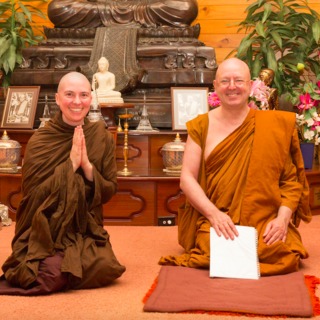
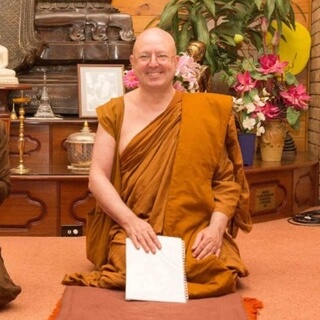
My teacher Ajahn Brahm calls them public enemy number one,
Or it might be Ajahn Brahmani.
Anyway,
Ill will is obviously a source of suffering,
You know,
And as such,
It's a very problematic hindrance of the mind,
Not only because,
You know,
We develop animosity and resentment towards others,
Which damages our relationships,
But also because of the toxic effect that it has on our own mind.
It's almost impossible.
In fact,
I'd say it is impossible to be angry and happy at the same time.
You know,
It's very obviously a coarse form of suffering that makes us miserable and makes others around us very miserable too.
And so,
We do need to start to understand how we can develop resentment and how it can fester if we're not very careful and learn how to use our minds in ways that helps us to undermine that tendency,
Helps us to overcome the tendency of irritation,
Frustration when things don't go our way.
And in the suttas,
The Buddha likens a mind with anger to water that's boiling.
So he has all these lovely similes of water for the different five hindrances.
I think the sensual desire is the water that's colored with different dyes.
What else is there like,
Sleepiness is the one that's covered with the kind of algae,
Or that might be doubt,
I'm not sure.
It's murky anyway and you can't really see clearly.
So all of these things are basically obscuring the mind's potential to be able to see things as they are.
Because if the water's boiling and constantly being churned up,
It can't reflect reality in an accurate way.
You know,
In a way that a lake can reflect accurately if it's very,
Very still.
You know,
You can see the trees,
You can see the mountains reflected in that lake almost perfectly.
Or you can see right to the depth of that lake,
To all the pebbles and stones lying at the bottom.
But if the water is actually so hot that it's boiling,
Then you know,
You can't see very much at all.
And unfortunately,
It's often when we're in an angry state and make decisions that those decisions go badly wrong,
You know,
And we end up really regretting our choices,
Especially because we weren't able to see.
But the good news with this is that apparently according to one of my teachers,
He says that this is probably the easiest one to overcome.
And I probably say that's true,
Judging by from my own experience.
Because craving,
Wanting is so pervasive in the mind,
You know,
It's there from the moment we wake up in the morning,
Right,
The person that causes this desire to,
To eat or to,
To enjoy life,
And there's nothing wrong with enjoying,
But it's something that drives our existence.
So it's very deep and very subtle.
Obviously,
The coarser level is things like sensual desire that then would turn into breakage as our sealer.
So that can be of course,
Equally as problematic as ill will.
But generally speaking,
The ill will is,
In a sense,
I wouldn't necessarily say more superficial,
But easier to overcome or at least reduce quite significantly by practicing in certain ways.
So that's the good news.
And I was thinking that,
You know,
The anger and resentment is quite a topical theme at the moment,
Because obviously,
There's great political divide in the world,
Elections in America,
Which were pretty good,
Much a landslide victory for Joe Biden,
But also,
You know,
It wasn't so far apart.
So,
You know,
It's almost as though our countries like whether America or,
Or England,
I don't know about other countries in Europe or elsewhere in the world,
But it's as though our nations are almost split down the middle,
You know,
50-50 voted for Brexit,
50-50,
50% voted to stay in the EU.
And it's so easy when we can see these almost opposite views to start to stigmatize the other side and say,
Well,
The other side of the baddies,
You know,
We're right,
And they're wrong,
And how can they have thought like that?
How can they have voted like that?
And we start to lose this sense that we're all human beings simply doing this.
And also that,
You know,
Just because other people have different political choices,
Or sometimes they're not even choices,
They've just been very much influenced by the media,
Who may be more or less reputable.
And,
And that means that we can't see any good in those people,
Right,
Just because they have different choices from us,
Without remembering that if we'd have had similar imports,
Similar conditioning,
Similar education or upbringing,
How do we know that we wouldn't too see things that way?
How can we be so certain that we'd be so different,
Right?
Or that we wouldn't be like we are?
So we're always very biased.
And it's so easy,
If we're not careful for these differences to sort of create more and more rifts between people,
And then our countries,
Our political systems,
Our people can never really heal.
So instead of moving,
You know,
Into more hatred and division,
We need to think about how we can bring some brightness and move towards love,
Towards unity,
Towards harmony in our societies,
And also in our minds,
Right,
Because it all starts within our minds.
So even in the Dhammapada,
The Buddha says,
In a very famous quote,
You know,
That hatred is never overcome by hatred,
But by love alone,
Is hatred overcome?
And I think Martin Luther King said something very,
Very similar,
You know,
Because this is the wisdom that is not so hard to come to,
Right?
When we fuel the fires of anger by retaliating,
Then we're just creating more and more of a problem.
We're getting ourselves into some really difficult areas.
So yeah,
I was listening to a talk by Ajahn Brahm,
My teacher,
A few weeks ago,
And he said something really nice.
He said that the best way,
This is paraphrasing him as best I remember,
The best way to defeat a harmful ideology is not to argue and not to fight it,
But to present the better one,
A more beautiful one.
Yeah.
And in a sense,
One that can supplant the ideologies that cause more harm.
And isn't that just a beautiful way to look at life,
You know,
Instead of arguing,
We just try to rise towards something nobler and present that,
Encourage that in others.
So we don't have to say all the people are wrong,
But we can say,
Well,
This is the way I choose to live and be that good example,
Be the change you want to see in the world,
Right?
So,
But it's difficult to do this when we feel that,
You know,
Our anger is justified in some way.
And of course,
Many times when I talk about anger,
People invariably ask,
Well,
Isn't some kind of anger good because it can motivate us to make a change,
You know,
Isn't righteous anger good?
Because we know we're on the side of ethics.
But the thing with anger is that it always tires the mind.
And as I say,
It's very hard to make clear and effective decisions when the mind is like that boiling water,
We can't see clearly what we want to do.
So sure,
You know,
Speaking up against injustice,
Feeling hurt,
Even feeling angry by the horrible,
You know,
Racism that we see in the world has its place initially,
But I would say it,
The skillful way to deal with that is to go back into your own private space,
And reflect carefully on anger on the benefit,
Sorry,
Not the benefits on the harm of anger,
Yeah,
And of the beauty of loving kindness,
The beauty of understanding of harmony,
And try to overcome those negativities first,
Because once you do that,
You'll still hold the same values,
But your mind will be energized and balanced enough to take steps and to take the right steps to overcome these things.
So it's not that we don't act unless we're angry,
We act out of love,
We act out of compassion.
And these are much more powerful,
Stronger forces that are much more sustaining as well.
So without further ado,
I did want to talk about the five ways in the suttas that the Buddha talks about how to overcome anger and resentment.
And there's two different sets of five ways.
But I wanted to go with the first one in the beginning,
And I think that's,
Let's have a look.
That is from the Anguttas.
It's Anguttara Nikaya 5161 for anybody who wants to check these suttas out.
And this is from a beautiful book by Bhikkhu Bodhi called Social and Communal Harmony.
And it's a very lovely little collection of all kinds of different themes.
So this one is specifically about dealing with anger.
So I'll just read through it and then go into each one in a little bit more detail.
So here,
The Buddha is addressing the monks,
But I tend to think that this is a little bit gender biased,
Because there were undoubtedly nuns there as well,
I'm sure somewhere,
Or you may have given this to nuns later on.
And also this equally applies to all lay people too.
So I'm going to use the word community instead.
Community,
There are these five ways of removing resentment by which one should entirely remove resentment when it's a mism towards anyone.
And I just like to add here that I equally think these can apply to removing resentment towards ourself.
So anyone means others,
But it also means anger towards ourself,
Because we're really strange creatures as human beings.
And you would think that we wouldn't want to harm the one that we hold dear and that we look after every day and bother to feed and wash and all the rest,
But we do.
So I think they apply equally to ourselves.
So what five?
Number one,
One should develop loving kindness for the person one resents.
And in this way should remove resentment towards that person.
Number two,
One should develop compassion for the person one resents.
And in this way,
Remove resentment toward that person.
So we practiced both of these just now in brief.
Number three,
One should develop equanimity toward the person one resents.
And in this way,
One should remove the resentment towards that person.
Number four,
One should disregard the person one resents and pay no attention to them.
In this way,
One should remove the resentment toward that person.
I can't help but tweet up that that's sort of what Twitter did to Donald Trump,
Isn't it?
And then number five,
One should apply the idea of ownership of karma to the person one resents.
Thus,
This one is the owner of their karma,
The heir of their karma,
Has karma as their origin,
Karma as their relative,
Karma as their resort,
Will be the heir of any karma they do,
Good or bad.
In this way,
One should remove the resentment toward that person.
So just to quickly mention about karma in this context,
It doesn't mean fate.
It simply means their actions,
The actions that will then bear fruit and in particular the intentional actions,
So the quality of intention behind any act of speech or any physical action that they do.
So where they're coming from,
Really.
Okay.
So this is really interesting,
I find,
Because obviously loving kindness is number one and loving kindness is foundational to all the other Brahma Viharas,
So we always try with this one first of all.
And it's the most powerful antidote as well to ill will.
It's the one that the Buddha often talks about in the suttas and he talks about it in the context of receiving abuse,
Verbal abuse,
That one should remain with a mind of loving kindness towards the one who's abusing.
And if that doesn't work,
To have compassion toward them,
Because of course they're creating their own suffering.
I mean,
If you've ever abused anybody or shouted at somebody,
You've probably noticed that you can only do that if you're already suffering,
If you're already having a bad day or something's gone wrong or you feel misunderstood.
So the suffering there already and then by using that bad speech and abusing you,
They're creating more suffering in the future as well.
It obviously disturbs relationships and destroys harmony between people,
Especially when we're not able to forgive.
So that forgiveness is also part of loving kindness.
But the Buddha even goes further in a particular sutta called the simile of the sore.
And it's rather a gruesome simile because he's talking about the imagined scenario of being literally sawn limb by limb with a two handled sore.
So that means one of those sores with the teeth,
You know,
And imagine that some bandits have got hold of you and they're like soaring off your leg or something.
Pretty gruesome,
Right?
And then he makes the statement that if one would develop anger towards those people,
Even who were torturing them in such a way,
They would not be practicing my teachings,
He says,
They would not be practicing my teachings.
And sometimes if people aren't familiar with the wider context of Buddhism,
They can feel that that sounds very judgmental,
You know,
Like,
How can they say that that's not practicing properly?
But the Buddha is concerned with one thing and that is suffering.
Okay,
Two things,
Suffering and the end of suffering and in particular the end,
Right?
So in that context,
If you would have even a moment of hatred towards those people,
You wouldn't be practicing the teachings in the sense that you would still be in that whole cycle of suffering.
Yeah.
And the Buddha wants you to end suffering completely.
So even though it looks at that moment that you're the one that's suffering,
Actually the suffering of dying is one type of suffering,
But the suffering of killing somebody else,
This is something in a completely different league because they're not only creating enormous bad karma and obviously they're suffering enormously already in this life,
Something's gone very,
Very wrong.
But if you do have the view or the,
You know,
Mind that's open to the possibility of lives in the future,
Then they're certainly not going to get a very good rebirth.
And so this suffering is going to be perpetuated for a long,
Long,
Long,
Long time.
But fear not,
There are also other ways to practice loving kindness and the Buddha says that even for one who practices loving kindness for the length of time it takes to snap their fingers,
Another one is to pull the cow's udder to milk the cow,
But I think it's easier to snap our fingers really.
We don't usually have a cow available to try that one out.
Even if you develop loving kindness for that length of time,
You are practicing his teachings and he praises that more than giving arms,
Than giving food to hungry people,
For example.
And again,
This is like,
Surely it's more of a sign of loving kindness and it has more advantage if you actually give food to a thousand people.
But I think the reason that it's more important to develop loving kindness from the depth of your mind as an intention,
As an inclination of the mind is because by doing that you're more likely to develop more and more and more loving kindness that becomes like the theme tune of your life in a way,
Right?
It becomes the inclination and the character of your life.
So it's incredibly powerful and it's going to lead to a lot more charity,
A lot more generosity than a single offering could ever do.
At least that's my interpretation.
And of course,
Loving kindness opens our heart to all beings,
Right?
Not only to the beings that we like,
And as I said the other day,
Not only the beings that are like us,
Right?
So apparently in psychology,
They found that we tend to empathize more naturally with people who look like us.
So of course this can show you where the roots of things like racism can lie,
Like very fundamental,
Obvious discrimination,
Systemic racism,
Something much more pervasive and tricky to address.
But you know,
We have this natural tendency,
Of course,
I mean,
That's why a mother and a child look so alike,
Because you see yourself in the mother's eyes,
And they're your first mirror,
Right?
But with loving kindness,
We can really start to expand our empathy and understanding to all beings simply on the grounds of them being human like ourselves,
Right?
We all suffer,
First of all,
We all suffer,
Even if people appear to be happy,
People appear to have more than us,
People appear perhaps to do all kinds of bad things and still don't seem to suffer.
But we don't know that,
We really don't know that.
And I think I know enough about the way my mind works now,
That I could pretty much say with certainty,
That if you have,
You know,
Negative speech or harmful behavior towards another person,
You are suffering.
And equally,
If you,
Even if you live in a beautiful place,
And you have,
You know,
So called everything you ever wanted around you,
You can still suffer if you don't know why you're here,
Right?
You don't know what the real purpose of life is,
What the real meaning is,
Then you still suffer just the same,
Because we all want freedom,
We want more than just physical material comfort.
And so just by being alive,
We suffer.
And yeah,
So there's another simile,
I'm already aware that I'm going to talk too long,
Again,
But there's so much I'd like to share.
So I'll try and go through it fairly quickly.
But there's another lovely simile that one of my teachers Ajahn Brahmali likes to use about different ways to remove resentment.
And the first,
There's another five ways and the first three pertain to loving kindness.
And these are not just practice of loving kindness as an emotion,
But ways to use the mind.
So it's kind of ways to start thinking and reflecting in order to undermine aversion and resentment in our mind.
And I think this is very practical,
Because thinking and reflecting on situations,
Reframing our experience is something we can do every day,
Not only on the meditation cushion,
But it's what we do in our private life.
It's what we do when,
I don't know,
Maybe you're lying in bed about to go to sleep,
And you've got some time to reflect on the day,
You can learn to incline your mind in the direction of freedom in the direction of your benefit,
Rather than your harm.
So a really important question to ask ourselves with anything we think or any way that we reflect is,
Is this line of thought or is this,
Yeah,
Let's say line of thought in this case,
Is this for my benefit?
Or is this for my harm?
Just that simple question.
And amazingly,
Once we realise something's for our harm,
We tend to have a natural instinct to turn away from it.
But we have to remember to ask that question.
So in this particular sutta,
The Buddha's talking about people whose bodily behaviour is impure,
But their verbal behaviour is pure,
Or their verbal behaviour is impure.
Is that the other way around?
Or it's vice versa,
Right?
So perhaps somebody could say very nice words,
But do very terrible things.
Or perhaps somebody,
You know,
Speaks really unkindly to people,
But they actually live quite a good life,
You know,
Maybe they like to swear a lot and they get angry,
But they're actually,
You know,
Working as a nurse or as a teacher and doing a lot of good.
And so they're the first two kind of people.
And then the next one is one whose body and verbal behaviour are quite impure.
And then,
Yes,
And then,
Verbal are impure.
Yeah,
That's right.
So in that case,
They sometimes still experience peace in their mind.
But then the fourth kind of person is somebody whose bodily and verbal behaviour is impure and they don't experience any peace in their mind.
Okay.
So the first three of these cases where they're either verbal or bodily behaviour is impure,
And sometimes they gain some peace.
In each of these cases,
The Buddha advises that we basically look at the positive side of that person.
So what he's saying here is that we're all different,
Right?
We all have some strengths and some weaknesses.
And these change all the time,
Right?
We might look at another person and think,
Gosh,
They're always lying,
This is terrible,
I would never lie.
And immediately you kind of place yourself as better than them.
But perhaps you don't lie,
But perhaps you have other negative qualities,
Like you get impatient with people or you're kind of too much of a perfectionist,
Too hard on yourself.
And the other person is not,
Right?
So we start to see that we can't really compare in that way.
And that certain things that irritate us about someone might not irritate other people about them.
Or that certain things that seem to be objectionable in a person is not the whole picture,
Right?
It's not the whole picture.
So the simile that the Buddha gives is that if we meet such a person,
He says,
It's like seeing a rag by the roadside you press down that bag with the left foot and spread it out with the right foot and then tear off the intact section and take it away.
So too,
When a person's body behave,
Bodily behavior is impure,
But their verbal behavior is pure on that occasion,
One should not attend to the impurity of the bodily behavior,
But should instead attend to the purity of the verbal behavior.
So this shows that you're trying to look for the good in that person.
You realize that they appear like an old rag,
You know,
That's been discarded somewhere,
But actually part of that rag can still be used.
So you take away the good part because remember this is not at this stage about getting a realistic picture of a person.
And I don't really think we can ever do that.
We can never really know another,
But it is about trying to overcome your own suffering and your own anger,
Which really doesn't do you any good.
So we try to look at the person in a positive light.
And by doing that,
We tend to encourage those good qualities in another.
You know,
You can reinforce that by giving praise or appreciation for another's good qualities,
You know,
Saying,
Oh,
I see this in you.
And if you do that,
That person tends to feel encouraged.
And you may find that they start getting that quality more and more.
So in this way,
The negative ones don't always have to be drawn attention to because quite often when we do that,
We just get into arguments.
And so in the next simile,
It's the opposite.
So this is one whose bodily behavior is pure and their verbal behavior is impure.
And the simile that the Buddha gives here is that there's a pond covered with algae and water plants.
Someone might arrive afflicted and oppressed by the heat,
Weary,
Thirsty and parched.
They would plunge into the pool,
Sweep away the algae and the water plants with their hands and drink from their copped hands and then leave.
So too when a person's verbal behavior is impure,
But the bodily behavior is pure,
On that occasion,
One should not attend to the impurity of verbal behavior,
But instead attend to the purity of their bodily behavior.
In this way,
Resentment toward that person should be removed.
So these aren't literal similes.
It doesn't mean that it necessarily imply that all of their bodily behavior is pure and all of their verbal behavior is impure.
They're just examples.
But again,
It's saying look at the good part.
And in this simile,
It's nice because it's saying that someone comes who's afflicted by and oppressed by the heat,
Weary,
Thirsty and parched.
So this is a simile for us when we're full of anger,
Right?
We actually feel hot.
You know,
The heart rate starts to kind of go up and we might even be flushed in our face.
I remember talking to a woman once and she actually did go bright red.
I could see the color creeping up her neck like a red flash and right into her face.
It was really,
I felt for her actually because I felt she was suffering.
So we are this person oppressed by the heat and we come to this pond.
And if we're just going to kind of look at the algae and worry about the algae,
We're never going to get any water to drink.
So we move it aside and then we drink and quell our thirst by,
Quench our thirst by again seeing the good in that person.
And the next one is simile,
But this is a person whose behavior is much more impure,
The bodily and verbal.
And in this case,
The water is only a puddle.
So there's just this little puddle,
Which is very murky and not very nice at all.
But at the same time,
You're very thirsty.
So then you have to get down on your hands and knees and cop the water in your hand to drink it.
So this means we have to pay even closer attention to that person in order to find one little thing that we can respect,
Anything in that person that can help us to pacify our anger.
Yeah.
There might be public figures,
For example,
I'm probably giving too much away.
But anyway,
There are some people it's hard to see that,
But then we say,
Okay,
Well,
Their family seem to care about them.
You know,
They might be loyal or they might be,
I don't know,
There might be something there,
Right?
They don't always act in their absolute worst.
They don't always,
You know,
Put their finger on the,
I don't know what that button is.
They didn't do that.
Phew.
So there are some things that we can be grateful for even there.
So these are the three of those five examples where loving kindness is the antidote.
So then compassion is the second one,
Right?
Compassion is the next method for overcoming our resentment.
And compassion is given a nice example in here with a person who is basically very,
Very sick,
Their body and their verbal behavior is very impure and they never have any peace of mind.
So their mind never attains what's called here an opening of mind.
So their mind is basically always full of the hindrances.
Yeah.
And in this case,
The Buddha says we change our approach.
So here it says,
Suppose a sick afflicted gravely ill person was traveling along a highway and the last village behind him and the next village ahead were both far away.
They would not obtain suitable food and medicine,
Nor a qualified attendant.
They would not get to meet the leader of the village district.
So this basically means they would be abandoned even though they're desperate.
Another person traveling along the highway might see that person and arouse sheer compassion,
Sympathy and tender concern thinking,
Oh,
May this person obtain suitable food,
Suitable medicine and a qualified attendant.
May they get to meet the leader of the village district for what reason?
So that this person does not encounter calamity and disaster right here.
And then later it also says so that with the breakup of the body and after death,
That person will not be reborn in the plane of misery and a bad destination in a lower world or even in hell.
So whether we believe or are open to the possibility of future lives,
We can certainly see that this person is living in hell right now.
Yeah.
They're really thirsty,
Gravely ill,
And there's absolutely no help around.
So the only thing you would think,
Isn't it,
Is,
Oh my goodness,
May someone come and save this person.
May they get the help they need.
And for some people we know they're not going to.
So rather than feeling angry and upset with that person,
We can turn it around and become full of concern for them.
Imagining if we were in a similar situation,
How we might feel.
So I think the compassion is a really,
Really powerful way to overcome resentment,
Especially when there isn't very much you can do or reflect on about this person's qualities at all.
And then the third one that I mentioned was the equanimity.
And I think this is another really important one.
Again,
It's sequential.
So you've tried the matter,
You've tried the compassion,
And nothing much can be done.
So equanimity is the response of the heart,
Which steps back in a sense when you've tried every other method and you just realize there's only so much you can do.
So in a sense,
There is still care,
But you also become realistic about how far you can really help somebody.
And there's a sense of spaciousness in the mind.
So,
You know,
We might have to actually get physical space from that person in order to reflect with equanimity on the situation.
At first,
We might feel quite,
You know,
Stressed or upset after maybe an interaction with somebody.
But then when you get a bit of space and you go back and reflect,
You can have a bit more objectivity about the situation and even come to peace with your own inner emotional response.
And when all that has settled and you can be more accepting,
More equanimous and more realistic about how far you can help,
Then there might be a solution that arises.
You might be able to write an email to that person.
For example,
One of my friends,
Mel,
She was talking to me today.
She came to visit and this had happened and she'd written an email to somebody to say,
You know,
Is there anything you'd like to talk about further to try and,
You know,
Smooth things over?
And sometimes that's as much as we can do.
Yeah.
And if they want to accept that invitation or not is entirely up to them.
There's another really nice quote that my teacher says with people that we have difficulties with and we've tried everything and we feel that it's better not to be too close to them.
He says,
You can always love the tiger from a distance.
So this is also quite nice because sometimes we need to give ourselves that space to become more balanced in ourselves and also to be accepting of our own limitations.
Sometimes we can't overcome our anger right away.
We still feel resentment,
But we can,
You know,
Equally look at our qualities.
Don't blame ourselves for not being perfect and also just develop equanimity towards ourself.
You know,
We're still on the path.
We're still practicing.
We're not perfect yet.
We may never be and we may never need to be,
But we're doing our best.
So then the fourth one that was mentioned here was disregarding that person or paying them no attention.
And sometimes people feel that's a bit harsh,
Like you can't just ignore a person or give up on them.
But I think what this is talking about is actually having boundaries.
You know,
That sometimes we need some space.
We need to just take a break from each other for a while again to let things settle,
To let our own emotions settle,
But also so that this person or this particular incident that may have happened doesn't obsess our mind.
You know,
We don't want to give them too much head space,
Right?
Too much host them too far into our lives.
We do this all the time,
For example,
With the news,
Right?
We just bring the news right into our living rooms and we listen to a whole great big world overview about the most terrible things happening everywhere.
And sometimes that's just too much.
We need a bit of distance.
We need to just turn it off and look at what's right around us.
You know,
The good things that we have.
I was joking with Mel earlier,
Sometimes we just need to go and hop a tree.
We both hopped up a tree today,
A very beautiful tall pine tree.
So it can also mean just diverting your attention right away from that person,
Away from the problem and looking at something more uplifting,
Giving yourself a break.
It could also mean,
For example,
Not allowing a person to get a rise out of you.
I think this would apply,
Especially if anybody has teenagers or maybe a parent or so who knows exactly how to trigger you.
Sometimes we just want to ignore that and pay it no attention rather than respond.
So we let them do that and we just say,
Yeah,
Yeah,
Whatever.
That's a kind of disregarding the triggers that we're being presented with,
Right?
And sometimes that's enough to deescalate the whole situation.
People generally give up if you,
For example,
Stop replying to their emails.
Yeah.
So I think a healthy sense of boundaries is really important and recognising that we can't solve other people's problems for them.
Yeah.
And this is where the last one comes in.
So the last one that the Buddha talks about in this particular list is the recognising that we're all heir to our kama.
So I'll just read that one out again because it's very powerful if I can find it.
So it's dealing with anger.
So this is the one where we apply the idea of ownership of kama to the person that one resents.
This person is the owner of their kama,
The heir of their kama,
Has kama as their origin,
Kama as their relative,
Kama as their resort,
And will be the heir of any kama they do,
Good or bad.
In this way,
One should remove the resentment toward that person.
And I think it's equally important to say here that the same holds true for us,
Right?
So somebody can appear to hurt us.
But if we are the owner of our kama,
We have a choice as to how we respond or whether we respond.
So we can still make good kama with whatever arises in our lives.
We can still make sure we're on a good path.
We practise forgiving.
We practise listening to another person's perspective.
We practise loving kindness and compassion.
We take the distance when we need to.
And we just keep on trying to align our lives with the most noble intentions that we know,
You know,
The intentions of loving kindness,
Non-cruelty and of letting go.
Letting go is like forgiving,
Forgiving ourselves,
Forgiving others for not being perfect.
And realising again that,
You know,
We're all a product of our conditioning,
All of us.
We're not only a product of our conditioning,
We're actually just a process.
We are just conditioning in a sense.
There's no part of us that is not conditioned,
Right?
So we're just this kind of massive conditioned phenomena.
And if someone else had been brought up the way we had,
They may very well have similar views.
But people have been brought up in all kinds of different ways.
They may have gone through tragedies or traumas that we have no idea about.
And that may be why they respond to things the way they do.
And I mean,
Earlier I said we can't be certain that we wouldn't have the same views if we were brought up just like them.
But I actually think that we can be quite certain that we probably would have the same views because we are simply a product of everything we've heard,
We've thought,
We've read,
The people that we've met.
You know,
There may be some things that we bring from previous lives,
Some certain inclinations,
But still,
You know,
Whether our goodness comes to fulfilment or our lives go from,
I don't know,
Brightness to darkness or darkness to darkness,
It really depends on how we respond to whatever's in front of us.
So reflecting on karma is very,
Very helpful.
And realising,
Of course,
That we don't just say,
Well,
It's your karma,
Tough luck.
We help people to make good karma,
We teach about good karma,
We try to be good examples to other people.
But ultimately,
We can't be responsible for their happiness or their suffering.
It's impossible.
It's hard enough to be responsible for our own,
Right?
Isn't it?
But we can work on that.
We can work on becoming architects of our own happiness,
My new favourite phrase.
And keep on putting those causes in place.
So,
Oh,
One more thing to mention,
Because I did refer to that other sort of with all those examples of the person that's part good,
Part negative,
And how we can use compassion,
And then the person that's really,
Really suffering,
Sorry,
How we can use metta,
And then the person that's really suffering,
How can we use compassion.
But the last of the examples given here is actually somebody whose body and mind are very pure,
Their verbal and bodily behaviour are very pure.
And they often obtain this beautiful opening of mind.
And this is really nice,
Because in this simile,
It says that somebody arrives oppressed by heat,
Weary,
Thirsty and parched.
So this is like me when I go to my teacher kind of upset about something.
Oh,
Arjun,
You didn't listen to me last week.
Oh,
It's too hard doing this project.
If I was a monk,
I'd be living in Perth in your monastery,
You know,
This kind of thing.
So sometimes I approach him in this way.
But I'm coming to a beautiful,
Beautiful pool.
So it says here,
It's like you have plunged into a pond,
And you bathe and drink and then after coming out,
Sit or lie down in the shade of a tree right there.
So isn't this lovely,
You come up to this kind of person,
And they soothe you,
They calm you,
They offer such loving kindness,
They offer the shade of a tree,
The shade of wisdom and compassion,
Shade of perspective and equanimity.
And in that sense,
We can come out of any ill will or resentment very quickly.
And I think this points to the beauty of having wise friends and associating with the virtuous and the good.
And how that can be a really,
Really powerful way to overcome our own hindrances.
I don't like the word defilement,
But certainly how to overcome our own anger or anything that stands in the way of us and the path,
You know,
As in the real,
The path that we really want to be walking on to our higher good.
So having wise friends,
I think is very important.
And also rejoicing in another person's goodness,
Mudita.
Yeah,
I was teaching on mudita the other day for a day retreat and just seeing the happiness and the joy that such beings have and learning to delight in that and to make that happiness our own.
We can feel happy for them.
So there are all these different ways.
And I hope in there,
There was something of use.
These subjects are always really big.
And I sort of feel like,
Oh,
I'll probably get through that in 15 minutes.
But then after 40 minutes,
I've still only touched the surface,
But hopefully in there is something of help.