34:46

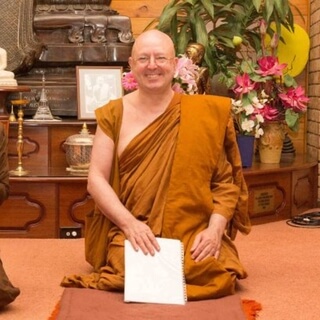
My Life As A British Buddhist Nun | Ven Canda

by Anukampa Bhikkhuni Project

Rated
4.9
Type
talks
Activity
Meditation
Suitable for
Everyone
Plays
245

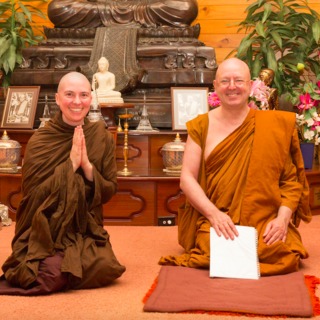
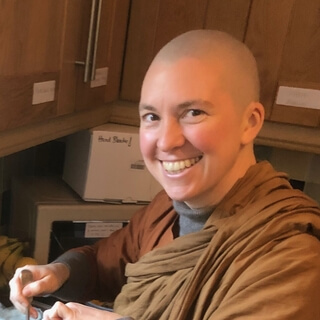
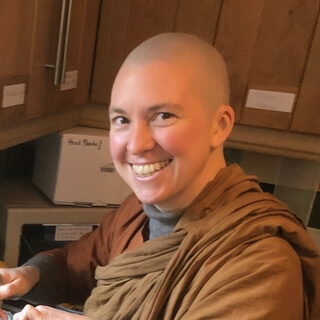
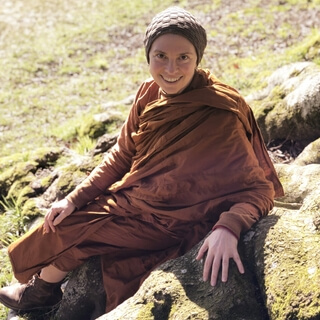
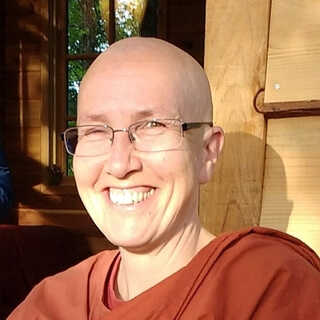
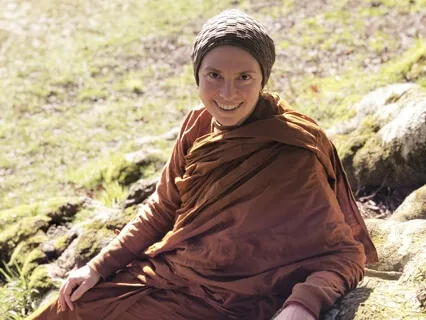
Venerable Canda's inspiring Story: what led a young woman from Chesterfield, in the north of England, to the monastic life, full bhikkhuni ordination, and the founding of Anukampa Bhikkhuni Project? This talk was given on behalf of the Dhamma Centre, Essex in 2020. A Buddhist nun since 2006, Ven Canda emphasises kindness and letting go as a way to deepen stillness and wisdom, and her teachings are richly informed by the compassion and pragmatism of the Early Buddhist Texts.
Self DiscoveryMonastic LifeOrdinationDhammaMeditationGender EqualityCultural ExperiencesHealth ChallengesCommunityKindnessLetting GoStillnessWisdomBuddhismInfluential TeachersGender In BuddhismCross Cultural ExperienceOvercoming Health ChallengesCommunity BuildingBuddhist OrdainmentsFemale Monks ExperiencesSelf Journey

Transcript

Good afternoon to everyone.

Thank you so much for tuning in to today's session to listen to Venerable Chanda speak on her personal life experiences being a British born British nun and her personal life experiences on walking this path of Dhamma.

We are so glad to have,

We feel very glad and of course very grateful to Venerable Chanda for accepting our invitation from the Colchester Dhamma Centre to give this talk to our audience and to of course all of our friends and devotees who have also tuned into today's session.

I am really hopeful and I am sure that this session to most of the ladies who are also here would be an inspirational talk also specifically to because we do rarely come across bhikkhunis,

Venerables like Chanda who have gone across the world practicing and being operating under prominent teachers as Venerable Acharya Brahman and also with regards to her team project the Anukkhampa Bhikkhuni project.

So without further ado with much respect I would like to welcome Venerable Chanda to speak on her life and to deliver the talk.

I'm just going to unmute your mic and vote.

Yes.

Wonderful.

Great.

So thank you very much Bente for inviting me today and for organising this session.

It's really an honour to be here with everybody and I'm very grateful to meet you too.

It's lovely to meet a fellow monastic and a Dhamma brother and hopefully I'll be able to invite you to Oxford at some stage along the way.

So thank you very much and really lovely to see so many people here this afternoon.

Many of you have been in my morning session,

The Metta session and you've come back for more.

It's a good sign that there's a thirst for the Dhamma in England.

And yeah my journey started in England not so very far from Oxford in Chesterfield where I was brought up and my upbringing looked very normal by most standards.

I was lucky to have a stable family,

Very loving parents and good friends at school and all the kind of blessings of being born in a safe country with good health care and you know good education system.

And I guess you know the question is always there from childhood what are you going to be when you grow up?

And I could never really answer that question but in my teens the question became increasingly incessant you know this was the time when I had to start thinking about what I'd do at college or whether I'd go to college and suddenly I started to ask a lot of questions like is this really what I want to do with my life you know because this is what I could see everyone else around me was doing and they were reasonably happy but somehow I felt there must be more.

And for me I remember watching the news from time to time with my parents and you know the same old stories war and famine,

Power and greed and you know most people seem to be taking this in their stride quite used to the kind of stories that were here but it really shook me and I felt that something here is a miss you know why is there so much suffering why do human beings harm each other the way that they do and what is the purpose of it all you know if there is so much suffering in the world is that just needless suffering or is there really a purpose and also what is a compassionate response you know how can I respond in a compassionate way to that suffering and in a way that makes sense of it and that maybe seeks an end to that and these were the kind of thoughts that were going on in my head but I couldn't really string them together at that age I was about 15.

But I felt that I needed to expand my horizons and fortunately I had a very close best friend and we sort of came up with this plan to go to India as soon as we could actually and for me it was before going to university and so we traveled to India in search of something and I really had no idea what it was I mean now when I look back at my journey I think why India you know was there some kind of connection there from past lives or why why India out of all places from a small town in England but I felt as soon as I arrived in that country I felt this vast sense of humanity and the interconnectedness of all of us you know it felt as though yes there was a lot of suffering but there was also a kind of acceptance and understanding of that and a real sense of the impermanent nature of life.

Life and death was very very visible very present in the streets you know death wasn't something that was taboo or that we didn't talk about and at the same time I could see that although there was you know the same sort of suffering that we get in every country and over there perhaps more in terms of poverty and all kinds of struggles there was still a sense in general that there was something more than my own individual existence there was something more to life and very soon into my journey over there I started to hear about meditation and I thought this is really interesting you know I wonder what's really going on in my mind and I'd already had an experience with feeling quite depressed in my teens partly due to this suffering of not knowing why I'm really here so I already had this sense that happiness isn't dependent on external conditions even if we have the perfect external conditions as I say a loving family you know doing well at school good friends still we're subject to suffering and sometimes that suffering for me felt like more than I could hold more than I could really understand the reason for but I knew there must be a reason and when I started to hear about the meditation I thought this is what I have to try I have to sit with my own mind and watch what happens you know when I'm just alone and and learn about myself right because our whole education system is about learning about the outside learning about what happens in life what happens you know in history and economics whatever arena but we never talk about learning about what's happening inside so my first meditation retreat I was 20 years old and and when I went for that retreat it was a vipassana retreat so the focus was on being aware of my body sensations and looking at the way my mind was reacting to all of that and what I started to realize the first sort of insight if you like was that when I think I'm reacting to things outside I'm actually reacting to sensations within myself those experiences those objects of the senses outside come in contact with my senses with my body and mind and they create a sensation and because of that contact and because of the sensation I react so I'm never reacting to things outside there's something in between and that is these sensations in the body that we can be in direct contact with and for me this was really key because I understood that this is where we can start to weaken our craving our reactivity you know we get a pleasant sensation we want more of it we meet somebody that we like why do we like them because they make us feel good and because we feel good we want that sensation again and again and again the same thing if we come in contact with something unpleasant or unwanted we get an unpleasant feeling an unpleasant mental reaction or emotional reaction and because of that there's a wish to get rid of it a wish to push it away this is also a kind of craving right and so we're constantly reacting and and you know being repelled or enticed by the objects and experiences in the world but now I had a way to understand how that's arising within me and how by developing some equanimity around that developing some peace and some spaciousness around those experiences within myself and understanding that these experiences change you know they're not fixed they're actually arising and passing constantly that really undermined the tendency of my mind to react and to create suffering for myself right so this was the first thing for me the buddha's focus on suffering and the fact that suffering arises from a cause it arises from craving and knowing that was so powerful because as soon as we realize that we can start to look inwardly and we can start to address the cause instead of trying to amend all the external kind of manifestations of suffering we can actually go right inside and look at the cause where this is coming from and so I was very fortunate to start this kind of practice without really knowing anything about buddhism as a religion because it had immediate effect and the first thing I felt was enormous sense of hope and an enormous sense of meaning that this was really the purpose of my life I knew that I wanted to just take this as deeply as I could for the rest of my life and I don't know where that faith came from it was partly experiential because it just made so much sense and I already felt more balanced and lighter and an enormous sense of relief but it may also be to do with perhaps being on this journey in previous lives who knows I just knew that I wanted to make this the focus of my life and I was in a position to basically I didn't have responsibilities I didn't have reasons to come back necessarily so I spent the next seven years of my life living in Asia mostly in India Nepal in Thailand and Burma I never went to Sri Lanka which is strange I'm not quite sure why but most of the meditation centres where I practiced were in India and Nepal and so I would work a little bit along the way wherever I could find some sort of you know job that was fairly easy like travelers jobs yeah so I went to South Korea and for a while I taught there taught English and then decided to sell jewelry instead because it was easier to make money quickly and then get back to India to practice so I lived like this for several years just focusing everything on trying to establish myself in the dark map and I think I'm very grateful to my first teacher Goenka he's a Burmese businessman actually Indian origin and many monastics start off with Goenkashi because the courses are so accessible and available on a donation basis and the other thing that I really learned from him was the importance of service in the development of meditation and from the beginning I understood that and I would give as much time to serving on retreats as to sitting there myself and this really helped me widen the perspective for my own personal spiritual journey and sometimes challenges and struggles to something that was much more universal and so I could understand that the kind of experiences that I was having were universal to all beings maybe they manifested slightly differently you know different backgrounds different cultures different economic situations that we all have but ultimately we're all subject to the same sufferings yeah the suffering is born of greed hatred and delusion so this was wonderful and the whole time when I was practicing I was increasingly sure that I want to become a nun and Bante has asked me to talk also specifically about how that affected me as a woman and what my journey was like as a woman seeking aspiration and I think one of the first things was that it took so long to find a suitable place you know I was asking my teachers I was asking my friends and all the Dhamma brothers and sisters that I'd meet along the way where can I ordain how can I find an opportunity do you know a teacher and nobody knew I even wrote to Goenkaji and he gave me a very encouraging letter he said that it's definitely a noble thing to do and one who ordains makes quick progress on the path but he also couldn't advise me and with a lot of integrity he said that was because he was a lay person and he hadn't ordained himself which I thought was very sincere but he definitely encouraged it you know contrary to what some people do believe about about S.

N.

Goenka he did encourage me to ordain so finally after about 10 years of practice and traveling and coming back to India to meditate I heard about my teacher who was to become my teacher in Burma and it's funny sometimes when you meet teachers because just the hearing of him I just knew this is my teacher and I have to ordain at that time I'd actually not given up hope but I'd taken a little bit of a detour and come back to England to study Indian medicine Ayurvedic medicine because I just didn't have a monastery in sight but this was only something like a backup plan so when I heard about my teacher I went straight over to Burma in the next summer holiday and I took temporary ordination and I think this is the first time I'd met somebody who'd really developed the practice to a very deep level and the meta and the kindness that would radiate from him was just extraordinary I remember the first time that we met in his monastery in the forest monastery and he walked towards my kuti and I had this thought in my mind this is why they say the Buddha had these lights radiating from him these different colored lights because it really felt like there was this radiant presence of benevolence and in such an atmosphere I was such a happy nun even though I hadn't yet had the chance to take the full ordination the conditions were there it was a very very basic monastery in Morby for anyone who's Burmese we had to take a local bus which took about two hours in the sweltering heat and then travel on a motorbike taxi or else in a little kind of jeepney where every time it banged you know you'd hit your head on the ceiling and we'd always say well we're nuns so we shouldn't have to pay because monks didn't have to pay right so then they'd say okay okay and then we'd get to the entrance to the monastery which was basically a red dirt track and we'd have to walk the last two miles so by the time we arrived you know as young nuns the robes would be falling off and we'd be completely drenched with sweat in that humidity but every time I got back there I just felt like I was in the day for now it just felt so conducive to practice and this is part of the foot one of the first steps of training simplicity and contentment with little yeah in a sentence you clearing out the complexities of life simplifying just living in a small heart that simplicity makes space for something else and that something else was the full heart of commitment to practice so we used to sit in this meditation hall with no windows no mosquito nets or coils you know the mosquitoes would come straight in and out again after having a good old nibble there was no electricity the first time I arrived there wasn't even a kitchen the food was just cooked on a little wood kind of bonfire really outdoors so it all tasted very smoky and not very good for the tummy but I was so happy I was just so filled with delight and gladness at having found this opportunity to practice and to have the support the spiritual support of such a great teacher so I went back to finish my degree because I felt I owed it to my parents and I owed it to the to the college lecturers and to myself just to finish what I started you know but I was very very clear that I was going back afterwards to ordain for good and my teacher when I came back he actually asked me is it for life and I said yes very sure of myself and he said in that case I'll make you a cootie and a few years later he actually did make me a special hot on top of a little hill so there was a little waft of air that would blow past but very slight despite all these hardships I was a very happy non living there but unfortunately I got a parasite infection fairly early on and this of course is after 10 years of also living in India and having many such infections and taking all kinds of antibiotics and things to try to cure my stomach but when you're younger at least in my case I was probably quite reckless so I just take the antibiotics and then carry on drinking the local water and you know living like a local with no money to speak of so by the time I got to Burma I think my system was already quite run down and unfortunately this had an impact because I was only able to stay with my teacher there for about three or four years during that time also there were visa problems and I had to leave the country to try and renew my visa and come back again but during that time I had the great privilege to be able to stay at Wat Pa Bantad with Achha Mahabhura who is also a great forest master in the Thai tradition and this was a really pivotal experience for me as well because we had the opportunity to practice wakefulness and meditate throughout the day and night and again it was a very very simple place the cuties there were literally just a kind of wooden platform and it would have a little tin roof and then four curtain rails and from those curtain rails there was just a rubber curtain or a plastic curtain quite thick to keep the monsoon rains away but on that platform all there was was like a tatami sleeping mat and some kind of lump for a pillow like a brick and so it was very conducive to staying awake and doing a lot of meditation and I think at this time I started to see the importance of really calming the mind until then I'd been practicing mostly with the inside practices but here I had the chance to deepen my samadhi and not knowing actually whether I'd get back again or not to Burma during the time I was in Thailand there was actually it was the uprising in Burma where the monks it was called the Saffron Revolution by the press where they started marching against the military dictatorship in Burma and at that time I really didn't know if my teacher and my community were safe and we'd listen out for the news and there'd be no news at all I'd try and phone but there was no you know working phone connection so I just really didn't know whether I'd get to go back again or not a lot of uncertainty and I went to India to do a long meditation retreat shortly after that and I remember in that retreat thinking so far in your life the Dhammas always put you in the best place possible for you to develop this is going to continue to happen the Dhamma will make sure that you're always in a position to practice and I really hung on to that it felt like a deep sort of inner knowing and luckily I did get my visa to go back but as I said the climate the food and the general intensity of being there sort of took its toll on my health and it was after about four years of trying so hard to to manage with that that I finally realized I'd have to find a new way forward in my path I was really chronically ill and nothing would work I went to hospitals in Thailand and got all the different treatments but nobody could find a solution and around the same time I got in contact with my teacher Ajahn Brahm who I didn't know of course would become my teacher but I just had these little CDs with some of his talks and I had no idea that he was a well-known monk I just put it on and listened and the first thing that struck me was hearing the Dhamma in English so far in Burma I'd had to try to understand my teacher in Burmese and we used to make little tape recordings and then try and transcribe some of the words and ask one of the monks who spoke reasonable English to translate it to us but this was a very piecemeal method of learning Burmese and although it worked to the point where I could understand the meditation instructions and I could have my interview mostly in Burmese it wasn't the same as just absorbing the Dhamma directly through someone speaking my own language and the other thing I also realized was that he understood the Western psychology in ways that perhaps people in Burma or even in India might not so in Burma there was this really strong kind of attitude of like striving and sitting for long long hours which I loved I mean I was very gung-ho so we'd sit there for hours and be really really enjoying the meditation watching everything rise and pass away but over time I realized my body needed a gentler approach yeah and my mind needed to develop more contentment and more softness around the meditation object so Ajahn Brahm's teaching spoke straight to my heart and straight to where I was at in the practice and I knew from hearing the talks I only heard a few two or three and I thought I have to go and meet this teacher at that time I had no idea where he even lived whether he accepted nuns no idea whether it would be possible for me to train with him or not but I literally took a leap of faith I felt like there was nothing that could stop me I had to meet this teacher and so in 2010 I left Burma and I was fortunate enough to meet him in Germany that year and I told him you know I want to come to Australia and I want to train but at that time he said everything was full the nuns monastery was full and of course by now I was starting to realize that as a nun there were very few options right for a monk if it doesn't work in one place you can go to another monastery to another teacher but for a nun there were very few options I was so lucky in Burma with my teacher that he did provide us very good facilities and he would even tell the lay people you must support the nuns the nuns are very diligent they work and meditate very well you know don't only give to the monks support the nuns as well but you know firstly I realized that I wasn't fully ordained so I wasn't considered a member of the wider sangha but secondly that meant that there were also not so many places and not so many nuns who could teach me so Ajahn Brahm told me that the monasteries in Perth were full but that I could come for the rains retreat and so two years later after spending time in Amravati and Chithurst and other monasteries in Europe I managed to get the chance to go to Perth and when I arrived at Bodhinyana monastery for my rains retreat I had this really strong sense of this is how the Buddha taught this is the atmosphere the Buddha would have created it was a place of such safety and acceptance such incredible warmth you know you didn't have to prove anything you didn't have to be anyone and even this idea of how a monastic should behave it was really encouraged to just be yourself you know to just come honestly as you are and you would be respected and given this automatic sense of trust and it sounds kind of funny to talk about great teachers such as Ajahn Brahm you know who are worthy of such great respect themselves bestowing that respect on you you know like who am I to deserve such respect but I think this is the characteristic of a heart which is so humble and sees beyond the self that they respect and give this trust to all beings because they know our own potential having realized their potential for themselves yeah so I immediately felt very accepted and the whole atmosphere was incredibly conducive to developing states of calm and I also started to realize that I guess my approach to practice before was very much a linear kind of way of progress which you know there was a lot of letting go and a lot of insight that could arise but there was still a sense of me doing the practice there's something in there observing what's happening everything's arising and passing but there's someone seeing that there's a person in there who has to work who has to strive and become liberated and now coming to Ajahn Brahm's way of teaching it was quite revolutionary for me he was basically saying the more you can get out of the way the more a natural process can unfold and so the practice started to take on a different momentum and I became like in a sense the backseat driver and this was very conducive to an understanding of non-self how things arise based on conditions and pass away according to conditions and most of the time when I get involved I just mess up that whole thing and actually make it worse so his focus was very much on setting the right attitude to practice from the beginning really creating a lot of kindness gentleness and peace in the mind and from that perspective allowing the breath in allowing whatever wants to come in whether it's thoughts or emotions that need attention whether it's body sensations or breath yeah so so it's getting into a much less controlling way of practice and of course at the same time I also realized that Ajahn Brahm had ordained bhikkhunis right and as I said until then it didn't match but when I heard that it was actually possible to take the full ordination my heart just leapt and I thought well of course I mean if there's a chance why wouldn't you why wouldn't you I'd already let go of so much you know I lived in Asia for so many years away from my family had all this uncertainty around where I would practice had to say goodbye to my first teacher you know this was really difficult and always keeping that trust keeping that sense of renunciation and just allowing the path to unfold and now suddenly there was this chance to ordain as a bhikkhuni it just seems so obvious because I think when we ordain we don't take half an ordination we don't ordain with half a heart it's a full renunciation it's a full giving of ourselves to the Buddha's path and so the bhikkhuni ordination for me felt very natural it felt as though it was just confirming what I'd already what already happened in my heart a long time ago but the ordination itself had a very powerful meaning for me because I was actually entering the Sangha for the very first time and this is the Sangha of bhikkhus and bhikkhunis right we also talk about the fourfold assembly which includes lay men and women but there's the real Sangha is the Sangha of bhikkhus and bhikkhunis and the Buddha said that he wouldn't pass away until this was established until the bhikkhus the bhikkhunis and the lay men and lay women were well established in the Dhamma so this was always the Buddha's intention and unfortunately that bhikkhuni Sangha seemed to maybe there were a few people who maintained it but at least in the Theravada tradition it was lost but fortunately it was preserved in the Mahayana tradition and so when Ajahn Brahm was doing his research about ordaining bhikkhunis he realized that we can take the ordination from a Mahayana non from a Mahayana bhikkhuni because they have essentially the same Vinaya right these different traditions are only on the surface but they're essentially following the Dhamma Guptaka Vinaya which is the same ordination procedure and process and as well as this the Buddha had actually given an allowance in the texts it's in the Vinaya the Tula Vaga 10 verse 2 and 17 and he'd actually given a very clear text that in the absence of bhikkhus to perform an ordination sorry in the absence of bhikkhunis to perform an ordination ceremony bhikkhus monks can perform that ceremony and ordain women as bhikkhunis yeah so there's still a lot of debate around this but this clause is kept in the Vinaya right and then when he did ordain bhikkhunis another clause came in to say that bhikkhunis are allowed to ordain bhikkhunis but the previous one was not rescinded so both of these allow and give the possibility for nuns to be ordained and I think that shows the incredible foresight of the Buddha you know that he knew there may be a time when perhaps the bhikkhuni sangha would be lost and he gave this possibility for it to be reinstated yeah and so I managed to get a place at the mums monastery after a couple of years of being in Australia and had the chance to take the bhikkhuni ordination and one of the beautiful things that the bhikkhuni ordination that was chanted was to ask the sangha to lift me up out of compassion into the sangha and to take the bhikkhuni ordination for the sake of attaining nibbana nothing less that this is not about status in any way this is not about wanting to prove a point or to just say I'm equal to monks but it's really for our own liberation and at the same time this enables us to start to develop our own communities and to be independent from the bhikkhuni sangha which is so so necessary so my experience in Burma had shown me that there aren't enough places and that when you do have to leave say a foreign country because the food no longer suits your body or the climate is very difficult where do we go where do we actually go there is nowhere and so in 2015 Ajahn Brahm asked me it was kind of a kind of joking conversation where we both said oh yeah maybe I should do something in England and he said oh yeah that's a great idea that's what you should do so he kind of asked me to do that and a couple of months later you know I asked him again we serious he said yes I really think that's what you should do give it a go and see what happens and so I felt moved to do that out of compassion for the women that would follow because it's all very well that I could meet a really good teacher in Burma but as I say it takes its toll health wise language wise culture wise in many many ways and we need to have something that's sustainable for women going forward something like a legacy that other people can benefit from long after I'm gone so right now where you see me is in our first little vihara in Oxford this is just a little four bedroom house but it's the first time that bikinis that fully ordained nuns have actually had their own place to stay you know that's come around entirely through the generosity of others in England and in Britain so it's a really historical step and from here we hope to expand and to end up having a training monastery for women where many people can come and ordain but as I say this is very early days and so this is the step in the right direction and everybody that's here everybody that's supporting me that's coming to my talks is all a very big part of that because this can only happen if other people want it to happen and if other people feel that yes indeed women renunciants do have something to give yeah we need to be more visible some people have written to tell me that you know there's something different when a nun teaches there's a greater perhaps empathy or just something that we can bring that maybe monks don't in the same way that monks may have certain qualities that we don't but even more than that I would say that every individual has something very unique to bring whether male female or gender neutral it really doesn't matter we're all unique and we all experience the path in different ways yeah so everybody's journey on this path is unique to them and we all have so much to share and I would really want to encourage everybody who's listening to just believe in yourself and trust the Dhamma you know the Dhamma was taught to all beings the Buddha taught to bhikkhunis just as he taught to bhikkhus and to lay women and lay men and there were many enlightened nuns many enlightened lay women in the time of Buddha who were great supporters and who supported the bhikkhuni sangha too so we're keeping that legacy alive and I really want to thank all my teachers along the way because I've learned so much from every one of them and I'm sure I'm going to keep continuing to learn a lot more so I think that I've talked for the duration now tried to cram it all in but that was only a tiny little picture of how my journey's been so thank you very much for listening.

Meet your Teacher

Anukampa Bhikkhuni ProjectOxford, England, United Kingdom
4.9 (29)

Recent Reviews

Katrin

September 15, 2022

Essential listening for all women who are curious about ordination.

ASOKA

August 7, 2021

A good understanding about u and your journey. Very inspiring. Tks for sharing <3

More from Anukampa Bhikkhuni Project

Loading...

Related Meditations

Loading...

Related Teachers

Loading...
© 2025 Anukampa Bhikkhuni Project. All rights reserved. All copyright in this work remains with the original creator. No part of this material may be reproduced, distributed, or transmitted in any form or by any means, without the prior written permission of the copyright owner.

How can we help?

Sleep better
Reduce stress or anxiety
Meditation
Spirituality
Something else