It's very nice opening the eyes and seeing friends around and also the beautiful snowdrops that somebody's put here.
It's a really nice touch.
So I wanted to just expand a little bit on the theme of kindfulness,
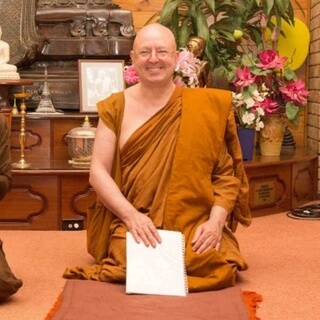
Which is a phrase I think first coined by my teacher Ajahn Brahm,
Who's been a monk for about 44 years now.
And he's always put a lot of emphasis on the kindness aspect of the practice,
As did the Buddha.
And yet sometimes this can be forgotten,
I think,
A little bit when we focus on mindfulness.
Sometimes we tend to look at mindfulness almost as a path in itself,
And perhaps don't see the bigger context in which it was taught by the Buddha,
Which was as part of the Eightfold Path.
And I think when you do focus on only one aspect of the path,
It's almost like a monoculture.
The soil gets depleted,
And we sort of stop seeing it in its fuller picture.
And so mindfulness,
I think Jaya has been talking to the group about that,
And I wanted to kind of expand a little bit and maybe just add a few more dimensions to it that might not always be touched on.
And perhaps my whole focus to the practice tends to be on loving kindness.
But mindfulness is often termed bare awareness,
As if there's such a thing as being able to see something very objectively.
And of course this is the aim,
To be able to uncover the truth of the present moment in a way which is very clear,
Very objective,
And without distortion,
Without interpretation,
Without mental reactivity.
And so the purpose of that,
Of course,
Is to uncover the truth of impermanence,
Of non-self,
And of suffering.
Because only by understanding these three characteristics can we really learn how to work with that and ultimately transcend that.
So we need to meet experience in order to understand it,
First of all.
And so mindfulness is the first attempt to sort of come in contact with the objects of consciousness.
But one of the difficult things about this is that we of course carry all our conditioning with us.
We carry our views,
We carry our kind of cultural understandings about,
Say,
Beauty,
Or how it constitutes beauty,
Or language also very much affects the way we see things.
So an example of that,
I heard that the word for bridge in German is,
I think,
Feminine,
But in Spanish it's a masculine word.
I don't know if anybody knows those words.
But apparently the German people who have the feminine word for bridge tend to discuss more the shape and the sort of elegance of the bridge,
Whereas the Spanish people tend to see the strength of the bridge and define it in those kind of terms.
So our language shapes the way we perceive,
And that of course shapes our view.
If you think in a certain way for long enough,
You start to,
For example,
If I think about a person in a certain way,
Then when I see that person,
I'll notice whatever it is that I've thought about them.
That will inform my view of that person.
So those qualities that I've been dwelling on will stand out to me above all others.
And so it's very difficult to have this sense of bare awareness.
And my teacher is a little bit cheeky,
So he coined the term bare awareness,
B-E-A-R,
Which means a kind of teddy bear awareness.
And what he means to say by that is that you can have this sense of kindness along with awareness.
And kindness to me is a sense of warmth.
It's a sense of befriending and offering a sort of spirit of loving presence to whatever we come in contact with.
It's almost like an extra ingredient in the mix.
And some people because of that may say,
Well,
That's not really objective.
But I would argue on the basis that is awareness ever objective?
I think depending on our character or our experience in life,
We do carry certain tendencies in how we view things.
So if I'm a sort of particularly angry or stressed person,
I mean,
This can change,
Of course,
Depending on our conditions in life,
You know,
At times we'll be more stressed and worried than other times.
And in those times,
The awareness we tend to bring,
The tendencies we tend to bring in our relationship to all of life tend to be a little bit negative or maybe reactive.
Whereas when we're feeling in a very good place with a lot of loving kindness,
With a sense of spaciousness,
Things are going well,
We tend to bring those kind of qualities to the way we observe things.
So the same two people look different to us depending on our mood,
You know,
Or even when we think about our past,
It looks very different to us.
You know,
If I'm in a happy mood,
I think of all the good things that happened or even the same things that happened,
I think of them in a different light.
Whereas when I'm feeling depressed or sorrowful or a bit sort of hopeless,
Life's not really going the way I wanted to,
You tend to sort of see all the things that reinforce that view in your past.
So in this way,
Our attention,
Our mindfulness is never fully objective.
And it's very interesting,
You know,
The difference between mindfulness and kindness,
I think one analogy that I was using during the meditation was that the mindfulness is like the light of the sun,
So it brings awareness into contact with the senses,
You know,
So we were aware of it first of all,
And the kindness is like the warmth.
So if you only see something,
It can be a little bit dry,
It can be perhaps equanimous,
But is that really enough to engage you with the object of your experience and to keep your attention?
Because one of the purposes of mindfulness is to penetrate deeply into experience.
And what are the ways we can do that?
First of all,
We have to be able to stay with our experience.
So,
I mean,
It's very easy to choose our friends.
Our friends tend to be people who we want to stay with for longer.
And if you look at the qualities a good friend has,
They tend to be warm,
They tend to be trusting,
They don't criticize or find fault with us too much,
They don't try to control us,
You know,
There's this word control freak,
And nobody really likes to be with a control freak.
And yet when we meditate sometimes,
That's exactly what we do.
We say,
You know,
You're my mind,
You should do what I want because it's time to meditate,
Like now.
So right now we need to,
You know,
Have this experience and not that experience.
But in a way that's not really being friendly towards what's actually present.
And so adding the kindness enables us to stay with it for longer.
And then the objects of experience we are interested in tend to want to stick around.
You know,
So for example with the breath meditation,
Which I usually go to later because I've already developed an amount of mindfulness through body awareness,
I tend to then allow the breath to come in rather than go out and pull it in.
And when you invite the breath in with a very gentle heart and a very receptive heart,
It tends to want to stay because it likes hanging out with the mind,
You know.
Whereas if we go on to the breath too early,
I don't know about anyone here,
But I've been meditating quite a long time and for the first probably ten years,
You know,
We were taught to start with the breath meditation in any retreat.
And it was such a struggle.
I could never stay with more than a few breaths.
And by the time we finally moved into the body awareness,
It was such a relief because there was a lot more to interest me and keep me engaged.
So I didn't have a very good relationship with the breath.
And later on I realized that the Buddha's place in the noble path,
It's almost sequential.
Well,
It is sequential.
It loops back on itself too.
Each factor of the path reinforces the other.
But initially,
One of the first factors of the path is actually right intention.
So it's looking at the attitude we bring to the way we relate to experience.
So that's the second factor of the Eightfold Noble Path.
And the three factors of that,
There's often this breakdown of points,
Which is quite handy when you want to remember things or teach.
The three right intentions which we should bring to our meditation and to our life are an attitude of non-ill will,
Which is a synonym for metta or loving kindness.
So this is an attitude of friendliness again,
You know,
Of well-wishing and of making peace.
And the other one is nekama,
Which means literally renunciation,
Which I think scares some people in the West.
It sounds a bit austere.
I don't think I'm very scary.
So I'm renounced in some ways.
But all it really means is making peace with or letting go of.
And this often pertains again to a sense of not trying to control things so much.
Like you let go,
You give to the process rather than trying to make it go just the way you want it to go.
And that,
Of course,
Relates to the way we practice.
So there is a process that happens naturally when we're aware and we add that kindness.
Naturally the body and the mind start to relax.
We don't have to make it happen.
If you say,
Come on,
Body,
Relax,
That actually has the opposite effect most of the time.
You know,
It's like I can't relax.
Or if you say to somebody who's suffering,
You know,
May you be happy,
It's like,
But you're not happy.
So is that really meeting that situation with kindness?
Another way to look at,
Oh,
I should talk about the third one in that little triad.
So there's the metta relating with loving kindness and the pronunciation or the letting go,
Making peace with experience.
And the last one is avrihimsaka,
Which basically means ahimsa.
You might know that word from Mahatma Gandhi.
So he was,
Of course,
The leader in nonviolent resistance to the British in India.
I don't know exactly when.
In the sontem in the fifties they kicked them out.
But they kicked them out through nonviolence.
Isn't that amazing?
I mean,
Actually probably shamed them into having to leave.
I'm not quite sure of the detail,
But it's beautiful that this word was also used by Mahatma Gandhi.
But it's right there in the Buddhist suttas as an attitude that we bring to our practice.
And I think this gentleness is something that can't be overestimated or exaggerated.
You can never be too gentle.
And being around my teacher teaches me this constantly because he's the most loving,
Soft and gentle person.
And every time I'm on retreat with him and I hear him guiding the meditation,
Almost speaking about what he's doing as he's doing it,
I realize,
Wow,
It's even more gentle than I realize.
It's even less force,
Even less effort than I realize.
It's really making peace and being very,
Very soft.
And I think an aspect of that gentleness is also patience.
I realized this quite recently because I was thinking,
I seem to have the other ones down quite well,
But there's something there that's not taking me deeper.
And then he said to me,
Oh,
Gentleness includes patience.
Because when we're impatient,
We're actually being quite harsh with our experience.
It's like we don't want to wait with it.
We don't want to just be there,
Hold its hand and sit with it.
Give it the time,
Give it the space.
We want to get in something else,
Move somewhere else,
Often to the future.
Usually it's to the future.
So this patience is an aspect of gentleness.
And elsewhere in the suttas the Buddha said that patience is the highest of the spiritual qualities.
And I think that also points to the idea that this process of practice is not under our control.
It's something that happens when the causes are there for it to happen.
And these motivations,
These are in a way the causes for the practice to take off.
And it's from those right intentions that then the practice of virtue becomes natural.
Because if you have intentions without ill will,
Without a sense of harming or cruelty or control,
Naturally you're going to live a very ethical life.
You can't really harm anybody.
So the Buddha said that this is one of the best motives for practice,
The understanding that all beings suffer,
They all desire their own happiness and recoil from pain.
These are the words he uses.
And so kindness and compassion is very much a part of the practice from the very beginning when we take it up,
As a reason for taking it up and also as an attitude which sustains the practice and it sustains the way we live our lives,
So the two become mutually supportive.
And the other reason that kindness,
I mean there's many reasons that kindness is so important,
But one of the main areas which it's very effective in is undermining what we call the five hindrances.
So earlier in the beginning of this little reflection I was saying that mindfulness is not really bare because it often has a certain attitude or particular way of perceiving.
And the reason for that is because we have these things called the hindrances which the Buddha defines as obscurations of the mind.
I like the word,
I mean the words are a bit complicated,
But it's a nice image to me because they obscure wisdom.
So obscurations of the mind which weaken wisdom.
So they can also be thought of as a kind of curtain.
So it's not that these things have to be overcome exactly,
But you need to be able to pull them back.
It's not that you need to annihilate them,
But it's like learning how to just move them back and look beyond them,
So move them aside if you like.
And so these hindrances basically distort our perception.
You know,
When we have ill will we can't see anything,
We just see,
There's a phase isn't there in English,
Seeing red.
You know,
Everything looks kind of like he's out to get us.
You know,
We can't see any good in that person we're angry with,
And sometimes in ourself as well.
So they distort wisdom and they also nourish delusion.
And delusion is again that which bends the truth.
So we don't see things as they are,
We see what we want to see,
Or we don't see what we don't like to see,
Or what we're not ready to see because of these five hindrances.
So just for anyone who's new to this,
The hindrances,
Main hindrances to meditation,
And of course you can see how this would affect your life also,
Are like the ill will or anger.
And that's the extreme end of that particular hindrance.
It can also include irritability,
Even a sense of impatience,
Or slight roughness,
Or you know,
Kind of gruffness,
Agitation.
And then the next one is craving or desire,
Which means desire related to the five sense world.
So anything which makes you feel you don't have enough already is one way to describe it.
Because I think with that the antidote can be a sense of contentment.
You know,
When we're content within ourselves,
We don't look to experiences,
People,
Stimulation outside to make us happy.
There's nothing wrong with enjoying some of those things,
But when we depend on those things for our happiness,
Something inside us is lacking,
You know.
Something is not content with the present moment the way it is.
So there's the ill will,
The sense of desire,
And then the drowsiness and how is it now translated?
In the past it was translated as sloth and torpor,
But now I think something like drowsiness and lethargy or something like that.
So it's basically when you're kind of nodding,
You know,
You're a little bit tired quite often.
I mean tiredness is part of this.
And again,
You know,
It's not very helpful to fight that tiredness.
Sometimes we just need to go to bed and that's the kindest thing to do,
You know.
And then later on,
Of course,
You know,
The tiredness may still come up even if you've slept.
And often that is related to not wanting to be in the moment.
You want to blank out.
You want to kind of switch off,
Numb out,
If you like.
And then the restlessness,
Which is a similar thing.
It takes you away from the moment and into the future.
And the last one is doubt.
And it's not that doubt in itself is always a bad thing.
There's a kind of sceptical doubt,
Which is.
.
.
I'm trying to remember them now.
I'm not sure if the sceptical doubt.
.
.
There's a kind of doubt which is so cynical that it stops you from even being open.
But there's another kind of doubt which is more questioning doubt,
Which is not a bad thing to have.
It's like,
I'm not quite sure,
Let me find out.
So it leaves the pathway open to discover something you don't know already.
But the kind of doubt which is very sceptical and sort of prevents you from taking the first step is the hindrance here.
And in meditation it can manifest as a kind of confusion.
It took me quite a number of years to realise that.
You know,
I was going through a difficult time in the monastery at one point,
And feeling like I'm not quite sure where my life is going or what to do or why I'm feeling this way.
Something wasn't right.
And it was very difficult to meditate.
I would sit down and sometimes just have to get up and leave the room.
And I was thinking,
Gosh,
What's happening?
And after a while I realised this is the hindrance of doubt.
It's manifesting as a kind of don't know what I'm doing,
Where I'm going,
Why I'm doing it,
You know,
A confusion.
And it was very intense.
But once I realised it was doubt,
Then of course that was helpful and I could find the antidote to that.
So these hindrances are the things that obscure and weaken wisdom.
And I think kindness is a remedy for every one of them.
Because again,
You know,
We're not here to try to change things or push things away.
That's again a kind of ill will.
But having kindness and a sense of acceptance,
A willingness to say,
Okay,
You know,
Here you are,
How can I relate to you with kindness?
How can I relate to you in a way that's going to pacify the difficulty and lead to peace?
And that is one of the main purposes of mindfulness,
You know,
Is to bring the mind to a state of peacefulness,
Where it's clear,
Where it's still,
Where it's stable.
And then it has a chance to see things as they are.
To see even difficult things that we don't want to see.
So one of the nice ways that my teacher teaches how to use kindness and how to deal with the hindrances is to put.
He said you have to be very aware of where you need to put the kindness.
So he said it's in the space.
The hindrances arise in the space between the observer and the observed.
And I find that this is a very,
Very simple and nice way,
Almost like a pictorial way to look at it.
So you have this,
There isn't really a thing like an observer,
But you could call it knowing or observing.
So there's some thing observing and then there's something being observed.
And it's between the two that these hindrances arise.
It's like having a bad marriage or a bad relationship,
A bad friendship.
You know,
There's some kind of tension there in the middle.
And so he's saying you put the kindness,
You put the making peace,
You put the letting go in the middle between these two things.
Like an armistice with the mind,
You make an armistice.
I looked up the meaning of that word today because I knew it was about making peace.
And the literal translation,
If I can get it right,
Was something like a temporary ceasefire or cessation of hostility with the intention to reach lasting peace.
I thought that was so beautiful,
You know.
So you haven't yet fully reached that lasting peace.
But for the moment we just stop fighting,
You know.
We just stop making this big problem between ourselves and our experience.
We stop fighting and arguing with reality as it is right now.
And instead we put this peace,
We make an armistice between our self and whatever it is we observe.
Because this is a place we don't have much control.
Buddhism doesn't teach to change everything on the outside in order to be happy,
To change people just as you like them to be,
To make them behave the way you want them to behave,
Or to change our self either.
This is another thing that's often a misconception I think in Buddhist circles that we're here to sort of perfect ourselves somehow.
But the Buddha's saying no,
You're already good enough,
You're already good enough.
Often the problem is we don't have enough kindness and acceptance and compassion to ourselves.
To just allow ourselves to develop in our own time according to the conditions,
You know.
Our job is to put those conditions in place.
It's not to force progress or some sort of convoluted idea of perfection.
Because we're not perfect and we're not meant to be perfect,
We're human beings,
You know.
And so this sense of making peace with life is very,
Very healing and beautiful.
And it's understanding through wisdom where you can influence life,
Where you can influence reality or experience or practice.
We can't change what we're aware of always.
We can do our best,
But it's just impossible to control the whole world.
But we can do something about the way we relate to it.
And that is in the sense where the karma's made.
That's making good mental karma.
So karma is all about intention,
Yeah.
So it's how we relate to things changes our experience of them.
And eventually it even changes the objects themselves.
So one example of that that I can give off the top of my head is a recent retreat I did in Perth.
It was a three month's range retreat.
And the first day I was a little bit agitated.
I'm not quite sure why.
I didn't really ask myself why.
But I noticed that every time the song came out the roof,
Which was made of a kind of corrugated steel,
Would bang like this all of a sudden.
And I'd been told by my teacher to stay in my cottage for the whole two weeks for two weeks of that retreat,
Not go out of the cottage.
I sometimes just had a look at the nearby lake.
But that was about it.
You know,
I pretty much stayed in there,
Ate in there,
Did walking meditation in there.
And so I was thinking,
Oh,
I knew there was a bit of aversion in my mind.
And I was like,
Oh,
How am I going to manage this for two weeks if it's banging every day?
Because if you have a mind which is a little bit brittle in the moment,
It tends to project into the future and think it's going to be like this forever and ever and ever.
And then that evening I realized my mistake and I thought,
Actually,
That was some aversion.
What's the antidote?
Meta.
Meta practice.
Love and kindness.
So I developed loving kindness.
I was walking in my cottage backwards and forwards.
And I realized that there was some real deep sea to grief there.
And I also remembered a very painful incident in my life.
And I don't know,
At that time,
My mind was quite creative.
So I just imagine I was walking towards myself as this wounded person,
A few years younger than I am now.
And I was just extending sympathy and saying,
It's all right,
Sweetheart,
It's OK.
And also I was imagining that my teacher was holding my head and I was massaging my own feet in this little visualization and just extending this thing like,
It's OK,
It's OK,
Darling.
Just really tender and the tears were coming a little bit.
But somehow that was what seemed to be needed.
It just kind of arose spontaneously.
I'm not often very visual,
But it arose spontaneously.
And then the next day,
Somehow there was a much deeper settling and I could start to practice and just leave things alone.
And gradually the energy in my mind built up.
And I had quite a nice day.
The breath was coming in and going out.
It was very pleasant.
And I got to the end of the day and I realized,
Oh,
There was hardly any banging.
And whatever banging I did here,
Which wasn't very much at all,
I had absolutely no problem with at all.
So I thought that was very interesting in two ways,
Because not only did I relate to the banging differently,
I actually didn't notice it.
And so,
Again,
What is bare awareness?
I actually wasn't aware of the same things when my mind was in a way more expansive and happier.
That's the other thing about metta.
It creates happiness.
So for this reason it's a very,
Very powerful way of practicing,
Because it's through a happy mind that we develop stillness,
That we develop a sense of.
.
.
It's a samadhi in the Pali language.
It means a stilling of the mind and an ability to just stay with experience for extended periods of time,
Long enough,
Again,
To penetrate that and see things that we haven't seen before,
That we don't expect to see.
So the kindness gives us all that,
And there's many more things I could say about the kindness,
But I do want to give you some time to contribute or ask questions or discuss your experience,
Or perhaps ways that kindness.
.
.
You do use kindness in your practice,
Or areas where you find it difficult to use kindness.
Anything you'd like to offer,
Because I think,
Again,
We can never have too much,
And a lot of us struggle with a lack of kindness towards ourselves,
Especially.
We can be kind to everyone else,
But we pull ourselves around,
Drag ourselves through the bush,
Stay up late at night on the internet,
Etc.
So I offer that for your reflection,
And please feel free to offer anything back to the group to share.