Hey friends,
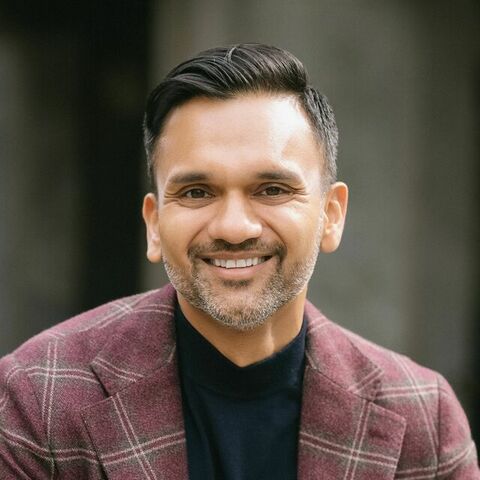
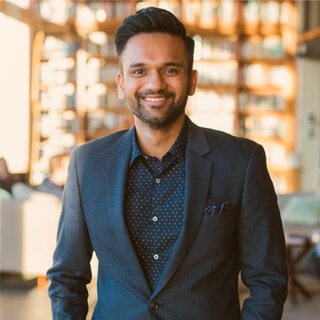
I'm Anu Gupta,
Author of Breaking Bias,
And today I want to lead you through a practice of transforming internalized biases.
I define bias as a learned habit of thought or a learned belief that distorts how we perceive,
Reason,
Remember,
And make decisions.
Biases manifest in so many different forms and they're contingent upon a stereotype or a false belief that we have about our identity,
Whether it's our skin color,
Our race,
Our ethnicity,
Our sexuality,
Our disability,
You name it.
And it is one of the most pervasive challenges facing us as a humanity.
Now the good news is that with ancient wisdom,
Whether it's from Buddhism or Sufism and a whole lot of other contemplative practices,
As well as modern neuroscience,
We have the ability to really transform the way we perceive others,
But more importantly how we perceive ourselves.
So this practice that I'll be offering around transforming internalized biases is really to become intimate with our own thoughts,
Beliefs,
And ideas about ourselves,
Not all of them,
But just one particular way,
And then to practice with it relationally.
There's a really famous Sanskrit chant known as Loka Samastha Sukhino Bhavantu,
Which basically means may all beings be happy and free.
It's something that a lot of people within contemplative spaces,
Meditation spaces,
Yoga spaces,
Often repeat to themselves,
You know,
Really wishing for the well-being and the freedom for all beings,
Not just human beings,
But the more than human beings,
Animals,
Birds,
Fish,
Insects,
Plants,
As well as the living earth.
Now I'll just speak for myself.
Oftentimes I leave myself out of that wishing,
Wishing that all beings may be happy and free.
So the intention for this practice is to really look inward,
To really shift how we actually perceive ourselves,
How we treat ourselves day to day,
Moment to moment with our thoughts,
With our emotions,
And with our feelings.
And if judgment comes up,
If rejection comes up,
If abandonment comes up,
And there are exiled parts of us that are within us,
We don't judge that either.
Rather,
We hold that with compassion,
With curiosity,
With care,
And a sense of gentleness.
One last thing I'll say about shifting internalized biases is that the power of this practice really begins with awareness.
There are five tools that collectively break bias known as prism,
But mindfulness is really the core of it,
The M in prism,
Because it allows us to not just become aware of the thought,
But also then to connect with its somatic experience.
So we're becoming mindful of the body sensations that accompany that thought.
And then if we zoom out,
We can begin to become mindful of the narrative,
The story,
And how our brains have been programmed to have that story,
And then how that creates certain emotions and feelings.
So again,
We bring mindfulness to all of those things,
And we often accompany our awareness of what's happening in this internal world with loving kindness,
With compassion,
With care,
Because the idea isn't to reject it,
But rather is to make it known.
And slowly with that practice,
We can really transform how we feel about ourselves,
Particularly those parts of us that we've exiled because we've judged them so much.
So I'll stop talking for now,
But I'd love to invite you to a short practice with me.
So wherever you are,
Find a comfortable seated position.
You can rest your hands on your lap or on your knees.
You can straighten your spine.
It helps with preventing us from falling asleep during practice.
And we'll be here together for about six minutes.
If it's comfortable,
Bring your eyes to a gentle close,
Or place your gaze at a stationary point in front of you,
Something that isn't moving.
Then after your next exhale,
You can bring your attention to your breath.
Notice your in-breath and your out-breath.
This breath that's been with you since the very moment you were born,
Your longest living companion.
Really savoring this breath.
And now bring your attention to your body,
This body that is your ultimate home.
A collection of bones and flesh and blood,
Memories,
Ambitions,
Desires,
So many different aspects.
Of the fullness of your humanity.
So in this moment,
Really bring that gentle awareness and attention to this body,
Particularly noticing any part of your body that may feel tense,
Where there may be some holding.
And inviting a sense of release,
Some softness.
Perhaps repeating a simple mantra,
Breathing in,
I calm my body.
Breathing out,
I smile.
Remembering our ancestor,
Thich Nhat Hanh,
Who shared this wisdom with us.
Breathing in,
I calm my body.
Breathing out,
I smile.
And feeling that softening,
That easing,
In any part of your body that may feel tense.
Your shoulders,
Your jaw,
Your tongue,
Your hands.
Breathing in,
I calm my body.
Breathing out,
I smile.
And with that smile,
Bring to mind an aspect of your humanity that you judge,
That you reject,
Whether you like it or not.
Perhaps it's your accent,
Your height,
Your color,
Something else,
A habit that you reject.
Something that you've acquired.
And not needing to get sucked into the shame or aversion that may arise,
But rather noticing where that shame or aversion resides in the body.
Perhaps it's in your shoulders,
Your chest,
Your hands,
Your jaw.
And just feeling that contraction.
And holding that contraction,
That tension,
With compassion.
Breathing in,
I calm my body.
And breathing out,
I smile.
So bringing that smile to that part of your body.
To release that resistance.
And offering some words of kindness to this body.
And to this mind.
May you be happy and free.
May you be happy and free.
May you be happy and free.
And now notice what's happening in the mind.
Perhaps there's thinking,
Planning,
Judging,
Even judging of this practice itself.
That's okay.
Really notice that and label it.
Thinking,
Planning,
Judging,
Whatever it may be.
And then bring your attention back to your body.
And notice where in this body you hold that judgment,
That aversion toward yourself.
And bringing a sense of compassion,
Kindness towards this part.
Really noticing the suffering beneath this story.
The longing,
The longing to be seen,
The longing to be loved,
The longing to be forgiven.
The longing to be perceived as beautiful,
As worthy,
As deserving of love.
And see if you can provide for this part of your being,
That love,
That bearing witness,
That you may choose to bring your hand,
Or both your hands to your heart.
And offer yourself and this exiled part of you,
Some well wishes,
Some words of kindness,
Of love.
May you be free and happy.
May you be in peace.
May you live with ease.
And now gently shifting to embody the fullness of your body.
And have a moment of silence.
Inhabiting every crevice and corner from the top of your head to the bottom of your feet,
Your front and back.
May I be happy and free.
May I be at peace.
May I live with ease.
And just offering these words of comfort to yourself,
To your being.
And really shifting your attention from your head to your heart and to your body.
Really integrating into the fullness of your humanity.
And then after your next exhale,
You can bring your chin to your chest,
Stretching the back of your neck,
And slowly open your eyes.
Welcome back,
Dear ones.
So this was a short practice to really transform internalized biases.
And we just dipped our toes in there.
But you can see how transformative this can be for our nervous system.
And slowly that has a direct impact on the way we perceive ourselves and others,
But really starting with ourselves.
So I hope you continue to practice this and try it with different identities and different ways.
There may be judgment that you're holding toward yourself.
Loka Samastha Sukhino Bhavantu.