Welcome.
Welcome to meditation.
Thank you for joining me today.
Let's go right in.
We'll start in a comfortable seated position.
Any seated position that feels right to you,
So that you feel well supported and less prone to fidgeting.
That's really one of the keys to finding your comfortable seat.
And then as you sit tall,
Feel yourself shift back just a little bit,
Even if it's a half inch,
One inch.
We tend to project forward a little,
Thinking about the next thing we have to do.
And when you sit back,
Even just a few inches,
I say you sit into your back body.
Sometimes you can feel a little more present.
And then once you sit back and sit tall,
As we've been discussing,
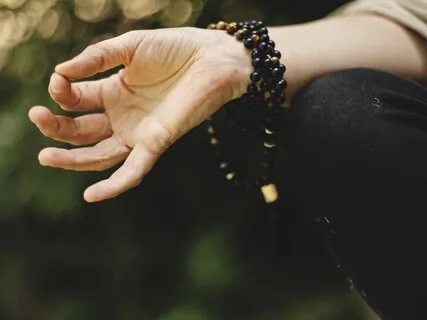
You might bring your palms to face up in your lap.
If you feel you need a little more energy this morning,
If you're feeling groggy,
Or maybe flip your palms down on your thighs.
If you feel you need more grounding and support.
And in meditation,
It's your choice.
If you'd like to open your eyes or close them,
Or let your gaze simply trail down,
You might try both and see what helps you,
What helps you to be centered and more focused and present.
Today we will be doing a couple of different breathing exercises.
Then I will give you your three minutes of silence.
And then when you come back from that silence,
I'll give you one more breathing technique.
And you might be able to use these techniques throughout your day when you think of them,
When you need to pull the mind back into focus and reorient your thinking.
So as you sit here resting your hands,
Eyes closed,
Or maybe your gaze down,
Just let your awareness scan the body.
Maybe you start with your feet and legs and slowly work your way up and notice what you're feeling today.
Again,
I call that checking the weather.
There's no need to feel anything in particular.
You're simply noticing what is as you move from feet and legs through your hips and your back.
You might also notice your belly and your breath.
Notice your upper chest and your shoulders,
Your arms and hands.
Notice the back of your neck and your throat and your head.
Notice your face and let your face soften.
Be very aware of your back body,
This region of the body we tend to not place a lot of awareness in.
So feel the back.
Notice the breath as it moves into your back.
And as you notice the breath,
Notice if it feels relaxed and spacious or if there's any tension,
Just observing what's there.
Take another breath in and out.
And then you're welcome to join me in what I mentioned last time was Ujjayi breath,
That ocean wave breath.
We gently constrict the muscles at the back of the throat like you were fogging a mirror or cleaning your glasses.
It's that gentle constriction.
Exhale out the mouth.
You make the sound.
You might do that a few times with the mouth open.
Exhale,
Just so you feel that at the back of the throat.
And then you'll keep that action at the throat and the mouth will stay closed and breathe in and out through the nose.
You might gently hear that sound emanating from the back of the throat.
Call it ocean wave breath because it sort of mimics the sound of the ocean.
And it lengthens your inhalation and exhalation.
It also makes you very aware of your breath.
Take two or three more rounds of Ujjayi breath.
And today we're using this little bit of sound to focus our awareness.
So you might hear the sound of your breath.
And we'll add one more element to this.
So now as you inhale in your mind,
Hear the sound hum.
So you're using that Ujjayi breath,
Hear the sound hum on the inhale.
And as you exhale in your mind,
Hear the sound sa.
So then it becomes this repetition.
Inhale hum.
Exhale sa.
And you just repeat that.
Inhale hum.
Exhale sa.
And it's entirely at your own pace.
We use sound in meditation as a way to train the mind,
To grab a hold of the mind.
We're just focusing on the sound of your breath.
We'll do another round or two with hum sa.
Now I'll give you your three minutes of silence.
You can continue with a hum sa breath or your Ujjayi breath.
If those don't work for you,
Just do normal breathing.
Three minutes on your own.
I'll ring the bell to signal the return.
Invite your breath to deepen.
And you might feel your fingers move,
Perhaps brush the thumbs across the fingertips.
And you may keep your eyes closed or your gaze down.
We'll take just three more rounds of breath.
And this time,
You'll inhale to about the count of four.
And then hold your breath to the count of four.
And then exhale out to the count of eight.
And do that two more times.
So you're just inhaling to four,
Hold your breath for four,
And exhale for eight.
One last cycle like that.
And then releasing that breath and just take a few normal breaths.
When you're ready,
You might lift your gaze.
And I'll share a quote by Rumi here,
The quieter you become,
The more you are able to hear.
May you use these practices to help you find more focus and awareness in your day.
And we'll just take one big stretch up.
So as you inhale,
Just reach your arms,
Maybe like a yawn,
Stretch them out and up and lengthen into the fingers.
You might even lift your gaze upward,
Look up.
And on exhale,
Simply let your arms come down,
Lifting your gaze out into the room.
Thank you so much for practicing with me today.