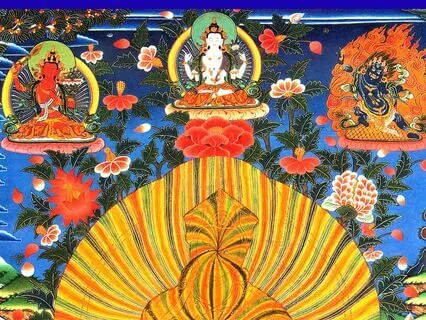
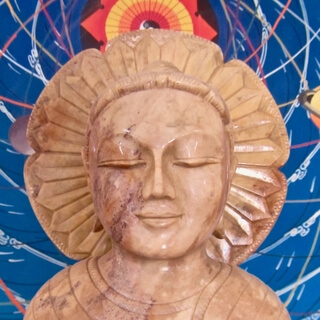
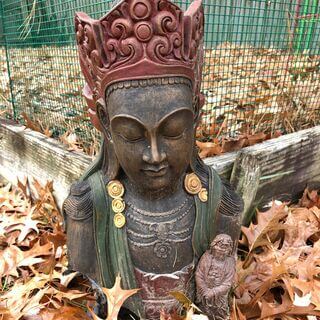
So I wanted to talk tonight about Stealth Bodhisattva is the name of the flyer that you probably saw.
And a Bodhisattva is one who,
Out of love and compassion,
Comes back into this human life over and over and over again to help free and awaken all beings.
It's really an ultimate act of service and love and kindness to come back and tell every being,
Every sentient being is free.
And in a way,
It's a stealth thing because we're doing it all quietly.
And whether or not you take a Bodhisattva vow doesn't matter.
We're,
As students of the Dharma,
As practitioners of the Dharma,
We are these stealth Bodhisattvas in the world just on a day-to-day basis,
Even if you don't intend to come back many lifetimes.
On a day-to-day basis,
We're out in the world doing this work of the Dharma,
Doing this work of love and compassion under all circumstances.
In a way,
I like to think of it like Clark Kent and Superman or Wonder Woman,
Her version.
You might be out there.
You might be working in the library or in a factory.
I worked in dialysis with kidney patients in a clinic.
And that's my job by day.
That's what it looks like my job is,
Right?
I work talking with people about insurance.
But underneath it all,
When I'm talking about insurance,
I'm connecting to their hearts.
I'm connecting to love.
I can be saying,
Hey,
So do you have Medicare or Medicaid?
You know,
But I'm really like looking at them and beaming metta,
Loving kindness,
And just connecting with their essence.
And my adopted goddaughter also works in this dialysis center with me,
And we joke about,
You know,
What we're really doing.
You know,
As we're pushing papers for insurance companies to all the employees there,
To the people who are the patients there,
We're offering from our deepest essence a connection with what truly is and what truly connects us as human beings.
So don't worry about what your title is,
Your quote-unquote title in the world.
In a way,
We're all doing the same job.
And it's an important job,
Very important work to be guardians of equanimity,
To be guardians of love and compassion in this world,
Where really a lot of people are very lost.
So it's deep work that you're doing here,
That you're here today.
And you don't worry.
You might say,
Well,
I don't know if I can do this work.
It doesn't matter.
Dharma's already chosen you.
It's already working through you,
And you can't mess it up.
The Dharma doesn't make mistakes.
So that you're called to meditate and be grounded and operate from your heart.
This is already too late.
You can't quit.
Like it or not,
The Dalai Lama once said,
People talked to him about asking him about time off.
And he joked,
He said,
Buddha,
Time off?
Bodhisattva,
Time off?
What do you mean,
Time off?
And the good news about that is,
You know,
We're just a vehicle,
Right?
So it's not like we have to be striving to do this work.
We just have to show up and let it happen through us,
Like the hole in the flute.
Hafiz,
Poet Hafiz says,
I'm the hole in the flute that God's breath blows through.
And that's about the biggest description of self that you can get.
We're just a hole in the flute.
It's not anything bigger than that.
Not anything more complex than that.
So I just jotted down a few things that are kind of like bodhisattva,
Stealth bodhisattva training.
And really the number one thing is not to be distracted by your mind.
Very important not to get distracted by your mind,
By all the insanity.
This is partly from Bhante Gunaratne's book,
Mindfulness in Plain English.
He says,
Somewhere in this process you will come face to face with the sudden and shocking realization that you are completely crazy.
Your mind is a shrieking,
Gibbering madhouse on wheels,
Barreling pell-mell downhill,
Utterly out of control and hopeless.
No problem.
You are not crazier than you were yesterday.
It has always been this way.
You just never noticed.
You are not crazier than anybody else around you.
The real difference is that you have confronted the situation and they have not.
The very fact that you have looked at the problem straight in the eye means that you are on your way up and out of it.
In the Vipassana tradition,
Which I know many of you here are from different traditions,
But one way to work with your mind that I found particularly helpful is to just to label in a really light way,
Oh,
There's worry,
There's fear.
It really puts kind of an end to the insanity.
The mind's a little bit like a pusher.
It kind of like says,
Hey,
Here's some self-hatred over.
Come on over here.
Just think or worry,
You know.
Just have a little bit of worry.
You know,
Just one bite.
And you know where that goes.
My gosh,
A little bit of worry and,
You know,
Hours later,
You've worked yourself up into a frenzy.
You have to be careful and just really know how to say no to my no.
I know where worry goes.
I know the direction that's going to go.
I probably shouldn't,
But I like to swim very far out in the ocean.
And I'm a very good swimmer.
But sometimes when I get pretty far out,
Quarter mile,
I don't know,
Half a mile,
Very far out,
I'll run into a,
I'll realize that I'm caught in a current.
I won't have noticed it.
And I'll be swimming fairly hard and I'm not going anywhere.
And at those moments,
I'll look up and I'll think,
Oh,
My God,
I'm so far from the shore.
And I'll have a moment of panic.
Right.
But because of my practice,
Immediately I'll just have this panic.
I'm going to drown.
And then I'll just go,
That's panic.
That's just panic.
It doesn't,
It's not going to help me.
It's not going to lead anywhere.
And the minute I can just go,
There's panic,
Gone.
Just evaporate.
Now,
I might try and come back a few minutes later.
But it's such a great gift to just,
From my mindfulness practice,
To go,
That's just panic.
I know where it goes to follow that.
It's not going to help me get back to shore.
And just the mind can just drop it and just let it go.
Really the same with self-hatred.
I spent most of my life with very,
Very severe depression.
And through this practice,
And also through therapy,
It unhooked itself.
I just had raging thunderstorms of depression,
Day after day after day,
For really about,
From five years old to about 40.
I had my first suicidal thought at age five.
And it's really because of the practice,
And what's been able to be undone through the practice,
Now the self-hatred coming,
It's like flashes of lightning on the horizon.
I don't get lost in it anymore.
I can see,
Oh,
There's self-hatred.
It's just such a bad,
It's just such a wrong direction to go.
And the mind can have that understanding.
And knowing your mind is so important.
One of my friends died of ALS two summers ago.
And he'd been a practitioner for many years.
And he said,
Amita,
I'm so glad I'm not trying to learn how to watch my mind now in the 11th hour,
When my body and mind are deteriorating.
I know how to do this practice.
I know what to do.
And he died peacefully,
And he was present.
He wasn't afraid.
He wasn't overwhelmed,
Because he knew how to be with his mind.
And this is why you're here.
So the self-bodhisattva,
The first path and part of this path is knowing your own mind.
It's knowing others' minds,
Too,
And not getting distracted by what other people do.
And there's just one little koan I've been using recently from a Hawaiian elder.
She said,
Don't take other people's shortcomings personally.
If someone gets angry with you or they blame you,
You don't have to take that personally.
That's a bodhisattva path when we don't catch that ball.
Somebody throws a ball at us of anger or judgment,
Just step aside.
Let it go.
Great gift to the world,
And we don't catch it,
Because you know what happens when you catch it.
Throw it back.
They throw it back.
It turns into this endless thing,
Doesn't it?
So that's a great gift of a bodhisattva.
A second great training of a bodhisattva is to be grounded in your body.
As a culture,
We are very ungrounded.
The Pew Research Study,
They asked people about their feeling rushed.
A quarter of the people said they always feel rushed.
A quarter of the population always feels rushed.
So we can be the part of the life that doesn't feel rushed.
And even if we do,
We can know it.
Oh,
Rushing.
All right,
Come back into the body.
I was with a Tibetan teacher called Sokne Rinpoche about two months ago,
And he talked about,
He said,
You know,
Really our culture has too much lung energy.
It's spelled R-L-U-N-G,
The Tibetan R-L-U-N-G.
It's just like,
It's wind energy,
Right,
In the head.
We're just,
We just have so much energy here from all that we do,
Especially because we live in a virtual reality a lot of times.
And he said,
Really,
Our Dharma practice needs to be,
He called it the French press meditation,
You know,
The coffee.
He said,
Really,
You know,
You should just be really breathing down into your belly,
You know.
When you do your meditation,
Breathing down in your belly.
You know,
You do that a couple times,
You are grounded in the body.
So important that we be present in our bodies.
It's really a neck down practice.
The more you can stay below the neck,
Often the better it is.
Not that the thinking is a problem.
Really only about 2% of our thoughts is functional.
One of my teachers said the other day,
Well,
That's interesting,
2% is functional.
Okay,
That eliminates 98%.
What would I be doing?
What am I doing?
Sometimes I try and pay attention to my feet throughout the day.
That can really help.
Just even now sitting,
When you're walking around.
And lastly,
As part of a grounding in the body,
It's really important to,
I find,
To bookend my day.
They were,
Again,
Another study,
They looked at what's the first thing people do in the morning and the last thing they do in the evening?
It's check their emails.
Is that what you want to be starting and ending your day with?
Because what we start and end our day with is really kind of what we pay homage to,
Isn't it?
So if you can,
Bookend your day beginning,
Even if it's five of these French press meditations.
And then when you end your day,
Right before you go to sleep,
You just get into the sitting posture and be aware.
I find that the bookend is a really powerful way to practice in daily life,
Even if it's just a little bit.
Another way of the bodhisattva is to do the difficult thing.
You know what that is.
You know it's the resentments that you haven't let go of,
That you carry around.
I did a retreat this spring where the lady leading the retreat had us have a sack of potatoes.
And each person we had a resentment with,
We had to write their name on a potato.
And then we put all the potatoes in a bag and we had to carry it around all day long,
Everywhere we went.
And she's like,
This is what resentments are.
You don't put them down.
You think you do.
And I kept looking at everyone else going,
Why are you carrying all those,
That heavy bag of potatoes around?
Then I look at my bag and I'm like,
Well,
I can't get rid of these.
No,
I'm not ready.
So doing the difficult thing.
The poet Rumi,
He talks about going into the fire,
That most of us want to go into the stream.
And in going in the stream,
We end up in the fire.
And those that go into the fire end up in the stream.
He says,
One group walks towards the fire,
Into the fire,
Another toward the sweet flowing water.
No one knows which are blessed and which not.
Whoever walks into the fire appears suddenly in the stream.
A head goes under this water surface,
That head pokes out of the fire.
Most people guard against going into the fire and so end up in it.
Those who love the water of pleasure and make it their devotion are treated with this reversal.
So it's really being willing to walk into the fire,
Whatever that is.
It comes in all forms.
A friend of mine who has a center,
They were really struggling financially.
And she turned to her husband and she said,
Let's just give more.
Seems counter-indicated,
Doesn't it?
But in giving more,
They received more.
This spring,
Where I worked was in a public hearing with a large insurance company.
And some of the patients got up and said things that weren't true,
People that I had worked with intimately for years.
And it was so hard.
People who,
After the hearing,
I had to go back to the clinic and help take care of them,
Saying these things that were not true.
And at one point,
I felt so hurt that I realized the only recourse was to start sending love and kindness to that person.
At the minute I did that,
It was exactly what I didn't want to do because I was feeling so upset and angry and hurt.
But the minute I started sending love and kindness and praying for them,
They became like family.
And it was fine going back and taking care of them in the clinic an hour later.
We have to do that turnaround.
As Bodhisattvas,
Doing that difficult thing,
Turning that around.
We want to run to turn towards.
When we want to hate,
To turn love.
And it's a hard practice,
But you just do the best you can.
And don't beat up on yourself.
Khenpo Rinpoche says,
Erring and erring,
We walk the unerring path.
So it's OK.
We don't do it very well.
Erring and erring,
We walk the unerring path.
Another part of being a Bodhisattva,
I'm not going to talk a lot about this because it's self-evident,
Is the I that is we.
It's not just you and your practice.
Obviously,
If you're serving all beings and you're here to help everyone,
It's dependent on each other.
So when I sit every day,
If I can do that book-ending thing,
It helps Mark.
And it helps Fern.
And it helps everyone.
It helps Katie.
It helps all of you when I practice.
If one of us doesn't come,
It's that sense that we're all supporting each other somehow.
It's not a me and my enlightenment thing.
Even the Buddha,
When he was trying to wake up and he was on this verge of the most difficulty,
All the armies of Mara,
He reached down and he touched the earth.
And he said,
Let the earth bear witness.
And the earth,
She shuddered.
And she said,
I'm here.
I bear witness.
So he asked for help.
He got help.
And the earth allowed him and her witnessing allowed him to wake up.
He wasn't alone.
So when you're serving and you're being a guardian of equanimity and love and compassion,
It's one Buddha heart.
One Buddha heart.
We're all waking up to the one Buddha heart.
So in a way,
It's this tremendous journey of coming back many,
Many,
Many lifetimes or many,
Many moments in this lifetime.
And in another way,
It's no journey at all.
It's one Buddha heart.
And the more you do this practice,
The more raw your heart becomes.
I used to be not very moved by anything,
Maybe because I was so depressed.
But it's just like now,
So many things just move me to tears.
I was just watching the leaves fall the other day.
I just started crying.
It's just everything is so precious,
So precious.
Because it's one Buddha heart.
It's one body.
And the last piece,
And I touched on this a little bit earlier,
Is part of the Bodhisattva path is it's 24-7.
It's not time off.
We become,
It's about being a living prayer.
So you don't carry the message.
You are the message.
You are the message.
So look,
What kind of message are you right now or in your life?
Do your actions line up with the message that you want to be?
Do they line up with the one Buddha heart?
And if not,
Seeing what's out of alignment and bringing that into alignment.
I just read a really nice piece by this poet,
Banke Zen poet.
And he said,
Really our task is to look into everyone's heart with your birthless eyes and to see what binds them.
So we're just,
As Bodhisattvas,
We're just looking and seeing where people are bound.
And that includes ourselves.
Looking with birthless eyes into where we're out of alignment,
Where we're bound.
It doesn't have to be a big thing what you do.
I've been working with a young man on Maui and we were talking about service and he picked his one piece of service to be bringing hot chocolate to his grandfather with dementia every day.
Just some small way of serving life each day.
No big deal.
This is a Bodhisattva path.
Doesn't have to be a huge thing.
And just sitting every day remembering your Buddha heart,
Remembering your intention to help relieve suffering in yourself and others.
And to do this every day we have to be in good spiritual fitness and that means checking in with the sitting every day.
Seeing how we're living the message.
Really I'd like to close with an example that my teacher Ajah Shanti shared.
He said really the whole of the practice is in leaving your shoes outside the door.
So you take your shoes off outside the door and humbly you come into this room,
This sacred place.
Shoeless.
Stretch out your hands.
You take in the sacred.
You sit for 45 minutes like we did today.
But you're not meant to stay in here forever.
And so you take what the sacred offers and humbly you go back out into the world.
You put your shoes on.
And you carry this heart and this wisdom and this mindfulness back out here.
And you do it over and over again.
You come back and take off your shoes.
Come back into the hall.
Drink in your true nature.
Put your shoes back on.
Go back out.
Emissaries,
Missionaries or ambassadors actually is probably a better word.
Over and over and over again.
That is the true path of the Bodhisattva.
Every day,
Many times a day,
Taking our shoes off,
Putting them back on with great humility.
So let's sit for a minute.