Hello and welcome to Vibrant Lives podcast,
Formerly Amanda's wellbeing podcast,
Five Minute Food Facts series.
I'm Amanda Hayes,
Your host,
A lawyer turned nutritionist with a deep curiosity about living a healthy,
Active and fulfilling life,
Which I would call a vibrant life and sharing what I learn with you on this podcast.
Before I launch into today's episode,
I'll just let you know that the content of my Five Minute Food Facts series is for information purposes only,
And it's not intended to replace the advice of your own health professionals.
This is the second of my four part series all about dietary fat.
In the first episode,
I gave you an overview of dietary fat,
Where I described to you what fat is,
The different types of dietary fats,
And a brief overview of fat digestion.
Now onto the more practical side of things.
Today I'll be looking at unsaturated fats,
Which includes essential fatty acids.
In the next episode,
I'll look at saturated fats and finally at cholesterol.
But first,
A very brief recap.
Unsaturated fats are those where some carbon molecules in the carbon chain have double bonds.
The number of double bonded carbons and the location of those bonds in the chain and the length of the chain all affect the chemical and therefore health properties of the fatty acid.
Fatty acids with one double bond are called monounsaturated fatty acids,
And those with two or more double bonds are called polyunsaturated fatty acids.
Dietary fat in the context of our health and in particular cardiovascular disease remains one of the most controversial areas in nutrition research.
I'll talk to this point more in episode three about saturated fats.
So today I'll try and unpack what we know and keep it practical.
So if we start with monounsaturated fatty acids,
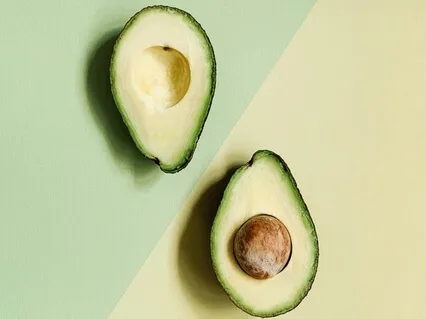
They're found in avocados,
Nuts,
Some vegetable oils such as canola,
Olive and peanut.
Monounsaturated fatty acids are generally deemed healthy fats,
And they may help contribute to a healthy blood cholesterol profile.
However,
Like most things nutrition,
What matters is your overall dietary pattern,
Not single nutrients.
I think two of the most well known monounsaturated fatty acids would be olive oil and canola oil.
So here are a few quick notes on them.
As you probably know,
There is olive oil and olive oil.
Extra virgin olive oil is premium grade olive oil.
It's extracted by cold pressing and no heat or solvents are applied,
So it retains most of its nutrients.
Virgin olive oil is usually made from inferior grade olives and has a lower nutrient value than extra virgin olive oil.
Olive oil,
Pure olive oil,
Light and extra light olive oil are all commercial grade oils and they're refined.
They're less healthy choices and personally,
I would avoid them.
In Australia,
The Australian Olive Oil Association oversees industry standards in olive oil production and administers a certification process.
The standards are high,
Higher than in some other countries,
So I recommend purchasing extra virgin olive oil produced in Australia.
This also of course has the benefit of supporting our local economy and less food miles.
There is research supporting the benefits of extra virgin olive oil in heart health and as most people know,
It's an integral part of the traditional Mediterranean diet.
But of course,
It is not olive oil alone that makes the Mediterranean diet healthy.
It's the entire package,
Including lifestyle and social factors.
Also,
It may be the polyphenols,
They're antioxidant compounds in the extra virgin olive oil that provide the cardio protective properties.
And now a few notes on canola oil.
It comes from the rapeseed plant.
It's one of Australia's major seed oils and in fact,
It's Australia's third largest broad acre crop after wheat and barley.
So it's big business.
Canola oil in its unrefined form contains a good amount of monounsaturated fatty acids.
But what we see on the supermarket shelves is most often highly refined to be used in high heat cooking.
And highly refined oils,
Which we'll talk about in a moment,
Are not healthy choices.
Put it like this.
I would not use supermarket version canola oil in my kitchen thinking it was brimming with good fats.
So now if we have a look at polyunsaturated fatty acids.
This type of fat is mainly in liquid vegetable oils such as sunflower,
Sesame,
Soybean and corn.
It's also the main fat found in oily fish,
Some nuts,
Chia seeds and flax seeds.
You may have heard the term essential fatty acids.
So they are polyunsaturated fatty acids that humans cannot make or make enough of.
And therefore we must obtain them from our diet.
Our bodies can't make alpha linolenic acid,
Which is an omega 3,
Or linoleic acid,
Which is an omega 6.
And therefore they're deemed essential.
Omega 6 oils are found in liquid vegetable and seed oils,
As I mentioned,
And omega 3 in some nut or plant oils like walnuts and flax seeds.
They're also found in fatty fish and shellfish like salmon,
Anchovies,
Sardines,
As icosa pentanoic acid,
Which I'll refer to as EPA,
Much less of a mouthful,
And docosa hexanoic acid,
DHA.
The body can make small amounts of EPA and DHA from alpha linolenic acid by a process of desaturation and elongation,
But it may not be enough.
So we need to obtain them from food.
DHA also is important in the development of vision and of the brain.
The body uses some polyunsaturated fatty acids to make biologically active compounds called icosanoids.
And these have a role to play in regulating various body functions,
Including blood clotting and blood pressure.
You may in your travels have heard or read about the ratio of omega 6 to omega 3 oils that humans consume.
It's believed that historically we consumed a ratio of omega 6 to omega 3 of about one to one.
But now with the commercial production of omega 6 containing vegetable oils,
The ratio has swung to more like between 10 and 20 omega 6 to one omega 3.
The imbalance is hypothesized,
In other words suspected,
Not known for sure,
To contribute to chronic inflammation as omega 6 produces more pro-inflammatory metabolites while omega 3 produces more anti-inflammatory ones.
However,
The majority of human studies have not actually confirmed this biological hypothesis,
So it's still unknown.
Scientific evidence does however support that adequate dietary intake of omega 3 from plants in the form of ALA and from fish and seafood in the form of EPA and DHA is associated with significant reduction in coronary disease risk and sudden death.
So that's good news.
It's worth noting that these protective effects are mostly associated with fish consumption rather than supplement use.
However,
Some studies have found favourable results from fish oil supplements whilst others have not.
It's really highly individual and probably depends on one's underlying omega 3 status.
I would say that if you are considering taking omega 3 supplements,
I recommend speaking with a health professional like a registered practising nutritionist to ascertain if it is necessary and then to discuss the side effects because there are some.
In any case,
In the interest of keeping this episode practical,
I'll look at cooking with unsaturated oils.
Oils are very useful,
Vital even,
In cooking.
We use them in salad dressings,
Marinades for pan frying,
Stir frying and more,
So it pays to know which oils are most suited to what you are concocting in your kitchen.
For starters,
Some oils have neutral flavours and some like extra virgin olive oil and sesame oil have distinct flavours.
If you want to cook with oil,
For example pan frying something,
Knowing a little bit about an oil's smoking point is useful.
The smoking point,
Which is also referred to as the burning point,
Occurs when an oil starts to burn and produce smoke.
If you heat an oil to this point,
Many of the nutrients in the oil degrade and they can release harmful free radicals.
For a recap of free radicals,
Jump back to my episode about antioxidants.
I'll put a link to that in the show notes.
The smoking points of some common household cooking oils are refined light olive oil is 240 degrees Celsius,
Canola oil 204,
Vegetable oil 204 to 232 and extra virgin olive oil 163 to 190.
This is really the only oil I use in cooking and the smoking point in my experience is high enough to pan fry.
In general,
The more refined an oil,
The higher its smoking point.
And a quick note on refined versus unrefined oils.
So oil is obtained from plants,
Nuts or seeds by an extraction or pressing process.
Oils left in their natural state are labelled as raw,
Virgin or unrefined and in general retain their health properties.
Oils that are further processed after extraction,
For example by bleaching,
Filtering,
Deodorising and or heating to break down the virgin oils leaves you with an oil that has a neutral taste and a higher smoking point.
So these are the kind of oils that are used in processes like deep frying.
Refined oils are cheap,
They are highly processed and really have little to recommend them from a health point of view.
Out of curiosity I had a quick look at the McDonald's Australia website to see what oils they use for their deep frying and this is what it said quote we use a blend including canola and sunflower oils to cook with like all vegetable oils it's cholesterol free and has 85% less trans fat than our previous blend end quote.
85% less trans fat.
I'm not sure what quantities of trans fat used to be in that oil but that is ringing alarm bells for me.
Also I'll unpack the cholesterol free comment in my fourth episode.
So I guess to sum up the really important information is how much and what type of fats and oils should we consume.
There is so much ongoing research and debate so according to the Australian dietary guidelines that were last updated in 2013 so they're pretty old we should choose reduced fat dairy and replace foods high in saturated fat with foods containing unsaturated fats.
However the era of demonising fats is over.
The dietary guidelines are up for review and so I think it'll be interesting to see how they will look when it comes to fats.
So at the end of the day this is what I'd say fats and oils are an important part of our diet we need them to provide energy to insulate our bodies and for our cell membranes to function properly just to name a few reasons.
The approach that I like to take is that the source of the fat rather than the quantity is important so I consume extra virgin olive oil small amounts of sesame oil when I'm doing Asian dishes but I make sure it's pure sesame oil and not mixed with some other type of oil.
Butter,
Again I look for real butter not butter spreads that are mixed with oils and occasionally I would use flaxseed oil in salad dressings.
I recommend including fish and seafood in your diet about two times per week and that should provide adequate EPA and DHA.
Where possible I would aim for sustainably sourced seafood but that's often easier said than done plus it can be very expensive and I would avoid or limit fish high in mercury and that's big fish like swordfish and marlin.
Raw nuts and seeds are great sources of polyunsaturated fatty acids so try and incorporate a small handful or so into your daily diet.
And finally I'd avoid highly processed foods like pies,
Donuts and commercial biscuits as they're bound to contain industrial oils that are of little benefits or even detriment to your health plus they're probably loaded with sugar and other funny additives that are not real food.
So there's the wrap on unsaturated fats.
So you don't need to be scared of fats just choose the fats that you eat wisely and eat them in fairly small amounts.
Thank you for listening today and I hope that there was some useful information in that episode for you.
Eat well,
Move well,
Think well.