Hello and welcome to Vibrant Live's podcast 5-minute food facts series.
These are short podcast episodes about nutrition-related topics where I'll talk about why we need a certain food or nutrient,
How much to consume,
If there are any risks associated with it,
And any other useful information to help you make healthy food choices.
I'm Amanda Hayes,
Your host,
A lawyer who retrained as a nutrition scientist.
I'm committed to staying up-to-date with research in the wellbeing space and sharing with you credible and reliable content about living a healthy,
Active and fulfilling life,
In other words,
A vibrant life.
I'll quickly acknowledge that any information or advice provided in Vibrant Live's podcast is not intended to be used to treat or prevent medical conditions and it's never a substitute,
Of course,
For advice from your own health professionals.
In today's episode,
I'll be talking about adaptogens.
I'll give you a very broad overview of adaptogens,
What they are,
And what their health benefits are.
Simply put,
Adaptogens is a name for a group of herbal supplements that can help reduce the effects of stress on the body.
In a recent scientific paper,
They were defined by Pernossian and others as adaptogens are natural compounds or plant extracts that increase adaptability and survival of living organisms to stress.
In addition to that,
For a herb to be an adaptogen,
It must be non-toxic and not harm the human body.
There are many different adaptogens.
Some of the most popular that you may have heard of are Panax ginseng,
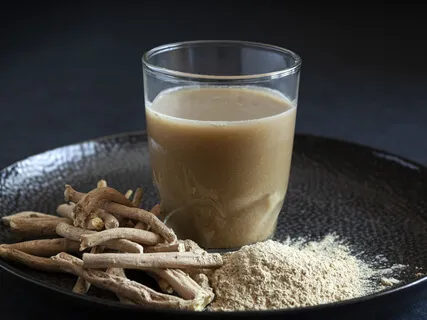
Ashwagandha,
Rhodiola rosea,
Shisandra and cordyceps,
The latter of which is a fungus and hopefully I'm pronouncing them correctly,
I'm not entirely sure.
And anyway,
Each of them has different effects and properties and sometimes the health benefits are best attained through the interplay between a combination of adaptogens.
In a historical context,
Adaptogens have been used in traditional medicines such as Ayurveda for centuries.
We know based on human experience that they are effective.
What is beginning to be understood is the mechanisms by which or how they work.
Although there have not been a lot of human trials to date,
Published research in this area has increased steadily over the past two decades,
So it's a really interesting area to watch.
So that all sounds really good,
But what do they actually do?
So adaptogens have been credited with the following things.
They help the body maintain homeostasis or balance under stressful conditions such as mental or physical stress and environmental stress like pollution or disease.
Adaptogens are effective in reducing chronic inflammation which can help maintain good health and vitality as we age.
They can increase resistance to chemically or biological harmful agents.
They can enhance mental performance.
They can improve aerobic performance and physical endurance.
And they offer immune protection.
So that is a pretty alluring list of benefits.
So how do they do all those amazing things?
The survival of organisms and resistance to stress depends on adaptability and what is known as adaptive homeostasis or in other words a kind of dynamic equilibrium.
So adaptogens role in achieving this is by building up the body's natural resistance to stresses.
One description I liked when I was researching for this episode is that adaptogens are like stress vaccines.
They activate the body's defense systems and enable it to reverse the negative effects of stress and restore balance.
Scientists believe that adaptogens work in a multi-channel network like manner so they target entire systems,
For example the immune neuroendocrine system which is why they can have such broad effects.
So as I mentioned there is a growing body of scientific evidence supporting the use of adaptogens in certain situations and here are a couple of examples that I found interesting.
One is sports performance.
So adaptogens can enhance the cell's ability to use energy which can make the body use oxygen,
Glucose,
Fats and proteins more efficiently and therefore provide us with a steady supply of energy.
The other interesting application is during perimenopause which is the lead up to menopause and perimenopause usually lasts for about 4 to 5 years and during this time there are significant hormonal changes that take place and that affects a woman's body composition and those changes are also responsible for symptoms such as night sweats,
Hot flushes and reduced sleep quality.
This is not the place to go into detail about all those hormonal changes but what I do want to mention here is that several adaptogens have been shown to help with these symptoms that occur during perimenopause.
In particular,
Rhodiola rosea can help enhance your focus and combat fatigue.
Shisandra boosts endurance and working capacity and ashwagandha can help block excess stimulation and help with sleep.
So as I mentioned earlier,
Adaptogens are considered non-toxic but just like everything,
Safety is in the dose.
So when I use them myself,
I make sure to only use them as directed and follow the instructions on the packaging.
Also,
Because they are substances that act on the body's system there is a risk of drug interactions and that is something to be aware of and definitely look into if you are on any medications.
If you'd like to know about specific adaptogens where the research is more robust like rhodiola rosea,
Panax ginseng,
Ashwagandha,
Shisandra or cordyceps I'd be very happy to publish some episodes on those.
Simply leave me a note in the review section.
Thank you very much for listening today.
Eat well,
Move well,
Think well,
Live vibrantly.