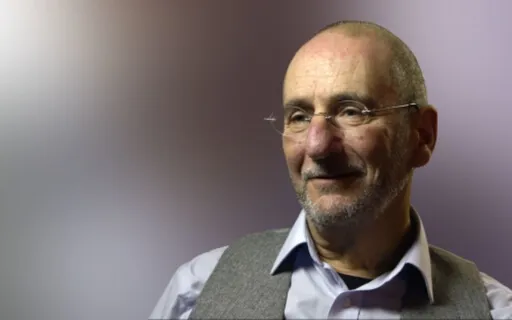
Richard Sylvester,
Thank you for joining me.
You are an author,
A compassion of a seeker.
I hope you die soon.
The book of no one amongst others.
Thank you for being here.
I appreciate it.
Okay,
Alex.
Good to see you.
So,
Richard,
Non-duality.
I have been talking to people on my own seeking journey for the last probably six months or so,
Really diving into it with a view to attaining something.
And I know that that is something that cannot be done.
So,
Richard,
What is non-duality?
Well,
The first thing I'll say is that if you're lucky,
Which is a ridiculous sentence,
But nevertheless,
If you're lucky,
You might lose something.
You certainly won't gain anything but you may lose something.
So,
The simplest answer to the question,
What is non-duality?
It's seeing that there is no self.
Seeing non-duality is seeing that there is no self.
So when I say if you're lucky,
You might lose something,
What you might lose is yourself,
Or what you might lose is your self,
Which in a way means not that you might lose that,
But that it might be seen that your self does not exist and has never existed.
She has a Western,
Relatively young man that's very difficult to,
For my mind in particular,
To comprehend.
I've studied the psychologies and the philosophies and everything else.
What you're saying there,
It seems like a complete antithesis of everything that I've been conditioned with.
Well,
Can I just throw in firstly that it's not difficult to understand,
It's impossible to understand,
But that no understanding is needed.
And secondly,
Yes,
You're absolutely right.
This is the absolute opposite,
That everything that I and you and we,
Pretending that there are such people,
Everything that we have been conditioned to understand,
We've been conditioned to understand that,
You know,
I am an individual,
A person,
A self,
Living within a world or a universe,
If you like,
Which is separate from me.
So that's,
If you like,
That's duality,
That's separation.
Duality means two things,
Which mean,
You know,
These two things are there's the world,
That's one thing,
If you like,
And there's me as a separate thing living inside or within that world.
So the suggestion from here is that is,
Let's call it an appearance or an illusion or unreal,
But in actuality,
There is no separate individual as one thing living within a world,
Which is another thing.
So there's no duality,
There is simply non-duality.
So what is it within the apparent human that perceives there is a separate entity there?
I think that's an impossible question to answer.
The nearest that I could get to it is that there's a kind of energy of contraction that seems to take place.
I could suggest,
I mean,
This is a bit of it.
Well,
I'm going to say this is a bit of a story.
Everything that we're saying is a bit of a story.
So here comes another bit of a story.
We could say that the newborn child is born into non-duality,
Is born into oneness.
There's no sense of separation in the newborn child.
And at a certain point in our development,
It's pointless to argue about or really to even discuss when that might be,
At a certain point in our development,
There's probably been a lot of air quotations during this conversation.
Sorry about that.
At a certain point during our development,
A kind of separation seems to happen.
It doesn't really happen,
But it seems to happen.
In other words,
What seemed to be just everything being experienced becomes me experiencing everything else.
So there's now two things.
There's me,
The experiencer,
And there's the world out there full of experiences.
And that just seems to be what naturally,
As in usually occurs round about the age of who knows.
Two,
Three,
Four,
Who knows?
And what you're suggesting in regards to no self,
I don't really know what else to call it,
In regards to no self,
Is that something that you would think you can work towards?
Or is it something completely spontaneous,
Just a natural happening?
Yeah,
You see,
So what I'm saying is that there is no you who can work towards anything.
So there may well be the feeling for the apparent person.
There may well be the feeling for the apparent person that I can absolutely work towards resolving my dilemma,
My unhappiness,
If you like,
Whatever that might be about.
And in one way,
That's what creates a spiritual seeker.
I mean,
I was a very,
Very sincere spiritual seeker,
I would say,
For probably about 30 years,
Because there wasn't any recognition here that that which was seeking didn't actually exist.
That recognition hadn't happened and couldn't happen.
So the suggestion from here is it is quite likely that,
Let's say,
For the character,
The personality,
The character of Richard,
The character of Alex,
There'll be a feeling of dissatisfaction,
There'll be a natural desire to end that feeling of dissatisfaction,
And there'll be a seeking for something that will bring about the end of that dissatisfaction.
All of that is completely futile.
All of that is simply part of the dream which seems to exist.
In saying that it's completely futile,
I'm not saying anything negative about it,
It doesn't matter.
I'm just pointing out that the search by my illusory self to end myself is hopeless.
It's futile.
And yet there may spontaneously arise the seeing that we're talking about here,
The possibility of seeing that this and that are not separate.
This and the computer I'm speaking into,
This and the image of Alex I'm speaking to,
This and everything is not as it appears to be separate.
It's just what we're really,
All we're talking about,
All we're communicating about is just the possibility of that sense that there's a separate person here simply collapsing spontaneously.
And the next word I'm going to say is really,
Really importantly,
Uncaused.
So there is no cause and effect.
So there's no cause for the collapse of the apparent person.
Now we could go on from that and we could say there is no cause and effect in any case and then that might bring us on to other ideas.
I'm sure you're already familiar with the suggestion that there's no time in which cause and effect could take place,
But that's all a bit abstract and rarefied,
You know,
For the moment.
We could just notice,
Yes,
That where the collapse of this as a person,
This is feeling itself to be separate from everything,
Is concerned there's no cause and effect.
So Richard,
Who has written the books I mentioned at the beginning,
There was no writer of the books.
Yes.
It just happened.
It just happened.
We could say,
If you like,
Something,
I don't know if this is confusing or clarifying.
I don't know if it helps or not.
And one thing I want to say here is it absolutely just doesn't matter.
You know,
There's no intention here to help.
There's no intention here to clarify if that happens.
It simply happens.
But what I could say,
You know,
Either you could say,
Well,
We could say various things.
No book was ever written.
There was no time in which a book could be written.
We could say a book wrote itself.
We could say a character,
A kind of two-dimensional character called Richard wrote a book.
A phrase I particularly like,
Which is not my phrase,
It's somebody else's,
Is we could say,
This is a kind of divine puppet and that,
Alex,
Is a kind of divine puppet.
And we could say a book was apparently written by a divine puppet.
You could say,
I'm going to say two things.
You could say each and every one of those sentences is complete nonsense.
And you could equally say each and every one of those sentences is as clear a description as it's possible to give.
I will stand by both of those assertions.
I'm going to assert that what I have just said for the last minute and a half is both complete nonsense and also the clearest description that anyone could give.
I defy any other speaker on non-duality.
There are a lot of us now.
I defy any other speaker on non-duality to give a clearer description or to give a description which is more complete nonsense than what I've said.
I hope by now you and the possible listeners and viewers are beginning to kind of tune in to the sort of,
In a way,
Appalling paradox of what we're talking about.
And it's appalling if we see it as appalling.
But in another way,
Maybe we may be tuning into the fact that actually this is also very light.
It could be great fun.
And part of that is around the fact that partly because of the impossibility of communicating about this,
It absolutely doesn't matter what I say,
What you say,
What you ask me or what my answers are.
It doesn't matter.
And this is why the podcast is called The Dancing Paradox because of exactly what you're suggesting there.
I've never been able to use language which seems to trip me up every possibility to lay up what you've essentially said there.
What that leads me towards for some reason is purpose.
I know sitting here,
I get up out of bed and if I don't have something to move towards,
I feel like there's no motivation.
So I suppose I'm asking from your perspective there,
Is there a purpose of anything or is it just not,
Or there is purpose for no one?
No,
There's no purpose in anything.
Again,
There's a character here we might say if we want to,
It's just a story,
Because there's a character or a fine puppet called Richard.
And Richard may have a dental.
You see,
Here we are,
One thing that maybe we'll get onto,
There will be a denial here that there's any such thing as time or place.
And yet the character,
Richard may wake up,
I have a dental appointment two miles away in an hour.
So the character gets up in time and space and moves through time and space to the dental appointment.
So for the character,
There may well be motivation,
Purpose,
Who knows.
But in actuality,
Of course not.
Everything is simply apparently happening.
In practice,
Therefore,
What may happen for,
You know,
For the character Richard,
When the character Richard thought he was a person,
He probably took quite a lot more things very seriously and thought they were very important.
So what may happen is that when the person collapses,
And if you like,
The character is seen for what it is,
A lot of stuff will still go on,
But it's quite likely that it won't be taken so seriously anymore.
So I don't like hypotheticals,
It's very difficult.
But if you look around the world now,
For example,
There's a vast majority of people would say,
Oh my God,
The world's in an absolute mess.
But when I sort of listen to people say that,
I go,
Well,
It couldn't be any other way.
It's simply just an unfoldment,
If you like,
For the lack of a better term,
I don't know how to say it.
How do you like suggest that the world is not wrong?
Well,
I just pick up that phrase you just said,
And in a way,
That's enough,
You know.
I'll put it slightly differently,
But essentially,
I'm just agreeing with what you said,
Nothing can possibly be other than what it is.
And in a way,
I think that is a deeply challenging sentence.
But in another way,
It's also in the realm of what I often call the bleeding obvious.
Quite a lot of what is said by myself and other non-duality speakers is very much in the realm of the bleeding obvious.
So,
When I say the world cannot be in any regard other than what it is,
While some people's kind of moral sense might hate that and might react against that,
In another sense,
It's just absolutely obvious that that is the case.
And morality,
While we're on that point,
Would you perceive that to just be pure conditioning of culture?
No,
Not at all.
I think a lot of it's to do with,
You see,
Again,
We're very tricky because I've already talked about the absence of time and space,
And now I'm going to talk about evolution.
Where can evolution happen?
Well,
Let's leave that aside for the moment.
Since you've raised morality,
And I mean,
In a way,
We could say,
I mean,
I'm very interested in that,
And we could spend,
You know,
Two or three hours talking about that.
And we could also say it's entirely irrelevant to what we're talking about here.
But since you've raised it,
I say,
No,
Absolutely,
Of course,
It's not entirely to do with conditioning.
To a very large extent,
It's to do with our evolved psychology.
You can't understand morality unless you understand certainly something about evolutionary psychology,
Which explains why,
Partly,
Partly explains why,
You know,
The kind of fundamentals of morality tend to be the same in,
You know,
In every culture.
Yeah.
But on an absolute level,
It's just,
Is what it is again.
Yes.
On an absolute level,
What happens is what happens.
Everything is what it is.
And then the mind comes in and labels it good or bad,
God or devil,
Sinful or not sinful.
Exactly.
Yeah.
And psychology,
Were you a psychologist or a psychiatrist or?
I certainly was not a psychiatrist.
Yes,
I did.
I did a postgraduate training in humanistic psychology and quite a lot of training in counselling and therapy.
Yeah.
How do you reconcile that with non-duality?
I wouldn't,
I wouldn't even,
There's no need to reconcile non-duality with anything.
Right.
So when you're sitting with a,
I don't know,
Call it a client or a patient or whatever,
And they've got all these seeming problems,
Apparent problems that are showing up for them.
Do you come at it from a place of non-duality or do you come at it from a place of,
I can help this person?
Can I,
Can I change the terms of the question slightly?
Because that's not what I did.
I was actually,
I was actually a trainer.
Right.
More than the,
I mean,
I have done some one-to-one practice,
But not very much.
I was mostly a trainer.
Okay.
If I could turn that around,
Hopefully it's the sort of same question from a different perspective.
If somebody was talking to me about,
You know,
That they were thinking of going to get some psychotherapeutic help of any kind,
And if they had a feeling for non-duality,
If that was important to them,
Or even more so if there was actually a kind of,
You know,
If there had been a realisation or a seeing here.
The one piece of advice,
I've been professionally trained not to give advice,
But the one piece of advice I would give is it's probably best if you go to see a therapist who also has a feel for non-duality,
Preferably a therapist who's awake,
But if they're not awake,
At least they've got a feel for non-duality.
Because otherwise what tends to happen if somebody who's had a non-dual awakening or is even an interest in this,
If they,
If they share what's going on for them with a therapist who doesn't have a feel for that,
The therapist is quite likely to pathologise them unnecessarily.
So that could look like.
.
.
They'll see pathology where what's actually being described is simply how the world tends to be experienced if this shift has occurred.
So there might be a diagnosis of schizophrenia or something along those lines?
It's possible.
More likely something like disassociation.
Yeah.
Yeah.
I mean,
For the same reasons,
I mean,
Again,
I don't give advice,
But pretending I do,
If,
You know,
If there's been an awakening to this,
It's probably quite a good idea to be careful who you talk about it to in your own family and within your own friendship group.
And particularly if you're involved with a religious group to anybody in that,
Because again,
There might be a tendency amongst people who have no feel for this whatsoever to unnecessarily pathologise what's happened and to become very concerned about you.
And perhaps from,
You know,
Very well-meaning motives,
You know,
Try to call in help or something like that,
All of which is,
You know,
At the very least extremely tiresome,
As best avoided.
In a way,
The best thing to do with this,
If you,
You know,
Unless you really know the other person has a feel for it,
The best thing to do with this probably is just keep quiet.
People talk to me.
People ask me,
People talk to me about how they can talk to other people about this.
And I think,
Well,
Why would you want to talk to other people about this?
I don't mean what,
You know,
Talking,
This sort of thing.
We know we're interested.
Hopefully people who watch this on YouTube will be interested.
But why would you want to talk about your Uncle Harry?
Why would you want to talk to your Uncle Harry about this?
Unless Uncle Harry has shown that he's interested.
It'd be kind of mad to go up to Uncle Harry and start talking,
Hey,
Uncle Harry,
Did you know there's no such thing as a person and you don't exist?
I mean,
If you start doing that,
Then you can't really be surprised if Uncle Harry calls a psychiatrist.
Yeah,
Yeah,
That's a very fair point.
It does seem that the average person loves to share what they're picking up though,
Right?
And get it out of themselves into the world.
So maybe it's just a natural thing that's taking place.
So I've seen many people get hurt like that.
I know,
I agree.
It's absolutely natural.
And I've seen many people get hurt by that.
I don't mean seriously hurt,
But just bruised.
I mean,
It's nothing like that.
It doesn't matter either.
You know,
Who cares?
But if you want to avoid the bruising,
Yeah,
Yeah,
Sure.
Don't go up to a bunch of strangers in the pub and say there's no self,
There's no you.
Yeah,
Yeah.
I mean,
Do that if you want to fight,
But not otherwise.
And you know,
Like every person's working life,
Maybe you could share your background in this sense.
Does your working life evolve and adapt based on this experience or non-experience as it were?
Or is it easier?
Is it more difficult?
I don't think there's any,
There's no rules about this.
All I would say in general is that there can be a stunning and staggering or in other cases,
Just a slight loss of motivation when this is seen.
So it can be a problem in that sense.
Whatever it is that we've been motivated to do,
I mean,
It might,
It could be our work.
It could be,
You know,
That we've been devoted to our guru and we've been running a little ashram with meditation meetings in our house.
It doesn't really matter.
There's likely to be a big shift in motivation with this.
However,
I remember,
I really remember,
I'm going to say one of the earliest tools that this is actually the first talk I ever gave about non-duality.
And somebody in the audience said,
Well,
This sounds terrible.
He said,
Because you know,
If this happened to me,
Then I wouldn't want to get up and go to work in the morning.
So I looked at him and I said,
Look,
Do you live in a house?
He said,
Yes.
Do you have a mortgage?
I said,
Do you like living in a house or would you be,
Prefer to live in a ditch?
And he said,
No,
I like living in a house.
I said,
Well,
In that case,
If this happens,
That,
That character will probably still get up in the morning and go to work to pay the mortgage to go on living in the house.
It doesn't necessarily make any difference.
And also,
You see,
We have no idea.
I want to use a really mischievous phrase here.
This is totally mischievous.
I mean,
There are no awakened ones,
But I want to use the phrase,
Yeah,
We have no idea who the awakened ones are.
You see,
So the next time you call an Uber,
Your Uber driver may not be there.
And I don't mean that your Uber taxi hasn't turned up.
I mean,
You might be being driven around Wolverhampton or in my case,
London by an Uber driver who isn't there in the sense that we're talking about.
Yeah.
I mean,
Conceptually,
I'd always had this idea that people who had experienced something like this or not experienced it as it were would be some like,
You know,
Just sitting on a pillow in the house,
Meditating all day.
Well,
What I do,
Sorry to interrupt you,
I usually hover three or four inches on up the floor most of the day as I meditate.
Meditating,
Yes.
Yeah.
And,
And obviously when I started listening to people like myself,
Tony Parsons and Jim Newman,
It was just like,
Oh,
These are just normal guys who are saying things that make complete sense or no sense to me,
But there's such a strong resonance there that I can't put it down.
And it seems to me,
Again,
This is just the mind speaking here that it's sort of the end of the seekingness.
I've done it with work and business.
I've tried to make loads of money.
That was one way of doing it.
And then I went into spirituality quite in depth.
That's another way of doing it,
Just to have a different type.
And this just seems to just wipe all that away,
But I don't want that to be a concept in my own mind,
Which paradoxically to me creates the concept in of itself.
So I get stuck in,
I want the end of seeking,
But I don't want that to be a concept in of itself.
Does that make sense?
And what happens is what happens.
So if that wanting comes up,
It comes up.
It's perfectly understandable.
And I think what you're describing is very common.
And for the seeker,
The seeker can't help seeking for whatever it might be,
Power,
Money,
Sex,
Who knows,
Who cares,
Religious truth,
God.
But in our cases,
In those of us who are cursed,
Cursed with the curse of an interesting duality,
It's probably more likely to be spiritual seeking.
And there may be this wonder,
I mean,
For me,
It was a wonderful spiritual fairgrounds for spiritual seeking people by these wonderful magical figures,
You know,
Gurus with huge guru hats and huge great long guru beards and thousands of flowers and,
You know,
Very attractive devotees,
Many of them,
Some of whom the gurus were doing very naughty things with when the disciples weren't looking at it.
It's the collapse of all of that.
I mean,
That was great fun.
But it is the collapse of all of that the recognition that,
You know,
Yeah.
So the You could say if you like the recognition that,
You know,
Every everyone and everything is equally ordinary,
Or everyone and everything is equally special.
Doesn't matter which way around you put it.
Yeah,
I've heard Tony Parsons call it the beloved.
And I heard you say unconditional love before but also suggest that that doesn't come anywhere near it.
Could you potentially just expand on that,
Please?
We have to use words.
And the phrase unconditional love just seems to be,
To me,
The best phrase to describe what scenes.
You see,
I talk about very often,
I mean,
This is very much a time bound story.
And I'm sure that,
You know,
When this goes up on YouTube,
We'll get comments from the Advaita police that I'm way out of line by saying this,
But you know,
I really don't give a fuck.
You know,
I'm not to care.
Now I've lost me thread.
What was I going to say?
Yeah,
That sometimes,
Often,
Experience,
This isn't an experience,
But experientially,
There can be two seeings.
And I and others sometimes talk about this as the seeing of emptiness and the seeing of fullness.
And you could say that the seeker is not dead.
You know,
Seeking is not complete in the sense that it has completely collapsed until the seeing of fullness has been seen.
So,
The seeing of emptiness is the seeing that there's no one here.
After that,
It's seen,
If you like,
That seeking is hopeless,
And yet there is still a kind of seeking energy,
So there may be despair.
What ends the seeking energy finally?
And what ends despair finally,
Is the seeing that although this,
And by this I mean this and that,
Not that they're different because they're not,
But this and that are not just empty,
They're also full.
So,
As soon as I've said that,
As soon as anyone said that,
The listener is entitled to say,
Well,
What are they full of?
Are they full of porridge?
Are they full of white bait?
No,
They're full of unconditional love.
And the only reason to use the phrase unconditional love is,
It seems here,
The best phrase to use.
And if anybody else has got a better phrase,
Great,
Use it.
And the other one to add to that,
You know,
This is a kind of important point that sometimes it's missed,
Sometimes people ask a question to it,
That the important word in that phrase is not the word love,
It's the word unconditional.
And it's the difficult word,
Because the suggestion from here is that almost everyone,
I guess everyone apart from the,
You know,
The actual,
The people with psychopathic personality disorder,
Everyone else,
In some way or other,
Has some kind of handle on what love is,
In some way or other.
The difficult word there is unconditional,
Because the mind,
Or if we like the apparent mind of an apparent person,
Always lives in conditionality.
So,
Well,
To put it at its simplest,
If love is unconditional,
It includes everything.
If it includes everything,
It includes that which Richard,
The character,
Most hates.
But Richard's mind,
Which is irrelevant here,
So it doesn't matter,
But nevertheless,
Richard's mind cannot get round that through it,
Underneath it,
Or over the top of it.
Richard's mind cannot get that what Richard most hates is also included in unconditional love.
But that doesn't matter,
Because Richard's mind has got nothing to do with this seeing.
So,
Even though Richard's mind can never get that,
Nevertheless,
It can be seen that unconditional love is simply the case.
At all times,
Regardless of self or no self.
There is no time,
So not at all times,
No.
There,
No,
Just this,
There's just this,
And it may be seen that this is an outpouring of unconditional love,
Right?
Now,
If you can well imagine,
You could say this,
There are a vast number of apparent people out there that you could say this to who will become immediately outraged by this,
And will say,
How can you say that,
Richard?
Have you seen what's going on in the world?
And then we can have a bit of a fight,
And usually,
You know,
We set a stopwatch and see how long it is before Simon mentions Hitler.
I'm sorry,
You know,
It was all I could say,
I'm sorry,
You know,
As a kind of individual,
As a character,
I feel like,
You know,
On behalf of oneness,
On behalf of non-duality,
I want to apologise for how appalling this is.
That unconditional love is never the,
In spite of Hitler,
Unconditional love is nevertheless the case,
You know,
And if anybody out there really wants to have a go at me,
Or at any other non-duality speaker who might say this,
All I can say is,
And what's more,
You're the one that's doing it.
You're doing it.
You see,
My mind goes to,
When you said it's like an outpouring of unconditional love,
My mind went to,
By who or by what?
It needs a linear process to go from A to B to C,
So it's naturally gone,
Okay,
So what is doing that,
Which inevitably in my mind goes,
God,
Or something similar to that.
I don't know where the question is in this,
But could you sort of expand on that?
Would you like this to be an outpouring of unconditional love from God?
Would you like that?
I don't really care if it is or isn't really,
I don't know.
Well,
If you don't care,
I don't care,
So if you don't care and I don't care,
Let's,
You know,
Let's forget about God.
But if there's anyone out there listening to this who wants it to be an outpouring,
You know,
From God,
Have it.
It doesn't matter,
It doesn't make any difference.
Yeah.
I suppose I'm just trying to get to truth,
Whatever that is.
Well,
Truth is an idea.
Truth is just an idea.
Forget about truth.
Right.
Truth is just the mind,
You know,
Kind of scrambling around in the swamp of reality,
Trying to come up with an idea that satisfies,
Satisfies,
Forget about truth.
So,
You know,
There's no need to bring God into this,
But if you want God,
Have her.
You know,
If you'd like this to be an outpouring,
You know,
Love,
Unconditional love from God,
Then have her.
But it's just an unnecessary thought.
And don't,
And notice that whilst you're having God,
In the story of Alex,
Or in the story of Richard,
Or in the story of Fred,
You might be watching this YouTube video,
While you're having God,
She's only there while you're having her.
So,
You know,
Maybe you'll have God for about 30 seconds in your thought processes,
In the story of time.
So,
God exists,
She exists for 30 seconds,
You know,
And then the next thing is going to be,
You know,
I'd like a cup of tea now,
Or my ears itching,
Or I,
Oh,
She's nice walking down the street.
So,
You know,
Whatever's arising is arising.
So,
If God,
As the source of unconditional love is arising,
Well,
That's what's happening.
And then the next thing is the cat jumps on my lap.
So,
Now it's the cat that's arising.
And now the cat is the source of conditional love.
Because the cat only loves me as long as I feed her.
Yeah.
And you're going to inevitably piss off a lot of religious type of people.
Yes.
A lot of the Eastern traditions in particular talk about reincarnation a lot.
Yes.
I'm going to suppose,
Correct me if I'm wrong here,
That you perceive that to be complete nonsense,
Because there's no think to reincarnate?
No,
I'd say that we've just leapt fairly and squarely and very obviously into the realm of the unknowable.
That's what I'd say.
I mean,
There are people that would say what you've just suggested.
I've got no quarrel with that.
That's fine.
But when it comes to anything like that,
I'd say it's unknown.
I mean,
This used to be an obsession of mine when I was still a seeker,
But I got involved with non-duality.
And one of my trips with speakers that I would go to is,
You know,
I would try to create the most precise question about death.
And what happens after death,
In inverted commas,
Notice the inverted commas,
You know,
Not to trick the speaker,
But to try to draw out of them something I could understand.
I remember one afternoon before a talk,
I met a philosopher friend of mine in the pub,
And we constructed the most divinely perfect question about death.
And what happens with a speaker?
And this is the one that's going to nail it down.
Of course,
It didn't,
It didn't get anywhere.
No questions about death ever do.
So,
If anybody who's giving talks on non-duality wants to sort of just,
You know,
Dismiss them and just say what you just said,
Fine,
I have no quarrel with that.
But all I'll say is,
It's unknowable.
And once it's seen that it's unknown,
What tends to,
I would say,
You see,
That what tends to happen in the seeing of this is that death ceases to be the kind of issue that it may have been before.
Not because there's any knowledge about death that appears,
But because it is now recognized that it's unknowable.
So,
Who cares?
What's the point?
So,
It can be dropped.
It may not be dropped.
Maybe the mind might still enjoy kind of potty chasing about it,
But it's likely to be seen that that's completely pointless.
So,
I know,
You know,
I know there's plenty of non-duality speakers,
You know,
Any questions about say,
You know,
Karma,
You know,
The standard answer is,
You know,
It's a story,
It's just a story.
So,
Again,
The advice of police might be on my case for this.
But I think what is absolutely clear is it's unknowable.
So,
Forget it.
I used to do lots of,
Now watch the air quotations.
Okay,
Many,
Many years ago,
I got involved in past life regression.
I have had many past life experiences,
Air quotations.
Some of those were induced by processes in therapy,
And some of them I've just spontaneously noticed the air quotations.
Who knows?
Their thoughts,
Their images,
They're what?
Who knows?
Who cares?
I always question why everyone ends up like King Henry VIII or something.
No one's just John from down the street.
No,
No,
They are,
You know,
This is a misconception.
Actually,
Funny enough,
I had a conversation with another non-duality speaker about this,
And they said exactly the same thing.
How come that everybody's,
You know,
They're clear patra,
They're never the clear patra.
Actually,
If you know anything about the experiences of past life regression,
That is absolutely not true.
Usually,
Past life regressions are extremely,
In terms of the status of the person,
Are extremely dull and boring.
Paul Anthony Right.
Yeah,
I've only ever seen things on YouTube,
And I'm seeing people talk about that.
There's some wonderful philosopher,
And I'm just thinking,
Come on.
Steve McQueen Well,
Maybe they,
It's,
That's unusual.
Believe me,
I've been involved in the world of past life regression.
I was,
Not now,
But many years ago.
I was very involved with it for quite a long time.
That's not the usual case.
Usually,
You know,
Past life regressions- Paul Anthony Past life.
Steve McQueen Some vision of some miserable foot soldier being hacked to death on the fields at Waterloo or something like that.
It's very unlikely to be Napoleon.
It's much more likely to be some miserable,
Comerick,
Dying foot soldier.
Paul Anthony Richard,
Let's talk about suffering,
If you would.
Steve McQueen Oh,
God,
Do we have to?
Paul Anthony No,
We don't have to,
But we're going to anyway.
Steve McQueen Oh,
God,
But we won't get anywhere with it.
Paul Anthony Yeah.
Suffering,
Do you think the root of suffering is purely from the sense of separation?
That's it.
Steve McQueen No,
Absolutely not.
A toothache is a toothache.
A toothache is toothache.
Paul Anthony But you don't have to suffer from this toothache.
Steve McQueen Well,
You,
You don't have to.
We could get very philosophical here about what that word suffering means.
So I'm going,
I'm just sort of,
For the moment,
Maybe we'll do that.
Maybe we'll drill down into this in some depth.
So at the moment,
I'm just going to be very naive and simplistic about it.
You know,
Toothache is toothache.
It doesn't make any difference whether this has been seen through or not.
So we could say,
Okay,
If we want to drill down into that a little further,
There are certain kinds of suffering,
Which are less likely to arise when this is seen.
So,
So,
So,
Steve McQueen Toothache is not one of those.
Paul Anthony Yeah.
So psychological suffering then,
Or spiritual suffering,
What do you suggest that,
That tends to happen?
Steve McQueen I'm tempted to say there is a very,
Very high chance that when this is seen,
Spiritual suffering ends.
Now,
If we wanted to go into that a lot more,
We probably don't.
We need to really then sort of say,
Well,
What exactly do we mean by spiritual suffering?
But for the moment,
Let's just leave it at that.
I would say that spiritual suffering,
There's an extremely high chance that that will end when this is seen.
Emotional pain,
Feelings,
And so forth,
It depends what you mean by suffering and pain.
You see,
I would say,
I mean,
One of the things I talk about sometimes is,
You know,
There are certain,
What we could call basic core feelings and emotions,
Which are entirely natural.
And these,
Fortunately,
Do include joy and love,
But they also include fear,
Anger,
And sorrow.
Fear,
Anger,
And sorrow,
Natural feelings,
You know,
They're just as,
I don't know about just as likely,
But,
You know,
Just as,
You know,
The Zen thing says,
You know,
Before liberation,
Carry water,
After liberation,
Carry water.
You could say before liberation,
Anger,
Sadness,
After liberation,
Anger,
Sadness.
There's at least one,
I think a Zen master,
I'm not absolutely sure,
But anyway,
There's at least one Buddhist master who said,
Even in the greatest yogi,
Joy and sorrow still arise.
And there's another one that said that no one knows sorrow more than a Zen master.
So,
The idea that somehow we can banish these very,
Very natural phenomena of feelings is kind of,
It's really,
It's a bit infantile really.
But what I would say is that there is a kind of neurotic suffering.
So,
There's a lot of feelings that could be called neurotic.
For example,
Embarrassment,
Irritability,
Anxiety,
Anxiety rather than fear,
Irritability rather than anger,
For example.
And the neurotic feelings,
Because they come more from the person and from the personal story,
Are likely either to die or to very much diminish when this is seen,
When the person's seen through.
But the other thing that tends to happen,
Suffering is often maintained by the story in the head that I am telling.
And the more neurosis there is in me,
The more suffering will be maintained in that way.
You know,
The nagging neurotic story that can go on for minutes,
Hours,
Days,
Weeks,
Months,
Even years,
Even years,
Even decades,
There's a high likelihood that that kind of neurotic suffering will collapse or diminish or perhaps collapse completely when this is seen.
Because the story in the head is much more likely to be seen through rather than to be taken seriously.
But natural feelings,
As I've said,
Anger,
Sadness,
Fear,
As well as joy,
Happiness,
Love,
Why should they not continue to arise?
Of course they will.
Yeah.
Are you aware of U.
G.
Krishnamurti?
Oh yes.
Yeah.
He wrote,
Well I don't think he wrote the book,
But someone wrote a book called Mind is Myth.
Okay.
And he suggests that there is no mind in this world.
Of course.
And essentially psychology is a completely flawed concept because you're studying something that's not there.
A big leap from the first to the second,
So let's deal with that first.
Of course there's no such thing as a mind,
There is simply an ever-changing flow of impressions which may create one of those impressions may be that there's a mind.
You know,
In other words there's just this dynamic flow and change but it might create the impression that there's something solid called a mind.
So that's the first thing.
Totally agree with that.
Then to jump from that to then saying airily,
Well therefore of course psychology,
Crap,
It's a great line.
It's a great line for,
You know,
A spiritual teacher,
A non-duality teacher that wants to shock people,
Slap them around the face,
Quick then slap around the face.
I love it.
But it's also nonsense,
You know.
I mean we could say,
You know,
We could say there's no such,
You know,
There's only this,
There are no certain objects,
So there's no such thing as a spanner.
Well you try and repair your fucking car engine.
See how far you get.
A spanner is fucking useful when it comes to repairing your car and psychology is occasionally useful when it comes to repairing,
In inverted commas,
A mind.
Not repairing it,
Just understanding it.
You see I've already said,
You know,
I mean if you want to understand human behavior and the mind,
You have no chance,
I would say,
No chance at all unless you understand something about evolutionary psychology.
Obviously some,
Not everybody's going to agree with that,
Of course,
But that's,
You know,
That's my stance.
So now you come in and say well that's nonsense because there's no such thing as a mind.
I agree with you.
There's no such thing as evolution.
I agree with you.
There's no such thing as time which evolution could take place.
I agree with you.
Now let's go back to what I first said.
Nevertheless,
You want to understand the shit that goes down in the minds of the people that drive you mad,
Your best bet is to get a little bit of understanding of evolutionary psychology because you're going to be lost without it.
So again it's the same thing.
I totally agree there's no such thing as a spanner but you're not going to repair your car without one.
Yeah.
Yeah this is all paradox.
Yes there it is again.
Yeah,
Yeah,
Yeah,
Yeah and a big thing at the moment,
You've probably seen it Richard all over the internet,
Is something called sense making.
You haven't heard that?
Okay.
I thought I thought I was sort of up with the model.
Okay,
What's this?
Tell me.
Gosh evolutionary psychology,
You know about that.
Do you know Ken Wilber?
Ken Wilber,
You aware of him?
Well yes,
I'm afraid I know rather more about Ken Wilber than I wonder.
I even wrote a bit about him in one of my books.
I do know about Ken Wilber.
I have done for a long time.
Okay,
We don't need to go down that route.
No let's not.
Okay.
I mean if you want a story maker there's Ken Wilber.
Yeah.
Okay spiral dynamics,
Do you know about that?
Say again?
Spiral dynamics.
Yes,
I've come across the term and I don't,
I,
For the life of me I don't know what it is.
Okay the reason,
The only reason I bring them up because sense making is what spiral dynamics will consider tier two.
So essentially jumps from tier one which is nobody really understands one another to tier two where it's more of a holistic complex view where we begin to understand everybody else's psychology and blah blah blah.
So sense making is a big thing at the moment,
Very very smart intellectual people talking about it.
Does this come,
Does it come from Ken Wilber?
No it doesn't.
Integral theory is a big part of it.
I know about integral theory.
Yeah.
I'll tell you what actually,
I think it's best we don't talk about Ken Wilber and integral theory because I know from my own YouTube channel that YouTube has criteria for offensive language and so forth.
So if we,
If you get me talking about Ken Wilber.
Okay.
The video might get banned.
We'll end the recording Richard,
We'll end the recording later and I'll ask you a question about Ken Wilber.
But anyway,
So sense making.
I mean I'd like to say that Ken Wilber probably thinks as little,
Probably thinks as little of my writings as I do of his but actually of course not because Ken Wilber won't have heard of me.
Okay.
Yeah okay.
In terms of where,
I can't even remember why I brought that up now to be honest.
But it was to do with making sense of reality and giving meaning to things.
How we give meaning to the world which is how we make sense of it.
And I'm in this paradox as you've mentioned there with regards to the spanner.
I'm going the meaning that we are giving to things is a complete illusion.
It's not there,
It's not real.
However,
I can completely see how when we don't have a sense of meaning as an individual,
We can get lost in an ocean of philosophy and all these other things and it can,
From my experience of working with other people,
Lead them into a psychological breakdown slash breakthrough.
Can I,
Can I interrupt and say something really important here right?
There is a universe of difference between a person who doesn't have a sense of meaning which often is a very very sad individual.
Yeah.
And an individual in you know who can be in extreme difficulties.
There's a huge difference,
There's a universe of difference between a person who doesn't have a sense of meaning and I'm looking for a word here because I can't say a person or an individual and the case where meaning has been seen through because the person has collapsed.
Not only are they not the same,
They're almost opposites.
Yeah.
So,
You,
In the seeing of this meaning collapses and that is glorious and freeing or it may be glorious and freeing.
That has nothing to do with a person,
In other words some you know a psycho-physical system where there is the belief in separation and the experience of separation who's kind of lost because there's no sense of meaning.
They're not the same as a gulf between them.
Yeah that makes sense.
So,
Meaninglessness for the person who lacks meaning and is depressed is completely different to the meaninglessness of somebody who has,
The self has dropped away.
Someone who has seen that this is gloriously meaningless.
I'm the creator,
I am the originator of,
It's in my first book I think,
But I'm the originator of the great mantra,
Helpless,
Hopeless and meaningless.
And I've told this story many a times but that mantra actually popped into my head,
Maybe God,
Maybe she put it in my head,
Who knows.
Actually when I was in a meeting at Nathan Gill many years ago at the Study Society in London and I just spontaneously blurted it out.
And then in the tea break a friend of mine,
He was in the meeting,
Came up to me and put his hand on my shoulder and said,
Richard,
That was the most depressing thing I have ever heard anyone say.
And I kind of immediately started to apologise to them and they said,
No,
No,
No,
It was wonderful.
Okay,
That's a bit of a paradox and yeah,
It's not that much of a paradox,
You know,
It shouldn't be difficult in a conversation like this to see how to say that everything is meaningless,
Hopeless,
We are helpless,
It is hopeless,
Excuse me,
Everything is meaningless.
For a conversation like this,
It should be obvious why that is not as doer as it sounds.
Yeah,
Yeah,
I've had this discussion numerous times,
As you say,
Down the pub over a beer,
It's never really worked out too well.
The idea of free will is obviously a big conversation in this arena,
The non-duality arena.
Do you hate,
I don't know how to phrase the question,
But do you subscribe to the idea of no free will?
I'm going to say something terribly shocking here,
Maybe again,
If you'd like to please,
But then I'll follow it up.
No,
I absolutely do not subscribe to the idea of no free will.
What I subscribe to,
And it's not an idea,
Is the actuality that there is no one who can operate free will,
But much more primary.
So free will collapses when it's seen that there's no one who can possess free will.
So,
No,
I'm being a little mischievous here,
Because I'm not because if we ignore non-duality and just look at this philosophically,
I would say yes,
Actually,
I do agree there is no possibility of free will.
I don't think there's the possibility of free will on any level,
And I've written a chapter in one of my books about it,
And I've made YouTube videos about it,
But what I'm really saying when I'm saying no to that is that there is something more primary than no free will,
No individual or person who can exercise free will,
And that's the difference between what somebody like me is saying and then the usual kind of arguments that you get about why free will cannot exist,
Which are often expressed very well and very clearly by other people.
Yeah,
Yeah.
But it's like there's something more fundamental than there is no free will,
Much more fundamental is there is no one who could own free will.
So to use your example earlier,
You brought up Adolf Hitler,
So I'm going to use him,
And everybody does it.
The guy did what he did.
There is nobody there doing that.
It's just an unfoldment,
It's just life happening,
Apparently.
Yes.
Isn't that shocking?
Maybe.
It's incredibly freeing,
I think.
Yes.
You see,
If we wanted to make a different kind of video here and have a discussion about moral philosophy,
Then we could do it,
But it's not what we're doing.
So let's stick with what you're saying,
And maybe you can expand on what you just said there,
That it's incredibly freeing,
Because I agree with you.
It absolutely is.
It seems to me,
You mentioned unconditionality,
That to me is the unconditional freedom.
Yeah.
And it's desperately easy to misunderstand.
Another incident that happened to me when I was giving a talk,
Which I've also written about,
Is I was talking about this lack of no free will,
No person to operate free will,
Therefore no free will.
And she was actually a friend of mine in this talk,
And she was a very nice,
Well-meaning person.
And she looked at me,
And she said,
Well,
If what you're saying is right,
Then I can go out and murder people on the street.
And this is what it gets turned into.
I'm saying there's no one there.
And so what she's hearing is me saying there's someone there who can go and murder people on the streets,
And that's okay because there's no free will.
That's the level of difficulty in understanding what's being said,
When anyone says the person doesn't exist.
Not free will doesn't exist,
But the person doesn't exist.
It's so much deeper than that.
Yeah.
Jim Newman said to me,
This one stuck with me,
He said,
Oh no,
There is definitely choice,
Just choice for no one.
Yeah.
You see,
It's a question of words.
I'm going to say I'd argue with Jim about that,
But we're probably arguing about the use of words rather than anything else.
Yeah,
Sure.
You see,
What I would prefer to say is a decision appears,
And a decision is made by no one.
For me,
I mean,
Okay,
Yeah,
It's not an argument with Jim.
It's just how I use language and how he uses language.
For me,
The word choice doesn't make any sense without a chooser,
And there is no chooser,
So there's no choice.
Nevertheless,
Decisions are made.
Now,
Somebody might say,
Well,
A decision doesn't make sense without a decider,
To which I'd say,
Well,
I'm sorry,
We've reached the limits of language.
So that would be my choice of words.
So a decision is made,
But no one decides.
I'm sitting in a restaurant,
I'm looking at a menu,
I'm looking at a menu.
Will it be the fish or the meat?
Fish,
Meat,
Fish,
Meat,
Fish,
Meat.
I'll have the meat,
Please.
No,
A decision's been made,
But no one's made it.
I would not call that a choice,
Because,
I mean,
Partly because I think,
You know,
Philosophic,
If you're going to have a philosophical discussion about choice,
And I'm interested in that,
I think it's a fun way to pass an afternoon,
Then I think,
For me,
I would use a different kind of language.
So I'd say there's no choice,
There's no chooser,
There's no choice,
And yet decisions are apparently made.
So in your 30 years,
As you put it earlier,
Of this seeking,
Was there,
Was it a very ordinary seeking journey,
Without going too much into depth of the story?
Was it just very,
Very ordinary?
Not ordinary?
Okay.
It was incredibly exciting,
It was wonderful,
It was lovely,
It had gurus and meditation and groups and,
You know,
These kind of,
You know,
Est and things like that,
These kind of wonderful new-agey psychotherapeutic torture groups,
You know,
Where you were locked in a room with 200 other people and not allowed to go out and be,
You know,
While,
You know,
Somebody on stage harangued you and sort of tore your personality to shreds,
It was great.
All that,
That stuff that used to come,
That came over a messle in,
You know,
This really kind of,
You know,
Punch you in the face kind of,
You know,
Confrontation,
That punch you in the face is metaphorical,
Not literal.
Oh,
So exciting.
Plus all the lovely spiritual stuff,
The,
You know,
The meditations to Tibetan gongs and gurus in robes and monks and lamas and,
Oh,
Lovely.
Sounds great.
Such a fairground.
By the way,
Also I have to say the wonderful sense that somehow I was getting somewhere,
You know,
My Richard's little devotee feet were very slowly getting higher up the mountain of enlightenment.
That's a wonderful feeling until it collapses.
Do you,
See the question always comes up in my mind and it's come up with a few people I've spoken to.
Would the cloak have fallen off if you hadn't have gone through that work?
There's two answers to that for me and they lead to the same place.
One is I'm simply going to say there's no cause and effect.
Make of that what you like.
And the other answer,
If you don't like the first one,
Is it's unknowable.
So,
Who cares?
You see,
What happens is what happens.
Here,
What,
Pretending there was a past,
Here what happened was 30 years of spiritual seeking.
That's what happened.
You know,
For another divine puppet or individual,
What happens is not 30 years of spiritual seeking,
What happens is 30 years of darts playing in the pub.
In either case,
Awakening may or may not occur.
Apparently.
Parent awakening may or may not occur in either case.
It's really frustrating.
No wonder people get angry about this.
I mean,
People get angry about the transubstantiation of the blood of Jesus in Holy Communion,
Whether that's symbolic or real.
Think how much angrier they're going to get them out of the suggestion that there's no person.
Richard,
I've looked speaking to you.
Good personality,
Paradoxically enough.
Good humour.
Yeah,
Thank you for coming on.
I appreciate it.
Other listeners will enjoy it.
Where can people check you out?
Are you on YouTube?
Best way is go to my YouTube channel.
I've been very inactive for some time,
But now I've become much more active.
So,
At the moment,
There's usually probably a couple of new videos going up about every week.
And I'm producing,
I just mentioned this,
I'm producing a series of videos called What is Non-duality?
And each one is quite short,
It just takes one particular aspect of the topic or subject.
Some of them are as short as three minutes,
Some of them as long as 20 minutes.
And I think we're now up to episode 20.
And one of those goes up roughly once a week.
So,
Yeah,
Check that out if you want.
There's a website also.
Yeah,
I'll put the links below.
Richard,
Thank you for joining me.
I've enjoyed it,
Alex.
Thank you very much for giving me your time.
Thank you.
Bye-bye.
Bye-bye.