Welcome to learn Buddhism.
I'm Alan Pito What is a Buddhist?
Are you a Buddhist?
Let's talk about that in this episode Let's say you have been reading about Buddhism watching some videos Maybe you went to a temple you are what we call an observer of Buddhism You're learning about the religion and but you're not quite sure yet If you really want to have this as your religion if you want to become a Buddhist,
This is very common Now when you want to actually become a Buddhist there are two paths you can take there's an ordained path And there's the layperson or the unordained path Let's talk about that because there are over half a billion Buddhists around the world So how what is the mixture here?
Like what are what are they now the ordained Buddhist?
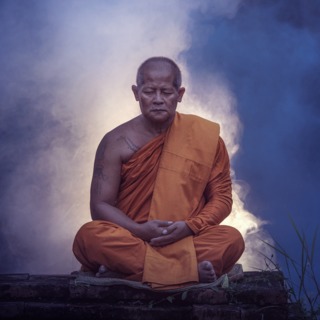
You are probably very familiar with from imagery and videos and books.
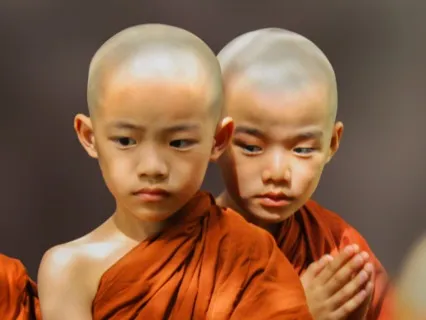
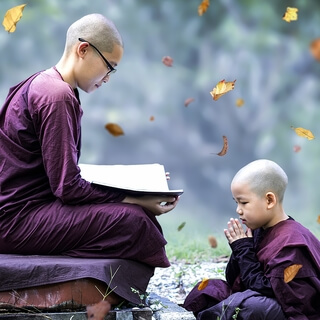
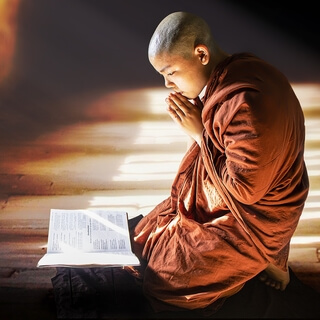
These are your monks and nuns.
They have what I call Gone all in on the Buddhist religion.
They have given up their layperson householder everyday Ordinary life to go all in with Buddhism.
They want to go down this path now That sounds great,
Especially to a lot of Westerners who want to jump on a plane tomorrow and become a monk or nun But there's a little bit more involved than just that They have usually been inside a Buddhist religion probably all their life as some child They've been learning about it and they've made the decision through this constant exposure to Buddhism There's also a period where they show their intention like I want to become a monk or a nun and there's usually a period where they have to go ahead and learn things or show that they really are committed to becoming a Monk or a nun and then when they actually become ordained it's not like they are fully ordained at that particular point They're usually a novice or they are essentially under observation or a trial period basically And this is really to ensure that their perception expectations of what the monastic life is about really is matching to the reality of the situation because for some people they may not expect that they have to do their own chores or hundreds of essentially regulations and rules that they have to follow way more than they would have to in ordinary life and They may not be expecting everything that's required of a monastic and that's where they go You know what?
This isn't for me.
So if they pass that period then yes They can become a fully ordained monastic You also have certain schools and traditions where maybe you go to quote upon quote Buddhist College and just be for years Before you even become ordained.
So there are many different types of Ways you become an ordained Buddhist but it goes with understanding what it actually means to do that and also an observation period learning and just making sure this is right because essentially the monastic community Inside Buddhism is called the Saka and it goes all the way back to the time of the Buddha and as part of what we call The triple J event Buddhism the Buddha as our teacher the Dharma's as teachings and a song has this monastic community So they are very much respected,
But there's a lot expected as well.
Now.
There's also where you can Temporarily become a monastic and this is very popular in different cultures especially inside Theravada Buddhism is in countries like Thailand where maybe it's looked at as a rite of passage or something similar to that Where before you go out into the world and get a job and get married and everything else You should really become a monastic just for a short amount of time now Yes,
People will become a monastic for the rest of their lives,
But this is also very popular as well This is also where you see a lot of Westerners who want to become a monastic sometimes so they can just say yep I was a Buddhist monk at one particular time and that gets a little bit more I would say personally in my opinion into the ego side of things because yes,
You can say you were a Buddhist monastic,
But You're not anymore.
So going to Become ordained temporarily great experience I'm not saying anything against that but it shouldn't be done just to brag that you were a Buddhist monk It should be for the experience to show that you understand the hardships and the challenges that Monastics have so that we can support them because they are part of that revered triple gem inside Buddhism And they need our support lay lay person support monastics and monastics support laypersons so it's a in different ways and so it's very important that we show them the respect and support as really essentially Disciples not just of the Buddha but they help with us Understanding the Buddhist teachings and tradition and practice as laypersons They are all in there in this every single day and so they can give us Insight that we may not get on our own as laypersons Now everybody else that over half a billion Buddhists out there.
They are laypersons.
They are unordained and this is very typical With most religions as well You will see most people in most religions are really the laypersons and the same holds true inside Buddhism Now when it comes to the laypersons inside Buddhism what we do almost just like the monastics We will not necessarily become ordained but we do attend a service as well So monastics will also do this too,
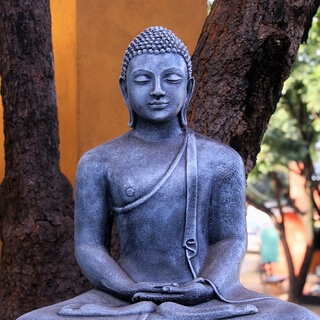
But we will take refuge in something called the triple gem And I just mentioned that a second ago where we take refuge Basically put our faith in The Buddha as our teacher the Dharma his teachings and the Sangha his monastic community We're putting our faith in them and we're taking refuge in them to help us and Dukkha suffering in our lives So we become as we become awakened Become an enlightened being blow out the three fires of greed anger delusion Which causes Dukkha and suffering in our lives so that we can realize our true natural state in our Vada we put our refuge inside them so this is typically a public ceremony and you go to a temple and there'll be different activities that Occur with this and usually there'll be a period right before then where you get taught about what it actually means to take refuge in triple gem Some facts about Buddhism.
So just so you're aware what you're actually doing now this takes somebody from that observer stage of Buddhism where they actually come and Quote-unquote official Buddhist you're taking this official ceremony now There's many different ways this is done throughout all the different Buddhist traditions out there in schools But it's generally the same you are taking refuge in the triple gem and this marks your journey into Buddhism as a Buddhist because you're taking refuge in these three things now Do you have to take this in a public ceremony the traditional way is yes Yeah,
You would you would do that but with Buddhism of interest with people around the world.
That's not always possible you may not have a Temple nearby or even a group and so you want to become a Buddhist and you've been learning about it And you're ready to take the commitment.
Yes,
You can do this in your home There are some times where you can do an online ceremony.
For example a great way to actually do it Can you take your vacation period or time and travel somewhere where there's a temple and you're actually doing one of these particular Ceremonies and you should align that to whatever tradition you would like to follow as well That's a great way and the reason you're doing that is not so much that you are part of this ceremony But because of what this ceremony does the ceremony gets you engaged in part of Not just the Sangha the monastic community,
But the larger Sangha which also includes the laypersons So you are going to be taking refuge of typically along with a bunch of other people who are also now becoming Buddhist And you will also be having people inside there taking the triple gem again So you can take the triple gem as many times as you want to it's not something where it's a one-time deal and also Do your daily practice?
We usually do this as well,
But you all have people come back going Yeah,
I'm just gonna take the triple gem again.
It's a great faith-based portion of Buddhism and so these people that you meet can sometimes be Lifelong friends that you met there and specifically Dharma friends as we call them in Buddhism So having good Dharma friends people who are also on this path towards Awakening enlightenment trying to realize Nirvana.
They are also there with you.
That's what we want We want to be around people that can help us and us help them along this path along with the monastics Now again,
You might be somewhere where you don't have this and you travel somewhere We are obviously have the internet and different ways you can keep in touch So there's different ways that this is a great experience to actually be engaged in You will probably remember it for the rest of your life as this starting point.
So if you can do it in person Fantastic,
But if you can't there's usually other ways to actually do this as well now another portion of of becoming a layperson Buddhist is going to be taking the five precepts and for Most people this might be at the same time as the triple gem or it may be later You don't have to take the five precepts in order to be a Buddhist So the sort of official way to be a Buddhist if you will is to take the triple gem That's the very traditional way to do it taking the five precepts is not required at that particular time in most traditions now When you're ready to take the five precepts,
They could be very challenging for you based upon different things Perhaps where you work you can start where you're at with this But the reason we have precepts inside Buddhism is to guide us in that Morality conduct portion of the Buddha's Noble Eightfold Path towards enlightenment to help us down that path So so we will also as Buddhists show trust and respect to others as well So it's a very good thing.
It helps us ensure we do not harm others or violate others So this is a very root root foundation if you will of being a Buddhist but as Lay persons or human beings to different nuance levels You might violate some or all these at different points and that's to be I don't want to say expected But we are so clouded diluted ignorant to the truth that the Buddha taught it.
We need a lot of help So we are in this constant Cycle right now where we're just reacting to things and that's due to the three fires of greed anger delusion Until we get rid of those it'll be hard in many many ways to fully Practice the five precepts,
But because we are going I want to be Buddhist.
I want to go down this path We're taking the five precepts as well when we're ready So that we can go.
I really want to be down this path.
I really want to make progress aside Buddhism I'm gonna do my very best to follow all of these or as many as I possibly can because I understand they are extremely wholesome And this is the way we should do it.
And if you look at the Buddha has aligned followers monastics They all follow the five precepts and an alighting being this is not even something they necessarily have to even think about their morality and conduct and their actions are So aligned because they understand the truth and it can't go back.
They blew out the three fires agreed anger delusion They are no longer doing entities But well,
What are the five precepts so the five precepts are to refrain from killing harming or violating others to refrain from Stealing or taking what is not yours to refrain from sexual misconduct Refrain from lying gossip or harsh speech and refrain from intoxicants or stimulants Well,
That sounds pretty straightforward and you're like,
Yes,
I could follow all of this We're gonna find that we violate them in many nuanced even minor ways For example,
Let's say that I don't know you step on an ant as you're walking out there.
Well,
It wasn't intentional Was it violence?
You know,
What was the actual purpose of that?
Was it just an accident?
So when we actually look at how we may violate or break some of these precepts We have to really look at the context of them as well and the Buddha did and Buddhism does as well But we do have something called Repentance so when we do break these precepts we can actually repent and you see a lot of times at temples Buddhist repenting for any type of Breaking of any of these precepts and this is a very wholesome practice and I'll explain why so yes,
We are really Saying it to the Buddha or to bodhisattvas or anything else like that because we're trying to do one thing here Get it out.
If you just keep this inside if you go.
Yeah,
I did that but it's not that bad We want to get it out.
We want to make it aware to others and in Buddhist cosmology Yes,
There are Buddhism Bodhisattvas that can help us in different ways But you really need to think about it this way where you don't want to keep it inside you want to bring to the surface What that transgression was what precept you broke in order for others?
Including yourself to be aware of that because when we are aware when we bring this to light to the surface We are aware of how we broke that precept in order to not break it again So for example,
If you I don't know lie to somebody well,
Okay.
What was the reason for that?
Why did you do that?
Can you not do that again?
This is what we want to do.
This is all about Transforming your mind transforming your conduct morality so that it is aligned on the Buddhist path We want to do what the Buddha and his aligned followers did is to become enlightened So the only way we can do that is to follow the Noble Eightfold Path and the different practices in Buddhism Which include the five precepts and as we do this and as we practice very much like going to the gym We will become more aligned with these five precepts It may take some time but your effort and dedication determination towards it is what really makes the difference and Again,
You you may not even be aware sometimes that you are breaking a precept So during your daily practice whether that's a morning session or evening session or both Let's say it's during the evening session and you recite the five precepts and may jog something in your memory you go Wow,
I actually broke this precept today.
That's allowing you to be aware of it You can absolutely repent for that and bring that to the surface.
So you're aware so you don't do it again Now there are five precepts are also can be very much aligned to secular law So for example,
If you killed somebody well,
That's in Buddhism on our religious side of the house That's not something we want to do because we have violated others It is going to generate typically on wholesome karma or actions that are gonna keep us trapped in a cycle of rebirth So there's a Buddhist religious version of that which is very important for us that why we don't want to do it But on the secular law side in our society,
You could be of course in prison for that So you can find that when you align yourself with the five precepts,
You're typically align yourself with secular law as well So it can be very much aligned that way although it was never intended to be Our five precepts are mostly about us Aligning with the Buddha's Noble Eightfold Pass,
Especially morality and conduct but because we are in society We're engaging with society in our everyday lives.
This helps us keep us on that straight and narrow So what should you do?
Should you become a Buddhist right now?
My recommendation is learn and keep learning And talk with others There is no expectation that you need to become a Buddhist right now to continue learning about the religion or to engage in certain Practices and ceremonies that we have and then when you're ready You can become a Buddhist with a triple gem ceremony And that will be the time where typically with a particular temple for example,
They will give you some instruction before that actually occurs Or you can talk to a monastic or monastics beforehand so that you're understanding what it actually entails And if this is the right decision for you,
But there is no expectation or pressure for you to become a Buddhist Officially right away.
Do you have any questions about becoming a Buddhist or what it actually means to become a Buddhist?
I'd like to hear back from you.
You can go ahead and send me a message from my website alanpedo.
Com I look forward to talking with you in our next episode.
Thank you