Welcome to another episode of Learn Buddhism.
I'm Alan Pito.
When we think of the Buddha,
We're usually thinking about him as a grown adult when he was the Buddha.
But just like us,
He was a baby before.
So I think the entire story about the Buddha's birth and him being a baby is a great part about Buddhism,
But it's one that's not always known by Westerners or even celebrated by Westerners.
But the birth of the Buddha is very popular with the half billion Buddhists around the world.
And let's dig a little bit into it in this episode.
So this all starts about 2,
600 years ago,
And we have to go with the Buddha's mom,
And that was Maya.
And when we look at Maya,
She was trying to get pregnant for about 20 years with the king and just wasn't getting pregnant.
And she had one night this dream.
And the dream was that there was this white elephant with these really long tusks that were coming toward her.
And when it reached her,
It actually entered her body through her right side.
And as the story says,
It settled into her womb.
And basically,
When we're looking at that part of the story,
When this elephant's tusk touched her side,
She was with child.
She was going to have the future Buddha.
And this is something that's,
I think,
Really for Westerners,
Like,
Wait,
What's going on?
How is this part of Buddhism?
We're thinking it's just all about meditation,
Right?
But in Buddhism,
When we see the very symbolic white elephant,
This is symbolic of a bodhisattva,
A bodhisattva who is going to have their final birth and become a Buddha.
So in Buddhism,
The path of the bodhisattva is to become a fully awakened being,
A Buddha.
And they are in their final rebirth,
You know,
Before they come to the human realm,
They are going to be inside this heavenly realm.
So there's different realms of rebirth,
And one's a heavenly realm.
And there's a specific heavenly realm there,
Which is really for bodhisattvas.
And they're just waiting to go into a world to become the next Buddha.
So we see,
Basically,
Shakyamuni Gautama Buddha,
You know,
He was inside his heavenly realm,
Decided this is the perfect condition,
The right time for his,
You know,
Rebirth as to become a Buddha in this era.
And that's where we see this white elephant coming down.
And this also,
For a lot of Westerners,
Gives a bit of,
You know,
Reflection.
They're like,
Well,
Wait a minute,
This sounds very,
Very similar to even like,
You know,
Maybe Christianity.
It's just like,
Almost like the immaculate conception of the Virgin Mary,
Right?
Because we're seeing here where Maya is becoming pregnant due to this white elephant,
Not as a result of her husband,
Per se,
In this story.
So I think it's a really interesting concept.
And we're not going to know all the details and all the behind the scenes about this,
Right?
We're not going to have all that portion of the story.
But it's very,
Very symbolic,
That white elephant going into her,
That's a Bodhisattva initiating their next rebirth.
And of course,
You know,
If we want to look at a little more scientifically,
A little more biologically,
Yes,
Could be very much,
You know,
The Bodhisattva is helping her become pregnant,
You know,
As part of this entire,
You know,
Process right here.
So it's not where the king is not involved at all.
But this is an important part of it,
Because it gives Maya a very important part to this entire story.
For a Buddha to exist,
It needs a mom,
Right?
You need to be born into that world.
And Maya is the one.
And I think she is extremely important part of Buddhism,
Because you're not going to have the Buddha without a mother.
And Maya is a very important part of that.
So as the story continues,
You know,
And very culturally,
Very traditionally,
At least back then,
You know,
She was going to go to her mom's home.
And she was going to,
You know,
Give birth there.
But she didn't make it all the way,
You know,
So she was ready to give birth.
This is where you're going to see,
If you ever looked at Buddhist imagery,
Paintings,
You see where she's basically holding on to the branch of a tree,
And she gives birth.
And this is how she gave birth to Siddhartha.
This is the boy,
The man who is going to become the future Buddha,
Right?
And the wonderful part about this is,
You know,
She gave birth to the Buddha.
And this is why Buddhists,
You know,
Revere Maya and love Maya,
Because without her,
We're not going to have the Buddha of this era,
Right?
And she was able to give birth to him.
So seven days after she died,
And that's a really tragic part of this entire story.
And we can look at it in a few different ways.
So she did something for Buddhists,
Which was remarkable,
It was beloved,
And so important to the Buddhist religion,
Because she gave birth to the Buddha,
You know,
And she will never see him become the Buddha in this life.
And of course,
There's in Buddhism,
The story where he actually goes to his mom later on and actually teaches her.
So this,
Like the story doesn't end with Maya here.
But in this world on earth,
That was it,
You know,
She couldn't,
You know,
Caress him and raise him and everything.
And we really see just seven days after he was born,
That that's it,
You know,
He lost his mother.
And when we look kind of all about Buddhism,
Right,
There's impermanence,
You know,
There's a lot about,
You know,
There's death,
There's rebirth,
Right.
And he's been exposed to this right away,
Right away.
And that could be very much the instigation for him to pursue the past later on.
So it's like all these seeds are being planted.
And that could have had a very strong part with him pursuing the life where he became the Buddha.
So that was,
Of course,
A sad part,
But a remarkable part.
So like,
You know,
She's giving birth to him,
Right?
The story that we have is he was able to walk and speak right after he was born.
Now,
For us right now,
We're going,
Wait,
How is that even possible?
We've seen plenty of movies,
You know,
Videos of like,
You know,
Babies being born,
You know,
Or maybe you are a parent who saw your child being born.
Like,
There's no way,
You know,
They're not going to be able to walk,
Right.
But we're seeing here in the story that he did.
And it's a very vivid imagery that we're being exposed to in the Buddha's birth.
So this entire story about the Buddha's birth,
And this can become very important when we celebrate the Buddha's birthday.
He was able,
As a baby just being born,
Able to walk seven steps.
And he points up to the sky with his finger.
And he basically goes,
This is my last birth into this world.
It is for the sake of realizing Buddhahood that I've come into this world.
I'm the greatest enlightened being,
And I'm here to liberate all beings.
Wow.
Able to walk and able to speak right after being born.
The story does continue going that,
You know,
At that moment,
There's a four heavenly kings.
This is a very important group inside Buddhism.
And also nine dragons.
You know,
They're all,
You know,
Fragrant.
Fragrant rain is falling from the sky.
They're bathing him,
You know,
As part of this remarkable birth of the Buddha.
And when we look at this,
We may be going,
Okay,
Is some of this,
You know,
Exaggerated?
Does this really happen?
Or is it maybe,
You know,
Creative license?
We don't know.
But as far as the Buddhist religion,
This is taken as the Buddha's birth,
Right?
And we can also kind of look at it,
You know,
If you want to,
Was Westerner modernized,
Right?
Maybe he did or did not speak.
Maybe this was,
You know,
Part of being a bodhisattva.
There's more that happened.
And,
You know,
It's reflected in different ways.
And this is just how it's articulated.
And we can look at that also,
You know,
If you want to give a little context in Buddhist art.
In Buddhist art in general,
You're seeing that there's lots of vivid imagery.
And it doesn't almost 100% mean that's exactly how something looked or how someone looked or,
You know,
Or whatever it's meant as a teaching as well.
So when we're looking at the Buddha's birth,
Walk seven steps,
Point up in the sky,
Was able to,
You know,
Recite all this.
There was a lot happening,
Right?
And there's also like lotus,
You know,
Petals,
You know,
I get right at the,
At his feet that are growing.
So,
I mean,
Very,
Very remarkable things.
But we also have to understand.
So at this point,
He's just being born,
Right?
He was a bodhisattva before.
Again,
We don't always know the true nature of everything in our world.
But we see later on when he was the Buddha.
And when you become that fully awakened being,
There's what we understand in Buddhism,
That when you've attained this extremely high level of meditative concentration,
You become a Buddha,
Right?
Or arhat or whatever.
You are able to have these supernormal or what we may define as supernatural powers.
And with the Buddha,
You know,
He wasn't using them like you might expect of a religious leader.
You know,
You're like,
Well,
I'm going to use this to gain converts.
You know,
He wasn't doing that.
In fact,
He said,
We shouldn't be using these powers at all.
And so that was quite the departure of what we might see elsewhere,
Where it would be maybe theoretically used in a religion to help gain the prominence of that religion and gain converts.
He used it very,
Very sparingly,
Even though he had that,
But he would use it as a way to teach or a way to help others.
So a very,
Very different way,
Which gives some,
You know,
Credits to what he was doing and who he was.
So if we look back,
Because,
You know,
He didn't have to use those powers at all,
Or he could have used them all the time,
But he was very restrained in it.
And he said,
We shouldn't be using it.
So I think that's a complete departure than what we might expect to hear from a religious leader.
So when we look at the Buddha's birth,
Maybe all of this happened,
Maybe some of it happened,
Maybe some of it happened in different ways,
And this is the way it's been explained to us.
But when we're looking for what actually happens as a celebration of the Buddha's birthday,
You're going to see,
If you go to a temple,
For example,
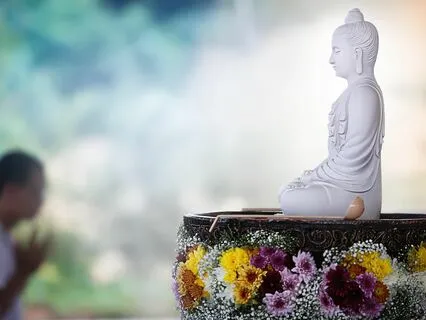
There's like a little statue of a baby Buddha.
And it's the same thing I was just describing to you,
Right?
Where he's,
You know,
Standing,
Pointing up to the sky,
And you're going to see a lot of Buddhists,
They're putting water over the baby Buddha.
Remember the story here?
We had the four heavenly kings and the nine dragons,
And they're raining fragrant water from the sky to bathe him.
So we're seeing that that is something that lay Buddhists are doing at the temple for the Buddha's birthday.
And when I was a very young Buddhist,
You know,
Starting off on this,
I'm like,
There's no way I'm doing this.
I mean,
I don't understand this,
You know,
Particular ritual that's occurring.
And I didn't,
You know,
Really see the benefit to it,
Right?
I'm like,
It's not that important.
But when I understood what the actual Buddhists are doing here,
It's more than meets the eye.
And I think that's what a lot of Buddhism,
You know,
Sometimes for a Westerner,
You're looking at all these rituals,
All these customs,
All these things that are happening in Buddhism,
And you're going,
Well,
That's just cultural,
Or that's just traditional,
Or whatever,
Right?
But there's usually some very,
Very profound meaning and practices to this.
And this is actually a beautiful one.
I really like this one.
Because like all Buddhist practice,
It's helping us.
We are in the Buddhist eyes with,
According to the Dharma,
We're sick,
You know,
We're sick with,
You know,
Being in another iteration in the cycle of rebirth,
And it's all that unsatisfactory,
It's the dukkha.
And we don't really understand,
We perceive things in different ways.
And so there's different ways that we need to be taught and to experience and to progress on the Dharma,
On the path.
So things like this,
These interactions we're doing,
These ceremonies we're doing,
These rituals we're doing,
If we understand what we're doing,
We can find joy in doing it.
We can find that there are ways to helping to transform our mind.
So I want to explain a little bit more about bathing the Buddha,
Because this is an important part,
And actually a very beloved part of the Buddha's birthday that everyone participates in.
So when they are,
You know,
Putting,
You know,
Getting the ladle,
And they're putting the water over the baby Buddha,
It's usually just like you learn from the Buddha's birth there,
Like you had the dragons and then the rain,
The fragrant rain,
You're going to see flowers and fragrance inside this water as well.
So this is not usually plain water.
So what we're trying to do is actually Buddhist practice.
And I love this.
We are purifying the body,
Purifying the speech,
And purifying the mind.
And if you remember,
Like the threefold training,
You know,
We got wisdom,
We got morality and conduct,
And concentration categories.
This is what we're doing here,
Right?
So we want to make sure we're purifying ourselves of all that unwholesome karma that we're generating,
Right?
We want to stop that.
We want to start generating wholesome karma,
Right?
So when we are engaging in this activity,
Look at that baby Buddha as like a baby Buddha inside you,
Like your mind,
Like you have Buddha nature inside you.
You have the capacity,
The ability to become a Buddha as well,
To become an awakened,
Enlightened being.
That's what we learn in Buddhism.
The Buddha,
Upon his enlightenment,
Basically,
You know,
Just said out loud,
Like,
This is wonderful,
Like all sentient beings can do what I did.
And we are the ones who are really preventing that because we're like,
Oh,
I can't do that.
We have delusions,
We have greed,
You know,
Ignorance,
And all this,
The three fires,
Three poisons.
And so what we're able to do with this activity,
Very,
Very symbolic in a lot of ways,
Purifying that baby Buddha inside us,
Got a little kernel inside us,
A little baby Buddha inside us that we can grow and can have flourish,
Like we saw was the actual Buddha.
So when we're putting the ladle over the Buddha and washing him,
You're also washing away all those things in your mind,
Right?
You know,
That's unwholesome.
You're doing a very wholesome activity.
So I'm going to talk more about how we actually bathe the Buddha.
So some of the benefits of bathing the Buddha,
Now these are five different benefits,
Wealth and happiness,
Good health and longevity,
All wishes are fulfilled,
Peace and harmony for family,
Friends,
And relatives,
Never to face the eight obstacles of learning the Dharma or suffering,
And to achieve quick enlightenment.
Now,
That all being said,
Doesn't mean you can just like,
You know,
Put water over the baby Buddha and all this will just happen.
But these are actions we're taking to help fulfill that through what we're doing right now.
So,
You know,
Your actions still matter,
But these are some of the benefits of that.
So the first thing we're going to do when we're going to the baby Buddha,
We are going to kneel.
And typically there's a place for you to do this.
And usually it's set up specifically for this purpose.
You'll see something where you can kneel on there.
It's usually cushioned and you'll go ahead and kneel.
Now,
Before you do that,
A lot of Buddhists,
They're going to go ahead and bow to the baby Buddha.
Because of what we're doing,
We are,
When we bow,
We are showing reverence,
Respect,
And love and admiration for that teacher.
So this is just a baby,
But it's what this baby becomes.
They are a Bodhisattva who came into this world to become a Buddha,
Right?
Wow.
Where would we be without the Buddha?
So this was a watershed,
You know,
Moment in our current era by having this baby Buddha.
So when you bow before the baby Buddha,
You know what,
That's wonderful.
You know,
It's,
It's something where we are humbling ourselves,
You know,
Humbling that ego that's inside us as well,
Showing respect to this future teacher,
The future liberator for us.
And we're able to,
To do that in a very loving,
Respectful way.
So you're going to go ahead and kneel before the baby Buddha.
And this is to help you also to position yourself.
You're,
You're,
You're going to be lower than the baby Buddha.
Cause remember,
This is our teacher,
Respective figure.
You're going to be at that position.
Now,
The next step is actually a good one.
You're going to make a wish and you're like,
Well,
Okay.
You know,
So I'm doing this before a statue,
But,
But let's take a look at this here.
Right?
So we are doing a little bit of what we call skillful means inside Buddhism.
What we want to do is make a wish,
But you know,
A wish for your bind body and intention to do good deeds,
Speak good words,
And think good thoughts,
Because we are trying to transform our mind,
Which is typically,
You know,
Consume was a three fires,
Three poisons of greed,
Anger,
And ignorance.
You know,
That's,
You know,
The,
The creation of all that unwholesome karma,
Right.
You know,
Keeping us trapped in the cycle of rebirth.
We want to start transforming that.
So when we're able to do good deeds,
Speak good words and think good thoughts,
And this is very popular in the tradition I practice in,
That is going to be something where we go,
You know what,
That is a wish I want to fulfill.
Right.
And when we're kind of doing this engagement with the baby Buddha,
We can make that wish.
Right.
And we're cleaning out our mind with that water and making this wish.
Then we go into the very important part,
Right?
We're going to go into the actual bathing of the Buddha.
Now the Buddha doesn't need you to bathe him,
Right?
You know,
He's,
He's clean.
You know,
This,
This little statue is clean.
You don't have to bathe him.
Right.
But we're,
Of course,
Doing this as part of the ritual,
The ceremony.
So there's usually going to be this long handled wooden ladle.
And,
You know,
This is what we're going to use to get the water that's inside the basin to bathe the Buddha.
As part of this,
We want to sincerely pray for the merits of bathing this baby Buddha,
Purifying our afflictions and defilement of greed,
Desire,
Anger,
And hatred.
So remember the three fires,
Three poisons,
You know,
Greed,
Anger,
And ignorance.
That's what we want to get rid of.
So when we're rid of that three fires,
Three poisons,
That's nirvana.
And we achieve that through enlightenment.
So that's what we want to do.
We want to use the bathing of the Buddha to help us get to there.
We want to purify ourselves as part of this process,
Often very symbolically,
Of course,
To be able to get to there.
So we can also pray for,
You know,
Ending violence,
You know,
Evil in the world and stuff like that.
Those who practice Pure Land Buddhism,
Right?
We may want to,
You know,
Pray that our troubled world is transformed into a Pure Land right here,
Right now.
So all these different types of prayers and,
You know,
Wishes that we can do,
You know,
We're using this opportunity.
It's very symbolic,
Very important date for us,
You know,
The baby Buddha's birthday.
We want to do that and we can engage in different practices that way.
So what kind of mind should we have when we're bathing the Buddha?
Well,
Remember,
We're engaging in a Buddhist practice,
A Buddhist activity,
Right?
So we should have faith,
Sincerity,
And righteousness.
So this is from my tradition.
So they basically say,
We should give rise to a joyful mind and have deep faith in the merit of bathing a Buddha.
When we pour water over the Buddha,
We are also cleansing our own minds.
Remember that?
So I think that's really good there.
Sincerity.
When we bathe the statue of the Buddha,
It is as if the Buddha is before us and we have cultivated the greatest merit in the world.
We should transfer this merit to all sentient beings,
Grow in wisdom together,
And create positive conditions.
So just like if the Buddha,
You know,
As maybe an adult,
Right there,
He's got,
You know,
Dirty feet from walking.
We're going to clean him,
Right?
That's what we would do back then.
It's showing respect,
Sincerity,
And kindness,
Right?
And then finally,
Righteousness.
We wish to be rid of karmic obstructions and to purify our minds.
We wish for the merits of bathing the Buddha and pray for peace in the world and happiness for all humanity.
Isn't that wonderful?
So even if you don't believe the Buddha,
You know,
As a baby stood up and talked and all this stuff,
Look at this practice right here.
Isn't this really engaging?
So when we are actually bathing the Buddha,
We're going to have a little bit of a ritual that we're going to do.
Now,
All of this can vary between the traditions.
Of course,
I'm just,
You know,
Speaking of my tradition right now,
But you know,
It'd be very,
Very similar.
So we're going to go right shoulder,
Left shoulder,
And right shoulder again.
So you're bathing three times.
So when we do the right shoulder,
We basically,
You know,
To ourselves go,
I vow to speak good words,
Bathe him over the right shoulder.
Next,
We go,
I vow to have good thoughts,
Bathe him over the left shoulder.
And then finally,
We vow to do good deeds and bathe him over the right shoulder.
Beautiful,
Right?
That is how we bathe the Buddha.
And so that is,
Again,
You know,
I mentioned a couple of times,
I think it's just a wonderful tradition,
A wonderful ceremony.
It is Buddhist practice.
You know,
A lot of things we do,
We don't think is Buddhist practice,
But it is.
So if you have the opportunity to go to a temple,
Engage in bathing the baby Buddha,
Do it,
Do it,
Get into that tradition,
Get into that ritual,
That process.
Hopefully,
This gave you a little insight about that.
But I think it's going to be a wonderful part to your tradition.
We are so grateful that we have the Buddha in our lives,
You know,
Without him being born,
Without Maya giving birth to him,
Without him on that Bodhisattva path to even have that come to that fruition,
We wouldn't even be talking about Buddhism right now,
More than likely.
So that's why we celebrate the baby Buddha's birthday.
It's,
You know,
Very cute as well,
Too.
We're seeing this little baby Buddha there,
Of course,
Right?
But highly symbolic.
It is Buddhist practice.
And something that you may have thought of as,
Oh,
That's really cultural,
Traditional.
Now,
Maybe you're taking a look at it with some different eyes going,
I like that.
Not only is that beautiful,
That's a great Buddhist practice as well.
So let me know if you've actually bathed the baby Buddha before or if you're going to and what your experiences are.
I'd love to hear back from you.
I'll talk with you in our next episode.
Thank you.