Welcome to Learn Buddhism,
I'm Alan Pedoe.
With the coming of every new year,
People find a time to set new resolutions and paths for them to take.
Sadly,
Many of these quickly end due to lack of commitment.
But there is one thing that should be a serious commitment for any Buddhist.
Freeing yourself from the self-imposed jail of suffering and dissatisfaction brought upon by the three poisons of greed,
Anger,
And delusion.
However,
Many of us do not stay committed because it takes too much time to practice Buddhism,
Whether that's studying scripture or meditating.
Think about it this way,
If you were wrongly imprisoned,
Wouldn't you want to do everything to get out of jail?
Thankfully,
The Buddha provided us the path towards freedom,
Towards liberation,
Which is the noble Eightfold Path,
Which leads you to becoming enlightened so you can realize your true natural free state of Nirvana.
In the Buddhist Noble Eightfold Path,
It is grouped into three categories,
Which we as Buddhists also look at as the Threefold Training.
These three trainees and also three groups of the Eightfold Path provide us everything we need for liberation,
For freedom from that suffering.
It helps us understand the truth about Dukkha,
Which is suffering or unsatisfactoriness,
Through right understanding and right thoughts.
It helps us create the conditions to transcend suffering through right speech,
Livelihood,
And action.
And it helps keep us on the path towards enlightenment through right effort,
Right mindfulness,
And right concentration.
These,
When they are fully practiced and fully understood,
Allows us to become awakened to the truth that the Buddha taught us,
Become enlightened beings,
Blow out the three fires of greed,
Anger,
And delusion,
And realize,
Rediscover our true natural state of Nirvana,
Which is devoid of greed,
Anger,
Delusion,
And the unwholesome karmic actions we were taking as a result of that.
The reason this Eightfold Path and the Buddhist Mission is so important is because he told us this realm,
This birth that we're in right now,
The human realm,
Is a rare and precious thing because of all the realms of rebirth.
This one gives you the best chance of understanding the Buddhist teachings,
The Dharma,
And the ability to become enlightened,
To escape,
To end the cycle of rebirth.
You can't do it in any of these other realms.
It's only this human realm.
So now we have this precious opportunity,
This rare opportunity,
To practice Buddhism.
We shouldn't regress.
We should practice as much as possible so that we can continue on this path towards enlightenment.
However,
Our wild mind doesn't want us to practice Buddhism because what we're trying to do is to tame this mind,
Control this mind,
Purify this mind.
The mind is often likened to a bull or an ox that's just wild and it's doing whatever it wants to.
And because of that,
It's controlling you.
It's almost like you have a rope around that bull or ox and it's taking you wherever you want to go and you have no control.
But the fact is that's not the true nature of things.
Remember nirvana is your true nature.
It's devoid of this ox just pulling you and bringing you everywhere and causing you all this suffering.
So when we practice Buddhism,
We're gonna face resistance essentially from ourselves,
Our mind,
And this is what we have to transgress.
Going back to our New Year's resolution and also the Eightfold Path,
Let's take a walk through all of the Eightfold Path and how you can apply that to your practice in the New Year.
Now the first category is wisdom and I love this because it's almost foundational in a way.
We have Right View which is basically having right view to have these right concepts and right ideas as it refers to the Buddhist teachings,
To the Dharma.
When we talk about the Dharma seals,
The Four Noble Truths,
This entire Noble Eightfold Path,
All the concepts,
Our Right View of these tells us these are the correct views,
The right truth towards liberation,
Towards freedom.
So having this Right View,
It's sort of like faith in a way,
But it's this Right View and faith in the Buddhist teachings as being the correct ones that leads us to freedom is going to give you that base.
We may not understand all of it.
Some words and terms and concepts can be very confusing,
But having this Right View of the teachings,
Of the Buddhist path,
Is what we want to start with.
And that's coupled with Right Thought which makes up the second part of the wisdom category of the Eightfold Path.
I like this one for our New Year concept because I like to say New Year,
New Buddha mind.
Right Thought is also known as Right Determination or Right Awareness or Intention.
So think about it this way.
We have our Right View,
But we have to have the right thoughts,
The right determination to practice Buddhism.
So what we're trying to do with our Right Thought is,
Of course,
In our mind we're trying to eliminate the three poisons,
Three fires of greed,
Anger,
And delusion by keeping our thoughts in accord aligned with the Buddhist teachings,
With the Dharma at every moment.
Because when we do that,
We don't allow fuel to go on to the three fires of greed,
Anger,
And delusion.
If we don't allow them to arise,
They can't cause us Dukkha,
Suffering,
Unsatisfactoriness.
Then we go into the Conduct or Morality portion of the Eightfold Path and the Threefold Training.
Now when it comes to everyday layperson Buddhists like you and me,
The majority of what we're doing is going to be generating merit,
Trying to create wholesome karmic actions and events because we want to be aligned with the Buddhist path.
Now the Conduct Morality portion sounds so simple and in fact it is sometimes neglected or overlooked by a lot of Western Buddhists,
But it's so important because if you don't have this portion,
Wisdom is not going to mean anything and this meditation grouping is not going to mean anything either.
Because you need this foundation because this is what enlightened beings are.
They are morally correct.
Their conduct is correct as it is aligned with the Dharma,
With the Buddhist teachings.
So Right Speech,
As we progress on this new year,
Are we ensuring the verbal karma,
Our speech,
Is aligned with the Buddha's teachings?
Are we doing words of compassion,
Words of praise,
Words of altruism?
These are words that benefit verbal karma,
That benefit others.
Right Action is our next portion.
So Right Action is going to be your karma of the body.
These are your actions that are in accord with the Dharma,
The truth.
They are wholesome karma as well.
We don't want to do things such as killing,
Stealing,
Or engaging in sexual misconduct because these are things that can harm other people.
And then we round out the conduct morality category with Right Livelihood.
And this is traditionally spoken of as Right Profession or occupation,
But also a way of life.
It's especially important because this has a good bearing on also Right Speech and Right Action.
Is what you're doing in your life,
Whether that's occupation or hobbies or anything else or people you hang out with,
Is it doing things where you're going to be lying or killing people?
For example,
These are things that we want to avoid because they can generate karma that's not going to be wholesome to us,
That's aligned with the path in Buddhism.
Then we come to the concentration or meditation category of the threefold training and the eightfold path.
The one that I like to hone in on is Right Effort.
Right Effort,
Also known as Right Diligence,
Means that we're using skillful means in practicing,
Following the Dharma.
In essence,
We should be moving in the direction of the Dharma with courage and diligence.
So remember we had Right Thought and Right View at the beginning in the wisdom category.
Here in the Right Effort portion,
You are going,
I need to move forward on the path that the Buddha laid out in Buddhism,
Even though some people may say things about me for being a Buddhist or following his teachings or maybe I'm not going to engage in these activities,
Which as we learn maybe in our conduct morality portion is not wholesome and we're saying no we're not going to do that.
That could be where we may fall back and go,
Why does this want to be part of the crowd or I'm just going to go ahead and do that so I fit in.
This courage and diligence we have in our effort in following the Buddhist path is very important because essentially what we're trying to do is prevent these unwholesome states from arising,
Ending unwholesome states that have arisen,
And develop wholesome states that have not yet arisen.
And then to round it all out we're strengthening any wholesome states that have arisen.
So we're trying to end and prevent unwholesome states and then we're trying to have these wholesome states arise and they have arisen already to strengthen them to make sure they stay there.
That is our right effort.
Then we get to right mindfulness and I like right mindfulness because when you think about the Buddha and his enlightened followers one thing you sometimes think about is well they became enlightened there was nothing more they need to do.
It was basically a light switch went off and that's it.
That's not the case.
When we even look at the Buddha he was practicing mindfulness.
He was essentially practicing quote-unquote every moment of every day even though he wasn't a fully awakened being a Buddha.
He was still practicing and he was practicing mindfulness in every moment every encounter.
So mindfulness also known as true contemplation means that we have a mind as pure aware it does not give rise to unwholesome thoughts.
You're already seeing how all of these are kind of interdependent and connected to each other.
So when we're having right mindfulness we're on the path.
And again look at the Buddha on all of this eightfold path he was doing things that measured and met every portion of this eightfold path.
While mindfulness gets sort of a secular or culturally accepted term and actions in our society what we mean in mindfulness in the Buddhism or Buddhist context is that we are contemplating in periods of the body.
We're contemplating the suffering of feelings.
We're contemplating the impermanence of the mind and we're contemplating the non selfhood and non self of all phenomena which is a very challenging and difficult thing to do.
So mindfulness we may be going well just be mindful in all situations or I'll think about something.
It's a good start but we need all the eightfold path to help us with right mindfulness.
And that takes us to the last one right concentration.
This is where we are trying to focus the mind and settle our distracted body so that we can purify the mind.
We can cultivate ourselves as it is referring to the Buddha's past the Dharma the teachings of the Buddha.
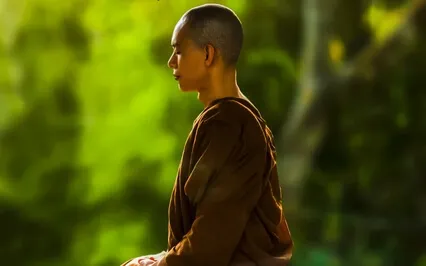
Now commonly what you see here is going to be meditation or meditative concentration to be more specific.
So sitting meditation is a very popular practice but it's not always practiced by all Buddhists.
Everything from chanting,
Recitation,
Walking meditation,
Sitting meditation,
A variety of different ways that we practice this meditative concentration is actually employed by laypersons and also monastics.
So what we're trying to do here remember that visualization I gave you of that ox or bull that's your distracted wild mind.
We're trying to essentially calm down settle this mind in our body so that we may be able to contemplate the true nature of things just as the Buddha taught us.
We need to do this for ourselves to become enlightened because just being aware of the Buddhist teachings,
Reading books,
Watching videos,
Attending some lectures,
Whatever,
That's all intellectual in nature.
And that's fine we need to have that portion of this in Buddhism as well but it's the practice.
It's this hard work and effort to settle your mind and to gain true insight,
Wisdom is what we're trying to do.
A good analogy for this is almost like going to the gym and I've used this example many times before.
If you want to become healthier,
You want to work out,
Gain muscle,
Become fit,
Become an athlete,
Whatever,
You're gonna be exercising.
You can be on a fitness regimen,
A program.
This includes everything from eating right,
Doing proper form and technique,
Consistent effort at the gym or wherever you're going to be practicing and we can relate that to the Eightfold Path.
If you want to progress in Buddhism you have to practice.
You just can't read about it or watch a YouTube video or even listen to a podcast.
You have to practice Buddhism but the one thing especially as we're going into this new year,
This one thing and one complaint or one challenge a lot of people have is,
I don't have the time.
Buddhist practice can be done all the time.
What we usually think of is,
Well I have to have a morning or evening routine daily practice.
Absolutely.
This is a good way to structure and have a foundation to your practice.
Absolutely.
You can do a little bit more when you have dedicated time,
Dedicated location to practice but as you're out there in the world,
Are you practicing right mindfulness?
Are you employing right speech and right action?
Do you have right view and right thoughts as you're encountering other people in other situations?
These are all different ways you can be practicing Buddhism in all different times and situations that you encounter.
This can be five minutes for example for your daily practice and you supplement that with your interactions throughout the day.
One practice I like to give you is,
Let's say you're starting off with maybe just five minutes or ten minutes a day with your daily practice but as you go out and you encounter people and situations you may realize later on,
You know I didn't really handle that with right speech or my mindfulness was not there or my effort wavered here.
This is where we can go at the end of the day.
We can reflect upon those.
Maybe we can read some scripture or revisit a particular teaching that we enjoy to reinforce us.
We're going to not be perfect at all times.
The Buddha knew this.
That's why we have Buddhist practice.
That's why he practiced all the time too,
Even as a enlightened being.
So as you encounter situations where you just didn't handle it quite well,
Reflect on that at the end of the day because through this continuous effort,
This continuous practice,
You will be shaping and transforming your mind that's more conducive to Buddhist thought teachings and practice.
To go back to my athlete or working out example,
Let's say you just had a bad day at a gym one day or maybe you're trying to compete as a swimmer and so you just had your your form was off one day or whatever,
You're reflecting on it.
You're going,
Oh you know I understand why I didn't have the time that I had all these other times because I did this technique instead of this technique or my mind wasn't fully engaged in my form or I was distracted by this or that or I didn't eat well or I wasn't feeling right.
You understand where I'm going with this.
We're not always going to be perfect but if we are in this mindset of continual improvement and continual practice,
We will progress on the Buddhist path.
Just don't beat yourself up over it.
Just realize you may have had a setback or you may have not practiced for a week.
You can always start from where you are.
So keep this in your mind.
New year,
New Buddha mind,
We can practice Buddhism.
You do not have to dedicate hours every single day to it.
Just practice.
Do you have any questions about starting a daily Buddhist practice?
You can actually go to my website alanpedo.
Com and find out how to actually start a daily Buddhist practice and also watch a video on it.
If you have any questions or concerns you can also email me from my website and I look forward to talking with you in our next episode.
Thank you and Happy New Year!