Welcome to Learn Buddhism.
I'm Alan Pedo.
When you think of Buddhist practice,
One thing you're probably not thinking about is the cultivation of merit.
But the cultivation of merit is actually the primary practice of Buddhists around the world.
But what is it exactly and why is it so important?
Well,
Merit is the result of good deeds,
Acts,
Or thoughts that are in accord with the Buddhist teachings.
Merit then creates the right wholesome conditions for us to progress on this path towards enlightenment so we can realize our true natural state of nirvana where we have blown out the three fires of greed,
Anger,
And delusion and thus can end the cycle of rebirth.
Because the cycle of rebirth is re-becoming in these forms that we're in right now like the human realm.
This is dukkha.
It is unsatisfactory.
It is suffering.
So we want to end that particular condition.
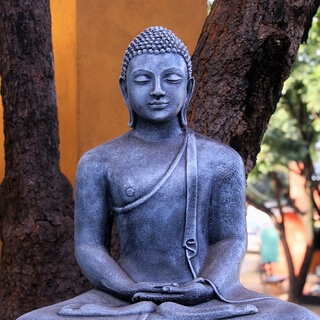
Now this is all rooted in the teachings of the Buddha.
The Buddha realized that not everyone wanted to or even could become a monastic which is a monk or a nun.
But they still needed a path to follow in everyday life.
So through generating merit laypersons,
You and me,
Can create the wholesome changes within ourselves and provide for the future conditions that are beneficial on the Buddhist path,
This eightfold path,
Towards enlightenment.
Even the Buddha,
If we want to look to his prior lives,
Prior life tales,
He was generating and cultivating merit in all those prior lives that which eventually accumulated in the right conditions for his last rebirth in this world where he became the Buddha.
So we can even see in the Buddha's life story where the cultivation of merit was very important.
And we can see where the Buddha in the Buddhist scriptures of the different traditions still show that merit is so important.
So the Buddha said,
Bhikkhus,
And bhikkhus are monks in the Buddhist time,
There are three grounds for making merit.
What three?
The ground for making merit consisting in giving,
The ground for making merit consisting in virtue,
And the ground for making merit consisting in mind development.
These are the three.
So the Buddha was laying the groundwork for what this cultivation of merit is.
And he said it was these three things.
It is giving,
Morality,
And mental development.
And we're gonna talk about that because these three things,
They help you stop the three poisons or three fires of greed,
Anger,
And delusion,
Which is really that root cause of dukkha,
Suffering,
Unsatisfactoriness,
These unwholesome karmic actions,
And rebirth.
We want to end that.
So when we are cultivating merit,
We are actually practicing Buddhism.
Let's talk about them.
So the first one is giving.
And this one may just kind of get blown over or overlooked by a lot of Buddhists,
But it is so central.
Even the Buddha said that giving is really the heart of his teachings.
And not the giving that we may think about in our minds right now,
But this true deep fundamental giving that also has a component of your mind and your thoughts and everything else.
This is really the Buddhist teachings.
And when you practice giving fully,
You are really practicing the Buddhist teachings and the Buddhist path.
And he said this.
So that alone is very hard for us,
Which is why we also practice everything else inside Buddhism.
But with giving,
This has become very much the primary practice of many Buddhists,
And we see it in many,
Many different ways being practiced.
For example,
The Saka,
The monastic community.
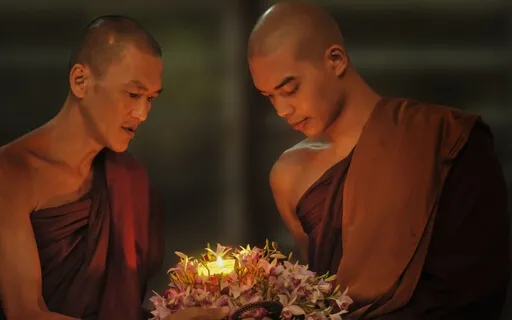
This has always been looked at as a very meritorious field of merit for us to give to.
And we can look at the primary reasons why we look at the Saka in that way.
These are people who have given up the householder life where you and me,
We're laypersons,
We're in a householder life right now,
We have our everyday activities.
They gave it all up.
They became homeless and became a monastic.
They're all in,
As I like to say,
Inside Buddhism.
And because of that,
They are fully committed on this Buddhist path towards enlightenment.
And with that,
We want to support them.
And they may have accumulated good merit in these prior lifetimes,
These prior existences that accumulated,
Just like the Buddha,
Towards like,
You know what,
This is the time that I want to become a monastic.
And we need to support them on that,
On that particular path.
So we're generating good merit when we give to the Saka.
For example,
If we are supporting and making sure the temple is staying open,
If we are providing food and medical needs for the monastics,
If we are giving them clothing,
All these different things are very much rooted in the accumulation of merit when it comes to the Sangha.
And you see many ceremonies even related to that.
For example,
There's like Sangha Day where you,
Maybe it's giving merit,
Excuse me,
Giving money,
Or you're giving clothing to the monks and the nuns.
And so there's many different rituals that are actually part of this where we are generating good merit towards the Sangha.
Now in turn,
It doesn't end there.
The monastics also generate and accumulate good merit.
So it's just not a layperson practice.
It's also a monastic practice.
In turn,
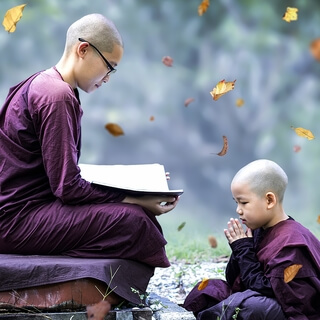
They are teaching us how to understand the Buddha Dharma,
The Buddha's Dharma,
His teachings.
And when we are taught that,
When we understand that,
When they help us engage in rituals and ceremonies and retreats and meditation and everything else,
They are generating good merit.
I'm going to talk more about this accumulation and generation of merit at the end of this episode and what you do with this merit,
But they are also generating it as well.
So it's a very symbiotic and mutually beneficial relationship.
And the monastics need the laypersons,
And the laypersons need the monastics.
So we need each other and it's a very,
Very mutual relationship.
Then we have morality.
In general,
This means to live a balanced life in accordance with Buddhist ethics.
And you can do this by following and aspiring to follow the five precepts.
And you can also take on additional precepts,
For example the eight precepts,
Which are the five precepts,
Addition two,
Three more,
Or Buddhist software precepts and different things that are aligning you with the morality portion of the Buddhist teachings.
When we are practicing and aspiring and upholding the precepts as much as possible,
We've aligned ourselves,
This middle path,
This middle way,
Aligned with the Buddhist teachings that we are not harming others and thus also not harming ourselves along the path towards enlightenment.
So if you can fully uphold the precepts,
Fantastic.
For a lot of us we are aspiring to uphold the precepts.
And a lot of times we will have to do repentance for maybe breaking a precept.
For example,
Not practicing it fully,
Maybe you did a quote-unquote wide lie,
For example,
And broke a precept.
We do repentance so we understand that.
So morality is us trying our best to align ourselves with the Buddhist teachings as it relates to ethics.
You can also take,
A lot of times you see laypersons do this,
Short-term retreats as it relates to morality.
So when you look at short-term retreats,
Sometimes people look at it as oh I'm gonna do meditation or kind of maybe live like a monk or take the eight precepts,
But you're trying to align yourselves with that morality portion of cultivating merit.
And then finally we have mental development.
So this is where we are trying to purify our mind of that three poisons,
Three fires of greed,
Anger,
And delusion.
And we do that with effort and determination.
Now what's important about this,
It's just not sitting meditation.
So a lot of Westerners and beginners think sitting meditation is the beginning and end of all Buddhist practice.
And it's absolutely not.
Buddhist practice consists of three things we call the threefold training.
It is wisdom,
It is going to be morality,
And it's also going to be concentration or mental development as we're seeing here.
So these threefold training you can also see right here inside the cultivation of merit.
So practicing everything on that eightfold path requires your effort and determination.
But when it comes to mental development,
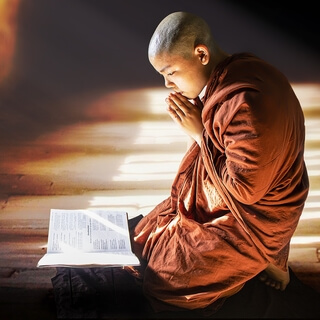
Yes meditation is important,
But so is chanting,
Reciting,
Invoking a name of a Buddha,
Is going to be attending Dharma talks and services,
Classes,
Venerating Buddhism bodhisattvas,
Mindfulness.
Think of whatever you want to as far as Buddhist practice,
You're going to find it in here as well.
It's because when we look at these three components of cultivating merit,
We are actually practicing Buddhism in all its glory and all its fullness right here.
So it is very much aligned with the threefold training in Buddhism as it relates to the Buddhist Noble Eightfold Path.
If you can cultivate your merit with these three things,
You're practicing the Buddhist Noble Eightfold Path as well,
Which is why Buddhists from around the world are practicing this.
Now yes,
They may be focusing heavily on the giving component,
And if you think about that it's also purifying and transforming your mind,
Trying to get away from ego,
Self inside your mind,
Break down that component right?
And then as you progress on to morality,
You're now aligning yourself even more with the Buddhist Noble Eightfold Path.
And then we get to mental development,
And of course you can be practicing these all at the same time,
But with mental development now you're refining because now you are essentially not fueling,
Putting fuel on the three fires of greed,
Anger,
And delusion,
And you're now letting all the right conditions arise for you to achieve enlightenment.
Unfortunately enlightenment is not always a guarantee.
Even the Buddha,
When he became awakened,
There was a moment of doubt where he wasn't sure anybody would really understand his teachings because it's not really easy to not just grasp,
But to fully practice becoming an enlightened being.
However,
He did decide,
Yes I'm gonna go forward and teach and that's what made him a Buddha,
But he understood that it's these future conditions that needs to be really developed,
Especially for laypersons,
And that's really why we have the cultivation of merit.
Just like the Buddha,
He cultivated merit in all those prior lifetimes which accumulated in his last birth,
Which allowed him to become a Buddha,
And that's what we have to think about as well.