Welcome to another episode of Learn Buddhism.
I'm Alan Pito.
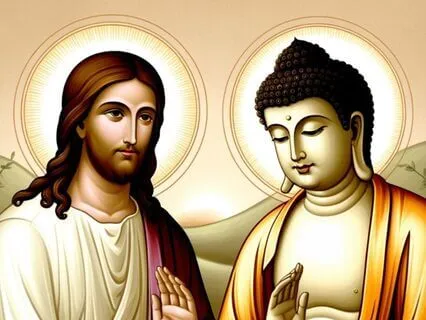
The Buddha and Jesus.
Is there any similarities between Buddhism and Christianity?
Did Jesus,
When he was an adult,
Learn about Buddhism which shaped his ministry?
We'll talk about these because you're bound to hear about them to some level in your practice and studying and understanding of Buddhism.
So,
If you're practicing Buddhism or just studying Buddhism,
You've probably asked yourself or heard others talk about how there are some similarities.
Maybe,
For example,
You hear about loving kindness in Buddhism and you correlate that to what we talk about love inside Christianity or maybe charity or giving or even meditation.
On the very high level surface,
A lot looks the same.
A lot of the teachings you're going to hear,
Maybe when you go to church,
Is going to sound very similar to what we have in Buddhism.
But are they the same?
And then you may also hear about the Buddha and Jesus.
You might have heard that,
Well,
The adult Jesus,
In the period of time where before he started his ministry,
That he actually traveled and he encountered Buddhism.
Because Buddhism was around long before Jesus was born.
It was over 500 years old by the time Jesus was born.
So,
Did he learn something and bring that back and that helped shape what we now see as Christianity?
And these are very interesting topics.
Now,
That latter part where we talk about where maybe Jesus went and encountered Buddhism,
It was largely shaped by a 1894 book by Nicholas Miltovich,
Where he basically made the suggestion that,
Well,
The Jesus went and experienced Buddhism and shaped by what the Buddha taught,
Came back and taught his ministry in that fashion or was shaped in a large part by that.
However,
From what I understand,
There was some cross-examination of that and challenges.
And he basically admitted,
Well,
It was this fabricated evidence is where he came up with that notion.
So,
The idea that Jesus actually learned about Buddhism and Buddhist teachings and concepts,
While there's no way for us to prove or disprove that because that part is just not known to us,
Most historians and theologians,
They're like,
No,
There's nothing there.
There's nothing that we can see that can shape that particular component of this theory or idea.
So,
When we look at Jesus and his ministry,
We don't have to look to Buddhism for that.
We can see that as its own separate thing and it was created in that way.
So,
The notion that it was the Buddha was influenced him or Buddhism,
Well,
That is true that there was some components through trade and there was the spread of Buddhism in many different ways.
You can find things in the ancient past.
It doesn't mean that Jesus would have read that or understood that or practiced that or in any way that where he shaped his ministry and which later evolved into what we now call Christianity.
So,
I think we can really dispel that as maybe fabrication or rumor or just high hopes that he would have encountered Buddhism.
And that is where we get a lot of these concepts and ideas we see in Christianity,
That they are a totally separate thing from Buddhism and rightfully so.
So,
That brings us into another part of this.
Okay,
If Jesus had not have heard of anything about Buddhism or Buddhist teachings and that didn't shape his ministry and what became Christianity in our modern world,
Is there anything that intersects?
Is there anything that we can see as not necessarily borrowing but,
You know,
Similar concepts and ideas?
And I think that's a good discussion because when we look at Buddhism and if we take Christianity out of the picture for a second and we just talk about Buddhism,
What the Buddha taught was the true nature of our world as he explained it.
And what he was doing was explaining,
As I mentioned,
The true nature of things and how he understood it through dependent origination,
Impermanence,
Karma,
All these different things.
And when we look at that,
He's almost like,
As I always give an example of,
Like cleaning that dirty window so you can see clearly what is truly there so we won't make these wrong assumptions and perceptions.
And when we look at all religions in that way,
Can some things be the same?
Well,
Of course.
You know,
Getting out of the picture of like how different religions came to be and different things like that,
We can go that of course there's going to be a lot of things that are going to be similar because maybe a particular religion sees a particular concept the same way as Buddhism and maybe in a very limited fashion because each religion is going to be different in that way.
But we see it where they're seeing that same truth,
Right?
And maybe it's going to be X,
Y,
Z,
Whatever it might be.
That is going to be,
Maybe as the Buddha would say,
Well,
Of course,
You know,
Human beings are going to see certain things and they may begin these glimpses,
These flashes of light,
If you will,
These sparks of enlightenment into the true nature of the world.
And you can find that possibly inside different religions.
And even if you look at the Buddha,
Before he was a Buddha,
When he was Siddhartha Gautama,
There was before Hinduism,
There was the religion of the time,
Which eventually as we now know as Hinduism,
Grew into that.
That was a religion where he borrowed similar concepts,
Where he had his understanding of things such as karma,
Where he had of samsara and different things like that.
But he took a drastically different approach to that than what was being taught at the time.
That's why it's a separate religion,
Buddhism,
Because it is not the same as Hinduism in that regard.
There's fundamental differences.
And that also shapes what we see about Christianity and other religions as it correlates to Buddhism,
Because they're not the same.
You know,
When the Buddha and as Buddhism as we currently understand it,
It definitely stands alone,
I would say,
For the vast majority of world religions,
Because it teaches things such as,
Of course,
Impermanence,
But impermanence in the Buddhist understanding.
This is where you don't have things such as a all-powerful,
You know,
Lives forever deity,
God,
Whatever.
The Buddha said that can't exist.
You can't have something that escapes impermanence.
And we talk about dependent origination,
And you talk about the realms of rebirth.
So even in Buddhism,
We have a God's realm,
Right?
But it's not the same as like a heaven,
Insofar as like when we see in Christianity,
Where even beings inside that realm,
Which may be there for a very long time,
They can't escape karma as well.
And they may not always remain in that realm,
Or like hell that we have inside Buddhism.
It's not the same as maybe like hell inside Christianity,
Where maybe that's forever,
Maybe.
You're saying inside Buddhism,
No,
It's until you essentially burn off the karma like any of the other realms.
And that's where it can shape the future rebirth.
So definitely different concepts.
And,
You know,
Even the concept of not-self,
Where the idea we have of our self right now,
And we may feel,
Even if it's a minor degree,
A little something we're latching onto,
That it's a me,
An I,
A self that's unchanging,
You know,
It's permanent,
It's everlasting,
Right?
Some may call it a soul or self,
You know,
Whatever you want to call it.
We are definitely existing as we are existing right now,
As this grouping of aggregates or skandhas.
And through Nama Rupa and other concepts inside Buddhism,
It gives us false illusion of a permanent,
Unchanging,
Independent self.
And that was another key thing that the Buddha was trying to explain is that,
Yes,
You exist right now.
Yes,
You are you right now.
But it is a temporary grouping of things that give off this illusion of self.
The illusion of self is that you have a permanent,
Unchanging,
Independent version of that,
Maybe like a soul,
Right?
So the religion of his time,
That would have been where,
Yes,
You know,
Your karma can shape you going into another body in the future,
Right?
Reincarnation.
But he didn't teach reincarnation,
He taught rebirth.
So that that karma is not your soul or self,
But we are obviously recipients of the karma from prior iterations.
And while all that's being said,
It sounds like a lot right there.
That's important because you look at some other world religions,
And even Christianity,
Right?
Well,
Maybe there's going to be everlasting self goes to heaven,
Right?
And that is a big,
Big thing.
You know,
It's a big thing inside Christianity,
Whereas you don't have that inside Buddhism.
So there's gonna be these fundamental differences where there are stark contrasts between the two religions.
Now,
That doesn't mean that you're not going to find again,
Like I'm talking about these sparks,
These glimpses of the truth.
It's not to say,
Of course,
That one is truer than the other,
But you're seeing that,
Okay,
The world as we see the world,
The existence that we're in right now,
What is the truth?
And really,
It depends on your religion,
Which one you're going to believe in.
So if you're Buddhist,
You're gonna believe in Buddhism,
You're Christian,
You're gonna believe in Christianity,
Of course,
And it's just going to be these glimpses.
And that's where a lot of that cross religion exchange and understanding really comes in because at the core,
For a vast majority of world religions,
You are going to have these central concepts,
If you will,
Right?
I think charity,
Giving,
Loving kindness,
All these different things,
Those are really,
Really core concepts.
While they may be different in many different ways between your religions,
You're gonna find meaning,
You're gonna find similarities between the two.
And I think that's a beautiful thing because that's where you can find,
You understand,
You can find out,
Yes,
We are trying to help one another in different ways.
Of course,
Between religions,
Different outcomes,
Different goals here,
Different ways of doing that,
But this is really important.
So one thing I like is if I'm in church,
For example,
And we hear a pastor,
Priest,
Whomever,
Giving a sermon,
Giving a teaching,
And a lot of times,
I will go,
I get it.
And it's going to be from perhaps something from Buddhism that I understand.
And I can see what they're trying to explain.
Now they're providing it in the realm of Christianity and how to understand it that way.
And absolutely,
That's the whole purpose there.
But as I'm maybe listening to it,
I'm like,
Okay,
I can understand how that also applies to Buddhism because we're looking at the world that we're in.
And of course,
We're talking about beyond the world as well.
But we're talking about the world that we're in and how we interact and everything else.
And you can find those similarities.
And I think,
Again,
As I mentioned just a few seconds,
A few minutes ago,
That's beautiful.
It's beautiful we can find that appreciation between world religions and these central concepts,
These glimpses,
These sparks of the true nature of our world and reality in ourselves.
Now,
Of course,
In Buddhism,
You know,
We have a lot of teachings there,
Right?
And one of those that you've heard a lot about is going to be karma.
And you even hear about karma used secularly or even in different religions now,
Right?
You may even have heard,
For example,
If you're a Christian inside church,
They talk about karma.
And it's almost become one of those routine words that you hear throughout life,
Throughout our world,
Right?
And it's become very,
Very normalized that way.
But it means different things to different people.
So for example,
If you're a Hindu,
Karma is going to mean something different,
Perhaps,
Than what you're going to hear inside Buddhism.
And then the way it's being used maybe secularly or in different religions to explain certain things.
It's,
Of course,
Not the Buddhist understanding of it.
So when we're talking about karma in Buddhism,
It's important when we have this discussion about Christianity,
Because things that are very,
Very central and very critical,
I would say,
To Christianity is something that a Buddhist possibly is not going to be accepting of.
And one of those is,
Of course,
The crucifixion of Jesus.
This is a pivotal moment inside the story of Jesus and the formation of Christianity.
This was a key moment,
Right?
And,
Of course,
The resurrection of Jesus is the other one.
These are crucial.
But for a Buddhist looking at that with a Buddhist mind and Buddhist understanding,
It's not going to have the same weight or power for a Buddhist.
It is not to say that one is right over the other.
Just from the scripture,
Just from the teachings and understanding between the two different religions,
A Buddhist may not understand that concept and how that weight is so important for Christianity.
Because when you're looking at,
For example,
Karma,
Well,
You are the recipient of your karma.
You create your karma and,
You know,
Bound by that,
Right?
And also by past karma.
So having something,
For example,
A crucifixion and being able to take on,
You know,
The sins of the world,
This is something that for Buddhists is really hard to grasp.
Like,
How can you essentially,
You know,
Wipe that out and be the savior for that?
That's a hard concept.
So even like the Buddha,
Siddhartha Gautama,
When it came to Buddha,
He was not absolving,
Removing the karma from others.
That was their job to be able to no longer create karma,
Called karma without outflows,
Because the karma they have is the karma they have.
It's almost like salt in the water.
You can't get rid of that salt.
It's in there.
And so to get out each of the little grains of salt,
Buddha can't do that.
You know,
That's your salt inside you.
And I think a really important way to understand that inside Buddhism is with Angulimala.
Angulimala was this mass murderer in ancient India,
And just everyone was looking for him to try to capture him.
He was killing a lot of people,
And he eventually came upon the Buddha.
And so this was a,
Yes,
Buddhists,
They know this story.
They know this story is told in many different ways.
There's many different imagery of this.
It's really fascinating.
But what you see here was Angulimala wasn't able to catch the Buddha.
He was going to kill the Buddha.
He just saw him as a monk.
He was going to capture him and kill him,
Right?
Because that's what he's doing.
And he was trying to get to a certain number of people he wanted to kill.
But the Buddha had super normal,
Supernatural powers and didn't allow him to do that.
And this really frustrated Angulimala.
And he was like,
Hey,
Stop,
Monk,
Right?
And the Buddha was basically saying,
No,
Angulimala,
It's you who basically needs to stop.
You need to stop this.
You need to stop your karma,
Right?
And it was really this interaction and the subsequent teaching and interaction the Buddha had with Angulimala,
Where Angulimala became a monastic and under the Buddha.
And why that's so important was when you look at this mass murder in Angulimala,
He's the most unlikely person you would think to become a monk.
And he also became one of the most revered monks inside Buddhism,
Inside original Buddhism,
Because he was just this drastic shift,
This black and white shift,
If you will.
And he became someone that helped,
Known for helping pregnant mothers,
For example.
It was just amazing the transformation that he had.
But the point I'm trying to bring here was,
Even though he was a respected disciple of the Buddha,
Even though the Buddha was alive at that time,
The Buddha couldn't remove his karma.
That is not the Buddha's job.
The Buddha was to teach the path and the path to stopping karma,
Unwholesome and even wholesome karma.
You would have karma without outflow,
Stopping the karma to keep you trapped in the cycle of rebirth.
And so he eventually was caught and basically beat to death by villagers that were looking for him.
Because remember,
He killed a lot of people and they wanted vengeance,
Right?
The karma came to fruition.
But Angulimala,
Even though he was dying and Buddha was there,
Eventually saw him,
He was okay with that because he understood that his karma caught up with him.
He understood what he did,
But he was in a better place because now he was in Arhat and he was able to ensure that he's on the right path to no longer having rebirth.
And I think that was really a powerful story.
And I definitely recommend you look up the story of Angulimala.
There's many,
Many different things out there,
But it's something central.
So for a Buddhist to,
For example,
The crucifixion of Jesus,
Right?
It doesn't hold the same weight.
Not to say it's not a powerful thing that happened,
A crucial,
Critical thing that happened in Christianity to religion.
Absolutely.
100%.
Just from the Buddhist religious perspective,
It wouldn't hold the same weight.
For example,
If the Buddha was crucified,
It wouldn't hold the same weight because that's not the teaching of the Buddha and the understanding that Buddhists have about Buddhism because that couldn't be possible in the Buddhist religion.
So even though there's going to be some similarities and concepts and understanding that we're going to have between the two religions,
And that's wonderful,
It's beautiful,
We can work together,
We can get things accomplished,
Right?
We can help others in different ways,
Right?
Absolutely.
We can absolutely do that.
I've done that.
You can absolutely do that.
But we're just trying to say,
Just kind of,
You know,
The scriptural,
The core teachings and understandings,
You're not going to have these similarities.
And this is why you don't often see a lot of Buddhists who are also Christians and vice versa.
You often see where maybe you have a Christian who maybe has lost their faith a little bit,
And they start understanding Buddhism.
But what you often see was,
You know,
They'll go back to Christianity.
Maybe it was a newfound faith,
Not in a bad way with Buddhism,
But like it helped rekindle their understanding and their faith.
Because maybe the meditation,
For example,
That we have inside Buddhism,
That,
You know,
Helped unlock something.
It's not the same as inside Christianity.
Christianity has meditation as well,
But there's a different purpose,
A different reason for meditation in Christianity,
Which is beautiful.
It says meditation in Christianity is beautiful,
Very powerful,
Very important,
But it's fundamentally different than what we have in the purpose for inside Buddhism.
So you may have these same words,
Same different things that are very similar sounding and concepts,
But they have different motivations,
Different reasons,
Different goals between the two religions.
So again,
You know,
When we're,
As I'm doing this podcast episode,
We're getting very close to Christmas.
And this is also in December for a number of Buddhists.
We have Bodhi Day,
The Buddhist enlightenment in Mahayana tradition.
So it kind of shares the same month.
We talk a lot about Buddhism and Christianity and Buddha and Jesus.
And I think we can look at both of these with love and respect.
You know,
You have two religious leaders.
We have two that were shaping a doctrine,
A teaching,
A path for their followers that continue to this day.
And when we look at those core concepts,
If we can follow the core concepts in whatever religion you're in,
Wonderful,
Beautiful,
You're going to be able to see that we can help others.
We're able to share common understanding and paths to alleviate the suffering of others and hopefully also ourselves.
Now,
When it comes to the actual similarities,
As you just learned,
You know,
There's nothing showing that Jesus actually even heard about Buddhism or the Buddha or anything else like that.
So I think hopefully that can help you with some of that questions that may come up.
Christianity is something that was developed in our modern understanding of it,
Was developed outside of Buddhism.
And Buddhism,
You know,
Predates Christianity in that way because the Buddha was born like 500 plus years before Jesus was born.
So even though,
Again,
You have some similarities,
Like even the Buddhist conception,
Right?
You know,
You have the queen who received that white elephant that came down from heaven and had the bodhisattva,
The one who was before Siddhartha,
Before the Buddha,
Right?
Entered her side and she was of child after that.
Very similar to the story that we hear about Mary,
Right?
And you see these similarities,
But that doesn't mean that they're the same.
It doesn't mean that anything was influenced by the other one.
I think we can look at these separately.
I think we can look at them with love and respect and understanding and find common ground.
And you see that a lot.
I see that a lot with interfaith.
With my organization that I'm in,
I see the monastics do that quite a bit.
They're talking with others in Christianity,
For example,
And other religions.
And I think that's great.
You know,
So even though we may all have different goals,
You know,
For example,
Christian is this goal,
Buddhist is this goal.
You can find similarities.
You can find paths towards understanding to help others right now.
Maybe there's a disaster.
Maybe there's homelessness,
Hunger.
There's absolutely things we can all do together to alleviate the sufferings of others.
And as we're in December right now,
It's the time of this podcast.
I think that's a great thing to keep in the back of our minds.
What can we do to help others?
And it doesn't matter if you're Buddhist or Christian or other religion.
I think that's all something we can get behind and find ways to help others alleviate that suffering.
Thank you.
And I hope you enjoyed this podcast and I'll talk with you in our next episode.