Welcome to another episode of Learn Buddhism.
I'm Alan Pito.
For Westerners,
There's lots of interest in how you create,
Build your Buddhist altar.
So the Buddhist altars that we see in temples can sometimes be quite elaborate,
But the ones that we have inside our homes can be also elaborate but also very modest as well.
But there's a key point to actually having a Buddhist altar.
This is a place we go to for refuge.
It's a place we go to to enhance and to build our practice and our relationship with a Buddha,
Bodhisattva,
And overall with the Dharma,
The Buddhist teachings themselves.
So I'd like to talk a little bit today about setting up,
Building a Buddhist altar,
And what that means to you and how it works in everyday life.
Now before we begin,
It's important to note that your tradition will really determine how you set up a Buddhist altar.
So Buddhism,
The religion,
Is made up of many different traditions and schools and just different ways you're going to do this.
For some traditions,
There may be nothing at all,
And for others there could be something very specific that you're going to do.
So this is going to be very general in nature.
So just be aware that you should talk to your temple,
Your teacher,
Other practitioners,
And understand what's appropriate for your tradition.
Okay,
So why are we setting up a Buddhist altar even to begin with?
So let's go back 2,
600 years ago to the time of Shakyamuni Buddha,
Gautama Buddha,
Or even if you want to think of a cosmic Buddha like Amitabha Buddha,
Or maybe a Bodhisattva like Guan Yin.
They are not here physically in front of you.
If we went back 2,
600 years ago to Shakyamuni Buddha,
Maybe we could go and hear him give a Dharma talk,
But we can't do that.
So we are doing many things with a Buddhist altar,
But one that I think that's really important is we are communing.
We are engaging with our teacher,
Our protectors,
And that is the Buddha.
That is a Buddha.
That is a Bodhisattva.
These are the ones that we are engaging with primarily inside Buddhism.
Now,
Of course,
You may also have a picture or image of your teacher there as well.
That's popular in many schools.
So there could be different things you have in this altar,
But it's really that communion,
If you will.
That's that connection,
That engagement with your teacher or with that religious figure,
Such as the Buddha or a Buddha or a Bodhisattva that you want to do.
You want to bring them into your life,
Into your practice right then.
And again,
If we think,
If we were 2,
600 years ago when the Buddha was alive,
Wouldn't you want to see and hear and talk to the Buddha morning and night?
I would.
And for Buddhists,
They would as well.
Or maybe for Amitabha Buddha,
The cosmic Buddha,
The Buddha of the Western Pure Land,
Wouldn't you want to talk and get teachings from that Buddha?
Or maybe a Bodhisattva like Guan Yin,
Would you not want to bring Guan Yin into your life,
Into where you're at right now and get that help,
Understanding the Dharma?
Yes.
So that,
I think,
Is a really key part about having an altar.
But it may sometimes be escaped by Westerners.
It may seem very religious,
But how else are we supposed to engage with our teacher?
And we want to bring something that is wholesome and pushes out these unwholesome thoughts and everything else that's arising in our mind.
So when we are engaging with our Buddhist practice in front of the altar,
When we are doing things like giving offerings,
When we are doing prostrations and bowing and incense and all these different things and looking at an image like a statue or a painting or a picture of a Buddha or a Bodhisattva or a teacher,
For example,
What are we doing?
We are allowing the most wholesome things in a Buddhist religion to give rise to us.
That is an awakened,
Enlightened being,
A Buddha or Bodhisattva,
Right?
And when we have sutras,
When we have these teachings that are around the altar or given proper reverence in place at the altar,
We are saying that that is really important to us.
Those are sacred documents to us because they lead us to liberation,
The liberation of nirvana,
Where we have ended greed,
Anger,
And ignorance.
So an altar is really this special place.
And I know giving you that example,
Like if we were 2,
600 years ago in a time in a Buddha,
Just imagine that.
This is maybe,
That altar is just a very symbolic image in place that you're making in your home that recreates,
If we ever went to where he was,
Where the Buddha was,
That place right there,
That is holy for us as Buddhists.
And we are trying to recreate that so we can get those teachings,
Get that energy,
Get that ability to change our minds,
To tame our wild minds,
And get rid of these unwholesome things in our lives,
In our minds by being in that place.
And we saw that at the time of the Buddha.
We had many arhats,
Did we not?
So a lot of the monastics became enlightened.
And why?
Because they were in that pure land of Shakyamuni Buddha right there around him.
And that was highly,
Highly conducive.
So we obviously don't have a living physical Buddha on this earth right now.
Shakyamuni Buddha has went to parinirvana,
And so now we have his teachings,
We got his monastics,
But we want to still have that communion.
So that's another part.
We are basically engaging and showing reverence for the triple gem,
The Buddha,
The Dharma,
And the Sangha with our altar.
So that triple gem is why we become Buddhists,
Right?
We believe in the teachings of the Buddha.
We believe what the Dharma says.
We believe and trust in the monastics.
Those are the ones who are here right now helping us understand Buddhism and are fully practitioners with the Buddha.
For laypersons,
Another part of having an altar is that it is a merit-generating activity.
And merits are very important for Buddhists,
Laypersons,
And monastics.
And this is really where we are changing,
Shaping our karma.
We are making sure we are engaging in wholesome activities.
So when we are engaging in our Buddhist practice using the altar,
We are in a merit-generating activity.
And this is why they are so important for us as laypersons.
So I've talked a little bit about why having an altar is important,
But again,
One thing to really understand with all of this is you need some place to practice.
You need some place where it's going to give you that connection.
If you just try to do this by yourself,
And for a lot of us,
We're not probably going to have a temple nearby.
And so you may go to the temple as much as you can.
Maybe it's only on weekends or maybe certain times of the year because it's so far away or maybe on vacations,
But you want to continue your practice.
So how you connect is really important.
And by having a particular place you go to,
A particular setup,
A particular activities you're doing,
You are engaging correctly.
Now,
Could you do it without an altar?
Of course.
Is it going to be as conducive?
Probably not.
So for example,
You could probably work out at home to build your fitness,
Use no weights,
No exercise equipment,
Just use body weight.
And you can do that.
You could absolutely do that.
But if your goal was to be,
For an example,
A bodybuilder,
That's probably not going to work.
You're going to need machines.
You're going to need specific equipment that you could only find at a gym,
For example,
If you didn't have it at home.
So you're going to go to a particular place,
A gym,
That's conducive to the environment of you becoming a bodybuilder.
And of course,
You want all the other things to go with that,
You know,
Proper nutrition and everything else.
An altar gives us sort of like that.
That's sort of like our gym,
If you will.
But it is really our recreation,
Our connection to those religious figures,
Like a Buddha,
Like a Bodhisattva,
Like our teachers,
That we are connecting to.
So again,
It's really important for us.
And it's not something that you really have to go,
Wow,
Do I have to get something extremely expensive?
Absolutely not.
You know,
I've talked about this in some videos I've made before.
It's not something that you have to go out and buy some multi-thousand dollar,
Very specific type of altar equipment.
And are there lots of places that will sell you things?
Yes,
Of course.
You know,
Is it necessary?
No.
Now you might have some traditions where they want you to have a particular setup for your altar.
And if that's the case,
Yes,
Then you would have to explore that if that's your tradition and you want to do it authentically.
But usually there's going to be some very cost-effective options as well.
So again,
I'm not being very specific to different traditions right now because there's many,
Many different ways to do this.
But let's say they want you to have something very specific.
Yes,
You can definitely go for a cost-effective option.
And that may not be the most pretty or elegant version,
But it's going to do what it needs to do.
And I think that's really important.
So yes,
It doesn't have to be very,
Very beautiful or ornate or something like that.
You can have a very modest altar.
It's really your engagement,
Your connection,
Your mindset,
Your heart,
Your faith with your altar,
What you're doing there,
Which is going to be really important,
And how you treat it.
Because guess what?
There's an altar in you as well,
Right?
Your mind.
So you can imagine your mind.
You can maybe visualize,
For example,
That,
You know,
Your mind,
Your consciousness,
It's almost like a Buddhist temple,
Right?
We want to make sure only wholesome things are coming in.
And this is when we talk about like Buddhist mindfulness and the three fires,
Three poisons,
Greed,
Anger,
And ignorance.
We're talking about we want to tame our mind.
We want to really reveal our true natural state,
Which is nirvana,
Which is free of greed,
Anger,
And ignorance.
So you can really think about there's like an altar in your mind as well,
Right?
Do you want it to be dirty?
Do you not want to give it respect?
And,
You know,
See it for what it is.
You know,
You have that Buddha inside you.
That's what the Buddha taught us.
We're all capable of doing what he did and become enlightened,
But we don't see it.
We're so clouded to that truth.
So we want to really treat that altar inside us as well,
You know,
In our mind.
We want to reveal our true Buddha nature,
But we can express that physically,
Visually,
In front of us with an altar.
So when we're looking at an altar,
What do we have to do?
And as I mentioned,
Many places will try to sell you some very expensive things.
And if you want to do that,
That's perfectly okay.
I'm not,
You know,
Here to try to stop you.
I'm just saying you don't really have to do something super elaborate.
But what we're looking in general for an altar is a particular place you want to have it.
Now,
If you have an extra room,
Maybe a room dedicated to your practice,
That's perfect.
You know,
You can have a room just dedicated towards,
You know,
Buddhism,
If you will.
You can have a room with your altar.
You can have everything else set up in there.
It's nice and quiet.
Great.
For a lot of us,
That's not really realistic.
So when that happens,
You have to find a place that's respectful.
Because remember,
This is going to be almost like if you had the Buddha really coming to you in real life,
To your home,
Where would you have your Buddha?
Well,
You're not going to have your altar or the Buddha,
You know,
Give a teaching in your bathroom or,
You know,
In a very busy place like where your TV is or something like that.
That's not conducive to Buddhism or to that teacher,
Right?
It's not very respectful.
So we want to find a place that's going to be respectful.
And it's a location where it's not going to get knocked over or dirty or anything else like that.
Now,
Again,
That can be really,
Really difficult if you have a small location,
Right?
So find a place that's going to be respectful.
It's going to be out of the way,
Won't get knocked over,
Disturbed,
Right?
Now,
If you don't have that,
As I mentioned,
Maybe a very small place.
A lot of Buddhists,
They're trying to make sure their altar,
Especially an image of the Buddha or a Bodhisattva,
For example,
Is in a high location.
So this might be where,
You know,
In a pinch,
You're going to have this on a very high bookshelf,
For example,
Where it's going to show that respect for that teacher.
And again,
We can look 2600 years ago,
How did,
You know,
For example,
The Buddha teach or other teachers,
It's going to be from a high location,
Because you can hear them,
You can see them,
You know,
It's almost like if you go to,
You know,
The movies or a play or something like that,
You also want the stage to be above you so you can see it more clearly.
So that's why we want to show that respect.
That's our teacher,
That's that religious figure in our religion that we're showing respect to.
So in a pinch,
Absolutely,
You can definitely have it in different locations.
But just keep in mind,
We want to do it in a respectful location.
Now,
Is there different places you're going to keep your altar that is more traditional?
Absolutely.
For example,
There could be certain locations that you're going to put the altar that aligns with the compass,
Right?
For example,
If we are looking to have maybe a Buddha like Amitabha,
What would we do?
Well,
We would orient the altar towards the east,
Even though Amitabha Buddha is the Buddha of the Western Pure Land.
And this is because when we're setting up the altar this way,
We're going to set up in a way where we face him.
And that's going to be where we are facing the West,
You know,
Where we're looking towards the Western Pure Land.
And we see the Buddha,
In this case,
Amitabha Buddha,
Facing towards us as if he's in the Western Pure Land,
And we're looking at him in that direction.
So yes,
You can absolutely have particular directions and orientations.
You're going to have your altar.
But I don't want us to get too hung up on that.
Now,
Is that traditional and that the way we should do it?
Yes,
Absolutely.
But I don't want you to go,
Well,
I need to have this particular location,
But I got a very small area at home.
It's not going to be conducive.
Let's go back to that respectful location.
Let's go to a place where it's conducive to where you're going to have it.
So in a pinch,
Yes,
Don't fret.
Don't worry about that.
Let's find a respectful,
Good location for your altar.
If it aligns where you can orient it in the correct location for your tradition,
Wonderful.
And work towards that.
We want to be as authentic and traditional as we can.
But if we can't,
Then it's going to be okay.
So don't worry too much about that.
Now,
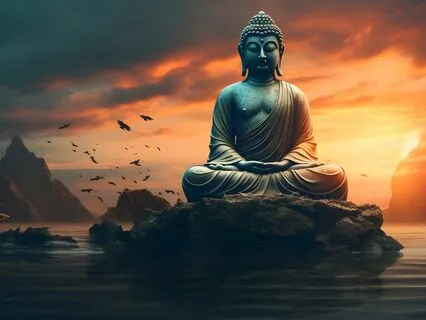
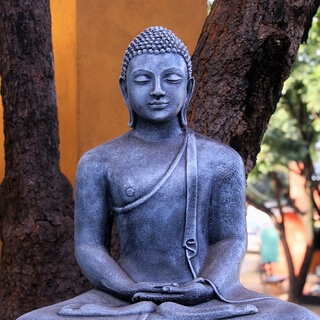
When we have things like the Buddha or a Buddha,
Like Amitabha Buddha,
Or maybe a Bodhisattva like Guan Yin,
How do we actually show these images?
Whether it's a physical statue,
Or maybe it's like a painting or something like that.
What do we actually do?
So sometimes it can be pretty fragile,
Right?
You might have something that's really delicate or maybe a little more sturdy,
But we want to treat them with respect.
And as you kind of got in the impression here,
We want to make sure they're not damaged or knocked over and given a place of respect.
Because we're trying to bring them into our practice.
When we are having that Buddhist figure in front of us,
They are our teacher.
We are doing the actions towards that teacher.
The bowing,
The prostrations,
The incense offering,
The offerings in general.
Maybe a food,
For example.
When we are doing the chanting,
The reciting,
All this is towards them as if they were there in front of us right now.
If we could just recreate that or go back in time,
That's what we would want to do.
So we are engaging in that practice.
And that's,
You know,
It's a wonderful thing.
It gets sometimes overlooked,
I think,
In the West,
Or maybe taken in a different way in the West.
Like,
Oh,
It's going to do x,
Y,
And z,
Or however you may interpret it.
But we're trying to recreate in our daily practice our interactions with these figures.
And if we look more broadly in the Buddhist tradition,
We are really bringing them force towards us.
The energy,
The actual Buddha or Bodhisattva to us in that engagement.
And if you want to think about it in a different way as well,
When we're having a Buddha or a Bodhisattva right there,
The image of them,
Guess what that is?
It's also a reflection of you.
So there's going to be that a Buddha or a Bodhisattva nature inside you as well.
And so we are looking,
We are engaging with really what we want to become,
You know,
Because that's the Buddha nature inside us.
So when we're looking at maybe Guanyin Bodhisattva,
Or we're looking at maybe Amitabha Buddha,
Or Shakyamuni Buddha,
Gautama Buddha,
We are looking at what we would want to become to,
Or this perfected image of what we have in our Buddhist religion.
And this is like the wholesome visual image that we're trying to see that's also inside us.
And that really even goes towards how we're treating them as well.
So this is why we have them raised at a higher level.
This is why they are away from things that can damage them.
But this is also why going beyond just where we have the images of these Buddhism Bodhisattvas,
We're cleaning them,
We're keeping them safe and dust free and everything else like that,
Because that's also cleaning our Buddha nature in our mind,
Right?
So when we're doing recitation,
Chanting,
Prostrations,
This is for that Buddha inside us as well.
And I think it's a really,
Really good imagery for us to keep as Buddhists,
Because it helps us understand why we're all doing this in the first place.
There's a Buddha inside you,
You know,
Order,
You know,
This,
This Bodhisattva path,
You know,
For us in Mahayana,
That that you are trying to bring forth as well.
That's all inside you,
There's nothing stopping you from doing that.
Just we're stopping ourselves from doing that.
And this is the message of all the Buddhism Bodhisattvas.
We can transcend that we just got to keep on the path.
So when we are having these images of the Buddhism Bodhisattvas,
You know,
Again,
There's many,
Many different traditions,
Many different ways this is done,
You don't have to get some very expensive,
Elaborate statue of the Buddha or a Bodhisattva that's going to cost like hundreds or even thousands of dollars.
No,
You don't have to do that.
If you do that,
That's whatever you want to do.
But you don't have to do that.
In fact,
You could even just have an image of one of them,
Right?
Where in a pinch,
You don't have a lot of money.
Absolutely print one out,
Or maybe it's like on your smartphone.
We're going to the point where would we need to have something physically?
Yes,
That would be wonderful to have.
Is that always possible for everybody?
No.
So if you could have like,
Just like an image of them.
Perfect.
You know,
You could absolutely do that.
And there's actually many Buddhist traditions where that's actually how it's done as well.
So it's almost like a little scroll there.
So there's many,
Many different ways you can do this.
But we're all going to treat them the same way with respect,
Whether that's just like an image printed out or like a physical Buddha statue or Bodhisattva statue.
Same way.
If these can be blessed,
You know,
Like at your temple by a monastic,
That's also really important.
You're engaging with that part of the triple gem,
The monastics,
And you're engaging in that way.
And usually if you get it from your temple,
It's already done there as well before you buy it or get it.
But if not,
You can definitely reach out to your temple,
See how that's done and have them,
You know,
Bless that statue or that imagery that you can use in your daily practice.
There's other things as well,
Too.
You may have like a very hollow statue,
For example.
For a lot of traditions,
That's where it gets filled with sutras or other Buddhist religious instruments.
And so there's many,
Many different things to go inside here.
This is why I heavily recommend you talk to your temple and find out how to do this properly and get the right materials,
Right items.
But that's,
That's a big part.
Then we also have other things to go around our altar.
And these are really all the different instruments that we're going to have.
And this is everything from like bells to like offering bowls.
It could also be where you have like a little censer,
You know,
Like with a like ash or rice inside there for your incense,
Which are placed upright inside there.
And that is also a very important thing.
So like when we are giving offerings,
When we are doing incense,
We can do incense whenever we need to.
We can do it,
For example,
In the morning and night.
It's a very cleansing of practice right there.
Now,
Do you have to do incense?
No.
You know,
Like for me,
I will only do it at temple.
I just don't want to do it at home.
But,
You know,
For many,
They do it at home.
You can also have offering or offering bowls.
And this is everything from like food to different types,
You know,
Like flowers maybe.
And if you're going to do food,
For many Buddhists,
Like what they'll do before they even eat,
They will give the offerings to,
You know,
The Buddha or Bodhisattva.
And again,
Think about it.
2,
600 years ago,
This is that revered guest.
You're a Buddhist,
Right?
And you're having the central figure of your religion come to your home.
You're going to make sure they get food,
Get that offering first before you eat,
Right?
We're recreating the same thing.
We're going to clean our altar like we would make clean the feet of the Buddha and his enlightened followers when they come to our home.
So we're doing these activities,
Bringing us back to the time when we have a physical Buddha in front of us or Bodhisattva.
So there's many,
Many different things and activities you can do when you give the food offerings.
You know,
When you're done with that,
They can stay out there,
But you may want to give it outside,
You know,
Provide it to,
You know,
The natural world outside after that,
Right?
We're doing this all respectfully.
And you go to temple,
A lot of times what will happen is like when you go and give offerings,
It's all sometimes very structured.
You give offerings and those offerings as they're for a period of time given at the main shrine or other locations,
They'll eventually go back to maybe go to the monastics or something like that.
So they just don't,
You know,
Get wasted.
There's actually a whole merit generating activity there.
So when we are in front of our altar,
You know,
There's many,
Many different things that we're going to do.
As I mentioned,
You know,
I have videos and podcasts episodes about this,
But you know,
When we're there,
We are engaging.
Now,
I think a really important thing that we do there besides the offering,
Besides the prostrations and the bowing,
Is we can do our sutra chanting,
Right?
We can do recitation of Buddha names.
These are all meditative concentration and wisdom building activities that are merit generating activity.
Because we are visually,
Physically in front of this shrine,
This like altar that we've created,
Right?
And our religious figure,
When we are chanting,
When we are reciting,
We are really in this perfect environment as much as possible to be able to engage in our practice and our mind can be there as well.
Almost again,
Like you're at the gym and you're around other people working out,
You're around like-minded individuals trying to go towards that same goal,
Or maybe in college or school or something like that.
You're all trying to,
Or trade school,
You're trying to get to this same goal and this is what you're trying to do and it's a conducive environment.
That's what we're trying to recreate.
So that is going to be something that we're going to use our altar for.
I think it's wonderful.
Now,
When you are doing all this in front of your altar,
You know,
As I mentioned,
It's a merit generating activity.
Also think about how you are going to end your session.
So when we are ending our session,
Almost like the Buddha is going to go away,
Right?
Or that Bodhisattva or Buddha is going to go away.
We are going to show our respects.
Of course,
There's prostrations,
There's a bowing.
We are going to give that respect.
Now,
That physical statue or imagery that you have is not going to walk out your door like a physical being would,
Right?
So this is where,
You know,
If you have a location where maybe,
You know,
People moving,
Walking around,
Right?
You would want to put it inside the cabinet if there's a special cabinet at your altar for the Buddha or Bodhisattva statue or imagery.
Maybe it's something where they could be put away.
We want to be respectful of them,
Right?
Same goes for the offerings and everything else.
We want to make sure the area is clean,
Everything's safe,
Everything's proper.
Because that activity,
While you may be going,
What's the purpose of that,
Right?
Is that really necessary?
Did I clean?
Is it really necessary?
Did I do that?
You don't have to do anything.
Not at all.
The Buddha didn't say you have to do this.
You know,
Monastics aren't going to say you must do this.
But if you want to progress on the path,
Guess what?
This is sort of that exercise you're also doing for your mind as well.
If we can't keep our altar space clean,
This very religious place we have in our home,
How are we engaging with our own mind,
Right?
So that's not to go,
Hey,
You're not doing this right now.
You're doing something wrong.
Not at all.
But think about it that way.
That might encourage you to go,
Wow,
Okay,
I think I will clean the statue as I'm cleaning the statue.
I'm thinking about,
You know what?
I'm cleaning my mind as well.
I want to very symbolically,
If you will,
Get rid of these unwholesome thoughts and images and actions that I have.
I want to clean my mind of that,
Be very mindful in the future,
Et cetera,
Et cetera.
So we can engage mindfully with our altar for ourselves because ultimately what we're trying to do is be liberated,
Liberated from the cycle of birth and death,
Rebirth,
Samsara.
And we want to end the three fires,
Three poisons of greed,
Anger,
And ignorance,
Which is what gives rise,
If you will,
In many ways to unwholesome karma,
Which is keeping us in the cycle of rebirth,
All very unsatisfactory,
All very much suffering.
But when we are done,
We are away from greed,
Anger,
And ignorance.
We are awakened and enlightened to the truth.
We realize our true natural state in nirvana.
So nirvana is the absence of those three things.
Your altar is helping you with that.
So look at your altar if you can.
I hopefully this helped you out a little bit.
Look at it as this sacred place for you and for your teacher.
And that could be Shakyamuni Gautama Buddha.
It could be Amitabha Buddha.
It could be Guan Yin.
It could be your teacher imagery right there.
But they're the ones helping you get to liberation,
Get to nirvana.
And wouldn't we want to treat them with respect?
Wouldn't we want to treat them with love and care?
Yes.
And guess what?
That's inside you as well.
That's your consciousness.
That's your mind that we're working on as well.
And when we're having that physical interaction with our altar,
Perfect.
Now a final thing I'll mention before we end this podcast episode.
What if you're moving?
And so you're going to another location,
Right?
So when we're doing this,
We want to make sure that we are being very respectful in the move.
I think one thing you can do is engage in Buddhist practice here as well.
Almost like you are helping the Buddha move,
Right?
You almost have him like in your cart or something,
And you're wheeling him or your car,
And you're taking him to a new location.
Let's be respectful.
Let's imagine that we are moving that spiritual figure to another location,
That religious figure to another location respectfully,
Carefully.
And when you're traveling,
This is something where if there's somebody who can take care of your altar while you're gone and provide offerings,
Let's do that.
It's almost like if you had the Buddha or Bodhisattva staying over at your home,
Would you just go,
I'm going on vacation.
I'll see you in a week and let them starve or,
You know,
Not be taken care of.
No,
Not at all.
We want to see if somebody can take care of them,
Right?
So look at your altar as this continuous engagement with a Buddha,
Bodhisattva,
Or your teacher.
So I hope this has helped you a little bit.
I would love to hear about you and your experiences with an altar and what you have.
You can definitely respond to me on this podcast or my website or social media.
I'd love to hear back from you,
And I will talk with you in our next episode.
Thank you.