Welcome to another episode of Learn Buddhism.
I'm Alan Pideaux.
So recently in social media,
I asked,
Does anybody have any questions about Buddhism that I can help answer on some of these podcast episodes,
And I got some great responses back.
I'm just going to cover just a few of them in this particular podcast,
But I'm definitely going to be doing this more often,
Asking if there's any questions,
Because I think it's going to help a lot of you with some questions you may have as well.
So one of the questions I received was,
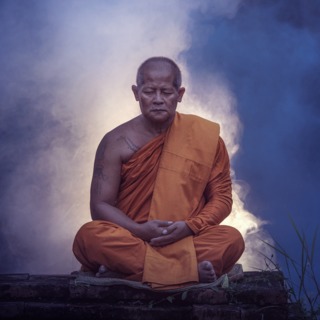
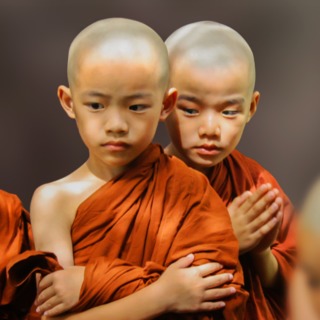
Does a monk,
And this could also be monastic,
Right,
So monks or nuns,
Have a better chance of achieving nirvana over a layperson?
So this is a great question.
Does a monastic have that advantage compared to a layperson,
Which I suspect most of you listening to this podcast are,
Just like me,
We're laypersons.
And the answer is generally yes.
You know,
It's sort of like they are fully engaged in their religion.
They're all in,
As I like to call it.
They're practicing every day.
They're engaged in a lot of religious activities in Buddhism.
They're studying.
They're teaching.
They definitely have a distinct advantage in that.
Now,
When we talk about monastics,
There's all different levels and experience levels and traditions.
So that's a very broad statement,
Right?
You know,
Do they have an advantage?
We don't really know.
It's all individual-based as well,
Right?
But do they really have an advantage?
Yes,
They do.
And that includes both branches of Buddhism,
Theravada and Mahayana.
However,
If you look inside Mahayana,
That distinction kind of goes away because Mahayana is the path,
Is the bodhisattva path.
And that's really whether you're a monastic or layperson,
You can definitely be on that path towards the full awakening to become a Buddha,
Which contrasts to Theravada,
Where we're trying to become awakened,
Enlightened,
Realize nirvana as individuals,
As arhats.
And I'm very broadly covering this.
But that's kind of the distinction.
So in Mahayana,
You have,
As a layperson,
Almost equal opportunity to become enlightened and awakened as you would a monastic.
Now,
Even in Mahayana,
Becoming a monastic absolutely gives you that advantage because you're more engaged.
It all takes effort,
Right?
But again,
If we look inside Mahayana,
You have traditions in schools such as Pure Land,
Where you can experience rebirth in Amitabha Buddha's Western Pure Land,
For example.
And that is where you can more easily,
Efficiently become awakened,
Become enlightened,
Become a Buddha in the future.
But that's also almost like a Bodhisattva training ground.
So you see lots of Bodhisattvas who may have become enlightened,
Right?
But they don't necessarily are postponing or don't want to become a Buddha right now because they're so engaged in that practice.
So it's a little bit of a complex question.
When we think of nirvana,
We're thinking about,
Oh,
Okay,
We're achieved that state,
That particular natural true self of us,
Right?
And we look right to Shakyamuni Buddha,
Where he had parinirvana,
Or the final nirvana when he died,
Right?
And you'd see that total distinction between the two branches of Buddhism.
For example,
In Theravada,
That was it,
Whereas you see inside Mahayana,
You got the three bodies of the Buddha.
So there's still,
In essence,
This Buddha nature of Shakyamuni Buddha that continues on,
But not something that we can see or interact with in sort of like a physical manner.
So you do have distinctions about what nirvana means generally between both branches.
Absolutely it's the same,
But you have this distinction,
Including about can laypersons more efficiently or effectively or easily become enlightened and realize nirvana.
So the answer to you is yes,
Absolutely.
Monastics definitely have an advantage,
If you want to call it that way,
Just because they are more engaged than us as laypersons.
And we all know that,
We're busy as laypersons,
We're distracted as laypersons,
We're more confused as laypersons.
I'm a layperson,
You're probably a layperson as well too.
So it's perfectly okay,
That's why we have monastics there to help us.
If you're on the Mahayana side of things,
You realize maybe you're in Pure Land tradition you're practicing,
Great,
You have the Western Pure Land to look forward to,
To help you with that practice.
If you're in any other particular practices or traditions,
You're still engaged,
You're still going part of that.
Or inside Theravada,
As a layperson,
No,
You're probably not going to achieve nirvana.
It's possible,
Absolutely possible,
But more likely than not.
So even inside Theravada,
Laypersons are really focused on rebirth,
That's why in both branches you hear a lot about marriage generation and everything else.
We want to be reborn in the human realm so that we can more effectively become enlightened.
This is a process,
Right?
So yes,
Monastics have the advantage,
But it doesn't mean it's a complete 100% advantage.
So another question we have is,
Maybe something about being Buddhist and vegetarian?
I see many questions about it online.
Great question as well.
So this is something that even I was very interested in early on with learning Buddhism.
And do you have to be vegetarian or vegan,
For example,
As a Buddhist?
And the short answer is no,
You do not have to.
Now a lot of this goes back to the five precepts.
We have especially that precept against killing,
Right?
And when we look at this half billion Buddhists around the world,
Are they all vegetarian or vegan?
No,
Absolutely not.
They are not.
And especially in maybe some Theravada countries,
No,
They're not.
Whereas you see in maybe some other countries,
For example,
Maybe China,
For example,
There's more emphasis on a vegetarian diet.
But is that complete?
No.
Now,
Of course,
If you look at the monastics,
For example,
I mean,
Chinese Buddhism is generally the tradition that I follow.
Monastics there will have a vegetarian diet.
And I'm being very general about this.
And layperson is like when we go to temple,
It's just vegetarian.
You're not bringing meat or anything else onto that temple.
Whereas maybe you see in Theravada,
For example,
Very traditional,
Maybe going alms rounds,
For example,
They're going to take what's given to them.
So as long as it's not been killed,
For example,
Just to be given to that monk or nun,
That is a key portion there.
So basically monastics have lots of precepts,
For example,
And things they can and can't do.
And so that's one of them.
So like a layperson just can't kill an animal just to give it to a monastic,
For example.
But I think you're generally talking about what can we do as laypersons,
Right?
And this is a really tricky question.
There's no right or wrong answer to this.
But any form of killing does create karmic influences,
Right,
Karmic actions.
And this is something we want to do.
We don't want to,
We want to stop these karmic actions that are affecting our path,
Right?
So we don't want unwholesome karmic actions.
We want wholesome karmic actions.
And wholesome karmic actions are related to Buddhism,
To Buddhist practice,
To five precepts,
Right?
The reason we even have precepts is sort of like these guardrails to keep us on the path,
You know,
Going straight towards enlightenment.
So what do you do?
You know,
For many Buddhists,
You know,
It's really on maybe observance days.
They're taking them to eight precepts,
For example,
And they're observing this and maybe they're observing a vegetarian diet or vegan diet on that particular day.
And they're trying to reduce essentially their footprint,
Their impact,
You know,
As it comes to meat.
And you know,
Obviously that results in killing animals.
So that's often what you'll see or if they go to a retreat or if they go to the temple,
For example,
This is when you more often than not see it.
But beyond that,
No,
They're usually eating meat.
And of course,
I mean,
Very general,
Everyone's an individual,
You got different cultures and things like that.
But you know,
As a Buddhist,
Should you be eating meat or not?
I think the short answer is no,
We should not be eating meat.
But is that even feasible?
No.
You know,
There's lots of different things.
If you look at,
You know,
Just in general,
Some people have to eat meat for medical health reasons,
Right?
Is that creating a karmic impact,
Imprint or impact?
Yeah,
Absolutely.
It's just,
You know,
What we're trying not to do is intentional killing,
Right?
But of course,
As we are eating meat,
Someone's had to,
You know,
Slaughter that animal and prepared and all these karmic actions are taking place,
Even if all we're doing is just going to the restaurant to eat it or to pick up something from the supermarket.
So there's all these different types of impact.
So when we look at whether should we be vegetarian,
Should we eat meat or not,
We're really talking about this holistic karmic impact imprint that's actually happening.
Because one,
We want to make sure our karmic,
You know,
Actions are wholesome in nature.
And that's very,
Very hard to do as laypersons,
Right?
That's why we try a lot.
That's why we have repentance.
That's why we try to practice as much as possible.
You know,
It's just not always going to be possible,
Not even possible for monastics.
They have hundreds of precepts and they're really more focused than we are with just five precepts.
But they are trying to really,
As much as possible,
Minimize their unwholesome karmic impact imprint so they can focus on the wholesome one,
The wholesome generation towards enlightenment.
So yes,
You know,
If you can at least minimize the amount of meat you eat,
That's good.
And of course,
You know,
There's studies all different ways.
And this podcast isn't about studies,
You know,
But you know,
Maybe eating less meat would be helpful for you,
Right?
And these are all really questions for your physician or doctor,
Of course,
Right?
But yeah,
There's nothing saying that you have to be vegetarian to be a Buddhist.
Of these half-billion Buddhists around the world,
They are not all vegetarian.
And vast majority are not.
And yes,
There are times,
Observance days.
I gave you an example.
We're going to a temple.
We're going to adopt a more vegetarian diet,
For example.
I'm not saying that always is the case,
But in certain traditions,
You know,
Like mine,
It is.
But yeah,
You can definitely eat meat.
Just be aware of that,
You know,
Impact you're doing.
And for some Buddhists,
Maybe it's reciting a gatha or a type of like prayer or something and realizing the impact you're doing,
Maybe try to reduce it.
But remember,
You know,
All this is,
You know,
Having an imprint on your mind and your actions.
And those of those people who have maybe slaughtered that animal and prepared that animal,
There's actual impact to that as well.
So we want to reduce the suffering of others,
Not just ourselves.
So it's a very complicated question.
In some ways,
It's very black and white.
But in other ways,
It's very complicated and it really boils down to individual decision.
You know,
If you want to reduce your meat consumption,
Great.
You know,
That's a very wholesome thing to do.
You're very much aligned with,
You know,
The first precept.
But even,
You know,
If you look at Shakyamuni Buddha,
Gautama Buddha,
When he was alive,
He ate meat,
You know.
So he was,
Of course,
Doing alms rounds,
Alms with monastics,
And they were given what was given by the layperson.
They were eating that.
So that was a very different situation.
We have a lot more control in our modern society to different choices.
But again,
It's totally an independent decision.
Very complicated.
I do have an article about this up on my website.
But yeah,
Very complicated question.
I would recommend,
If you need a little more guidance,
You know,
Talk to your monastic for a little more guidance in the tradition that you may be following.
Here's another great question.
Why do Western people only focus on Vipassana meditation,
I believe you're talking about,
Even though Buddhism is far bigger than that?
Absolutely.
You know,
Buddhism is much more than Vipassana meditation,
Which has become very popular.
It was really,
The version we're seeing right now was a modern version of meditation born out of Burma.
A very revival movement out there.
It was great.
It got more people,
Even inside Burma,
Myanmar,
More interested in Buddhism,
You know,
Lay persons.
Fantastic.
And we see how it became very well received in the West.
But just like you're asking,
You know,
Buddhism is a lot more than that.
Like,
Why are we focused on that?
So Vipassana is really,
You know,
This,
For lack of a better term,
Like outcome of meditation,
Right?
You know,
So we have kind of calming meditation,
Then we have kind of this insight meditation,
Which is Vipassana.
And it's not really a meditation of itself.
It's really the outcome of it.
But it's this technique out of Myanmar,
Burma,
It's become very,
Very popular.
And I think to really simply answer your question is,
You know,
When we talk about,
You know,
Western people,
Of course,
That's,
You know,
A huge generalization for us to say,
Everyone's like this.
Of course,
Everyone is not.
But a lot of people in the West are very attracted to Buddhism,
And thus also very attracted to just meditation,
For example,
Vipassana meditation,
Because they don't want anything religious in nature.
And you look at Buddhism as being not religious,
Because it doesn't have an all powerful creator God like you might see in some other religions.
And you know,
You probably heard some of my other podcast episodes or saw my articles on my website,
For example.
That's not the case.
Buddhism has lots of gods.
You know,
We don't have an all powerful creator God,
You know,
That,
You know,
Many Westerners associate with true religion.
And so that's a Western definition of religion.
And that's really important to know.
But Buddhism is definitely a religion.
But a lot of Westerners look at it as not a religion because of the Western view of what makes a true religion.
So it's really that idea about it.
So when you look at,
For example,
You know,
True Buddhism,
Some people may call it,
You know,
Cultural Buddhism,
But it's true Buddhism.
There's a lot.
There's a lot of rituals,
A lot of,
You know,
Gods and beings and all these different things,
Right?
So when more to your question,
Like when Westerners look at Vipassana meditation,
You're like,
Oh,
This is what the Buddha taught.
This is exactly what I need to do.
I can strip away all this other stuff.
And just like any other religion,
You can absolutely pick apart,
You know,
Like what you want from a religion and just practice it,
Right?
You know,
If you want to look at some other religions and you're like,
Well,
I'm just going to,
You know,
Pray this way because I like how that works,
But I'm not going to pray to maybe some supreme creator God.
Okay,
But that's not necessarily that religion anymore,
Right?
You're just taking a piece away from it.
So does it mean Vipassana meditation has no benefit?
No,
It's not what I'm saying at all.
Anything we do as laypersons,
You know,
Or just people in general,
That's more aligned with Buddhism.
Wonderful.
You know,
Our mind needs a lot of taming.
And if that's what you're focused on in this lifetime,
Great.
Does it break you from the cycle of birth and death?
Probably not.
You know,
There's a lot more to Buddhism than just meditation.
The Buddha taught a very holistic eightfold path,
And there are three parts to that.
And meditative concentration,
And there's different parts to that,
It's just one part.
So there's actually three parts to the training.
So it's almost kind of like just drinking water,
But not eating anything else.
You know,
Water will keep you hydrated,
But that's not really going to nourish you or really help you long term.
But it's definitely okay,
Like if that's what brought you into Buddhism,
Wonderful.
You know,
That's okay.
But there's definitely,
Just like you're mentioning here,
Buddhism is far bigger than that.
You're absolutely right.
It is massive,
Buddhism.
And really,
We don't even know a lot about ancient Buddhism,
Right?
There's a lot that's lost because it wasn't written down,
It was very orally recited,
And things weren't really thought of,
Oh,
Let's keep a record of this.
Some things were lost or destroyed.
So yeah,
We've lost a lot about Buddhism,
But the Buddhism we know about right now is massive,
It's huge,
And it's so enriching and wonderful that,
Yeah,
And this is the reason why I do these podcasts and social media and articles and videos and everything else is introduce Westerners to the big world of Buddhism.
There's a lot more out there,
And it's very impressive.
So yeah,
I think that's mainly why they focus on that.
Okay,
This is an interesting one.
Among the many Bodhisattvas in Buddhism,
How many are real and how many are imaginary?
That's a good question.
It's a loaded question as well,
Too.
So if you ask anybody inside Theravada Buddhism,
The answer is none of the ones you hear about in Mahayana are real.
The only ones that are real would have been Shakyamuni Gautama Buddha.
He was a Bodhisattva many prior lifetimes,
And he was on the Bodhisattva path,
And they look at Bodhisattvas in Theravada as those who have taken a vow before,
For example,
Maybe a prior Buddha and are on this long path to become a Buddha,
And that's a very rare thing,
A very unique being,
Right?
In Mahayana,
We got that as well,
Too.
That's absolutely part of Mahayana,
But inside Theravada,
These future Buddhas,
Like our next one is Maitreya,
These future Buddhas start as Bodhisattvas over a very long path,
So only Buddhas,
Their prior lifetimes when they were Bodhisattvas,
Those are the only true Bodhisattvas inside Theravada.
Now doesn't mean that we can't,
In Theravada,
Revere a teacher as almost like a living Bodhisattva,
For example.
That happens as well,
Too,
For very unique,
Very special teachers,
For example,
Inside Theravada,
But as a Bodhisattva,
We got to really take that into context,
Right?
But when we look inside Mahayana,
I'm sure you've all seen it,
It's just a huge world,
Right?
You got Guanyin,
Right?
You know,
The very,
Very popular Bodhisattva,
And you just see all these different Bodhisattvas.
Some are just like,
Wow,
Who are they?
It seems like magical or mythical,
Right?
Are these real beings?
And you hear so many stories,
Right?
Is that even real?
And we really have to,
And this is probably going to be a much bigger episode I'll do later on,
But the short answer is you're not going to know.
You're not going to know either way from a,
Let's say,
Scientific perspective,
Right?
So what we understand as laypersons is just a small,
Small part of our world.
We don't really have a full understanding of things.
So we're told about these Bodhisattvas,
Right?
Even,
You know,
Gautama Buddha,
Shakyamuni Buddha,
Prior lifetimes of the Bodhisattva,
We don't know that for sure.
Obviously,
We can't go back in time and actually verify that,
Right?
So even that we can't verify.
So if we want to think about Bodhisattvas in general,
There's no way to prove any of them were real.
But when we look inside Mahayana,
It's the path of the Bodhisattva.
Everyone in Mahayana is basically on the Bodhisattva path.
Those who are very engaged will take the Bodhisattva vows,
But this is the path of the Bodhisattva.
We realize we're going to be unenlightened Bodhisattvas going forward.
So that's a big distinction inside Mahayana.
Got all of these cosmic Bodhisattvas,
For example,
But everyday laypersons are also considered Bodhisattvas.
Monastics are considered Bodhisattvas.
How is that possible?
Because we're all on the Bodhisattva path.
We just happen to be unenlightened Bodhisattvas.
We're still laypersons or monastics.
We're still going to meet,
Create some karma.
We're not there yet,
But we're on that path and we're trying our best and we understand it's going to take many,
Many lifetimes,
For example.
So that's a clear distinction.
But you're really,
I think,
Talking about maybe,
For example,
The cosmic Bodhisattvas or special Bodhisattvas,
Maybe like Guan Yin.
And so,
Yes,
Those,
Even for me,
I'm like,
Wow,
That's a very,
The imagery is just amazing in these stories,
Right?
And so I couldn't tell you if they were true or not.
Or is this embellishment?
Or is this how it was explained?
Or how it appealed to an audience at a particular time?
And it doesn't distract from these Bodhisattvas from being real or not real.
Maybe there's going to be some parts to it.
And we have that inside Theravada as well with other stories,
Right?
So how do we know exactly what's real?
We don't.
And so that's why you have faith in Buddhism.
And a lot of people scoff at that,
Like,
Well,
Blind faith is not what I want to be a Buddhist for,
Right?
I want to scientifically prove things.
And we can't.
And so I think I've talked about this before.
It's one of those things where you don't have to do that blind faith,
Right?
Because even a Buddhist said,
You can test out my stuff.
If you can't see that this is real,
Then don't,
Right?
You don't have to follow me.
He didn't try to force followers or lie to get followers.
He's like,
You can test all this out.
If you can't prove it,
That's OK.
And there's,
Of course,
Things that we just can't prove.
For example,
Maybe rebirth,
For example,
Right?
Or even karma to a lot of aspects.
Because these are things that we have to take on faith from a teacher,
The Buddha.
And so even like with Bodhisattvas,
Mahayana and Theravada does not recognize this.
But we have the Buddha telling us about certain Bodhisattvas.
And so that's where we get that from.
Now,
Do Bodhisattvas really exist and all that?
Of those half billion Buddhists around the world,
The vast majority are going to be inside Mahayana.
And a lot of them absolutely revere Bodhisattvas.
And there's many different ones out there.
Even in Theravada,
You're going to find Guanyin still part there.
Because the Mahayana path was growing in ancient India and became very popular.
So it's kind of like a remnant that kind of still remains.
Very interesting with laypersons there.
But yes,
Laypersons find lots of benefits with Bodhisattvas.
I would say this to you.
Even if you're like,
Well,
I really need to scientifically prove it.
Look at it this way.
They are wonderful examples of how we should be engaged,
Right?
So I'm not saying this is how traditional Buddhists,
Regular Buddhists,
View Bodhisattvas.
Because they look at them as real.
But as what we look at it from another perspective,
I just want to give you this other angle here.
I would look at,
For example,
Guanyin.
And I'm like,
I love Guanyin.
I think this is like a wonderful Bodhisattva.
That how he,
She is able to help sentient beings,
Very inspirational.
It helps those on the Bodhisattva path go,
This is amazing.
They are foregoing becoming a full-fledged Buddha of an era to help others and how they've helped others.
Even like with Guanyin,
How they just like lost faith at one point.
And Amitabha Buddha had to,
And I'll talk about this in a future episode,
Had to go ahead and help them,
Right?
These are wonderful stories that inspire Buddhists and help us understand what to do as well.
So there's not going to be a clear answer for you here.
But yeah,
For example,
In Mahayana,
Of course,
Everybody's an individual,
Right?
There's going to be different views on this.
But yeah,
We look at them as real.
Even though we can't,
For example,
See them or actually hear,
For example,
Them like right in front of me,
Yes,
We look at them as real.
Is that part of it?
Yep,
Absolutely.
And I don't see that as really a bad thing.
So even if they didn't really exist and we had this faith in them,
These are really wholesome beings,
Whether they turn out to be real or not,
Right?
That I think is transforming us from the inside.
I think that's great in that aspect.
And remember,
We got a lot more to Buddhist practice.
It's just not a bodhisattvas that we venerate and everything else.
And we're coming very close to the end of this episode.
So I wish I could get to more of these questions.
I definitely want to do more of this in the future.
And I'll mark some of these other questions I didn't answer.
One of them is actually very interesting.
Are the Four Heavenly Kings only limited to Chinese Buddhism?
And essentially,
You can look up the Four Heavenly Kings on yourself.
I'll do a future episode about them.
But basically,
They are the guardians of the Buddha and the Dharma and everything else.
And we see them very prominently inside Chinese Buddhism.
They're looked at a little bit differently there as well,
A little bit more than we might find elsewhere.
But no,
They're not.
You can actually find the Four Heavenly Kings inside,
If you will,
Theravada countries,
Like Burma,
Myanmar,
Or even Thailand,
For example,
And Vietnam.
You're going to find the Four Heavenly Kings pretty much in a lot of countries,
And thus a lot of Buddhist countries.
And yeah,
So a lot of things that you see are coming from ancient India,
Where we had Buddhism thrive at one point.
And that just got transmitted everywhere,
Right?
And so there might be more emphasis on them.
For example,
Maybe Chinese Buddhism,
As you kind of mentioned,
This takes on this much more grander role,
And maybe that's why you see them more.
But no,
You can see them in other countries,
As I mentioned,
Myanmar,
Burma,
For example,
Thailand.
Yeah,
You can absolutely find them in those countries as well.
So I hope you all enjoyed this episode.
I know we just covered a couple of questions here,
But I hope that piqued your interest.
Definitely keep an eye out on my social media when I ask,
Again,
If anybody has any questions,
Or if you don't want to wait for that,
You can just go to my website,
Send me a question.
From there,
I'll be happy to mark that down,
Add that for a future Q&A episode.
So I won't do these for every single episode,
Right?
I'll do little breaks in between,
But I definitely want to do more of these.
I love these questions.
I mean,
They're really great questions,
And I think a lot of you have had these questions as well.
Or maybe you didn't even think about these questions now as you're thinking,
Like,
Okay,
That was interesting,
Right?
I didn't think about that as a lay Buddhist.
Now I do,
And it's actually maybe helped me a little bit too.
So if there's anything you think I need to dig in a little bit deeper on the ones I've answered,
I'd be happy to do that as well.
So I look forward to talking with you in our next episode.
Thank you.