Welcome to Learn Buddhism.
I'm Alan Pito.
Today I want to talk about five misconceptions that beginners and westerners have about Buddhism.
Very common ones.
I've heard these.
People have told me about them.
I've read them on discussion boards.
I've heard these discussions.
And so I want to kind of talk about these and explain a little bit more about these misconceptions or these beliefs about Buddhism and a little more information to help you understand the actual true meaning or what the actual teaching is.
So let's go into the first one.
Buddhism is all about suffering.
So what we're talking about here is the term Dukkha.
And in the very early English translations of Dukkha it was translated as suffering.
It was a very loose translation.
Dukkha has many different connotations to it.
Distress,
Unsatisfactoriness,
Disease,
Dissatisfaction,
You name it.
It's just all these different things.
But suffering kind of came out of it in these early translations.
So it caught the mindset of people because,
Well yeah,
We understand suffering.
Or we understand things that aren't going great in our life and we relate that to suffering.
It really caught on.
It was a very simplistic and easy way to understand this very complicated term because there was no good English translation.
So even to this day you will probably see graphics or quotes or something where you see the word suffering.
There's inherently nothing really wrong with it if it helps people kind of get into Buddhism.
But there is more to this term.
The issue is that people believe that all Buddhism is talking about is suffering Dukkha when it's not actually true.
Now,
Did the Buddha say all I teach is Dukkha and the cessation of Dukkha?
Or as we might translate it,
All I teach is suffering and the cessation of suffering.
Yes,
He did say that.
But we've got to look at what the Buddha was trying to do.
He's trying to essentially wake us up,
Alert us to what's going on.
So he's very much like a doctor saying,
You're sick.
We've got to get you cured,
Healthy.
Get this disease out of you.
And that's just Dukkha,
Right?
And so he used that term,
But it's not all of what Buddhism is about.
If we look at what Buddhism is fundamentally about,
Many different things,
Many different topics and teachings and terms,
But we can really narrow it down to one thing,
Dependent origination.
When Siddhartha Gautama meditated under the Bodhi tree and awakened and became enlightened,
Became the Buddha,
He was awakened to dependent origination.
Not to Dukkha itself,
But dependent origination.
So what is this term?
Dependent origination,
Of course,
Looks to translate.
I'll give you another example.
Cause and effect,
Arising and falling.
So basically it's saying that nothing arises out of nothing and nothing goes away essentially.
So all things must arise and fall.
Everything is ever-changing,
Impermanent,
Interconnected.
This is what dependent origination is roughly about.
I'm getting a very,
Very high-level overview here.
You might want to think about it this way.
If you plant a seed in the ground.
So you have this seed.
The seed didn't come from nowhere.
It came from plants and everything else.
And the plant came from something.
There's this continuation that goes on and on and on and on.
It just did not just poof into existence.
So the seed goes into the ground.
But the seed is going to sit in the ground until it gets the right things it needs to grow.
Namely,
Water.
So water is going to activate it,
But it now needs nutrients to grow.
You see where I'm going with this.
So it needs these causes and conditions,
Dependent origination,
To exist,
To grow.
But you know what?
It won't last forever.
So it's going to also eventually cease to exist as well.
So we're talking about numerous different concepts here.
The five aggregates,
Karma,
And all these different types of Buddhist terminology.
But it's dependent origination we're talking about.
And the reason it's so important is because when the Buddha was awakened to that,
He understood why things happen.
Why he exists.
Why phenomena exist.
Why we're caught into greed,
Anger,
And delusion.
All these things.
Dukkha.
Dukkha made sense because Dukkha is all interconnected with that as well.
But his dependent origination is this fundamental,
If you will,
Foundation of Buddhism.
And while it may not get as much air time to give a word as Dukkha or suffering or karma or these other words and terms that are so common in our modern day vocabulary and mindset,
It's really foundational to Buddhism.
So if we were to actually truly understand dependent origination like the Buddha,
Yeah,
We would be awakened and enlightened,
Hopefully,
By that experience.
Because then we fundamentally switch.
We get it.
It's almost like that curtain is drawn and you can actually see what is actually happening.
Why things are occurring.
Why you're feeling a certain way.
Why you are.
And just what is self.
All these different things.
It all comes into being.
And thus,
You no longer create this karma of these ordinary beings like we are right now,
Or we're trapped in a cycle of rebirth.
So you get where I'm going with this.
Dependent origination is so foundational to Buddhism.
But we're so caught on that word suffering we believe that's all Buddhism is talking about.
But Dukkha,
Suffering,
Is conditioned.
If you look at the Buddha,
His life followers,
The ones who became enlightened and escaped cycle rebirth,
Guess what ended for them?
Dukkha.
So if Dukkha was always there,
Was the Buddha always suffering?
No,
Because he understood dependent origination.
He understood why Dukkha arises and how to make sure it doesn't arise.
So it's a very foundational teaching inside Buddhism.
And it probably needs to get a little more attention,
In my opinion.
Alright,
Number two.
Buddhism,
Or Buddhist practice,
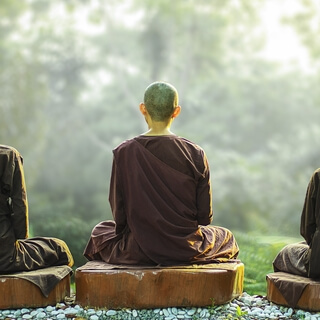
Is only meditation.
Meditation is so much in the mindset of a lot of Westerners and beginners that all we think of Buddhism is meditation.
Meditating.
That's it.
That is the core foundational practice inside Buddhism.
But it's actually not.
So roughly 19th and 20th centuries there was a movement,
Really centered,
It really came out of Burma actually.
Where you may have heard of the term Vipassana,
It is inside meditation.
That's where we kind of get reborn,
Rebranded as meditation and really just took everything by storm.
Slowly,
But took everything by storm because people were having more time to kind of get into some of these monastic practices,
Right,
To lay persons.
But also even the monastics.
Not all monastics meditate.
And so that may sound very unusual because we look at monastics and we're like,
Okay,
Yeah,
All they're going to do is go off into some mountain somewhere secluded and just meditate.
And that's actually not Buddhism.
So even historically,
Monks would probably rarely do the city meditation that we associate Buddhism with.
Not to do maybe social occasions or whatever the case might be,
But usually maybe more senior monastics or certain traditions of Buddhism might do more meditation.
But when we're looking at this,
We're talking about a part of the Buddhist Noble Eightfold Path,
Which is that concentration,
That meditative concentration portion of the Buddhist Noble Eightfold Path did not say you must only do city meditation.
Doesn't say that.
Now,
Did the Buddha do city meditation?
Yes,
But he also did a lot of other things as well.
Now,
When we go back to foundationally what I'm talking about here,
Lay persons like you and me,
Even monastics,
We do a lot of different things inside Buddhism,
Even traditions that you would associate purely with meditation like Zen and Chan,
Which are the meditation schools.
Guess what?
They do a lot more than sitting meditation.
So we do chanting,
There's recitation,
There's sutra,
Calligraphy,
If you will,
Copying,
There's studying,
There's mindfulness,
There's studying the sutras,
There's all these ceremonies,
There's all these different things that are part of Buddhist practice.
I'm very high level in it.
You have certain traditions that go different routes here,
Maybe more focused on one thing or another,
But there's many,
Many different things that we do as Buddhist lay persons.
And especially for Buddhist lay persons,
If you really look at them,
Meditation,
Even today,
Is not a very popular practice.
And if you look in the West,
A lot of people who go right into Buddhist practice,
They're like,
Well I've got to meditate,
And they get very discouraged very easily because they have got to devote time to that.
This is very much like exercising.
And so it's something they may not use to and they kind of give up.
So what do lay persons do inside Buddhism?
Well,
It depends on the tradition,
But yes,
Largely chanting,
Maybe recitation of sutras,
Scriptures.
Very,
Very popular,
Very popular,
Because you can get it done very quickly,
But it's part of a daily practice,
So it's repetition.
And it's also,
If you will,
Concentration.
If I'm focusing on the qualities of a Buddha,
I'm focusing on something very wholesome,
And I'm single-mindedly focusing on that.
It's meditative concentration.
Or on a sutra or chanting,
The rhythmic portion of it is meditative concentration.
So sometimes we think,
Hey,
It's only got to be sitting meditation.
It's not.
And even beyond that,
A lot of Buddhists around the world,
The lay persons,
It's morality and conduct which they are fundamentally working on.
So even,
If you will,
Chanting and or recitation,
Things like that,
They may not even do that all the time.
Maybe special occasions or ceremonies,
But they're foundationally improving their morality and conduct to be in line with the Buddhist teachings.
And so when you look at the Buddhist Noble Eightfold Paths,
We've got three major sections of it,
And the morality and conduct is a big part of it.
Even the Buddha said you can become enlightened,
Awakened,
If you could just really master,
If you will,
The morality,
Conduct portion of it.
Now,
It all kind of syncs together.
I don't want to get too much into the weeds here on this one,
But it's basically to say that there's way more than meditation,
As far as sitting meditation,
Inside Buddhism.
So please do not get discouraged or feel that's the only thing you need to do.
Please explore.
And even when you get to even Theravada and some traditions we associate purely with sitting meditation,
You're going to find out there's a lot more going on there too.
So be open to that and be welcoming and just explore.
If you start closing your mind off to what all Buddhist traditions and practice has in store,
You're going to be missing out on possibly quite a bit.
Okay,
Let's go into the third one.
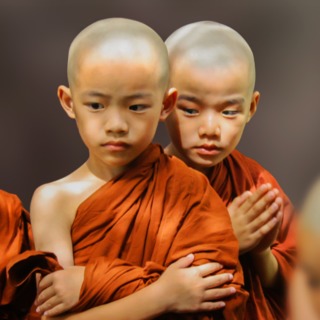
Buddhism is only for monks and nuns,
Essentially monastics.
So I think this is kind of a fun one because largely we think about Buddhism as really to monastics.
You know,
If you look at all the pictures online and everything else related to Buddhism,
You are bombarded with monastics as far as what you see with Buddhism,
Whether that's famous Buddhist such as Thich Nhat Hanh or Dalai Lama,
Etc.
You're just bombarded with these images,
Right?
However,
Who makes up the majority of Buddhism?
Lay persons.
Lay persons make up these 300 to 600 million Buddhists around the world.
Are there monastics?
Absolutely.
But it's the lay persons that are actually the majority part of Buddhism.
Now,
There's different topics here.
So if we look at what a lot of maybe Westerners maybe think about Buddhism,
They may think,
Well,
You know what,
Being a lay person,
That's not really being a Buddhist.
You know,
You're not really all in it.
And so I'm going to become a Buddhist monk or nun right away.
So maybe zero experience with Buddhism,
But you've seen what you saw online.
You're like,
Yep,
I'm going to go off to some monastery in Asia.
And that's what I'm going to do.
I'm going to become a monk because remember my prior topics here,
All I'm able to do is just meditate.
I'll be away from all the stressors of life.
Well,
Let me tell you,
Folks,
The lifestyle of a Buddhist monastic is heavily regulated.
There's lots of work to it.
There's lots of different chores and responsibilities.
You're interacting with lay persons,
Doing ceremonies,
Etc.
So beyond having to perhaps go to a different country,
Learn a different language,
Learn also a scriptural language like Pali or Sanskrit.
Now you're also having to abide by a lot of rules.
So as lay persons,
Roughly,
We follow basically what's called five precepts,
Five rules.
Now monastics,
Hundreds,
Hundreds of different rules.
And for female monastics,
Even more.
So there are all these rules and guidelines,
If you will,
For monastics.
Now it may seem like,
Whoa,
Someone's telling me what to do.
No,
No one's telling you what to do because you don't have to become a monastic.
And you don't have to become a Buddhist lay person either.
So we're doing this because we want to progress on the Buddhist path towards awakening and enlightenment.
And these are what help us align ourselves with the Buddhist and the wayful path,
Which is the path towards that.
So we can absolutely say,
I'm not going to follow that.
And that's okay.
But you're also not,
If you will,
Quote,
Unquote,
A Buddhist and following a Buddhist and a wayful path.
Doesn't mean you have to be perfect on all of it.
This is why we're practicing and progressing on a path.
But this is also why monastics have more precepts than we would have as lay persons because they're all in,
If you will.
And so they have to follow all these different rules and regulations to help them.
Because they've went in to become a monastic,
Whereas we as lay persons are still in the everyday life.
So I have jobs,
Responsibilities,
You got payments,
You got bills to pay,
You name it.
So we got all relationships,
We got all these different things as lay persons that a monastic has basically shed themselves off.
So they've,
Okay,
I've given up everything to follow this path and they're also taking on these precepts,
Almost like a rope to help them on this path.
So you have that.
But then,
Yeah,
There are,
For example,
Like in Theravada,
You might find,
For example,
You become a monastic temporarily,
A monk temporarily.
And so that's also very appealing to a lot of Westerners and beginners because you go,
Well,
I can say I was a monk.
If you're becoming a monk just to say you're becoming a monk,
You're kind of missing the point of Buddhism in that context as well.
So the self or I is what we're trying to break down to get rid of in Buddhism this false belief in a self or an I that doesn't really exist.
And it's a much bigger topic here.
But basically that's what we're working towards.
So if you're feeding your ego to say,
Well,
I was a Buddhist monk and go write a book or whatever else the case might be,
You're missing the point of what it is to actually be a monastic.
In these countries,
For example,
Let's give Thailand,
For example,
A lot of a lot of temporary monastics go inside there.
It's almost like a rite of passage or going off to college,
If you will.
A lot of people do it is expected in a lot of cases.
It's a very good experience.
You see all different ages go inside there.
Now,
Do people stay be a monk?
Yeah,
Absolutely.
But is there a lot of temporary ordination?
Yeah,
Absolutely.
There is as well,
Too.
But that's part of the culture.
So that's not something that's expected of Westerners.
Now,
If you want to do it and you have wholesome reasons for doing it,
Absolutely.
But even think about it this way as laypersons,
You don't have become an ordained monastic even temporarily.
We have short-term retreats,
Long-term retreats,
Day retreats.
There's different ways you can experience monastic lifestyle as a layperson.
There's these guided structured ways to actually do that where you don't have to become a monastic.
Again,
That would work for me.
I have no intention to say,
Hey,
I was monastic when you can still experience that.
And a lot of laypersons do that.
It's very commonplace maybe once a year or several times a year or whatever the case might be.
Now,
If you want to be an actual monastic,
First step,
Let's say you're not even a Buddhist yet,
Become a Buddhist.
Become a Buddhist layperson.
Become the best Buddhist layperson you can.
Attend the ceremonies.
Learn.
Study.
Keep going to temple.
Now,
If you're like,
You know what,
I'm really feeling this.
I do want to become a monastic.
I want to start working towards the next step.
Perfect.
Talk to the monastics.
Say,
Hey,
This is what I want to do.
And have them give you the guidance on that.
It could be a pathway for you to get you more involved in different things,
More teachings.
You're there more often.
And even think about this,
When you're ordained as a monastic,
You might go,
Fantastic,
I'm a monastic now.
Not so fast my friend.
You're going to be almost like a novice monastic.
So you're still starting off at the very bottom level if you will.
Because you're a beginner at that level.
You could have been a layperson Buddhist for a long time.
But you're just starting off as a monastic.
And you're going to need more guidance than someone who's been a monastic for a long time.
So this is not just for a whim,
I would say.
And you can easily experience what you need to experience in Buddhism as a layperson.
There is plenty,
Plenty to do as a layperson.
Here's a great one.
Number four.
Buddhists believe in reincarnation.
We hear this so,
So often.
And so we have rebirth in Buddhism,
Not reincarnation,
To be blunt.
Now it can be argued and say,
Hey it's just nuanced,
It's really essentially saying the same thing.
To some degree I can understand that,
But I would say no.
And here's the reason why.
If you ask any Westerner,
And or use the term reincarnation,
First thing that pops in your mind is,
Oh,
What will I be reborn as?
Or what was I in the past?
We're connecting it with the concept of self,
Ego,
I,
Soul,
Whatever you want to call it.
And this is fundamentally what the Buddha said does not exist.
There's no permanent unchanging independent self.
But we believe we have a permanent unchanging independent self.
So we believe we're never changing,
There's something central core,
Foundational to us that never changes,
And will continue on.
And it was before us and it continues on in that way.
And so Buddha is saying,
Nope,
That doesn't exist.
That is the actual,
That's a big issue,
That's a,
Going back to the earlier topic,
One of the causes of dukkha,
Because we're clinging and craving to that belief.
So reincarnation is a very,
I would say,
Loaded word to use because of the connotations and belief of what it actually means.
Rebirth is talking about essentially,
To really strip this down and keep it simple right now,
We're talking about yes,
Essentially the continuation of consciousness,
Or stream of consciousness,
But a very specific part of it,
But we're talking about karma.
So not a self,
Not a soul,
Not an I,
Karma.
And it sounds very unusual,
Because I'm going to talk about this in a second,
We see Tai-Bed and Buddhism,
The Dalai Lama,
Right?
What we're talking about is the past karmic repercussions,
What arose and future potentials of them.
This is what we're talking about.
A loose example is,
I'm sure you've all seen the Buddhist or Buddha mala beads,
You know,
You've got a string and there's little beads connected to them,
Prayer beads.
So the string is sort of like karma.
We can't find really a beginning to that,
And there's really no kind of end to that,
Right?
It just continues on and on and on.
But these little beads are the different existences.
It doesn't have to be human,
Just different existences.
But they're all connected by this single thread.
So there's this continuation,
There's this connection,
Casual connection,
But each of those beads is a separate independent existence in that context,
Which you can see where dependent origination comes in,
It's all kind of connected in different ways,
But there's nothing permanent about any of that.
The only thing that continues on,
And we had before,
Was karma,
Karma,
Karma,
Karma.
And so the karma that we're all having side arts right now from the past,
And the ones we're creating for the future,
Whether that's going to be immediate or another existence,
It's not something like a soul or self or ego or an eye.
It's these actions,
These intentional actions.
So this is very much what the Buddhist practice is about.
You saw that with the Buddha,
His line of followers,
Where you've heard where they've achieved nirvana,
Escaped the cycle of rebirth.
We're talking about ending karma,
Ending these intentional karmas that keep you trapped in the cycle of rebirth.
That's what's going on here.
There's delusion,
There's greed,
Anger,
All this stuff that's keeping that string going.
They severed that string,
And that was it.
So there's no future bead to keep going on,
Because there's no string to go on as well.
So that's what we're talking about in Buddhism.
But it kind of gets intermingled because even during Buddhist time was that belief in reincarnation.
And so that's what he was fundamentally talking about,
Is saying,
No,
That doesn't exist.
I'm not teaching what they're teaching is something different.
And he used it in that context.
So I'm very high level in it.
But yes,
We don't have reincarnation inside Buddhism as a Westerner may believe in it.
So that's why we use the term rebirth.
And you might see,
Especially like what's the Dalai Lama,
Like oh,
He was the fortune's reincarnation.
It's not the same person,
Same soul,
Self,
I that's reincarnated each time.
It's that casual connection,
The karmic actions is what they're really talking about.
It's this how this explained,
I would argue,
Is how we're interpreting it as,
Oh,
I wonder what the Dalai Lama is going to be reincarnated as next.
That's where we're getting kind of caught in that terminology.
So it's rebirth we're talking about.
All of Buddhism accepts this.
It's rebirth,
If we're talking to karma,
The different traditions and branches of Buddhism have different,
I would say,
Slightly different explanations.
There's everything from the point where you have ended this existence,
You die,
Like how fast you know that the karma progresses on that,
That's true consciousness.
For example,
In Tibetan Buddhism there's a bardo states,
Whereas maybe in Theravada it's like how you use this instantaneous.
So there's different interpretations and explanations of it,
But we all believe in the same thing.
And then I left the best for last,
And that is going to be Buddhism is a way of life,
Or Buddhism is a philosophy.
It's not a religion.
So,
In my opinion,
And my articulation,
Buddhism is a religion,
And I'm going to explain it here,
But we have to understand,
We have to take out our Western perceptions,
Interpretations,
Assumptions of what the word religion actually means.
Because we're doing a very Abrahamic religion definition of what religion is,
Such as must have the creator God,
Etc.
That we look at Buddhism and go,
Whoa,
It doesn't have this,
It doesn't have that,
So thus it is not a religion.
It's just really a way of life,
Or philosophy.
They've been practicing Buddhism for so long,
All these cultural aspects,
There's all this kind of dirt layered on there,
And that's not the real Buddhism.
Real Buddhism is X,
Y,
Z.
So we're taking very much this Westerners' eyes here and going,
Well,
I'm dismissing all this because I've failed,
And I believe because I've read this,
Or I've heard this explanation,
And so thus this is actually Buddhism.
So you see very up and coming movements,
Such as secular Buddhism,
Which is very popular as Westerners,
Because a lot of Westerners are frankly trying to get away from,
Let's say,
Organized religion,
Or they have bad experiences with religion.
So what they're looking at is a sort of religion that's not a religion.
So Buddhism kind of fits that bill because,
Well,
There's no creator God,
Etc.
The Buddha wasn't some supernatural being,
So all this stuff got layered on here.
But look,
It's all about a way of life,
Or philosophy,
Meditation,
Etc.
And so we're losing a lot of what Buddhism really is when that actually happens,
In my opinion.
And so you ask a lot of monastics and other Buddhist practitioners,
Remember that,
350 to 600 million,
They treat Buddhism as a religion because it is a religion.
So let me talk about that.
So when we go philosophy or way of life,
You know what,
If you look at most of the religions out there,
They're going to have a philosophy and they're going to have way of life components to it.
They all do.
That's part of religion.
Religion is sort of this glue that kind of binds everything together for us,
Lay persons,
And even the religious practitioners like monastics.
So I don't want to get too deep into this topic to make it too overly complicated,
But I mentioned how we kind of put our perceptions and assumptions of what religion actually is.
What wasn't actually a word for,
If you will,
Religion,
Let's say in the Buddhist times,
So you don't really have that label plastered on Buddhism,
But we have many things inside Buddhism that makes it an actual religion.
So also we have a central figure,
The Buddha,
He's our teacher,
A central figure of Buddhism.
We have essentially a salvation message in Buddhism,
Which is talking about,
A member of talking about Dukkha and suffering earlier on,
How to end that,
How to end rebirth.
We're talking about things such as life after death,
What happens when we die,
Which is a very central concept of pretty much all the religions.
So we talk about that in Buddhism too.
We talk about what happens after you die.
We talk about the way to affect that essentially in Buddhism.
That's becoming enlightened beings,
Stopping the cycle of rebirth.
We got monastics,
We got the monks and nuns,
We got temples,
We got rituals,
We got ceremonies.
There is a very such structure to practice religion.
As Buddhists,
We have faith in what the Buddha taught us,
Because even though he said,
And you'll hear this argument too,
Well,
The Buddha said that you need to challenge everything,
You need to test this out for yourself essentially,
And prove it for yourself.
Don't take what I said,
You prove it.
That is true.
However,
If we were to do that,
We would probably get nowhere in Buddhism.
There's very hard concepts a lot of times to really comprehend and to understand.
So we are taking a lot of this on faith.
And maybe we got one grain from the kernel of truth from the Buddha,
I see what he's talking about there,
So the rest is got to be right.
And so we're not doing it on blind faith,
But it is faith going,
This is the religion I want to follow,
He's the teacher I want to follow,
This feels right,
This sounds right,
I may not understand it all,
But I'm going to continue on.
I'm going to continue on in a faith to continue to understand the sutras,
The scriptures,
Read,
Give us some monastics,
Etc.
So we definitely have faith inside Buddhism,
So it's not a blind faith.
We got cultural inclusion of course,
And we got different holidays,
Etc.
And the cultural sometimes gets a bad rap.
But it's actually really important.
If you think about it,
I was talking about how religions kind of glue,
Right?
So Buddhism can adapt itself to many different types of religions,
And we see that especially in Asia.
But we're not saying that all these different cultural aspects of it should be disregarded either.
I found a lot of things where I go like,
Why are we practicing this,
Or why is that ceremony there?
And I,
Earlier on,
Chalked up to maybe just a cultural thing.
But as soon as I began to learn more of the deeper meanings to it,
I was really shocked.
I was really amazed,
Like,
I never thought to practice Buddhism that way,
Or that's another way to interpret it or practice it or learn a particular Buddhist teaching.
And it's beautiful,
It's beautiful when you see these traditions for centuries,
Have been practicing Buddhism.
They've developed this culture around Buddhism that can be very beneficial to us.
A lot of it may be unusual to Westerners.
Hey,
You know what,
That's okay,
You're learning another culture,
So there's an added benefit to this.
But try to understand the meaning behind it.
Now some things will probably just not mean anything to you,
And that's understandable.
But definitely try to understand it.
And even if it perhaps doesn't do a one-to-one where you're like,
I still don't feel comfortable with that particular cultural portion or ceremony,
That's okay.
At least you learn something,
And maybe it can be applied in a different way in your life.
But we have these different cultural aspects of Buddhism.
Now the foundation of Buddhism,
The core of Buddhism,
Which is a community argument,
Is still the same between all these different countries and traditions.
So it's still there,
But it's just the way it's being practiced,
But those cultural things are sometimes not always cultural.
For example,
Let's say rebirth.
And so that may be looked at with skeptical Western eyes going,
Oh,
That's just a cultural thing.
Well,
We can go back to the Buddha and we're talking about non-self and everything else.
And so we've got to really take a step back.
And yeah,
Maybe there are good arguments,
And it's good to discuss this.
Absolutely.
But let's take a look at what the monastics have to say,
What's practices,
What's keep an open mind when we come to the Buddhist teachings.
We also have,
Which also throws off Westerners,
Is heavenly and supernatural beings.
So we've got bodhisattvas,
We've got demons,
We've got gods.
Mara,
Very central part of the Buddhist story.
He was basically like a deity or almost like a demon,
If you will.
But is there different analogies?
Yes,
He's almost sort of like the inside your mind where he's controlling things or how you may perceive things like greed,
Anger,
Delusion.
But he was also very much a physical or metaphysical being inside of Buddhist stories.
So we got a lot of things here and there's a lot of things we don't understand.
So we're very much in science,
Which is great.
But a lot of things that we have in science right now were very much supernatural.
Not that long ago,
Centuries ago,
Even decades ago.
So we start discovering things where supernatural becomes scientific.
So not saying this is or is not true,
But we need to keep an open mind to this stuff.
So some things absolutely could be colorful,
To put it lightly,
Was cultural and the articulation of things and to help be that glue to help lay persons understand Buddhism.
Got it.
But it also helps us with understanding the story in,
I would say,
A less black and white or very mechanical way.
We have a little bit of humanity inside it.
And then we have scripturally to future Buddha.
So our Buddha,
Shakyamuni Buddha,
The Buddha of our era,
Is not the only Buddha.
There's Buddhas before Shakyamuni and there'll be Buddhas after Shakyamuni.
So we're talking about a future Buddha.
So we got essentially prophecies inside Buddhism.
And then of course we have analysis of philosophy,
The scriptures,
Teachings,
The religion,
Etc.
So that's all part of Buddhism.
And so where I'm going with this is Buddhism is a whole complete religion.
It's got everything there.
But if we start looking at it with western eyes going,
Well,
It doesn't have a central God,
A creator God,
Or the Buddha wasn't a supernatural being,
Etc.
Or we believe,
Because everything else the Buddha said,
Oh,
So scientific,
Or it really makes sense,
But this is all feels like add-ons.
We're starting to lose a lot,
In my opinion,
When it comes to Buddhism.
Buddhism is very much a religion.
Even if you believe it to be a central culture in a lot of different aspects,
You can find a lot of that black and white inside there where it's still a religion.
So you do not have to have in religions a creator God.
There are several religions where that does not exist.
So did he not become religions either?
So we've got to really look at it that way.
So Buddhism is like the first largest religion in the world.
It's very much a religious activity.
And I would like to ask you to really keep an open mind to this and get engaged in ceremonies.
Go to a temple and get involved in that.
It's going to feel weird sometimes.
That's OK.
You'll break out of that.
But even ask them in aesthetics afterwards,
Can you just help me understand a little bit more?
How can I include some of my practice?
Sometimes you'll get some really great answers.
And I think that opens up your eyes and,
If you will,
Awakens and lightens in a different way.
A little spark right there that makes this religion just very much more on a human level,
Humanistic.
And it's great.
So these were the five things that I hear a lot about and I want to talk to you about.
Especially that fifth one.
You may not agree with me on that one or several of these ones.
But these are the ones I want to talk about.
And if you have any questions about them or if there's maybe a particular topic or term or belief you have,
And you're like,
I'm not exactly sure if this is just a Western belief about Buddhism or if it's actually Buddhist teaching or about Buddhism truly,
Yes,
Send me a message or give a comment.
I would love to hear that.
I'll probably do another one of these episodes again so we can talk about it.
Thank you.
And I'll talk to you next time.