Today,
Why meditation is so difficult,
That it's so difficult.
I said it's not difficult at all.
The easiest,
Most simple thing.
But we have to make it difficult,
Because everybody is so difficult,
That the simple things are incomprehensible to difficult,
Complex,
Fascinating human beings like yourselves.
So,
I'll try to make this basin as difficult and as incomprehensible as possible.
Starting out with this,
I usually on this particular first,
After the first day of meditation,
I like to usually talk on the ten barometers,
Which means barometers,
Which is a Pollywood for like,
Perfections or virtues,
Or qualities that are necessary for enlightenment.
And without these barometers,
Of course,
We will not be able to understand,
Comprehend the Nama.
But like many people in Asia,
As well as in the West,
Conceive these barometers as if they didn't have any connection to them yet,
And they had to spend the next ten lifetimes developing these barometers,
Thus putting off their attempts at complete and full enlightenment in this lifetime.
But the Buddha teaching of the Four Noble Truths and Eightfold Path,
If one can comprehend that teaching,
One can at least have the opportunity to listen to it and practice,
That means you have enough barometers,
Enough of that,
To at least be in situations where it's being taught,
And have the opportunity to practice and to comprehend it.
Now the first one listed is called Dhanabharamita,
Which is the charitableness,
The act of giving.
Now charity,
Dhanah,
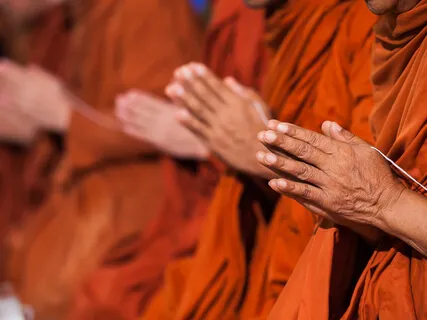
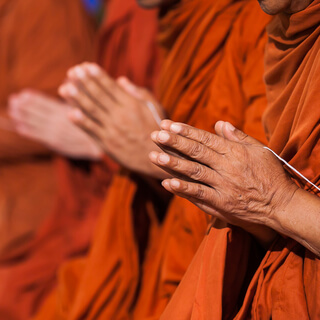
Has this gesture of giving out,
Like that,
It's an opening out.
And that very gesture,
Physical gesture itself,
Is something important for us all to develop,
An outgoing gesture of being charitable to others,
To give what we can of our wealth and possessions to those who are without,
To be able to share our things with other beings.
Now without that,
It's the gesture of taking and getting,
Grasping is like this,
You're trying to hold on and take everything for yourself,
Trying to,
That's why I was saying last night,
This attitude of attainment,
Of achievement,
Of getting,
Of gaining,
Is not suitable for the practice of the Dharma,
It's not suitable for worldly wealth and power.
But for the Dharma,
This gesture of giving out,
The gesture of Dhanah,
Of charity,
Is more useful,
Is necessary.
Now in countries like Thailand,
It are very much,
This attitude of charity is highly praised and encouraged in that society,
Especially to the religious seekers and monks and nuns that live by the discipline set down by the Buddha.
So that in Thailand you have a whole society,
Nearly a whole society that supports,
Respects and encourages those seekers of the truth.
And that is really quite remarkable in this day and age that that still exists.
At a time where the attitude more are to get for yourself,
Take what you can for your own need,
Not worry about anyone else.
Now this was the Baramita in the Jataka stories,
The stories about the lives of,
The previous lives of the Buddha,
The last previous life before he was born as Gotama was,
He was called Vaisantara,
The Bodhisattva Vaisantara,
Thay of Pat Vaisandhan.
And Pat Vaisandhan was perfected this particular Baramita.
This is one of the favorite stories of the Thais,
And every year they have a festival in many of the temples in which the story of Vaisantara is recited.
And it's the,
To a Western mind,
This story is somewhat hard to take,
Hard to understand,
Because such teratableness as Vaisantara seems almost to be bordering on the absurd in the minds of Westerners.
Because Vaisantara was so charitable he gave away his wife and children,
Not to mention his white elephant.
As you can see,
Westerners have a hard time with this.
I know it's the white elephant that boggles your mind.
But all these stories do have a significant meaning,
A symbolic meaning in a religious way,
In that even we have to relinquish and give up even that which we most cherish,
Our possessions,
Valuables,
Even our relationships,
We have to be able to let go and not cling to even those we love and are very attached to.
This doesn't mean to get rid of them,
Like in the end it all comes out very happily.
Vaisantara,
Because of his virtue and his resolution in keeping his vow of charitable,
Does get it all back in the end,
Wife,
Children,
Elephant,
Kingdom,
Everything.
That's a happy ending.
Now just regard this also as like not only here at the center,
This insight society,
But also in your own life,
Wherever you live,
This attitude of dharma is a way of integrating practice into daily life.
To say,
Use your mindfulness and wisdom to observe how much you need,
How much you can give to others who need,
Not to just spend your life accumulating wealth,
Possessions,
And everything just for some sense of desire,
Or concern for your own particular safety and security.
Like even develop the habit of putting in coins in little charity boxes when you go into churches or blind people or beggars or whatever.
Just the action itself is useful in the world.
Training yourself not to look down on those who are without,
But to say,
Want to help and be concerned,
Giving what you can of your own possessions.
In the Bhikkhu Sangha,
They like the offering of food here in the center.
It's an actual movement from you to the to the alms bowl of a monk.
I mean you might think,
Well I didn't prepare the food,
I didn't buy the food,
I didn't.
Don't be so concerned with having everything absolutely pure and perfect.
But just the actual movement of giving has its own profound effect on our lives.
That's one reason why in this retreat here we are asking,
Or recommending anyway,
Those two offer things to make that as a kind of movement outward to the monks.
To not just be here to get something from the center or from the monks,
People here not to just feel you came here to get or to achieve,
But came here to give.
It's part of the training,
Giving,
Giving even in tiny little amounts or in great amounts or in moderate amounts,
Whatever.
It's like putting the food in the alms bowl,
Is a development in that direction.
In London,
They have this Buddhist society that was established about 50,
60 years ago by a very famous Buddhist,
Mr.
Christmas Humphreys.
And they have a summer school there.
Every summer it's a British Buddhist tradition by now,
It's been going on for 30 years.
And this summer school,
Say three or four years ago,
When they invited monks to teach at it,
The monks were more or less just treated like lecturers or teachers,
And they didn't feel any need to,
Say,
Establish a relationship with the monks as monks.
So the monks were kind of eight with the people and were not in any way the people in the Buddhist society.
They didn't seem at all concerned about offering or giving to monks as such.
They thought it was all silliness.
They didn't want any of that in Britain.
But now they're beginning to find this a playable thing.
Like three years ago they invited me to teach there for two weeks,
And I said I'd only go if they promised to give me alms food,
One meal a day of alms food.
And so they looked a bit disgruntled and said,
Well,
All right,
If that's what we have to do.
They thought I was being a bus budget.
Then during that two weeks I noticed the line kept,
At first there were just two people kind of offering food,
Looking a bit embarrassed by it all.
By the end of the two weeks the line was so long I couldn't possibly have eaten that much food.
We had to carry it in shopping bags back to.
.
.
We were living in London at the time for the other monks.
And the people found this kind of a blessing,
A joyous thing to do.
They didn't find it such an annoying or fussy detail.
Another time someone came to,
A friend of mine,
An English friend came to Thailand to see me.
And he,
When I went on the alms round in the morning,
He wanted to walk behind me and kind of just watch what was going on.
And I consented to that and he followed me.
And when we came back he said,
That was really one of the most inspiring things I've ever witnessed.
He said,
That's Vindabhatta or alms round.
And he was one of these kind of trendy English men who would probably go to places like the Esslin Institute and whatnot,
If he lived in America.
And in England he was in these kind of encounter groups and things of this nature.
And then he said,
Now I really know what encounter means,
After seeing that.
The encountering of a devoted and good-hearted lay person offering food to a religious mendicant.
And in that very exchange,
In that moment of offering and receiving,
Is a very good kind of action in the world at that moment,
In which something skillful and something good is going on.
So,
This is,
Gana Baramita is the most important one to develop in our lives,
For the welfare of our own practice,
As well as for the welfare of other beings.
Now the second Baramita is the Sila,
Called Sila Baramita.
And this is translated as morality.
Now morality sometimes has a ring to Americans as being something restrictive and prudish and narrow-minded,
Intolerant and so forth.
Because morality has been identified with kind of a closed-minded conservatism,
With prudery.
But in Buddhism,
The Buddhist morality is a refraining from acting on evil impulses with bodily action or speech.
And immorality does not have to do with thinking,
It has to do with action and speech.
So that the Sila Baramita is developed by refraining from using our bodies and our speech,
For doing that which is unkind or cruel,
Dishonest,
Exploitive,
Insensitive,
Inconsiderate,
Mean and selfish.
And you say,
Well what is that?
Well,
Like yesterday you took the Sila,
The refraining from killing,
Intentionally killing any living being.
Now this is important,
Buddha always made it clear,
It's the intention,
Not the action so much.
Like sometimes we accidentally kill something,
A step on an ant or something of this nature,
Which can't be helped.
But to refrain from intentionally killing anything,
Any living being.
To refrain from taking things that don't belong to us and stealing.
Or we can,
Like a monk,
Refrain from taking anything that's not given to him.
So that I know from my own experience that I tended to kind of pick up things before.
I tended to,
When I see things that attracted me,
I just grab them and look at them.
I had no intention of stealing them.
But it wasn't a particularly good habit,
Just to be pulled out and to pick up things that don't belong to you.
So in the monastic life we always train ourselves not to do that.
So that things,
Say maybe some interesting,
Fascinating,
Lovely things are around,
Objects that we might like to pick up,
But we refrain from doing it because they haven't been given to us.
If they've been given to us then we can keep them or look at them,
Use them.
And this is a refinement of that particular rule.
It also helps to prevent looking around at other people's lovely possessions and coveting them.
It's like when you walk down into the town,
On the streets in London,
Where they have beautiful displays of goods,
We refrain from being pulled into that.
We don't seek to look or touch or admire all the worldly goods.
This is a way of training or perfecting Sila.
But in the Buddhist ways of teaching,
Sila is our guideline,
More than absolute rules.
So we can,
Like for lay people,
Sometimes the interpretation has to be on a court level,
Just not stealing something,
Intentionally stealing.
But we can also refine that particular precept to refrain from touching or grasping things that are not given to us.
Then the third precept is about,
For lay people,
For householders,
It's Gamae Summicha,
Which is refraining from infidelity,
Promiscuity,
Or refraining from the misuse of sexuality,
In which we misuse our bodies or the bodies of others just for lustful or greedy purposes,
Without being responsible or considerate or sensitive to ourselves or to others.
Sexuality sometimes we don't respect,
Even our own body,
We misuse it a lot and exploit it,
Try to get as much pleasure out of it as we can,
Without understanding the limitations of it or how to use it appropriately.
Then for the eight precepts,
It's the celibate precept of refraining from any intentional erotic type of behavior,
Which we totally refrain from any kind of sexual behavior at all.
Then the Mutsawada precept of refraining from telling lies.
Now lying is.
.
.
We know that when we lie,
When we don't tell the truth,
When we exaggerate or gossip,
Let's try to sit down and meditate after you do that,
See what happens to your mind.
You just told a big lie,
Or even a little one.
See how much peace of mind you get when you sit down to meditate,
Even though the results,
The unpleasant results of lying.
And this we refine more,
You know,
As just to avoid heedless speech,
Gossiping about others,
Exaggerating things.
And then the fifth is the Suramayrao refraining from drugs,
Taking drugs that change consciousness in alcoholic drinks.
The Sila is a.
.
.
This is a refraining precept rather than a doing.
It means refraining from.
Doesn't that imply doing anything?
The Dhanah is the actual good action,
Isn't it?
Developing the Dhanah is a charitable,
Loving action,
Outgoing action,
Kindness to other beings.
And then the Sila is the refraining from evil actions,
Selfish actions in the world with our body and speech.
Now the third,
Baramita,
Is called Nekama,
Which is renunciation.
Nekama,
Baramita.
Now those are like the last three that you took,
The not eating a meal in the afternoon,
Not going to shows,
Dancing,
Singing,
Playing games,
Not to seek unusual amounts of sleep as a way of escaping or seeking out comfort in order to get lost in ease and luxury.
So these are more like renunciate precepts.
And this you can also use in your own lives to reflect on the way you live your life,
How much of your life is really conducive towards spiritual development,
And how much of it is not conducive.
It's up to you to decide.
You have to examine and look at and be aware of how you're living your life and be responsible for it.
And so then they come up,
Baramita,
You develop through,
Really looking,
Being honest about the way you're living and renouncing that which is not particularly useful or conducive towards the spiritual light.
If your goal is enlightenment,
Then this is what you have to do.
If it's not,
Then you don't have to.
It's up to you.
But many people fill their lives with useless activities,
Just busy,
Busy,
Just trying to kill time,
Doing something,
Watching television,
Drinking,
Going to bars,
Just running around,
Heedlessly just living one's life,
Doing this,
Doing that,
Not because any of these things need be done,
Or even because we want to do them,
But because we're just so heedless and caught up,
Wound up,
That we live our lives in this very kind of habitual flurry.
And if you're one of those people,
It's time to investigate more carefully on the way you're living and develop a style of life that is more conducive to calm,
To peace,
Tranquility.
Now the next two baramitis are panya and virya,
And these are like panya in this particular case,
More like worldly wisdom,
Common sense,
Having some intelligence in your life,
Using your intelligence to reflect on what's good to do,
What isn't good to do,
What brings success,
What brings failure,
What brings happiness,
What brings suffering,
To have,
Use this discriminative faculty,
The intellect,
In a good way,
In a skillful way,
Rather than just being caught an obsessed thinker,
An obsessed intellectual,
And just seeks escape through thinking about things,
Reading books.
So panya baramita means using thought,
Concepts,
The intellect,
Skillfully for things that are worth doing,
Worth thinking about.
And combined with this is the virya baramita of effort,
Or putting effort into what we're doing.
That's not just thinking about life and having ideals and ideas and plans and schemes and never doing anything.
Like if you have a lot of intellectual ability,
Sometimes you can't get anything done because you think about doing things,
But because of a lack of virya or effort in your life,
You can think too much about things to the point where they all seem not worth doing,
Or you can become very pessimistic and think,
Well,
It will never work,
I won't even bother to try it.
So if you're one of those who dreams,
Idealizes,
And then never gets anything done,
It's because of a lack of this virya,
Which is the kind of doing something,
Finding out,
Using the panya or the wisdom to figure out what's worth doing,
And then doing it.
And learning from your successes and failures.
Without virya,
But not enough panya,
It means you're one of those people that just go out and do things without reflecting on whether it's worth doing or not.
You believe anybody,
To some you say,
Why don't you do this,
So you do it.
You just rush around doing things,
Not knowing why or if it's worth doing.
So these are a balance for each other,
The passive and active,
The intelligence and the faith,
The wisdom and the effort.
Now the next one is Kanti Maramita,
Which means patient endurance.
Without any patient endurance,
Of course,
We couldn't possibly meditate.
Meditation,
Like sitting and all these things,
Is developing a kind of patience and endurance.
You have to endure through that which is unpleasant or painful or boring,
Tedious.
If you know Kanti Maramita in your life,
You tend to just react to things when something becomes unpleasant,
Boring,
Painful,
You just leave it,
Get away,
Run away.
When you become disillusioned with somebody or something,
You just leave it,
Run away.
You don't endure through the seemingly unendurable.
Now it doesn't take any patience or endurance to endure through pleasure,
Something that's fun,
Pleasurable,
Exciting and interesting.
Because I had to endure through that wonderful show,
Terribly exciting,
Fascinating show,
I had to endure,
Or through a good meal,
A really delicious meal.
I had to just sit there and patiently endure through that.
But sometimes we have to endure through the pain,
Like sitting here for an hour.
When we want to leave,
We want to get up,
We want to move,
We want to go away.
Endure through monotony or depression or doubt or despair.
All these conditions we would like to run away from,
We'd like to annihilate and destroy.
When I went to Wat Pa Pong for the first time,
I couldn't speak the language at all,
I couldn't understand it.
And they all spoke Lao,
Northeast Thai,
Which is a Lao,
A Lao-shan dialect.
And it was such a strict monastery,
You had to sit there.
Sometimes in those days Ajahn Chah could go on for three or four hours.
You'd just sit like this in this Thai posture,
With your legs off to one side.
And I found that just five minutes of sitting like this in those days was excruciating.
And so when I arrived I thought,
Well,
I'm sure that because I can't understand the language,
And I'm a foreigner,
That I'll have special considerations and they'll let me out of this.
It's tedious,
Kind of saying one has to sit and listen.
All the other monks can understand what he's saying,
So it's very interesting for them.
But for me,
I can't understand it.
My body just isn't flexible enough to sit like that for over five minutes.
And oh,
Very good reasons,
Aren't they?
So I went to Ajahn Chah and I told him,
I gave him these reasons.
It doesn't make any difference,
You have to do the same as all the others.
I've not been very considerate.
I thought,
Well,
I think I'll leave,
Go be appreciated.
But something convinced me to stay on at least for a little while.
I was there for ten years actually.
And learn to endure through what seemingly was unendurable.
At first it was just sitting like this and then everything is quite unscheduled in Thailand.
They aren't likely Americans that go by the clock and have everything,
This hour is for this,
Next hour is for that,
And so forth.
So very,
Just when it's time to get up and leave,
We get up and leave,
And so forth.
So that your sense of organization and punctuality is not the same.
You never knew how long Ajahn Chah was going to talk.
And so you start anticipating,
I know he's in for a long one this evening.
Of course I couldn't understand what he was saying either.
I determined in my mind to endure,
Make it a practice of patient endurance.
The only thing one could do in such a situation.
But it was very worthwhile,
It was a lesson that I benefited from.
Ajahn Chah would sit on a high seat,
I'd radiate hatred,
Hate vibes out to that high seat.
And sometimes I could just see that the body just be red with rage and fury.
But I kept watching it,
Enduring this rage because one could see that it was a natural kind of habit I developed.
When I couldn't do what I wanted,
And was tied down to something,
Limited and restricted,
And couldn't get my own way.
And had to conform to something I didn't particularly enjoy doing,
That anger arose.
Terrible anger,
That I seldom ever had when I was a layman.
But through that watching and observing that tendency started to fade.
I found out after a few years that my bad temper almost seemed to go away.
It didn't seem to bother me anymore,
The conditions for it were fading.
We still had to do things,
One time I remember Ajahn Chah kept me up sitting till about 3 or 4 o'clock in the morning.
We started,
We chanted every fortnight,
Every two weeks we had to chant the 227 rules.
Which was boring enough.
And then you,
After the 227 rules had been chanted,
You usually you had,
You could get up and leave.
But that particular day there was another monk from some other monastery there.
And Ajahn Chah and that monk sat there and started just talking,
Laughing,
Looked totally un-serious and foolish.
And I was waiting for them to ring the bell to dismiss us.
And they didn't ring.
As we met about 6 in the afternoon in the evening,
About 10 in the evening,
Still didn't ring.
And then 12 midnight.
And there's anticipation waiting for the bell to ring.
When is he going to ring?
These two monks just chatting and laughing,
Telling jokes.
Just very aggravating.
But what it did was after a while I just let it go,
I stopped resisting.
And in that letting go and non-resistance I felt very much at ease.
And about 3 or 4 o'clock in the morning the bell rang.
And I was really peaceful and content.
And as I bowed to Ajahn Chah he looked at me and he missed his glint.
But there was no anger in me.
I was perfectly at ease.
I was quite grateful in fact for his kindness in torturing me like that.
So in there,
Say here during this retreat,
See even these opportunities where you are bored,
Disillusioned,
In pain.
Not as.
.
.
Just watch the mind,
What happens to the mind.
Observe the irritation or the rage or the proliferations that go on.
The conceptual proliferation.
Just be aware of those.
Because you are now one who is watching and listening,
Looking at the way things are.
Not trying to become a good meditator,
A saint,
A Buddha.
Trying to become this or that.
That's worldly attitude,
Becoming.
The Dharma attitude is being.
So being aware that these are changing conditions in not-self.
After the Kanti Baramita is listed the Satya Baramita.
And Satya is honesty and truthfulness.
And this is very important because we need to have a really profound kind of honesty with ourselves,
Our intention for what we are doing.
Sometimes we tend to ignore or lie or cheat even with ourselves.
Not be quite clear in our minds of what we are doing.
So we tend to do things sometimes just out of habit or just kind of lazy rationalization,
Justification.
This is a lack of Satya Baramita.
Like intention,
Knowing one's intention.
Now that isn't quite as complicated as it sounds.
Like somebody asked me the other day about digging in the garden.
Because they dug up a worm,
Cut a worm into.
Was that an offense against the precepts?
I said,
Was your intention to cut the worm into?
He said,
No.
What was your intention?
Well it was to help the garden.
Well then there's no offense.
But you have to be honest about this.
If you go out in the garden to kill worms.
Like meat eating.
You eat meat.
Well you should be vegetarian because you are encouraging people to kill animals by eating meat.
I say,
Well I don't encourage animals.
I don't encourage killing of animals.
My intention for eating the meat is not to eat animals or joy at eating animal flesh.
But the intention for eating the meal is for nourishment and eating food that's been offered without demanding any kind of special food.
So the intention is to make oneself easy to take care of and accepting the food that's offered.
The intention is not to eat meat.
You see,
That's the difference.
But if I'm lying about that,
I really want to eat meat.
So I just justify my carnivorous obsessions.
Well the Buddha didn't say anything.
He said it's alright for monks to eat meat.
So it's alright for monks to eat meat.
So telling the lay people,
They say,
What do you want to eat?
I want to eat meat.
Steaks and roasts.
Kill me a chicken.
Now this intention is that one has to be honest about with oneself.
Now honesty also doesn't mean that you have to always give yourself the worst possible intention.
Like some people think that by being terribly honest means they always have to think the worst thing about themselves.
Whatever is the worst alternative,
They think,
That's what I really am.
And then they think that's being very honest and straight with yourself.
But you have to use your intelligence.
This isn't trying to decide,
It's thinking to the lowest level just because you're too lazy and too unconfident to recognize the good qualities that you have.
Sathya also is recognizing that which is good in yourself,
That which is honest and sincere and trying to do the right thing.
Like virtue and is kind and so forth.
Some people say,
Well I don't,
I'm really no good,
Rotten so and so,
Selfish and mean.
They aren't at all,
They think that's being very honest because they're afraid to admit to really look at their authors as a good side.
Then at the other extreme of always giving yourself the best description and ignoring any faults,
Laziness,
Lack of honesty.
So Sathya Maramita is really looking at closely your intentions.
Not in order to come up with some conclusion about who you are or what you should be,
But just observing the way you tend to live with yourself and with others.
The next one is called Adi Tana.
This means resolution,
Means resolute.
Now if you have no Adi Tana Maramita,
That means you start something and then when you get bored with it,
You give it up.
You can't stay with anything.
When it becomes uninteresting or some disillusion with it,
You stop.
I resolve to practice meditation every morning for half an hour,
Reasonable resolution.
And then you do it one day and the next day,
Third day you don't,
Then you give it up.
That's a lack of resolution.
But to develop resolution in your life,
You have to also be a clever person.
And some people make resolutions that are just too extreme,
Like saying,
I will meditate for half an hour every morning for the rest of my life.
Or maybe something like,
I will meditate five hours every day for the rest of my life.
You make resolutions like that when you're terribly inspired,
Like coming off a meditation retreat.
And then when you get,
After the inspiration and the high is lost,
Then suddenly you can't even meditate for five minutes every day.
Especially if you compare your resolution with the reality of what you're doing,
You seem hopeless.
You have no,
I'm too weak,
I'm worthless,
I have no kind of discipline,
I have no willpower.
So in developing resolve or Adi Tana,
First of all know what you can do,
What you can do without any great resolution.
Like use spans of time that you can easily succeed at,
Like sitting for half an hour in the morning.
Or if you can't manage half an hour,
Like just ten minutes,
Set a period of time in which you find that you can do it.
To know first of all what you can do.
This is using your panya,
Your wisdom.
And then resolving to do that for say a month,
Or a couple of weeks or whatever,
For a span of time that you can manage,
Not for the rest of your life.
And then seeing how you do,
How successful you are.
But be making it firm in your mind to do it,
And be it in a reasonable way.
Not making grandiose resolutions that you cannot possibly keep to.
Then as you find out what you can do,
Then you can say extend the period of time,
Do it in that way.
Because this isn't a practice in order to get there all at one jump,
Try to get rid of evil and faults and become good.
But it's the practice of wisdom,
Mindfulness.
None of us need to become anything.
One of your friends is a very dedicated meditator,
And he says,
I sit for three hours every day,
No matter what happens.
The house catches on fire,
Telephone rings,
Whatever happens,
I will not budge from my posture.
And you know that he will not budge,
He's just so firm and resolute.
And then you think,
Well,
I budge every two minutes.
The house is on fire,
I budge.
Now remember,
We're not trying to become like someone else,
Or attain an ideal,
Like becoming an ideal.
But very humbly,
Very determinedly looking at the way things are.
In the monastic life,
We have all kinds of Adhitanas that we do.
The Buddha taught up this,
Left us with this discipline in which we develop Adhita-baramita.
And Adhita-baramita is resolving,
Making resolutions,
But reasonably so.
Like our Jan Chara wouldn't even let us resolve,
Make resolution to be a monk our whole life.
When bhikkhus,
When they're very full of faith and inspiration,
We go,
I want to make a resolution to be a bhikkhu my whole life.
He says,
You don't know the future.
Don't make resolutions for a whole life,
But use the Adhita-baramita for developing awareness right now.
When you see that you're one who's irresolute,
Wavers and vacillates,
And can't do anything,
Then develop Adhita-baramita in a reasonable way.
Do it so that you can keep resolutions,
Use your intelligence to know what you are capable of doing.
Then once you know what you can do,
Then you can develop beyond that if necessary.
Now the last two baramitas are the metta that the venerable Cambodian monk was talking about,
And the baramita of upekha,
Which is like equanimity or humility.
So metta is translated not too accurately as loving kindness,
Because the word love in the English language is a bit too powerful a word.
We use love in English for the word like,
And we say,
I love McDonald's hamburgers.
That means you like them a lot.
You wouldn't say I have metta for McDonald's hamburgers,
Unless you hated them.
So actually I prefer teaching in England,
Where people,
When I went to England,
Asked people there,
Do you practice metta?
And they said,
Oh,
We can't stand metta.
What do you mean?
Well,
It's kind of false,
Isn't it?
You're saying I love my enemies,
I love myself,
I love all these.
It's kind of like being terribly sentimental and a bit sickening when you don't really mean it.
English,
I feel aversion for that.
It's like being rather silly,
Just saying you love things that you don't love at all.
Because the word love in English implies liking or being attracted towards.
When you love something,
You're attracted toward it,
Aren't you?
McDonald's hamburgers,
You're attracted toward it.
When you see someone you love,
You're attracted toward them.
You want to go to them.
But metta is the kind of,
It's more like kindness,
Just the word kindness.
Or not dwelling in aversion on that which is unpleasant,
Like,
Say,
An enemy or someone who's hurt you or incels you,
Someone you do not like at all.
You feel no attraction toward.
You feel whenever you see that person,
You want to walk away from them.
You want to go away.
You don't want to walk toward them.
You're repelled by them.
But you can have metta for them,
Which doesn't mean you love them,
But means you are kind.
And if they need help,
You help them.
And you don't dwell on aversion.
You don't go around talking about them,
Spreading bad rumors,
And dwelling in your mind of they did this and then they did that and they're no good and they don't deserve to live.
That kind of proliferation you refrain from doing.
Now this metta also applies toward yourself.
When we have metta for ourselves,
It means that we don't,
I love me,
It means we don't dwell in aversion on ourselves,
On this body or the conditions of our mind.
We tend to be very self-critical.
I'm too lazy,
I'm too weak,
I'm not strong enough,
I'm not good enough,
I'm not beautiful enough,
I'm not intelligent enough,
I'm not worthy,
And so forth.
We tend to have a mind that is always kind of disparaging,
Fault-finding,
Dwelling on our failures and imperfections.
That means a lack of metta.
You have no metta for yourself.
But a metta for yourself means not dwelling in aversion.
You're aware of weaknesses and faults and failures.
You're not denying or saying,
I love my weaknesses.
I think my weaknesses are absolutely wonderful,
My faults.
I've heard people say that.
I can't believe it.
It's being aware of weaknesses and faults without dwelling in aversion on them,
Feeling guilty for not being perfect.
Not living that kind of,
Developing those mental additives that are always being averse,
Because we find so many imperfections in our thoughts and emotions,
In the way we look,
In our habits,
Backgrounds,
Past.
Many of you have done things in the past that you think are terrible,
That you think you're weak,
Or you have something wrong with you that's not very nice,
And you hope nobody will ever find out that you're not perfect.
You did something wrong.
Well,
With metta,
It means that we don't proliferate like that anymore.
Metta is a clearing of the mind,
It's a clarity,
Not dwelling in aversion on,
A kindly attitude,
A friendliness,
Towards this body and mind.
But it isn't a masking or a kind of just conditioning the mind to think nice,
Sentimental thoughts about ourselves or about others.
But when we develop this metta,
This inner ease and peacefulness towards this very being,
This formation here,
And the mental formations that come and go in the mind,
Then we radiate this outward,
This in-ease to other beings.
This is why when metta is spreading,
They call it the spreading of metta.
If we're at ease and at peace with ourselves,
Then we will be at ease and at peace with others,
Even the most awful beings.
With the most evil beings,
We can still be peaceful with,
We don't need to dwell in aversion,
Even on the most mean and disgusting beings.
And when we can do this,
Then even the most violent and dreadful beings are affected by that.
Saint Francis of Assisi was famous for that kind of metta,
In which wild animals and all that would draw near,
Weren't frightened because of this radiance of metta,
Kindness.
Now the last one is upekha,
Which translated most commonly as equanimity,
Which means a kind of emotional balance in yourself,
In which you're no longer,
It follows from the metta,
From the developing of metta,
Then equanimity or humility are there.
You're not getting caught up in the successes and failures of your life,
In the happiness and suffering,
Good fortune and bad fortune.
Like if you have no humility at all,
No equanimity,
You tend to,
When you're successful,
You think,
Oh I'm successful,
I'm world success,
I'm great,
I'm.
.
.
And you jump for joy,
Get caught up into that gladness of being a successful person.
But then when you fail,
What do you do?
I'm no good,
I'm worthless,
I'm a failure,
I don't deserve to live anymore,
I think I will kill myself,
Depression.
So you're kind of a helpless victim of fate if you have no equanimity,
Aren't you?
Somebody praises you and you say,
You're wonderful,
And you think,
Whoopee,
I'm wonderful.
Somebody says,
You're no good,
You say,
Oh,
I'm no good.
It's like a puppet on a string,
You'd be manipulated by people if you have no equanimity.
But if you have equanimity and humility,
Then success,
You know success,
But you're not going to get carried away by it.
Or failure,
You recognize the failure,
But you're not going to be carried away by failure,
Or by praise,
Or by criticism,
Or by good fortune or bad fortune,
Or by happiness or suffering.
You can observe,
That's the way life is,
Sometimes we have successes and sometimes failures.
Sometimes there's happiness,
Sometimes suffering,
Sometimes people praise us and sometimes they blame us.
This is the way the world is.
Don't expect it to be otherwise.
Don't expect life to always be successful,
Happy,
Full of praise and fame and honors.
Nor do you have to think that life is always going to be just a misfortune,
Full of misery and failure and depression,
And recognize that these things alternate in our lives.
We can't always be successful,
We're not always failing.
These are just conditions changing,
And they're all impermanent.
So we have equanimity toward these conditions,
Because they're not self,
They're not me,
They're not mine.
Now in metta,
In upekha,
There's metta,
A kind of inner peace and ease which radiates outward.
And upekha is an emotional balance within yourself,
In which you learn from success and failure,
Praise and blame,
Happiness and suffering,
That are no longer just helpless victims of fate.
Now these are the ten baramitas of the Theravada system.
These are what we're developing now,
Aren't we,
In our life here.
These are naturally developing as we live more mindfully.
Not thinking,
This year I'm going to just develop dana,
Next year I'll develop sila,
Next year I'll develop.
.
.
You see the stress on this proper attitude of living,
Acting in the right way.
Some people think,
I don't know,
They get the impression when I talk,
They're like,
Just saying you just kind of sit there and just say everything arises,
Passes away,
The world blows up,
You say everything's passing away.
Somebody comes into the room and starts cutting your heads off with a sword,
I think,
In permanent conditions,
Not me,
Not mine.
That's not.
.
.
They're trying to do that,
Just try.
Just see if you can do that.
Now this allows us to,
They act in the world in skillful ways,
To be that force in the society which is kind and gentle,
Considerate,
Wise,
Moral,
Charitable,
Patient,
Resolute,
So forth.
The society needs that,
Doesn't it?
In America we really need that kind,
Those kind of people,
Those kind of beings.
We need wise people,
Kind,
Patient,
Gentle people,
In a time where great powers,
Great aggressive power being generated.
Very strong powers,
Aggressive,
Very masculine powers going out to,
Got to protect ourselves and get rid of the enemy and annihilate that which we don't like.
And try to keep what we have for ourselves.
But this is a very gentle,
More feminine kind of power.
Which is the only thing that will neutralize the other,
Will balance it out.
Being very patient,
Kind,
Humble.
They don't,
Doesn't sound like it can do very much,
Does it?
We need to kill the people that are making the bombs.
Even the people in the peace movement in Britain want to kill the people who are making bombs.
It goes on and on,
You start killing the people that are making bombs and what happens.
And while I had a,
Remember one weekend in Cambridge,
This man was ranting about,
You aren't doing anything for world peace.
You're just sitting there,
Letting anything,
They're going to blow up the world,
Any moment.
He was ranting and I said,
Look,
You come into this room and you don't bring any peace with you.
I could just feel,
Even before he said anything,
His presence was aggressive.
It was attacking,
It was avert,
It was critical.
It was all those vibrations that caused war.
He was vibrating it.
He was radiating that kind of aggression outward.
Wasn't aware of it because he was caught up in his own fears and ambitions and self-conceit.
We're using the wisdom faculty to observe how things work.
Now in this retreat,
Observe what,
How to balance and find a balance within yourself.
Learn to be at peace with yourself.
Can you be at ease with yourself?
If you can't be at ease with yourself,
Then you can't very well expect the United States and Soviet Union to be peaceful.
You can't demand that someone else be peaceful or a whole nation of ignorant people have peace.
That's asking the impossible,
If you cannot be peaceful.
But first you have to look and know what peace really is.
It's not just something that a government can bring.
It's something that you,
As an individual human being,
Has to do.
If you want world peace,
You have to bring it into your world.
You have to know what it is.
So in this way,
In the practice of meditation,
Is you're learning to be at peace.
Peaceful coexistence with this body,
With the conditions of your mind,
Even the unpleasant ones,
Especially the unpleasant ones.
And then you'll know what you're talking about when you're talking about peace.
And you also have a bit of great effect on the world.
You have a good effect on the beings around you,
On the society you live in.