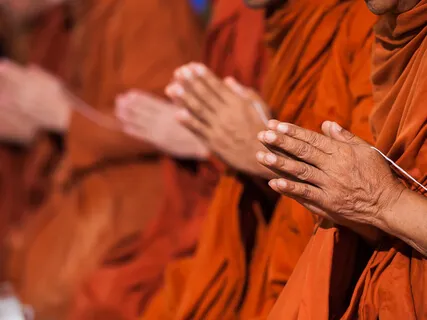
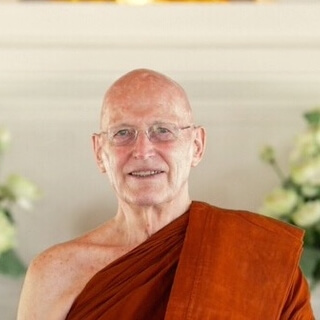
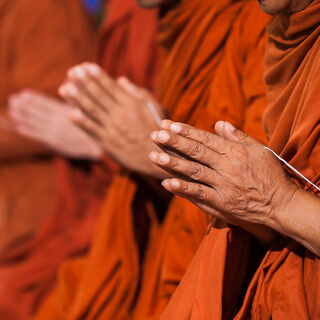
This is the beginning of the second retreat.
Those of you who are continuing on from the first can renew your eight precepts.
And for those who have just come,
I will go through these eight precepts again and then give them to you formally.
Can you hear?
Does it all fit up for your old one or not?
Now for those of you who were on the previous retreat,
It's a good time also to reflect on just the form of the eight precepts and see what you've learned from it so far.
Now we're using for the meditation retreat what the kind of precepts are conducive towards spiritual development,
In which your attention is directed inward rather than your attention being pulled outward all the time.
Most of the time our lives are constantly being pulled out of ourselves to look at this,
Listen to that,
Read,
Watch television,
Eat,
Talk with people,
And our mind is being pulled outward into objects.
Like if you go sightseeing,
You'll feel your attention always being pulled out by the scenery.
You listen to music or talk,
Chat,
Read books,
All this.
Your consciousness is being absorbed into objects of sense.
Now for meditation,
The goal of our practice for Buddhist meditation is nibbana.
Now nibbana or nirvana sounds terribly kind of exotic or impossible for those of you who might have read about it in a book or heard the word,
But what it really means is the unconditioned,
Which is something that we don't look for outside.
We won't be able to see it with our eye,
Or it's not a sound that you hear with the organ of your ear,
Or smell,
Taste,
Touch,
Or create with your mind.
So the practice of inclining to nibbana means that we prepare ourselves in a way in which our senses will be as little beyond necessarily stimulated,
In which we will be able to concentrate our attention,
Compose ourselves on what's going on inside our minds.
So our meditation practice is more like an inner listening,
Listening,
Watching.
So we want as little kind of sensory distraction as possible just for this ten day retreat.
So we don't watch television,
Listen to the radio,
We don't read books,
We keep a noble silence,
And we don't have to talk or entertain each other with fascinating,
Interesting conversations.
We don't have to seek each other for romantic affairs.
We aren't getting caught up in playing games,
We aren't going to play football,
Tennis,
Ping pong or anything.
Bridge,
Chess,
Poker.
We're not going to eat all day long,
We have certain designated meal time,
And we don't have to go around trying to look for something to eat.
And refrain from going to the pub or the beer hall or taking drugs such as marijuana,
Heroin and opium,
LSB,
These kind of things.
Drugs that we could easily escape,
Get our consciousness off into when we get bored with looking at what's going on in our minds.
Sometimes when you have to sit with yourself without anything to do,
It can be pretty,
Rather miserable to have to be with your own mind for a while.
You'd rather be with somebody else's mind for a while.
Something that is more interesting than our own particular habits and conditions.
But in this practice also we are developing a firm patience and ability to endure.
So we have to endure things before we wouldn't endure.
We would tend to run away and escape into something else.
Now we're going to try to at least endure a little longer.
We're going to stay in certain postures so that we're not going to try to seek comfort all the time,
But just sitting comfortably but not luxuriously,
Sleeping but not just escaping into sleep all the time,
Certain times to sleep.
Sitting,
Standing,
Walking,
Basic postures,
Sitting,
Standing,
Walking,
Lying down.
We're going to practice the concentration on our own breath,
Normal breath,
Recognising our postures of sitting,
Standing,
Walking,
Lying down and keeping these precepts.
Now when I give these precepts it's in the Pali language,
So I will explain them to you so that you will know what you're saying,
What you're vowing.
So first of all we chant the salutation to the Buddha,
Namo Tassa Bhagavato Arhatu Samputasat,
Which means a kind of praise,
Salutation to the Arahant,
The blessed one.
It's a traditional Theravada kind of salutation before anything begins.
Then you take the three refuges.
This is the traditional way of being a Buddhist,
Is taking the three refuges.
Buddha Dhamma Sangha,
I take refuge in Buddha,
In the Dhamma and in the Sangha.
Putang Theranang Kachami,
Tamang Theranang Kachami,
Sangkang Theranang Kachami.
Theranang Kachami means refuge and Putang Tamang Sangkang,
Buddha Dhamma Sangha.
So taking refuge in Buddha,
You say Putang Theranang Kachami,
This is your taking refuge in wisdom.
Now taking refuge in wisdom means using wisdom.
Now this is the whole point of this retreat really,
Is to use wisdom in it,
Not to just kind of sit here in a habitual manner and wait for something to kind of zap you from outside and enlighten you,
But it's for you to arouse wisdom in your practice during this time.
So taking refuge in Buddha means to,
It's a very practical thing,
It's not just a kind of exotic oriental phrase in which you repeat just for the sake of tradition,
It actually has an important meaning.
It's a reflection,
A recollection for you to remind yourself to be wise,
To take refuge in wisdom.
Then Tamang Theranang Kachami,
Dhamma is the truth,
The word Dhamma or Dhamma,
The ultimate reality.
Now that's not something separate either,
So when you take refuge in Dhamma you're not exactly taking refuge in some belief in a supreme being,
But in the truth here and now,
Because the Dhamma,
The ultimate truth is imminent now.
So it's a verbal recognition of the ultimate reality that is imminent now in all of us.
So the Dhamma or the ultimate truth,
The Buddha is the personification of wisdom,
And Dhamma has no personification,
Has no personal qualities.
Buddha,
You see,
They can make Buddha images,
They can make them look like human beings,
Like see this little image here,
Shaped like a human being.
They can't make Dhamma images,
They can't make a Dhamma,
They use symbols like wheels or various symbols that kind of mean Dhamma,
But they're never personifications,
They're not beings of any sort.
Then Samkhang Theranang Kachami in the Sangha means,
Sangha means those who practice the Dhamma,
Those who live by the Dhamma,
Those who take refuge in the Buddha,
Like you and like myself,
Human beings,
Men and women,
Who practice the teaching of the Buddha are called the Sangha.
The Sangha means those who practice virtue,
Who live a good life,
Practicing what is good,
Doing good,
Refraining from doing evil,
Who are sincere in what they're doing and earnest.
So you're taking refuge in that in yourself also,
Which is sincere and good and earnest,
Not that in you which is foolish,
Worried,
Frightened,
Greedy and so forth.
You're not taking refuge in those,
You're taking refuge in a practical way,
Reminding yourself to use courage,
Goodness,
Diligence,
All these for your practice of meditation.
In practical situations as being a human being living here in this place,
In this country.
So Sangkhang Theranang Kachami means taking refuge in that in yourself which is virtuous and good.
So the refuges are merely ways of reminding ourselves to seek our refuge in wisdom,
Truth and virtue.
Rather than seeking our refuge,
People generally seek refuge now in Swiss banks,
Modern technology,
Refuge in others,
Seeking safety or security and some kind of relationship to someone else,
Seeking refuge in worries.
People will just spend all day worrying.
But these are all very inadequate refuges,
They're not like,
They're not refuges.
Refuges are safe places to be and those aren't safe.
They always lead to despair,
Sorrow,
Death.
So the three refuges of the Buddhist are,
They are truly refuges,
Places of safety.
Now the eight precepts begin with Banadibhadra which means refrain from intentionally killing anyone.
So during these next ten days if you'll kindly refrain from killing anybody.
Otherwise you'll break the precept.
But also it means intentionally killing a being.
So don't kill the rats,
The ants,
The flies,
The cats or any other.
Refrain from intentionally killing.
Then the second is refraining from taking anything that is not given.
So not to steal,
Not to take,
Not even to look at,
Touch other people's possessions.
So you know,
Just remember to kind of not to just leave things alone unless you,
You know,
There's something that you really need and ask for it or if it's yours or if it's part of the community.
But to refrain from even like if you're sharing rooms to just borrow or take things that belong to other people.
Even though you have no intention of stealing,
Just refrain from just touching things that belong to others.
It's good practice.
Then the third is refraining from any kind of sexual conduct,
Erotic behaviour,
Intentional kind of erotic behaviour.
So that we'll keep the vow of celibacy during this next 13 days.
And the fourth is refraining from using vain speech,
Lying,
Gossip and so forth.
This would be noble silence.
So it's a,
That one is quite well covered.
So,
But noble silence doesn't,
It means that you can speak if,
Like if,
When I ask you a question,
You can answer it.
When I have an interview or something you can talk to me.
If the house catches on fire you can yell for help.
If you have a problem with anything and you need something and you can talk to Martina and or who's the,
I'm allowed to talk to you.
Or who is it?
Maria.
Maria.
But Maria,
Don't go and just use any old excuse to talk to Maria.
Then,
Also remember,
Noble silence,
That people are trying to keep it so that sometimes it's very difficult if somebody else talks to us.
We have to be very,
We feel that we're rude if we don't answer.
So remember to be responsible for not drawing somebody into conversation that maybe they,
They really don't want to be part of,
But you might unconsciously do that and respect the rights of those around you and their attempts to keep silence.
Watch the impulse to want to talk because speaking,
Talking is a great release of a lot of repressed feelings.
So like when people in ordinary life have a lot to complain about,
Complaining is a way of releasing tension.
So that when we can't complain about something,
When we're quiet,
We find maybe all these tensions arising.
So that's what you want.
You want them,
You want to look at these things rather than just habitually just follow the habits of your lifetime.
You want to see the way your mind works and what you've been doing throughout your life so you can understand.
So that we're limiting ourselves in this way so that we can't just follow habit.
We have to kind of stop and say,
Well I can't do that now.
I'm taking these precepts.
So,
And then watch what happens so that you begin to observe the conditions of your mind and let them go.
So that you're through mindfulness you're letting things go in a skillful way rather than just a habitual heedless way.
You're learning how to skillfully let things go rather than just habitually repress and carry on in ways that keep binding us to suffering.
Then the fifth precept is to refrain from taking drugs like the hallucinogenic drugs and addictive drugs and drink like spirits and alcohol and so forth.
Then this is so that your,
The people also let off a lot of repression through drinking.
One way,
I suppose Switzerland,
People drink as much as they do in England.
People have to drink because alcohol allows you to say all the things you wouldn't dare say when you're sober.
So that in all societies,
Everywhere in the world,
Drinking is an important kind of part of it.
It's kind of a safety valve for most people in which they can kind of relax and stay and act in ways that they wouldn't dare be able to do if they were not inebriated or under the influence of alcohol or drugs.
But now we are trying to release tensions and repression through wisdom and watching rather than just drinking drugs is unskillful.
It just makes you addicted and caught up and you don't get any wisdom from it.
Then the last three,
The sixth precept is vikalapotana,
Which means regarding food,
Being more disciplined in regards to food.
So that just accept the food that is offered at the designated time rather than seeking food,
Going to restaurants,
Having supplies of food,
Munching away on this and that.
So that you can,
Don't spend your time just looking for distraction through eating.
That's another way that we distract ourselves when we get bored,
Depressed,
Is to start eating things.
So accept just the food that is given here and watch your mind.
The food has been superb actually.
It's hard to watch one's mind when watching the food.
Then the next one is a long one,
Nājakīta vāsīta vasukha tasana māla gāntā vīlēbhāna tārāna mānta nāma vipuṣa na tāna.
That's not English.
And that's the refrain from dancing,
Singing,
Playing games,
Wearing cosmetics and spending your time having your hair curled,
Polishing your nails,
Dressing up in fancy dress and so forth.
Refrain from getting involved in that kind of activity and game playing.
This is the kind of the one that you can't do anything fun,
So that you're not allowed to have a good time here.
And then the last one,
Mahāsāyāna,
Ujjāsāyāna,
Mahāsāyāna,
Is refraining from sleeping in inappropriate times,
Seeking to escape through sleeping on high luxurious beds or extreme comfort,
So that you're just accepting the sleeping place you've been given and try not to spend the day sleeping.
Sleep is another way out of everything,
Isn't it?
One of our favourite ways is to just crash out and forget.
If you can't eat,
You can't sing and dance,
You can't have sex,
You can't take drugs,
You can't do anything,
Then you can go to sleep.
So this is a precept,
So are you sure you want to take these?
So this is the form,
It's a renunciate form for what they call samanās.
Samanās are those who are intending for the spiritual goal.
So samanās are,
Our precepts are to always say,
Guide one,
To contain one's desires,
To direct that energy that would go out into these other things towards spiritual development.
So the eight precepts,
Like a container,
Kind of holds you,
Keeps you from going out every which way.
Like living here together,
Many people in one building,
We can live very easily with each other because we're not demanding very much from each other and so we have time for spiritual practice.
If we didn't have the precepts,
Then it would be each person wanting to do what he or she wanted to do,
Which would affect,
If we couldn't agree on the form we were going to use,
We'd have just chaos,
Anarchy.
This person would want to do this and this person would want to do that and there would be arguments,
Quarrels,
Who would have time for a meditation?
So we,
All of us,
Agree to contain ourselves within this form so that we can all live this time together and support each other in our spiritual life.
Because not many,
Most people don't have an opportunity to spend,
Say,
Ten days just inclining to nibbana,
Developing their spiritual life,
As you well know.
In lay life there's so many things pulling you out into the worldly conditions all the time.
So here we're trying to create an atmosphere and give you the opportunity to where you're not having to,
The kind of tensions and demands made on you,
Or not the kind that will be pulling you out,
But they will be the kind that will be encouraging you to look inward,
To watch,
Be aware.
Q.
Could you ask for the egg tree,
Sir?
A.
Yes,
Ma'am.
Q.
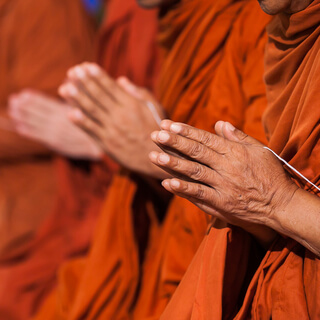
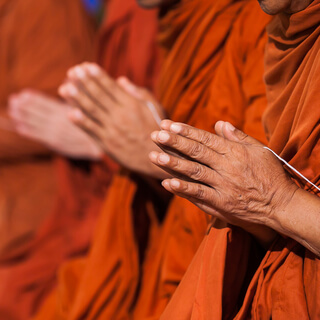
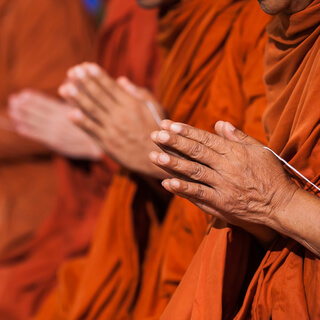
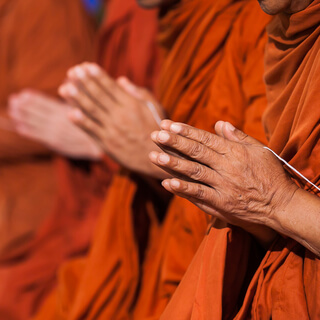
Have you put your hands together?
A.
Yes,
Ma'am.
Q.
Have you put your hands together?
A.
Yes,
Ma'am.
Q.
Have you put your hands together?
A.
Yes,
Ma'am.
Q.
Have you put your hands together?
A.
Yes,
Ma'am.
Q.
Have you put your hands together?
Dutiyampi Dhamman Saranamgachami Dutiyampi Sankham Saranamgachami Tatiyampi Bhutan Saranamgachami Dutiyampi Dhamman Saranamgachami Dutiyampi Sankham Saranamgachami So now you have taken the three refuges.
And now the precepts.
Bhanadibhata Vairamini Sikabadang Samadhyami Adinadhana Vairamini Sikabadang Samadhyami Abramacharya Vairamini Sikabadang Samadhyami Mutsawada Vairamini Sikabadang Samadhyami Suramiraya Machabama Tatthana Vairamini Sikabadang Samadhyami Vikalapochana Vairamini Sikabadang Samadhyami Najakita Vatita Vitsuka Tasana Malakanta Vilebana Tarana Mantana Vipusana Thana Vairamini Sikabadang Samadhyami Ujasayana Mahasayana Vairamini Sikabadang Samadhyami Imani Atat Sikabadani Samadhyami You are now in the Samana vehicle.
You are riding in the Samana vehicle.
The vehicle is like a car,
Isn't it?
It can carry you somewhere.
If you have a good vehicle,
Then you can kind of depend on it.
You don't have to spend your time doing all kinds of things or getting lost on the path.
You just put yourself in a good vehicle and then it takes you to where you are going and you just can sit and watch.
So now you are in this eight precept vehicle.
And now the real practice is to sit and watch.
Stand and watch,
Walk and watch,
Lay down and watch.
Be mindful.
Now the vehicle itself,
Whether you like it or not doesn't matter.
Whether you approve of all of it,
It doesn't matter because you are watching your mind.
It's not up to you to try to get the,
If you are riding in a Renault or something,
I don't want a Renault,
I want a Rolls Royce or a Mercedes.
Just ride in this one that you are in now and see if it gets you anywhere.
And thinking I'd rather have another one.
If you do think that,
Then watch that.
Recognize the conditions of your mind.
The discontentment,
The struggle,
The resistance.
Now in any kind of restrictive form there is going to be natural resistance to it.
When you are in,
Say,
Keeping precepts,
Keeping silent,
You have a schedule,
You get up in the morning and then sit and then do these various things.
Everything is kind of bordered and everything is itemized.
They do this at this time,
This time at that time.
So there is resistance to that too.
You want to look at that resistance.
You want to recognize that.
It's only for ten days.
So you have a chance to watch suffering and how the mind kind of resists authority or a structure imposed of it.
Now this is important because we need to learn to surrender,
To relax,
To let go.
As long as the form is not based on any kind of exploitive or evil actions.
So you are not asked to do,
You are not based on morality,
On what is considered moral by wise people in the world.
So that you will not be asked to do anything that would be immoral or evil or cruel,
Anything like this.
If our Venerable Nando asks you to kill somebody,
Steal something,
Then you say,
I'm sorry Venerable Sermato,
I would break my precepts if I were you.
So it's kind of your protection from unscrupulous gurus.
If we ask you to break your precepts,
You say,
No.
That's your guideline,
Your right.
And so the rest of it,
Like the meditation,
The schedule,
All this is based on the precepts to keep that form.
So what you do now is watch your mind.
Like any feeling of resentment of authority or being told what to do or having to conform to something that you didn't design yourself.
And we have to conform our activities to something imposed on us from someone else.
We feel a resistance or aversion arising.
When we,
Like sitting in meditation,
When you can't get up when you want to,
Or so forth,
You feel aversion arising.
Sometimes we resent,
Like I used to feel that a lot in Thailand when I went to stay with Ajahn Chah.
He used to make me sit for hours like this.
It was kind of the Thais like to sit in this,
This polite posture.
And I found it very painful to sit like this for five minutes.
He used to make us sit for something like two or three hours like that.
My knees would be,
I'd be going,
Getting really angry.
I noticed,
I noticed that I directed that anger at him.
I used to sit there and I used to just feel such hatred for him.
And then I would think,
I'm not going to stay here.
I don't have to do this.
I'll show him.
I'm going to leave.
Well,
I didn't.
I watched that,
Watched that kind of aversion and anger.
Pain,
When you're in pain,
You get angry.
If you can't,
You know,
Or when you're in a,
Put in a position where you can't do what you want,
Or you feel you can't do,
Or you're,
You're,
You're afraid of what others will think,
Or you're trying to,
You know,
There's so many things here that we can learn from,
From living in a,
In a community,
From having authority figures,
Monks and lay people,
From having disciplined rules and a disciplined life.
Where,
And where we can't get drunk,
Can't complain about things.
We can't distract ourselves with television or games.
We come and we sit together,
Stand together,
Walk together,
Eat together and all this,
But we,
We watch.
So we're bringing our attention to our mind,
What goes on inside us,
Because we're trying to watch what happens to us,
Rather than just follow habit.
You're studying habit.
You're watching it,
Listening to it.
So you begin to have a perspective on the conditioning that you've acquired up to now.