Wisdom.
Insight into Truth.
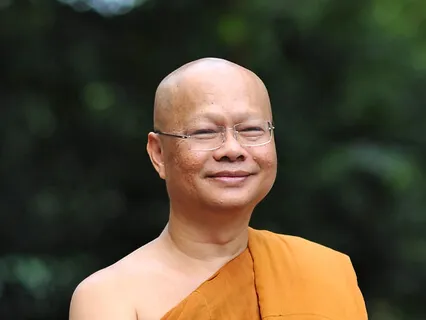
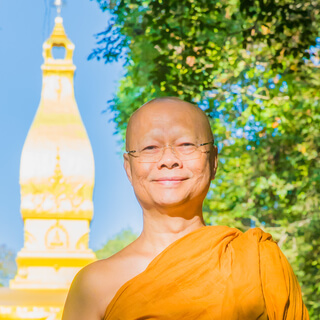
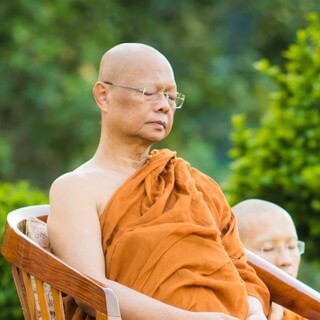
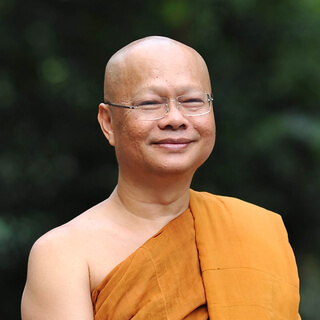
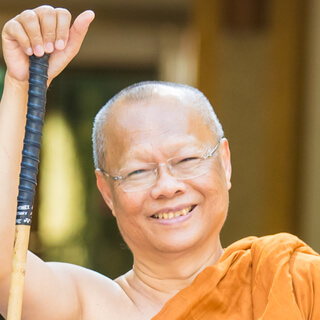
A collection of short Dharma teachings by Venerable Ajahn Anand.
Untying the Knot of Not Knowing.
The Buddha taught that delusion creates the world.
When the heart is covered over with delusion,
It will bring up a sense of self all the time,
Identifying with this body,
This mind,
And the experience of the world.
We will think that this is mine,
My part of the world,
My house,
My car,
My land,
My everything.
The sense of self is fed by this delusion,
This not knowing.
All our desires and attachments flow from this not knowing,
From not understanding truth.
So the way of Buddhism is to cultivate the opposite of not knowing.
We cultivate the knowing,
The understanding that comes through continuous awareness.
As we develop this continuous awareness,
We begin to see the arising of the sense of self and all the desires and attachments that we are normally lost in.
When the mind can see that,
Then it will detach from the normal process of labeling things and creating a sense of self around our experiences.
And with that,
There's no longer anyone who creates the world.
There's no one who owns the world.
Our old way of looking at things disappears.
Seeing through the mirage.
Wisdom means knowing things as they really are.
The mind is used to seeing things wrongly,
Viewing the world in a distorted way.
It's used to seeing what's impermanent as permanent,
What's changing as unchanging,
What is suffering as happiness,
And what is not self as self.
The mind is that which simply knows objects and experiences.
When it's not still and peaceful,
Then it's getting lost in these objects,
These mental impressions.
This is the point where we get lost in the world and where suffering arises from.
But the concentrated mind is peaceful.
It knows objects as objects.
It's not lost.
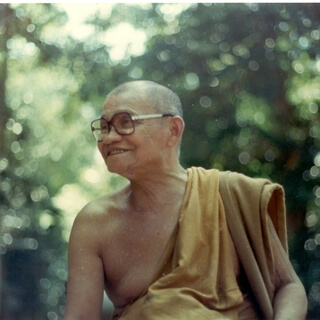
Ajahn Chah used the simile of a room with only one chair.
When guests come,
We know that they've come in,
But there's only one chair,
And we're sitting on it already.
So the various guests can't stay.
When we always remain on this one chair,
The guests will come,
But then they'll have to leave.
And so it is with the mind strengthened by mindfulness and concentration.
Whatever objects come in,
The mind will know them.
They can't stay.
Seeing things as they really are,
True wisdom begins to arise.
Not ours.
The senses and their respective objects are just the way they are,
According to nature.
Eyes are just eyes.
Sights are just sights.
They don't proclaim themselves to be anything at all.
It's the sense of self that gives meaning to them by reacting with attraction or aversion.
But with mindfulness and clear comprehension keeping up with the process of sense contact,
The mind will see in accordance with truth.
All phenomena are simply arising,
Remaining,
And passing away.
Ajahn Chah frequently taught what he called the practice which is never wrong.
This is the practice of restraint,
Of watching and guiding the six sense faculties,
The eye,
Ear,
Nose,
Tongue,
Body,
And the mind.
Whenever we experience the eyes seeing forms,
The ears hearing sounds,
The nose smelling odors,
The tongue tasting flavors,
The body feeling tactile sensations,
Or the mind experiencing mental objects,
Ajahn Chah would teach to contemplate these experiences right at that point.
To know them and understand them.
Seeing them clearly is changing and impermanent.
It's like walking along a road.
There might be various things in our way,
Rocks,
Sticks,
Or rubbish,
But we just clear them aside and keep walking,
Not letting them worry us.
The mental impressions are obstructions as well,
But if we quickly clear them away by seeing them as impermanent,
Unsatisfactory,
And not self,
We keep progressing.
When we let go of our attachment to these obstructions,
We see that they're simply objects of the mind.
When we experience happiness,
We say,
I am happy.
We take the state to be ours at that time,
But that state doesn't last,
Does it?
It comes up according to conditions,
And as those conditions change and pass,
That mood,
That feeling,
Will pass as well.
Suffering's the same.
It comes up according to conditions,
And then changes,
And goes away again.
In fact,
The whole world is in a constant state of change,
Arising and passing away,
Completely beyond our control.
If any of this could be taken as mine,
Then it should be able to remain the way we want it to,
But it doesn't.
If there were really a permanent self,
We'd be able to control our moods to maintain them or to prevent them from occurring,
But we can't.
They arise and pass away according to conditions.
And because of this,
They're unsatisfactory.
But when we know them all as they arise and pass away,
Then there won't be any suffering in the mind.
We won't attach to them as myself,
My mood,
My happiness,
My unhappiness.
We will see the truth,
Realizing,
Ah,
These things,
They don't belong to me.
And that's when the mind lets go.
The dynamics of change.
The most obvious place we can observe and contemplate the truth of not-self,
Or anatta,
Is just with our own breath.
Any time we turn our attention to observe the breath,
We can see that it's merely carrying on its function.
The breath goes in,
And then it goes out.
It arises.
It passes away.
And that whole process of the breathing is beyond our control,
Isn't it?
We can't say that this breath is ours.
Whether we say that or not,
It just carries on by itself.
Any time we can observe something following its natural function,
This is showing us the truth of not-self.
Everything that we take is a self,
Believing,
This is me,
This is mine.
If we keep investigating,
We'll gradually come to see the truth.
These various parts of the body,
Are they a self?
Take any part,
The teeth for instance.
Ask yourself,
Are these teeth really me?
Are they mine?
When they fall out,
Are they me?
Are they mine?
Contemplating this physical form,
We see that what we call my body comes from the food and drink that we take in,
Which supports the arising of the four elements.
As we absorb in more and more of these four elements,
The body grows up from a baby,
To a child,
To a youth,
To an adult.
And through delusion,
We label this as a person,
Don't we?
We say that this is me,
Mine,
My body.
But when we investigate the nature of things,
We see that this thing that we call a person is impermanent,
Unsatisfactory,
Not self.
The four elements that make up this body are not going to last forever,
Are they?
It's their nature to change and break up,
To get old and degenerate,
And eventually they'll separate and completely disappear.
If we continue to contemplate this with mindfulness and wisdom,
We'll see that in actuality,
These four elements are empty,
That within them,
There's no self to be found.
We're all in the same boat.
We have to learn how to contemplate the truth of this life,
Of this existence.
Where do we come from as human beings?
We've been in the womb of our mother,
Literally just a little drop of liquid.
And over time,
More and more of the four elements come together,
Earth,
Fire,
Water,
And air,
Growing and developing to form that one little drop into a human being.
And straight away,
Our consciousness attaches to this form.
We start to see it as a self,
As our self.
Unfortunately,
The attachment to this body leads onto all kinds of worries and suffering,
Both in the world and in our own life.
Reflect on the unsatisfactoriness of this body.
Since it's subject to change,
How can it be satisfactory?
Just look at our posture.
We experience discomfort because we can't remain still.
We have to move around from moment to moment,
From standing to sitting to lying down and then up again.
We walk and then we stop.
If we didn't change posture,
The pain would quickly become intolerable,
Wounded.
We don't normally contemplate these things.
This body keeps getting older and older.
So we may do the best we can to look after ourself,
No matter what we do.
As time passes,
The body naturally degenerates,
Getting illnesses and pains.
This body is in a constant state of change.
The longer we keep using it,
The more prone it is to disease.
By the time people reach 80,
Their brains don't function like they used to.
Their memory is deteriorated.
The bones get frail.
The heart,
Kidneys,
Lungs and liver all start to cause trouble.
But this is just the natural course of the body.
The Buddha taught that all things are impermanent.
They can't last.
We cling to the notion that they'll be here for a long time.
But really,
This can't be.
When we go to the hospital,
Everyone wants to be cured.
Nobody wants to die.
But this just isn't possible.
We do our best to treat the body,
And if it heals,
We accept that.
But if it doesn't,
We have to accept that,
Too.
Even the doctors have to die.
How many doctors have we seen that are over a hundred years old?
Doctors have the ability to heal people to some extent,
But to stop death,
This they can't do.
Doctors,
Nurses,
They all have to die as well.
We all have aging,
Illness and death as a part of nature.
If we have an eye,
We're subject to diseases of the eye.
If we have a liver,
We're subject to diseases of the liver.
When we have arms and legs,
Then there'll be pain in the arms and legs.
When we have bones,
Then there'll be aches and pains within our bones.
This is just the nature of the body,
To be subject to pain and disease.
We have to realize that we can't control or command it.
If we could,
We wouldn't let it get old,
Get sick,
Break apart or die.
When we are born,
We don't see the old age,
Sickness and death that's inherent within birth.
But birth is the very condition that leads to old age,
Which leads on to pain.
When one is very old,
And pain and suffering is at its peak,
The physical form will then break apart and fade away.
Conventionally we call this death.
A Mind Unbound In the beginning,
We're still strongly bound by a sense of self,
Which in essence is delusion.
There's craving and clinging encircling the mind.
Now if delusion,
Craving and clinging were the mind,
Then there'd be no way for us to purify our minds and make them serene and clear.
But the mind and the mental defilements are separate entities.
These defilements have gradually moved in and taken the mind from its natural state.
They've been with us for so long that it's beyond the scope of what we can comprehend.
The original mind is pure and radiant.
And even now,
We'll notice that at times our mind is free from greed,
Anger and delusion.
So how do delusion,
Craving and clinging originate within the mind?
Where do they arise from?
They come in through the sense organs,
Namely the eye,
Ear,
Nose,
Tongue,
Body and mind.
If the mind gets caught into attraction or aversion at these points of contact,
The defilements arise simultaneously.
But if we can maintain a state of detached awareness,
Unmoved by attraction and aversion,
Then the mind will be beyond the reach of the defilements.
This is a mind free from greed,
Anger and delusion.
The End of All Clinging When we have generosity,
Virtue,
Loving kindness and the practice of meditation combined,
We'll be strengthening the power of our mindfulness for our investigation into truth.
Look at the mind as just the mind,
Not a person,
A being,
A self,
Me or others.
Even though we may have wholesome states of mind arising,
We have to learn to let them go as well,
Not allowing a sense of self to form.
By now,
You might be confused and think,
Well,
If I let everything go,
Even the wholesome states,
There'll be nothing left.
But we must remember that the aim of the practice is to abandon self-identity view,
Because if we feel superior to others,
This is another cause for suffering.
If we cling to the notion that we're better,
Equal or inferior to others,
This is just self-identity view.
Whenever there's self-identity view,
There are mental defilements.
And whenever there are mental defilements,
There'll be suffering as well.
If we can let go of both the wholesome and the unwholesome,
Then we'll see the mind in its natural state.