Why are we here?
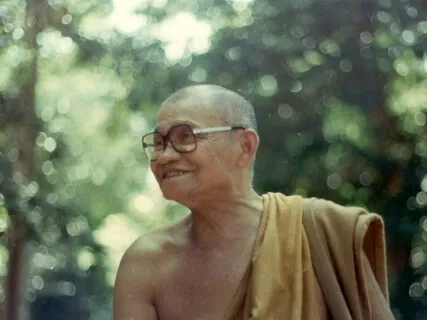
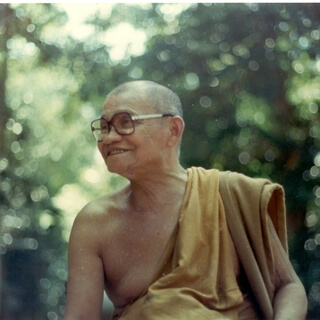
A Dharma talk by Venerable Ajahn Chah.
This rands retreat,
I don't have much strength,
I'm not well,
So I've come up to this mountain here to get some fresh air.
People come to visit,
But I can't read or receive them like I used to,
Because my voice has just about had it.
My breath is just about gone.
You can count it a blessing that there is still a body sitting here for you all to see now.
This is a blessing in itself,
For soon you won't see it.
The breath will be finished,
The voice will be gone.
They will fare in accordance with the supporting factors,
Like all compounded things.
The Lord Buddha called it Kaya Vajam,
The decline and dissolution of all conditioned phenomena.
How do they decline?
Consider a lump of ice,
Originally it was simply water.
People freeze it and it becomes ice,
But it doesn't take long before it's melted.
Take a big lump of ice,
Say as big as this tape recorder here,
And leave it out in the sun.
You can see how it declines,
Much the same as the body.
It will gradually disintegrate,
After not so many hours or minutes,
All that's left is a puddle of water.
This is called Kaya Vajam,
The decline and dissolution of all compounded things.
It's been this way for a long time now,
Ever since the beginning of time.
When we are born,
We bring this inherent nature into the world with us,
We can't avoid it.
At birth,
We bring old age,
Sickness and death along with us.
So this is why the Buddha said Kaya Vajam,
The decline and dissolution of all compounded things.
All of us sitting here in this hall now,
Monks,
Novices,
Laywomen,
Laymen,
Are without exception lumps of deterioration.
Right now the lump is hard,
Just like the lump of ice.
It starts out as water,
Becomes ice for a while,
And then melts again.
Can you see this decline in yourself?
Look at this body,
It's aging every day.
Hair is aging,
Nails are aging,
Everything is aging.
You weren't like this before,
Were you?
You were probably much smaller than this.
Now you've grown up and matured.
From now on,
You'll decline,
Following the way of nature.
The body declines just like the lump of ice.
Soon,
Just like the lump of ice,
It's all gone.
All bodies are composed of the four elements of earth,
Water,
Wind and fire.
A body is the confluence of earth,
Water,
Wind and fire,
Which we proceed to call a person.
Originally,
It's hard to say what you could call it,
But now we call it a person.
We get infatuated with it,
Saying it's a male,
A female,
Giving it names,
Mr.
And Mrs.
And so on,
So that we can identify each other more easily.
But actually,
There isn't anybody there.
There's earth,
Water,
Wind and fire.
When they come together in this known form,
We call the result a person.
Now don't get excited over it.
If you really look into it,
There isn't anyone there.
That which is solid in the body,
The flesh,
Skin,
Bones and so on,
Are called the earth element.
Those aspects of the body which are liquid are the water element.
The faculty of warmth in the body is the fire element,
While the winds coursing through the body are the wind element.
At Wat Bapong,
We have a body which is neither male nor female.
It's the skeleton hanging in the main hall.
Looking at it,
You don't get the feeling that it's a man or a woman.
People ask each other whether it's a man or a woman,
And all they can do is look blankly at each other.
It's only a skeleton.
All the skin and flesh are gone.
People are ignorant of these things.
Some people go to Wat Bapong,
Into the main hall,
See the skeletons there,
And then run right out again.
They can't bear to look.
They're afraid,
Afraid of the skeletons.
I figure these people have never seen themselves before.
Because they're afraid of the skeletons,
They don't reflect on the great value of skeletons.
To get to the monastery,
They had to ride in a car or walk.
If they didn't have bones,
How would they be?
How would they be able to walk about like that?
But they ride their cars to Wat Bapong,
Go into the main hall,
See the skeletons,
And run straight back out again.
They've never seen such a thing before.
They're born with it,
And yet,
They've never seen it.
It's very fortunate that they have a chance to see it now.
Even older people see the skeleton,
And get scared.
What's all the fuss about?
This shows that they're not at all in touch with themselves.
They don't really know themselves.
Maybe they go home and still can't sleep for three or four days,
And yet they're sleeping with a skeleton.
They get dressed with it,
Eat food with it,
Do everything with it,
And yet,
They're scared of it.
This shows how out of touch people are with themselves.
How pitiful.
They're always looking outwards,
At trees,
At other people,
External objects,
Saying,
This one is big,
That's small,
That's short,
That's long.
They're so busy looking at other things that they never see themselves.
To be honest,
People are really pitiful.
They have no refuge.
In the ordination ceremonies,
The ordinees must learn the five basic meditation themes.
Kesa,
Hair of the head,
Loma,
Body hair,
Nakha,
Nails,
Dantaa,
Teeth,
Tacho,
Skin.
Some of the students and educated people snigger to themselves when they hear this part of the ordination ceremony.
What's the adjunct trying to teach us here?
Teaching us about hair,
When we've had it for ages.
He doesn't have to teach us about this,
We know it already.
Why bother teaching us something we already know?
You see,
Dim people are like this.
They think they can see the hair already.
I tell them that when I say to see the hair,
I mean to see it as it really is.
See body hair as it really is.
See nails,
Teeth and skin as they really are.
That's what I call seeing.
Not seeing in a superficial way,
But seeing in accordance with the truth.
We wouldn't be so sunk up to the ears in things if we could see things as they really are.
Hair,
Nails,
Teeth,
Skin.
What are they really like?
Are they pretty?
Are they clean?
Do they have any real substance?
Are they stable?
No.
There's nothing to them.
They're not pretty,
But we imagine them to be so.
They're not substantial,
But we imagine them to be so.
Hair,
Nails,
Teeth,
Skin.
People are really hooked on these things.
The Buddha established these things as the basic themes for meditation.
He taught us to know these things.
They're transient,
Imperfect,
And onerless.
They're not me or them.
We are born with and eluded by these things,
But really,
They're foul.
Suppose we didn't bathe for a week.
Could we bear to be close to each other?
We'd really smell bad.
When people sweat a lot,
Such as when a lot of people are working hard together,
The smell is awful.
We go back home and rub ourselves down with soap and water,
And the smell abates somewhat.
The fragrance of the soap replaces it.
Rubbing soap on the body may make it seem fragrant,
But actually,
The bad smell of the body is still there.
It's just temporarily suppressed.
When the smell of the soap is gone,
The smell of the body comes back again.
Now we tend to think these bodies are pretty,
Delightful,
Long-lasting,
And strong.
We tend to think that we will never age,
Get sick,
Or die.
We are charmed and fooled by the body,
And so we are ignorant of the true refuge within ourselves.
The true place of refuge is the mind.
The mind is our true refuge.
This hall here may be pretty big,
But it can't be a true refuge.
Pigeons take shelter here,
Geckos take shelter here,
Lizards take shelter here.
We may think this hall belongs to us,
But it doesn't.
We live here together with everything else.
This is only a temporary shelter.
Soon we must leave it.
People take these shelters for refuge.
So the Buddha said to find your refuge.
That means to find your real heart.
The heart is very important.
People don't usually look at important things.
They spend most of their time looking at unimportant things.
For example,
When they do the house cleaning,
They may be bent on cleaning up the house,
Washing the dishes,
And so on,
But they fail to notice their own hearts.
Their heart may be rotten.
They may feel angry,
Washing the dishes with a sour expression on their face.
They fail to see that their own hearts aren't very clean.
This is what I call taking a temporary shelter for a refuge.
They beautify house and home,
But they don't think of beautifying their own hearts.
They don't examine suffering.
The heart is the important thing.
The Buddha taught to find a refuge within your own heart.
Atahii atanau natau.
Make a refuge unto yourself.
Who else can be your refuge?
The true refuge is the heart,
Nothing else.
You may try to depend on other things,
But they aren't a sure thing.
You can only really depend on other things if you already have a refuge within yourself.
You must have your own refuge first before you can depend on anything else,
Be it a teacher,
Family,
Friends,
Or relatives.
So all of you,
Both laypeople and homeless ones who have come to visit today,
Please consider this teaching.
Ask yourselves,
Who am I?
Why am I here?
Ask yourselves,
Why was I born?
Some people don't know.
They want to be happy,
But the suffering never stops.
Rich or poor,
Young or old,
They suffer just the same.
It's all suffering.
And why?
Because they have no wisdom.
The poor are unhappy because they don't have enough,
And the rich are unhappy because they have too much to look after.
In the past,
As a young novice,
I gave a Dharma discourse.
I talked about the happiness of wealth and possessions,
Having servants and so on.
A hundred male servants,
A hundred female servants,
A hundred elephants,
A hundred cows,
A hundred buffaloes,
A hundred of everything.
The laypeople really lapped it up.
But can you imagine looking after a hundred buffaloes?
Or a hundred cows?
A hundred male and female servants?
Can you imagine having to look after all of that?
Would that be fun?
People don't consider the side of things.
They have the desire to possess,
To have the cows,
The buffaloes,
The servants,
To have hundreds of them.
But I say that fifty buffaloes would be too much.
Just twining the ropes for all of those brutes would be too much already.
But people don't consider this.
They only think of the pleasure of acquiring.
They don't consider the trouble involved.
If we don't have wisdom,
Everything around us will be a source of suffering.
If we are wise,
These things—eyes,
Ears,
Nose,
Tongue,
Body,
And mind—will lead us out of suffering.
Eyes aren't necessarily good things,
You know.
If you're in a bad mood,
Just seeing other people can make you angry and make you lose sleep or you can fall in love with others.
Love is suffering too,
If you don't get what you want.
Love and hate are both suffering because of desire.
Wanting is suffering.
Wanting not to have is suffering.
Wanting to acquire things,
Even if you get them,
Is still suffering because you're afraid you'll lose them.
There's only suffering.
How are you going to live with that?
You may have a large,
Luxurious house,
But if your heart isn't good,
It never really works out as you expected.
Therefore,
You should all take a look at yourselves.
Why were we born?
Do we ever really attain anything in this life?
In the countryside here,
People start planting rice right from childhood.
When they reach 17 or 18,
They rush off and get married,
Afraid they won't have enough time to make their fortunes.
They start working from an early age,
Thinking they'll get rich in that way.
They plant rice until they're 70 or 80 or even 90 years old.
I ask them,
From the day you were born,
You've been working.
Now it's almost time to go.
What are you going to take with you?
They don't know what to say.
All they can say is,
Phew,
Beats me.
We have a saying in these parts.
And tarry picking berries along the way,
Before you know it,
Night falls.
Just because of this,
Beats me.
They're neither here nor there,
Just content with a beats me.
Sitting among the branches of the berry tree,
Gorging themselves with berries.
Beats me,
Beats me.
When you're still young,
You think that being single is not so good.
You feel a bit lonely.
So you find a partner to live with.
But two together,
And there's friction.
Living alone is too quiet.
But living with others,
There's friction.
When children are small,
The parents think,
When they get bigger,
We'll be better off.
They raise their children,
Three,
Four,
Or five of them,
Thinking that when the children are grown up,
Their burden will be lighter.
But when the children grow up,
They get even heavier.
Like two pieces of wood,
One big and one small.
You throw away the small one,
And take the bigger one,
Thinking it'll be lighter,
But of course it's not.
When children are small,
They don't bother you very much.
Just a bowl of rice and a banana now and then.
But when they grow up,
They want a motorcycle or a car.
Well,
You love your children,
You can't refuse.
So you try to give them what they want.
Sometimes the parents get into arguments over it.
Don't go and buy them a car,
We haven't got enough money.
But when you love your children,
You've got to borrow the money from somewhere.
Maybe the parents even had to go without,
To get the things their children want.
And then there's education.
When they've finished their studies,
We'll be alright.
But there's no end to the studying.
What are they going to finish?
Only in the science of Buddhism is there a point of completion.
All the other sciences just go round in circles.
In the end,
It's a real headache.
If there's a house with four or five children in it,
The parents argue every day.
The suffering that is waiting in the future,
We fail to see.
We think it'll never happen.
When it happens,
Then we know.
That kind of suffering,
The suffering inherent in our bodies,
It's hard to foresee.
When I was a child minding the buffalo,
I'd take charcoal and rub it on my teeth to make them white.
I'd go back home and look in the mirror and see them so nice and white.
I was getting fooled by my own bones.
That's all.
When I reached 50 or 60,
My teeth started to get loose.
When the teeth start falling out,
It hurts so much.
When you eat,
It feels like you've been kicked in the mouth.
It really hurts.
I've been through this one already.
So I just got the dentist to take them all out.
Now I've got false teeth.
My real teeth were giving me so much trouble,
I just had them all taken out.
16 in one go.
The dentist was reluctant to take out all 16 teeth at once,
But I said to him,
Just take them out.
I'll take the consequences.
So he took them all out at once.
Some were still good,
Too.
At least five of them.
He took them all out.
But it was really touch and go.
After having them out,
I couldn't eat any food for two or three days.
Before,
As a young child minding the buffaloes,
I used to think that polishing the teeth was a great thing to do.
I loved my teeth.
I thought that they were good things.
But in the end,
They had to go.
The pain almost killed me.
I suffered from toothache for months,
Years.
Sometimes both my gums were swollen at once.
Some of you may get a chance to experience this for yourselves someday.
If your teeth are still good and you're brushing them every day to keep them nice and white,
Watch out.
They may start playing tricks on you later on.
I'm just letting you know about these things.
The suffering that arises from within.
That arises within our own bodies.
There's nothing within the body that you can depend on.
It's not too bad when you're still young.
But as you get older,
Things start to break down.
Everything begins to fall apart.
Conditions go their natural way.
Whether we laugh or cry over them,
They just go on their way.
It makes no difference how we live or die.
Makes no difference to them.
And there's no knowledge or science which can prevent this natural course of things.
You may get a dentist to look at your teeth,
But even if he can fix them,
They still eventually go their natural way.
Eventually,
Even the dentist has the same trouble.
Everything falls apart in the end.
These are things which we should contemplate while we still have some vigor.
We should practice while we're still young.
If you want to make merit,
Then hurry up and do so.
Don't just leave it up to the oldies.
Most people just wait until they get old before they'll go to the monastery and try to practice the Dhamma.
Women and men say the same thing.
Wait until I get old first.
I don't know why they say that.
Does an old person have much vigor?
Let them try racing with a young person and see what the difference is.
So why do they leave it until they get old?
Just like they're never going to die.
When they get to 50 or 60 years old or more,
Hey grandma,
Let's go to the monastery.
You go ahead.
My ears aren't so good anymore.
You see what I mean?
When her ears were good,
What was she listening to?
Beats me.
She was just dallying with the berries.
Finally,
When her ears are gone,
She goes to the temple.
It's hopeless.
She listens to the sermon,
But she hasn't got a clue what they're saying.
People wait until they're all used up before they'll think of practicing the Dhamma.
Today's talk may be useful,
For those of you who can understand it.
These are things which you should begin to observe.
They are our inheritance.
They'll gradually get heavier and heavier,
A burden for each of us to bear.
In the past,
My legs were strong,
I could run.
Now just walking around,
They feel heavy.
Before my legs carried me,
But now I have to carry them.
When as a child,
I see old people getting up from their seat,
Getting up they're grown.
There's always this,
But they don't know what it is that makes them grown like that.
Even when it gets to this extent,
People don't see the pain of the body.
You never know when you're going to be parted from it.
What's causing all the pain is simply conditions going about their natural way.
People call it arthritis,
Rheumatism,
Gout,
And so on.
The doctor prescribes medicines,
But it never completely heals.
In the end,
It falls apart.
Even the doctor.
This is conditions faring along their natural course.
This is their way,
Their nature.
Now take a look at this.
If you see it in advance,
You'll be better off.
Just like seeing a poisonous snake on the path ahead of you.
If you see it there,
You can get out of its way and not get bitten.
But if you don't see it,
You may keep on walking and step on it.
And then it bites.
If suffering arises,
People don't know what to do.
Where to go to treat it.
They want to avoid suffering.
They want to be free of it,
But they don't know how to treat it when it arises.
They live on like this until they get old and sick and die.
In autumn times,
It was said that if someone was mortally ill,
One of the next of kin should whisper,
Buddha,
Buddha,
In their ear.
What are they going to do with Buddha?
What good is Buddha going to be for them when they're almost on the funeral pyre?
Why didn't they learn Buddha when they were young and healthy?
Now with their breaths coming fitfully,
You go up and say,
Mother,
Buddha,
Buddha.
Why waste your time?
You'll only confuse her.
Just let her go peacefully.
People don't know how to solve problems within their own hearts.
They don't have a refuge.
They get angry easily and have a lot of desires.
Why is this?
Because they have no refuge.
When people are newly married,
They get on together alright.
But after age 50 or so,
They can't understand each other.
Whatever the wife says,
The husband finds intolerable.
Whatever the husband says,
The wife won't listen.
They turn their backs on each other.
You see,
I'm just talking because I've never had a family.
Why haven't I had a family?
Just looking at this word household,
I knew what it was all about.
What is a household?
This is a hold.
If somebody were to get some rope and tie us up while we're sitting here,
What would that be like?
It's called being held.
Whatever that's like,
Being held is like that.
There's a circle of confinement.
The man lives within his circle of confinement,
And the woman lives within her circle of confinement.
When I read this word household,
This is a heavy one.
The word is no trifling matter.
It's a real killer.
The word hold is a symbol of suffering.
You can't go anywhere.
You've got to stay within your circle of confinement.
And now we come to the word house.
This means that which hassles.
Have you ever toasted chilies?
The whole house chokes and sneezes.
This word household spells confusion.
It's not worth the trouble.
Because of this word,
I was able to ordain and not disrobe.
Household is frightening.
You're stuck,
And you can't go anywhere.
Problems with the children,
Money,
And all the rest.
But where can you go?
You're tied down.
There are sons and daughters,
Arguments and profusion until your dying day,
And there's nowhere else to go,
No matter how much suffering it is.
The tears pour out,
And they keep pouring.
The tears will never be finished with this household,
You know.
If there's no household,
You might be able to finish with the tears,
But not otherwise.
Consider this matter.
If you haven't come across it yet,
You may later on.
Some people have experienced it already to a certain extent.
Some are ready at the end of their tether.
Will I stay,
Or will I go?
At Wapapong,
There are about 70 or 80 huts.
When they're almost full,
I tell the monk in charge to give a few empty,
Just in case someone has an argument with their spouse.
And sure enough,
In no long time,
A lady will arrive with her bags.
I'm fed up with the world,
Longpa.
Oh,
Don't say that.
Those words are really heavy.
Then the husband comes and says he's fed up too.
After two or three days in the monastery,
The world-weariness disappears.
They say they're fed up,
But they're just fooling themselves.
When they go off to a hut and sit in the quiet by themselves,
After a while,
The thoughts come.
When is the wife going to come and ask me to go home?
They don't really know what's going on.
What is this world-weariness of theirs?
They get upset over something and come running to the monastery.
At home,
Everything looked wrong.
The husband was wrong.
The wife was wrong.
But after three days quiet thinking,
Hmmm… The wife was right after all.
It was I who was wrong.
Habi was right.
I shouldn't have got so upset.
They change sides.
This is how it is.
That's why I don't take the world too seriously.
I know it's ins and outs already.
That's why I've chosen to live as a monk.
I'd like to present today's talk to all of you for homework.
Whether you're in the fields or working in the city,
Take these words and consider them.
Why was I born?
What can I take with me?
Ask yourselves over and over.
If you ask yourselves these questions often,
You'll become wise.
If you don't reflect on these things,
You'll remain ignorant.
Listening to today's talk,
You may get some understanding.
If not now,
Then maybe when you get home.
Perhaps this evening.
When you listen to the talk,
Everything is subdued.
But maybe things are waiting for you in the car.
When you get in the car,
It may get in with you.
When you get home,
It may all become clear.
Ah,
That's what longpo meant.
I couldn't see it before.
I think that's enough for today.
If I talk too long,
This old body gets tired.